


Reliance Industries Share Price Outlook After Market Slump: Key Levels For Retail Investors


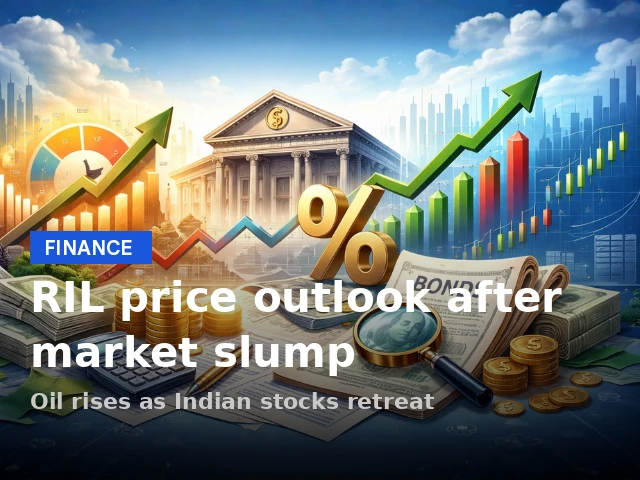

Key Takeaways
- Brent prices rise above $98 as geopolitical tensions heighten risk, pressuring Indian equities.
- Sensex closes at 76,391.39, down 363.66 points; Nifty at 23,869.60, down 126.65 points.
- Decliners include Asian Paints, Bharti Airtel, Reliance Industries, Tata Steel, SBI, Axis Bank, Indigo, Bajaj Finance, and Adani Ports.
- Retail investors should approach the next session with caution and consider Swastika's Sarthi AI stock assistant for stock-level research.
Oil prices extended gains for a fifth straight session, with Brent crude trading above $98 a barrel as tensions in the Middle East persisted. Indian benchmarks retreated in a risk-off session, with the Sensex at 76,391.39, down 363.66 points (0.47%), and the Nifty at 23,869.60, down 126.65 points (0.53%). For retail investors across India, the main question is where the reliance industries share price heads next and how best to navigate in a market painted by global risk and domestic earnings cues. The breadth of the market tilted toward declines, underscoring the challenge of finding reliable leadership in this environment. This combination–elevated oil, geopolitical headlines, and mixed domestic signals–has become a recurrent feature of the current trading backdrop, and it warrants a disciplined, data-driven approach to stock selection and risk management.
| Index | Level | Change |
|---|---|---|
| BSE Sensex | 76,391.39 | -363.66 (-0.47%) |
| NSE Nifty | 23,869.60 | -126.65 (-0.53%) |
Reliance Industries Share Price Reactions After Market Selloff
The reliance industries share price moved in step with the broader market, echoing a risk-off tilt that tests the resolve of long-term investors as oil and macro cues shift. While the Sensex and Nifty declined, the heavyweight’s performance remains a bellwether for the health of India’s large-cap universe. Observers also monitor the reliance industries limited stock price as a proxy for sentiment around flagship conglomerates with energy, retail, and digital exposure. A sustained slide in the reliance industries share price could weigh on overall market breadth, while a stabilizing trend would indicate that leadership may re-emerge in selective defensive and growth-oriented pockets.
Analysts and traders often use the stock’s price trajectory to infer the pace of a potential risk-on rebound. If oil remains volatile and macro cues stay mixed, you may see a pattern where the reliance industries share price drifts within a defined range, punctuated by occasional breakouts driven by earnings updates or sector-led rotation. Retail investors should not rely on a single data point; instead, they should triangulate the price action with volumes, option activity, and sector momentum to form a robust view.
Oil And Geopolitics: Brent Crude Trading Above $98 And Market Implications
Brent crude prices extended gains for a fifth straight session to hover above $98 a barrel, a development that reinforces caution for energy-sensitive equities and import-reliant sectors. The risk is that Brent could climb above $100 a barrel if the Middle East conflict drags on, which would add upward pressure to inflation and potentially temper domestic consumer-spending expectations. In the session, Yemen’s Iran-aligned Houthis claimed an attack on two Saudi oil tankers transiting through the Red Sea, a move that ramps up supply-side risk narratives. Concurrently, U.S. leadership signaled a willingness to escalate if Iran targets commercial shipping in the Strait of Hormuz, complicating risk sentiment for global markets. These geopolitics dynamics tend to reverberate through Indian equities, especially those with energy exposure or import-intensive costs, and they often translate into increased volatility across indices and stocks alike.
From a portfolio perspective, higher-for-longer oil scenarios can tilt the risk-reward of cyclicals versus defensives. Traders may look for hedging angles or selectively overweight quality exporters and consumer staples that demonstrate resilience in energy-tight environments. It’s important to pair oil-price narratives with company-specific fundamentals to avoid overreacting to macro headlines. For readers who want a deeper, stock-level view on how these macro shifts translate into potential stock moves, Swastika's Sarthi AI stock assistant can help tailor a research plan for individual tickers and sectors.
Top Decliners On The Session: Bharti Airtel Stock Price And Asian Paints Stock Price In Focus
Among the notable decliners, Asian Paints, Bharti Airtel, Reliance Industries, Maruti Suzuki India, Tata Steel, SBI, Axis Bank, Indigo, Bajaj Finance, and Adani Ports faced selling pressure. In particular, the bharti airtel stock price moved under pressure as telecom and consumer segments contended with price competition and demand-slow dynamics, while the asian paints stock price reflected cautious consumer spending on discretionary items. These movements highlight how sectoral shifts–telecom, consumer durables, and industrials–can drive idiosyncratic stock performance even as a broad market backdrop remains precarious. For retail investors tracking these names, it’s essential to evaluate the quality of earnings, balance-sheet strength, and momentum signals before adjusting exposure. A stock-level lens becomes even more important in a market where breadth is negative and leadership appears selective.
Axis Bank Stock Price And SBI Stock Price Moves In A Choppy Session
The financials pulled back amid the risk-off mood. The axis bank stock price and the sbi stock price both displayed declines as investors rebalanced portfolios away from rate-sensitive names and toward more defensively positioned bets. In a market where breadth favors the downside, the performance of large banks becomes a focal point for assessing systemic risk and the health of the financial segment. The axis bank stock price and the sbi stock price movements underscore the broader caution surrounding financials as yields and credit metrics oscillate in response to global cues and domestic macro data.
Investors should monitor how credit growth trends, asset quality, and interest-rate trajectories influence the axis bank stock price and the sbi stock price in the coming sessions. A disciplined approach–prioritizing strong franchises, robust capital adequacy, and transparent earnings visibility–can help manage volatility in financials while preserving upside potential as macro conditions evolve.
Market Breadth And What It Means For Retail Investors
On the BSE, 2,583 shares declined, 1,637 rose, and 171 remained unchanged, painting a cautious picture for the broader market. When breadth tilts toward declines, it often signals a consolidation or distribution phase, where leadership narrows to a handful of stocks while the rest slip. For retail investors, breadth data should translate into a measured approach to stock picks, position sizing, and risk controls. It also underscores the importance of diversification–across sectors and market caps–and the value of maintaining liquidity to exploit eventual recoveries.
To explore stock-level research and tailor your plan to your risk profile, consider using Swastika's Sarthi AI stock assistant.
Frequently Asked Questions
What were the key index moves on July 23, 2026?
The Sensex ended at 76,391.39, down 363.66 points (-0.47%), while the Nifty settled at 23,869.60, down 126.65 points (-0.53%).
Which stocks led the declines on that session?
Prominent decliners included Asian Paints, Bharti Airtel, Reliance Industries, Maruti Suzuki India, Tata Steel, SBI, Axis Bank, Indigo, Bajaj Finance, and Adani Ports.
How did Brent crude prices behave amid the geopolitical tensions?
Brent crude prices extended gains to above $98 a barrel, with risks that the price could climb above $100 if the Middle East conflict drags on.
What did market breadth look like on the BSE?
Market breadth showed 2,583 declines, 1,637 advances, and 171 unchanged shares.
What should retail investors do next after this session?
Maintain risk discipline, diversify, and consider stock-level research using Swastika's Sarthi AI stock assistant for deeper insights.
Conclusion
The session underscores the reality that volatility is a defining feature in the near term, driven by oil dynamics and geopolitical developments as much as domestic earnings cues. For a retail investor, the takeaway is to anchor decisions in risk discipline, diversification, and a clear plan for your holdings within a market that can swing on headlines. The reliance industries share price story offers a useful proxy for how the broader large-cap complex may behave in a risk-off episode, but it should sit within a diversified framework that protects capital while enabling selective exposure to high-conviction ideas.
Latest Articles
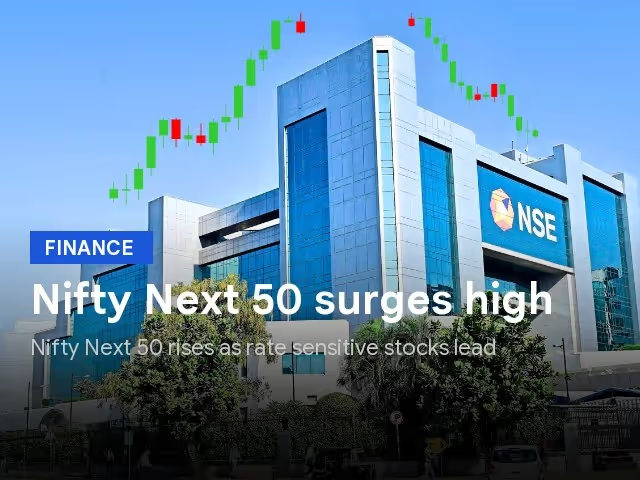
Nifty Next 50 index soars 4% Rally to 52-Week High: A Guide for Indian Retail Investors


TLDR
- Nifty Next 50 jumped 4% to a 52-week high, led by rate-sensitive stocks.
- The rally underscores appetite for financials and other rate-sensitive sectors.
- Retail investors should balance diversification and risk management amid mid-cap exposure.
- Swastika's Sarthi AI helps track index moves and stock specifics for smarter decisions.
Is a 4% move in a single session enough to change how you think about mid-cap exposure in India? In a day when the Nifty Next 50 vaulted to a fresh 52-week high, the move was led by rate-sensitive stocks and broad participation across the index. For a retail investor watching the market, this isn't just a number–it's a signal about where risk appetite sits and how macro cues could shape the next leg of the rally.
What caused the Nifty Next 50 index to jump 4% to a 52-week high?
In today's session, the Nifty Next 50 logged a sharp 4% rise and carved out a fresh 52-week high. Market commentators point to renewed demand for rate-sensitive stocks as a primary driver. The move suggests investors are pricing in a favorable macro backdrop, with expectations of supportive liquidity and potential policy considerations that could influence interest rates. In such a setup, mid-cap-oriented indices often see rotation and catch-up moves as risk appetite improves.
Which rate-sensitive sectors led the rally?
Rate-sensitive stocks–those whose earnings are sensitive to changes in interest rates–were in the spotlight. The rally typically reflects a shift into financials, housing finance, and related segments that tend to perform when rates are stable or decline. The Nifty Next 50's performance in this session highlights the appetite for these names when macro cues point to lower or stable rates. Sector leadership in such a rally isn't unusual and can signal a broader rotation into cash flows tied to credit, financing, and insurance across Indian markets.
How should retail investors position themselves after a rate-sensitive-driven move?
After a move like this, retail investors should take a measured approach. The key is balancing the chase for potential mid-cap gains with rigorous risk control. Consider maintaining a diversified exposure that doesn't over-concentrate on any single rate-sensitive name and prefers a mix of growth and value plays within the Nifty Next 50 universe. A systematic investment approach (SIP) in a Nifty Next 50 ETF or a curated selection of index-linked products can help smooth entry. Finally, use tools and research to confirm the sustainability of the move–quantitative metrics, macro cues, and company fundamentals all matter.
What next for the Nifty Next 50 and how to fine-tune your allocation?
Going forward, expect continued sensitivity to rate expectations and macro surprises. The Nifty Next 50, being mid-cap heavy, can exhibit higher volatility than the broader market; this means timing can be tricky, but long-term allocation can still capture growth. For retail portfolios, the prudent approach is to recheck risk tolerance and adjust exposure to rate-sensitive segments accordingly. Consider a balanced mix of SIPs, periodic rebalancing, and a clear cap on single-name risk to preserve upside while limiting downside. The idea is to maintain participation in potential growth without letting a single move dominate the portfolio's risk profile.
FAQ
Why did the Nifty Next 50 index rise 4% and hit a 52-week high?
The index's 4% jump was driven by demand for rate-sensitive stocks, signaling improved risk appetite among investors and a favorable macro backdrop for financials and other rate-sensitive segments.
Which sectors are typically rate-sensitive and led the rally in Nifty Next 50?
Rate-sensitive stocks generally include banks, non-banking financial companies, housing finance lenders, and other financial services that react to shifts in interest rate expectations.
What should Indian retail investors consider after such a move in the Nifty Next 50?
Investors should focus on diversification, risk management, and a balanced allocation to mid-cap exposures, avoiding excessive concentration in any one rate-sensitive name; consider SIPs and using tools like Swastika's Sarthi to monitor changes.
What is the Nifty Next 50 index and how does it relate to Nifty 50?
The Nifty Next 50 tracks 50 stocks that follow or complement the Nifty 50 in market capitalization and liquidity, offering exposure to potential mid-cap growth that can behave differently from the blue-chip Nifty 50 constituents.
How can Swastika's Sarthi AI help you track this move and act on it?
Sarthi provides AI-assisted stock and index insights, monitoring constituents of the Nifty Next 50, identifying movers, and delivering risk-adjusted ideas for retail investors.
Conclusion
For the retail investor, a 4% Nifty Next 50 move to a fresh 52-week high signals a shift in market appetite toward rate-sensitive exposures and mid-cap growth. It suggests that the macro backdrop and policy expectations are influencing liquidity and risk-taking in a way that may continue to shape the near-term path of the index. The immediate takeaway is not to chase the momentum blindly, but to use a disciplined framework that balances growth potential with risk controls. Mental model: treat rate-sensitive moves as confirmation to recheck your portfolio's sensitivity to interest-rate expectations and to rebalance toward a diversified mix that aligns with your risk tolerance and time horizon.
Open your trading and demat account here

India Bank Credit Growth at 17.7%: Gold Loans Up 1.2% and What It Means for Retail Investors
Key Takeaways
- India's bank credit growth stands around 17.7% YoY, signaling strong loan demand.
- Gold loans rose about 1.2%, indicating stable collateral-backed lending.
- For retail investors, banks with solid loan growth and stable funding are worth watching.
- Use this data to stress-test bank stock choices and monitor margins in upcoming results.
Two numbers dominated the latest bank data: bank credit growth at 17.7% year on year and gold loans rising by 1.2%. For retail investors, these digits are not just trivia – they map the pulse of lending, consumer demand, and the earnings trajectory of lenders. In a credit driven growth cycle, understanding who benefits and where to look next can make a real difference in your portfolio.
Below we unpack what these figures imply, how to think about bank earnings in a rising credit environment, and how you can translate this into smarter stock or mutual fund selections. This is not financial advice; its a lens to view the market through. If you want deeper institution grade insights on any bank or index Swastika\'s Sarthi AI assistant can help you compare growth trends across peers with a few clicks.
What does India bank credit growth at 17.7% mean for retail investors today?
At a macro level, a 17.7% growth rate across banks signals strong lending activity spanning households and businesses. For retail investors this matters because robust loan growth can support banks earnings and loan book expansion, which tends to positively impact earnings. The key questions to watch in quarterly results are whether banks sustain momentum, how funding costs evolve, and how asset quality behaves as loan volumes rise.
In practice, the beneficiaries of a healthy credit cycle are banks with broad distribution networks, disciplined risk controls, and a mix of loan products that balance growth with quality. A rising loan book can lift recurring interest income and improve return metrics, but only if funding costs and credit costs stay in check. This makes it important to compare banks not just on loan growth percentages but also on deposits, cost of funds, and the way their loan mix shifts with demand.
Gold loan growth at 1.2%: what this tells us about demand and balance sheets
Gold loans are typically a predictable segment where borrowers pledge gold as collateral to secure funds. The measured growth of about 1.2% suggests collateral backed lending remains stable even as overall credit expands. For retail investors this is a nuanced signal: while overall credit is expanding rapidly, the gold loan segment is not the main engine of growth but contributes to the stability of certain banks\' funding and loan-collection profile.
From a balance-sheet perspective, slower growth in gold loans can be seen as less pressure on asset quality risk in that segment, compared with riskier unsecured lending. However, the overall picture still matters: if banks rely heavily on secured lending (like gold loans) to manage liquidity or fee income, changes in this segment could affect earnings variability. Investors should watch how banks manage their mix of secured versus unsecured lending as interest rates and demand evolve.
How rising credit growth could influence bank margins, loan pricing, and interest income
In a rising credit environment, banks often see a combination of higher interest income and potential pressure on margins if funding costs rise. If deposit growth keeps pace with loan growth, banks may be able to improve or sustain net interest margins (NIM). Conversely, if competition for deposits intensifies or if funding costs move higher, the margin expansion could be capped. For investors the important signal is whether a bank can translate loan growth into stronger earnings without a disproportionate increase in the cost of funds.
Which banks stand to benefit from robust credit growth – and what to watch in results
Not all banks will benefit equally. Private-sector lenders with strong retail franchises and diversified funding strategies may capture loan growth more efficiently, while public-sector banks with widespread branch networks may see broader access to deposits that support funding. The critical signals for investors are: the rate of loan growth across segments, the pace of deposit accretion, and any shifts in the loan mix that might affect margins or asset quality in the next few quarters.
Practical steps for retail investors: how to use this data in portfolio decisions
Here is a simple, investor friendly playbook to translate these macro signals into portfolio choices:
- Build a watchlist of banks with healthy loan growth and a stable funding mix.
- Check the banks\' deposit growth trajectory and cost of funds.
- Look for banks with a diversified loan mix that includes retail segments and prudent risk controls.
- Compare net interest margins and how they have trended as credit growth has risen.
- Keep an eye on asset quality indicators and upcoming quarterly results.
- Use AI powered tools like Swastika\'s Sarthi to surface bank specific insights that align with your risk tolerance and return targets.
FAQ
What is the current bank credit growth rate in India?
The bank credit growth rate reported is 17.7% year on year.
By how much did gold loans grow in the latest data?
Gold loans grew by about 1.2% in the latest data.
What does a 17.7% credit growth signal mean for retail investors?
It signals strong lending activity and potential for higher interest income for banks, with the caveat that funding costs and asset quality need to be monitored.
What should retail investors watch in bank results following this data?
Investors should watch loan growth momentum, deposit growth, and margins (NIM), as well as asset quality indicators, to assess the sustainability of earnings.
How can Swastika Investmart help me analyze bank stocks in this rising credit cycle?
Swastika Investmart offers research reports and Sarthi AI stock assistant that helps retail investors compare growth trends, margins, and asset quality across bank stocks and indices.
Conclusion
The current data snapshot 17.7% bank credit growth with gold loan growth at 1.2% paints a picture of a lending environment that is expanding but not in a way that ignores risk. For the retail investor the takeaway is clear identify banks that can grow their loan books while preserving asset quality and funding efficiency. These banks are the ones most likely to translate growth in credit demand into durable earnings power in the quarters ahead.
Open your trading and demat account here

Petrol and Diesel Price Today: City-Wise India June 15 2024
TLDR
- City-wise petrol and diesel prices update across major Indian metros as of June 15, 2024.
- Prices vary by city due to local taxes, duties, and logistics.
- Fuel-price moves can influence inflation, costs, and stock sector performance.
- Use Swastika's Sarthi AI stock assistant to interpret energy cues for portfolio tweaks.
What if the daily price tag on petrol in your city could hint at the next move in the stock market? On June 15, 2024, city-wise petrol and diesel rates across India paint a live map of energy costs that quietly power or pressure every wallet and every business. For investors, understanding these micro-movements can offer early signals on which sectors might outperform others in the near term.
City-wise petrol and diesel price today India June 15 2024: what the data means for investors
The latest update shows price variations across major metros such as Chennai, Bengaluru, Delhi, and Mumbai. While nominal numbers differ, the pattern of differences often aligns with local taxes and logistical nuances. Retail investors should note that these price signals matter for sectors reliant on transportation, logistics, and consumer goods. When you track energy price signals, paying attention to the divergence across cities can hint at potential winners and losers in the supply chain.
For an investor, the practical takeaway is to watch how these city-level price gaps translate into regional cost pressures. A logistics-heavy firm, for example, may face higher per-unit transport costs in a city where fuel is comparatively dear, impacting margins and pricing decisions. Conversely, companies with strong fuel-hedging strategies or efficient supply chains could benefit from price dynamics that structurally favor leaner operations.
How daily fuel price updates affect logistics costs and sector stock sensitivity in India
Fuel costs are a core input for sectors that move goods and people–think e-commerce, FMCG, airlines, and public transport. If petrol or diesel spikes in a given market, delivery costs creep up, which can compress margins unless firms manage pass-through or optimize logistics. The city-wise snapshot makes these cross-market cost pressures visible, helping investors identify which sectors could be more sensitive to energy-cost shifts. That awareness supports more nuanced sector tilts in a portfolio rather than broad, one-size-fits-all bets.
From a portfolio perspective, the signal isn’t about chasing a single winner. It’s about recognizing the energy-cost landscape’s fingerprints across economies and tying them to earnings risk. Stocks with flexible cost structures, strong pricing power, or effective hedges against fuel volatility may weather price swings better than those with high fixed costs.
Petrol-diesel price volatility and inflation: actionable insights for Indian retail investors
Fuel-price volatility is a meaningful contributor to headline inflation, which in turn shapes consumer behavior and monetary policy expectations. The city-level differences highlighted in the update underscore how regional inflation pressures can move in different directions at the same time. For retail investors, this means adding energy-price signals to a broader macro framework–watch how inflation prints and what the central bank rhetoric suggests about rate trajectories, then adjust exposure to cyclicals, consumer durables, and other sensitive sectors accordingly.
In practical terms, you don’t need to overhaul your entire portfolio with every price tick. Build a simple framework: track the energy price trend, map it to sectors you own, and test how your holdings historically respond to energy shocks. This disciplined approach helps you stay nimble without overreacting to daily noise.
Turning price signals into actionable ideas starts with a clear mental model. Consider an energy-sensitivity framework: estimate how a stock’s input costs and margins shift with energy prices and adjust exposure accordingly. You can also identify firms with pricing power or hedging strategies that dampen energy-cost volatility. If the market narrative shifts with energy prices, you’ll want a robust research workflow to translate cues into stock ideas. offers institutional-grade research on stocks and indices, helping retail investors translate energy-price signals into sharper portfolio moves.
The article provides the latest city-wise petrol and diesel update across Indian cities, with June 15 as the date of the snapshot.
For investors, energy and transport costs affect margins for logistics, consumer, and industrial sectors; align holdings to sectors likely to benefit or suffer from fuel-cost shifts and monitor price signals over time.
FAQ
Which cities are covered in the June 15 petrol and diesel price update?
The update lists petrol and diesel rates for major Indian metros such as Chennai, Bengaluru, Delhi, and Mumbai, along with other Indian cities.
Why do petrol and diesel prices differ across cities?
City-wise differences arise from local taxes, duties, and logistics costs that influence the pump price in each market.
How can these fuel-price updates inform stock market decisions?
For investors, energy and transport costs affect margins for logistics, consumer, and industrial sectors; align holdings to sectors likely to benefit or suffer from fuel-cost shifts and monitor price signals over time.
What is Swastika's Sarthi AI stock assistant?
Sarthi AI offers institutional-level research on stocks and indices to retail investors, helping translate energy-price cues into actionable ideas.
Where can I learn more about ongoing fuel-price updates?
The article provides the latest city-wise petrol and diesel update across Indian cities, with June 15 as the date of the snapshot.
Conclusion
In India’s evolving market, daily fuel price updates are more than a price tag. They act as a practical test of transport costs, inflation pressures, and the pulse of consumer demand across cities. For the retail investor, the key takeaway is to treat energy prices as a dynamic, city-specific signal that can guide sector allocations and stock choices in the near term.
Next, adopt an energy-sensitivity mental model: estimate how fuel costs could affect a stock’s margins and cash flows, and use a research tool like Swastika’s Sarthi AI to validate ideas with data-driven insights. This approach helps you turn daily price signals into repeatable decisions rather than one-off bets.
Open your trading and demat account here

Rupee rises 58 paise to 94.60 per USD: A retail investor's guide to currency moves in India
Key Takeaways
- Rupee rises 58 paise to 94.60 per USD in early trade.
- This move reflects a firmer rupee and a shift in currency risk for traders.
- Retail investors should assess currency exposure and hedging needs.
- Swastika's Sarthi AI supports stock-level analysis to navigate currency moves.
What if a 58-paise move in USD/INR could tilt your next stock decision? In early trade, the rupee jumped to 94.60 per dollar, a move that underscores how currency shifts can ripple through retail portfolios. The daily fluctuation in USD/INR often reflects a mix of global cues, risk sentiment, and near-term flows. For investors across India, this is a reminder that currency moves can influence entry points, cost structures, and hedging decisions on a day-to-day basis.
Why did the rupee rise to 94.60 per USD in early trade and what were the drivers behind the 58-paise gain?
In early trading, the rupee strengthened to 94.60 per USD, adding 58 paise to its value. Market participants pointed to a blend of favorable global cues and a softer dollar index, which tends to lift risk appetite for emerging market currencies. While macro fundamentals stay in focus, such moves are typically driven by short-term flows, hedging activity, and shifts in market sentiment rather than a fundamental change in India’s long-run outlook.
How does rupee appreciation to 94.60 affect Indian equities and fixed income?
Currency moves like this can influence equity margins and earnings expectations in the near term. Export-oriented players and IT services firms that earn revenue in dollars may see some compression when those dollars convert to rupees. Conversely, a stronger rupee can ease import costs and support domestic pricing for some sectors. The article positions this as a one-day movement within the broader currency-move landscape that traders watch closely, rather than a lasting trend in any particular sector.
What should retail investors do now: hedging, portfolio tweaks, and risk management?
A practical response is to map your portfolio’s currency exposure and consider hedging where appropriate. Identify holdings with meaningful USD-denominated revenue or import costs and evaluate hedging options, including currency derivatives or selective sector tilts. The article highlights this as a moment for disciplined risk management rather than a reason to chase short-term gains. For deeper stock-level insight into currency sensitivities, Swastika offers Sarthi, an AI stock assistant that can help quantify how USD/INR moves may impact your holdings.
Which sectors are most sensitive to USD/INR moves and what should you watch?
In general, export-oriented and IT services sectors can be more sensitive to USD/INR swings, as margins and revenue streams are tied to dollar flows. Import-heavy industries and sectors affected by commodity prices can also feel the impact through input costs and pricing dynamics. Investors should monitor the USD/INR level and nearby price action, using it in conjunction with domestic cues to gauge near-term risk and opportunity in their stock selection.
FAQ
What was the rupee's level against the US dollar in early trade?
The rupee rose to 94.60 per USD in early trade, gaining 58 paise.
By how much did the rupee move in that session?
It gained 58 paise against the US dollar.
What factors does the article cite as driving this move?
Market participants cited a firmer risk-on mood and some dollar movement as factors behind the rupee's rise.
What should retail investors focus on in response to currency moves like this?
Retail investors should monitor USD/INR levels, assess currency exposure in portfolios, and consider hedging strategies where appropriate.
Conclusion
what for your portfolio right now The move to 94.60 per USD in early trade serves as a practical reminder that FX risk is an ever-present factor for Indian retail investors. Currency shifts can influence entry points, sector performance, and hedging needs, even when the global macro backdrop remains broadly stable. Use this moment to tighten awareness of your portfolio’s currency exposure and ensure your stock selection accounts for potential FX moves rather than relying solely on fundamentals in isolation.

E100 Ethanol Pricing in India: A Retail Investor’s Guide to Sugar Stocks
Key Takeaways
- E100 fuel push could reshape sugar-based ethanol margins in India.
- Maize-based ethanol profitability matters more in the near term than sugar-derived ethanol.
- Shree Renuka Sugars’ earnings sensitivity hinges on ethanol pricing and feedstock costs.
- Watch policy signals and feedstock price spreads to gauge stock risk and opportunity.
How E100 fuel push redefines margins for sugar-based ethanol players in India
India's plan to move toward E100 (100% ethanol) as a transportation fuel is designed to reduce imports and cut fossil fuel reliance. In sugar-based ethanol, the sector faces a pricing challenge: the value of ethanol produced from sugar feedstock currently trails that of maize-derived ethanol. NDTV Profit's reporting quotes Chaturvedi describing this remuneration gap. For Shree Renuka Sugars and peers, the key question is whether policy and procurement pricing can bridge this gap or whether feedstock costs will erode margins. This matters for stock performance because margins drive earnings and dividend capacity. Swastika's Sarthi platform offers institutional-grade stock-level insights that help quantify the risk-reward in real time.
Maize vs sugar ethanol: which path investors should watch
Chaturvedi's comparison shows maize-derived ethanol currently commands higher margins than sugar-based ethanol. If this dynamic persists, investors may see margins improve for maize-ethanol players and for names that blend ethanol with maize supply chains, while sugar players could face margin compression. The takeaway for retail investors is to monitor feedstock price spreads, procurement contracts, and policy support for E100 pricing. This is where diversification or hedging might help, as Sarthi can help with stock-level analysis of those names.
Shree Renuka Sugars earnings sensitivity to ethanol pricing
Shree Renuka Sugars, a notable sugar-based ethanol producer, sits at the intersection of feedstock costs and ethanol pricing. If the sugar-based ethanol becomes less remunerative versus maize ethanol, the company's earnings could be sensitive to price support, sugar prices, and cane-cost reforms. For investors, that means focusing on earnings volatility, debt, and cash flow stability rather than headline volume growth alone.
What to watch for: policy signals and price spreads
Meanwhile, policy signals around E100 pricing, procurement, and cane pricing will influence margins. The next several quarters could show whether the pricing gap between sugar-based and maize-based ethanol narrows or widens, which in turn affects stock performance. Investors should track government tenders, ethanol price announcements, and feedstock cost trends to stay ahead.
Practical steps to position a retail portfolio around India's ethanol mandate
Actionable moves: diversify across sugar and maize ethanol names, set price-levels using Sarthi for entry and exit, stay updated on policy changes, and use diversification to balance risk in a volatile sector.
FAQ
What is E100 fuel and why does it matter for sugar companies?
E100 refers to 100% ethanol blended fuel. For India, this push can reduce import dependence and boost demand for ethanol. However, the article notes that sugar-based ethanol is currently less remunerative than maize-based ethanol, highlighting margin risk for sugar players like Shree Renuka Sugars unless prices improve.
How might ethanol pricing affect Shree Renuka Sugars’ margins?
If the price paid for ethanol derived from sugar feedstocks remains below maize-based ethanol, Shree Renuka Sugars' margins could be compressed unless cane costs fall or pricing supports are introduced. The exact impact depends on policy and feedstock price spreads.
Which Indian stocks could benefit from the ethanol push?
Companies involved in ethanol production from various feedstocks (sugar-based and maize-based) and those with diversified agro-processing operations may benefit if policy and pricing support margins. However, the article specifically flags the sugar-based ethanol gap; investors should verify feedstock contracts and earnings sensitivity.
What misconceptions exist about E100 fuel and sugar stocks?
A common misconception is that a mandate for E100 automatically boosts sugar-sector profits. In reality, the sugar-ethanol margin relative to maize-ethanol is a key risk factor, so price support or policy shifts are needed to translate policy into earnings uplift.
What data should I track next to evaluate this theme?
Track ethanol price spreads between sugar-based and maize-based ethanol, policy announcements on E100 pricing and procurement, cane and maize feedstock costs, and quarterly earnings of sugar and ethanol players to gauge the margin trajectory.
Conclusion
The push toward E100 fuel is not a pure sugar story; it’s a test of whether feedstock economics translate into durable margins for Indian ethanol players. Investors who track feedstock price differentials, policy signals, and earnings sensitivity will be better positioned as India navigates the E100 era. Next steps: stay engaged with policy updates and use stock-level analytics to time entries.

Impact of Gold Rally on Indian Jewellery Stocks: A Smart Investor's Guide
Key Takeaways
- Gold prices rallying lifted Indian jewellery stocks as bullion-driven demand strengthens.
- Look beyond headlines: focus on margins, inventory risk, and the retailer's reach.
- Monitor bullion levels and USD/INR moves as the next catalysts for momentum.
- Use a disciplined stock-level approach and tools like Sarthi to guide entry and exit.
Which Indian jewellery stocks stand to gain from a bullion price rally?
Gold's sharp rally lifts the aura around jewellery demand in India, especially during wedding and festival seasons. Companies with integrated manufacturing and broad retail footprints can better pass higher bullion costs to customers, helping margins when gold stays elevated. For a practical stock idea, Swastika's Sarthi offers entry points and risk controls for jewellery names.
How do margins, inventory, and store footprint affect jewellery stocks during a gold rally?
Margins in Indian jewellery firms hinge on pass-through of bullion costs, seasonal demand, and the ability to optimise inventory turnover. A rally usually lifts consumer sentiment and volumes, but if gold surges faster than prices at the retail counter, margins can compress in the short term. Companies with tighter inventory management, efficient supply chains, and a dense store network tend to outperform during bouts of bullion-driven optimism.
What signals to monitor next quarter after a gold rally to gauge continuation?
Keep an eye on bullion price levels and the rupee-dollar trajectory, as a reversal in either can cool demand narratives quickly. Watch quarterly gross margins and inventory turnover for jewellery players to see if pass-through is working in real time. Consider how wedding-season demand, store expansions, or online channels are shaping sales momentum, not just headline stock moves.
FAQ
Which Indian jewellery stocks benefit from a bullion price rally?
Typically those with strong pricing power, healthy balance sheets, and broad retail networks that can pass bullion costs to customers without eroding volumes. Integrated players with manufacturing and multiple sales channels tend to fare better than pure-play retailers during bullish bullion cycles.
How should I time entry into jewellery stocks on a gold rally?
Prefer a pullback entry or confirmation of margin expansion rather than chasing headlines. Look for improving gross margins, stable inventory turnover, and sensible valuations relative to cash flow. Swastika's Sarthi can help map entry levels and risk controls for metal-linked retailers.
What risks should investors watch when jewellery stocks rise with bullion prices?
Key risks include any lag between bullion cost changes and retail prices, sudden bullion reversal, high debt levels, and competition that squeezes margins. External factors like currency moves and demand-supply dynamics in wedding seasons also matter.
Gold ETFs vs jewellery stocks for exposure to bullion moves?
If you want direct exposure to gold price moves, gold ETFs or futures are more straightforward; if you want exposure to consumer demand for jewellery, stock selection matters and diversification helps. A balanced approach across bullion-linked assets and high-quality jewellery retailers can reduce single-name risk.
Is the belief that a gold rally lifts all jewellery stocks always true?
Not really. Margins, brand strength, debt, and execution across a retailer's network cause dispersion; some names may underperform despite bullion strength if they carry higher costs or slower pass-through.
Conclusion
Gold moves are a texture on the profitability canvas for India's jewellery sector; the key insight is that margin resilience and execution matter more than headline rallies. Investors who couple an understanding of bullion dynamics with disciplined, stock-level analysis will be better positioned as gold trends evolve.
Think of bullion moves as a weather system and use margin resilience plus stock-level analysis to guide your entry and exit.
Big Budget


Popular Articles





.avif)
.avif)

.avif)



START YOUR INVESTMENT JOURNEY
Get personalized advice from our experts
- Dedicated RM Support
- Smooth and Fast Trading App
