


NVIDIA Stock Price And The AI Race: Open Models, OpenAI Partnership, And The Future Of Sovereign AI




Key Takeaways
- In the AI race, the nvidia stock price moves as policy and adoption pace shape the open-vs-proprietary model debate.
- Open models are argued to strengthen safety, cybersecurity, speed of innovation, and national AI sovereignty.
- Sam Altman and Jensen Huang advocate a balanced, multi-lane AI strategy that affects Nvidia's ecosystem and stock dynamics.
- Retail investors should monitor policy signals and leverage tools like Swastika's Sarthi AI stock assistant for deeper stock insights.
In the AI race, the nvidia stock price has become a live barometer of investor sentiment as policymakers, tech leaders, and retail investors watch who wins the battle between open models and proprietary systems. The debate isn’t only about technology; it’s about where value will be created, who controls data and governance, and how fast AI can diffuse across industries. AI will transform every industry, power every company, and be built by every country, making the next few years a defining period for investors across India. The tension isn’t just about technology–it’s about strategy, sovereignty, and the price investors pay to participate in the AI era.
As the discussion unfolds, two of the AI world’s most influential voices articulate distinct paths forward. On one side, open models are championed as engines of safety, rapid diffusion, and broader access. On the other, governance, guardrails, and monetization are emphasized–yet even proponents of closed deployments acknowledge that open models can play a crucial role in shaping global AI leadership.
According to Sam Altman of OpenAI, i want the US to win in AI both in open source and proprietary models, and i am glad to see this.
According to Jensen Huang of Nvidia, For my first post, I’m sharing a letter @NVIDIA signed on why open models matter.
Policy and market expectations are converging. The core message is that openness can accelerate safety and innovation, while guardrails and monetization ensure continued investment in AI infrastructure. Huang’s statements underscore a view that AI will transform industries, empower companies, and be built by countries–an outlook that encourages a broad, multi-lane AI economy. Altman’s stance further signals a US-led dawn of AI leadership that spans both open-source and proprietary models, suggesting opportunities for an expansive ecosystem that Nvidia can leverage through GPUs, software platforms, and services.
According to Jensen Huang of Nvidia, AI will transform every industry, power every company, and be built by every country.
According to Jensen Huang of Nvidia, Open models strengthen safety and cybersecurity, accelerate innovation and diffusion, and enable sovereignty…
For Indian retail investors, Nvidia’s role as a cornerstone hardware and platform provider means the stock price could respond to how quickly AI diffuses across sectors and how policy shapes deployment. An open-model emphasis could broaden Nvidia’s addressable market by accelerating the demand for GPUs, software stacks, and cloud AI services that enable open and collaborative AI efforts. Conversely, a stronger focus on proprietary AI systems may highlight monetization opportunities in software layers and enterprise services built atop Nvidia’s hardware ecosystem. In either scenario, the nvidia stock price becomes a reflection of the pace and scale of AI adoption across industries, markets, and regulatory environments. The article’s framing of the US leadership goal–winning in AI in both open source and proprietary models–points toward a resilient, multi-lane AI landscape that could sustain demand for Nvidia’s data center GPUs and AI software platforms over the coming years.
OpenAI partnership and openai collaboration are central to Nvidia’s strategic narrative. The evolving balance between openness and commercial viability could influence Nvidia’s ecosystem strategy–how it positions CUDA, software platforms, and cloud offerings to support both open and proprietary AI workloads. The broader message is that a US-led, multi-lane AI economy can drive demand for Nvidia’s hardware and software assets, while policy momentum and enterprise AI adoption will determine the rhythm of Nvidia’s stock price moves. Indian investors should track policy cues, AI deployment pace, and Nvidia’s product cadence to assess how these forces translate into price action and portfolio outcomes.
Open models are described as critical for safety, diffusion, and sovereignty–values that shape the AI governance landscape and, by extension, market opportunities for Nvidia. The governance discussion is not a binary choice but a spectrum where openness and oversight co-exist to accelerate adoption and value creation. This nuanced view suggests that Nvidia could benefit from a broader AI ecosystem that includes both open and proprietary components, supported by a security-first approach that reassures regulators and enterprises alike. For investors, the practical takeaway is to monitor the policy environment, the pace of AI deployments, and Nvidia’s ability to deliver an integrated hardware-software stack that supports both open and closed AI models.
For readers seeking deeper, action-oriented insights, Swastika’s Sarthi AI stock assistant can surface institutional-grade stock research and AI-driven market insights to help you translate these trends into your investment plan: Swastika's Sarthi AI stock assistant.
NVIDIA Stock Price Outlook After The AI Race Turn
The AI race narrative puts Nvidia at the center of enterprise AI deployment. As governments and firms commit to scalable AI, demand for Nvidia’s GPUs and AI accelerators could influence the trajectory of the nvidia stock price. Open models and the governance debate may broaden the AI market, creating opportunities for Nvidia to monetize hardware, software, and services that enable AI across industries. Altman’s call for US leadership in both open and proprietary AI models adds nuance to the thesis: a blended, multi-lane AI ecosystem can be financially rewarding if Nvidia can scale its platform across diverse AI workloads.
From a practical perspective, investors should monitor indicators such as AI adoption momentum, enterprise AI deployments, and regulatory developments affecting AI deployment. A robust open AI ecosystem could increase demand for Nvidia’s GPUs and software, while strong proprietary strategies might support monetization in software offerings and ecosystems that lock in loyalty across large enterprise customers. The net effect on the nvidia stock price will hinge on the intersection of technology adoption, policy momentum, and Nvidia’s execution in delivering a unified AI platform across both open and closed models.
To stay ahead, consider how open AI dynamics influence Nvidia’s business. The nvidia stock price is unlikely to move in a straight line; rather, it will reflect the evolving mix of AI adoption, policy support, and competitive dynamics in the AI compute stack. The broader takeaway for Indian investors is that Nvidia remains a key proxy for AI infrastructure growth, with opportunities tied to how quickly institutions adopt AI tools, how policies shape deployment, and how Nvidia continues to expand its software-enabled ecosystem to serve both open and proprietary AI models.


Open Models And Sovereignty: Implications For Nvidia Stock Price
Open models are celebrated for boosting safety, accelerating innovation, and enabling sovereignty–concepts that resonate with government-led AI initiatives and enterprise adoption alike. The governance narrative matters for Nvidia because policy directions can influence enterprise willingness to deploy AI workloads on Nvidia-powered hardware and software platforms. If open models drive broader AI diffusion, Nvidia could benefit from greater compute demand across a wider set of customers and use cases. Conversely, if governance intensifies, Nvidia’s software and ecosystem offerings–tied to secure, auditable AI deployments–could become a differentiator that sustains demand for its accelerators and development tools.
In practical terms, the trajectory of the nvidia stock price will be shaped by how quickly AI adoption scales in the presence of regulatory guidance, cybersecurity requirements, and data localization norms. Investors should assess Nvidia’s ability to deliver a secure, scalable AI stack that supports both open and proprietary models, and to manage risks associated with policy uncertainty. The long-run view remains constructive if Nvidia continues to expand its software platforms, developer tools, and cloud partnerships that enable AI across a broad spectrum of business models, including those built around open models and sovereign AI initiatives.
OpenAI Partnership And OpenAI Collaboration: What Retail Investors Should Know
The narrative around openai partnership and openai collaboration highlights how industry players balance openness with monetization to accelerate AI progress. The evolving language–openai partnership and openai collaboration–signals a shift toward collaborative ecosystems that accommodate both open and proprietary AI workloads. This dynamic has implications for Nvidia, which provides the compute backbone for many AI initiatives and could benefit from a broader deployment of AI workloads across open and closed models. For retail investors, the key takeaway is that partnerships and collaborations in AI can accelerate platform development, expand the addressable market for Nvidia’s GPUs and software, and influence the pace of enterprise AI deployment. Policy and industry standards evolving in tandem with private-sector initiatives will shape Nvidia’s growth trajectory and, by extension, the nvidia stock price.
Ultimately, the article frames the US leadership objective as “winning in AI both in open source and proprietary models,” which implies a multi-lane AI economy where both open and closed models coexist and thrive. Nvidia stands to gain from this by broadening its software ecosystems and cloud offerings to support diverse AI workloads while continuing to lead in compute acceleration. For Indian investors, tracking policy momentum, AI deployment across industries, and Nvidia’s ability to monetize its platform across open and closed AI models will provide a clearer lens on Nvidia’s long-term stock trajectory.
Jensen Huang's Open Models Letter And The Broader AI Governance Debate
The article emphasizes Huang’s emphasis on open models with the idea that “open models matter” as a catalyst for collaborative AI progress. The letter Huang references underscores a belief that openness can drive safer, faster AI advancement and help nations build sovereign AI capabilities. For investors, this governance lens suggests that Nvidia’s trajectory will be shaped by how policy, collaboration, and enterprise demand intersect to accelerate AI deployment. Nvidia’s ability to maintain leadership in compute, software ecosystems, and partnerships across open and proprietary AI models will influence its stock price as the AI governance landscape evolves.
From a practical standpoint, Nvidia’s long-term position benefits when AI adoption accelerates through both open and closed channels, provided that security and governance standards are robust. The cross-model dynamics highlighted in the article imply that Nvidia must balance openness with secure, scalable solutions to sustain demand for its hardware and software platforms. Retail investors should stay attuned to policy signals and enterprise AI adoption momentum–these are the levers that can shape Nvidia’s stock-price trajectory over the coming years.
Practical Steps For Indian Retail Investors In The AI Era
First, recognize that the AI governance debate is more than a technical issue–it shapes incentives for AI deployment, regulatory posture, and the direction of enterprise AI investments. An open-model emphasis can expand AI diffusion, which may benefit Nvidia through broader GPU demand and software ecosystem expansion. However, governance and cybersecurity considerations create demand for secure AI workloads that Nvidia is well-positioned to address with its software and platform offerings. The net effect on the nvidia stock price will depend on how policy momentum and enterprise adoption converge across geographies, including India. Investors should monitor policy signals, track enterprise AI adoption rates, and evaluate Nvidia’s product roadmap for a secure, scalable AI stack that supports both open and proprietary models.
Second, build a framework to evaluate Nvidia stock against the AI adoption cycle. Look at how many enterprises are moving from pilots to production AI deployments, the rate of GPU refresh cycles, and the growth of data-center capacity. Consider policy developments–such as export controls, data localization, and cyber-security standards–that could influence AI deployment. Remember that sentiment around AI can move markets not just on quarterly earnings but on macro policy shifts that impact the pace of AI adoption. A disciplined approach–balancing exposure to Nvidia with other AI-focused investments–can help you navigate volatility while remaining exposed to the upside of a rapidly expanding AI economy.
Related Reads
Frequently Asked Questions
What did Jensen Huang say about open models?
According to Jensen Huang of Nvidia, For my first post, I'm sharing a letter @NVIDIA signed on why open models matter.
What is Sam Altman's stance on open vs proprietary AI models?
According to Sam Altman of OpenAI, i want the US to win in AI both in open source and proprietary models, and i am glad to see this.
Why are open models considered beneficial?
Open models strengthen safety and cybersecurity, accelerate innovation and diffusion, and enable sovereignty.
Which organizations are central to the AI governance discussion in the article?
OpenAI and Nvidia are central to the discussion about open models and AI governance.
Where can Indian retail investors seek deeper insights on Nvidia stock?
Swastika's Sarthi AI stock assistant offers institution-grade stock research and insights.
Conclusion
The next step is to map your AI exposure to policy signals and technology adoption cycles, then use Sarthi to refine your thesis with data-driven insights and scenario planning. This approach can help you participate in the AI era with clarity, discipline, and a long-term view on Nvidia’s role in an open-and-proprietary AI world.
Latest Articles

94,000 Tonnes of LPG En Route: Is India Safe from a Supply Shock?


Key Takeaways
- 94,000 tonnes of LPG successfully heading to India via Strait of Hormuz
- Global tensions have disrupted shipping routes but supplies continue
- India depends heavily on LPG imports from the Middle East
- Short-term supply stable, but risks remain if tensions escalate
LPG Supply to India: Stability Amid Global Uncertainty
At a time when global geopolitical tensions are rising, especially around the Strait of Hormuz, India has received some relief. Two LPG carriers, BW Tyr and BW Elm, carrying nearly 94,000 tonnes of liquefied petroleum gas, have successfully crossed this critical chokepoint and are on their way to Indian ports.
This development raises an important question: Is India safe from a potential LPG supply shock, or is this just temporary relief?
Why the Strait of Hormuz Matters So Much
The Strait of Hormuz is one of the most important energy transit routes in the world.
Key facts:
- A significant portion of global oil and gas passes through this route
- Any disruption can impact energy prices worldwide
- India relies heavily on Middle Eastern energy imports
With ongoing geopolitical tensions, shipping through this region has become risky. Even a temporary halt can trigger panic in global energy markets.
India’s LPG Dependency: A Structural Reality
India is one of the world’s largest consumers of LPG, widely used for cooking fuel in households.
The numbers tell the story:
- Annual consumption exceeds 30 million tonnes
- Around 60 percent of demand is met through imports
- Nearly 90 percent of imports come from the Middle East
This dependency makes India vulnerable to supply disruptions and price shocks.
What Does the Arrival of 94,000 Tonnes Mean?
The successful transit of LPG shipments is a positive signal, but it needs to be viewed in context.
Short-term impact:
- Ensures immediate supply continuity
- Prevents panic buying or shortages
- Supports stable domestic distribution
But is it enough?
Not really. India’s daily LPG consumption is massive, and such shipments only cover a small portion of demand. The real concern lies in sustained supply over the coming weeks.
Real-World Scenario: How It Affects You
Imagine a situation where LPG supply is disrupted for even a few weeks.
- Cylinder prices could rise sharply
- Delivery delays may increase
- Government may need to increase subsidies
For a middle-class household, this directly impacts monthly expenses. For businesses like restaurants or small manufacturers, it affects operating costs.
Impact on Indian Markets
Energy disruptions do not just affect households, they have a broader market impact.
1. Oil Marketing Companies
Companies like Indian Oil Corporation, Bharat Petroleum Corporation Limited, and Hindustan Petroleum Corporation Limited are directly impacted.
- Higher import costs can दबाव margins
- Government intervention may limit price hikes
2. Inflation
Rising LPG prices can push inflation higher, especially in rural areas where LPG usage has increased under government schemes.
3. Currency Pressure
Higher energy imports increase demand for dollars, putting pressure on the rupee.
Government and Regulatory Readiness
The Indian government and regulators are closely monitoring the situation.
Key measures:
- Strategic reserves and diversified sourcing
- Coordination with shipping and port authorities
- Monitoring of supply chains
India has improved its energy resilience over the years, but complete insulation from global shocks is still not possible.
Can India Avoid a Supply Shock?
Reasons for optimism:
- Multiple shipments successfully crossing the route
- Strong coordination with global suppliers
- Stable port operations within India
Risks that remain:
- Escalation of geopolitical tensions
- Prolonged disruption in shipping lanes
- Sudden spike in crude oil and gas prices
In simple terms, India is safe for now, but the situation needs continuous monitoring.
Investor Perspective: What Should You Watch?
For investors, energy disruptions often create both risks and opportunities.
Key sectors to track:
- Oil marketing companies
- Gas distribution companies
- Logistics and shipping
Short-term volatility is likely, but long-term investors should focus on fundamentals and policy direction.
Having access to reliable research and insights is crucial during such uncertain times.
Swastika Investmart offers:
- SEBI-registered platform
- Advanced research tools
- Tech-enabled investing experience
- Strong customer support and investor education
FAQs
1. Why is the Strait of Hormuz important for India?
It is a key route for oil and LPG imports from the Middle East, making it critical for India’s energy security.
2. Is India facing an LPG shortage right now?
No, current supplies are stable, but risks remain due to global tensions.
3. How much LPG does India import?
India imports around 60 percent of its LPG needs, mostly from the Middle East.
4. Will LPG prices increase?
Prices may rise if global supply disruptions continue or oil prices remain high.
5. Which sectors are affected the most?
Oil marketing companies, gas distributors, and sectors sensitive to fuel costs are most impacted.
Conclusion
The arrival of 94,000 tonnes of LPG offers short-term relief, but it does not eliminate the broader risks tied to global energy supply chains. India’s dependence on imports, especially from the Middle East, means that geopolitical developments will continue to play a key role.
For investors and consumers alike, staying informed is essential. Market movements, policy decisions, and global events are closely interconnected.
If you want to navigate such market developments with confidence, backed by expert research and smart tools, consider starting your journey with Swastika Investmart.
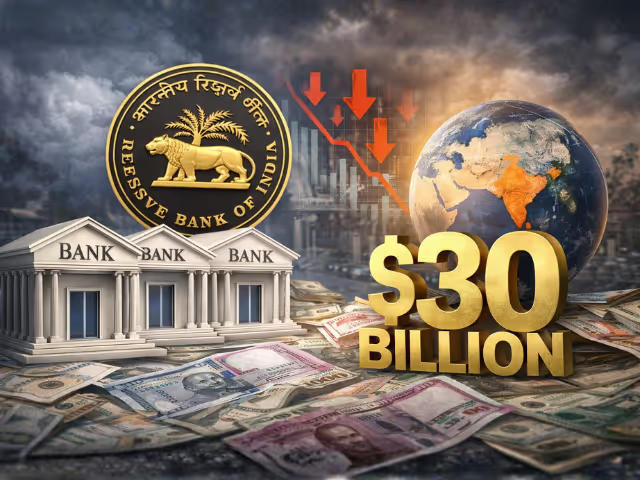
Reserve Bank of India’s New FX Rules: Why Banks Are Worried About a $30 Billion Unwinding
Key Takeaways
- Reserve Bank of India caps forex positions at $100 million
- Banks may need to unwind nearly $30 billion positions
- Could strengthen rupee but hurt bank trading books
- Short-term volatility expected in currency and markets
RBI’s New FX Rules: A Turning Point for Forex Markets
India’s currency markets are witnessing a major shift after the Reserve Bank of India introduced tighter rules on foreign exchange exposure. The move has triggered concern among banks, as it may force them to unwind positions worth nearly $30 billion.
At first glance, this may sound like a technical regulatory change. But in reality, it has the potential to impact the rupee, banking stocks, and even overall market sentiment.
What Are RBI’s New FX Rules?
The central bank has instructed authorised dealer banks to ensure that their open positions in the rupee do not exceed $100 million at the end of each trading day.
Earlier framework
- Banks could maintain open positions up to 25 percent of their capital base
- This allowed greater flexibility in currency trading and hedging
What has changed now?
- A strict cap of $100 million per day
- Applies to onshore currency markets
- Forces banks to reduce large speculative or arbitrage positions
This is a significant tightening of liquidity and risk-taking capacity in the forex market.
Understanding the $30 Billion Unwinding
The biggest concern is the scale of positions that may need to be closed.
Where are these positions?
- Offshore non-deliverable forwards market
- Some exposure in currency futures
- Strategy involved buying dollars onshore and selling offshore
Over time, banks built large positions to benefit from price differences between markets. Now, with stricter limits, they may have to unwind these trades quickly.
What does unwinding mean?
In simple terms, banks will need to:
- Sell dollars in the domestic market
- Close existing contracts
- Absorb potential losses if prices move against them
This is where the $30 billion figure becomes critical.
Why Are Banks Concerned?
Banks are not opposing regulation, but they are worried about the timing and scale.
Key concerns
1. Potential losses
If banks unwind positions at unfavorable rates, it can lead to mark-to-market losses on their books.
2. Market disruption
A sudden unwinding of large positions can cause sharp moves in the rupee.
3. Short timeline
Banks have requested more time beyond the April deadline to manage this transition smoothly.
4. Impact on treasury operations
Forex trading is a key revenue stream for banks, and tighter limits may affect profitability.
Impact on the Indian Rupee
Interestingly, what worries banks could benefit the rupee in the short term.
How?
When banks unwind positions, they will likely:
- Sell dollars in the onshore market
- Increase supply of dollars
- Strengthen the rupee
Recently, the rupee weakened past the 94 per dollar mark due to global factors like rising crude oil prices and geopolitical tensions. This unwinding could reverse some of that pressure.
Expert view
Market participants expect the rupee to move towards the 92.50 to 92.80 range in the near term if large-scale unwinding takes place.
Global Context: Why This Move Now?
The timing of RBI’s decision is not random.
Key global triggers
- Rising oil prices due to Middle East tensions
- Increased volatility in global currency markets
- Pressure on emerging market currencies
India, being a major oil importer, is particularly sensitive to these factors. A weaker rupee can increase import costs and inflation.
By tightening forex exposure, RBI aims to:
- Reduce speculative pressure
- Stabilize the currency
- Maintain financial system stability
Impact on Stock Markets
Currency movements often have a ripple effect on equities.
Banking stocks
- Short-term pressure due to potential trading losses
- Volatility in treasury income
IT and export-oriented sectors
- A stronger rupee may reduce export competitiveness
- Margins could be slightly impacted
Oil and import-heavy sectors
- Benefit from a stronger rupee
- Lower input costs
Overall, markets may remain volatile in the short term as participants adjust to the new regime.
Real-World Example
Imagine a bank holding a large dollar position expecting the rupee to weaken further. Suddenly, new rules force it to reduce that position.
If the rupee strengthens during this process:
- The bank sells dollars at a lower price
- It incurs losses
- Multiple banks doing the same creates a chain reaction
This is exactly the scenario markets are trying to assess right now.
Regulatory Perspective
The Reserve Bank of India has always prioritized financial stability over short-term market comfort.
This move reflects:
- A proactive approach to risk management
- Strong regulatory oversight
- Focus on long-term stability of the rupee
While it may cause temporary disruption, such steps are often necessary to prevent larger systemic risks.
What Should Investors Do?
For retail investors, this is more about understanding the broader picture than reacting immediately.
Key takeaways
- Expect short-term volatility in currency and banking stocks
- Focus on fundamentally strong companies
- Avoid panic-driven decisions
Having access to reliable research and real-time insights becomes crucial during such phases.
Platforms like Swastika Investmart provide:
- SEBI-registered credibility
- Advanced research tools
- Tech-driven investing experience
- Strong customer support and investor education
FAQs
1. What is the new FX rule introduced by RBI?
Banks must keep their open rupee positions within $100 million at the end of each trading day.
2. Why is there concern about $30 billion unwinding?
Banks may need to close large forex positions, which can lead to losses and market volatility.
3. How will this impact the rupee?
It may strengthen the rupee in the short term due to increased dollar selling.
4. Which sectors are most affected?
Banking, IT, and import-heavy sectors may see short-term impact.
5. Is this a positive move overall?
Yes, from a long-term stability perspective, it helps control risk in the financial system.
Conclusion
The Reserve Bank of India’s new FX rules mark an important shift in how currency risk is managed in India. While the immediate concern revolves around a potential $30 billion unwinding, the broader objective is to ensure stability in an increasingly volatile global environment.
For investors, this is a reminder that policy changes can create both risks and opportunities. Staying informed and using the right tools can make all the difference.
If you want expert insights, reliable research, and a seamless investing experience, consider starting your journey with Swastika Investmart.

PC Jeweller’s Strategic MoU with NSDC: Boosting Skill Development in the Gems & Jewellery Sector
Key Takeaways
- PC Jeweller Ltd partners with National Skill Development Corporation
- Aim: Develop 2 lakh micro-entrepreneurs in 5 years
- Strengthens India’s gems & jewellery ecosystem
- Positive long-term impact on organized jewellery players
PC Jeweller’s Strategic MoU with NSDC: A Game-Changer for Skill Development
India’s gems and jewellery sector is one of the largest contributors to employment and exports. In a significant move, PC Jeweller Ltd has signed a Memorandum of Understanding with the National Skill Development Corporation.
This partnership aims to create a structured ecosystem for skill development and entrepreneurship in the jewellery industry. At a time when India is focusing on employment generation and formalization of sectors, this initiative could play a crucial role.
Understanding the PC Jeweller and NSDC Partnership
The MoU positions PC Jeweller as an industry and franchise partner in the gems and jewellery segment. The primary objective is to onboard and train nearly 2,00,000 micro-entrepreneurs across India over the next five years.
What does this mean in simple terms?
- Individuals will be trained in jewellery-related skills
- They can become franchise partners or independent entrepreneurs
- The initiative promotes self-employment in smaller towns and cities
This is aligned with the government’s broader vision of Skill India and entrepreneurship development.
Why Skill Development Matters in the Jewellery Sector
India’s jewellery market is largely unorganized, especially at the grassroots level. Many artisans lack formal training, certification, and access to organized retail networks.
Key challenges in the sector:
- Lack of standardized training
- Limited access to capital and branding
- Fragmented supply chain
By addressing these gaps, this initiative can bring a large part of the industry into the formal economy.
Real-world example
Consider a small-town goldsmith in Madhya Pradesh. Traditionally, he relies on local demand and word-of-mouth marketing. With structured training and franchise support, he can:
- Improve design and quality standards
- Access branded distribution channels
- Increase income and scale operations
This transformation is exactly what the MoU aims to achieve.
Strategic Benefits for PC Jeweller
This move is not just about social impact; it also has strong business logic.
1. Expansion of Franchise Network
By onboarding micro-entrepreneurs, PC Jeweller can expand its presence in Tier 2 and Tier 3 cities without heavy capital expenditure.
2. Brand Penetration
A larger network means higher visibility and trust, especially in semi-urban markets.
3. Supply Chain Strengthening
Training and standardization can improve quality control across the value chain.
Impact on the Indian Economy
The gems and jewellery sector contributes significantly to India’s GDP and exports. Initiatives like this can have a multiplier effect.
Economic implications:
- Job creation at scale
- Boost to rural and semi-urban economies
- Increased formalization and tax compliance
This aligns with the broader push by regulators and policymakers to bring more sectors under the formal economy.
Stock Market Perspective: What Should Investors Watch?
From an investor’s point of view, such strategic partnerships can indicate long-term growth potential.
Positive signals:
- Focus on scalable business model
- Expansion without heavy capital investment
- Alignment with government initiatives
However, investors should also keep in mind:
- Execution risks
- Time required to see financial impact
- Overall market sentiment
In the short term, such news may lead to positive sentiment, but the real impact will depend on execution.
Industry-Wide Impact
This move could set a precedent for other jewellery companies to invest in skill development and structured expansion.
Possible ripple effects:
- Increased competition in organized jewellery retail
- Better quality standards across the industry
- Higher consumer trust in branded players
Over time, this could accelerate the shift from unorganized to organized players.
Role of Technology and Modern Investing Platforms
As sectors evolve, investors need reliable platforms and research tools to make informed decisions.
Platforms like Swastika Investmart stand out with:
- SEBI-registered credibility
- Advanced research and analytics tools
- Strong customer support
- Focus on investor education
Whether you are tracking stocks like PC Jeweller or exploring sectoral opportunities, having the right platform can make a significant difference.
FAQs
1. What is the objective of PC Jeweller’s MoU with NSDC?
The aim is to train and onboard 2 lakh micro-entrepreneurs in the jewellery sector over five years.
2. How will this impact the jewellery industry?
It will promote skill development, improve quality standards, and help formalize the sector.
3. Is this positive for PC Jeweller stock?
It is a positive long-term development, but investors should track execution and financial impact.
4. Who benefits the most from this initiative?
Small artisans, aspiring entrepreneurs, and semi-urban markets are expected to benefit the most.
5. Does this align with government initiatives?
Yes, it supports Skill India and entrepreneurship development programs.
Conclusion
The partnership between PC Jeweller Ltd and National Skill Development Corporation is a forward-looking step that blends business expansion with social impact. While the immediate financial impact may take time, the long-term potential is significant, both for the company and the industry.
For investors, this is a reminder that structural changes and strategic initiatives often create the biggest opportunities.
If you want to stay ahead in the market with expert insights, smart tools, and a trusted platform, consider starting your investment journey with Swastika Investmart.
%20(3).avif)
Market Opening Updates for Today 30 March 2026: Nifty, Sensex Slide Amid Global Volatility
The Indian stock market is set for a weak opening as global uncertainty continues to weigh on investor sentiment. Benchmarks like Nifty 50 and BSE Sensex are under pressure following sharp declines in global markets and rising geopolitical tensions in the Middle East.
With GIFT Nifty indicating a gap-down opening, traders and investors are preparing for heightened volatility and cautious trading conditions.
Key Takeaways
- Indian markets likely to open sharply lower amid global sell-off
- Banking and IT sectors expected to remain under pressure
- Rising geopolitical tensions impacting risk appetite
- Defensive sectors may outperform in the short term
- Investors advised to stay cautious and focus on quality stocks
Why Indian Markets Are Falling Today
The primary reason behind today’s expected decline is global market weakness triggered by geopolitical tensions and uncertainty in crude oil prices. As India is a major oil importer, any spike in crude prices directly impacts inflation and corporate margins.
Additionally, foreign institutional investors continue to show cautious behavior, leading to sustained outflows. This has added pressure on indices like Nifty Bank and Nifty IT, both of which are sensitive to global economic trends.
Sector-Wise Market Impact
Banking and Financial Services
The financial sector is witnessing selling pressure due to concerns over rising interest rates and global instability. Stocks in this space often react sharply to FII movements and macroeconomic cues.
IT Sector Slow
The IT sector is particularly vulnerable due to its heavy reliance on global demand, especially from the US and Europe. A slowdown in these economies can directly impact earnings visibility.
FMCG and Pharma Stability
Defensive sectors like FMCG and pharma are expected to show relative resilience. These sectors typically perform better during uncertain times as they cater to essential consumption.
Role of Global Cues and RBI Outlook
Global cues remain the dominant driver for Indian equities in the short term. Investors are closely watching central bank actions, especially from the US Federal Reserve.
On the domestic front, the Reserve Bank of India continues to monitor inflation and liquidity conditions. Any shift in policy stance could influence market direction.
Regulatory oversight by Securities and Exchange Board of India ensures market stability, but short-term volatility is inevitable in such global scenarios.
What Should Investors Do Now
In times of market volatility, a disciplined approach becomes essential. Here are some practical strategies:
- Avoid panic selling and stick to long-term investment goals
- Focus on fundamentally strong companies with stable earnings
- Consider staggered buying instead of lump sum investments
- Diversify across sectors to reduce risk
Investors using platforms like Swastika Investmart benefit from strong research-backed insights, helping them navigate uncertain markets with confidence. As a SEBI-registered broker, it offers reliable advisory tools, a tech-driven trading experience, and a strong focus on investor education.
Market Outlook for the Coming Days
The near-term outlook remains volatile, with markets likely to react to global developments and crude oil price movements. However, India’s strong macroeconomic fundamentals, stable GDP growth, and policy support provide a cushion against prolonged downturns.
Long-term investors may find selective opportunities during corrections, especially in sectors aligned with India’s growth story such as infrastructure, banking, and digital services.
Frequently Asked Questions
Q1. Why is the Indian stock market falling today?
The decline is mainly due to global market weakness, geopolitical tensions, and cautious investor sentiment.
Q2. Which sectors are most affected right now?
Banking, IT, and financial services are under pressure, while FMCG and pharma are relatively stable.
Q3. Should I invest during market corrections?
Yes, but adopt a staggered approach and focus on fundamentally strong stocks.
Q4. How do global events impact Indian markets?
Global events influence foreign investments, currency movements, and commodity prices, all of which affect Indian equities.
Q5. Is this a good time for long-term investors?
Market corrections can offer good entry points for long-term investors if approached strategically.
Final Thoughts
Market volatility is a natural part of investing, especially in a globally interconnected economy. While short-term movements may seem unsettling, disciplined investing and a long-term perspective can help you navigate uncertainty effectively.
If you’re looking for a reliable platform to make informed investment decisions, explore Swastika Investmart and take advantage of its research-driven tools and investor-first approach.
.avif)
Stocks in News Today 30 March 2026: PC Jeweller, Ceigall India, GR Infra & RailTel news
The Indian stock market continues to react to company-specific developments, and Stocks in News 30 March 2026 highlights several firms making headlines due to major business updates. From infrastructure wins to strategic partnerships, these announcements can influence short-term price movements and long-term investor sentiment.
Understanding these triggers is essential for traders and investors who want to stay ahead in a fast-moving market.
Key Takeaways
- PC Jeweller partners with NSDC to expand entrepreneurship in India
- Ceigall India secures a major ₹603 crore infrastructure project
- GR Infraprojects wins a highway upgrade bid in Gujarat
- RailTel bags a ₹444 crore network project in Karnataka
PC Jeweller Signs Strategic MoU with NSDC
PC Jeweller has entered into a Memorandum of Understanding with the National Skill Development Corporation to boost entrepreneurship in the gems and jewellery sector.
The initiative aims to onboard up to 2,00,000 micro-entrepreneurs over five years under the PC Jeweller brand. This move aligns with India's broader push toward skill development and self-employment.
Why This Matters
This partnership is not just about expansion. It reflects a shift toward organized retail in the jewellery sector. With increasing regulatory oversight from bodies like the Securities and Exchange Board of India, such structured initiatives can enhance transparency and trust.
For investors, this signals long-term growth potential, especially if execution remains strong.
Ceigall India Secures ₹603 Crore Project
Ceigall India has received a Letter of Award for a ₹603 crore project under the hybrid annuity model.
The project includes an 18-month construction timeline, which is relatively fast for infrastructure developments in India.
Market Perspective
Infrastructure companies benefit significantly from government spending. With India's focus on highways and logistics, such contracts can improve revenue visibility.
The hybrid annuity model also reduces financial risk, as part of the funding comes from the government, making it attractive for companies and investors alike.
GR Infraprojects Emerges as Lowest Bidder
G R Infraprojects has emerged as the lowest bidder for upgrading a 60.21 km stretch of NH-56 in Gujarat.
The project involves converting a two-lane road into a four-lane divided highway, which is critical for improving regional connectivity.
Investment Insight
Winning bids is crucial, but execution quality matters more. GR Infra has a strong track record in timely project completion, which enhances investor confidence.
Such developments also align with the government’s infrastructure push under initiatives like Bharatmala, further strengthening the sector outlook.
RailTel Bags ₹444 Crore Karnataka Project
RailTel Corporation of India has secured a ₹444 crore Letter of Intent for the Karnataka State Wide Area Network 3.0 project.
The project involves system integration and is expected to be completed by 2031.
What Investors Should Watch
RailTel operates in a niche segment combining telecom and government infrastructure. Long-term projects like KSWAN 3.0 ensure stable revenue streams.
Additionally, digital infrastructure is a key growth area, supported by government initiatives and increasing demand for connectivity.
Broader Market Context
These developments come at a time when the Indian markets are balancing global uncertainties with strong domestic fundamentals. Regulatory bodies like Reserve Bank of India and SEBI continue to ensure liquidity and market stability.
Company-specific triggers often drive short-term price action, but long-term investors should focus on fundamentals such as order book strength, execution capability, and sector tailwinds.
How Investors Can Approach These Stocks
Investors should avoid chasing stocks purely based on news. Instead, consider:
- Evaluating financial health and debt levels
- Understanding project execution timelines
- Tracking order book growth
- Monitoring sector trends and government policies
Platforms like Swastika Investmart provide research-backed insights, helping investors make informed decisions. As a SEBI-registered broker, it offers reliable advisory services, advanced tools, and a strong focus on investor education.
Frequently Asked Questions
1. What does “Stocks in News” mean?
It refers to companies that are in the spotlight due to recent developments like contracts, partnerships, or regulatory updates.
2. Should I invest in stocks based on news alone?
No. News can trigger short-term movement, but long-term decisions should be based on fundamentals and research.
3. What is the hybrid annuity model in infrastructure?
It is a funding model where the government and private players share project costs, reducing financial risk for companies.
4. Why are infrastructure stocks gaining attention in India?
Government spending on roads, railways, and digital infrastructure is driving growth in this sector.
5. Is RailTel a good long-term play?
It has potential due to its niche positioning in telecom infrastructure, but investors should assess financials and execution capability.
Final Thoughts
The Stocks in News 30 March 2026 list highlights how strategic deals and project wins can influence market sentiment. While these updates create opportunities, disciplined investing remains key.
A balanced approach combining news tracking with fundamental analysis can help investors navigate volatility more effectively.
If you want deeper insights and research-backed recommendations, you can explore opportunities with Swastika Investmart’s platform here:
.avif)
Share Market Setup Today 30 March 2026: Nifty50, Sensex, BankNifty is set for a cautious start
The Indian stock market is set to open on a cautious note on 30 March 2026, tracking weak global cues and mixed institutional activity. Traders and investors should stay alert as volatility remains elevated, with important support and resistance zones coming into play.
Key Takeaways
- Global markets are weak, signaling a negative start for Indian indices
- FIIs remain net sellers while DIIs provide partial support
- Nifty and Bank Nifty continue to show a downtrend structure
- Volatility is rising, indicating cautious trading sentiment
Global Market Cues Impacting India
Global sentiment remains under pressure. US markets closed lower, with the Dow Jones declining sharply. Futures are also trading in the red, reflecting continued bearish sentiment.
Asian markets are following suit, trading with a negative bias. Meanwhile, GIFT Nifty indicates a gap-down opening of around 200 points, suggesting early weakness in Indian equities.
Such global cues often influence short-term market direction in India, especially for index-heavy stocks and sectors like IT, banking, and metals.
Institutional Activity: FIIs vs DIIs
Institutional flows provide crucial insights into market direction.
- Foreign Institutional Investors recorded heavy selling of ₹4367 crore
- Domestic Institutional Investors offset some pressure with buying of ₹3566 crore
- Net outflow stands at ₹801 crore, indicating cautious sentiment
This divergence shows that while global investors are reducing exposure, domestic institutions continue to provide stability. However, persistent FII selling can weigh on market momentum.
Derivatives Data and Market Sentiment
The derivatives segment reflects a mixed to negative outlook:
- Nifty PCR stands at 0.94, indicating slightly bearish positioning
- India VIX surged to 26.80, signaling increased volatility
- Highest Open Interest is at 24000 CE and 20000 PE
- Max Pain level is around 23000
FIIs’ positioning in index derivatives shows increased call writing and short positions, hinting at resistance at higher levels. This suggests traders should remain cautious on aggressive long positions.
Nifty Outlook for 30 March 2026
Nifty continues to trade in a clear downtrend, with selling pressure visible at higher levels.
Key Support Levels
- Immediate support at 22500 to 22470
- Stronger support zone at 22270 to 22150
Key Resistance Levels
- Immediate resistance at 22800 to 23000
- Next hurdle near 23200
If Nifty breaks below 22470, further downside could be seen. On the upside, sustained movement above 23000 is needed for trend reversal.
Bank Nifty Outlook
Bank Nifty is also showing a weak structure, aligned with the broader market trend.
Support Zones
- 51300 to 50700 is a crucial support range
- Below 50700, next support is around 50000
Resistance Zones
- 52000 and 53000 will act as key resistance levels
Banking stocks often drive market direction, so traders should closely watch these levels for intraday opportunities.
Volatility and Risk Management
India VIX rising above 26 suggests heightened uncertainty. This typically leads to sharp intraday swings. Traders should:
- Use strict stop losses
- Avoid over-leveraging in F&O
- Prefer hedged strategies like spreads
As per SEBI guidelines, retail investors should exercise caution in derivatives trading and ensure proper risk management.
Role of RBI and Macro Factors
The Reserve Bank of India’s stance on inflation and liquidity continues to influence market sentiment. Any unexpected policy changes or global macro developments can further impact market direction.
Interest rate trends, currency fluctuations, and crude oil prices remain key variables to monitor.
How Swastika Investmart Helps Traders Navigate Markets
In volatile markets like these, having the right tools and insights becomes critical. Swastika Investmart, a SEBI-registered broker, offers:
- Strong research-backed market insights
- Advanced trading platforms for seamless execution
- Dedicated customer support for investors
- Educational resources to improve trading strategies
Their focus on technology and investor awareness makes them a reliable partner for both beginners and experienced traders.
FAQs
What is the expected opening for Nifty on 30 March 2026?
Nifty is expected to open lower due to weak global cues and negative GIFT Nifty indications.
Why are FIIs selling heavily?
FIIs often react to global uncertainties, interest rate trends, and currency movements, leading to selling in emerging markets like India.
What does a high India VIX indicate?
A high VIX reflects increased market volatility and uncertainty, often leading to sharp price movements.
What is Max Pain in options trading?
Max Pain is the price level where option writers incur the least loss, often acting as a magnet for expiry.
Is it safe to trade in a volatile market?
Yes, but only with proper risk management, stop losses, and disciplined strategies.
Conclusion
The stock market outlook for 30 March 2026 remains cautious, with global weakness, FII selling, and rising volatility shaping sentiment. Key support and resistance levels will play a crucial role in determining the next move.
For traders, this is a time to stay disciplined, focus on risk management, and avoid emotional decisions. Markets may offer opportunities, but only for those who approach them with a clear strategy.
To explore smart trading tools and expert insights, you can get started here:
Big Budget


Popular Articles





.avif)
.avif)

.avif)



START YOUR INVESTMENT JOURNEY
Get personalized advice from our experts
- Dedicated RM Support
- Smooth and Fast Trading App
