


Reliance Share Price And FII Flows: What Indian Retail Investors Should Watch



Key Takeaways
- FIIs pulled $32 billion from Indian equities since 2024, with 82% of trading sessions posting net outflows.
- Mid-June saw nearly $3 billion in net inflows, but total outflows from March 1, 2026 to June 15, 2026 stood at $29.3 billion.
- Valuations look attractive but require a clear trigger; MSCI India-to-EM ratio now 1.30x vs 1.73x in June 2025.
- Global capital remains biased toward U.S. assets; a meaningful return of FIIs may take three to four quarters; focus on earnings and risk management.
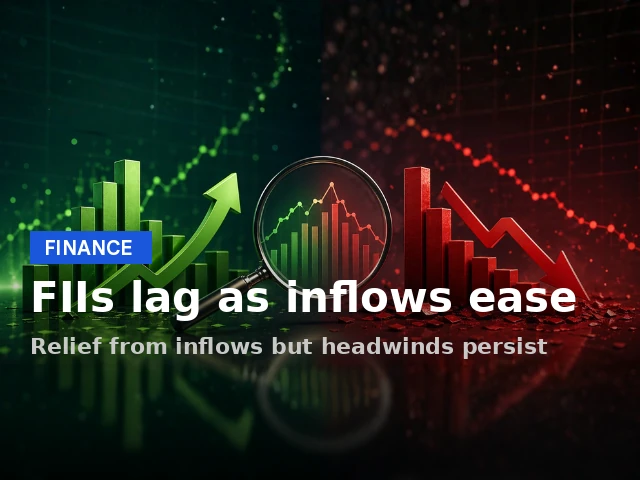
For retail investors, the question isn't just about numbers–it's about what global money is doing and what it means for your own portfolio. FIIs sold $32 billion from Indian equities since 2024, and 82% of trading sessions have posted net outflows. Yet in mid-June, inflows of nearly $3 billion offered a glimmer of relief. As markets digest these shifts, the reliance share price becomes a telling barometer of risk appetite and the domestic earnings story that investors chase.
Five Reasons FIIs May Keep Distance From Dalal Street In 2026
Elara Securities identifies five persistent headwinds that suggest offshore money may stay on the sidelines for some time:
- Valuations are attractive but there is no strong trigger to spark a broad revival in FII inflows. The MSCI India-to-MSCI Emerging Markets price-to-earnings multiple has fallen to 1.30x from 1.73x in June 2025, underscoring the valuation gap but not guaranteeing a rally. The brokerage notes that two developments are essential for a broader return: a cooling of the ongoing U.S. artificial intelligence rally and a meaningful improvement in corporate earnings. Until then, India lacks an immediate thematic trigger that can attract large foreign allocations beyond selective opportunities.
- Global risk-off periods typically favour U.S. Treasuries. Historical patterns show net purchases of U.S. government debt during crisis periods while equity flows across both developed and emerging markets turn negative, often bottoming near negative $90 billion after major disruptions. This divergence suggests global institutional investors prioritise capital preservation by moving into Treasuries, a process that generally takes three to four quarters.
- India's relative appeal has weakened. The U.S. Federal Reserve’s hawkish stance strengthens the U.S. dollar and pushes Treasury yields higher; the real U.S. yield has remained upward, with the 10-year Treasury around 4.5%. The yield spread between Indian and U.S. 10-year government bonds has narrowed to about 220 basis points. After hedging the rupee through the three-month annualized forward premium, the implied risk premium turns negative at 3.03%.
- Global capital is moving back towards U.S. assets. The trend–often described as a 'dollar asset trade'–is supported by a stronger U.S. dollar and firmer Treasury yields, and it gained momentum after hawkish comments from the Federal Reserve Chair Kevin Warsh.
- Technology flows remain concentrated in the U.S. Infrastructure funds attracted $30 billion during Q2 CY26, up from $19.5 billion in the prior quarter. Global technology funds net inflows declined to $81.7 billion in Q2 CY26 from $99.6 billion in Q1 and $191.5 billion in Q4 CY25. U.S. technology funds attracted $16.9 billion in June 2026 on a four-week rolling basis, up from $7.2 billion in May. By contrast, technology funds outside the U.S. recorded outflows of $4.4 billion in June, vs $2.4 billion in May, led by withdrawals from China and South Korea.
Taken together, Elara believes these trends imply that while India may see selective foreign buying, a meaningful return of FII flows is likely to take longer as investors continue to favour U.S. assets and await stronger earnings and a more compelling investment theme in India. Read more from the original coverage to see how domestic investors navigate the evolving landscape.
For stock-specific insights, consider Swastika's Sarthi AI stock assistant: Swastika's Sarthi AI stock assistant.
Valuation And Triggers: Why A Revival Needs More Than Costly Makeover
Valuations may look attractive now, but a revival in FII inflows requires a clear earnings narrative and structural triggers. A cooling of the U.S. AI rally would help, as would a credible uptick in corporate earnings. Without these catalysts, Indian equities may drift even if the reliance share price remains a focal point for traders.
Global Risk-Off And The U.S. Treasury Preference: A Key Constraint
In stress periods, global capital often shifts into U.S. Treasuries, offering safety and liquidity. The historical pattern suggests a rotation that can last three to four quarters.
India's Relative Attractiveness And The Yield Differential
With the U.S. Federal Reserve's policy stance keeping yields elevated, the spread between Indian and U.S. 10-year bonds around 220 basis points makes India less attractive on a relative basis. The implied risk premium turns negative at 3.03% after rupee hedging.
Dollar Asset Trade And Tech Flows
Global capital gravitation toward U.S. assets continues, even as Indian tech exposure remains meaningful. Infrastructure funds and technology funds show strong U.S.-centric flows; non-U.S. tech funds have faced outflows.
Reliance Share Price And Market Outlook: Connecting Macro Flows With Indian Blue-Chip Stocks
In a world where foreign money is still cautious, stock-specific momentum matters. If you track stock price action of major Indian blue chips such as reliance industries limited stock price, infosys stock price, stock price of tcs, hdfc bank stock price, icici bank stock, and kotak mahindra bank stock price, you’ll see how macro signals translate into price patterns. Meanwhile, the reliance share price and these names will respond differently to earnings surprises and macro cues. This is where a practical approach, supported by research tools, becomes essential.
Swastika's Sarthi AI stock assistant
Frequently Asked Questions
What Are The Five Reasons FIIs May Keep Distance From Dalal Street?
The five reasons are valuations without a clear trigger; global risk-off periods that push capital toward U.S. Treasuries; India's relative appeal waning due to higher U.S. yields; global capital moving back toward U.S. assets; and technology flows remaining concentrated in the U.S.
How Has The MSCI India To EM P/E Ratio Moved From 2025 To 2026?
The ratio fell to 1.30x in 2026 from 1.73x in June 2025.
What Happened In Mid-June 2026 With FII Flows?
There were nearly $3 billion in net inflows in mid-June 2026, even as cumulative outflows remained substantial.
What Is The Yield Differential Between India And The U.S. 10-Year Bonds?
The yield spread narrowed to about 220 basis points, with the U.S. 10-year around 4.5%, and hedging rupee can make the implied risk premium turn negative at 3.03%.
When Might FIIs Return In A Meaningful Way?
Elara Securities suggests a meaningful return may take longer as investors continue to favor U.S. assets and await stronger earnings; historically, such a shift can take three to four quarters.
Conclusion
Retail investors should approach the next few quarters with a disciplined framework: monitor earnings themes, stay selective, and avoid chasing broad market bets as FIIs remain cautious. The present environment favors high-quality businesses with resilient earnings and strong balance sheets, even if the reliance share price continues to reflect macro noise. A practical mental model is to pair macro flow signals with company-level fundamentals, setting small, probability-weighted exposure targets and predefined exit rules.
Open your trading and demat account here
Reference :
1 : Economictimes
Latest Articles

फेड ऑफिशिअल के हॉकिश बयान से दबाव में सोना-चांदी।


फेडरल रिजर्व के अधिकारियों की तीखी टिप्पणियों के बाद बाजार में अधिक ब्याज दरों में बढ़ोतरी पर रोक लगाने के बारे में पुनर्विचार करने से पिछले सप्ताह कीमती धातुओं में मुनाफ़ा वसूली का दबाव हावी रहा। इजराइल-हमास युद्ध पर कम होती चिंताओं के बीच, सुरक्षित आश्रय की मांग में कमी ने सोने के प्रति आकर्षण को कम किया है। अक्टूबर में 10 प्रतिशत के उछाल के बाद, नवंबर की शुरुआत में सोने की कीमतों में भारी मुनाफावसूली हुई, जिससे इस सप्ताह पीली धातु तीन सप्ताह के निचले स्तर पर पहुंच गई है। लेकिन सोने की कीमते कॉमेक्स में अभी भी 1960 डॉलर के आसपास बनी हुई हैं। अमेरिकी ट्रेज़री ऑक्शन में निराशा रहने के कारण इसके बॉन्ड में बिकवाली का दबाव बढ़ गया है जिससे बेंचमार्क अमेरिकी ट्रेज़री यील्ड में बढ़ोतरी, सोने में तेज़ी को सिमित कर रहा है। पिछले सप्ताह फेड अध्यक्ष जेरोम पॉवेल अपने बयान में इस बात से सहमत नहीं थे कि मौद्रिक नीति पर्याप्त रूप से प्रतिबंधात्मक हो गई है, और संकेत दिए हे की मुद्रास्फीति में बढ़ोतरी फिर से ब्याज़ दरों में बढ़ोतरी को आमंत्रित करेगा, जिससे सोने और चांदी की कीमते दबाव में बनी हुई है। फेड प्रमुख के बयान के बाद से साल 2024 में होने वाली महत्वपूर्ण ब्याज़ दर कटौती की उम्मीद पर बाज़ारो का आत्मविश्वास कम हुआ है। इस सप्ताह अमेरिका से जारी होने वाले मुद्रास्फीति और रिटेल सेल्स के आंकड़े कीमती धातुओं के लिए महत्वपूर्ण रहेंगे।
तकनिकी विश्लेषण :
इस सप्ताह कीमती धातुओं के भाव में मुनाफ़ा वसूली जारी रह सकती है। एमसीएक्स दिसंबर वायदा सोने में सपोर्ट 59200 रुपये पर है और रेजिस्टेंस 62000 रुपये पर है। दिसंबर वायदा चांदी में सपोर्ट 69000 रुपये पर है और रेजिस्टेंस 73000 रुपये पर है।

इस दिवाली है सोने में निवेश के अच्छे अवसर।
दिवाली को निवेश करने के लिए भी शुभ समय माना जाता है और कई लोग इस दौरान सोने में निवेश करना चुनते हैं। सोने को एक सुरक्षित निवेश के रूप में देखा जाता है और ऐसा माना जाता है कि दिवाली के दौरान सोना खरीदने से सौभाग्य और धन में वृद्धि होती है। प्रतीकात्मक और सांस्कृतिक महत्व से परे, दिवाली के दौरान सोने के उपयोग के व्यावहारिक वित्तीय निहितार्थ भी हैं। कई लोगों के लिए, यह एक ऐसी संपत्ति में निवेश करने का अवसर है जिसमे समय के साथ बढ़ोतरी होती है, जिससे वित्तीय सुरक्षा की भावना मिलती है। रोशनी का त्योहार खुशी, एकजुटता और उत्सव का समय है। सोना, अपने प्रतीकात्मक और व्यावहारिक महत्व के साथ, इन उत्सवों में केंद्रीय भूमिका निभाता है। यह सिर्फ एक धातु से कहीं अधिक है; यह धन, समृद्धि और उज्जवल भविष्य की आशा का प्रतिनिधित्व करता है। चाहे वह आभूषणों, सिक्कों या सजावट के रूप में हो, दिवाली के दौरान सोने की चमकती उपस्थिति हमें प्रचुरता, उदारता और अंधेरे पर प्रकाश की जीत के मूल्यों की याद दिलाती है। चूँकि दुनिया भर में दिवाली मनाई जा रही है, इस बहुमूल्य धातु की सुनहरी चमक हमेशा उत्सव का एक अविभाज्य हिस्सा बनी रहेगी। वर्तमान में विभिन्न देशों के बीच भू-राजनीतिक तनाव बढ़ रहा है, जिससे अनिश्चितता बढ़ रही है। अनिश्चितता के समय में सोने की भूमिका अहम हो जाती है और यह भू-राजनीतिक तनाव, आर्थिक उथल-पुथल और प्राकृतिक आपदाओं के कारण निवेशकों के पैसे को अवमूल्यन से बचाता है। हाल के दिनों में, इज़राइल ने हमास के खिलाफ युद्ध की घोषणा की है, जबकि रूस और यूक्रेन के बीच 2022 से युद्ध चल रहा है। नतीजतन, वैश्विक अर्थव्यवस्था में मुद्रास्फीति तेजी से बढ़ी है, और मुद्रास्फीति के खिलाफ बचाव के लिए सोना सबसे अच्छा परिसंपत्ति वर्ग है। हालाँकि, यूएस फेड और अन्य प्रमुख केंद्रीय बैंकों ने बढ़ती मुद्रास्फीति को नियंत्रित करने के लिए अपनी ब्याज दरें बढ़ाना शुरू कर दिया है, लेकिन उच्च उधार लागत वैश्विक विकास को नुकसान पहुंचा रही है। वर्तमान में, अमेरिका में ब्याज दरें 5.5 प्रतिशत पर हैं, जो काफी अधिक है, और ब्याज दरों में और वृद्धि से आर्थिक उथल-पुथल हो सकती है। हालांकि 2024 के मध्य में ब्याज दर में कटौती की उम्मीद है, और इससे सोने की कीमतों को समर्थन मिल सकता है। चल रहे भूराजनीतिक तनाव और मंदी के डर ने सेफ हैवन की मांग बढ़ा दी है, और यह 2024 तक जारी रह सकती है। हम उम्मीद कर रहे हैं कि अगले साल तक कॉमेक्स डिवीजन में सोने की कीमतें 2250 डॉलर तक बढ़ सकती हैं, जबकि एमसीएक्स में कीमतें 64,000 रुपये से 66000 रुपये प्रति दस ग्राम तक बढ़ सकती हैं। सोने की कीमतों को 56000 पर महत्वपूर्ण समर्थन प्राप्त है। चांदी की कीमतें भी ऊपर की ओर बढ़ रही हैं और आगामी वर्ष में 78000 से 80000 प्रति किलोग्राम के स्तर का परीक्षण कर सकती हैं।

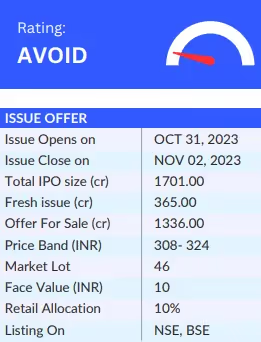
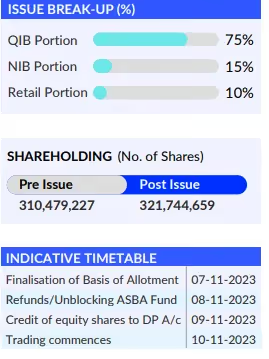
Honasa Consumer IPO Details
Honasa Consumer is the largest digital-first beauty and personal care ("BPC") company in India in terms of revenue. The Company has its flagship brand Mama earth. Along with that the Company has added five new brands to its portfolio, namely The Derma Co., Aqualogica, Ayuga, BBlunt, and Dr. Sheth's, and has built a 'House of Brands' architecture.
OBJECTS OF THE ISSUE
• Advertisement expenses towards enhancing brand awareness.
• Capital expenditure to be incurred by the Company for setting up new EBOs.
• Investment in the company's Subsidiary, Blunt for setting up new salons.
KEY MANAGERIAL PERSONNEL
Varun Alagh
Chairman, Whole-time Director and the Chief Executive Officer of the Company. He has been associated with the Company as a promoter and a director since September 16, 2016. Previously, he has worked with corporations such as Hindustan Lever Limited, Diageo India Private Limited for over a year and Coca-Cola India Private Limited.
Ghazal Alagh
She is a Whole-time Director and the Chief Innovation Officer of the Company. She holds a bachelor’s degree of computer applications from Panjab University, Chandigarh and a certification in software engineering from the academic council of the NIIT Academy, New Delhi. She has been associated with the Company as a promoter and director since September 16, 2016.
Raman Preet Sohi
Chief Financial Officer of the Company. He is responsible for establishing and executing the financial strategy of the Company. He joined the Company on April 27, 2020. Previously, he worked with Drums Food International Private Limited as the chief financial officer for a period of over a year.
Dhanraj Dagar
Company Secretary and the compliance officer of the Company. He joined the Company on May 11, 2022. He holds a bachelor’s degree of commerce from Bangalore University and a bachelor’s degree of law from Maneklal Nanavati Law College, Gujrat University. He was also admitted as an associate member of the Institute of Companies Secretaries of India.
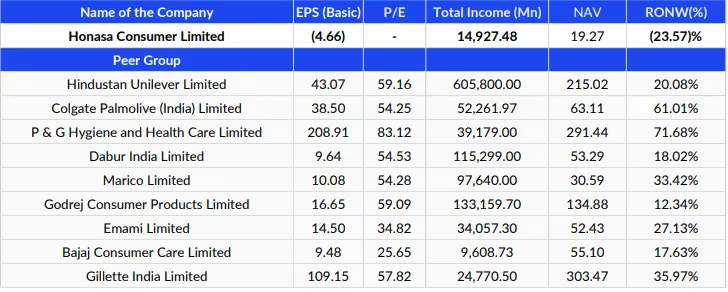
COMPARISON WITH LISTED INDUSTRY PEERS (AS ON 31ST MARCH 2023)
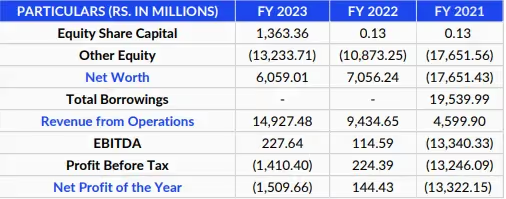
FINANCIALS (RESTATED CONSOLIDATED)
COMPANY PROFILE
Honasa’s portfolio of brands with differentiated value propositions includes products in the baby care, face care, body care, hair care, color cosmetics, and fragrances segments.
The Company's success with Mama earth and its ability to identify and cater to emerging trends has enabled it to develop repeatable brand-building playbooks that have helped in G scaling its newer brands at a fast pace.
It has a dedicated in house innovation team, consisting of 47 members, that drives end-to-end ideation and execution of new product launches.
For manufacturing, it has set up an asset-light contract manufacturing model that gives it the benefit of economies of scale at small batch sizes while also providing the flexibility to scale up production as needed.
The Company makes its products available to its customers through omni channel distribution networks across both online and offline touch points.
COMPETITIVE STRENGTHS
Brand-building capabilities and repeatable playbooks. Consumer-centric product innovation.
Digital-first omni channel distribution. Data-driven contextualized marketing.
Ability to manufacture a diverse range of products and maintain optimal inventory levels. Founder-led company with strong professional management.
KEY STRATEGIES
Expand distribution and brand awareness. Incubate or acquire new engines of growth. Strengthen business efficiency drivers.
KEY CONCERNS
The company does not manufacture any of its products and relies entirely on third-party.
It has recorded losses in the past. Any losses in the future may adversely impact its business. The Company does not hold any patents over its product formulae and has not made any applications in this respect.
It faces intense competition which may lead to a reduction in its market share.
Subsidiaries that it has acquired in the past, have incurred losses for certain historical periods. The company incurs significant advertising expenses.
The company’s majority revenue comes from the sale of products under its flagship Mama earth brand.
OUTLOOK & VALUATION
Honasa Consumer is a new-age company that is well-known for its flagship brand, Mama earth. The company offers a diverse range of products under its portfolio of six brands.The company has brand- building capabilities and it follows data-driven, context utalized marketing.
However the financial performance of the company has been inconsistent, and it has reported losses in recent fiscals. Subsidiaries that it has acquired have also incurred losses. Additionally, the company does not manufacture its products and relies on third parties for that, and it also does not hold any patents over its product formulas.
The business' return on advertising has also been consistent for a few years, i.e., 2.5%, thus the company's client retention is very low. As it is a loss-making company, we cannot derive its actual P/E, but even after considering its outflow in the latest investment, the company is coming at an extremely high valuation. Thus, I will suggest to Avoid this IPO.
DISCLAIMER:
The information contained herein are strictly confidential and are meant solely for the information of the recipient and shall not be altered in any way, transmitted to, copied or distributed, in part or in whole, to any other person or to the media or reproduced in any form, without prior written permission of Swastika Investmart Ltd. (“SIL”). The contents of this document are for information purpose only. This document is not an investment advice and must not alone be taken as the basis for an investment decision. Before taking any decision to invest, the recipient of this document must read carefully the Red Herring Prospectus (“RHP”) issued to know the details of IPO and various risks and uncertainties associated with the investment in the IPO of the Company. All recipients of this document must before acting on the given information/details, make their own investigation and apply independent judgment based on their specific investment objectives and financial position. They can also seek appropriate professional advice from their own legal and tax consultants, advisors, etc. to understand the risks and investment considerations arising from such investment. The investor should possess appropriate resources to analyze such investment and the suitability of such investment to such investor’s particular circumstances before making any decisions on the investment. The Investor shall be solely responsible for any action taken based on this document. SIL shall not be liable for any direct or indirect losses arising from the use of the information contained in this document and accept no responsibility for statements made otherwise issued or any other source of information received by the investor and the investor would be doing so at his/her/its own risk. The information contained in this document should not be construed as forecast or promise or guarantee or assurance of any kind. The investors are not being offered any assurance or guaranteed or fixed returns on their investments. The users of this document must bear in mind that past performances if any, are not indicative of future results. The actual returns on investment may be materially different than the past. Investments in Securities market products and instruments including in the IPO of the Company are highly risky and they are generally not an appropriate avenue for someone with limited resources/ limited investment and low risk tolerance. Such Investments are subject to market risks including, without limitation, price, volatility and liquidity and capital risks. Therefore, the users of this document must carefully consider all the information given in the RHP including the risks factors before making any investment in the Equity Shares of the Company.
Swastika Investmart Ltd or its analysts did not receive any compensation or other benefits from the companies mentioned in the report or third party in connection with preparation of the research report. Accordingly, neither Swastika Investmart Ltd nor Research Analysts have any material conflict of interest at the time of publication of this report. Compensation of our Research Analysts is not based on any specific merchant banking, investment banking or brokerage service transactions. Swastika Investment Ltd may have issued other reports that are inconsistent with and reach different conclusion from the information presented in this report. Research entity has not been engaged in market making activity for the subject company. Research analyst has not served as an officer, director or employee of the subject company. We have not received any compensation/benefits from the Subject Company or third party in connection with the Research Report.
CORPORATE & ADMINISTRATIVE OFFICE - 48, Jaora Compound, M.Y.H. Road, Indore - 452 001 | Phone 0731 - 6644000
Compliance Officer: Ms. Sheetal Duraphe Email: compliance@swastika.co.inPhone: (0731) 6644 241
Swastika Investmart Limited, SEBI Reg. No. : NSE/BSE/MSEI: INZ000192732 Merchant Banking: INM000012102 Investment Adviser: INA000009843 MCX/NCDEX: INZ000072532 CDSL/NSDL: IN-DP-115-2015 RBI Reg. No.: B-03-00174 IRDA Reg. No.: 713.

फेड बैठक से कीमती धातुओं में मुनाफ़ा वसूली।
कीमती धातुओं में लगातार तीन हफ्ते बढ़ोतरी होने के बाद पिछले सप्ताह थोड़ी मुनाफ़ा वसूली रही और कीमते सकारात्मक दायरे में कारोबार करती दिखी। फेड की बैठक के पहले कीमती धातुओं में नरमी, खरीदारी करने के अवसर हो सकता है क्योंकि भू-राजनितिक तनाव अभी कम नहीं हुआ है और आगे इसके बढ़ने के आसार क़ायम है। भारत में दिवाली करीब होने से सोने -चांदी की खुदरा मांग अच्छी रहने के चलते हाज़िर बाज़ार से भी कीमती धातुओं को सपोर्ट मिला हुआ है। वही इस सप्ताह में फेड की बैठक है जिसमे फेड द्वारा मौद्रिक नीति पर हॉकिश टिपण्णी कीमती धातुओं में कुछ दबाव बना सकती है लेकिन, निवेश और हाज़िर मांग का सपोर्ट रहने के चलते कीमती धातुओं में निचला स्तर सिमित रहने का अनुमान है। हालांकि, इजराइल-अमेरिका और मिड्ल ईस्ट में बढ़ता हुआ तनाव सेफ हैवन मांग बढ़ा रहा है। ग्लोबल आर्थिक आकड़ो में भी पिछले सप्ताह सुधार देखने को मिला है। अमेरिका की जीडीपी और रोज़गार बाज़ार में मजबूती बनी हुई है वही बेंचमार्क ट्रेज़री यील्ड लगातार बढ़ रही है। यूरोप और चीन की अर्थव्यस्था में भी सुधार हुआ है। भूराजनीतिक तनाव और फेड द्वारा ब्याज दरों में वृद्धि, दो विपरीत ट्रिगर कीमती धातुओं के भाव में संतुलन बना रहे है।इस सप्ताह बैंक ऑफ़ जापान, बैंक ऑफ़ इंग्लैंड और फेड की मॉनेटरी पॉलिसी, और अमेरिकी पैरोल डाटा कीमती धातुओं के लिए महत्वपूर्ण रहेंगे।
तकनिकी विश्लेषण :
इस सप्ताह कीमती धातुओं के भाव सीमित दायरे में रह सकते है। एमसीएक्स दिसंबर वायदा सोने में सपोर्ट 59000 रुपये पर है और रेजिस्टेंस 62000 रुपये पर है। दिसंबर वायदा चांदी में सपोर्ट 69000 रुपये पर है और रेजिस्टेंस 73000 रुपये पर है।

युद्ध बढ़ने की चिंताओं से बढ़ी सेफ हैवन मांग।
इजराइल-हमास युद्ध की चिंताओं के कारण लगातार सुरक्षित निवेश की मांग ने सोने की कीमतों को तीन महीने के उच्चतम स्तर पर पंहुचा दिया है, जबकि अमेरिकी ब्याज दरों पर कुछ हद तक मिश्रित संकेतों ने डॉलर और ट्रेजरी पैदावार में तेजी को रोक दिया है। सोने में लगातार दूसरे सप्ताह जोरदार बढ़त दर्ज की गई, कॉमेक्स सोने का वायदा भाव 2,000 डॉलर प्रति औंस के स्तर के करीब आ गया है, क्योंकि मिडिल-ईस्ट में व्यापक संघर्ष की आशंका के कारण पारंपरिक सुरक्षित ठिकानों की मांग से सोने की चमक बढ़ गई है। डॉलर इंडेक्स और ट्रेजरी यील्ड में पिछले सप्ताह के अंत में आई कमजोरी से सोने को प्रोत्साहन मिला, क्योंकि फेडरल रिजर्व के अध्यक्ष जेरोम पॉवेल ने कहा कि पैदावार में हालिया बढ़ोतरी वित्तीय स्थितियों को सख्त कर रही है, जिससे फेड द्वारा अधिक कार्रवाई की आवश्यकता कम हो सकती है। जबकि पॉवेल ने अभी भी इस वर्ष कम से कम एक और ब्याज दर बढ़ोतरी के लिए दरवाजा खुला रखा है, बाजार ने उनकी टिप्पणियों को एक संकेत के रूप में लिया कि फेड ने ब्याज दरें बढ़ाने का काम पूरा कर लिया है। इससे अमेरिकी डॉलर इंडेक्स और बेंचमार्क ट्रेज़री यील्ड उच्च स्तरों से पीछे हट गई, हालांकि 10 साल ट्रेज़री यील्ड की दर अभी भी 5 प्रतिशत के स्तर के करीब बनी हुई है। भारत में त्योहारों का सीज़न शुरू होना और दिवाली करीब होने के कारण भी ज्वेलर्स की खरीद सोने की कीमतों को चमका रही है। पिछले सप्ताह, एमसीएक्स में दिसंबर वायदा सोना 2.2 प्रतिशत तेज़ हो कर 60700 रुपये प्रति दस ग्राम, और चांदी 1 प्रतिशत तेज़ हो कर 72400 रुपये प्रति किलो पर कारोबार करती दिखी।
तकनिकी विश्लेषण
इस सप्ताह कीमती धातुओं के भाव में तेज़ी जारी रह सकती है। एमसीएक्स दिसंबर वायदा सोने में सपोर्ट 59000 रुपये पर है और रेजिस्टेंस 61800 रुपये पर है। दिसंबर वायदा चांदी में सपोर्ट 70000 रुपये पर है और रेजिस्टेंस 76000 रुपये पर है।

IRM Energy IPO Date, Price, GMP, Review
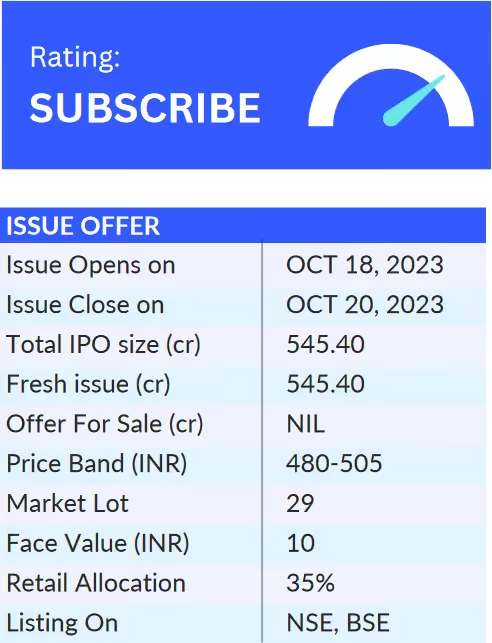
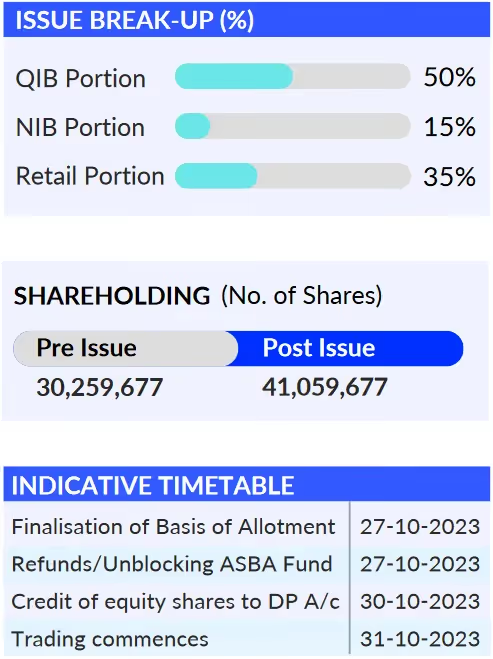
IRM Energy Limited is a gas distribution company. The company is involved in developing, operating, and expanding of local natural gas distribution network. IRM Energy is a value-driven energy enterprise serving industrial, commercial, domestic, and automobile customers.
OBJECTS OF THE ISSUE
- Funding capital expenditure requirements for the development of the City Gas Distribution network.
- Repayment of all or a portion of certain outstanding borrowings availed by the Company.
KEY MANAGERIAL PERSONNEL
Maheswar Sahu
He is a Non-Executive Director of the Company and the Chairman of the Board of Directors of company. He had active involvement in handling various portfolios in Government including PSU management.
Karan Kausha
He is Chief Executive Officer (CEO) of the Company on July 13, 2020. He has been associated with the Company since September 5, 2016. He has 16 years of experience in the field of General Management, Strategy, Business Development and Project Management.
Harshal Anjaria
Harshal Anjaria was appointed as the Chief Financial Officer (CFO) of the Company on July 13, 2017. He has been associated with the Company since July 11, 2016. He has been associated with the Company since July 11, 2016.
Shikha Jain
Shikha Jain was appointed as the Company Secretary and Compliance Officer of the Company on January 4, 2020 and November 7, 2022, respectively. She has been associated with the Company since September 2, 2019. She has over 5 years of experience in corporate secretarial and other related compliances.
COMPANY PROFILE
- Company develop natural gas distribution projects in the geographical areas (“GAs”) for industrial, commercial, domestic and automobile customers.
- The company has marked its presence in Banaskantha District in the state of Gujarat, Fatehgarh Sahib in the state of Punjab, and Diu & Gir-Somnath in the Union Territory of Daman & Diu and the state of Gujarat.
- The company is fulfilling the natural gas requirements of 48172 domestic clients, 179 industrial units, and 248 commercial clients.
- As of September 2022, the company has 216 CNG gas stations across its operating geographical areas.
- The company has received an award of City Gas Distribution- Growing Company of the Year 2020 from the Federation of Indian Petroleum Industries.
- Company supply natural gas to two primary set of customer segments that are CNG and PNG.
COMPETITIVE STRENGTHS
- Exclusivity in CNG and PNG supply in the awarded geographical areas.
- Diverse customer portfolio and distribution network of CNG and PNG.
- Strong parentage, experienced board and management team and strong execution team.
- Technology adoption and digital initiatives for efficient and optimal operations.
- Connectivity to gas pipelines and establishing cost-effective gas sourcing arrangements.
- Strong financial performance with consistent growth and profitability supported by healthy operating efficiency and favourable regulations.
KEY STRATEGIES
- Expand company’s presence in existing and newer geographical areas through an improved captive distribution channel.
- Infrastructure roll-out for development and operation of the new licensed geographical areas of Namakkal & Tiruchirappalli, Tamil Nadu.
- Technology adoption to increase operational efficiency and enhance customer value.
- Business integration for transition into a complete energy solution provider.
KEY CONCERNS
- Transporting natural gas is hazardous and could result in accidents, which could adversely affect the company’s reputation, business, financial condition, results of operations, and cash flows.
- The Company typically requires 15-18 months to generate revenue in its geographical areas. Any further delay in realizing revenue may affect projections, results of operations, and cash flows.
- Its operations are restricted to defined geographical boundaries and the natural gas requirements in these regions may be affected by various factors.
- Companies require various licenses and approvals for undertaking their businesses.
- The company is heavily reliant on CNG and industrial PNG supply operations and any decrease in the sales may have an adverse effect on the business.
- The company is dependent on Government policies for the allocation of natural gas and the cost of gas supplied for CNG and domestic PNG customers.
COMPARISON WITH LISTED INDUSTRY PEERS (AS ON 31ST MARCH 2023)

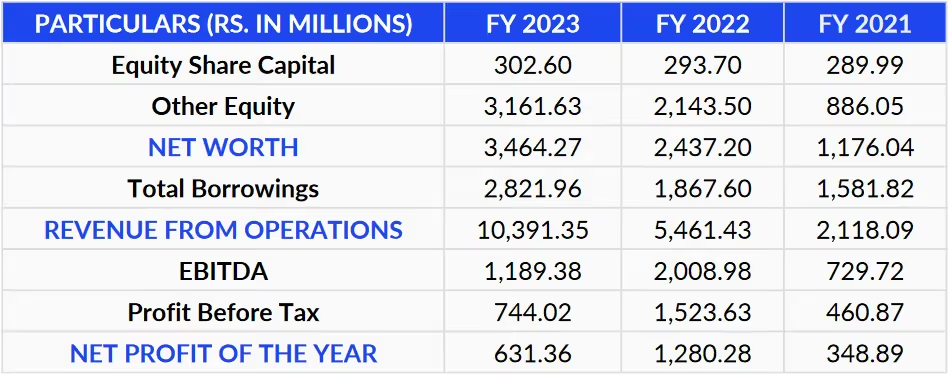
FINANCIALS (RESTATED CONSOLIDATED)
OUTLOOK & VALUATION
IRM has showcased consistent development of its gas distribution business in its key GAs. The company has a diverse customer portfolio and distribution network of CNG and PNG and a strong relationship with its customers. It has also reported strong financial performance in the last few years, except in FY23, when profit was impacted by a rise in gas prices due to geopolitical situations.
The company is still in the early stages of growth and may be impacted by unforeseen factors and other risks like limited geographic reach, government policies, delayed revenue generation, etc.
The issue is coming at a P/E valuation of 24.12x, which appears fairly priced. Thus, considering all these factors and the positive growth outlook, we will recommend a Subscribe rating to this IPO.
DISCLAIMER:
The information contained herein are strictly confidential and are meant solely for the information of the recipient and shall not be altered in any way, transmitted to, copied or distributed, in part or in whole, to any other person or to the media or reproduced in any form, without prior written permission of Swastika Investmart Ltd. (“SIL”). The contents of this document are for information purpose only. This document is not an investment advice and must not alone be taken as the basis for an investment decision. Before taking any decision to invest, the recipient of this document must read carefully the Red Herring Prospectus (“RHP”) issued to know the details of IPO and various risks and uncertainties associated with the investment in the IPO of the Company. All recipients of this document must before acting on the given information/details, make their own investigation and apply independent judgment based on their specific investment objectives and financial position. They can also seek appropriate professional advice from their own legal and tax consultants, advisors, etc. to understand the risks and investment considerations arising from such investment. The investor should possess appropriate resources to analyze such investment and the suitability of such investment to such investor’s particular circumstances before making any decisions on the investment. The Investor shall be solely responsible for any action taken based on this document. SIL shall not be liable for any direct or indirect losses arising from the use of the information contained in this document and accept no responsibility for statements made otherwise issued or any other source of information received by the investor and the investor would be doing so at his/her/its own risk. The information contained in this document should not be construed as forecast or promise or guarantee or assurance of any kind. The investors are not being offered any assurance or guaranteed or fixed returns on their investments. The users of this document must bear in mind that past performances if any, are not indicative of future results. The actual returns on investment may be materially different than the past. Investments in Securities market products and instruments including in the IPO of the Company are highly risky and they are generally not an appropriate avenue for someone with limited resources/ limited investment and low risk tolerance. Such Investments are subject to market risks including, without limitation, price, volatility and liquidity and capital risks. Therefore, the users of this document must carefully consider all the information given in the RHP including the risks factors before making any investment in the Equity Shares of the Company.
Swastika Investmart Ltd or its analysts did not receive any compensation or other benefits from the companies mentioned in the report or third party in connection with preparation of the research report. Accordingly, neither Swastika Investmart Ltd nor Research Analysts have any material conflict of interest at the time of publication of this report. Compensation of our Research Analysts is not based on any specific merchant banking, investment banking or brokerage service transactions. Swastika Investment Ltd may have issued other reports that are inconsistent with and reach different conclusion from the information presented in this report. Research entity has not been engaged in market making activity for the subject company. Research analyst has not served as an officer, director or employee of the subject company. We have not received any compensation/benefits from the Subject Company or third party in connection with the Research Report.
CORPORATE & ADMINISTRATIVE OFFICE - 48, Jaora Compound, M.Y.H. Road, Indore - 452 001 | Phone 0731 - 6644000
Compliance Officer: Ms. Sheetal Duraphe Email: compliance@swastika.co.in Phone: (0731) 6644 241
Swastika Investmart Limited, SEBI Reg. No. : NSE/BSE/MSEI: INZ000192732 Merchant Banking: INM000012102 Investment Adviser: INA000009843 MCX/NCDEX: INZ000072532 CDSL/NSDL: IN-DP-115-2015 RBI Reg. No.: B-03-00174 IRDA Reg. No.: 713.
Big Budget


Popular Articles



.avif)
.avif)
.avif)



START YOUR INVESTMENT JOURNEY
Get personalized advice from our experts
- Dedicated RM Support
- Smooth and Fast Trading App
