


RBI Repo Rate Outlook: Bond Yields Dip, Rupee Rises As Brent Crude Eases


Key Takeaways
- Bond yields fell to 6.7753% from 6.8253%, a five-basis-point drop.
- The rupee opened at 96.15 per USD, up 41 paise from 96.56.
- Brent crude price fell nearly 4% to around $93 per barrel as tensions eased.
- Markets expect RBI repo rate to stay at 5.25% in August, while the Fed signals hold.
In a trading session where macro cues from oil, currency, and policy intersect, the market moved in a way that matters for portfolio construction. The benchmark 10-year Indian government bond yield fell to 6.7753% in early trade from the previous close of 6.8253%, marking a decline of five basis points. The rupee opened at 96.15 per U.S. dollar, strengthening from 96.56, a 41-paise gain – the strongest opening in nearly two months. Brent crude price fell nearly 4% to around $93 per barrel after the U.S. and Iran paused military strikes over the weekend, easing supply concerns around the Strait of Hormuz. The Strait of Hormuz remains one of the world’s busiest energy shipping routes, and this development reduced supply concerns and weighed on global crude benchmarks. Investors will continue to monitor developments in global oil markets, foreign fund flows and upcoming policy announcements from the Federal Reserve and RBI for further cues.
Against this backdrop, the RBI Repo Rate path sits at the center of policy discourse for retail investors. The Federal Reserve is widely expected to keep rates unchanged at its July 29 meeting, providing a critical external backdrop for Indian policy. A market poll indicated that all 13 respondents expect the RBI to leave the policy repo rate unchanged at 5.25% in the August review, reinforcing a near-consensus view that policy remains on hold in the near term. The Indian economy relies on imported crude for more than 85% of its oil needs, which means oil price trajectories have a direct line to inflation and growth expectations. The RBI's next policy decisions–whether the stance remains data-dependent or hints at a gradual normalization–will hinge on inflation trajectories and external energy prices.
RBI Repo Rate: What Today’s Market Move Means For Retail Investors
The RBI repo rate remains the anchor for fixed-income strategy in a backdrop of oil and currency volatility. The yield movement, with the 10-year benchmark hovering around 6.7753%, creates a more favorable setup for longer-duration investments relative to the prior session. The rupee’s strong open at 96.15 per dollar and a 41-paise improvement highlight the currency’s sensitivity to energy price moves and capital flows, influencing hedging costs and carry trades. Given India’s energy import dependence, Brent’s retreat to about $93 per barrel reduces external inflation pressure and supports the case for a measured stance by the RBI. For investors, this environment underscores the value of diversification across duration, quality, and sectors that are resilient to shifts in energy and rate expectations. Consider how your fixed-income sleeve could be tuned to a hold impulse with optionality for duration if oil prices stay soft and inflation remains within target bands.


RBI Policy Update: How The August Review Could Unfold
Looking ahead to the August policy update, market participants will be watching for guidance on the RBI policy stance and any forward-looking signals. The August poll’s conclusion – that all 13 respondents expect no change to the policy repo rate at 5.25% – reinforces a broad expectation of stability. The Fed's anticipated hold at the July 29 meeting provides a macro backdrop that reduces the likelihood of abrupt policy shifts in emerging markets. Oil price trajectories, currency stability and inflation readings will be the key inputs. For readers seeking granular stock-level analysis, Swastika's Sarthi AI stock assistant can tailor research to individual holdings and indices.
RBI Rate Decision: Market Expectations For The Next Policy Move
The RBI rate decision remains unlikely to trigger an immediate policy change in August. The most probable outcome is a hold at 5.25%, aligning with the poll and current macro data. Guidance in the RBI policy statement will be crucial for gauging the central bank’s longer-run policy path and inflation trajectory. The bond market's sensitivity to external variables remains high, particularly with oil prices being a major external variable; a 6.7753% yield provides a fair anchor for pricing longer-duration risk. The rupee’s sensitivity to oil and fund flows will continue to influence capital market conditions. Investors should consider duration risk and liquidity while evaluating exposure to energy-sensitive sectors.
RBI Meeting Outcome: Interpreting The Signals For Bonds And The Rupee
When the RBI meeting outcome arrives, the emphasis will be on forward guidance and the stance toward inflation and growth. A stable or cautiously optimistic policy statement could permit gradual easing later in the year if energy prices stay favorable and inflation remains within target bands; a hawkish tone could delay policy normalisation. The current environment – with a firmer rupee and a lower yield benchmark – provides some room for calibrated policy. Watch the policy statement for the inflation projection, long-run policy path, and forward guidance that will shape bond pricing and equity valuations in the weeks ahead.
RBI Policy Stance: Reading The Current Economic Signals
The RBI policy stance today reflects a balance between inflation risks and growth prospects in a high crude-import environment. With more than 85% of crude oil requirements imported, oil price trajectories remain a major external variable. Easing Brent prices and currency stability give the RBI room to maintain flexibility and data-dependency rather than commit to a fixed path. The key for retail investors is to align asset allocation with a stance that supports measured normalization while withstanding external shocks. For deeper stock-level insights, Swastika's Sarthi AI stock assistant can tailor recommendations to your holdings and risk appetite.
Related Reads
Frequently Asked Questions
What caused the 10-year Indian government bond yield to fall to 6.7753%?
The yield fell to 6.7753% in early trade from 6.8253%, a decline of five basis points, as oil prices eased and global risk sentiment improved.
How did Brent crude price movements affect Indian markets?
Brent crude price fell nearly 4% to around $93 per barrel after the U.S. and Iran paused military strikes over the weekend, reducing supply concerns around the Strait of Hormuz.
What is the expected RBI policy stance for August?
All 13 market respondents expect the RBI to leave the policy repo rate unchanged at 5.25% in August, indicating a broad consensus for stability.
What was the rupee’s opening level against the U.S. dollar?
The rupee opened at 96.15 per U.S. dollar, strengthening from 96.56, a gain of 41 paise.
What is the scale of India’s crude oil import dependency?
India imports more than 85% of its crude oil requirements, making energy price movements a key macro driver.
Conclusion
The core takeaway for retail investors is that a softer oil backdrop, combined with a stable RBI policy path, tends to support a more constructive environment for fixed income and balance sheet resilience. As oil prices stabilize and the rupee remains sensitive to energy dynamics, anchoring risk through diversified bond positions and disciplined duration management can help protect capital while still offering upside from favorable macro conditions. The next steps include calibrating portfolios to a potential RBI repo rate path that remains on hold in the near term and preparing for possible shifts if inflation or energy trends surprise to the upside.
Latest Articles

Cigarette Tax Hike: Centre Imposes New Excise Duty Effective February 1


Key takeaways
- The Centre has imposed a fresh cigarette tax hike effective February 1
- Higher excise duty may impact cigarette prices and consumption trends
- FMCG and tobacco stocks could see short term volatility
- Long term impact depends on pricing power and volume resilience
- Investors should track regulatory risks and margin dynamics closely
Introduction: Why the Cigarette Tax Hike Is Back in Focus
The cigarette tax hike announced by the Centre, effective February 1, has once again put the tobacco sector under the spotlight. While tax increases on cigarettes are not new in India, every such move has implications beyond public health. It affects company earnings, government revenues, consumer behavior, and stock market sentiment.
For investors, this development raises familiar questions. Will cigarette companies be able to pass on the higher tax burden? Will volumes take a hit? And how should portfolios respond to renewed regulatory pressure?
This blog breaks down the latest excise duty change, its likely market impact, and what investors should keep in mind.
What Has the Centre Announced?
New excise duty effective February 1
The Centre has imposed a fresh increase in excise duty on cigarettes, effective from February 1. This duty is levied over and above GST and varies based on cigarette length and filter type.
While the exact increase differs across categories, the intent is clear: raise government revenue while discouraging consumption.
Regulatory context behind the move
Cigarettes are among the most heavily taxed products in India. Apart from GST, they attract compensation cess and excise duty. Periodic hikes are aligned with public health objectives and fiscal needs.
Such measures are typically notified through changes in excise schedules under the Central Excise Act.
How Cigarette Tax Hikes Impact the Industry
Pricing power vs volume risk
Historically, large cigarette manufacturers have demonstrated strong pricing power. In many past instances, companies have passed on tax hikes through price increases without a sharp fall in volumes.
However, sustained hikes can gradually push consumers towards cheaper alternatives or illicit products, especially in price sensitive markets.
Impact on margins
In the near term, margins may face pressure if companies absorb part of the tax increase to protect volumes. Over time, margins stabilize if price hikes are fully passed on.
Investors closely watch how quickly and effectively companies adjust retail prices after such announcements.
Stock Market Reaction: What History Tells Us
Short term volatility is common
Whenever a cigarette tax hike is announced, tobacco stocks often react negatively in the short term. The uncertainty around volumes and margins leads to cautious investor sentiment.
However, history shows that strong players tend to recover as clarity on pricing and demand emerges.
Long term investors focus on cash flows
Despite regulatory headwinds, cigarette businesses generate strong cash flows due to low capital intensity. This makes them attractive from a dividend and balance sheet perspective, provided regulatory risks remain manageable.
Broader Impact on Indian Markets
FMCG sector sentiment
The cigarette tax hike could weigh on broader FMCG sentiment in the near term, especially for companies with exposure to tobacco. However, diversified FMCG players with non tobacco revenue streams are better positioned to absorb shocks.
Government revenue considerations
Cigarettes remain a significant source of indirect tax revenue. The hike is expected to support fiscal collections, especially in a period where the government balances growth with fiscal discipline.
Consumer behavior dynamics
Repeated tax hikes may encourage down trading or increased use of non duty paid products. This remains a structural risk for the legal cigarette industry and a key variable for long term forecasts.
What Should Investors Do Now?
Avoid knee jerk reactions
A cigarette tax hike does not automatically translate into long term value erosion. Investors should assess company specific factors such as pricing strategy, brand strength, and cost control.
Track quarterly commentary
Management commentary in upcoming earnings calls will provide insights into volume trends and pricing actions. This information is crucial for making informed decisions.
Frequently Asked Questions
Why has the Centre increased excise duty on cigarettes?
The government aims to raise revenue and discourage consumption due to public health concerns.
Will cigarette prices increase after February 1?
Most likely, manufacturers may raise prices to pass on the higher excise duty, though the timing may vary.
How does a cigarette tax hike affect tobacco stocks?
Stocks often face short term pressure, but long term impact depends on pricing power and volume resilience.
Are cigarette companies still profitable despite high taxes?
Yes, leading players continue to generate strong cash flows, though regulatory risks remain a constant factor.
Conclusion: Balancing Regulation and Investor Strategy
The latest cigarette tax hike effective February 1 reinforces the regulatory risks associated with the tobacco sector. While short term uncertainty is inevitable, long term outcomes depend on how companies manage pricing, volumes, and compliance.
For investors, this is a reminder to stay informed and research driven rather than reactive. With its strong research framework, investor education initiatives, and customer centric approach, Swastika Investmart helps investors navigate such regulatory developments with clarity and confidence.

December Auto Sales Boost: Escorts Kubota Jumps 38.5%, SML Mahindra Surges 67%
Key takeaways
- December auto sales data shows strong momentum in tractors and commercial vehicles
- Escorts Kubota reports a sharp 38.5% year on year sales growth
- SML Mahindra posts an impressive 67% surge, outperforming peers
- Rural demand, infrastructure spending, and fleet replacement drive optimism
- Auto stocks see renewed investor interest across Indian markets
Why December Auto Sales Data Matters for Investors
Monthly auto sales numbers are among the most closely tracked indicators in the Indian equity markets. They offer early signals on consumer demand, rural income trends, infrastructure activity, and overall economic momentum.
The December auto sales boost has caught market attention, especially with Escorts Kubota and SML Mahindra delivering standout growth. At a time when investors were cautious about demand sustainability, these numbers have added fresh confidence to the auto and auto ancillary space.
Escorts Kubota’s 38.5% Jump: What Drove the Surge
Strong tractor demand from rural India
Escorts Kubota’s sharp rise in December sales reflects improving rural sentiment. Higher minimum support prices, better reservoir levels, and stable crop realizations have supported farm incomes. Tractors remain a key indicator of rural capital spending, and Escorts Kubota appears to be benefiting directly from this trend.
Product mix and distribution strength
The company’s diversified product portfolio across mid and high horsepower segments has helped it capture demand from both small farmers and commercial users. Strong dealer networks in north and west India have also supported timely deliveries during the peak season.
Market reaction and stock sentiment
Following the December auto sales boost, Escorts Kubota’s stock saw renewed buying interest. Investors are factoring in better volume visibility and operating leverage as capacity utilization improves.
SML Mahindra’s 67% Surge: A Commercial Vehicle Comeback
Revival in light commercial vehicles
SML Mahindra’s 67% sales growth stands out even within a strong month for autos. The surge reflects a recovery in light and intermediate commercial vehicles, supported by rising logistics activity and last mile delivery demand.
Infrastructure and replacement demand
Government spending on roads, housing, and public transport continues to drive demand for buses and haulage vehicles. Additionally, fleet operators are replacing older vehicles due to tighter emission norms and better financing availability.
Why the market is taking note
For a relatively smaller player, such strong growth changes the narrative. The December auto sales boost has positioned SML Mahindra as a turnaround candidate, attracting interest from investors looking beyond large cap auto names.
Broader Auto Sector Trends Behind the December Rally
Rural economy shows resilience
Tractors, two wheelers, and entry level commercial vehicles are all closely linked to rural demand. December sales suggest that the rural slowdown fears may be easing, at least in pockets where crop output and cash flows remain healthy.
Credit availability and financing support
NBFCs and banks have maintained credit flow to vehicle buyers, supported by stable interest rates and improving asset quality. This has helped convert demand into actual sales, particularly in the commercial vehicle segment.
Regulatory tailwinds
Indian auto companies have adjusted well to emission norms and safety regulations. With most transition costs now absorbed, incremental volumes are translating into better margins, a positive sign for equity markets.
Impact on Indian Stock Markets
Auto stocks regain leadership
The December auto sales boost has reinforced the auto sector’s role as a market leader during economic recovery phases. Stocks linked to tractors, commercial vehicles, and auto components have seen higher trading volumes and improved sentiment.
Spillover effect on ancillaries
Higher vehicle production supports auto ancillary companies involved in engines, axles, tyres, and castings. This creates broader participation across mid cap and small cap segments.
What investors should watch next
While December numbers are encouraging, sustainability matters. Investors should track upcoming quarterly results, margin trends, and management commentary on demand visibility before taking long term positions.
How Investors Can Approach Auto Stocks Now
Balance optimism with discipline
Strong monthly sales data often leads to short term rallies. Long term investors should focus on companies with strong balance sheets, pricing power, and execution capabilities rather than chasing momentum alone.
Frequently Asked Questions
Why did Escorts Kubota report such strong December sales?
Escorts Kubota benefited from improved rural demand, better farm income visibility, and a strong product mix in the tractor segment.
What explains SML Mahindra’s 67% sales surge?
The growth was driven by recovery in light commercial vehicles, infrastructure led demand, and fleet replacement cycles.
Does strong December auto sales guarantee long term growth?
Not necessarily. Monthly data is an indicator, but investors should track consistency, margins, and future order visibility.
How do auto sales numbers affect stock prices?
Better sales often improve earnings expectations, leading to positive stock sentiment, especially in cyclical sectors like autos.
Conclusion: A Promising End to the Year for Auto Stocks
The December auto sales boost has delivered a positive surprise for Indian markets. Escorts Kubota’s 38.5% jump and SML Mahindra’s 67% surge highlight improving demand dynamics in both rural and commercial segments.
While near term sentiment has turned upbeat, smart investing still requires careful analysis and risk management. With its strong research ecosystem, investor education focus, and customer centric approach, Swastika Investmart supports investors in navigating such sectoral opportunities with confidence.
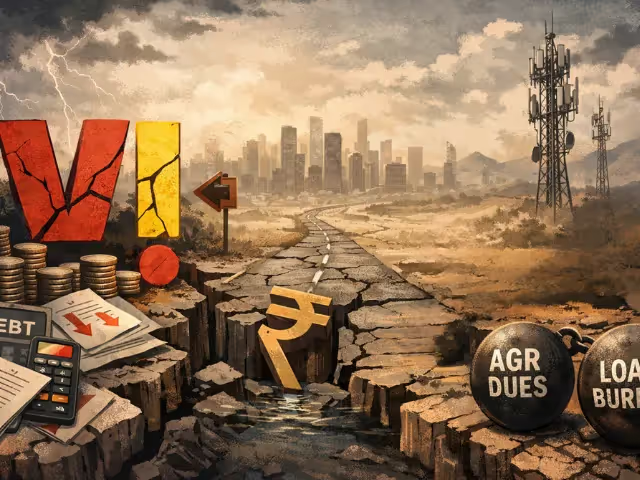
Vodafone Idea AGR Dues: What Lies Ahead for India’s Struggling Telecom Giant?
Key takeaways
- Vodafone Idea’s AGR dues continue to strain its balance sheet despite relief measures
- Government support has prevented immediate collapse, but long-term viability is uncertain
- Capital raising and tariff hikes are critical for survival
- The situation has wider implications for Indian telecom competition and investors
Introduction: Why Vodafone Idea’s AGR Dues Matter
Vodafone Idea’s AGR dues have become one of the most debated issues in India’s telecom sector. For investors, policy watchers, and even everyday mobile users, the question is simple yet crucial: can Vodafone Idea survive under the weight of massive adjusted gross revenue liabilities?
Once a strong challenger in India’s telecom market, Vodafone Idea today represents the fragile balance between regulation, competition, and financial sustainability. Its AGR dues are not just a company problem but a systemic issue with implications for banks, markets, and consumers.
This blog breaks down what lies ahead for Vodafone Idea, what the numbers really mean, and how this situation could shape the future of Indian telecom.
Understanding AGR Dues in Simple Terms
What are AGR dues?
Adjusted Gross Revenue refers to the share of revenue that telecom operators must pay to the government as license fees and spectrum usage charges. In 2019, the Supreme Court ruled that AGR should include not just core telecom revenue but also non telecom income such as interest and rent.
This ruling led to massive retrospective liabilities for telecom companies, with Vodafone Idea emerging as the worst hit.
Why Vodafone Idea suffered the most
Vodafone Idea was already dealing with losses due to intense price competition and high debt from past spectrum auctions. The AGR ruling added tens of thousands of crores in dues, pushing the company into a severe liquidity crisis.
Current Status of Vodafone Idea’s AGR Liabilities
The size of the problem
Vodafone Idea’s AGR dues run into tens of thousands of crores, making them one of the largest corporate liabilities owed to the government. Even after relief measures like moratoriums and conversion of interest into equity, the dues remain a major overhang.
Government support so far
The government has taken several steps to prevent a market duopoly:
- Moratorium on AGR and spectrum payments
- Conversion of interest into government equity, making the government a significant shareholder
- Telecom reforms aimed at improving cash flows
These steps have bought time but have not solved the core issue of long-term profitability.
What Lies Ahead for Vodafone Idea
Capital raising is non negotiable
Vodafone Idea needs fresh capital to survive. Without new equity or strategic investments, meeting future AGR payment schedules will be extremely challenging. The company has repeatedly indicated plans to raise funds, but investor appetite depends on clarity around cash flows and policy stability.
Tariff hikes could offer breathing room
Industry wide tariff hikes have improved average revenue per user. For Vodafone Idea, higher tariffs are essential to generate sustainable operating cash flows. However, tariff increases must balance consumer affordability, especially in price sensitive rural markets.
Network investments remain critical
Even as it struggles financially, Vodafone Idea must invest in network quality and 5G readiness. Falling behind peers on technology could lead to further subscriber losses, creating a vicious cycle.
Impact on Indian Telecom Markets
Competition and consumer choice
If Vodafone Idea exits or weakens significantly, India risks moving towards a duopoly. Reduced competition could eventually hurt consumers through higher tariffs and slower innovation.
Banking and investor sentiment
Vodafone Idea’s debt exposure affects banks and institutional investors. Any adverse development could impact sentiment in telecom related stocks and increase caution toward highly leveraged sectors.
Policy credibility and regulatory confidence
The AGR episode has become a case study in regulatory risk. How the government balances revenue collection with sector sustainability will influence long-term investor confidence in regulated industries.
What This Means for Retail Investors
Stock market perspective
Vodafone Idea’s stock remains a high risk bet. Price movements are often driven by news flow around government relief, fundraising, or policy changes rather than fundamentals.
Learning from the AGR episode
For investors, the AGR saga highlights the importance of:
- Understanding regulatory risks
- Avoiding excessive leverage exposure
- Focusing on companies with strong balance sheets and governance
Platforms like Swastika Investmart help investors analyze such risks with structured research tools and SEBI registered advisory frameworks.
Frequently Asked Questions
Will Vodafone Idea be able to pay its AGR dues?
Vodafone Idea can meet near term obligations only with continued government support and successful capital raising. Long-term sustainability depends on profitability and tariff growth.
Has the government waived AGR dues for Vodafone Idea?
No waiver has been granted. Relief has come in the form of moratoriums, equity conversion, and payment restructuring.
Is Vodafone Idea bankruptcy a possibility?
While immediate bankruptcy risk has reduced, financial stress remains high. The company’s future hinges on funding and operational turnaround.
How do AGR dues affect telecom users?
In the long run, high sector costs can lead to higher tariffs and reduced competition, impacting consumer choice.
How Swastika Investmart Helps Investors Navigate Such Risks
In complex cases like Vodafone Idea, informed decision making is critical. Swastika Investmart stands out through:
- SEBI registration ensuring trust and compliance
- Strong equity and sector research tools
- Tech enabled investing platforms for data driven decisions
- Investor education initiatives that explain regulatory and market risks clearly
- Dedicated customer support for long term investors
Whether tracking telecom stocks or building a diversified portfolio, having the right research partner makes a real difference.
Conclusion: A Defining Chapter for Indian Telecom
Vodafone Idea’s AGR dues represent more than a balance sheet issue. They reflect the evolving relationship between regulation, competition, and sustainability in Indian telecom. While government support has kept the company afloat, the road ahead remains challenging.
For investors, this episode reinforces the need for disciplined analysis and reliable advisory support. With its research driven approach and investor first philosophy, Swastika Investmart empowers market participants to navigate such high risk narratives with confidence.
.avif)
Indian Stock Market Opens Higher Today, 1 January 2026: Nifty, Bank Nifty & IT Gain
Early Market Snapshot
- Nifty 50 opens higher, extending mild positive momentum
- Bank Nifty trades in the green, lending stability to the broader market
- IT stocks see marginal gains amid selective buying
- Overall sentiment remains calm and constructive at the open
Indian Stock Market Opens on a Positive Note
Indian equity markets began the first trading session of the New Year on a positive note on 1 January 2026, reflecting steady investor confidence and supportive early cues. Benchmark indices opened marginally higher, indicating cautious optimism as participants step into the new calendar year.
With global markets offering mixed but stable signals, domestic investors appear focused on selective buying rather than aggressive positioning. The opening tone suggests an orderly start, with emphasis on quality stocks and key index heavyweights.
Opening Levels Across Key Indices
At the opening bell on 1 January 2026, major indices were trading as follows:
- NIFTY 50: 26,173.30 🟢 +0.17%
- NIFTY BANK: 59,674.80 🟢 +0.16%
- NIFTY IT: 37,963.95 🟢 +0.09%
The mild gains across indices indicate stable participation from investors as the market sets the tone for the year ahead.
Nifty and Broader Market Show Stability
The Nifty 50 opened higher, continuing its consolidation near record levels. Early buying interest in select large-cap stocks helped the index maintain positive territory, reflecting confidence without signs of overextension.
This opening move highlights a balanced approach by market participants, where optimism is tempered with caution at elevated valuations.
Bank Nifty Provides Support
The Bank Nifty opened in the green, signaling stability in banking stocks. While gains were moderate, the index’s ability to sustain above key levels continues to support overall market sentiment.
Both private and PSU banks remained in focus, as investors track institutional activity and sector-specific developments at the start of the year.
IT Stocks Trade Marginally Higher
The Nifty IT index opened with modest gains, supported by selective buying in technology stocks. Stable global tech cues and defensive positioning helped the sector maintain a positive bias in early trade.
IT stocks often attract steady interest during periods of market consolidation due to earnings visibility and export-linked revenues.
Market Sentiment and Global Cues
Global markets remained mixed overnight, providing limited directional cues. In the absence of major global triggers, domestic markets are likely to remain guided by:
- Institutional flow trends
- Technical levels on benchmark indices
- Sector rotation and stock-specific action
Low volatility in early trade suggests a disciplined and measured market environment.
What Investors Should Watch Today
- Sustenance of early gains as volumes build
- Movement in banking and IT stocks
- Any volatility triggered by global developments later in the session
- Institutional activity during mid-session trade
For traders, disciplined risk management remains essential, while long-term investors may continue to focus on fundamentally strong opportunities.
How Swastika Investmart Helps Investors Stay Ahead
Tracking daily market movements requires timely insights and dependable research. Swastika Investmart, a SEBI-registered brokerage, empowers investors through:
- Daily market updates and technical insights
- Advanced trading and investing platforms
- Strong customer support and expert guidance
- Continuous investor education initiatives
Whether markets are trending or consolidating, the right tools and research can make a meaningful difference.
Final Word
The market opening on 1 January 2026 reflects a calm and positive start to the New Year, with benchmark indices trading marginally higher. While optimism is visible, investors remain selective and disciplined in their approach.
If you’re planning your investment journey for 2026, partnering with a trusted and research-driven platform can help you stay ahead.
👉 Open your account today with Swastika Investmart
Stay informed. Trade smart. Invest with confidence.
.avif)
Market Set-Up for 01 January 2026: Global Cues, FII DII Flow & Technical Outlook
Quick Market Summary
- Global markets closed mixed ahead of the New Year holiday
- FIIs were net sellers in cash, while DIIs provided strong support
- Derivatives data indicates a mixed to cautious sentiment
- Nifty slipped below key averages, while Bank Nifty remains range-bound
- Market focus remains on support zones and selective stock action
Opening Context: Why the 01 January 2026 Market Set-Up Matters
The first trading session of a new calendar year often sets the tone for short-term market direction. For Indian equities, 01 January 2026 begins with a blend of cautious global cues and strong domestic institutional participation.
With global markets largely shut due to New Year holidays, liquidity remains lighter. In such environments, institutional data, derivatives positioning, and technical levels carry greater significance than headline-driven momentum.
This market set-up provides valuable insight into how traders and investors should approach the opening phase of 2026 with discipline and clarity.
Global Market Snapshot: Mixed Signals Ahead of the Open
Global cues remain mildly cautious as the year begins.
Key highlights include:
- US markets ended lower, with the Dow Jones declining by over 300 points
- Dow futures remained closed due to New Year’s Day
- Asian markets traded on a mixed note, reflecting low participation
- GIFT Nifty indicated a positive bias with a gain of over 50 points
With limited global direction, Indian markets are likely to rely more on domestic flows and technical structure rather than overnight triggers.
FII & DII Activity: Domestic Strength Offsets Foreign Selling
Institutional flow data reveals an important divergence.
In the cash market:
- Foreign Institutional Investors were net sellers
- Domestic Institutional Investors recorded strong net buying
- Overall market balance remained positive due to DII participation
This pattern highlights a recurring trend in Indian markets, where domestic institutions act as stabilisers during phases of foreign selling. Such behaviour often limits downside volatility and provides confidence to long-term investors.
For retail participants, this reinforces the importance of tracking net institutional flows rather than isolated selling pressure.
Derivatives and Volatility: Mixed Signals Beneath the Surface
Futures and options data suggests a neutral to cautious market structure.
Key observations:
- Nifty Put Call Ratio remains above 1, indicating balanced sentiment
- India VIX declined, reflecting reduced fear and controlled volatility
- Highest open interest is concentrated near key psychological levels
- Options positioning suggests resistance near upper zones and support at lower bands
FII activity in index derivatives shows mixed positioning, with both long and short exposures visible. This indicates lack of aggressive directional conviction, common during holiday-thinned sessions.
Technical Outlook for Nifty: Short-Term Weakness, Key Levels in Focus
From a technical perspective, Nifty is showing signs of short-term pressure.
Current structure indicates:
- Nifty has slipped below its 20-day moving average
- Momentum remains subdued in the near term
- Immediate support zone lies around the lower demand area
- Resistance is expected on pullbacks toward higher supply levels
Unless Nifty decisively reclaims key averages, traders may continue to adopt a cautious approach, focusing on range-based strategies rather than directional bets.
Bank Nifty Outlook: Sideways Consolidation Continues
Bank Nifty continues to display relative stability compared to the broader index.
Key technical observations:
- Index is trading sideways between its 20-day and 50-day moving averages
- Strong support exists in the lower zone, limiting downside risk
- Immediate resistance remains intact on the upside
This sideways structure suggests that stock-specific action within banking names may outperform index-level movement until a clear breakout emerges.
What This Means for Indian Market Participants
The 01 January 2026 market set-up points to a measured and selective approach.
Traders may consider:
- Respecting support and resistance levels
- Avoiding aggressive positions during low-volume sessions
- Using derivatives data for confirmation rather than prediction
Investors may focus on:
- Portfolio alignment rather than short-term noise
- Tracking institutional behaviour for directional clues
- Maintaining diversification across asset classes
Early-year sessions often reward patience over urgency.
Role of Research and Discipline in Early 2026
Market phases with mixed signals require structured decision-making. Relying on verified data, technical levels, and institutional behaviour helps reduce emotional bias.
SEBI-regulated research platforms play a crucial role by offering:
- Data-backed market interpretation
- Risk-aware technical frameworks
- Investor education and clarity during uncertain phases
This disciplined approach becomes especially important at the start of a new calendar year.
Why Investors Rely on Swastika Investmart
Swastika Investmart combines regulatory compliance with research depth to support informed investing.
Key strengths include:
- SEBI-registered operations
- Research-driven insights backed by experienced analysts
- Technology-enabled tools for derivatives and technical tracking
- Dedicated customer support and investor education
Such a framework helps investors navigate evolving market conditions responsibly.
👉 Open your trading and investment account today
Frequently Asked Questions
Is the first trading session of the year important for markets?
Yes, it provides early clues about sentiment, institutional behaviour, and risk appetite, though trends develop gradually.
Why do DIIs often buy when FIIs sell?
Domestic institutions focus on long-term allocation strategies and often step in to stabilise markets during volatility.
How useful is derivatives data during low-volume sessions?
It helps identify key support and resistance levels but should be used alongside price action.
Should traders avoid markets during holiday weeks?
Not necessarily, but position sizing and risk management become more important due to lower liquidity.
Conclusion: Start 2026 with Clarity, Not Noise
The market set-up for 01 January 2026 reflects a balanced yet cautious environment. While global cues remain mixed, strong domestic institutional participation and defined technical levels offer structure to market participants.
Rather than chasing early moves, investors and traders can benefit from discipline, research-backed insights, and risk-aware strategies as the year begins.
If you are looking for a reliable research partner and a SEBI-registered platform to navigate Indian markets with confidence, Swastika Investmart stands ready to support your journey.
.avif)
New Year 2026 Stock Market Outlook in India | Thematic Investment Ideas by Swastika Investmart
The New Year is not just a change in dates it marks the beginning of a fresh investment cycle. For market participants, it is a time for portfolio realignment, renewed institutional participation, and a shift towards structured, theme-based investing.
As Indian equity markets enter New Year 2026, investor sentiment remains constructive. With stable macroeconomic indicators, improving global cues, and strong domestic fundamentals, the focus is gradually moving away from short-term trading and toward quality, theme-driven stock selection.
To help investors begin 2026 with clarity, Swastika Investmart has curated a New Year–themed stock list, designed around long-term growth visibility, balance-sheet strength, and sectoral relevance.
Why Theme-Based Investing Makes Sense in New Year 2026
Theme-based investing allows investors to participate in broader economic and structural trends rather than reacting to daily market volatility.
As 2026 begins, several factors support this approach:
- Fresh allocations by FIIs and DIIs
- Portfolio restructuring after year-end closures
- Stable inflation expectations
- Continued focus on growth-oriented sectors
Instead of chasing momentum, thematic investing helps build portfolios aligned with economic continuity and sustainability.
Market Sentiment at the Start of 2026
The opening weeks of a new year often bring renewed participation across global and domestic markets. In India, this phase is typically characterised by:
- Rebalanced institutional portfolios
- Strategic positioning ahead of earnings season
- Gradual improvement in risk appetite
- Reduced speculative pressure
With supportive domestic indicators and measured global expectations, early 2026 provides a favourable environment for selective stock positioning.
New Year 2026 Investment Themes Curated by Swastika Investmart
The New Year 2026 stock list has been curated around key investment themes, keeping in mind sector relevance, earnings visibility, and long-term sustainability.
These themes are shared for investor awareness and education, not as investment recommendations.
Consumer & Lifestyle Theme
The New Year period often supports continued demand across consumer-facing businesses.
This theme typically includes companies with:
- Strong brand visibility
- Consistent revenue performance
- Resilient urban and semi-urban demand
Such businesses tend to benefit from sustained consumption momentum extending into the early part of the year.
Banking & Financial Strength Theme
Financial services remain a core pillar of the Indian economy as 2026 begins.
Stocks aligned with this theme generally demonstrate:
- Stable asset quality
- Improving credit growth trends
- Strong capital adequacy and governance
These characteristics often attract institutional interest during portfolio resets.
Technology & Digital Economy Theme
Digital adoption and technology-led efficiency continue to shape corporate performance.
This theme focuses on businesses with:
- Global client exposure
- Stable order pipelines
- Scalable digital business models
Technology-linked themes remain relevant for medium- to long-term portfolios.
Infrastructure & Capital Growth Theme
India’s infrastructure and capital expenditure cycle continues to offer long-term opportunities.
Companies under this theme are typically supported by:
- Policy continuity
- Visibility in project execution
- Alignment with national development priorities
Early-year phases often see gradual accumulation in such stocks.
Gold & Silver: Portfolio Balancing Theme
At the beginning of a new year, many investors also reassess asset allocation.
Precious metals play a role by:
- Acting as a hedge against global uncertainty
- Providing portfolio stability
- Supporting diversification strategies
Gold and silver remain important components of balanced portfolios in 2026.
Global Factors to Watch in Early 2026
Indian markets remain influenced by global developments. Key indicators to monitor include:
- Global equity market trends
- Bond yield movements
- Currency fluctuations impacting capital flows
- Commodity price stability
A stable global environment generally supports equity participation during the early weeks of the year.
How Investors Can Use the New Year 2026 Stock List Effectively
Rather than rushing into trades, experienced investors often use the New Year to align portfolios thoughtfully.
A disciplined approach includes:
- Focusing on quality over quantity
- Diversifying across themes and asset classes
- Managing risk through position sizing
- Aligning investments with long-term financial goals
The New Year is best viewed as a planning phase, not a speculative one.
Why Investors Rely on Swastika Investmart
Swastika Investmart follows a research-driven, compliance-focused approach to investing.
What investors value:
- SEBI-registered framework
- Research-backed insights
- NISM-certified analyst involvement
- Technology-enabled platforms and support
This approach helps investors navigate markets with confidence, especially during transitional phases like the start of a new year.
Frequently Asked Questions
Is the New Year a good time to invest in stocks?
The New Year often brings stable participation and fresh allocations, making it suitable for selective, quality investing.
Do FIIs and DIIs invest at the start of the year?
Institutional investors frequently rebalance portfolios in January, leading to selective activity in fundamentally strong stocks.
Should investors focus on themes rather than individual stocks?
Themes help investors align with long-term trends and reduce short-term decision-making noise.
Are New Year themed stock ideas suitable for long-term investors?
Yes, when supported by strong fundamentals and growth visibility, thematic ideas align well with long-term investing.
Final Thoughts: Start 2026 with Structure and Discipline
A New Year symbolises clarity, balance, and thoughtful decisions. The same principles apply to investing. With supportive institutional behaviour, stable global cues, and well-defined themes, New Year 2026 offers an opportunity to strengthen portfolios with purpose.
If you are looking for structured research, investor education, and long-term market guidance, Swastika Investmart is here to support your investing journey throughout 2026 and beyond.
📈 Begin the New Year with informed investing
🎯 Explore New Year 2026 themed insights today
Big Budget


Popular Articles





.avif)
.avif)

.avif)



START YOUR INVESTMENT JOURNEY
Get personalized advice from our experts
- Dedicated RM Support
- Smooth and Fast Trading App
