


Nifty 50 31 Jul 2026 Morning Market Summary


Key Takeaways
- Prev session close reference: Nifty 50 Pivot 24370.9; R1 24442.1; R2 24500.6; S1 24312.4; S2 24241.2.
- Standout mover: TRANSPEK from 1101.1 -> 1321.3 (+20.00%).
- Biggest loser: NARMADA from 36.19 -> 17.02 (-52.97%).
- Market-wide Index Options PCR: Not available for this session.
Nifty 50 Support And Resistance Levels For 31 Jul 2026
Pivot: 24370.9; R1: 24442.1; R2: 24500.6; S1: 24312.4; S2: 24241.2. The Pivot is the central reference; R1 and R2 above are resistance hurdles, while S1 and S2 below are cushions. All these numbers come from yesterday's close as the basis for today's session.
In plain language, if the price sits above R1, the near-term tone is mildly bullish; above R2, the bias could extend higher; if it slips below S2, the bias could turn bearish. For deeper stock-level insights, Swastika's Sarthi AI stock assistant.
Nifty Bank Pivot Levels For 31 Jul 2026
Pivot: 57271.9; R1: 57404.2; R2: 57543.55; S1: 57132.55; S2: 57000.25. Those levels mirror the same logic as Nifty 50 for the Bank Nifty.


Top 5 Gainers (31 Jul 2026 Session, EQ Series, Liquid Names Only)
| Ticker | From | To | Change |
|---|---|---|---|
| TRANSPEK | 1101.1 | 1321.3 | (+20.00%) |
| UEL | 128.11 | 153.73 | (+20.00%) |
| YASHO | 3215.6 | 3858.7 | (+20.00%) |
| RSDFIN | 92.29 | 110.74 | (+19.99%) |
| DCI | 276.75 | 329.7 | (+19.13%) |
Top 5 Losers (31 Jul 2026 Session, EQ Series, Liquid Names Only)
| Ticker | From | To | Change |
|---|---|---|---|
| NARMADA | 36.19 | 17.02 | (-52.97%) |
| EXPLEOSOL | 906.6 | 802.85 | (-11.44%) |
| THANGAMAYL | 5807.0 | 5226.5 | (-10.00%) |
| ASIANTILES | 60.71 | 54.68 | (-9.93%) |
| SIGNPOST | 311.2 | 283.55 | (-8.88%) |
Market-Wide Index Options PCR
Market-wide Index Options PCR: Not available for this session.
Frequently Asked Questions
Nifty 50 Support and Resistance Levels for 31 Jul 2026
Pivot 24370.9; R1 24442.1; R2 24500.6; S1 24312.4; S2 24241.2. These are reference points for today's trading, derived from yesterday's close.
Nifty Bank Pivot Levels for 31 Jul 2026
Pivot 57271.9; R1 57404.2; R2 57543.55; S1 57132.55; S2 57000.25. These are yesterday's close-based reference levels for today.
Top Gainers on 31 Jul 2026
TRANSPEK: 1101.1 -> 1321.3 (+20.00%); UEL: 128.11 -> 153.73 (+20.00%); YASHO: 3215.6 -> 3858.7 (+20.00%); RSDFIN: 92.29 -> 110.74 (+19.99%); DCI: 276.75 -> 329.7 (+19.13%).
Top Losers on 31 Jul 2026
NARMADA: 36.19 -> 17.02 (-52.97%); EXPLEOSOL: 906.6 -> 802.85 (-11.44%); THANGAMAYL: 5807.0 -> 5226.5 (-10.00%); ASIANTILES: 60.71 -> 54.68 (-9.93%); SIGNPOST: 311.2 -> 283.55 (-8.88%).
PCR for Market-wide Index Options today
Market-wide Index Options PCR: Not available for this session.
Conclusion
Yesterday's close reference levels set the stage for today's open. Nifty 50 pivot at 24370.9 with R1 24442.1 and R2 24500.6; S1 24312.4; S2 24241.2. The standout mover TRANSPEK posted a 20% gain while NARMADA slid 52.97% from 36.19 to 17.02. Market-wide Index Options PCR remains not available for this session. Watch how price interacts with the pivot and resistance/support on open, and consider exploring deeper stock-level insights with Swastika's Sarthi AI stock assistant.
Open your trading and demat account here
Reference :
1 : Nseindia
Latest Articles

What is Futures Trading


Quick Takeaways
- Futures trading allows investors to buy/sell assets at a future date.
- It's widely used for hedging and speculation.
- Indian exchanges like NSE, BSE, NCDEX and MCX offer futures trading on indices, equities, commodities, and currencies.
- Risks include high volatility and leverage.
- Trusted brokers like Swastika Investmart offer guided onboarding and research tools.
🧠 The Ultimate Guide to Futures Trading in India
What is Futures Trading?
Futures trading involves a legal contract to buy or sell an asset at a predetermined price at a future date. It is used extensively across financial markets—be it equities, commodities, or currencies.
In India, futures contracts are available for:
- Stocks & Indices (Nifty 50, Bank Nifty, Midcap Nifty, Sensex, Bankex, FinNifty)
- Commodities (Gold, Crude Oil, Silver)
- Currencies (USD-INR, EUR-INR)
💡 Example: A trader expecting crude oil prices to rise buys a futures contract. If the price increases by expiry, they profit.
Why Do Investors Use Futures Contracts?
1. Hedging Against Price Movements
Futures are often used to protect portfolios from adverse price changes.
Example: A farmer locks in the price of wheat by selling wheat futures on NCDEX, protecting against post-harvest price drops.
2. Speculative Opportunities
Retail traders speculate on price movements to make profits in short durations.
Example: Intraday traders frequently use Bank Nifty futures for margin-based trading.
3. Leverage for Higher Exposure
Futures contracts require only a margin deposit, offering exposure to a much larger position.
⚠️ Note: Leverage can amplify both profits and losses.
Where Can You Trade Futures in India?
- NSE (National Stock Exchange) – equity & currency futures
- MCX (Multi Commodity Exchange) – commodity futures (gold, oil, etc.)
- BSE (Bombay Stock Exchange) – equity derivatives
To start trading, you need a demat + trading account and F&O activation with a SEBI-registered broker.
How Does a Futures Contract Work?
Real-Life Example of a Futures Trade
Let’s say you expect Reliance Industries to rise in price.
- Current Reliance Futures Price = ₹2,500
- Lot Size = 250 shares
- Margin Required = ₹1,25,000 (approx)
If it goes up to ₹2,600:
- Profit = ₹100 x 250 = ₹25,000
If it falls to ₹2,400:
- Loss = ₹100 x 250 = ₹25,000
As you can see, volatility and timing are crucial.
Key Risks in Futures Trading
- High Volatility: Prices can change rapidly.
- Margin Calls: If price goes against you, you must maintain margin.
- Expiry Risk: Contracts expire; rollover may incur costs.
- Lack of Liquidity in niche contracts can affect exits.
Always evaluate your risk tolerance before entering the F&O segment.
Futures Trading vs Options Trading
How Swastika Investmart Can Help You Trade Smarter
Swastika Investmart, a SEBI-registered and NSDL/ CDSL-compliant broker, offers:
- Simplified onboarding for F&O traders
- Free research reports on equity and commodities
- Risk profiling tools and trader education
- User-friendly platforms for mobile and web trading
✅ With over 30 years of trust and strong regulatory compliance, Swastika helps retail investors and HNIs confidently navigate the futures market.
FAQs About Futures Trading
Q1. Is futures trading allowed for retail investors in India?
Yes, through SEBI-approved brokers with activated F&O segments.
Q2. Is it mandatory to hold till expiry?
No, you can exit anytime before expiry.
Q3. Are futures risky?
Yes, due to leverage and market volatility. Beginners should start small or use demo accounts.
Q4. What’s the minimum capital needed?
Varies by contract. Some futures require just ₹25,000–₹1,00,000 as margin.
Q5. Can I do futures trading via mobile apps?
Absolutely. Brokers like Swastika, Zerodha, and Angel One provide mobile platforms.
🏁 Conclusion
Futures trading can be a powerful tool when used with knowledge and discipline. Whether you're a hedger or a speculator, understanding how these contracts work—and being aware of the risks—is essential.
If you’re ready to explore futures trading, Swastika Investmart offers all the tools, research, and support you need to trade confidently in India’s dynamic financial markets.
👉 Start your F&O journey with Swastika – Where trust meets technology.
.avif)
What Is Intraday Trading?
Quick Takeaways
- Intraday trading involves buying and selling a stock on the same day.
- It’s fast paced, high risk, but can offer quick gains with discipline.
- Technical analysis, stop-losses, and volume tracking are key tools.
- SEBI regulates all trades, ensuring safe market participation.
- Swastika offers tools, education, and advisory to support new traders.
🧠 What Is Intraday Trading?
Intraday trading, often called day trading, is the process of buying and selling stocks (or other financial instruments) within the same trading day before the market closes.
📌 Example: You buy Reliance shares at ₹2,500 at 10:00 AM and sell them at ₹2,530 by 1:30 PM you’ve made ₹30 per share. But if the stock dips, you must exit the position the same day.
This contrasts with delivery trading, where shares are held for days or months. Intraday focuses purely on short-term price fluctuations, often using chart patterns, market news, and momentum.
🔍 Who Should Try Intraday Trading?
While intraday trading is not for everyone, it appeals to:
- Active retail investors with time during market hours.
- Those seeking short-term profit opportunities.
- Investors looking to learn price action and technical charts.
⚠️ Disclaimer: Intraday trading involves high risk. It's not ideal for long-term wealth creation. But with discipline, strategy, and proper tools, many traders succeed.
📊 How Does Intraday Trading Work in India?
✅ 1. Choose a Reputable SEBI-Registered Broker
Trading can only be done through a SEBI-recognized broker like Swastika Investmart that provides:
- High-speed platforms
- Low latency execution
- Real-time charts and analytics
✅ 2. Open a Trading + Demat Account
Even though you don’t hold shares overnight, a demat is linked for compliance. With Swastika, the onboarding is paperless, instant, and guided.
✅ 3. Select ‘Intraday’ While Placing a Trade
When buying a stock, choose “Intraday” or MIS (Margin Intraday Square-off) as the product type. Your trade must be squared off before 3:15 PM.
✅ 4. Use Margin (Leverage)
Brokers often allow 5x to 20x leverage meaning you can trade stocks worth ₹1,00,000 with ₹10,000 margin.
⚠️ High leverage = high risk. Losses can wipe out your capital quickly if not managed with stop-loss orders.
🧠 Popular Intraday Trading Strategies
🔁 1. Momentum Trading
Buy stocks that are moving rapidly due to news, results, or volume spikes.
🧪 Example: If Infosys declares strong quarterly results and opens 5% higher, a momentum trader rides the wave for quick profits.
📈 2. Breakout Trading
Watch key resistance levels. When a stock crosses it with volume, buy it.
🧠 Pro Tip: Use VWAP, RSI, and moving averages for confirmation.
🔄 3. Reversal or Pullback Trading
Identify when stocks are overbought/oversold and bet on a small correction.
Example: Nifty50 rises sharply in the morning and shows a bearish candlestick at 12 PM. A reversal trader may short for 30–50 points.
🧾 Key Tools Every Intraday Trader Must Know
Swastika's trading platforms integrate these tools with real-time alerts, so traders can act instantly.
📉 Risks Involved in Intraday Trading
- Market Volatility: Prices can reverse quickly on news.
- Emotional Trading: Greed and fear cause overtrading.
- High Leverage: A small price movement can amplify loss.
Overtrading: Multiple trades can rack up brokerage and taxes.
✅: At Swastika Investmart, we educate first-time traders via webinars, daily research reports, and one on one guidance ensuring informed decisions and responsible trading.
🔐 How SEBI Regulates Intraday Trading in India
- Brokers must report trades in real time.
- Leverage norms and margin requirements are strictly enforced.
- Auto square-off is mandatory for intraday positions by 3:15 PM.
- T+1 settlement ensures quick compliance.
Only SEBI-registered brokers like Swastika can provide the infrastructure needed for legal and safe trading.
🧠 Tips to Succeed in Intraday Trading
📲 Why Trade Intraday with Swastika Investmart?
- ✅ SEBI-registered broker since 1992
- ✅ Fast, intuitive mobile + desktop platforms
- ✅ Zero brokerage on 1st trade of the day
- ✅ Live technical research calls
- ✅ Daily intraday tips & WhatsApp updates
- ✅ Local relationship managers for handholding
🧠 Real Story: Rajesh, a retail trader from Indore, started intraday trading with ₹10,000 in 2023. With guidance from Swastika’s research desk and free training, he consistently earns ₹1,000–₹2,000/day all from his mobile.
🏁 Conclusion
Intraday trading is a high-speed game of psychology, discipline, and pattern recognition. It is not a shortcut to wealth but with the right tools, broker, and mindset, you can build a reliable source of income.
Swastika Investmart brings 30+ years of trust, transparent systems, and dedicated advisory perfect for beginners and seasoned traders alike.
🔗 Want to Start Intraday Trading?

What Is Commodity Trading? With Real-World Example
Quick Takeaways
- Commodity trading lets you buy/sell goods like gold, crude oil, and wheat.
- Major exchanges: MCX (for metals, energy) &NCDEX (for agri commodities).
- SEBI regulates commodity trading to ensure safety.
- Swastika Investmart offers trusted, research-backed trading platforms.
- It can hedge inflation and diversify a retail investor’s portfolio.
What Is Commodity Trading? (With Real-World Example)
Imagine you believe the price of gold is going to rise next month. Instead of buying physical gold, you can trade gold futures a standardized contract to buy gold at a fixed price in the future. If your prediction is right, you make a profit. This is the essence of commodity trading.
In India, commodities are traded digitally no need to physically own oil or wheat. Traders speculate on price movements through exchanges like MCX (Multi Commodity Exchange) and NCDEX (National Commodity & Derivatives Exchange).
✅ Commodity trading covers:
- Hard Commodities: Crude oil, gold, silver, natural gas.
- Soft Commodities: Cotton, coffee, wheat, soybeans, guar seed.
🔍 Why Should Indian Retail Investors Care?
✅ Hedge against inflation: Commodity prices often rise when inflation spikes.
✅ Diversification: Helps spread investment risk beyond stocks and mutual funds.
✅ Speculative Gains: Short-term traders can profit from price movements.
✅ Global Exposure: Especially via crude oil, gold, and base metals.
📌 Example: In 2022, when crude oil surged due to the Russia-Ukraine war, Indian commodity traders on MCX made significant gains from price swings — without ever touching a drop of oil.
🏛️ How Does Commodity Trading Work in India?
1. Exchanges You Trade On
India has two SEBI-approved commodity exchanges:
- 🏦 MCX: Trades metals (gold, silver), energy (oil, gas).
- 🌾 NCDEX: Focused on agricultural commodities.
These exchanges function like stock exchanges but for goods. You don’t take delivery (unless you want to); trades are settled digitally.
2. Contracts: The Heart of Trading
You trade commodity futures contracts to buy/sell a commodity at a future date. For instance, a Gold Mini August Futures contract means you’re trading 100 grams of gold, deliverable in August.
Contracts are standardized by:
- Lot size (e.g., 1 kg silver)
- Expiry date
- Tick size (minimum price movement)
3. Margin Trading: Low Investment, High Leverage
You don’t need the full contract amount. Just a margin usually 5–10% to enter the trade.
⚠️ Example: If a gold futures contract is worth ₹5,00,000, you might only need ₹25,000–₹50,000 as margin. But with leverage comes risk. Sudden price dips can wipe out your capital.
✅ Is Commodity Trading Legal & Safe in India?
Absolutely but only via SEBI-registered brokers and regulated exchanges. You must:
- Open a commodity trading account
- Complete KYC (PAN, Aadhaar, bank proof)
- Link to a demat account (CDSL/NSDL)Tick size (minimum price movement)
🛡️ As an established SEBI-registered broker since 1992, Swastika Investmart provides a transparent, regulated, and research-backed trading ecosystem, ensuring investor trust and protection.
🔑 Steps to Start Commodity Trading with Swastika Investmart
Step 1: Sign Up for a Free Trading Account
You can register online in minutes with your PAN, Aadhaar, and a photo.
Step 2: Verify Your KYC
Swastika offers paperless e-KYC through DigiLocker and webcam verification.
Step 3: Fund Your Account
Add money via UPI, net banking, or IMPS.
Step 4: Research & Trade
Use Swastika’s in-house research, charting tools, and mobile apps to place your first trade in gold, silver, or crude oil.
📊 Top Commodities Traded on MCX (2024)
🧠 Tips for Beginners in Commodity Trading
- 🔍 Always research fundamentals (supply-demand trends, weather patterns, geopolitics).
- 📈 Use stop-loss orders to limit risk.
- 🧾 Track contract expiry dates to avoid physical delivery.
- 📚 Educate yourself with Swastika’s webinars, market updates, and analyst reports.
🚫 Common Myths About Commodity Trading
👨 Why Choose Swastika Investmart for Commodity Trading?
- ✅ SEBI-registered since 1992
- ✅ Member of MCX & NCDEX
- ✅ Trusted by 1 lakh+ Indian investors
- ✅ Mobile + desktop platforms
- ✅ Real-time research + advisory
- ✅ Local support from over 100 branches
💡 Whether you're looking to diversify your portfolio or hedge against inflation, Swastika makes commodity trading accessible, secure, and insightful.
🏁 Conclusion
Commodity trading in India is no longer just for institutions. With the right broker, tools, and risk management, even first-time investors can participate safely and smartly.
Swastika Investmart combines regulatory trust, technology, and market research to empower you in the world of gold, oil, and agriculture futures. Now is a great time to open your commodity account and start small, learn fast, and grow wisely.
🔗 Ready to Begin?
👉 Open Your Commodity Trading Account with Swastika Investmart Today

What Is a Demat Account? Complete Guide for Indian Investors
Quick Takeaways
- A Demat Account stores your investments in digital form securely.
- Mandatory for trading stocks on NSE or BSE in India.
- Regulated by SEBI and supported by NSDL/CDSL.
- Offered by trusted brokers like Zerodha, Upstox, Groww, and Swastika Investmart.
- Easy digital onboarding with mobile trading and compliance checks.
What Is a Demat Account?
A Demat Account (short for Dematerialised Account) is a digital repository for your investments. It holds shares, mutual funds, ETFs, bonds, and other securities in electronic form, eliminating the need for physical certificates.
In India, the concept of Demat accounts was introduced in 1996 under the regulation of the Securities and Exchange Board of India (SEBI) to promote transparent and secure trading.
Why a Demat Account Is Essential for Indian Investors
Whether you’re applying for an IPO or buying your first stock, a Demat account is non-negotiable. It’s your entry point into the Indian capital markets.
✅ Key Benefits of Having a Demat Account
- Paperless Convenience: Store all your securities digitally.
- Regulatory Protection: Monitored by SEBI, with shares held under NSDL or CDSL.
- Mobile Investing: Most platforms offer real-time access through trading apps.
- Faster Settlement: Trades now settle within T+1 day (as per SEBI's new cycle).
- Centralized Portfolio: View stocks, mutual funds, and bonds in one place.
🧭 Understanding the Onboarding Process
Opening a Demat account is now easier than ever. The entire process is digital, simple, and SEBI-compliant.
📝 Step-by-Step Onboarding
1. Choose a SEBI-Registered Broker
Select a Depository Participant (DP) registered with NSDL or CDSL. Popular brokers in India include:
- Zerodha
- Groww
- Angel One
- Upstox
- ICICI Direct
- Swastika Investmart
2. Complete e-KYC
Upload:
- PAN card
- Aadhaar card
- Bank proof
- Live photo
- Signature
SEBI mandates In-Person Verification (IPV), which is typically done via live video.
3. Link Accounts
You’ll also need a trading account and bank account to complete the ecosystem.
4. Start Investing
Once verified, your Demat account will be live. You can begin trading via mobile or desktop platforms.
🏢 Spotlight on Swastika Investmart
When choosing a broker, trust, compliance, and advisory support are key. Here’s where Swastika Investmart stands out:
✅ SEBI-Registered & CDSL-Linked
✅ Deep Regional Presence with personalized investor support
✅ Strong Research Advisory for retail investors
✅ Robust Tech Infrastructure for secure and fast transactions
✅ Mobile App for seamless investing experience
Swastika is ideal for both beginners who need handholding and experienced traders who expect smart tools and reliable back-end support.
🧑🏫 Use Case: Riya, a First-Time Investor
Riya, a 24-year-old marketing professional from Pune, wanted to start investing in SIPs and direct stocks. She chose Swastika Investmart for its human support, easy onboarding, and compliance assurance. With a few documents and a 10-minute eKYC, her Demat account was live linked to both her bank and trading accounts.
🧠 Safety, Compliance, and Investor Protection
- Strong KYC and verification layers
- Transparent communication via SMS/email on every trade
- Data protection and two-factor authentication (2FA)
- Periodic account reconciliations via NSDL/CDSL
- Regulated access by Depository Participants only
💡 Tip: Always verify your broker’s SEBI registration before onboarding.
🔁 Throughout this journey, we’ve covered concepts tied to:
- Trading platform usage
- Investor protection under SEBI
- Mobile investing via apps
- Full-service broker capabilities
- Digital compliance norms
This ensures the blog speaks the language of both search engines and beginner investors.
5. FAQs
Q1. Is a Demat account mandatory to invest in stocks?
Yes. As per SEBI guidelines, you cannot trade on NSE or BSE without a Demat account.
Q2. Can I open a Demat account without a trading account?
You can open a standalone Demat account, but to buy/sell shares, a linked trading account is necessary.
Q3. Is Swastika Investmart a SEBI-compliant broker?
Yes. Swastika Investmart is a SEBI-registered stockbroker and a CDSL depository participant.
Q4. How long does it take to open a Demat account online?
Usually within 24–48 hours, depending on document verification and IPV completion.
Q5. Is it safe to store securities in a Demat account?
Absolutely. Your securities are held under NSDL or CDSL, both regulated by SEBI with strong safety protocols.
6. Conclusion
A Demat account is not just a compliance formality it’s the foundation of your investing journey in India. Whether you're a college graduate starting with ₹500 in ETFs or a working professional entering equities, your Demat account connects you to a secure, regulated, and digital future.
For a trusted, transparent, and tech-savvy experience, consider Swastika Investmart, especially if you value human support backed by strong SEBI and CDSL compliance.
🔗 Ready to Begin?
.avif)
Swastika Investmart Financial Highlights 2024–25
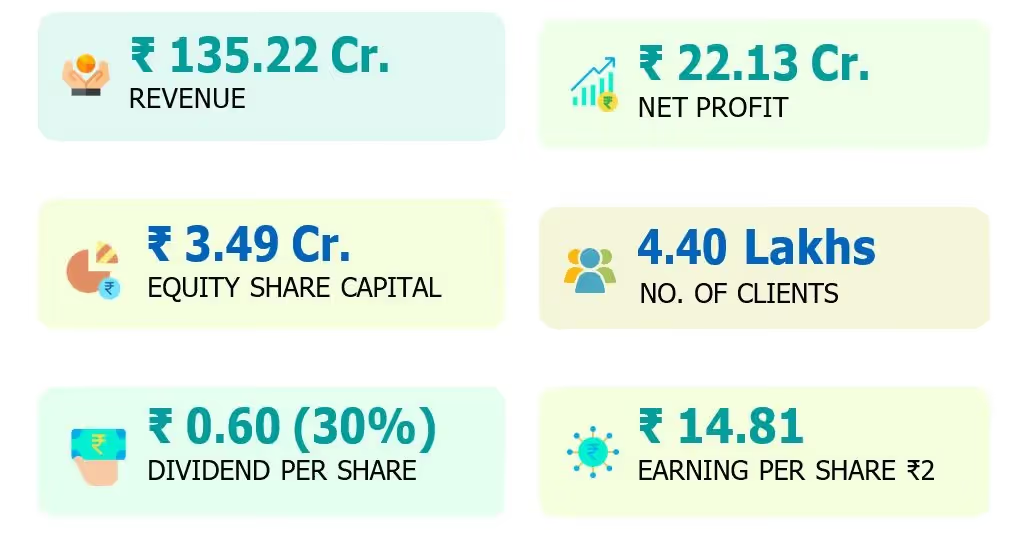
Standalone Highlights of results for the year ended as on 31st March 2025 :
.avif)
Legacy Enriched by the Next Generation Highlights 2024-25 :
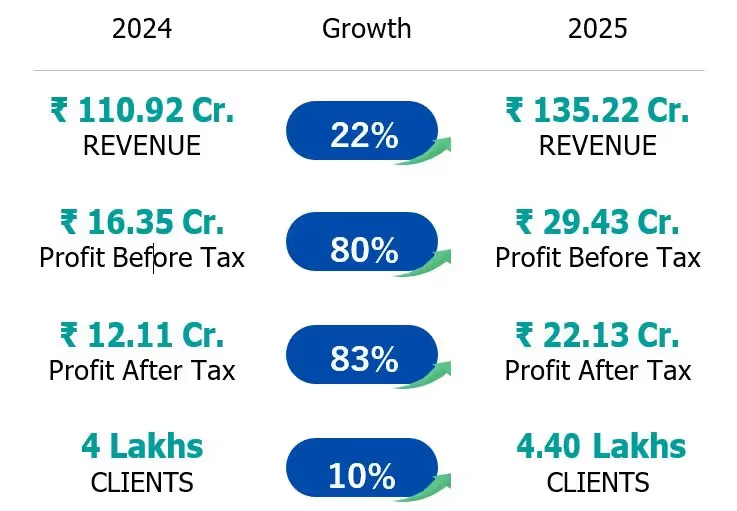
Growth Highlights 0f 2024-25 :
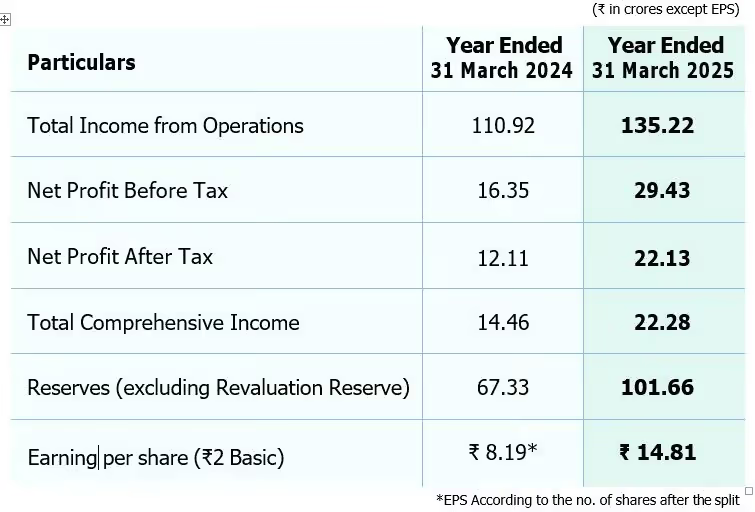
Extract of Audited Standalone Financial Results for the Year Ended as on 31st March 2025 :


Is Algo Trading a Good Idea?
Algorithmic trading (algo trading) has revolutionized the financial markets by automating the execution of trades based on pre-defined criteria. But is algo trading good to do?
For many people, algo trading offers great advantages. Algorithms can process a lot of data at a very fast speed and make trades at a very low cost. This makes trading much more efficient and profitable. Algorithms can react faster than humans to market fluctuations, allowing traders to take advantage of opportunities that may otherwise not be available. By not having human emotions taking part, there is less emotional risk in trading.
What is Algorithmic Trading?
Algorithmic trading is all about using computer algorithms to take control of the trading process. These smart algorithms separate through market data, spot trading opportunities, and place orders for the trader. They can execute trades at lightning speed and in volumes that far surpass what any human could manage, all while keeping emotions out of the equation—something that often clouds human judgment.
At its core, algorithmic trading relies on predefined rules, like price, volume, or time, to determine the optimal moments to buy or sell a security. These rules can range from straightforward to incredibly intricate, weaving in various market factors, technical indicators, and statistical models.
The Rise of Algo Trading
The growth of algo trading has been driven by leaps in technology. With high-speed internet, enhanced data analysis tools, and superior computational power, it’s become much easier to create, backtest, and roll out complex trading strategies. These tech advancements, along with the increased access to financial data, have opened the doors for not just institutional traders but also retail traders to dive into algo trading.
Nowadays, algo trading makes up a heavy chunk of the daily trading volume in financial markets. For instance, in the U.S. stock market, it’s estimated that over 60% of trades are executed using algorithms. This trend underscores the expanding influence of automation in shaping the global financial landscape.
Advantages of Algo Trading
1. Speed and Efficiency
One of the standout perks of algorithmic trading is its speed. Algorithms can analyze massive amounts of market data in real-time and execute trades in the blink of an eye. On the flip side, human traders are limited by their cognitive abilities and can’t react nearly as fast. This speed advantage lets algorithms capitalize on even the tiniest price discrepancies, raking in profits that would be tough to match with manual trading.
2. Elimination of Emotional Bias
Human traders often let their emotions, like fear or greed, cloud their judgment, which can lead to some pretty poor investment decisions. On the other hand, algorithmic trading takes that emotional bias out of the equation. Since algorithms stick to strict, predefined rules, they make trades without getting caught up in the fear of losing money or the temptation to chase after big gains. This results in a more disciplined and consistent approach to trading.
3. Backtesting and Optimization
Algo trading systems can be backtested using historical market data, which is a fantastic way for traders to test their strategies without any risk before putting real money on the line. Backtesting helps pinpoint which strategies work best in various market conditions. Plus, algorithms can be fine-tuned and adjusted continuously to keep up with the ever-changing market landscape.
4. Diversification
With algo trading, traders can easily diversify their strategies by managing multiple trades at the same time. Algorithms allow them to invest in a range of markets and securities all at once, which helps spread the risk across different assets. This diversification is key to lowering the overall risk of a trading strategy.
5. Reduced Transaction Costs
Automated systems make trading more efficient, which in turn cuts down on transaction costs. Algorithms can execute trades faster and at lower costs than humans can, especially when you factor in things like bid-ask spreads, slippage, and commissions. For high-frequency traders, those small savings can really add up to significant profits over time.
6. Access to Complex Strategies
Algo trading opens the door to executing complex strategies that would be tough for humans to handle manually. For instance, strategies like statistical arbitrage, market making, or pairs trading require quick analysis of huge amounts of data and the ability to make multiple trades simultaneously. These strategies can be effectively carried out through algorithmic trading systems.
Algo trading can be a smart move, but it really depends on what the trader is aiming for, their resources, and their level of expertise. For institutional investors who have access to cutting-edge technology and substantial capital, algorithmic trading can be an incredibly effective way to boost efficiency and profits. On the flip side, retail traders need to think carefully about the costs, complexities, and risks that come with algorithmic trading.
In short, algorithmic trading isn’t a one-size-fits-all approach. Traders must grasp the technology, recognize the potential risks, and thoughtfully evaluate whether the advantages outweigh the hurdles. By doing this, they can make well-informed choices about incorporating algorithmic trading into their investment strategies.
Big Budget


Popular Articles





.avif)
.avif)
.avif)



START YOUR INVESTMENT JOURNEY
Get personalized advice from our experts
- Dedicated RM Support
- Smooth and Fast Trading App
