


Why Tata Steel Share Price Is Moving: FII Flows Into Capital Goods And Metals


Key Takeaways
- FII selling surged to ₹3.38 trillion in the last year, while inflows into capital goods and metals & mining were ₹22,955 crore and ₹28,810 crore respectively.
- The BSE Capital Goods index rose 13% YoY and the BSE Metals pack gained 33% while the Sensex fell about 3%.
- Industrial Production grew 7.3% YoY in June 2026, signaling broad-based manufacturing momentum.
- Valuations in the capital goods space are richer, but pockets like power transmission & distribution, railways equipment, and defence electronics offer earnings-backed potential.
Two questions dominate Indian markets this year: Where is the next earnings cycle headed, and what does Tata Steel Share Price signal when FIIs rotate into domestic capex-linked cyclicals? Over the last 12 months, foreign selling swelled to ₹3.38 trillion, yet inflows into capital goods and metals & mining ran ₹22,955 crore and ₹28,810 crore respectively. The two sectors defied the broader trend, lifting the BSE Capital Goods index 13% YoY and the BSE Metals pack 33%, even as the Sensex drifted down nearly 3%. Tata Steel Share Price, as a bellwether in the steel complex, mirrors how macro flows interact with an earning cycle in a capital-goods led growth narrative.
Tata Steel Share Price Drivers In An FII-Rotated Market
In an environment where FIIs are recalibrating exposure toward domestic capex-linked cyclicals, Tata Steel Share Price becomes a useful lens to understand the ongoing rotation. The two sectors that outperformed were capital goods and metals; as noted, they saw consistent buying with only four months of net outflows. The numbers speak loudly: BSE Capital Goods index up 13% YoY; BSE Metals pack up 33% YoY; Sensex, by comparison, declined about 3%.
| Metric | Value |
|---|---|
| BSE Capital Goods Index Return (YoY) | +13% |
| BSE Metals Pack Return (YoY) | +33% |
| Sensex Movement (YoY) | Approximately -3% |
| FII Selling (Last 12 Months) | ₹3.38 trillion |
| FII Inflows – Capital Goods | ₹22,955 crore |
| FII Inflows – Metals & Mining | ₹28,810 crore |
| IIP Growth (June 2026) | 7.3% YoY |
| Net Outflow Months | Four |
According to Vaqarjaved Khan of Angel One, 'Essentially, foreign investors were positioning ahead of where they expect the next earnings cycle to emerge rather than chasing defensive or export-dependent themes. It was conviction buying into a structural theme amid broad-based caution.'
Reference :
These dynamics hint at a broader conviction in a multi-year cycle of domestic capex-led growth. As the sector rotates, the commentary from market tacticians is consistent with a view that growth is transitioning from a defensive stance to a manufacturing- and infrastructure-led expansion.
For stock-level analysis, Swastika’s Sarthi AI stock assistant can help you dissect Tata Steel along with peers in real time. Swastika's Sarthi AI stock assistant guides retail investors with institutional-grade research for deeper stock-level insights.


IIP Momentum And The Broader Industrial Cycle
The IIP data reinforces the narrative: industrial production expanded 7.3% YoY in June 2026, the strongest pace in nearly two years. Manufacturing – the largest component of IIP – registered its strongest growth under the new series, suggesting industrial momentum is broad-based rather than concentrated in a few sectors. This broad-based momentum supports a constructive backdrop for capex-linked cyclical names, including Tata Steel and peers in the metals and capital goods space.
As a result, market participants are increasingly pricing in a multi-year expansion in India’s industrial economy, backed by robust government infrastructure spending and improving private-sector capital expenditure. The positive trajectory in IIP aligns with the earnings visibility for capital goods and steel-related producers, potentially supporting a re-rating of earnings-linked multiples in the sector.
According to Hitesh Jain of YES Securities, 'FIIs are increasingly pricing in a multi-year expansion in India's industrial economy, supported by strong government infrastructure spending, improving private-sector capital expenditure, and manufacturing-led growth.'
While the macro narrative looks constructive, analysts caution that cyclically sensitive earnings can still see volatility. The valuation lens remains important–especially in sectors that have outperformed for several years. The commentary from Angel One’s Vaqarjaved Khan highlights a nuanced view: valuations are ripe, but the pockets that offer earnings-backed re-rating are not uniformly crowded. The key is to identify where order-book visibility remains strongest and where structural demand can sustain a multi-quarter to multi-year trajectory.
Valuation Narratives In The Capital Goods Space
Valuations across the broader capital goods universe have undoubtedly become richer after several years of sustained outperformance. Many companies benefiting from infrastructure, railways, defence, and power equipment have priced in a significant portion of the expected earnings growth, leaving less room for positive surprises. That said, valuation premiums can remain justified if India's investment cycle continues to strengthen. The less crowded pockets–such as power transmission & distribution, railways-linked equipment, and defence electronics–offer earnings-backed re-rating opportunities where order-book visibility is strongest, and growth outlook is clearer.
For investors scanning for opportunities, the shift in macro drivers suggests a tilt toward those segments where capex pipelines are visible and expansion plans are funded by a mix of public and private investments. Tata Steel Share Price remains a focal point for those tracking how steel demand matches industrial activity. In this context, even as some sectors trade at elevated multiples, select cyclicals with strong visibility can offer a compelling risk-reward if valuations are supported by earnings delivery.
Related Reads
- Tata Steel Share Price And Market Pulse: A Practical Investor's Guide
- Tata Steel Share Price Momentum: Market Open Sparks Early Gains Across Stocks
- Infosys Share Price Outlook: A Retail Investor's Comprehensive Guide To Monitoring And Investing
Frequently Asked Questions
What sectors led FII inflows despite broad selling?
Capital goods and metals & mining drew inflows of ₹22,955 crore and ₹28,810 crore respectively, even as FIIs selling reached ₹3.38 trillion over the last year.
How did the BSE Capital Goods and BSE Metals indices perform versus Sensex?
The BSE Capital Goods index rose 13% year-on-year, the BSE Metals pack rose 33%, while the Sensex declined about 3%.
What does IIP data say about India's industrial momentum in mid-2026?
Industrial Production grew 7.3% year-on-year in June 2026, with manufacturing showing broad-based momentum under the new series.
Where are valuation opportunities within the capital goods space?
Valuations across broader capital goods have risen, but pockets with strong order-book visibility—like power transmission & distribution, railways equipment, and defence electronics—may still offer earnings-backed re-rating.
What did market strategists say about the outlook for India's industrial cycle?
Vaqarjaved Khan of Angel One described conviction buying into a structural theme amid caution, while Hitesh Jain of YES Securities noted that FIIs are pricing in a multi-year expansion in India's industrial economy supported by infrastructure spending and improving capital expenditure.
Conclusion
Beyond the immediate steel and capital goods cycle, a set of large-cap names offer proxy exposure to India’s growth story. Infosys stock, Reliance Industries stock, Vedanta stock, Hindalco stock price and JSW Steel stock are often watched for how they respond to macro momentum and global demand signals. While Infosys stock reflects software-led demand cycles, the others–Reliance Industries stock and Vedanta stock–offer leverage to energy, metals, and large-scale industrial activity, which align with the capex-led narrative driving Tata Steel and peers. The broader sector dynamic thus presents a composite picture: cyclical exposure prefers metals and machinery, while technology exposure remains a stabilizing ballast amid volatility. Investors can use this mix to balance risk while staying aligned with the structural growth thesis underpinning the capex cycle.
Latest Articles

Intraday Trading Time Analysis


Intraday trading, often referred to as day trading, involves buying and selling financial instruments within the same trading day. In India, this practice has gained immense popularity due to the potential for quick profits. Understanding the best times to trade can significantly enhance your trading success. This guide will break down intraday trading time analysis in India.
1. Understanding the Trading Hours
The Indian stock market operates on specific hours:
Pre-market session: 9:00 AM to 9:15 AM
Regular trading session: 9:15 AM to 3:30 PM
Post-market session: 3:40 PM to 4:00 PM
For intraday traders, the regular trading session is where the action happens.
2. Key Time Segments in Intraday Trading
a. Market Opening (9:15 AM to 10:30 AM)
- Volatility: The first hour after the market opens is usually the most volatile. This period is characterized by high trading volumes as traders react to overnight news and market events.
- Opportunities: High volatility can mean greater opportunities for profit, but it also carries higher risk. It’s crucial to be cautious and have a clear strategy.
b. Mid-morning Session (10:30 AM to 12:00 PM)
- Stability: After the initial rush, the market tends to stabilize. Price movements become more predictable, and trends start to form.
- Trend Analysis: This is a good time to identify and follow trends. Many traders find this period less risky compared to the opening session.
c. Midday Lull (12:00 PM to 1:30 PM)
- Low Activity: Trading volumes typically decrease during lunchtime. The market may move sideways with limited price fluctuations.
- Patience: This is a time for patience. Avoid making hasty decisions. Use this period to reassess your positions and plan your next moves.
d. Afternoon Session (1:30 PM to 3:00 PM)
- Pick-up in Activity: Trading activity picks up again as traders return from lunch. The market starts to show more movement.
- Trend Reversals: Be cautious of potential trend reversals. It’s a good time to lock in profits or set up new positions based on the emerging trends.
e. Closing Hour (3:00 PM to 3:30 PM)
- Increased Volatility: The last half-hour can be volatile as traders finalize their positions before the market closes.
- Strategic Exits: It’s important to manage your exits strategically. Avoid holding positions into the closing minutes to prevent unexpected losses.
3. Tips for Effective Intraday Trading
a. Use Technical Analysis
- Charts and Indicators: Utilize charts and technical indicators like Moving Averages, Bollinger Bands, and RSI (Relative Strength Index) to make smart decisions.
- Support and Resistance Levels: Identify key support and resistance levels to anticipate price movements.
b. Stay Updated with News
- Market News: Keep an eye on financial news and market updates. Economic reports, corporate earnings, and geopolitical events can impact market movements.
- Stock-specific News: Follow news related to specific stocks you’re trading. Positive or negative news can trigger significant price changes.
c. Risk Management
- Stop-loss Orders: Always use stop-loss orders to minimize potential losses. Decide in advance how much you’re willing to lose on a trade.
- Position Sizing: Don’t put all your capital into a single trade. Diversify your positions to spread risk.
d. Develop a Trading Plan
- Set Goals: Have clear goals for each trading day. Know your entry and exit points.
- Discipline: Stick to your trading plan. Avoid impulsive decisions driven by emotions.
4. Tools and Platforms for Intraday Trading
a. Trading Platforms
- Brokerage Accounts: Open a trading account with a reputable broker like Swastika that offers robust trading platforms and tools.
- Demo Accounts: Practice with a demo account before trading with real money to improve your skills.
b. Trading Tools
- Charting Software: Use advanced charting software to analyze market trends and patterns.
- Scanners: Stock scanners can help identify potential trading opportunities based on your criteria.
5. Conclusion
Intraday trading in India can be highly rewarding if approached with the right knowledge and strategy. Understanding the different time segments within the trading day, utilizing technical analysis, staying updated with news, and practicing risk management are key components of successful intraday trading. Always remember to trade with a plan and stay disciplined to navigate the dynamic world of intraday trading effectively.

Types of Orders
What Is an Order?
An order is an instruction given to a broker or brokerage firm to buy or sell a security for an investor. It's the basic way to trade in the stock market. Orders can be placed by phone, online, or through automated systems and algorithms. Once an order is placed, it goes through a process to be completed.
There are different types of orders, allowing investors to set conditions like the price at which they want the trade to happen or how long the order should stay active. These conditions can also determine whether an order is triggered or cancelled based on another order.
Types of Orders
Market Order
A market order is an instruction to buy or sell a stock at the current price available in the market. With a market order, the investor doesn't control the exact price they pay or receive—the market decides the price. In a fast-moving market, the price can change quickly, so you might end up paying more or receiving less than expected.
For example, if an investor wants to buy 100 shares of a stock, they will get those 100 shares at whatever the current asking price is at that moment. If the price is ₹500 per share, they’ll buy 100 shares for ₹500 each. However, if the price changes before the order is executed, they might pay a different amount.
Limit Order
A limit order is an instruction to buy or sell a stock at a specific price or better. This allows investors to avoid buying or selling at a price they don't want. If the market price doesn't match the price set in the limit order, the trade won't happen. There are two types of limit orders: a buy limit order and a sell limit order.
Buy Limit Order:
A buy limit order is placed by a buyer, specifying the maximum price they are willing to pay. For example, if a stock is currently priced at ₹900, and an investor sets a buy limit order for ₹850, the order will only go through if the stock price drops to ₹850 or lower.
Sell Limit Order:
A sell limit order is placed by a seller, specifying the minimum price they are willing to accept. For example, if a stock is currently priced at ₹900, and an investor sets a sell limit order for ₹950, the order will only go through if the stock price rises to ₹950 or higher.
Stop Order
A stop order, also known as a stop-loss order, is a trade order that helps protect an investor from losing too much money on a stock. It automatically sells the stock when its price drops to a certain level. While stop orders are commonly used to protect a long position (where the investor owns the stock), they can also be used with a short position (where the investor has sold a stock they don't own yet). In that case, the stock would be bought if its price rises above a certain level.
Example for a Long Position:
Imagine an investor owns a stock currently priced at ₹1,000. They're worried the price might drop, so they place a stop order at ₹800. If the stock price falls to ₹800, the stop order will trigger, and the stock will be sold. However, the stock might not sell exactly at ₹800—it could be sold for less if the price is dropping quickly.
Example for a Short Position:
If an investor has shorted a stock at ₹1,000 and doesn't want to lose too much if the price rises, they might set a stop order at ₹1,200. If the price goes up to ₹1,200, the stop order will trigger, and the investor will buy the stock at that price (or higher if the price is rising quickly) to cover their short position.
To avoid selling at a much lower price than expected, investors can use a stop-limit order, which sets both a stop price and a minimum price at which the order can be executed.
Stop-limit order
A stop-limit order is a trade order that combines features of both a stop order and a limit order. It involves setting two prices: the stop price and the limit price. When the stock reaches the stop price, the order becomes a limit order. This means the stock will only be sold if it can meet or exceed the limit price, giving the investor more control over the selling price.
Let's say an investor owns a stock currently priced at ₹2,500. They want to sell the stock if the price drops below ₹2,000, but they don't want to sell it for less than ₹1,900. To do this, the investor sets a stop-limit order with a stop price of ₹2,000 and a limit price of ₹1,900.
If the stock price falls to ₹2,000, the stop order triggers, but the stock will only be sold if it can get at least ₹1,900 per share. If the price drops too quickly and falls below ₹1,900 before the order can be executed, the stock won’t be sold until it reaches ₹1,900 or higher.
In contrast, a regular stop order would sell the stock as soon as it hits ₹2,000, even if the price continues to fall rapidly and ends up selling for less. The stop-limit order gives the investor more control over the price, but there’s a chance the stock won’t sell if the limit price isn’t met.
Trailing stop order
A trailing stop order is a type of stop order that adjusts automatically based on the stock's price movement. Instead of setting a specific price, the trailing stop is based on a percentage change from the stock's highest price. This helps protect profits while allowing the stock to rise in value. If the stock's price falls by the set percentage, the order is triggered and the stock is sold.
Example for a Long Position:
Imagine an investor buys a stock at ₹1,000 and sets a trailing stop order with a 20% trail. If the stock price goes up to ₹1,200, the trailing stop will automatically move up to ₹960 (20% below ₹1,200). If the stock price then drops to ₹960 or lower, the trailing stop order will trigger, and the stock will be sold.
Example for a Short Position:
If an investor has shorted a stock at ₹1,000 and sets a trailing stop of 10%, the stop price would move down as the stock price falls. If the stock price rises by 10% from its lowest point, the trailing stop order will trigger, and the stock will be bought to cover the short position.
The trailing stop order allows the investor to lock in gains as the stock price moves favorably, while still providing protection if the market turns.
Immediate or Cancel (IOC) order
An Immediate or Cancel (IOC) order is a type of stock order that must be executed immediately. If the full order cannot be filled right away, whatever portion can be filled will be completed, and the rest will be canceled. If no part of the order can be executed immediately, the entire order is canceled.
Suppose an investor places an IOC order to buy 500 shares of a stock at ₹1,000 per share. If only 300 shares are available at ₹1,000 right away, the IOC order will purchase those 300 shares, and the remaining 200 shares will be canceled. If no shares are available at ₹1,000 immediately, the entire order will be canceled.
Good Till Cancelled (GTC) order
A Good Till Cancelled (GTC) order is a type of stock order that stays active until you choose to cancel it. Unlike other orders that expire at the end of the trading day, a GTC order remains open until you either cancel it or it gets executed. However, most brokerages set a limit on how long you can keep a GTC order open, usually up to 90 days.
Let's say an investor wants to buy a stock at ₹500, but the current price is ₹600. They place a GTC order to buy 100 shares at ₹500. This order will stay active until the stock price drops to ₹500 and the order is filled, or until the investor cancels the order. If the price never drops to ₹500 and the investor doesn't cancel the order, it will automatically expire after 90 days (or whatever time limit the brokerage sets).
Good 'Till Triggered (GTT) order
A Good 'Till Triggered (GTT) order is similar to a Good 'Til Canceled (GTC) order but with a key difference: a GTT order only becomes active when a specified trigger condition is met. Once the trigger price is reached, the order is placed in the market. If the trigger price is not reached, the order stays inactive.
Imagine an investor wants to buy a stock currently priced at ₹600, but only if it drops to ₹550. They set a GTT order with a trigger price of ₹550. If the stock price falls to ₹550, the order is activated and placed in the market. If the price never drops to ₹550, the order remains inactive until it reaches the trigger price or the investor cancels it.
GTT orders can also have a time limit, so if the trigger price isn’t reached within a certain period, the order will expire.
Conclusion
In the stock market, an order is a fundamental instruction to buy or sell a security, tailored to an investor's strategy and market conditions. The various types of orders—such as market, limit, stop, stop-limit, trailing stop, IOC, GTC, and GTT—offer flexibility to manage price, timing, and risk. Understanding these order types empowers investors to execute trades more effectively, ensuring alignment with their financial goals and risk tolerance.
Learn how to optimize your trades and manage risk with Swastika!

What is a Volatility Index?
A Volatility Index measures how much the market expects prices to fluctuate in the near future. Think of it as a risk indicator. In finance, this change in prices is often called as volatility. The Volatility Index tells us the expected level of volatility, expressed as a percentage (e.g., 20%).
What is India VIX?
The term "Volatility Index India," also referred to as "India VIX," describes a measure of the expected volatility of Nifty 50 Index options over the next thirty days. It may reflect what the market believes will happen to the Nifty 50 in the near future and can be calculated using the Black-Scholes model.
Imagine the stock market as a rollercoaster. Sometimes it's smooth sailing, and other times it's a wild ride. The India VIX (Volatility Index) is like a measure that tells you how bumpy that ride might be in the near future. It reflects how much investors expect the market to swing up and down over the next 30 days, using a percentage.
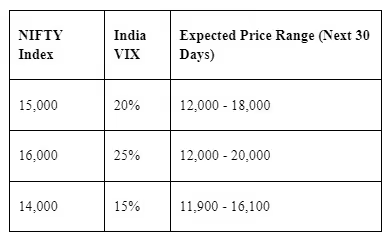
Example
Here's the breakdown:
- Low VIX (e.g., below 15%) suggests a calmer market with smaller price changes.
- High VIX (e.g., above 25%) indicates a more volatile market with bigger price changes.
India VIX shows an inverse relationship with the NIFTY index. When India VIX goes down, NIFTY usually goes up, and when VIX goes up, NIFTY tends to go down. Though it is relatively new, it has become a valuable tool for understanding market risk and volatility. Both experienced and new traders use it to navigate the stock market more effectively. By understanding this, you can reduce the fear of market volatility and make better trading decisions.
How is the India VIX calculated?
This index is computed using the Nifty 50 Index options order book as the foundation. The prices of Nifty options for the upcoming and nearing month are used to calculate volatility.
Example
Suppose the NIFTY 50 Index closed at 15,000 yesterday. If India VIX is 20%, it means the market expects the NIFTY 50 to fluctuate by 20% over the next year. So, the expected price range would be between 12,000 (20% below 15,000) and 18,000 (20% above 15,000).
How to Use India VIX for Trading
This is helpful for different types of traders and investors:
- Equity Traders: Use India VIX to understand market risk. If VIX is rising, prepare for more volatility.
- Long-term Investors: Use VIX to manage risk, even if short-term volatility is not a major concern.
- Options Traders: High VIX means higher option prices, good for option buyers. Low VIX is good for option sellers.
- Portfolio Managers: Adjust stock holdings based on VIX levels, holding more volatile stocks when VIX is low and safer stocks when it is high.
Benefits of using the India VIX:
- Risk Management: It helps you measure potential market risks, allowing you to adjust your trading strategies accordingly.
- Market Sentiment: A high VIX suggests investor fear, while a low VIX indicates confidence. This can help you understand the overall market mood.
- Options Trading: This can be a valuable tool for options traders to decide whether to buy or sell options contracts.
- Trading Volatility: Advanced traders can use it to directly trade on market volatility.
- Predicting Market Trends: The VIX often peaks before market downturns and bottoms before market upswings, providing insights for index trading.
- Portfolio Management: Mutual fund and portfolio managers can use it to adjust their holdings based on expected volatility.
India VIX and Market Sentiment:
Imagine the stock market is a big party. Sometimes it's a chill hangout with everyone relaxed (low VIX), and other times it's a wild dance party with people jumping everywhere (high VIX). The India VIX helps you guess what kind of party it'll be.
Low VIX
- Investors are happy to buy and hold stocks because they think prices will stay the same or go up slowly.
- Example: VIX is at 12%. Investors might buy stocks hoping they'll grow in value over time, because there's less risk of big drops.
High VIX
- Investors are worried about what will happen next and might not want to buy stocks. They might even sell their stocks to avoid losing money.
- Example: VIX jumps to 30%. Investors are scared! They might put their money in safer places like bonds, where prices are less likely to swing wildly.
The key thing to remember:
The VIX is a hint, not a mind reader. It tells you what investors are generally feeling, but it's not perfect. Feelings can change fast in the market. Look at other things too to get the whole picture.
Conclusion
India VIX serves as a powerful tool to gauge market sentiment and expected volatility, helping traders and investors make informed decisions. A low VIX indicates stability, while a high VIX signals uncertainty and risk. Though not foolproof, it complements other analysis techniques, offering valuable insights for managing risk, trading options, and understanding market trends. By leveraging India VIX, you can better navigate the rollercoaster of the stock market.

Forex Trading for Beginners – Currency Market Full Course
Introduction
If you're curious about currency trading but feel it's too complicated, you're in the right place. This blog will breaks down Forex trading into simple, easy-to-understand concepts, providing you with a solid foundation to get started. Forex, or foreign exchange, is the world's largest and most liquid market, offering great opportunities for traders. After completing this guide, you’ll have a clear understanding of the Forex market, learning how to analyze the market, manage risks, and apply strategies to trade wisely and take advantage of the potential profits available.
What is Forex Trading?
Forex trading, also known as foreign exchange trading or FX trading, involves buying and selling currencies to profit from changes in their exchange rates. Unlike stock markets, Forex is a decentralized market where currencies are traded over the counter (OTC) through a global network of banks, brokers, and financial institutions. It's the largest and most liquid financial market in the world, with a daily trading volume exceeding $6.6 trillion (approximately ₹494 lakh crore). Here's a detailed look at what forex trading entails, backed by data and factual insights.
Key Concepts
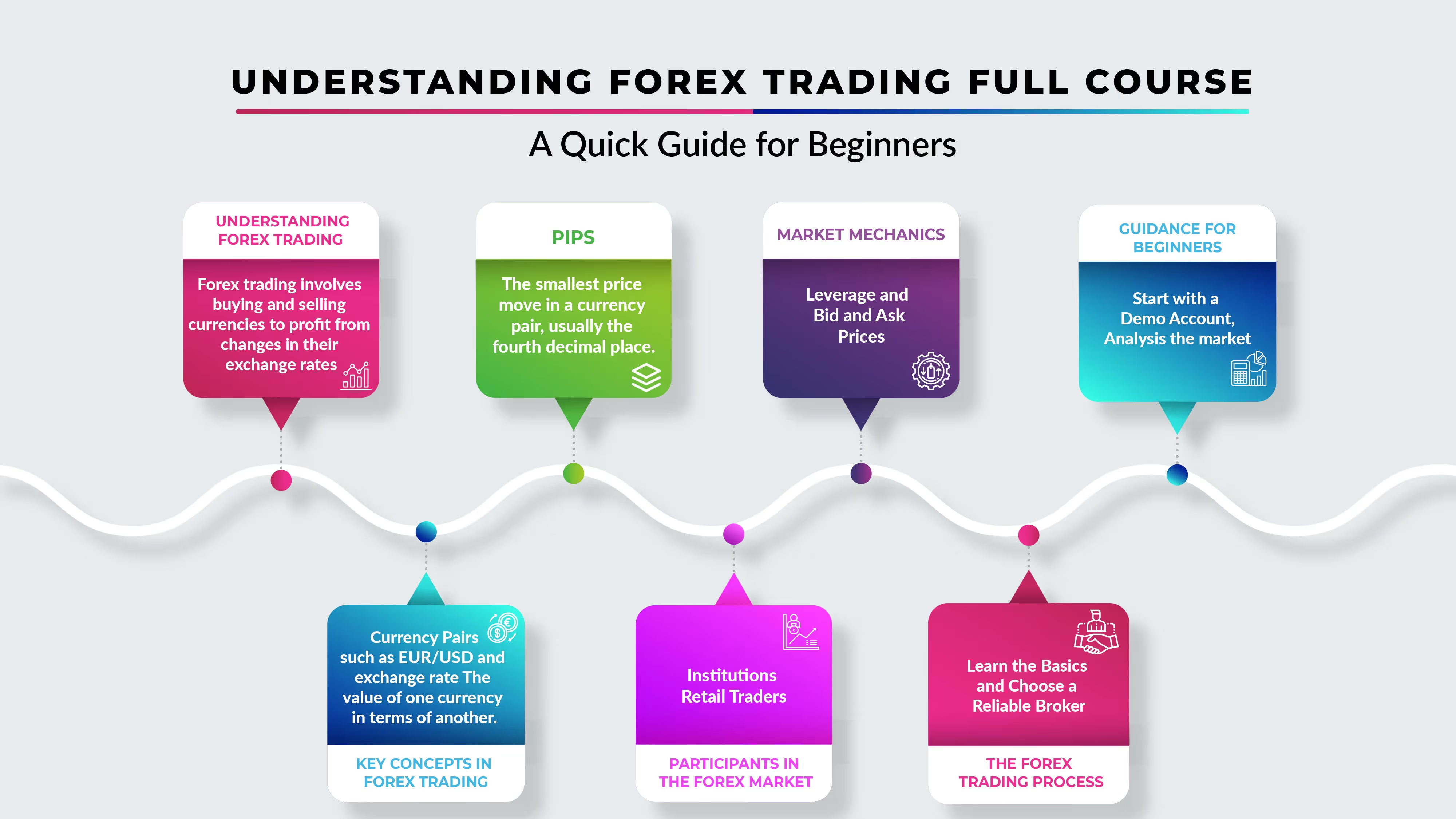
Currency Pairs: In Forex trading, currencies are quoted in pairs, such as EUR/USD (Euro/US Dollar). The first currency (base currency) is compared to the second currency (quote currency).
Exchange Rate: The value of one currency in terms of another. For example, if the USD/INR exchange rate is 85, it means 1 US Dollar equals 85 Indian Rupees.
Pips: The smallest price move in a currency pair. For most pairs, a pip is the fourth decimal place (0.0001).
The Basics of Forex Trading
1. Global Market Structure
Forex trading operates 24 hours a day, five days a week, across major financial centers in different time zones, including London, New York, Tokyo, and Sydney. This continuous trading environment allows for seamless transactions and round-the-clock market activity.
Currencies are traded in pairs, with one currency being exchanged for another. The most traded currency pairs involve the US Dollar and include EUR/USD (Euro/US Dollar), GBP/USD (British Pound/US Dollar), and USD/JPY (US Dollar/Japanese Yen).
According to the Bank for International Settlements (BIS), the EUR/USD pair accounts for approximately 24% of daily forex trading volume, making it the most traded currency pair.
2. Market Participants
The forex market is comprised of various participants, including central banks, commercial banks, financial institutions, corporations, hedge funds, and individual retail traders. Each participant plays a unique role in the market dynamics.
Institutional investors, such as banks and hedge funds, dominate the forex market, contributing to approximately 80% of the total trading volume. Retail traders account for the remaining 20%.
Central Banks and Governments
Central banks influence the forex market by implementing monetary policies, adjusting interest rates, and intervening in the currency markets to stabilize or stimulate their economies.
3. Market Mechanics
Leverage and Margin
Forex trading often involves leverage, allowing traders to control large positions with a relatively small amount of capital. While leverage can amplify profits, it also increases the potential for significant losses.
Data: Leverage ratios in forex trading can be as high as 50:1 or even 100:1, meaning a trader can control $100,000 (approximately ₹75 lakh) worth of currency with as little as $1,000 (approximately ₹75,000).
Bid and Ask Prices
The forex market operates on a bid-ask system. The bid price is the price at which a trader can sell a currency pair, while the ask price is the price at which they can buy it. The difference between the bid and ask price is known as the spread.
Benefits of Forex Trading
High Liquidity
The immense trading volume and continuous market activity ensure high liquidity, allowing traders to enter and exit positions quickly and at minimal cost.
Accessibility
Forex trading platforms and brokerage services have made forex trading accessible to individual retail traders. With an internet connection and a small initial investment, anyone can participate in the forex market.
Many forex brokers offer micro accounts, allowing individuals to start trading with as little as $100 (approximately ₹7,500).
Potential for Profit
The forex market offers opportunities for profit in both rising and falling markets. Traders can take long (buy) or short (sell) positions based on their market analysis and predictions.
Why Trade Forex?
Forex trading offers several advantages that make it an attractive option for many traders:
Liquidity: With a daily trading volume exceeding $6 trillion (approximately ₹450 trillion), Forex is the most liquid market in the world, ensuring you can enter and exit trades with ease.
24/5 Market: The Forex market operates 24 hours a day, five days a week, providing flexibility for traders across different time zones.
Leverage: Many brokers offer leverage, allowing you to control a larger position with a smaller amount of capital, increasing potential returns.
Low Costs: Forex trading typically involves lower transaction costs compared to other markets, with many brokers offering tight spreads and no commissions.
The Forex Trading Process
Step 1: Learn the Basics
Before diving into Forex trading, it's crucial to understand the basic terminology and concepts. Familiarize yourself with currency pairs, exchange rates, pips, and the different types of orders.
Step 2: Choose a Reliable Broker
Select a reputable broker who offers a user-friendly trading platform, competitive spreads, and robust customer support. Swastika Investmart is an excellent choice for all your trading needs. With us, you get access to a advanced trading platform that is both intuitive and powerful, designed to meet the needs of beginners and experienced traders alike. We offer some of the most competitive pricing in the market, ensuring you get the best value for your trades. Our dedicated customer support team is always ready to assist you with any queries or issues. Moreover, Swastika Investmart is regulated by recognized financial authorities, providing you with a secure and reliable trading environment.
Step 3: Open a Trading Account
Once you've chosen a broker, open a trading account.
Step 4: Fund Your Account
Deposit funds into your trading account. We offer various payment methods, including netbanking, UPI, and NEFT/RTGS/IMPS.
Step 5: Analyze the Market
Effective market analysis is a key to successful Forex trading. There are two main types of analysis:
Technical Analysis: Involves analyzing price charts and using technical indicators to predict future price movements.
Fundamental Analysis: Focuses on economic indicators, news events, and geopolitical developments to assess currency value.
Step 6: Place a Trade
Use your broker's trading platform to place a trade. Decide whether to go long (buy) or short (sell) based on your market analysis. Set your entry point, stop-loss, and take-profit levels.
Step 7: Monitor and Manage Your Trade
Keep an eye on your trade and be ready to make adjustments if the market moves against you. Use tools like stop-loss orders to minimize losses and protect your profits.
Guidance for Beginners
1. Start with a Demo Account
Practice trading with a demo account to gain experience without risking real money. This allows you to familiarize yourself with the trading platform and test your strategies.
2. Develop a Trading Plan
Create a trading plan that outlines your goals, risk tolerance, and strategy. Stick to your plan and avoid emotional trading.
3. Educate Yourself Continuously
The Forex market is constantly evolving. Stay informed by reading market news, taking online courses, and joining trading communities.
4. Manage Your Risk
Never risk more than you can afford to lose. Use risk management tools like stop-loss orders and diversify your trades to spread risk.
5. Keep a Trading Journal
Document your trades, including the reasons for entering and exiting each position. Reviewing your journal can help you identify patterns and improve your trading strategy.
Forex Trading Strategies
1. Scalping
Scalping involves making numerous trades throughout the day to profit from small price movements. This strategy requires quick decision-making and often leverages technical analysis.
2. Day Trading
Day traders open and close trades within the same trading day, avoiding overnight positions. This approach relies on intraday price movements and requires constant market monitoring.
3. Swing Trading
Swing trading involves holding positions for several days or weeks to profit from expected price swings. This strategy uses both technical and fundamental analysis to identify trading opportunities.
4. Position Trading
Position traders hold positions for months or even years, focusing on long-term trends and fundamental analysis. This strategy requires patience and a strong understanding of macroeconomic factors.
Essential Tools and Terminology
Technical Analysis:
• Charts: Line, bar, and candlestick charts display price movements over time. Candlestick charts are popular among traders for their visual clarity.
• Indicators: Moving averages, Relative Strength Index (RSI), and MACD (Moving Average Convergence Divergence) help analyze price trends, momentum, and volatility.
• Support and Resistance: Levels where prices historically have a tendency to rise (support) or fall (resistance). Traders use these levels to make trading decisions.
Fundamental Analysis:
• Examines economic factors, geopolitical events, and central bank policies that influence currency prices.
• Key economic indicators include GDP growth rates, inflation rates, employment data, and interest rates.
Risk Management:
• Stop-Loss Orders: Set a predetermined price to automatically close a losing trade, limiting potential losses.
• Take-Profit Orders: Set a price at which a profitable trade automatically closes, securing gains.
• Position Sizing: Determine the size of each trade based on your risk tolerance and account size.
Common Mistakes to Avoid
Overtrading
Trading too frequently can lead to higher transaction costs and emotional fatigue. Stick to your trading plan and avoid impulsive trades.
Ignoring Risk Management
Failing to manage risk properly can result in significant losses. Always use stop-loss orders and never risk more than you can afford to lose.
Lack of Education
Entering the Forex market without sufficient knowledge can be detrimental. Invest time in learning and continuously improving your trading skills.
Emotional Trading
Letting emotions drive your trading decisions can lead to poor outcomes. Stay disciplined and stick to your trading plan.
Conclusion
Forex trading offers opportunities for profit, but it requires diligence, education, and disciplined execution. By understanding currency pairs, trading concepts, tools like technical and fundamental analysis, and implementing robust risk management strategies, beginners can navigate the forex market effectively.
Remember, successful trading involves continuous learning and adapting to market conditions. With patience and perseverance, forex trading can become a fulfilling venture for those willing to invest the time and effort. Happy trading!

Freeze/ Unfreeze your online access
In case you feel that your online access has been hacked by someone or you feel that your online access needs to be blocked, you can opt out to freeze the online access to account. What does this mean for you:
- By Freezing account, your online session will be logged out
- By Freezing account, your online access will be blocked
- Once the account is freezed, all your pending orders will be canceled
- This would your Algo logins and algo orders too
- In order to sq.off/ place new order, you’ll need to contact your RM
You can Freeze your account via:
1. Trading Application
To freeze your account from the Trading Application, you’ll need to follow the steps below:
- Login to your Trading Application
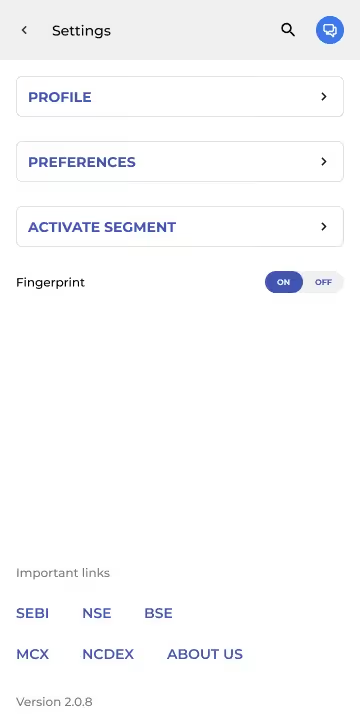
- Navigate to settings> profile
- Scroll down to bottom of the screen, “ Freeze Account” would be visible tap on it
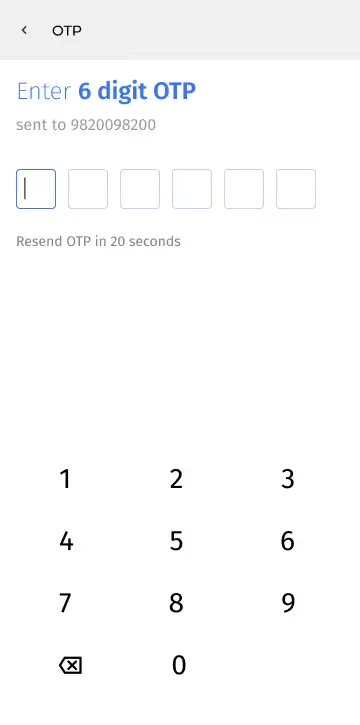
- You’ll be asked to verify your OTP
- As soon as you verify your OTP, your online access will be blocked
2. Reaching out to Helpdesk
You can reach out to the Helpdesk Number - 08069049876 to block the online access. You’ll be asked to identify yourself with some valid identification id, once validated your online access will be blocked
You will be able to unfreeze your online access by reaching out to the Helpdesk Number - 08069049876. You’ll be asked to identify yourself with some valid identification id, once validated your online access will be unfreezed.

Freezing your account ensures your online security by logging out sessions, blocking access, and canceling all pending and algo orders. You can unfreeze your account anytime by contacting the Helpdesk and verifying your identity. Stay proactive in safeguarding your account.
Start Trading with Swastika Now!

Stock Market for Beginners - Equity Market Full Course
Are you new to investing and looking to understand how the stock market works? You're not alone. Many people find the stock market complex and intimidating at first, but with the right information and guidance, anyone can learn to navigate it successfully. This blog will provide you with a complete overview of the stock market, including its processes and guidance for beginners to make learning easier. Whether you're looking to grow your savings, plan for retirement, or just learn more about investing, this guide will equip you with the knowledge you need to navigate the stock market confidently. By the end, you’ll have a solid understanding of how the stock market operates and how to start investing with confidence.
What is the Stock Market?
The stock market is a platform where investors can buy and sell shares of publicly traded companies. Shares, also known as stocks or equities, represent a portion of ownership in a company. When you purchase a stock, you become a shareholder and own a piece of that company.
Key Terms
1. Stocks/Shares/Equities: Units of ownership in a company.
2. Stock Exchange: A marketplace where stocks are bought and sold (e.g., NSE, BSE).
3. IPO (Initial Public Offering): The first sale of a company’s stock to the public.
4. Bull Market: A period when stock prices are rising.
5. Bear Market: A period when stock prices are falling.
Why Invest in the Stock Market?
Investing in the stock market offers several benefits:
1. Potential for High Returns: The Indian stock market has demonstrated strong growth over the years, providing investors with substantial returns. The BSE Sensex, one of the leading stock market indices in India, has shown significant appreciation.
2. Ownership in Companies: When you buy stocks, you own a part of the company and can benefit from its growth and success.
3. Accessibility and Liquidity: The Indian stock market is highly liquid, with significant daily trading volumes. This liquidity ensures that investors can buy and sell stocks with ease, providing flexibility in managing their investments.
Diversification: Investing in a variety of stocks can help spread risk and reduce the impact of any single investment’s poor performance.
4. Stock Market Reforms
Reforms in the Indian stock market have enhanced transparency, efficiency, and investor protection. Regulatory bodies like the Securities and Exchange Board of India (SEBI) ensure a well-regulated and secure trading environment.
The introduction of electronic trading, depository services and stringent regulatory frameworks has made the Indian stock market more accessible and reliable for investors.
Dividend Income
5. Regular Income Streams
Many Indian companies offer attractive dividend yields, providing investors with regular income in addition to capital appreciation.

Process of Investing in the Stock Market
Step 1: Learn the Basics
Before you start investing, it’s important to understand the fundamentals of the stock market. This includes familiarizing yourself with key terms, market dynamics, and basic investment strategies.
Step 2: Open a Trading Account
To buy and sell stocks, you need to open a trading account with a brokerage company like Swastika Investmart, a reputable broker that offers a user-friendly platform and reasonable fees. Also, we provide an easy and secure way to open a trading account.
Step 3: Fund Your Account
After opening your trading account, you need to deposit funds into it. Swastika offers multiple payment options, including bank transfers and online payment systems.
Step 4: Research Stocks
Conduct thorough research before investing in any stock. Look into the company’s financial health, performance history, industry position, and future growth prospects. Use resources like financial news, company reports, and market analysis.
Step 5: Place Your Order
Once you’ve identified a stock you want to buy, place an order through your trading platform. There are different types of orders you can use:
- Market Order: Buy or sell a stock at the current market price.
- Limit Order: Buy or sell a stock at a specified price or better.
- Stop-Loss Order: Sell a stock when it reaches a certain price to limit losses.
Step 6: Monitor Your Investments
Regularly review your investment portfolio to ensure it aligns with your financial goals. Stay updated with market trends and news that could impact your investments. Adjust your portfolio as needed based on your research and market conditions.
Guidance for Beginners
Start Small
As a beginner, it’s wise to start with a small investment amount that you can afford to lose. This helps you gain experience and confidence without risking significant capital.
Diversify Your Portfolio
Don’t put all your money into one stock. Diversify your investments across different sectors and industries to reduce risk. This way, poor performance in one area can be offset by better performance in another.
Focus on Long-Term Goals
The stock market can be volatile in the short term, but historically, it has provided substantial returns over the long term. Avoid making impulsive decisions based on short-term market fluctuations. Instead, focus on your long-term financial goals and stay patient.
Stay Informed
Continuously educate yourself about the stock market. Read books, take courses, follow financial news, and learn from experienced investors. The more knowledge you gain, the better decisions you’ll make.
Use Analytical Tools
Take advantage of analytical tools and resources provided by your broker or other financial platforms. These tools can help you analyze stock performance, track market trends, and make smart investment decisions.
Seek Professional Advice
If you’re unsure about investing on your own, consider seeking advice from a financial advisor. They can provide personalized guidance based on your financial situation and goals.
Different types of Risk
Risks involved in stock market:
Market Volatility: Fluctuations in stock prices can lead to both gains and losses, driven by economic conditions, investor sentiment, and geopolitical events.
Individual Stock Risk: Risks specific to a company include poor financial performance, management changes, industry competition, or regulatory issues.
Liquidity Risk: Some stocks may have low trading volumes, making it difficult to buy or sell shares without affecting the price.
Interest Rate Risk: Changes in interest rates can impact stock prices, especially for sectors sensitive to borrowing costs like financials and utilities.
Currency Risk: For international investments, changes in exchange rates between currencies can affect investment returns.
Inflation Risk: Rising inflation can erode purchasing power and affect corporate profitability and stock prices.
Political and Regulatory Risk: Changes in government policies, regulations, or geopolitical events can impact market stability and stock prices.
Systematic Risk: Market-wide factors that affect all investments, such as recessions, wars, or natural disasters, can lead to widespread declines in stock prices.
Timing Risk: Poor timing of buying or selling investments can result in losses or missed opportunities.
Risk Management Strategies in Stock Market Investing:
Diversification: Spread investments across various asset classes (stocks, bonds, cash equivalents) to reduce exposure to any single investment's risk.
Asset Allocation: Determine the allocation of funds among different asset categories based on risk tolerance, financial goals, and time horizon.
Setting Risk Tolerance: Establish clear boundaries on the amount of risk you are willing to accept in your portfolio to align with your comfort level.
Regular Portfolio Review: Periodically assess and adjust your portfolio to maintain diversification and alignment with your risk tolerance and investment objectives.
Emergency Fund: Maintain a cash reserve for unexpected expenses to avoid the need to liquidate investments during market downturns.
Conclusion
Investing in the stock market can be a rewarding way to grow your wealth, but it’s important to approach it with knowledge and caution. By understanding the basics, doing thorough research, and following a disciplined investment strategy, you can increase your chances of success. Remember to start small, diversify your portfolio, and focus on long-term goals.
Download PDF Guide
By downloading this guide, you’ll gain access to:
- In-depth explanations of stock market concepts
- Step-by-step instructions for opening and funding a trading account
- Tips for researching and selecting stocks
- Strategies for managing and diversifying your portfolio
- Detailed infographics to simplify complex topics
Equip yourself with the knowledge and tools you need to become a confident and successful investor. Download our comprehensive PDF guide today and start your journey in the stock market with Swastika Investmart.
Big Budget


Popular Articles





.avif)
.avif)

.avif)



START YOUR INVESTMENT JOURNEY
Get personalized advice from our experts
- Dedicated RM Support
- Smooth and Fast Trading App
