


RBI Rupee Movement: Nine-Day Rally And Market Implications



Key Takeaways
- RBI Rupee Movement: The rupee closed at 95.08 per dollar after nine straight sessions of gains.
- From July 23 close of 96.73, the rupee has strengthened by 165 paise (about 1.7%).
- The RBI kept the repo rate at 5.25% and maintained a neutral policy stance.
- Near-term rate expectations remain anchored as global cues and policy signals interact.
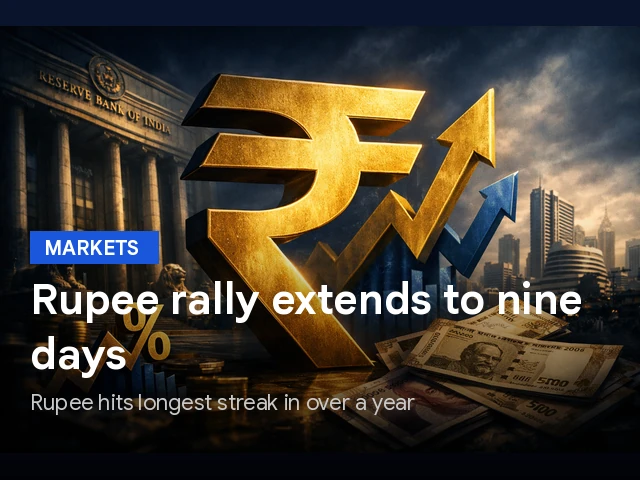
The RBI Rupee Movement has dominated India’s market narrative, with the currency closing at 95.08 per dollar after a ninth straight session of gains. This is the longest winning streak for the rupee in more than a year and represents a roughly 165 paise improvement from the July 23 close of 96.73. In simple terms, the rupee has strengthened by about 1.7% over this period, a move that frame the current macro picture as one of policy stability meeting a supportive external backdrop. The milestone matters not just for traders but for borrowers, exporters, and importers who build hedges and budget plans around currency levels. The price action reflects a convergence between a neutral policy stance from the RBI and a relatively stable risk-off environment that has allowed the currency to grind higher.
What is driving this RBI Rupee Movement? A core driver is the Reserve Bank of India’s decision to keep the repo rate unchanged at 5.25% for the fourth straight meeting. The Monetary Policy Committee (MPC), a six-member body, maintained a neutral policy stance, signaling that policy will stay in a steady lane unless new developments alter the macro picture. This stance provides a level of predictability that helps currency and debt markets calibrate risk, even as external tensions in West Asia add a layer of global uncertainty. For investors, this combination–stable policy and a currency that is drifting higher–can improve the comfort level for carry trades and foreign investment allocations, while also reminding hedgers to stay mindful of potential reversals if global risk sentiment shifts.
RBI Rupee Movement: Nine-Session Rally And Market Implications
The nine-session run in the rupee is more than a numerical feat; it signals a shift in how traders price currency risk in a domestic growth backdrop that remains resilient. A move of 165 paise in a little over two weeks translates to a significant risk-adjusted gain for importers who hedge forward, and for exporters who may see a tightening of margins on USD revenues when converted back to rupees. From a portfolio perspective, this momentum can influence cash-flow planning, currency hedging strategies, and even equity market exposure, since currency moves often feed into earnings expectations for export-oriented and import-intensive sectors. The current level of 95.08 per dollar places the rupee in a zone where price discovery is likely to hinge on policy cues, oil dynamics, and external risk appetite.
RBI Monetary Policy: How The RBI Rupee Movement Is Shaped By Policy Signals
RBI Monetary Policy is a primary lens through which the rupee’s movement is understood. With the repo rate held at 5.25%, the central bank has signaled a readiness to maintain current policy conditions unless the domestic or global landscape demands a shift. The neutral stance suggests that the RBI is comfortable with the trajectory of inflation, growth, and external stability for now, which in turn reduces the probability of abrupt currency shocks solely from policy surprises. For investors, this means currency risk remains a factor, but the near-term path is less likely to be disrupted by sudden rate hikes. The currency’s strength in this window is thus more about stability and gradual adjustment rather than aggressive tightening or easing.


RBI MPC Decision: What The Neutral Stance Signals For The Market
The MPC’s decision to maintain policy without changes is a clear signal that the central bank prioritizes a cautious, data-driven approach to inflation and growth. A neutral stance indicates that policy is not tightening or loosening aggressively; rather, it is calibrated to respond to evolving macro indicators. In the context of the RBI rupee movement, this means that near-term currency dynamics will likely be driven more by external developments–such as global commodity prices and geopolitical risk–than by domestic policy surprises. Retail investors should watch how this stance interacts with market expectations for the next policy cycle, as mild shifts in tone or guidance can still reshape risk premia and currency valuations.
RBI Policy Stance: How It Guides Near-Term Currency Trajectories
Policy stance plays a central role in anchoring expectations around future rate paths and currency behavior. The neutral posture implies a wait-and-watch stance on inflation trajectories and growth impulses, which can reduce volatility in the currency during periods of external uncertainty. In the current environment, the rupee’s nine-day rally could be sustained if external risk sentiment remains stable and oil and commodity prices stay broadly favorable. Conversely, any unexpected adverse shocks–whether geopolitical, trade-related, or commodity-driven–could reintroduce volatility as investors reassess the pace and path of policy normalization. For retail investors, this is a reminder that currency trends often ride the wave of policy clarity combined with global risk signals.
RBI Rate Expectations: What Traders Are Watching Next
Even with the current calm, rate expectations remain a live topic for market participants. The RBI’s decision to hold at 5.25% reinforces a near-term view that policy rates may stay steady unless inflation or growth data alters the risk-reward calculus. For the rupee, the key question is whether policy stability will be enough to sustain the current momentum or if a shift in external conditions–such as a change in oil prices, fiscal developments, or regional conflicts–could prompt a re-pricing of the currency. Investors should consider how changes in rate expectations could impact funding costs, external debt, and equity valuations tied to currency movements.
Practical Takeaways For Retail Investors In A Stronger Rupee Environment
For retail investors, the ongoing RBI rupee movement translates into tangible decisions across portfolios. A stronger rupee can dampen dollar-denominated costs for import-intensive businesses and can improve the efficiency of debt servicing for some borrowers. It also affects earnings translation for export-focused companies, potentially altering sectoral valuations. A balanced approach during currency moves–combining selective hedges, reviewing exposure to USD-denominated assets, and aligning sector bets with macro signals–can help manage risk and capture upside. If you’d like independent, AI-driven stock analysis tailored to currency-sensitive equities, consider Swastika’s Sarthi AI stock assistant for institutional-level insights. Swastika's Sarthi AI stock assistant helps retail investors navigate complex stock ideas in a currency move cycle.
Related Reads
- RBI Policy Update: How The RBI Monetary Policy Shapes Indian Markets
- RBI Digital Rupee And The 167th Income Tax Day: Pune Region Insights
- RBI Monetary Policy Repo Rate: Inflation Eases
Frequently Asked Questions
What is the current RBI rupee movement indicating for the currency trend?
The rupee is in a nine-session rally, closing at 95.08 per dollar, up about 165 paise from July 23, indicating a strengthening trend over the near term.
What was RBI's policy stance in this cycle?
RBI kept the repo rate at 5.25% for the fourth straight meeting and maintained a neutral policy stance.
What does the MPC decision mean for the rupee movement?
The MPC decision to hold and maintain neutrality signals policy stability, which supports the current RBI rupee movement by reducing policy-driven volatility.
How much has the rupee strengthened since July 23?
The rupee has strengthened by about 165 paise, roughly 1.7%, since July 23 when it closed at 96.73 per dollar.
Where can I get deeper research on currency and stock ideas from Swastika?
For institutional-level stock insights and currency-aware analysis, use Swastika's Sarthi AI stock assistant at the link: Swastika's Sarthi AI stock assistant.
Conclusion
What does this RBI Rupee Movement mean for you right now? It signals a window of stability where currency risk can be managed without aggressive policy shifts, provided external conditions remain favorable. For traders, hedging strategies that accommodate a persistent but gradual rupee appreciation can help lock in favorable costs while preserving upside for exporters and exporters-friendly sectors. The near-term takeaway is to monitor policy signals and external risk appetite, then align your exposures accordingly so you are not blindsided by unexpected shifts in the currency’s path.
Open your trading and demat account here
Reference :
1 : Aajtak
Latest Articles

Importance of Research Report


Writing research reports is a creative process. Creativity is the sense of how an analyst structures the report and communicates the message. What he does is take in a lot of financial information and give out an understandable version of what that financial information means. The process of converting numbers to views does demand certain qualities.
Research analysts make a difference by how they present their views, conclusions, and recommendations. The communication aspect of an analyst's job is as important as analysis, of which writing a research report is one.
Writing a Good Research Report -
Just like writing projects, compiling research reports also has three important steps - Planning, Drafting, and Editing.
The Major Points of a Research Report includes:
The writing process has to be planned as to how each section will be approached and assign a deadline for each. As there are many reports to be written and the workload shall be high near the quarterly results season, it is important to maintain high levels of discipline otherwise the delay can affect the work. Once done with the planning, work should begin on each section.
Generally, each organization has a template of its own, and therefore working on a predefined structure makes the work a little bit easier. Almost all the sections of a research report are fact-based and therefore filling them is more of a copy-paste function but certain important sections require an understanding of the business and thorough communication with management.
Fact-based sections in the Research Report:
- Peer group analysis, shareholding patterns, company fundamentals, and key financial indicators.
- Source of information: Annual reports, quarterly reports, calculations.
The view-based section of the research report:
- Company Business, Key Strengths, Key Concerns, Industry Overview.
- Source of information: Communication with management, Personal Understanding of the business and industry.
- Once the draft is ready it should be rechecked for financial figures and other errors and edited accordingly.
- Every year many reports are prepared by analysts but only a few make a remarkable presence. Things which should be avoided while preparing a report:
- Unnecessary details that are of no use should not be mentioned in it.
- Avoid using long sentences for description, make them precise & simple
- Use simple language which everyone can understand.
How to Read Crude Oil Inventory Data
Crude Oil is one of the most popular trading instruments among commodity traders. But before doing trade on any instrument every trader must know about the news related to that instrument, fundamental outlook, demand & supply factor, technical outlook.
Analyzing Crude Oil Inventory
Some important inventory data needs to keep in focus while analyzing crude oil inventory:
- U.S. API Weekly Crude Oil Stock
- U.S. Crude Oil Inventories
- U.S. Gasoline Inventories
- U.S. EIA Weekly Distillates Stocks
These are the important crude oil reports released in the United States among these all U.S. API Weekly Crude Oil Stock and U.S. Crude Oil Inventories are the two main important crude oil inventory reports.
API inventory report is released by the American Petroleum Institute (API) and other one U.S. Crude Oil Inventory is released by the Energy Information Administration (EIA).
API provides the information of all segments of America’s oil and natural gas industry. They have more than 600 members who produce, process and distribute most of the nation’s energy. The industry supports more than ten million U.S. jobs and is backed by a growing grassroots movement of millions of Americans.
API was established in 1919 as a Standards Setting Organization. EIA is an agency of the United States Federal Statistical System and also a part of the US energy department. The U.S. Energy Information Administration (EIA) collects, analyzes, and disseminates independent and impartial energy information to promote sound policymaking, efficient markets, and public understanding of energy and its interaction with the economy and the environment.
EIA provides a wide range of information and data products covering energy production, stocks, demand, imports, exports, and prices and prepares analyses and special reports on topics of current interest.
Release Day & Time:
U.S. API Weekly Crude Oil Stock inventor is released on Tuesday Night at 02:00 AM (IST), which gives a glimpse of the movement of the crude oil for the day trading session on Wednesday before releasing US Crude Oil inventory data, whereas US crude oil inventory data is released on Wednesday night between (08:00 PM to 09:00 PM). In case of any holiday in the US are any other factors, release date and time may vary.
Other important data like U.S. Gasoline Inventories, U.S. EIA Weekly Distillates Stocks, U.S. EIA Weekly Distillates Stocks are also released at the same time with US Crude oil inventory (EIA) on Wednesday.
Gasoline is generally used as fuel in vehicles and it is made from crude oil and other petroleum products.
Oil refineries companies and blending facilities produce motor gasoline to sell it at retail fuel stations.
Now the question is how it affects the crude oil price so simply to understand this logic we have a case here.
Case - US crude oil inventory fell and in numbers, it is less as compared to forecast so it means the price should move upside according to US crude oil inventory data but at the same time, gasoline inventory data rose which is a ready fuel to use in-vehicle engines it means supply is more than expectation, which will cap the upside movement of the crude oil price.
Conclusion:
You can check all these data and can keep yourself updated regularly by following the website: Investing.com under “Economic Calendar”.
The conclusion is that while analyzing US crude oil inventory data we have to analyze all other related inventory reports at the same time. If all the reports provide clear indications of demand and supply then we can decide whether we have to buy or sell. If data is mixed so it means that price will move in a range.
NCDEX Relaunchs Steel Contract
National Commodity & Derivatives Exchange Limited (NCDEX) will relaunch the Steel Futures contract on Monday, January 18, 2021, a release issued by the exchange said on Thursday.
Initially, contracts will be available for the months expiring in February 2021, March 2021 and April 2021. With this launch, the first in this year, NCDEX has re-entered the Non-Agri space expanding the bouquet of derivative products.
OVERVIEW:
India is the 2nd largest steel producer in the world and it mainly caters to the Infrastructure and Construction industry. The major steel-producing states in India are Punjab, Chattisgarh, West Bengal, UP, Orissa and Gujarat.
The steel industry is the heart of global development. It is considered crucial for the development of the economy and is considered the backbone of human civilization.
The importance of steel to the economy can be further verified by the fact that level of per capita consumption of Steel is treated as an important index to measure the level of socioeconomic development and living standard of the people of a country. All major economies around the world have been largely shaped by the strength of their steel industry in their initial years of development.
KEY BENEFITS:
- Benchmark Futures contract for Steel Long
- Hedging and price risk management tool for value chain
- Efficient and transparent price discovery
- Robust delivery mechanism
- Connects the entire value chain
Commenting on the launch, Vijay Kumar, MD & CEO, NCDEX, stated, “India is on the cusp of exponential growth in infrastructure sector due to government impetus on making the country a $5-trillion economy in the coming years. As a result, the consumption of steel is likely to take a quantum leap ahead.
As the price of steel is a major component of total cost in many infra-projects, developers find it difficult to manage the volatility in steel prices in absence of an appropriate hedging platform in the country. The steel contract being launched by us will provide these entities with a reliable and transparent risk management tool to hedge against volatile prices.”
Mr Kapil Dev, EVP & Head of Business & Products, NCDEX stated, “India’s steel consumption is probably going to develop at a lot sooner tempo as over Rs. 44 lakh crore value of initiatives is already being applied out of Rs. 111-lakh-crore National Infrastructure Pipeline (NIP).
Even the home manufacturing and exports are additionally on the rise at a brisk tempo. On the opposite hand, logistical and provide inefficiencies have made steel and its uncooked materials cost extraordinarily unstable posing challenges to the complete worth chain individuals. Because of this, having a steel futures contract at this level of time has an amazing utility for producers in addition to customers to handle their value dangers.’’
CONTRACT SPECIFICATIONS:
- Ticker symbol - STEEL
- Trading Unit – 10 MT
- Delivery Unit - 10 MT
- Maximum Order Size - 500 MT
- Tick Size – Rs.10 (per MT)
- Hours of Trading- Mondays through Fridays: 9:00 A.M. to 9:00 P.M.
- Quantity Variation - +/- 3% or 5MT (whichever is higher)
- Minimum Initial Margin- 8%
- Delivery Center - Mandi Gobindgarh, Ghaziabad (Uttar Pradesh)
- Delivery Logic - Compulsory Delivery
- Delivery Specification - Upon expiry of the contracts all the outstanding open positions shall result in compulsory delivery.
- Due date/ Expiry Date 20th day of the delivery month - If 20th happens to be a holiday, a Saturday or a Sunday, then the expiry date (or due date) shall be the immediately preceding trading day of the Exchange, which is other than a Saturday.

What Are Corporate Actions?
Corporate actions are decisions made by publicly listed companies that can have a significant impact on their shareholders. These actions are approved by the company’s Board of Directors, shareholders, or both.
Corporate actions can affect the company’s stock price, ownership structure, or financial position, and sometimes all three. The nature and type of the action determine the extent of these changes.
Types of Corporate Actions
Mandatory Corporate Actions:
These are actions where investors don’t have a choice—they happen automatically, and all shareholders are affected.
- Stock Splits: If a company decides to split its stock, every shareholder’s shares are automatically split.
- Dividends: If a company declares a dividend, all eligible shareholders will receive
Voluntary Corporate Actions:
These are actions where investors have a choice to participate or not.
- Rights Issues: A company may offer existing shareholders the right to buy more shares at a discount, but investors can choose whether or not to buy them.
- Buybacks: If a company offers to buy back its shares, shareholders can decide whether they want to sell their shares back to the company.
In short, mandatory actions happen automatically for all shareholders, while voluntary actions require investors to decide if they want to participate.
Major Corporate Actions:
Dividend
After paying taxes, a company's remaining profits belong to the shareholders. The company can either keep these profits or distribute them among the shareholders, which is known as declaring a dividend. A company can declare an Interim Dividend during the year and a Final Dividend at the end of the financial year. Once declared, the company must distribute the dividend within 30 days.
Bonus Issue
A bonus issue is an alternative to a cash dividend, where a company issues additional shares (bonus shares) to its existing shareholders. The number of bonus shares each shareholder receives depends on their current shareholding.
Stock Split
In a stock split, the face value of existing shares is reduced in a specific ratio. Companies may split their shares if the stock price becomes too high, which can limit investor participation. After a split, the price per share decreases, increasing the stock's liquidity in the market.
Share Consolidation
Share consolidation is the opposite of a stock split. The company increases the par value of its shares in a specific ratio and reduces the number of shares accordingly. This action is taken when the share price is perceived to be too low, which can negatively affect investor perception. Post-consolidation, the share price increases, potentially improving the market’s view of the company.
Merger and Acquisition
Mergers, acquisitions, and consolidations are corporate actions that change a company's ownership structure. In a merger, one company absorbs another, and the acquired company ceases to exist. In an acquisition, one company buys a substantial portion of another company's stock, and both companies typically continue to exist. In a consolidation, two companies combine to form a new entity, and the original companies cease to exist.
Buyback of Shares
A buyback occurs when a company repurchases its own shares using its reserves and surplus. These repurchased shares are canceled, reducing the company’s share capital. For a company to be eligible for a buyback, it must not have defaulted on payments such as interest, principal on debts, or dividends.
Delisting of Shares
Delisting refers to the removal of a company's shares from a stock exchange. This can be either compulsory or voluntary. In a compulsory delisting, shares are removed due to the company’s non-compliance with regulations. In voluntary delisting, the company chooses to remove its shares from the exchange and go private.
Impact of Corporate Actions on Investors
Here's how these actions can influence investors, especially in the Indian stock market:
Financial Gain or Loss
Dividends:
When a company pays dividends, investors receive regular income. For example, if a company declares a dividend of ₹10 per share, an investor holding 100 shares will receive ₹1,000.
Stock Splits and Bonus Issues:
These actions increase the number of shares an investor owns without changing the total value of the investment. For instance, in a 2-for-1 stock split, if you own 100 shares priced at ₹500 each, after the split, you'll have 200 shares priced at ₹250 each.
Mergers and Acquisitions:
If a company merges with another or is acquired, the stock price may change significantly. For example, if Company A acquires Company B, the share price of both companies might rise or fall, leading to potential gains or losses for investors.
Voting Rights
Rights Issues:
When a company offers new shares to existing shareholders at a discount, it can dilute voting power. If an investor doesn't buy the new shares, their voting influence decreases. For example, if you own 5% of a company, but new shares are issued and you don't buy them, your ownership percentage and voting power may drop.
Portfolio Diversification
Spin-Offs:
When a company creates a new independent company from one of its divisions, investors receive shares in the new company. This allows them to diversify their investments. For example if Reliance Industries spins off its telecom business, you might end up owning shares in both Reliance and the new telecom company, each with different growth prospects.
Information Signals
Share Buybacks:
When a company buys back its own shares, it might signal that the management believes the stock is undervalued. For example, if TCS announces a buyback, it could indicate confidence in its future performance, which might positively impact the stock price.
The Bottom Line
Corporate actions can have a big effect on a company’s future and its stock price, so it’s important for shareholders and investors to stay updated. These actions usually need approval from the board of directors and sometimes from shareholders as well.
Corporate actions can be either mandatory or voluntary and can have positive or negative effects. Generally, actions like paying dividends, buying back shares, or other moves to increase shareholder value are seen positively, unless investors believe the company could have used its resources better. On the other hand, rights issues and liquidations are usually disliked by investors.

राष्ट्रपति बिडेन के नए राहत पैकेज अनावरण से कीमती धातुओं को सपोर्ट।
सोने और चाँदी के भाव मे ऊपरी स्तरों से आई गिरावट पिछले सप्ताह रुकी और कीमती धातुओं में बढ़त दर्ज की गई है। अमेरिकी राष्ट्रपति जो बिडेन के द्वारा 1.9 बिलियन डॉलर के बिल का अनावरण और फेड प्रमुख जेरोम पॉवेल द्वारा मौद्रिक निति को डोवीश रखने की बात से कीमती धातुओं मे निचले स्तरों पर सपोर्ट देखा गया। गुरुवार को राष्ट्रपति बिडेन ने "अमेरिकी सुरक्षा योजना " का अनावरण किया जिसमे सरकार के खर्चे और अन्य दी जाने वाली सहायता के बारे मे बताया जिससे कीमती धातुओं को सपोर्ट मिला। अमेरिका से जारी होने वाले बेरोज़गारी के साप्ताहिक आंकड़े अनुमान 7.95 लाख से बढ़कर 9.65 लाख पर पहुंच गए।
बेरोज़गारी और बदतर होते कोरोना वायरस आकड़ो के कारण रोज़गार बाजार मे कमजोरी आ रही है। फेड प्रमुख जेरोम पॉवेल ने गुरुवार को कहा की जब तक मुद्रास्फीति अत्यधिक नहीं बढ़ जाती तब तक ब्याज दरे नहीं बढ़ाएंगे।पॉवेल के मुताबिक बांड खरीद योजना मे किसी भी तरह के बदलाव को पहले से ही आगाह कर दिया जाएगा। इस सप्ताह निवेशकों की नज़र अमेरिकी सीनेट पर रहेगी जिसमे पूर्व राष्ट्रपति ट्रम्प पर दूसरा दोषारोपण किया जायेगा।
तकनिकी विश्लेषण
इस सप्ताह फ़रवरी वायदा सोने के भाव मे तेज़ी रह सकती है और इसमे 48600 रुपय के निचले स्तरों पर समर्थन तथा 49600 रुपय के ऊपरी स्तरों पर प्रतिरोध है। चाँदी मार्च वायदा के भाव तेज़ रहने की सम्भावना है और इसमें 66000 रुपय पर समर्थन और 67000 रुपय पर प्रतिरोध है।
प्रमुख आंकड़े
इस सप्ताह ग्लोबल अर्थव्यवस्था से जारी होने वाले प्रमुख आंकड़े जिनमे, सोमवार को चीन की तिमाही जीडीपी, बुधवार को राष्ट्रपति बिडेन का भाषण, गुरुवार को बेरोज़गारी के दावे और यूरोपियन सेंट्रल बैंक की प्रेस कांफ्रेंस तथा शुक्रवार को अमेरिकी फ़्लैश मैन्युफैक्चरिंग पीएमआई के आंकड़े प्रमुख है।

Indigo Paints Limited IPO
Indigo Paints is the fastest growing amongst the top five paint companies in India. We are the fifth-largest company in the Indian decorative paint industry in terms of its revenue from operations for Fiscal 2020. Indigo has achieved this position in a highly competitive Indian decorative paint industry on the back of our multi-pronged approach.
This includes introducing differentiated products to create a distinct market in the paint industry, building brand equity for our primary consumer brand, creating an extensive distribution network, and installing tinting machines across our dealer network.
Indigo Paints has a strong market network with dealers in Tier 1, Tier 2, and Metros as well. It has 3 manufacturing facilities situated in Jodhpur (Rajasthan), Kochi (Kerala), and Pudukkottai (Tamil Nadu). It is further looking to expand its manufacturing capacities at Pudukkottai to manufacture water-based paints.
As of September 30, 2020, Indigo Paints owns and operates three manufacturing facilities in Rajasthan, Kerala and Tamil Nadu with an aggregate estimated installed production capacity of 101,903 KLPA for liquid paints and 93,118 MTPA for putties and powder paints.
As of September 30, 2020, Indigo Paints distributed their products to a network of 10,988 Active Dealers. In the six months ended September 30, 2020, their overall capacity utilization for liquid paint production was 20.77% and for powder, paint production was 57.98%.
Product Portfolio
Unique Products in the Existing categories:
- Dirt-proof & Water-proof Exterior Laminate – Indigo Paints launched India's first and only paint that gives equally effective protection from dirt as well as water. It offers superior resistance from dirt, while the silicone polymer repels water, and offers the walls an extremely smooth finish.
- Acrylic Laminate – Indigo Acrylic Laminate is a premium quality emulsion that gives the walls (both exterior and interior walls) a rich sheen finish offering a high-quality finish to the walls;
- PU Super Gloss Enamels – Indigo Paints’ PU Super Gloss Enamel is an all-surface enamel paint that delivers superior gloss and protects wood and metal with its anti-fungal and non-yellowing properties; and
- Polymer Putty – Indigo Paints’ Polymer Putty is a white cement-based putty with special polymers that gives double protection to the wall with a smooth and bright finish.
Unique Products disrupting the market to create a New Category (the first company to launch these products)
- Metallic Emulsion (Walls) – Indigo Paints pioneered the Metallic Emulsion segment, which gives a designer finish with glossy metallic texture effect. This has been used to glam up spaces suitable for interior and exterior walls of homes and offices and is available in shades of Gold, Silver, and Copper.
- Tile Coat Emulsion (Roof Tiles) – The Tile Coat Paint is a special paint for external roof tiles that provides unmatched gloss and sheen with excellent protection against algae and fungus.
- Bright Ceiling Coat (Interior Ceilings) – Indigo Paints created a new category for Ceiling Paints with the introduction of the Bright Ceiling Coat which offers unmatched brightness to the ceilings with a smooth matt finish to enhance the brightness of the room.
- Floor Coat Emulsion (Driveways) – This is India's first Floor Coat Paint that offers a glossy finish while also protecting the terrace floor, driveways, walkways and cement surfaces.
Strengths of the Company:
- Track record of consistent growth in a fast-growing industry with significant entry barriers.
- Differentiated products leading to greater brand recognition and enabling expansion into a complete range of decorative paint products.
- Focused brand-building initiatives to gradually build brand equity.
- The extensive distribution network for better brand penetration.
- Leveraged brand equity and distribution network to populate tinting machines.
- Strategically located manufacturing facilities with proximity to raw materials.
- Well-qualified and professional management team with a committed employee base.
IPO Details:
IPO DateJanuary 20, 2021, to January 22, 2021Issue TypeBook Built Issue IPOIssue SizeEquity Shares of Rs.10 totalling up to Rs.1169.12 CroreFresh IssueEquity Shares of Rs.10 totalling up to Rs.300 CroreOffer for Sale5,840,000 Equity Shares of Rs.10Face ValueRs.10 per equity shareIPO PriceRs.1480 to Rs.1490 per equity shareMin Order Quantity10Listing AtBSE, NSE
IPO Objective:
Offer For Sale: OFS money will not be received by the company.
Fresh Issue:
- To meet the capital expenditure requirements for manufacturing facility expansion at Pudukkottai, Tamil Nadu.
- To purchase tinting machines and gyro shakers.
- To repay all or certain borrowings.
- To meet general corporate purposes.
Financial Performance:
Financial Performance (in INR crore)FY2018FY2019FY2020H1 FY2021Revenue403.1537.3626.4260.2Expenses389.2503.2559225Net income13.22747.727.2Net margin (%)3.357.610.5
Tentative Time Table:
14 Jan 2021: Price Band announced
18 Jan 2021: Anchor List
20 Jan 2021: Offer Opens
22 Jan 2021: Offer Closes
27 Jan 2021: Finalization of Basis of Allotment
28 Jan 2021: Unblocking of ASBA
29 Jan 2021: Credit to Demat Accounts
02 Feb 2021: Listing on NSE & BSE
Outlook:
Among the top 5 in the Decorative Paint Industry in India, Indigo Paints is growing over 40% CAGR in terms of sales since inception. Revenue from operations has grown by 16.65% between FY19 to FY20, against the range of (8.8)% to 4.9% compared to peers. The quality of the paints is good, especially the exterior ones. The net margin of the company has been improving. We assign a "Subscribe" rating for listing gain and long-term eyeing the growth of their innovative products and their penetration in 3-tier and 4-tier cities.
Big Budget


Popular Articles





.avif)
.avif)

.avif)



START YOUR INVESTMENT JOURNEY
Get personalized advice from our experts
- Dedicated RM Support
- Smooth and Fast Trading App
