


Sensex Share Price: Key Moves, Global Cues, And What It Means For Retail Investors




Key Takeaways
- Sensex jump of 827 points lifts the market near the 24,000 mark as global cues brighten.
- Nifty 50 closes at 23,962.80 after opening at 24,124.70, up 80.75 points.
- DII inflows and fii net buyers indicate sustained institutional support amid positive macro signals.
- Brent crude hovers near $76 while the rupee trades around ₹95.29 per dollar, shaping the macro backdrop.
Sensex Share Price Movement In Focus: 827-Point Rally And What It Means For Retail Investors
The day’s action underscores how the sensex share price can pivot on global cues and domestic buying. The Sensex settled 827 points higher, reclaiming the psychological 24,000 level and signaling a broad-based risk-on tilt across multiple sectors. The Nifty 50 also showed strength, ending at 23,962.80, up 80.75 points or 0.34%. The index opened at 24,124.70, gaining 162 points or about 0.62%, before settling into a constructive close. Together these moves reflect a partial reversal of the recent volatility and suggest room for further upside in the near term.
At a macro level, the rupee opened around 95.29 per US dollar, a 10 paise improvement from the previous session, while Brent crude traded near 76 dollars a barrel and US WTI remained below 72 dollars. These global cues matter because oil prices influence import costs, inflation expectations, and risk appetite among FIIs and domestic buyers. For retail investors, today’s momentum raises the question: can this strength sustain into the next session, or does the market require fresh catalysts to push higher?
Table: Key Market Snapshot
| Metric | Value |
|---|---|
| Open (Nifty) | 24,124.70 |
| Open Change | +162 points |
| Close (Sensex) | 827 points higher |
| Nifty Close | 23,962.80 |
| Nifty Change | +80.75 points |
| Market Cap (Sensex Firms) | Rs 4,75,94,567 |
Across sectors, buying was broad-based with notable strength in realty, consumer durables, pharma and financials. The Bank Nifty outperformed the broader market, suggesting continued emphasis on financials as a lever for the rally. This breadth bodes well for traders and investors who favor a skew toward defensives in any near-term pullback. As always, it’s prudent to parse momentum with risk controls–position sizing, stop-loss discipline, and a bias toward quality earnings stories within those sectors.
For additional, stock-specific insights and a tailored research approach, consider Swastika’s Sarthi AI stock assistant: Swastika's Sarthi AI stock assistant.
Nifty Share Price Today: Open, Close, And The Day's Narrative
The Nifty's intraday journey mirrored the Sensex’s risk-on vibe. The index opened at 24,124.70, up 162 points, signaling early conviction among market participants. By session end, the Nifty settled at 23,962.80, up 80.75 points or 0.34%. The day’s chart shows a sustained push into the green, followed by selective profit-taking in the late trade that prevented a clean break above 24,000. For retail investors, the takeaway is to monitor whether the 24,000 level acts as a new support or becomes a magnet for quick profit-booking in upcoming sessions.
From a macro lens, oil got a lift as Brent traded near $76 while WTI hovered below $72. The rupee firmed modestly to around ₹95.29 per dollar. These external factors keep the domestic market in a delicate balance–supportive when global liquidity remains loose, cautious when inflation or commodity shocks reappear. In this environment, stock selection matters as much as timing: identify earnings resilience and balance-of-payments-friendly sectors that can weather commodity volatility.
Bank Nifty Outlook For Tomorrow: Sector Leadership And The Road Ahead
While the broad market posted gains, the Bank Nifty’s outperformance indicates that financials are playing a pivotal role in sustaining momentum. A positive Bank Nifty tilt typically signals confidence in credit growth, asset quality and margin resilience–factors that tend to support broader market sentiment. For traders, the focus would be on key resistance and support zones around the 50-day moving average and the psychological round numbers that often govern intraday moves. For long-term investors, this sector leadership could translate into selective exposure to banks, non-bank lenders and related financial services, provided earnings catalysts stay intact.
On the macro front, the day’s price action came amid a mixed global landscape and a macro backdrop where oil prices and currency moves influence borrowing costs and caps on equities’ upside. The Nifty’s volatility gauge (VIX) has shown periods of cooling, which can be a sign of more stable price action in the near term. However, risk management remains essential as volatility can re-enter quickly with shifts in oil pricing, liquidity, or geopolitical developments.
Sensex Market Cap And Market Breadth: Interpreting The Pulse
The market breadth on the session pointed to sustained interest in equity risk over the near term. The total market cap of all BSE Sensex companies stood at Rs 4,75,94,567. This figure, while a snapshot of the day, helps gauge overall investor appetite for large-cap Indian equities. A rising sensex market cap usually accompanies a broader participation across sectors, which in turn supports a more durable rally than a narrow, sector-led spike. Realistic expectations for retail investors should emphasize quality names with earnings visibility, rather than chasing momentum in late-stage rallies.
DII Inflows And FII Net Buyers: Flow Dynamics And Trading Implications
Market participants also monitored the flow dynamics. DII inflows stood at Rs 2,057 crore, while FII net buyers were reported at Rs 1,962 crore through the session, underscoring ongoing institutional support even as the market consolidates recent gains. These inflows can help sustain near-term momentum, particularly if domestic entities continue to add exposure while foreign investors demonstrate selective buying amid risk-on sentiment. Retail investors should consider these flows as a context for risk budgeting–how much of any incremental allocation is supported by durable earnings narratives rather than purely liquidity-driven bets.
Frequently Asked Questions
What drove the Sensex to an 827-point gain on July 10, 2026?
Sensex settled 827 points higher on positive global cues, with breadth broadening into realty, consumer durables, pharma and financial stocks.
What was the Nifty 50 level at the close?
Nifty 50 ended at 23,962.80, up 80.75 points (0.34%), after opening at 24,124.70 and rising 162 points in early trade.
What is the sensex market cap reported in the session?
Total market cap of all BSE Sensex companies stood at Rs 4,75,94,567.
What were the foreign and domestic institutional inflows in the session?
DII inflows were Rs 2,057 crore and FII net buyers were Rs 1,962 crore through the session, signaling continued institutional support.
What should retail investors watch next given the data?
Watch the Nifty and Sensex levels around 24,000, monitor oil and rupee moves, and consider diversified exposure to defensives like pharma and hospital stocks while staying alert to volatility indicated by the Nifty VIX and oil price moves.
Conclusion
The sensex share price today reflects a market that is wrestling with global cues while gradually aligning with domestic leadership across realty, durables, pharma and financials. For retail investors, the key takeaway is to balance optimism with discipline: use high-conviction, quality-driven names, manage risk through size and diversification, and stay mindful of macro signals from oil prices and currency movements. A practical mental model is to view pullbacks as potential buying opportunities in stocks with visible earnings trajectories and robust balance sheets, rather than chasing every up-leg move.
Open your trading and demat account here
Reference :
1 : Ndtv
Latest Articles
.avif)
Nifty Market Outlook 4 March 2026: Weak Start, Key Support in Focus


Summary
- Nifty likely to open weak amid negative global cues and GIFT Nifty pressure
- Key support seen near 24337 and 24000 zones
- Bank Nifty faces resistance near 59500 to 60000
- FII data in derivatives signals cautious undertone
- Traders should focus on risk management and stock specific moves
Nifty Market Outlook 4 March 2026: Weak Start, Key Support in Focus
Indian equities are set for a cautious opening today. The Nifty Market Outlook 4 March 2026 suggests continued pressure after weak global cues and heavy derivatives positioning.
US markets ended lower overnight, with the Dow Jones falling over 400 points. Asian markets are also trading in the red. GIFT Nifty indicates a sharp gap down opening of around 500 points, reflecting global nervousness.
Let us break down what this means for traders and investors in India.
Global Cues Weigh on Sentiment
Overnight weakness in US markets has spilled into Asia. Concerns around global growth, interest rate outlook, and geopolitical developments are keeping investors cautious.
For Indian markets, global cues matter because foreign institutional investors often adjust positions based on global risk appetite. When global markets fall sharply, FIIs tend to reduce exposure in emerging markets, including India.
Indian benchmarks listed on the National Stock Exchange of India and BSE are likely to reflect this cautious mood at the opening bell.
FII and DII Data: What the Numbers Reveal
In the cash market, FIIs were net sellers to the tune of over Rs 3200 crore, while domestic institutional investors bought aggressively, absorbing the supply.
This divergence is important.
- FII selling indicates global caution
- DII buying reflects domestic confidence and liquidity support
In the derivatives segment, FII data shows:
- Increase in short futures positions
- Heavy call writing
- Reduction in long positions
This suggests that FIIs are hedging or positioning for near term downside. The Put Call Ratio near 0.99 indicates balanced positioning, but the aggressive short buildup shows traders are preparing for volatility.
India VIX jumped sharply, signaling rising fear in the market. When volatility rises, traders should reduce leverage and tighten stop losses.
Nifty Technical Levels for 4 March 2026
As per the Nifty Market Outlook 4 March 2026, the index is likely to open below the recent budget day low of 24571. This is technically negative.
Immediate Support Levels
- 24337
- 24000
The 24000 zone is psychologically important. If this level breaks decisively, selling pressure may intensify.
Resistance Levels on Bounce
- 24800
- 25000
- 25250
The 25000 mark remains a strong supply zone where heavy call writing is visible. Traders can expect resistance near these levels if a pullback occurs.
Options data shows maximum open interest at 26000 calls and 24000 puts for the current expiry, with max pain around 25000. This indicates that 25000 could act as a magnet level later in the series if volatility cools.
Bank Nifty Outlook
Bank Nifty is also under pressure and is likely to open below its 100 day moving average near 59200.
This is significant because:
- The banking index often leads the broader market
- Sustained weakness here can drag Nifty lower
Support Levels for Bank Nifty
- 58600
- 57500
Resistance Levels
- 59500
- 60000
The 60000 level remains a strong psychological barrier. Unless Bank Nifty reclaims this level decisively, upside may remain limited.
Macro Context: RBI and Liquidity
The interest rate outlook from the Reserve Bank of India remains critical for market direction. If inflation moderates and liquidity stays stable, domestic flows may continue to cushion declines.
Market participants should also keep an eye on regulatory updates from Securities and Exchange Board of India, especially related to derivatives and margin norms, as these can influence trading volumes and volatility.
What Should Retail Investors Do Today
Volatile markets can feel uncomfortable, especially for new investors. But discipline is key.
For Short Term Traders
- Avoid aggressive long positions at open
- Trade with strict stop losses
- Prefer selling on rise strategy near resistance zones
- Reduce position size due to high VIX
For Swing Traders
- Wait for stability near 24000 before fresh buying
- Focus on sector leaders rather than weak midcaps
- Track Bank Nifty strength before entering financial stocks
For Long Term Investors
Corrections are part of the market cycle. India’s structural growth story remains intact, supported by domestic consumption, government capex, and improving corporate balance sheets.
Instead of reacting emotionally:
- Use staggered buying approach
- Invest via SIP in quality large cap stocks
- Avoid panic selling
Remember, markets regulated by institutions like NSE, BSE and SEBI operate within strong compliance frameworks, which adds credibility and stability to the ecosystem.
Sectoral View
- IT stocks may remain under pressure due to weak US cues
- Banking and financials may see short term volatility
- Defensive sectors like FMCG and pharma may outperform
Stock specific action is likely to dominate rather than broad based rallies.
Risk Factors to Watch
- Further FII selling
- Spike in crude oil prices
- Global bond yield movement
- Sharp move in India VIX
If global sentiment improves, markets can see sharp short covering rallies. But until key resistance levels are crossed, traders should remain cautious.
FAQs
What is the key support level for Nifty today
The immediate support is near 24337, followed by a strong psychological support at 24000.
Why is GIFT Nifty important for Indian markets
GIFT Nifty indicates early trends before the Indian market opens and reflects global sentiment.
How does FII selling impact the stock market
Heavy FII selling can increase volatility and put pressure on indices, especially large cap stocks.
Should long term investors worry about this fall
Short term corrections are normal. Long term investors should focus on fundamentals and use dips strategically.
Conclusion
The Nifty Market Outlook 4 March 2026 signals a cautious start driven by weak global cues and negative FII derivatives positioning. Key support lies near 24000, while resistance remains strong near 25000.
Volatility is rising, so disciplined risk management is essential. Traders should avoid emotional decisions and stick to predefined strategies. Long term investors can view corrections as opportunities rather than threats.
At Swastika Investmart, we combine research backed insights, advanced trading tools, and strong customer support to help investors navigate volatile markets confidently. As a SEBI registered intermediary, we prioritize transparency, investor education, and tech enabled investing solutions designed for Indian market participants.
.avif)
Stocks in News India Today 4 March 2026: Adani Ports, Cipla, Natco Pharma and Affle India
Summary
• Adani Ports reported 16 percent YoY cargo growth in February
• Cipla expands globally with a Middle East arm and biologics JV
• Natco Pharma launches Pomalidomide capsules in the US market
• Affle India announces leadership changes aligned with growth strategy
• These updates may influence sector specific momentum on NSE and BSE
Stocks in News 4 March 2026: Key Corporate Updates Investors Should Track
Indian markets continue to react sharply to company specific developments. In today’s Stocks in News 4 March 2026, four companies across ports, pharmaceuticals and digital technology are in focus. These updates are important for short term traders as well as long term investors tracking sector trends.
Let us break down the announcements and understand their potential impact on the Indian stock market.
Adani Ports Reports Strong Cargo Growth
Adani Ports and Special Economic Zone reported that its total handled cargo volume rose 16 percent year on year to 42.5 MMT in February. Logistics rail volume grew 3 percent to 52,101 TEUs.
Why This Matters
Cargo growth is a direct indicator of trade activity and economic momentum. Higher port volumes generally reflect:
• Strong import and export demand
• Improved industrial activity
• Rising infrastructure usage
India’s trade data and infrastructure push remain closely linked to port performance. With government capital expenditure still a focus area and policy support from institutions such as Reserve Bank of India and fiscal planners, logistics and port stocks often benefit from cyclical recovery.
For investors, sustained double digit cargo growth can support revenue visibility. However, global shipping costs and geopolitical developments also remain key risk factors.
Short term traders may watch price action on both National Stock Exchange of India and Bombay Stock Exchange for momentum continuation.
Cipla Expands Global Biologics Ambition
Cipla has incorporated a new arm, Cipla Middle East, and entered into a 60:40 joint venture with Kemwell Biopharma to manufacture biologics for global markets.
Strategic Significance
The pharmaceutical sector is moving toward complex generics and biologics. These segments offer:
• Higher margins
• Lower competition compared to plain generics
• Long term export potential
India is already a global generic medicine hub. Expansion into biologics signals a shift up the value chain.
For investors, this development suggests:
• Long term revenue diversification
• Global footprint expansion
• Reduced dependency on US generics pricing pressure
However, biologics require regulatory approvals and significant capital expenditure. Investors should track execution timelines and regulatory compliance under frameworks monitored by global agencies and domestic oversight standards aligned with Securities and Exchange Board of India disclosure norms.
Natco Pharma Launches Pomalidomide in the US
Natco Pharma announced the launch of Pomalidomide capsules in the US market for treatment of adult patients with Multiple Myeloma.
Impact on Earnings
The US market contributes significantly to revenue for many Indian pharma companies. A successful launch in a niche oncology segment can:
• Improve export revenue
• Boost profitability due to specialty pricing
• Strengthen US presence
Oncology drugs typically carry better margins than commoditized generics. However, competition, patent litigation and pricing dynamics must be monitored.
Retail investors should assess whether this launch materially impacts quarterly earnings or remains a limited contribution product.
Affle India Announces Leadership Evolution
Affle India has announced a planned leadership evolution aligned with its 10x Growth Plan.
Why Leadership Changes Matter
In technology and digital advertising businesses, management quality is crucial. Leadership restructuring can indicate:
• Strategic realignment
• Focus on scaling global operations
• Succession planning
Affle operates in the fast growing digital advertising and mobile marketing space. India’s digital economy continues to expand with rising smartphone penetration and digital ad spends.
For long term investors, leadership clarity and execution capability matter more than short term volatility. Monitoring management commentary and growth guidance is essential.
Sectoral View: What Should Investors Watch?
Ports and Infrastructure
Government spending, global trade flows and commodity demand drive this sector. Sustained cargo growth can improve sentiment.
Pharmaceuticals
Export performance, USFDA approvals, product pipeline strength and R and D investments remain key triggers.
Digital and Technology
Revenue scalability, global expansion and margin stability influence valuations.
Practical Investor Scenarios
Scenario 1: Short Term Trader
If you are a short term trader, watch:
• Volume breakout
• Delivery percentage
• Sector index movement
News based rallies often sustain only when supported by strong institutional participation.
Scenario 2: Long Term Investor
If you are a long term investor:
• Evaluate revenue impact
• Track debt levels
• Monitor management commentary
• Compare valuations with peers
Avoid buying purely on headlines. Instead, assess whether the news changes the long term earnings trajectory.
Broader Market Context
Indian equities remain influenced by:
• Global interest rate trends
• Crude oil prices
• Foreign institutional investor flows
• Domestic liquidity
Policy direction from RBI and regulatory clarity from SEBI continue to shape overall sentiment.
Stocks in News 4 March 2026 reflects stock specific triggers, but broader Nifty and Sensex trends will depend on macro factors as well.
FAQ Section
What is Stocks in News 4 March 2026?
It refers to companies making significant announcements on 4 March 2026 that may influence their share prices on Indian exchanges.
Is cargo growth important for port companies?
Yes. Higher cargo volume often indicates stronger trade activity and can lead to revenue growth for port operators.
Why is the US market important for Indian pharma companies?
The US is one of the largest pharmaceutical markets. Successful launches there can significantly improve export revenue.
Do leadership changes affect stock prices?
They can. Markets react positively if leadership changes signal stronger strategy and growth clarity.
Should investors buy stocks based only on news?
No. Investors should evaluate fundamentals, valuations and long term prospects before making decisions.
Conclusion
Stocks in News 4 March 2026 highlights important corporate developments across ports, pharmaceuticals and digital technology. While such updates can create short term volatility, long term wealth creation depends on consistent earnings growth and disciplined investing.
At Swastika Investmart, investors get SEBI registered services, research backed insights, advanced trading tools, strong customer support and continuous investor education initiatives. Our tech enabled investing platform helps you make informed decisions with clarity and confidence.
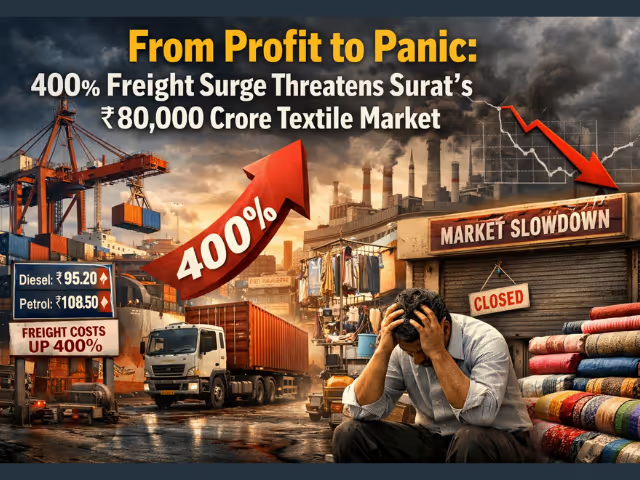
From Profit to Panic: 400% Freight Surge Threatens Surat’s ₹80,000 Crore Textile Market
Summary
• Shipping costs for the Surat textile industry have surged up to 400 percent
• Export orders and payments are getting delayed due to route disruptions
• Rising oil and raw material prices are squeezing profit margins
• Textile stocks may see short term volatility on NSE and BSE
• Diversification and cost control are key for investors and exporters
From Profit to Panic: 400% Freight Surge Threatens Surat’s ₹80,000 Crore Textile Market
The Surat textile industry, one of India’s largest man made fabric hubs, is facing a serious challenge. Shipping costs have surged by nearly 400 percent due to geopolitical tensions in West Asia. For a sector valued at around ₹80,000 crore and deeply dependent on exports, this is not a small shock.
Surat contributes significantly to India’s synthetic textile production. The city supplies fabrics to domestic markets and exports to the Middle East, Africa, and parts of Europe. When global shipping routes get disrupted, Surat feels the impact quickly.
Let us understand what is happening, why it matters for Indian investors, and how it could affect the stock market.
Why the Surat Textile Industry Is Under Pressure
1. Freight Costs Have Jumped Sharply
Shipping lines operating through sensitive routes near the Strait of Hormuz and Gulf waters have increased freight charges due to higher risk premiums and insurance costs. Some exporters report freight rates rising as much as four times compared to normal levels.
For textile exporters who operate on tight margins, such a spike can wipe out profits.
2. Payments Are Getting Delayed
Many exporters work on credit terms. When goods are stuck at ports or delayed at sea, payments are also delayed. This creates a working capital crunch, especially for small and medium enterprises.
Surat has thousands of MSME units. A cash flow squeeze can impact wages, production cycles, and future orders.
3. Raw Material Costs Are Rising
The Surat textile industry depends heavily on synthetic fibres derived from petrochemicals. When crude oil prices rise due to geopolitical tensions, input costs increase.
Higher raw material prices combined with higher freight costs create a double impact on margins.
Impact on Indian Stock Market
Retail investors often ask how such events affect stock prices.
The impact is usually seen in three layers.
Textile Stocks on NSE and BSE
Companies involved in textile manufacturing and exports may see short term pressure on earnings. If quarterly results reflect lower margins or weaker guidance, stock prices can react negatively.
Investors should monitor management commentary in earnings calls. Look for clarity on export exposure, freight cost absorption, and pricing power.
Shipping and Logistics Stocks
Interestingly, shipping companies may benefit from higher freight rates, depending on contract structures. However, volatility remains high in this space.
Oil and Petrochemical Companies
If crude oil prices rise, upstream oil companies may benefit. But downstream petrochemical players may face margin fluctuations. The broader impact depends on global price trends and domestic pricing policies under the watch of the RBI and government authorities.
Broader Economic Implications
The textile sector is one of India’s largest employment generators after agriculture. If export disruptions continue, it can affect:
• Employment in textile hubs like Surat
• Export growth numbers
• Trade balance
• Working capital demand from banks
The Reserve Bank of India monitors inflation and liquidity closely. If oil prices rise sharply, inflation risks increase. That can influence interest rate expectations.
Meanwhile, regulators like SEBI ensure that listed companies disclose material developments transparently so investors can make informed decisions.
Real Scenario: How an Exporter Is Affected
Imagine a mid sized Surat exporter shipping fabrics to Dubai and Africa.
Earlier freight cost per container was ₹1 lakh. Now it is close to ₹4 lakh. If the exporter cannot pass on this cost to buyers immediately, profit margins shrink.
If shipments are delayed by 20 days, payment cycles extend. That means more borrowing from banks at higher interest rates.
Multiply this by hundreds of exporters and you see the scale of impact.
Should Retail Investors Be Worried?
Market corrections due to geopolitical events are common. However, they are often temporary unless the conflict escalates significantly.
Retail investors should avoid panic selling based on headlines. Instead, consider the following:
• Check the company’s export exposure percentage
• Review debt levels and cash flow strength
• Look at long term demand trends in textiles
• Assess management quality and cost control ability
Diversification across sectors also helps reduce risk.
Long Term Outlook for the Surat Textile Industry
Despite current challenges, the long term story remains intact.
India’s textile exports are supported by:
• Growing global demand for affordable synthetic fabrics
• Government support schemes
• Production Linked Incentive initiatives
• Strong domestic consumption
If freight rates stabilize and geopolitical tensions ease, margins can recover.
Surat has survived multiple global disruptions in the past, including pandemic led shutdowns and supply chain crises. Its resilience comes from scale, entrepreneurship, and adaptability.
What Smart Investors Can Do Now
- Stay updated with quarterly results and management commentary
- Avoid overexposure to one sector
- Use corrections to accumulate fundamentally strong stocks
- Focus on companies with diversified export markets
Using advanced trading tools and research backed insights can help investors make better decisions during volatile periods.
FAQ Section
Why has the Surat textile industry been hit so hard?
The sector depends heavily on exports and shipping routes affected by West Asia tensions. A 400 percent rise in freight costs has sharply reduced margins.
Will textile stocks fall further?
It depends on how long freight rates remain high and how companies manage costs. Short term volatility is possible, but long term impact depends on fundamentals.
How does this affect Indian inflation?
If oil prices rise due to geopolitical tensions, input costs increase. That can create inflationary pressure, which the RBI monitors closely.
Should retail investors exit textile stocks?
Not necessarily. Investors should evaluate company fundamentals, debt levels, and export exposure before making decisions.
Conclusion
The Surat textile industry is facing a serious short term challenge due to a 400 percent surge in freight costs. Export delays, rising input prices, and working capital stress are creating pressure across the value chain.
However, India’s textile sector remains structurally strong. For retail investors, this is a time for careful analysis, not panic.
At Swastika Investmart, we are a SEBI registered entity offering research backed insights, advanced trading tools, strong customer support, and investor education initiatives. Our tech enabled investing platform helps investors navigate volatile markets with clarity and confidence.

Stock Market Opened Today 4 March 2026: Holi Holiday Update and What Investors Should Know
Summary
• Indian stock market resumed trading on 4 March 2026 after Holi holiday
• NSE and BSE reopened for equity, F&O, and currency segments
• Volatility expected due to global cues and holiday gap
• Retail investors should focus on disciplined strategy, not emotions
Stock Market Opened Today 4 March 2026: Holi Holiday Update and What Investors Should Know
The Stock Market Opened Today 4 March 2026 after remaining closed on 3 March 2026 for the Holi festival. Both the National Stock Exchange of India and the Bombay Stock Exchange resumed normal trading operations across equity, derivatives, and currency segments.
For many retail investors, post holiday trading sessions often bring curiosity and caution. Will markets open with a gap up or gap down. Will global cues dominate sentiment. Should investors buy immediately or wait.
Let us break it down in simple terms.
Why Was the Market Closed on 3 March 2026
Indian stock exchanges follow an official trading holiday calendar approved under regulatory norms of the Securities and Exchange Board of India. On account of Holi, equity markets remained shut on 3 March 2026.
However, as per exchange guidelines, only the evening commodity session was open on the Multi Commodity Exchange of India. This is common during certain festival holidays.
How Markets Typically React After a Holiday
When markets reopen after a holiday, price movement depends on three major factors:
1. Global Market Cues
If US or Asian markets moved sharply during the holiday, Indian markets often react at opening. For example, movements in crude oil prices, US bond yields, or geopolitical developments can influence the opening sentiment.
2. Domestic News Flow
Updates related to inflation, RBI policy expectations, government reforms, or corporate earnings also impact sentiment. Investors closely watch signals from the Reserve Bank of India, especially when rate decisions are near.
3. Technical Setup
Traders track support and resistance levels on indices like:
• Nifty 50
• Sensex
• Bank Nifty
Gap openings are common after a trading break.
What Happened When Stock Market Opened Today 4 March 2026
On reopening, liquidity returned across segments. Institutional participation resumed. Retail investors also became active after the extended weekend effect.
Key areas to watch today:
• Opening gap and first hour volatility
• FIIs and DIIs activity
• Sector rotation
• Midcap and smallcap momentum
Historically, post holiday sessions may see high volatility in the first 60 to 90 minutes. Experienced traders usually avoid aggressive positions during this period.
Sectoral Impact to Monitor
When Stock Market Opened Today 4 March 2026, sector specific moves became important.
Banking and Financials
Banking stocks often lead direction. Any commentary linked to credit growth or RBI liquidity stance influences this sector.
IT Sector
IT stocks react to global technology cues and US market movement during the holiday.
Oil and Gas
Crude oil movement plays a critical role in Indian markets. India imports a significant portion of its crude requirement. Any spike impacts inflation expectations and rupee movement.
FMCG and Consumption
Defensive sectors may see buying interest if broader markets remain volatile.
Practical Scenario for Retail Investors
Let us understand with a simple example.
Imagine you are a SIP investor investing monthly in equity mutual funds. A holiday gap opening should not change your long term plan. Market timing rarely works consistently.
On the other hand, if you are a short term trader holding leveraged positions in F&O, volatility after a holiday requires strict risk management. Use stop losses. Avoid emotional decisions.
Disciplined investing always beats reactive trading.
Regulatory and Safety Framework
Indian markets operate under strong regulatory supervision of SEBI. Exchanges like NSE and BSE follow strict risk management systems.
Circuit filters, margin norms, surveillance measures, and disclosure requirements protect investors from extreme volatility risks.
Retail investors should always verify that their broker is SEBI registered and compliant.
Data Context: Why Holiday Gaps Matter
In the past few years, Indian markets have shown increasing global correlation. Events such as US Fed announcements, crude oil spikes, or geopolitical tensions during Indian holidays often create gap openings.
However, long term investors have historically benefited from staying invested through volatility.
The Indian economy continues to show structural growth driven by:
• Strong domestic consumption
• Digital adoption
• Infrastructure push
• Formalization of economy
Short term noise does not change long term fundamentals.
What Should You Do Now
If the Stock Market Opened Today 4 March 2026 with volatility:
• Review your asset allocation
• Avoid impulsive buying at open
• Stick to SIP discipline
• Diversify across sectors
• Focus on quality companies
Markets reward patience and research backed decisions.
FAQs
Is the stock market fully open on 4 March 2026?
Yes. NSE and BSE resumed full trading operations on 4 March 2026 after the Holi holiday.
Was commodity trading open during Holi?
Only the evening commodity session was open on MCX during the Holi holiday.
Should I invest immediately after a holiday gap opening?
It depends on your investment horizon. Long term investors can continue SIPs. Short term traders should assess volatility and risk.
Does SEBI regulate holiday trading rules?
Yes. SEBI oversees exchange operations, including approved trading holiday calendars.
Conclusion
The Stock Market Opened Today 4 March 2026 after the Holi break, bringing back liquidity, volatility, and opportunity. While short term movements may attract attention, disciplined investing remains the key to wealth creation.
Indian markets operate under a strong regulatory ecosystem led by SEBI, with structured risk management systems at NSE and BSE. Retail investors should focus on long term goals instead of reacting to single day moves.
At Swastika Investmart, investors benefit from SEBI registration, research backed insights, advanced trading tools, strong customer support, and investor education initiatives. Our tech enabled investing platform is designed to help both beginners and experienced traders navigate markets confidently.

Iran War Impact on Oil Prices, World Politics, World Economy and the Strait of Hormuz
Summary
• Iran conflict is pushing global oil prices higher due to supply fears
• Strait of Hormuz disruption risk adds major geopolitical premium
• Higher crude prices can raise global inflation and slow growth
• Indian markets, fuel prices and rupee remain sensitive to oil spikes
• Investors should track energy stocks, inflation data and RBI policy
Iran War Impact on Oil Prices, World Politics and the Strait of Hormuz
Rising tensions in the Middle East have once again brought focus to the Iran war impact on oil prices, world politics and the global economy. Oil markets react quickly to geopolitical shocks, and when Iran is involved, the stakes become even higher because of its strategic location near the Strait of Hormuz.
For investors, policymakers and common citizens, this is not just a regional conflict story. It directly affects fuel prices, inflation, stock markets and global growth.
Let us understand the full picture in simple terms.
Why Iran Matters So Much in Global Oil Markets
Iran is one of the major oil producing nations in the Middle East. More importantly, it sits along the Strait of Hormuz, a narrow sea passage that connects the Persian Gulf to global markets.
Around one fifth of the world’s oil trade passes through this route. Major producers like Saudi Arabia, Iraq, Kuwait and the UAE depend on this channel to export crude oil.
If tensions escalate and shipping through the Strait of Hormuz is disrupted, even partially, global supply fears increase immediately. Oil traders price in this risk, and crude oil prices move up even before actual supply is affected.
This is called geopolitical risk premium.
How the Iran War Impact on Oil Prices Is Playing Out
Whenever conflict risk rises in the region:
• Oil futures markets react instantly
• Insurance costs for oil tankers increase
• Shipping companies reassess risk exposure
• Countries begin reviewing emergency reserves
Even if production does not fall, the fear of disruption pushes Brent crude and WTI prices higher.
Higher oil prices then impact:
• Petrol and diesel prices
• Aviation fuel costs
• Manufacturing input costs
• Transportation expenses
• Global inflation levels
Energy is the backbone of modern economies. When oil rises sharply, almost every sector feels the pressure.
Impact on World Politics
The Iran war impact on oil prices is deeply connected to world politics.
United States and Western Nations
The US closely monitors the Strait of Hormuz because energy stability affects global markets. Any disruption could push inflation higher in developed economies.
China
China is one of the largest oil importers and heavily depends on Middle Eastern supply. Rising oil prices directly affect its industrial growth.
Europe
European countries already dealing with energy transition challenges remain vulnerable to oil shocks.
This makes the conflict not just regional but globally strategic.
Energy security becomes a diplomatic priority. Military presence in the Gulf region increases. Sanctions, alliances and strategic oil reserves become tools of economic diplomacy.
Global Economic Impact
If oil prices remain elevated for a long period, the global economy may face:
• Higher inflation
• Slower GDP growth
• Weak consumer spending
• Pressure on emerging market currencies
Historically, sustained oil price shocks have preceded economic slowdowns. Businesses face higher costs, central banks struggle with inflation control, and investor confidence weakens.
Central banks like the US Federal Reserve and the European Central Bank monitor oil closely when setting interest rates.
What It Means for India
India imports more than 80 percent of its crude oil requirement. That makes the Iran war impact on oil prices extremely important for Indian markets.
1. Fuel Prices
If global crude rises sharply, petrol and diesel prices may increase unless the government reduces excise duties.
2. Inflation
Higher crude can push up wholesale and retail inflation. The Reserve Bank of India, or RBI, closely tracks crude prices when framing monetary policy.
3. Rupee Pressure
Rising oil imports increase dollar demand. This can weaken the Indian rupee against the US dollar.
4. Stock Market Impact
Sectors react differently:
Positive impact:
• Upstream oil companies
• Energy producers
Negative impact:
• Aviation
• Paint companies
• Logistics
• Auto manufacturers
Stock exchanges like the NSE and BSE often see volatility during geopolitical crises.
The Securities and Exchange Board of India, or SEBI, ensures orderly market functioning even during high volatility.
Strait of Hormuz: Why It Is the Real Trigger Point
The Strait of Hormuz is only about 33 kilometers wide at its narrowest point. This makes it highly vulnerable to blockades, military action or tanker disruptions.
If shipping lanes are threatened:
• Oil supply fears spike immediately
• Freight costs rise
• Insurance premiums jump
• Energy markets become volatile
Even rumors can trigger price swings because oil markets are forward looking.
Countries maintain strategic petroleum reserves to cushion short term disruptions, but long term blockages would create serious global energy stress.
Practical Scenario for Indian Investors
Imagine Brent crude rises from 80 dollars to 100 dollars per barrel due to escalation.
What could happen?
• Oil marketing companies may face margin pressure
• Aviation stocks may correct
• Inflation data may surprise on the upside
• RBI may delay rate cuts
• Broader indices like Nifty and Sensex may see short term volatility
However, energy and oil exploration companies could benefit.
Smart investors avoid panic. They focus on asset allocation, diversification and long term goals.
How Should Investors Respond
- Avoid impulsive decisions based on headlines
- Track crude price trends and RBI commentary
- Diversify across sectors
- Consider exposure to energy related stocks cautiously
- Maintain emergency liquidity
Geopolitical events create volatility, but they also create opportunity.
FAQs
How does the Iran war impact on oil prices affect India?
India imports most of its crude oil. Higher global prices increase fuel costs, inflation and pressure on the rupee, which impacts stock markets.
Why is the Strait of Hormuz so important?
Around one fifth of global oil trade passes through this narrow route. Any disruption can cause immediate price spikes.
Can oil prices cross 100 dollars due to conflict?
Yes, if supply disruption becomes real and prolonged, oil prices can move above 100 dollars per barrel.
Which sectors benefit from higher oil prices?
Upstream oil producers and exploration companies generally benefit, while aviation and transport sectors may suffer.
Does RBI react to rising oil prices?
Yes. RBI considers crude oil prices when assessing inflation risks and interest rate decisions.
Conclusion
The Iran war impact on oil prices, world politics and the global economy is significant and far reaching. The Strait of Hormuz remains the key strategic trigger point. Even the threat of disruption can move global markets.
For India, higher crude means inflation pressure, currency volatility and stock market swings. Investors should stay informed, remain diversified and avoid emotional decisions.
At Swastika Investmart, a SEBI registered stock broker, we provide research backed insights, advanced trading tools and strong customer support to help investors navigate volatile markets. Our tech enabled investing platform and investor education initiatives empower you to make informed decisions.

Oil Prices Spike on Global Tensions: Could India See a ₹50 Fuel Hike?
Summary
• Oil Prices Spike toward 80 dollars due to Middle East tensions
• A ₹50 petrol hike in one go is highly unlikely in India
• Government taxes and OMC margins act as buffers
• Higher crude impacts inflation, rupee, and stock market sectors
• Sustained crude above 90 dollars would increase risk
Oil Prices Spike on Global Tensions: Could India See a ₹50 Fuel Hike?
Oil Prices Spike again, and the big question for Indian households and investors is simple. Could petrol prices rise by ₹50?
With crude oil nearing 80 dollars per barrel due to rising tensions in key oil producing regions, global energy markets are adding a risk premium. For India, which imports more than 85 percent of its crude oil needs, any sharp move in oil directly impacts inflation, fiscal balance, and stock market sentiment.
Let us examine this logically and with current Indian market context.
Why Oil Prices Spike Matters for India
India is the world’s third largest oil importer. A large part of its crude comes from countries in the Middle East, along with discounted supplies from Russia. When oil prices spike, the import bill rises immediately.
A higher import bill can lead to:
• Pressure on the Indian rupee
• Higher current account deficit
• Rising inflation
• Strain on government finances
The Reserve Bank of India monitors crude prices closely because fuel costs affect headline inflation. If inflation rises, the RBI may delay rate cuts or maintain tighter monetary policy. That affects loan rates, EMIs, and corporate borrowing costs.
Can Petrol Prices Really Rise by ₹50?
A ₹50 increase in petrol prices in a short span is extremely unlikely under the current structure of India’s fuel pricing system.
Here is why.
Fuel Pricing in India Is Layered
Petrol prices in India include:
• Crude oil cost
• Refining margin
• Freight
• Central excise duty
• State VAT
• Dealer commission
Even if crude rises by 10 to 15 dollars per barrel, the final retail price does not increase in the same proportion because taxes form a large part of the retail price.
The government has previously reduced excise duty during high crude periods to soften the impact on consumers. In election cycles, retail price hikes are also typically moderated.
Oil Marketing Companies Have Buffers
Major oil marketing companies such as Indian Oil Corporation, Bharat Petroleum Corporation Limited, and Hindustan Petroleum Corporation Limited absorb short term volatility in margins.
If crude stays elevated only for a few weeks, these companies may avoid passing on the full increase immediately.
A ₹50 hike would require crude to surge toward 110 to 120 dollars and remain there for a sustained period. At current levels near 80 dollars, such a steep hike is not justified by fundamentals.
What Happens If Crude Stays Above 85 to 90 Dollars?
If oil prices spike and sustain above 90 dollars for several months, then gradual fuel price revisions become more likely.
In that scenario, India may face:
• Higher transportation costs
• Increased food inflation
• Margin pressure on manufacturing companies
• Lower consumer spending power
The RBI would have to balance inflation control with economic growth. Higher fuel prices can delay interest rate cuts, which affects sectors like real estate and automobiles.
Impact on Indian Stock Market
Oil Prices Spike and equity markets usually react quickly.
Sectors That May Face Pressure
- Aviation
Airlines are highly sensitive to fuel costs. - Paint and chemical companies
Raw materials are crude derivatives. - Logistics and transport
Diesel cost impacts margins. - Auto sector
Higher fuel prices may reduce demand for fuel intensive vehicles.
Sectors That May Benefit
- Upstream oil producers
Companies involved in oil exploration may gain from higher realizations. - Oil marketing stocks
If marketing margins improve, select stocks may benefit.
The NSE and BSE indices tend to show volatility when crude crosses psychological levels like 85 or 90 dollars.
Retail investors should avoid panic based decisions. Markets price in expectations quickly, and corrections can also create opportunities in fundamentally strong companies.
Real Investor Scenario
Imagine a middle class investor with SIPs in diversified equity mutual funds and exposure to auto stocks.
If oil prices spike temporarily, short term volatility may hit auto stocks. But if the investor has a long term horizon of five to ten years, reacting to every crude movement can hurt compounding.
Instead, monitoring macro trends, RBI policy commentary, and corporate earnings guidance is more practical.
Is India Better Positioned Today?
Compared to earlier global oil shocks, India is relatively better positioned.
• Forex reserves are healthy
• Oil imports are diversified
• Inflation is better anchored
• Fiscal management has improved
However, sustained geopolitical tension remains a risk. The key variable is not just the price level but the duration of high crude prices.
Frequently Asked Questions
Can petrol prices in India increase by ₹50 at once?
A sudden ₹50 increase is highly unlikely unless crude rises sharply above 110 dollars and remains elevated for a long time.
Why does crude oil impact Indian inflation?
India imports most of its crude oil. Higher oil prices increase transportation and manufacturing costs, which push overall inflation higher.
Will RBI increase interest rates if oil prices rise?
If rising oil leads to sustained inflation, the RBI may delay rate cuts or maintain tighter monetary policy.
Which sectors benefit when oil prices rise?
Upstream oil exploration companies may benefit, while aviation, paint, logistics, and auto sectors may face pressure.
Should investors sell stocks when oil prices spike?
Not necessarily. Investors should focus on long term fundamentals rather than reacting to short term commodity movements.
Conclusion
Oil Prices Spike near 80 dollars have raised concerns about fuel inflation and market volatility. However, a ₹50 petrol hike in India is highly unlikely under current conditions.
The real risk emerges only if crude sustains above 90 dollars for an extended period. Investors should track RBI policy signals, corporate earnings, and fiscal measures instead of reacting emotionally.
For investors seeking structured guidance, Swastika Investmart offers a SEBI registered platform backed by research driven insights, advanced trading tools, strong customer support, and investor education initiatives. Its tech enabled investing ecosystem helps retail investors navigate volatile markets with confidence.
Big Budget


Popular Articles



.avif)
.avif)

.avif)



START YOUR INVESTMENT JOURNEY
Get personalized advice from our experts
- Dedicated RM Support
- Smooth and Fast Trading App
