


RBI Repo Rate Outlook: Bond Yields Dip, Rupee Rises As Brent Crude Eases


Key Takeaways
- Bond yields fell to 6.7753% from 6.8253%, a five-basis-point drop.
- The rupee opened at 96.15 per USD, up 41 paise from 96.56.
- Brent crude price fell nearly 4% to around $93 per barrel as tensions eased.
- Markets expect RBI repo rate to stay at 5.25% in August, while the Fed signals hold.
In a trading session where macro cues from oil, currency, and policy intersect, the market moved in a way that matters for portfolio construction. The benchmark 10-year Indian government bond yield fell to 6.7753% in early trade from the previous close of 6.8253%, marking a decline of five basis points. The rupee opened at 96.15 per U.S. dollar, strengthening from 96.56, a 41-paise gain – the strongest opening in nearly two months. Brent crude price fell nearly 4% to around $93 per barrel after the U.S. and Iran paused military strikes over the weekend, easing supply concerns around the Strait of Hormuz. The Strait of Hormuz remains one of the world’s busiest energy shipping routes, and this development reduced supply concerns and weighed on global crude benchmarks. Investors will continue to monitor developments in global oil markets, foreign fund flows and upcoming policy announcements from the Federal Reserve and RBI for further cues.
Against this backdrop, the RBI Repo Rate path sits at the center of policy discourse for retail investors. The Federal Reserve is widely expected to keep rates unchanged at its July 29 meeting, providing a critical external backdrop for Indian policy. A market poll indicated that all 13 respondents expect the RBI to leave the policy repo rate unchanged at 5.25% in the August review, reinforcing a near-consensus view that policy remains on hold in the near term. The Indian economy relies on imported crude for more than 85% of its oil needs, which means oil price trajectories have a direct line to inflation and growth expectations. The RBI's next policy decisions–whether the stance remains data-dependent or hints at a gradual normalization–will hinge on inflation trajectories and external energy prices.
RBI Repo Rate: What Today’s Market Move Means For Retail Investors
The RBI repo rate remains the anchor for fixed-income strategy in a backdrop of oil and currency volatility. The yield movement, with the 10-year benchmark hovering around 6.7753%, creates a more favorable setup for longer-duration investments relative to the prior session. The rupee’s strong open at 96.15 per dollar and a 41-paise improvement highlight the currency’s sensitivity to energy price moves and capital flows, influencing hedging costs and carry trades. Given India’s energy import dependence, Brent’s retreat to about $93 per barrel reduces external inflation pressure and supports the case for a measured stance by the RBI. For investors, this environment underscores the value of diversification across duration, quality, and sectors that are resilient to shifts in energy and rate expectations. Consider how your fixed-income sleeve could be tuned to a hold impulse with optionality for duration if oil prices stay soft and inflation remains within target bands.


RBI Policy Update: How The August Review Could Unfold
Looking ahead to the August policy update, market participants will be watching for guidance on the RBI policy stance and any forward-looking signals. The August poll’s conclusion – that all 13 respondents expect no change to the policy repo rate at 5.25% – reinforces a broad expectation of stability. The Fed's anticipated hold at the July 29 meeting provides a macro backdrop that reduces the likelihood of abrupt policy shifts in emerging markets. Oil price trajectories, currency stability and inflation readings will be the key inputs. For readers seeking granular stock-level analysis, Swastika's Sarthi AI stock assistant can tailor research to individual holdings and indices.
RBI Rate Decision: Market Expectations For The Next Policy Move
The RBI rate decision remains unlikely to trigger an immediate policy change in August. The most probable outcome is a hold at 5.25%, aligning with the poll and current macro data. Guidance in the RBI policy statement will be crucial for gauging the central bank’s longer-run policy path and inflation trajectory. The bond market's sensitivity to external variables remains high, particularly with oil prices being a major external variable; a 6.7753% yield provides a fair anchor for pricing longer-duration risk. The rupee’s sensitivity to oil and fund flows will continue to influence capital market conditions. Investors should consider duration risk and liquidity while evaluating exposure to energy-sensitive sectors.
RBI Meeting Outcome: Interpreting The Signals For Bonds And The Rupee
When the RBI meeting outcome arrives, the emphasis will be on forward guidance and the stance toward inflation and growth. A stable or cautiously optimistic policy statement could permit gradual easing later in the year if energy prices stay favorable and inflation remains within target bands; a hawkish tone could delay policy normalisation. The current environment – with a firmer rupee and a lower yield benchmark – provides some room for calibrated policy. Watch the policy statement for the inflation projection, long-run policy path, and forward guidance that will shape bond pricing and equity valuations in the weeks ahead.
RBI Policy Stance: Reading The Current Economic Signals
The RBI policy stance today reflects a balance between inflation risks and growth prospects in a high crude-import environment. With more than 85% of crude oil requirements imported, oil price trajectories remain a major external variable. Easing Brent prices and currency stability give the RBI room to maintain flexibility and data-dependency rather than commit to a fixed path. The key for retail investors is to align asset allocation with a stance that supports measured normalization while withstanding external shocks. For deeper stock-level insights, Swastika's Sarthi AI stock assistant can tailor recommendations to your holdings and risk appetite.
Related Reads
Frequently Asked Questions
What caused the 10-year Indian government bond yield to fall to 6.7753%?
The yield fell to 6.7753% in early trade from 6.8253%, a decline of five basis points, as oil prices eased and global risk sentiment improved.
How did Brent crude price movements affect Indian markets?
Brent crude price fell nearly 4% to around $93 per barrel after the U.S. and Iran paused military strikes over the weekend, reducing supply concerns around the Strait of Hormuz.
What is the expected RBI policy stance for August?
All 13 market respondents expect the RBI to leave the policy repo rate unchanged at 5.25% in August, indicating a broad consensus for stability.
What was the rupee’s opening level against the U.S. dollar?
The rupee opened at 96.15 per U.S. dollar, strengthening from 96.56, a gain of 41 paise.
What is the scale of India’s crude oil import dependency?
India imports more than 85% of its crude oil requirements, making energy price movements a key macro driver.
Conclusion
The core takeaway for retail investors is that a softer oil backdrop, combined with a stable RBI policy path, tends to support a more constructive environment for fixed income and balance sheet resilience. As oil prices stabilize and the rupee remains sensitive to energy dynamics, anchoring risk through diversified bond positions and disciplined duration management can help protect capital while still offering upside from favorable macro conditions. The next steps include calibrating portfolios to a potential RBI repo rate path that remains on hold in the near term and preparing for possible shifts if inflation or energy trends surprise to the upside.
Latest Articles

RNT Associates Resignation And The Tata Family Office: What Retail Investors Need To Know


Key Takeaways
- Mehli Mistry's exit from RNT Associates marks a governance pivot within Tata family offices.
- RNT Associates holds a diverse startup portfolio, with dividend income comprising roughly half of ₹36 crore in revenue for the year ending March 2023.
- The tata sons board remains dominated by Tata Trusts and other philanthropic entities, shaping Tata ecosystem governance.
- Retail investors should watch governance shifts and dividend strategies as they evaluate exposure to Tata-related investments.
Breaking the rnt associates resignation, effective 1 July 2026, from the board of RNT Associates Pvt Ltd, signals a pivotal moment for Tata family offices and the startups they back. Mehli Mistry, who joined the board in March 2023, cited preoccupation with his other commitments as the reason for stepping down. The board comprises four members: Shireen Jejeebhoy, Deanna Jejeebhoy, Jamsheed Poncha, and Sidharth Sharma (General Counsel). Mehli Mistry's departure deepens a broader pattern of governance shifts within the Tata ecosystem, including his ouster from Tata Trusts in November 2025. RNT Associates continues to function as a family office and startup investment vehicle linked to Ratan Tata's circle and the Tata family network, with the two Tata sisters on the board alongside the four other members.
RNT Associates' portfolio is built on a mix of small stock-like investments in close to two dozen startups, including Paytm, Ola, and BlueStone. In the year ended March 2023, the last available financials show that dividend income accounted for about half of the company's revenue of ₹36 crore. The revenue mix underscores a business model where distributions and consultancy services drive profitability rather than scale through big equity gains. The board's composition–Shireen Jejeebhoy, Deanna Jejeebhoy, Jamsheed Poncha, and Sidharth Sharma–reflects both Tata family presence and professional governance, with Mehli Mistry having joined as a director in March 2023 and now departing. This sequence raises questions about how the investment strategy may evolve in the near term, particularly for a vehicle whose dividend income has historically been a dominant revenue line.
The governance architecture surrounding RNT Associates sits within a broader Tata group framework. The Tata family office and philanthropic network that ultimately controls Tata Sons has historically balanced private investment with philanthropic governance. The tata trusts trustees–notably the chairs and other senior trustees–steer the direction of Tata Sons, while the Tata's family offices maintain direct investment connections through vehicles like RNT Associates. The board composition and the ongoing disputes around Tata Trusts governance were formalized in the past year, with Mehli Mistry's ouster from Tata Trusts reported in 2025 and related challenges ongoing before regulatory authorities. The Tata Trusts governance architecture includes two major trusts–Sir Dorabji Tata Trust and Sir Ratan Tata Trust–owning 27.98% and 23.56% respectively of Tata Sons, and a combined 65.9% majority stake held by Tata Trusts and other philanthropic entities. The remainder includes Shapoorji Pallonji Group (18.38%), nine Tata Group companies (12.86%), and seven individuals (2.87%). The governance framework illustrates how influential institutional and philanthropic holdings shape Tata Sons' strategic direction, including discussions on investments in a startup ecosystem that attracts attention from retail investors and market observers alike.
From an investor's vantage point, Mehli Mistry's exit from RNT Associates signals that governance realignments at the intersection of family offices, trusts, and startup investments can ripple through the Tata ecosystem. There is still a strong alignment between the group's philanthropic and business interests, but the separation of a director–along with the changes in Tata Trusts governance–may influence the tempo and style of decisions related to portfolio support, dividend policy, and external consultancy arrangements. For retail investors, the key takeaway is clarity about governance and dividend policy as they evaluate exposure to Tata-related ventures. The evolving governance structure suggests that investors should monitor not only stock-level catalysts but also the broader decision-making processes that steer the Tata ecosystem.
To support your portfolio research in this complex environment, you can also explore Swastika's Sarthi AI stock assistant for insights on any stock or index. Swastika's Sarthi AI stock assistant offers institutional-level research to help retail investors dissect governance messages, dividend trends, and exposure to startups linked to the Tata ecosystem.
Frequently Asked Questions
What is the RNT Associates resignation?
Mehli Mistry resigned from the board of RNT Associates Pvt. Ltd, effective 1 July 2026; He joined the board in March 2023; The board comprises four members: Shireen Jejeebhoy, Deanna Jejeebhoy, Jamsheed Poncha, and Sidharth Sharma (General Counsel).
Who are the board members of RNT Associates?
The board members are Shireen Jejeebhoy, Deanna Jejeebhoy, Jamsheed Poncha, and Sidharth Sharma (General Counsel). Mehli Mistry joined March 2023 and resigned effective 1 July 2026.
What is the business model of RNT Associates?
RNT Associates earns money through dividends and consultancy services; in the year ended March 2023, dividend income accounted for about half of the ₹36 crore revenue. The investment vehicle has small investments in close to two dozen startups, including Paytm, Ola, and BlueStone.
What is the Tata Sons governance structure?
Tata Trusts hold a majority stake in Tata Sons, controlling 65.9% through Sir Dorabji Tata Trust (27.98%) and Sir Ratan Tata Trust (23.56%), with the rest held by smaller trusts (14.4%). Shapoorji Pallonji Group holds 18.38%, nine Tata Group companies hold 12.86%, and seven individuals hold 2.87%.
What should retail investors watch going forward?
The resignation deepens Mehli Mistry's separation from the Tata Group while he challenges his removal before the Maharashtra charity commissioner; investors should monitor governance shifts involving tata trusts trustees and the tata sons board, as well as any impact on dividend strategies and startup exposures. Consider using Swastika's Sarthi AI stock assistant for stock-level insights.
Conclusion
The rnt associates resignation highlights how governance moves among Tata family offices and philanthropic trusts can affect investment pace, portfolio allocation, and dividend policies. For retail investors, the prudent approach is to track governance signals–such as changes in board composition or control of the tata sons board and tata trusts trustees–and to adapt risk assessments and exposure strategies accordingly. A practical mental model is to view Tata ecosystem investments as a governance architecture rather than a single corporate entity, with decisions flowing from a network of trusts, family offices, and professional boards. A concrete next step is to evaluate whether a given Tata-linked exposure aligns with your risk tolerance and investment horizon, and to use tools like Swastika's Sarthi AI stock assistant to gain deeper stock-level insights.

Epfo Pension Fund Withdrawal Rules: A Retail Investor Guide
Key Takeaways
- epfo pension fund withdrawal rules set 12% employee EPF contributions on Basic + DA + retaining allowances.
- Total contributions, including epfo voluntary contributions, are capped at a monthly salary base of 15,000.
- Employer contributions stay at 12%, with 8.33% to EPS and 3.67% to EPF.
- Salary above 15,000 allows epf deposits for the entire salary only with APFC/RPFC approvals under para 26(6).
epfo pension fund withdrawal rules are not just about where your money goes today; they shape your retirement planning for decades. If you are an Indian employee, you typically contribute 12% of Basic + DA + retaining allowances to EPF. You may also make epfo voluntary contribution beyond that 12%, but the total of regular plus voluntary contributions is capped at a monthly salary base of 15,000. The employer contribution remains at 12%, with 8.33% going to the EPS and 3.67% to the EPF. If your salary exceeds 15,000 and you want to contribute your entire salary to EPF, APFC and RPFC approvals are required per para 26(6) of the EPF scheme.
To illustrate the structure, consider a typical single salary band:
| Entity | Rate | Notes |
|---|---|---|
| Employee | 12% of Basic + DA + Retaining Allowances | Plus epfo voluntary contribution beyond 12% up to cap |
| Employer | 12% of Basic | 8.33% to EPS; 3.67% to EPF |
For a deeper dive into how these rules affect your portfolio, consider using Swastika's Sarthi AI stock assistant: Swastika's Sarthi AI stock assistant.
EPF Contribution Rules: Employer Vs Employee Contributions Explained
In practical terms, EPF contributions are split within the same 12% block. The employee contributes 12% of Basic + DA + Retaining Allowances. The employer contributes 12% as well, but the distribution is 8.33% to the EPS (pension) and 3.67% to the EPF (savings). The 12% base remains the anchor even as individuals choose to make epfo voluntary contribution beyond 12% to boost retirement savings. The cap of 15,000 monthly base governs how much can be contributed when considering voluntary additions, and any changes beyond that require formal approval for salaries above the threshold.
RPFC Meaning And APFC Meaning: Why They Matter For Higher Salary Scenarios
rpfc meaning refers to Regional Provident Fund Commissioner, and apfc meaning refers to Assistant Provident Fund Commissioner. In practical terms, these roles matter when an employee seeks to contribute beyond the standard limits. For higher salaries, the EPF scheme allows an employee to exceed the standard 12% cap only with the approval of APFC (for the employee’s case) and RPFC (for the region) under para 26(6) of the scheme. Understanding these roles helps you plan if you want to consolidate more of your earnings into EPF or to explore alternative statutory channels for retirement savings.
Can You Deposit More Than 12%? APFC/RPFC Approvals And The 15,000 Cap
The straightforward answer is yes, you can deposit more than 12% as epfo voluntary contribution, but there are limits. If your monthly salary base is up to 15,000, you can voluntarily top up beyond the 12% and keep within the cap. If your salary exceeds 15,000 and you wish to deposit the entire salary into EPF, this requires formal approvals from APFC and RPFC under para 26(6) of the EPF scheme. These approvals ensure that the EPF administration remains compliant while allowing a higher savings rate for the employee. Always verify with your employer’s HR or the EPFO regional office before initiating such a request.
Step-By-Step On Epfo Voluntary Contribution Within The EPF Framework
Here is a practical step-by-step approach to making epfo voluntary contribution within the EPF framework:
- Identify your monthly salary base and calculate the 12% employee EPF deduction on Basic + DA + Retaining Allowances.
- Decide how much additional voluntary contribution you want, ensuring the total does not exceed the 15,000 monthly base cap.
- If your salary is above 15,000 and you wish to deposit the entire amount to EPF, prepare the required applications for APFC and RPFC approvals under para 26(6).
- Submit the request to your employer’s EPF office and follow any additional documentation they require, including approvals and signatures on the voluntary contribution form.
- Monitor your EPF passbook to ensure that the epfo voluntary contribution is credited correctly, and adjust your contributions as your salary or career status changes.
The entire process sits on the baseline that 8.33% goes to EPS and 3.67% to EPF from the employer’s 12% contribution. The voluntary contributions are on top of the 12% employee deduction. If you’re considering a higher savings plan tied to your job, a conversation with a qualified financial advisor can help align your EPF choices with your broader financial objectives.
Frequently Asked Questions
What are the epfo pension fund withdrawal rules?
Employee contributions to EPF are 12% of Basic + DA + Retaining Allowances; employers also contribute 12%, with 8.33% to EPS and 3.67% to EPF; epfo voluntary contribution beyond 12% is allowed up to a monthly salary base of 15,000; for salaries above 15,000, APFC and RPFC approvals under para 26(6) are required to deposit the entire salary into EPF.
What does rpfc meaning?
rpfc meaning stands for Regional Provident Fund Commissioner.
What does apfc meaning?
apfc meaning stands for Assistant Provident Fund Commissioner.
How do epf contribution rules work for employers and employees?
Employees contribute 12% of Basic + DA + Retaining Allowances to EPF. Employers contribute 12% as well, with 8.33% to EPS and 3.67% to EPF.
Can I deposit more than 12% under EPFO rules?
Yes. You can make epfo voluntary contribution beyond 12% up to a monthly salary base of 15,000. If your salary exceeds 15,000 and you wish to deposit the entire salary into EPF, you need APFC and RPFC approvals under para 26(6) of the EPF scheme.
Conclusion
For the retail investor, the epfo pension fund withdrawal rules form a practical framework that connects today’s payroll with tomorrow’s pension and savings. The 12% baseline for employees and the 12% baseline for employers, split as 8.33% to EPS and 3.67% to EPF, create a stable skeleton for retirement planning, while the epfo voluntary contribution option lets you tailor your savings a step further up to a 15,000 monthly base cap. When salary crosses the threshold, the APFC and RPFC approvals under para 26(6) let you explore the possibility of deposit adjustments, but ensure you follow the formal process and documentation. In practice, this balance between current savings and future pension is what keeps your financial plan resilient through career shifts and changing income patterns.
.avif)
Knack Packaging IPO: Complete Guide for Investors Before Applying
The Indian packaging industry has witnessed steady growth over the past few years, supported by increasing demand from sectors such as agriculture, food processing, chemicals, construction, and industrial manufacturing. Within this growing market, Knack Packaging Limited has established itself as one of the prominent manufacturers of Printed and Laminated Woven Polypropylene (PP) bulk bags.
The Gujarat-based company is now preparing to launch its Initial Public Offering (IPO) on the NSE and BSE Mainboard. The IPO includes a fresh issue of shares to raise capital for business expansion along with an Offer for Sale (OFS), where existing shareholders will sell a portion of their holdings.
With an issue size of ₹439.50 crore and a price band of ₹161 to ₹170 per share, the Knack Packaging IPO provides investors an opportunity to participate in a company that has shown strong financial growth, expanded its global presence, and is investing heavily in increasing its manufacturing capacity.
This detailed IPO guide covers all important aspects of the issue, including the company background, business model, financial performance, valuation, growth plans, strengths, risks, and key factors investors should evaluate before making an investment decision.
Knack Packaging IPO Quick Summary
For investors looking for a quick overview of the IPO, the following table summarises the key details of the issue, financial performance, valuation, and growth plans.
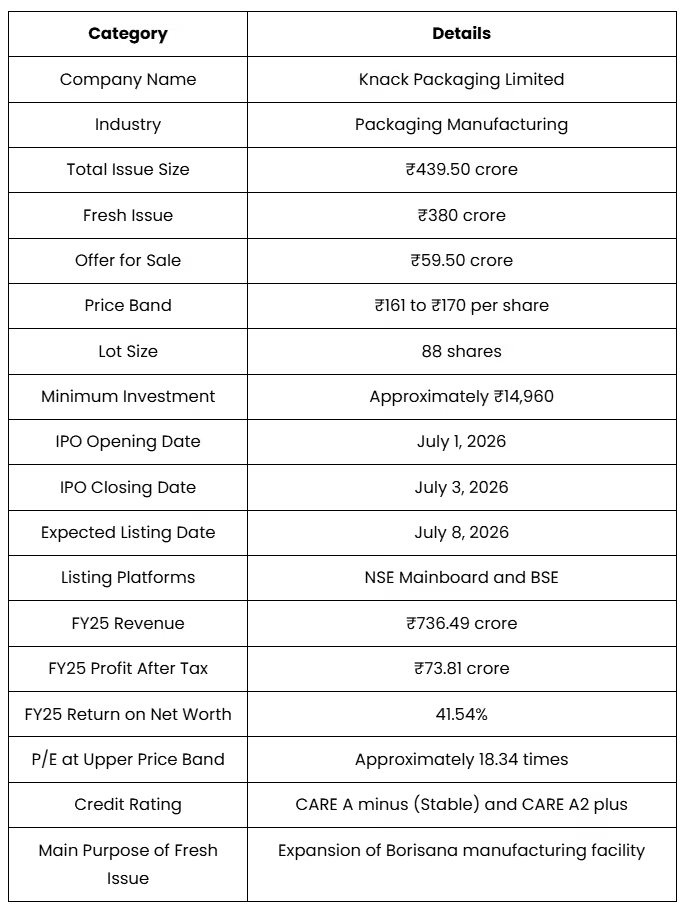
Knack Packaging IPO Overview
The Knack Packaging IPO consists of a fresh issue and an Offer for Sale component. The fresh issue will bring additional capital into the company, which will primarily be used for expansion activities, while the OFS will allow existing shareholders to sell part of their stake.
The following table provides a quick summary of the IPO structure and important issue related details.
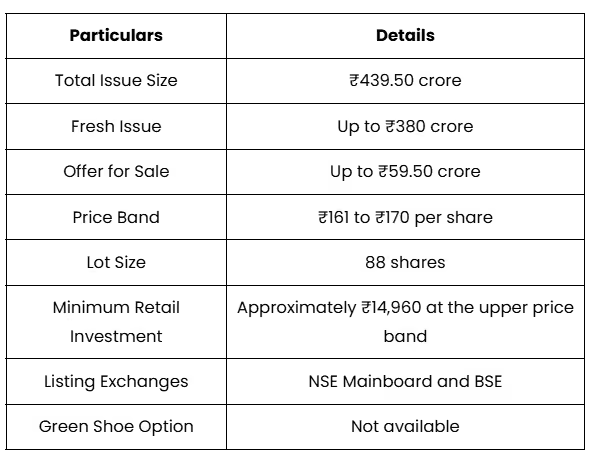
Knack Packaging - Company Overview
Knack Packaging Limited is engaged in manufacturing flexible bulk packaging solutions, mainly printed and Laminated Woven Polypropylene (PLWPP) bags. These bags are widely used by industries that require durable and lightweight packaging solutions for transporting and storing bulk materials.
The company's products are supplied to sectors including agriculture, chemicals, food grains, cement, fertilisers, and other industrial applications. Due to their strength, moisture resistance, and customisation options, woven PP bags have become an important packaging solution for businesses handling large quantities of materials.
One of the key strengths of Knack Packaging is its ability to provide customised packaging solutions at scale. The company has developed a large library of more than 73,000 printing cylinders, allowing it to meet specific design and branding requirements of customers across different industries.
Apart from its domestic presence, the company has built a strong export network and supplies its products to more than 70 countries. This international presence helps the company diversify its revenue base and reduce dependence on a single market.
The following table provides an overview of the company's important business details, including its headquarters, product portfolio, international presence, and operational strengths.

Market Position and Industry Opportunity
The packaging industry in India has been expanding due to rising industrial production, increasing exports, and growing demand for efficient transportation packaging. Bulk packaging solutions are becoming increasingly important as companies look for cost-effective and reliable ways to handle large volume goods.
Knack Packaging currently holds an estimated 10.1% share of the Indian PLWPP bulk bag market as of FY2025. The company operates in a market that is expected to witness strong growth in the coming years.
The following table highlights the size and expected growth opportunity of the PLWPP bulk bag industry. It helps investors understand the broader market environment in which Knack Packaging operates.
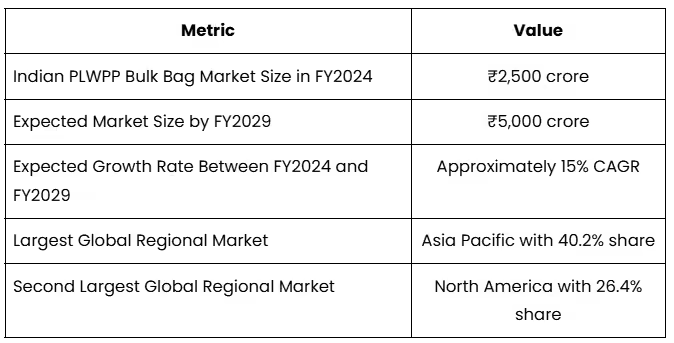
The company's growth strategy is focused on increasing manufacturing capacity, strengthening international operations, and improving operational efficiency. Its upcoming expansion project at Borisana, Gujarat, is expected to play an important role in supporting future growth.
However, investors should also evaluate factors such as execution capability, raw material dependency, market competition, and industry cycles before considering the IPO.
Knack Packaging IPO - Important Dates
Understanding the IPO timeline is important for investors as it helps them plan their application process, track allotment status, and prepare for the expected listing date.
The IPO process includes multiple stages, starting from anchor investor bidding, followed by the opening and closing of the issue for public subscription. After the issue closes, the company completes the allotment process before the shares are listed on the stock exchanges.
The table below highlights the key dates associated with the Knack Packaging IPO.
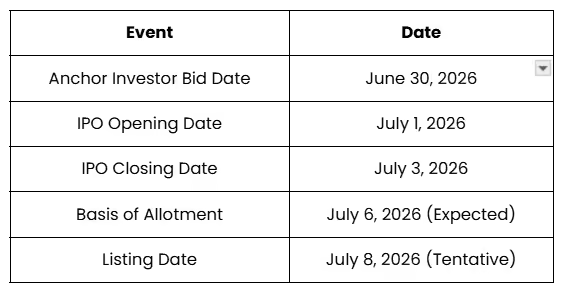
Investors should note that allotment and listing dates mentioned above are indicative and may change depending on regulatory approvals and the IPO process timeline.
Knack Packaging Financial Performance Analysis
Financial performance is one of the most important factors investors evaluate before investing in an IPO. A company's revenue growth, profitability, margins, and return ratios provide insights into its business stability and future growth potential.
Knack Packaging has reported consistent improvement in its financial performance over the last three financial years. The company has recorded growth in revenue, EBITDA, and profit after tax, supported by higher production capacity, increasing exports, and operational efficiency.
The following image presents the company's key financial performance indicators for FY23, FY24, and FY25.
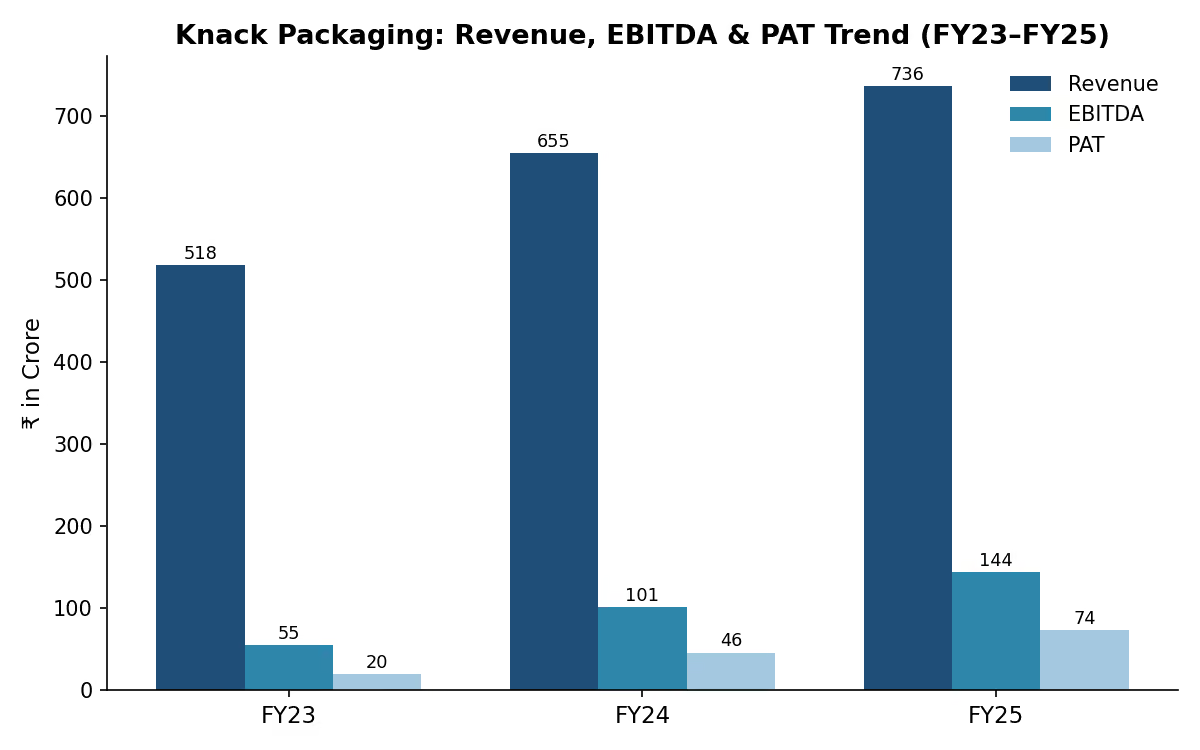
The company has shown strong improvement in profitability during the period. Profit after tax increased significantly from ₹198.70 million in FY23 to ₹738.10 million in FY25, indicating improved operational efficiency and better utilisation of resources.
The improvement in EBITDA also highlights the company's ability to maintain healthy operating margins despite operating in a competitive manufacturing segment.
Knack Packaging - Growth Highlights
The following points highlight the company's financial growth over recent years:
- Profit after tax increased at a CAGR of 50.30% between FY22 and FY24.
- EBITDA increased at a CAGR of 36.50% during the same period.
- Debt-to-equity ratio improved to 0.7 times in FY25 compared to 1.1 times in FY24 and 1.2 times in FY22.
- Return on Net Worth improved from 23.40% in FY23 to 41.54% in FY25.
A consistently improving return ratio indicates that the company has been generating better returns from shareholder capital. However, investors should also consider whether these growth rates can be maintained after the IPO and during the company's expansion phase.
According to Swastika Investmart's research team, as quoted by Mint, Knack Packaging IPO offers an attractive short-term investment opportunity backed by healthy financial growth, improving profitability, strong return ratios, and robust operating margins. The research team believes the IPO is reasonably valued at a pre-issue P/E of around 18.3x FY26 earnings, while highlighting the company's fully integrated manufacturing operations, extensive portfolio of over 13,000 SKUs, and a library of more than 73,000 customised printing cylinders as key competitive strengths. However, the team also advises investors to consider risks such as customer concentration, the absence of long-term supplier contracts, and execution risks associated with the proposed manufacturing facility, recommending long-term investors reassess the company after its post-listing performance.
Working Capital and Operational Efficiency of Knack Packaging
For manufacturing companies, working capital management plays an important role because businesses need to maintain inventory, manage supplier payments, and provide credit periods to customers.
The following table highlights important operational metrics that reflect the company's working capital cycle and customer relationships.
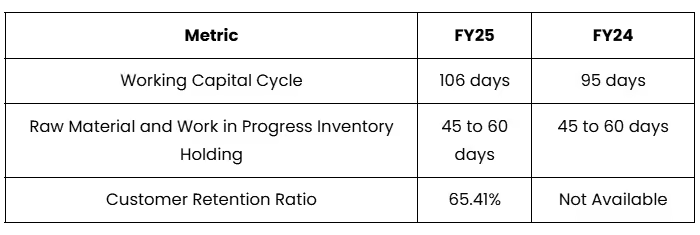
The increase in the working capital cycle from 95 days in FY24 to 106 days in FY25 indicates that more capital is being blocked in daily operations. While this is common during expansion phases, investors should monitor whether the company can improve working capital efficiency in the future.
The company has also maintained long-term relationships with several customers. Clients such as KRBL Limited and Repi Soap and Detergent PLC have been associated with Knack Packaging since 2013, highlighting customer trust and repeat business potential.
Knack Packaging IPO Valuation and Peer Comparison
Valuation analysis helps investors understand whether an IPO is reasonably priced compared to similar listed companies operating in the same industry.
Knack Packaging is being valued at a price-to-earnings ratio of approximately 18.34 times at the upper price band of ₹170 per share based on the company's reported earnings. Investors generally compare this valuation with industry peers to understand the attractiveness of the issue.
The following table compares Knack Packaging with selected listed packaging companies based on important valuation and profitability parameters.
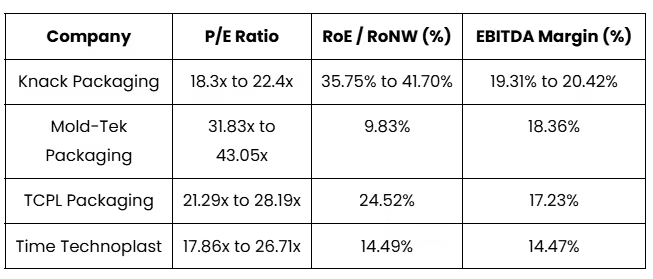
The comparison indicates that Knack Packaging is available at a relatively competitive valuation compared with many peers. The company also reports stronger return ratios and EBITDA margins compared with the selected companies.
However, investors should remember that valuation should not be considered in isolation. Factors such as company size, industry competition, expansion execution, and future earnings visibility are equally important while evaluating an IPO.
According to CARE Ratings, Knack Packaging’s credit profile is supported by sustained business growth, healthy profitability, a comfortable financial position, and experienced promoters. The company has been assigned CARE A-minus with Stable outlook for long-term facilities and CARE A2 plus for short-term facilities. The rating agency also highlights risks related to volatile raw material prices and foreign exchange fluctuations.
Objects of the Knack Packaging IPO Issue
The purpose of raising funds through an IPO provides investors with insight into how the company plans to use the capital received.
In the case of Knack Packaging, the majority of the fresh issue proceeds will be utilised towards expanding manufacturing capacity through a new facility at Borisana, Mehsana, Gujarat. This expansion is expected to support future production growth and help the company cater to increasing demand.
The table below explains how the company plans to utilise the proceeds raised through the IPO.
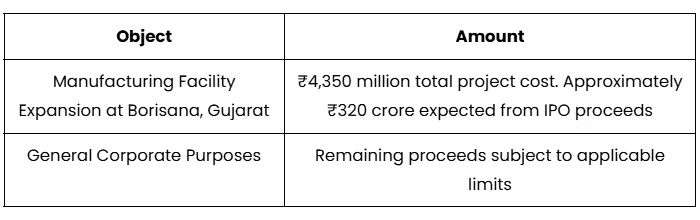
The Offer for Sale component of ₹59.50 crore will be received by the selling shareholders and will not directly contribute to the company's growth capital.
From an investor perspective, the IPO proceeds are primarily growth-focused. The success of this investment will depend on how efficiently the company completes the expansion project and converts additional capacity into revenue growth.
Promoters, Management and Shareholding Structure
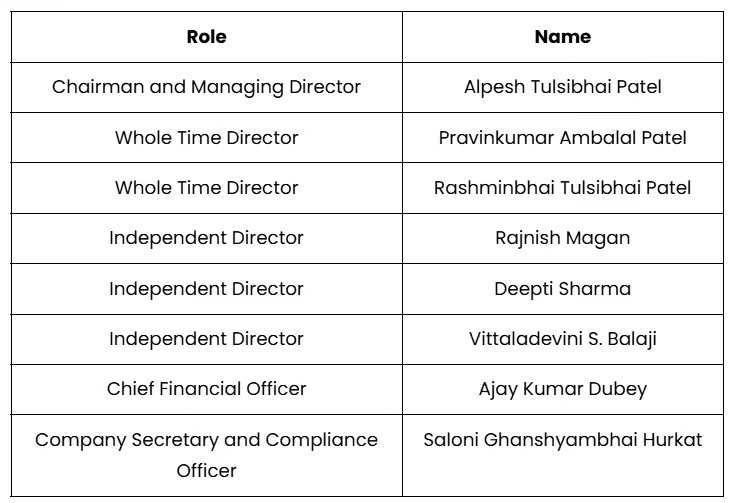
The strength of a company is often closely linked with the experience of its management team and the vision of its promoters. In a manufacturing business, where long-term customer relationships, operational execution, and capacity expansion play a crucial role, experienced leadership becomes an important factor for sustainable growth.
Knack Packaging is promoted and managed by professionals with experience in the packaging industry. The management team has been involved in expanding manufacturing capabilities, developing export markets, and building relationships with customers across multiple industries.
The following table provides details about the key members of the company's management team.
Promoter Holding and Lock-In Details
Promoter holding and lock-in periods provide investors with an understanding of promoter commitment after the IPO. A longer lock-in period generally indicates that promoters continue to have a long-term interest in the growth of the company.
The following table explains important promoter and investor lock-in details related to the IPO.
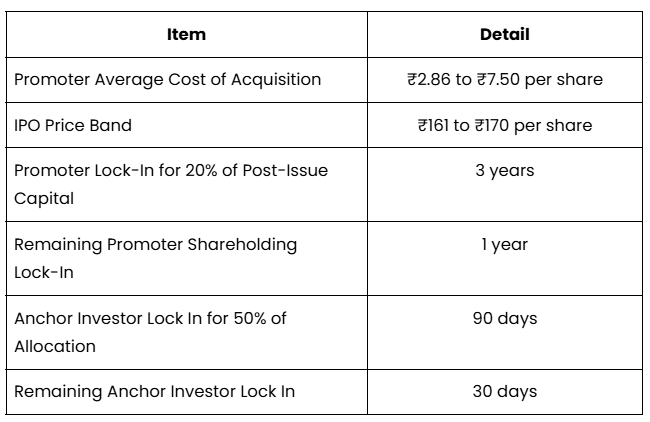
A key point investors should evaluate is that some important company properties, including the registered office and the upcoming Borisana project site, are leased from promoter-related entities. While such arrangements are common in promoter-driven businesses, investors should carefully review the terms, duration, and renewal conditions mentioned in the Red Herring Prospectus.
Sustainability Initiatives and Technology Advantage
The packaging industry is undergoing significant changes as customers increasingly focus on sustainability, recycling, and efficient manufacturing processes. Companies that can provide environmentally responsible packaging solutions may have better opportunities to attract global customers.
Knack Packaging has focused on sustainability initiatives by increasing the use of recycled materials, adopting renewable energy sources, and implementing technology-driven systems to improve operational visibility.
The following table highlights the company's major sustainability and technology initiatives.
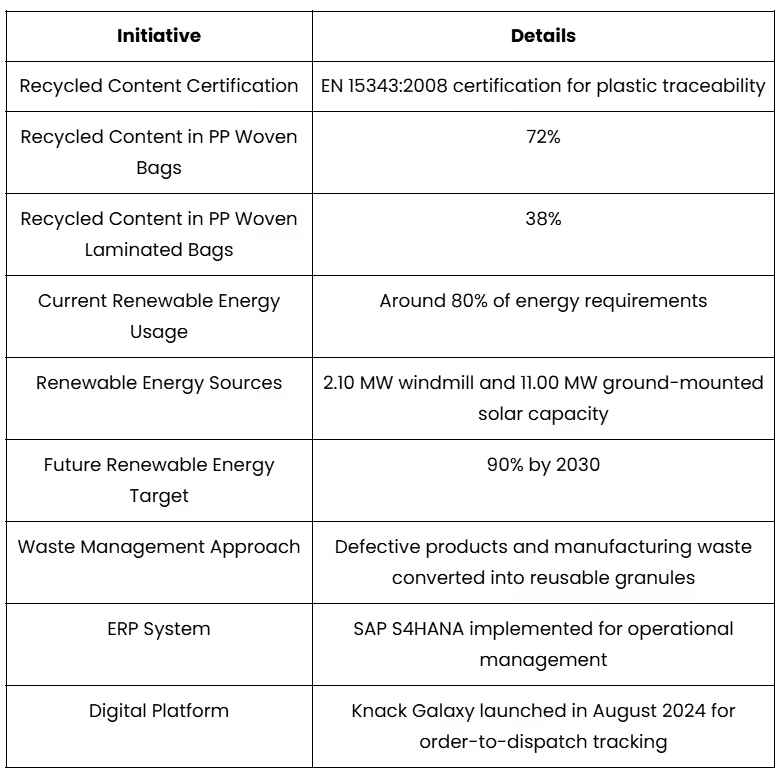
These initiatives can help the company improve operational efficiency, reduce dependency on conventional energy sources, and strengthen its position among customers that prioritise sustainable packaging solutions.
However, investors should also consider that sustainability initiatives require continuous investment and their financial benefits depend on effective implementation and customer acceptance.
Key Intermediaries Involved in Knack Packaging IPO
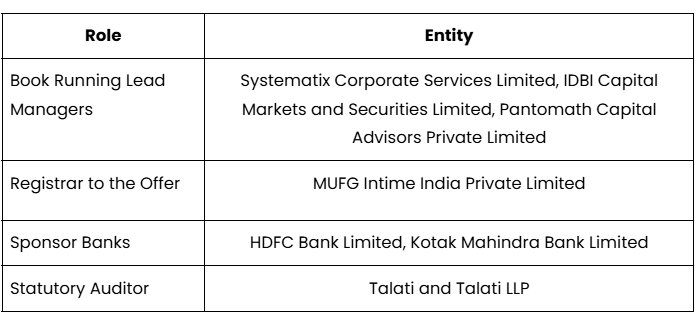
An IPO involves several financial institutions and professional agencies responsible for managing different aspects of the issue process. These intermediaries ensure regulatory compliance, investor servicing, and smooth execution of the public offering.
The following table provides details of the major intermediaries associated with the Knack Packaging IPO.
How to Apply for Knack Packaging IPO
Applying for an IPO has become simpler with digital banking facilities and online application platforms. Retail investors can participate through the ASBA process, where the application amount remains blocked in the bank account until the allotment process is completed.
The following table explains the important application requirements for investors.
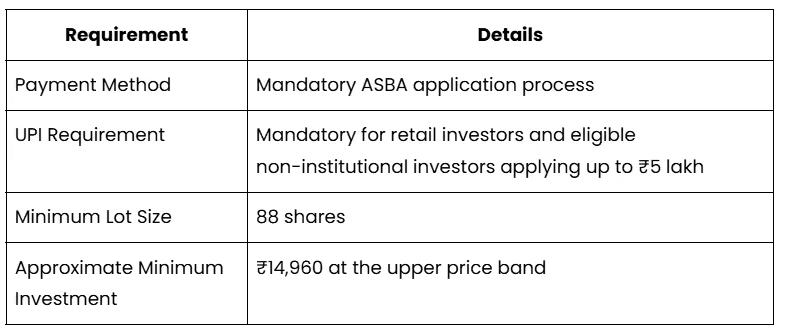
Investors should ensure that their PAN details, bank account information, and UPI details are correctly updated before applying. Any mismatch in details may lead to rejection of the application.
Key Strengths of Knack Packaging IPO
Before investing in an IPO, investors should evaluate the factors that can support the company's long-term growth. Knack Packaging has several business strengths that differentiate it within the packaging industry.
Strong Product Customisation Capability
The company's large library of more than 73,000 printing cylinders provides it with an advantage in serving customers requiring customised packaging solutions. This capability can help improve customer retention as businesses often prefer suppliers who can efficiently manage specific design requirements.
According to Nidhi Thakur of Swastika Investmart, Knack Packaging IPO offers a balanced growth opportunity backed by its premium packaging segment. The company’s 73,000+ printing cylinder library creates a strong competitive advantage. While valuation is supported by robust profitability, investors should consider moderated growth and the delayed impact of the Borisana facility before subscribing.
Established Export Presence
With exports reaching more than 70 countries, Knack Packaging has developed a diversified customer base across international markets. A global presence can provide additional growth opportunities and reduce dependency on domestic demand.
Healthy Financial Performance
The company has reported great improvement in revenue, profitability, and return ratios. Rising RoNW and improving debt levels indicate better capital efficiency and financial discipline.
Competitive Valuation Compared With Peers
At the upper price band, the company's valuation appears reasonable compared with several listed packaging companies. The combination of healthy margins and return ratios makes valuation an important factor for investors evaluating the IPO.
Long-Term Customer Relationships
The company's association with customers for several years indicates business stability and repeat order potential. Strong customer relationships are particularly valuable in the B2B packaging industry.
Focus on Sustainability
Higher usage of recycled materials and renewable energy adoption can support the company's positioning among customers looking for sustainable packaging solutions.
International Expansion Opportunities
The company's presence through its South African subsidiary and Mexican joint venture provides opportunities to expand its global footprint, especially in emerging markets.
Key Risk Factors Investors Should Consider
While Knack Packaging has demonstrated strong financial growth and has several business advantages, every investment opportunity comes with certain risks. Understanding these risks is important before making an IPO investment decision.
Investors should evaluate both the growth potential and possible challenges that may impact the company's future performance.
Expansion Project Execution Risk
A significant portion of the fresh issue proceeds will be utilised towards the company's new manufacturing facility at Borisana, Gujarat. The success of this expansion will depend on timely completion, effective utilisation of the new capacity, and the company's ability to generate sufficient demand.
Any delay in project completion, increase in project cost, or slower than expected capacity utilisation could impact future growth expectations.
Dependence on Raw Material Prices
The company's primary raw material is polypropylene, whose prices are linked to crude oil movements and global market conditions. Any significant increase in raw material costs without a corresponding increase in selling prices could affect profit margins.
Additionally, the company has some dependence on key suppliers, which creates concentration risk in procurement.
The following table highlights the company's raw material supplier concentration.

Currency Fluctuation Risk
Since Knack Packaging exports its products to more than 70 countries, changes in foreign currency exchange rates can impact revenue and profitability.
A stronger Indian rupee against major global currencies may reduce export competitiveness, while adverse currency movements can affect margins if not effectively managed.
Employee Retention Challenges
Manufacturing businesses require skilled employees for production operations, quality control, and technical processes.
The company's employee attrition rate increased from 9.43% in FY23 to 21.39% in FY25. A continued increase in employee turnover could create challenges related to recruitment, training costs, and operational efficiency.
Related Party Lease Arrangements
Certain important properties, including the registered office and the upcoming project location, are leased from promoter-related entities.
While such arrangements are common among promoter-driven companies, investors should review the lease agreements carefully to understand rental terms, renewal conditions, and any potential dependency on related parties.
Increasing Working Capital Requirement
The working capital cycle increased from 95 days in FY24 to 106 days in FY25. A longer working capital cycle means more funds remain blocked in inventory and receivables.
If the company continues expanding rapidly, efficient management of working capital will become increasingly important to maintain healthy cash flows.
Restated Financial Statement Considerations
The financial statements included in the IPO documents have been prepared specifically for the public issue process. Investors should review the restated financial statements and auditor observations provided in the Red Herring Prospectus before making an investment decision.
Legal and Regulatory Matters
The company is involved in certain legal matters, including recovery cases related to dishonoured cheques and a pending direct tax dispute.
While the financial impact of these matters appears limited based on available information, investors should consider all disclosed legal proceedings before investing.
Final Thoughts on Knack Packaging IPO
Knack Packaging enters the IPO market with a combination of strong financial growth, an established manufacturing base, international customer presence, and expansion plans aimed at increasing future capacity.
The company's strengths include healthy profitability, improving return ratios, a wide export network, long-standing customer relationships, and a differentiated position through customised packaging capabilities.
The valuation also appears competitive when compared with several listed peers, especially considering the company's profitability metrics and operating margins. The planned capacity expansion could provide the next phase of growth if executed successfully.
However, investors should also consider the associated risks, including dependence on raw material prices, working capital requirements, supplier concentration, export-related currency exposure, and execution challenges related to the new manufacturing facility.
Overall, the Knack Packaging IPO represents an opportunity in a growing industrial packaging segment, but investors should evaluate the company's growth potential, valuation comfort, and risk factors based on their individual investment objectives and risk appetite.
Before investing, investors are advised to carefully read the Red Herring Prospectus and consider consultation with a registered financial advisor.
For detailed IPO analysis, market insights, and expert guidance on IPO investments, investors can connect with Swastika Investmart, a trusted financial services provider helping investors make informed market decisions.

Nhai Share Price Outlook: Delhi Dwarka Tunnel And Kanpur Highway Projects
Key Takeaways
- Two Cabinet-approved road projects total Rs 14,115 crore, including the Delhi Dwarka tunnel and Kanpur–Kabrai highway.
- The Delhi tunnel is 8.1 km long with a Rs 6,969.67 crore budget, featuring a 3.14 km tunnel, 0.98 km approaches, a 0.554 km reinforced earth wall, a 2.556 km elevated corridor, and a 0.87 km at-grade road.
- The Kanpur–Kabrai highway is four-lane with a budget of Rs 7,145 crore.
- Direct and indirect employment is significant: every lane-km yields 264 direct and 55 indirect person-days, with the Delhi tunnel alone projected to generate about 7.54 lakh direct and 9.8 lakh indirect person-days.
nhai share price is more than a number; it's a signal of how India's infrastructure push translates into market expectations. The government approved two major road projects on Wednesday, totaling Rs 14,115 crore, including a six-lane tunnel connecting the Dwarka Expressway with Vasant Kunj in Delhi and a four-lane access-controlled highway between Kanpur and Kabrai in Uttar Pradesh. The Delhi project alone carries a cost of Rs 6,969.67 crore and will be developed under the Hybrid Annuity Mode as part of the National Highways (Original) scheme. This post unpacks what these approvals mean for traffic, employment, and the investment landscape, and how it relates tonhai share price in the near term.
Nhai Share Price Outlook For Indian Infrastructure Plays
The approvals signal a robust public works pipeline that can influence sentiment around nhai share price and related infrastructure stocks. The two projects – Delhi Dwarka tunnel (NH-148AE) and Kanpur–Kabrai highway in Uttar Pradesh – total Rs 14,115 crore, with the Delhi tunnel portion valued at Rs 6,969.67 crore. The Kanpur–Kabrai four-lane highway carries a separate budget of Rs 7,145 crore. Both projects are designed to improve regional connectivity, shorten travel times, and relieve congestion across critical corridors linking West, South, and East Delhi as well as Ghaziabad and Noida.
| Delhi Tunnel Project (NH-148AE) Components | Length / Cost |
|---|---|
| Total Length | 8.1 km |
| Tunnel Length | 3.14 km |
| Tunnel Approaches | 0.98 km |
| Reinforced Earth Wall Approaches | 0.554 km |
| Elevated Corridor | 2.556 km |
| At-Grade Road | 0.87 km |
| Under Forest Ridge | 1.98 km |
| Nelson Mandela Marg Elevated | 1.8 km |
| Alignment | Shiv Murti Interchange to Nelson Mandela Marg/Mahipalpur-Chhatarpur Road |
| Development Model | Hybrid Annuity Mode (HAM) as part of National Highways (Original) scheme |
| Estimated Cost | Rs 6,969.67 crore |
| Planned Integrations | AIIMS–Mahipalpur elevated corridor; Barapullah linked corridor |
The project is designed to integrate with the proposed elevated corridor between AIIMS and Mahipalpur. The link will eventually connect with the Barapullah elevated corridor, enhancing connectivity across West, South, and East Delhi, and extending to Ghaziabad and Noida.
The tunnel will pass beneath the environmentally sensitive Southern Delhi Ridge using TBM technology to minimise surface disruption while ensuring structural safety for the surrounding eco-system. In addition to the tunnel, the package includes a 1.8-km elevated U-turn facility and an elevated road along Nelson Mandela Marg to improve traffic flow and accessibility toward Chhatarpur and Mahipalpur.
Kanpur To Kabrai Highway: Cost, Length, And Connectivity Benefits
The other announced project is a four-lane, access-controlled highway between Kanpur and Kabrai in Uttar Pradesh, with an estimated cost of Rs 7,145 crore. This second project complements the Delhi tunnel by connecting major industrial and agricultural hubs in the region, reducing travel times and easing congestion along the Kanpur corridor.
Together, the two projects represent a total investment of Rs 14,115 crore and aim to unlock faster regional connectivity, improve freight and passenger movement, and stimulate economic activity around the corridor. The reforms reflect a broader strategy to modernise national highways and improve multi-modal connectivity across the National Capital Region and the northern plains.
Employment Impact And Economic Multiplier Of The Two Projects
As a rule of thumb, the government estimates that every lane-km of national highway construction generates around 264 person-days of direct employment and 55 indirect employment days. Based on this logic, the Delhi tunnel project alone is expected to create nearly 7.54 lakh person-days of direct employment and 9.8 lakh indirect employment days, besides generating additional economic activity in the surrounding areas. This implies sizable local and regional benefits beyond the construction phase and can influence the consumption dynamics in nearby communities.
Hybrid Annuity Mode And What It Means For Investors
The Delhi tunnel project will be developed under the Hybrid Annuity Mode (HAM) as part of the National Highways (Original) scheme. HAM is designed to combine public funding with private capital and project execution efficiency, potentially reducing toll risk and accelerating project delivery timelines. For investors, HAM-backed projects often offer a mixed risk-reward profile: steady revenue streams backed by government payments coupled with the potential for long-term asset value creation as the corridor integrates with existing networks.
With two major road infrastructure projects moving forward, there is a clear signal that the pipeline for public works remains robust. While stock-specific calls should be grounded in company fundamentals and broader market conditions, the macro visibility from such projects tends to support a constructive stance on infrastructure beneficiaries. As a practical consideration, retail investors can monitor the project milestones, bid awards, and private partner disclosures that often foreshadow value creation in related stock segments.
For a deeper, institution-grade search on any stock or index, Swastika's Sarthi AI stock assistant provides research insights and scenario analysis that can help you align infrastructure exposure with your risk tolerance and time horizon. Swastika's Sarthi AI stock assistant.
What The Delhi Projects Mean For The Nhai Share Price: Investor Takeaways
From an investor perspective, the two Cabinet-approved road projects signal a continued commitment to expanding road connectivity and reducing travel times across key corridors. While project approvals do not immediately translate into earnings statements for listed peers, the ramp-up in project execution can influence sentiment around infrastructure stocks and the broader nhai share price trajectory. Investors should watch for tender awards, concession opportunities under HAM, and the pace at which the National Highways Authority of India (NHAI) monetises or refinances project cash flows as part of the asset-light growth narrative that many market participants favour in the sector.
Frequently Asked Questions
Which two highway projects were approved and what are their costs?
The Cabinet Committee on Economic Affairs approved two road projects: the Delhi Dwarka tunnel on NH-148AE with a cost of Rs 6,969.67 crore, and the Kanpur–Kabrai four-lane highway in Uttar Pradesh with a cost of Rs 7,145 crore, for a combined investment of Rs 14,115 crore.
What are the key features of the Delhi Dwarka tunnel project?
The Delhi Dwarka tunnel project is 8.1 km in total length, comprising 3.14 km of tunnel, 0.98 km of tunnel approaches, 0.554 km of reinforced earth wall approaches, 2.556 km of elevated corridor, and 0.87 km of at-grade road. It includes a 1.8 km elevated segment along Nelson Mandela Marg and a 1.98 km section under environmentally sensitive forest ridge, and begins at Shiv Murti Interchange, terminating before Nelson Mandela Marg and Mahipalpur-Chhatarpur Road. It will integrate with AIIMS–Mahipalpur elevated corridor and Barapullah corridor, and is developed under Hybrid Annuity Mode (HAM).
What is HAM financing and which scheme does this project use?
The Delhi tunnel project is developed under the Hybrid Annuity Mode (HAM) as part of the National Highways (Original) scheme, combining public funding with private capital to support project execution.
What is the employment impact of these road projects?
The government estimates that every lane-km of national highway construction generates around 264 direct employment days and 55 indirect employment days. Based on this logic, the Delhi tunnel project alone is expected to create about 7.54 lakh direct and 9.8 lakh indirect employment days, contributing to local economic activity.
What is the overall investment and connectivity impact of the two projects?
Together, the two projects involve Rs 14,115 crore in investment, aimed at improving regional connectivity and reducing travel times and congestion. The Delhi tunnel links Dwarka Expressway, Vasant Kunj, and other West-South Delhi corridors, while the Kanpur–Kabrai highway enhances north-central Uttar Pradesh connectivity.
Conclusion
The Delhi Dwarka tunnel and Kanpur–Kabrai highway approvals are a reminder of how public infrastructure spend is a leading indicator for the financial performance and market perception of infrastructure stocks. For retail investors, the key takeaway is to monitor the project milestones, HAM financing progress, and regional connectivity gains as a way to gauge potential shifts in nhai share price over the coming quarters. Consider applying a simple mental model: treat the project pipeline as a forward-looking indicator of sector momentum, and align your holdings with those stocks and sectors most likely to benefit from faster, more reliable transport corridors.
Geojit BNP Paribas Share Price Context In The Indian Market Outlook
Key Takeaways
- Crude price near $70-75 per barrel relieves earnings, forex and fiscal headwinds.
- FII selling eases; domestic money leads the rally.
- Private banks, consumption, and telecom offer attractive opportunities as earnings visibility improves.
- Premium valuations persist, but large-cap stocks now offer better value than mid/small caps.
Investors watching geojit bnp paribas share price may sense a turning point for Indian equities as crude eases and FII selling cools. A brighter backdrop is emerging: crude oil has slipped toward the $70-75 per barrel band, which has positive implications for earnings, forex, interest rates, and the government's fiscal position. In this environment, domestic flows have room to sustain momentum, with private banks, consumption, and telecom sectors offering attractive opportunities. While near-term results may reflect temporary disruptions, the earnings outlook is improving, with some sectors showing resilience even as others recalibrate.
Geojit BNP Paribas Share Price Context In The Indian Market Outlook
Investors following geojit bnp paribas share price can glean insights into the sentiment that informs cross-border brokerage and local market flows. The market's fundamentals are now more important than headlines; with crude trending lower, FII selling easing, valuations modestly more attractive, and earnings visibility improving, the tone has shifted toward earnings-driven returns. Domestic investors, too, are recalibrating risk, focusing on sectors that can sustain growth as temporary headwinds fade.
The broader narrative remains earnings-driven rather than dependent on large foreign inflows. The improvement in crude pricing is a big relief for corporate earnings and macro stability, while valuations across sectors have become slightly more attractive as earnings visibility strengthens.
Lower Crude Oil And Easing FII Selling: Implications For Market Outlook
A major driver is crude oil falling to the $70-75 per barrel range, one of the biggest positives for the Indian economy. The fall has positive implications for earnings, forex, interest rates and the government's fiscal position. The reasons for FII selling have reduced, valuations have become slightly more attractive and the earnings outlook is improving.
According to Kunal Vora of BNP Paribas India, "Compared to where we were two months back, the market construct is looking better. Crude at $70-75 is a big relief. It has positive implications for earnings, forex, interest rates and the government's fiscal position. The reasons for FII selling have reduced, valuations have become slightly more attractive and the earnings outlook is improving," he said.
In the near term, earnings may reflect the temporary impact of crude-related disruptions, but the medium-term trajectory remains constructive for the broader market.
Private Banks Earnings Growth Outlook For FY27
After a subdued FY26, the forecast is earnings growth of 15-18% for leading private lenders during FY27. Attractive valuations across price-to-earnings and price-to-book metrics further strengthen the investment case. Heavy FII selling has weighed on the sector, but if that pressure eases, banks should benefit from improving flows.
According to Kunal Vora of BNP Paribas India, "After a subdued FY26, he expects earnings growth of 15-18% for leading private lenders during FY27. Attractive valuations across price-to-earnings and price-to-book metrics further strengthen the investment case."
Private banks, by virtue of their earnings resilience and balance-sheet strength, are positioned to lead the rally as external headwinds ease and domestic flows stabilize.
Domestic Money Can Carry The Market When FII Flows Subside
India does not really need FPI money to come back in a big way. What we need is a lack of selling. If incremental FII selling eases, domestic money can continue doing the heavy lifting and help the market grind higher even in the absence of a strong FPI inflow. This premise underpins a broader strategy for retail investors who focus on earnings growth and sustainable cash generation.
As a result, consumer-facing names, particularly within consumer staples and telecom, remain attractive on demand recovery hopes and pricing power. The picture for equities remains more balanced between growth and value as earnings visibility broadens.
Consumption And Telecom Stocks Offer Attractive Opportunities In The Coming Quarters
Besides financials, Vora remains constructive on consumption stocks, especially consumer staples, following the recent GST rate cut. He believes improving demand and pricing power could support earnings after the temporary crude-related impact fades. Telecom is another sector he favours because of its consistent pricing power and the possibility of another tariff hike over the coming quarters.
According to Kunal Vora of BNP Paribas India, "Besides financials, Vora remains constructive on consumption stocks, especially consumer staples, following the recent GST rate cut. He believes improving demand and pricing power could support earnings after the temporary crude-related impact fades. Telecom is another sector he favours because of its consistent pricing power and the possibility of another tariff hike over the coming quarters."
The stance underscores a balanced view: look for earnings growth in sectors with durable pricing power, while remaining selective in IT given AI-driven uncertainties.
IT Sector Valuations And Structural Questions In The AI Era
IT valuations have corrected meaningfully and dividend yields have become increasingly attractive, yet the sector continues to grapple with long-term uncertainty stemming from artificial intelligence. While the risk of widespread degrowth is unlikely, terminal growth assumptions have changed because of AI, making this a more value-oriented call, with an eye on eventual stabilization of growth. The broader implications of an IT hiring slowdown remain, given the sector remains one of India's largest employers and a significant contributor to wage growth.
According to Kunal Vora of BNP Paribas India, "We do not expect the sector to start degrowing, but terminal growth assumptions have changed because of AI. This has become more of a value call and a hope that growth eventually bottoms out."
The IT sector remains a key barometer for corporate demand but requires a nuanced view of long-term growth prospects in an AI-influenced world.
Premium Valuations Are A Structural Feature
Indian valuations across sectors are higher than global peers. That is a structural feature of our market and not unique to IT. I do not expect that premium to disappear. This makes a focus on earnings quality and balance sheets essential for stock selection in a high-valuation environment.
According to Kunal Vora of BNP Paribas India, "Indian valuations across sectors are higher than global peers. That is a structural feature of our market and not unique to IT. I do not expect that premium to disappear."
Investors should emphasize earnings durability, revenue visibility and robust balance sheets to navigate premium prices.
Large Caps Offer Better Value Than Mid And Small Caps
Although mid- and small-cap stocks have delivered exceptional returns, valuations have stretched after sustained domestic inflows and relatively lower FII ownership. Midcaps and smallcaps have become much more expensive relative to largecaps. We currently see better value in the large-cap space, while some froth remains in the broader market.
According to Kunal Vora of BNP Paribas India, "Midcaps and smallcaps have become much more expensive relative to largecaps. We currently see better value in the large-cap space, while some froth remains in the broader market."
For long-term investors, this suggests focusing on quality large-cap franchises with sustainable earnings growth and strong capital allocation at reasonable valuations.
Focus On Earnings Growth Rather Than Foreign Flows
Looking ahead, Vora expects market returns to broadly track corporate earnings rather than be driven by large foreign inflows. He believes India can continue delivering respectable returns if earnings growth remains in the low-to-mid teens and foreign selling gradually subsides. "We are banking on domestic money to drive the market, not FIIs. If earnings grow in the mid-teens and FII selling eases, returns should broadly follow earnings even without large foreign inflows," he said.
For stock-level decisions, this translates to a disciplined focus on companies with visible earnings trajectories, stable margins and strong balance sheets. Retail investors can complement this with AI-assisted insights from Swastika’s research tools and stock assistant to validate ideas before taking positions.
To explore stock ideas with AI-driven insights, explore Swastika's Sarthi AI stock assistant.
Frequently Asked Questions
What is the current market outlook with crude prices easing and FII selling cooling?
Crude easing and easing FII selling brighten the market outlook; earnings visibility is improving, and domestic money can sustain momentum even if foreign flows stay cautious.
Which sectors are highlighted as opportunities in this market environment?
Private banks, consumption, and telecom offer attractive opportunities, while IT remains a sector with premium valuations and structural questions due to AI.
What earnings growth is expected for private banks in FY27?
Leading private lenders are expected to grow earnings by about 15-18% in FY27, with valuations remaining supportive.
Why are valuations in Indian markets described as premium and structural?
Valuations across sectors in India are higher than global peers as a structural feature of the market, and this premium is not expected to disappear quickly.
What role does domestic money play if FIIs retreat?
Domestic money can carry the market if incremental FII selling subsides, reducing reliance on foreign inflows.
How are IT sector valuations and AI influencing growth assumptions?
IT valuations remain premium with AI introducing structural questions; growth may bottom out but not degrow, making it a cautious but value-oriented call.
Conclusion
For the retail investor today, the question is not whether FIIs will return in full force, but whether earnings growth can sustain a mid-to-high-teens trajectory as crude headwinds fade. With crude near $70-75 per barrel, earnings visibility improves, and valuations in large caps remain attractive relative to mid/small caps, the case for stock picking is clear: focus on sectors with pricing power and durable earnings. A disciplined, earnings-driven approach can help you navigate the current environment and participate in a potential rally driven by domestic money while keeping risk under check.

Zomato Share Price Sparks Market Momentum: A Retail Investor's Guide
Key Takeaways
- Sensex gained 444 points to 76,922.64 and Nifty 50 rose to 24,005.85.
- India VIX fell over 3% to 13.19, signaling cooled fear and improved risk appetite.
- 1,852 stocks advanced, 1,473 declined, and 100 were unchanged.
- Zomato share price led gains amid a broad rally in consumer staples and select defensive names.
Markets opened with a sharp question: can today’s breadth carry the rally? Sensex gained around 444 points to close at 76,922.64, and Nifty 50 rose over 140 points to end at 24,005.85. The zomato share price drew attention, rising around 6% to lead gains as several consumer staples joined the upmove, including hindustan unilever limited stock price moving around 3-4% higher, nestle india stock price also improving, and dabur stock price climbing roughly 5%.
Beyond the headline moves, breadth mattered. About 1,852 stocks advanced on the session, while 1,473 declined and 100 remained unchanged. The total market capitalization of all listed companies rose by more than Rs 2 lakh crore, lifting the aggregate to around Rs 476 lakh crore. Global cues provided supportive backdrop: Dow Jones finished at 52,319.20 and Nasdaq gained about 1.52%, reinforcing the mood in risk assets. Brent crude futures hovered near $72 per barrel, with WTI trading around $69 per barrel, underscoring a more comfortable supply backdrop compared with earlier spikes. On the monsoon front, June ended with a 40% rain deficit, and IMD projected July rainfall at roughly 90% of the long-term average, a factor investors will monitor for sector rotation and inflation dynamics.
From a sector lens, Nifty FMCG rose about 2% while Nifty Realty added roughly 4%. Nifty IT slipped more than 2%, reflecting profit-taking in some technology names. The leadership came from a mix of consumer staples and select defensives as the market breadth widened. Zomato stock price, nestle india stock price, hindustan unilever limited stock price, and other names delivered gains that helped offset pockets of weakness in heavyweight IT names. In single-session terms, the day’s movers painted a picture of breadth supporting a cautious but constructive risk stance for retail portfolios.
Zomato Share Price Movements And Market Implications
The zomato share price move highlighted the day’s breadth and the appetite for growth names alongside staples. The stock’s approximately 6% rise acted as a bellwether for a broader momentum across consumer-focused equities. While some investors focus on mega-cap indices, this session underscored how mid- and small-cap themes can accompany the carryover in large-cap sentiment, enabling a wider allocation spectrum for retail portfolios. The name’s movement must be interpreted in the context of a broader market that saw 1,852 advancers versus 1,473 decliners and 100 unchanged.
For traders and investors, the implications are twofold. First, simultaneous gains in consumer staples and select defensive names suggest a shift from purely cyclical bets to more resilient themes amid uncertain monsoon signals. Second, the strong breadth hints at accumulation in pockets of the market beyond the usual large-cap leaders, potentially offering fresh ideas for stock-picking within a diversified framework. To navigate this, consider balancing growth opportunities with defensive ballast to manage potential volatility from IT sector adjustments and global macro shifts.
According to VK Vijayakumar of Geojit Investments, “Investors may fine tune portfolios to discount the potential negative fallout of poor monsoon. Partial portfolio adjustment in favour of fixed income may be considered. Also churning of portfolios in favour of monsoon-proof sectors like health care, pharmaceuticals, power and select fairly valued defence stocks is advisable.”
Sensex And Nifty Rally: Key Levels And Sector Performance
The Sensex’s 444-point gain and the Nifty’s move above 24,000 levels marked another day of resilience for Indian equities. The closing print of 76,922.64 on the Sensex and 24,005.85 for the Nifty 50 translated into a broad-market footprint, with the breadth data showing 1,852 advances, 1,473 declines, and 100 unchanged stocks. In terms of sector effects, the Nifty FMCG index rose around 2% while the Nifty Realty index logged a 4% uptick. By contrast, the Nifty IT index declined by more than 2%, underscoring intra-sector rotation rather than a one-way chase in equities.
Key stock-specific moves underscored the day’s theme. The zomato share price was among the morning’s top movers, while the asian paints stock price improved by roughly 3%, and the hindustan unilever limited stock price rose in the 3–4% band. The nestle india stock price also contributed to the risk-on mood, with gains in the same range, and dabur stock price climbing around 5%. These participants helped create a more balanced risk-reward dynamic for investors weighing consumer staples against cyclical bets.
On the technical side, the market held above key supports as traders eyed the next leg higher. The short-term bias remained constructive as long as the Nifty stayed above a rough 23,800 support, with potential targets around 24,200 and beyond if momentum sustains. In this context, market participants should watch the interplay between pervasive breadth and sector-specific dynamics to identify pockets of value that align with a monsoon-adjusted macro outlook.
According to Rupak De of LKP Securities, “The short-term trend remains positive, with the index showing resilience throughout the session. However, momentum continues to be subdued. Going forward, the bullish bias is likely to remain intact as long as the Nifty holds above the 23,800 support level. On the higher side, the index may continue its slow but steady upward trajectory, with the potential to move towards 24,200 and higher over the near term.”
Market Breadth, Volume And Global Cues
Market breadth on the day was favorable to the bulls, with 1,852 advances versus 1,473 declines and 100 unchanged stocks. The broader market mood aligned with a steady global backdrop: the Dow Jones Industrial Average closed at 52,319.20 and the Nasdaq Composite rose by about 1.52%. Commodities also traded with calm: Brent crude futures hovered around $72 per barrel while WTI traded near $69 per barrel, signaling a softer energy backdrop relative to the earlier spikes visible during mid-year volatility.
These dynamics are particularly meaningful for retail investors, as they translate into opportunities for diversification across sectors and market caps. High-frequency traders and longer-term investors alike should consider how the breadth expansion interacts with sector rotations–especially when monsoon uncertainty weighs on agricultural and consumer demand dynamics. The calendar’s near-term risk factors also include the monsoon’s trajectory, with June’s 40% rainfall deficit and IMD’s July forecast of roughly 90% of long-term average rainfall. Investors may want to factor these into sector tilts toward staples, pharma, power, and defense as part of a calibrated defensive stance.
Stock And Sector Movers: Zomato, Nestle India, Dabur, Asian Paints, Hindustan Unilever, And More
Beyond the headline indices, a handful of individual names carried the day. The zomato share price remained in focus as a standout performer in a day of broad gains. Others showing strength included asian paints stock price (about 3%), hindustan unilever limited stock price (around 3–4%), nestle india stock price (roughly 3–4%), and dabur stock price (approximately 5%). In contrast, several IT names, including Tech Mahindra, TCS, and HCL Technologies, slipped around 3% apiece, illustrating the ongoing rotation within the market. The indices meanwhile reflected a mixed image with Nifty IT down more than 2% while realty and consumer staples lifted the broader market mood.
From a position-management perspective, the gains in consumer staples and defensives suggest that investors may be recalibrating expectations in light of the monsoon risk and macro uncertainties. This environment supports a disciplined approach: blend selective growth exposures with defensive quality stock picks and maintain readiness to reallocate based on evolving rainfall signals and earnings trajectory. A practical way to stay disciplined is to anchor decisions around a few core holdings while allowing for small, targeted bets in outperforming sectors when risk-reward looks favorable.
Monsoon Outlook And Defensive Positioning For Retail Investors
The monsoon context remains a tailwind and a watchful eye for equity markets. A 40% rainfall deficit in June raises concerns about agricultural incomes and rural demand, potentially affecting consumer sectors differently across states. With IMD projecting July rainfall near 90% of the long-term average, investors might find merit in defensive exposures–pharma, power, health care, and carefully valued defense stocks–while maintaining exposure to high-quality growth names that can weather near-term volatility. The nuanced takeaway is not to shy away from equities, but to tilt toward sectors with resilient earnings and enough pricing power to weather uneven monsoon seasons.
To navigate these uncertainties, portfolio tilts toward fixed income and cash-like instruments can provide ballast when equities wobble. The goal is not to avoid risk, but to manage it intelligently by creating a structure that can adapt to a shifting rainfall and macro narrative. In this context, Swastika’s research tools, including the Swastika's Sarthi AI stock assistant, can help retail investors drill into stock-specific theses and monitor evolving monsoon-linked dynamics. Swastika's Sarthi AI stock assistant can be a practical companion as you refine portfolio ideas and risk controls.
How To Use This Session Data In Your Portfolio
Given the day’s breadth and the sectoral splits, a practical approach for a retail investor is to build a framework that balances resilience with selective upside capture. Start by evaluating core holdings in consumer staples and defensives, alongside tactical allocations in growth-oriented names that show durable earnings and robust cash generation. Use the 23,800 Nifty support as a mental anchor for risk management: if prices pull back, it could be an opportunity to add quality names with improving earnings visibility and favorable competitive dynamics.
Frequently Asked Questions
How did Sensex and Nifty perform in the latest session?
Sensex gained around 444 points to 76,922.64, and Nifty 50 rose over 140 points to 24,005.85.
What happened to India VIX in today’s session?
India VIX dropped over 3% to 13.19, signaling a softer fear gauge and relatively steadier risk appetite.
Which sectors led gains and which were weaker in this session?
Nifty FMCG gained about 2% and Nifty Realty rose around 4%, while Nifty IT fell by more than 2%.
Which stock movers stood out today, including the zomato share price and others?
Zomato share price rose around 6%, with other noteworthy movers including asian paints stock price (~3%), hindustan unilever limited stock price (~3–4%), nestle india stock price (~3–4%), and dabur stock price (~5%). Tech Mahindra, TCS, and HCL Technologies fell about 3% each.
What should retail investors consider given monsoon uncertainty and global cues?
Investors may consider a portfolio mix that combines fixed income with defensive sectors like health care and power, while staying open to selective growth opportunities. Monitoring rainfall forecasts (monsoon) and global cues (Dow/Nasdaq, crude prices) is important, and tools like Swastika's Sarthi AI stock assistant can help refine ideas and risk controls.
Conclusion
Today’s session illustrates that a broad market rally can coexist with selective sector rotation, especially when monsoon and macro signals create mixed narratives. For the retail investor, the takeaway is to stay nimble, blend defensive ballast with selective growth bets, and rely on disciplined risk controls to weather volatility. As you respond to the zomato share price and other movers, focus on quality earnings, price discipline, and diversification across sectors that historically demonstrate resilience in uncertain monsoon years.
Big Budget


Popular Articles





.avif)
.avif)

.avif)



START YOUR INVESTMENT JOURNEY
Get personalized advice from our experts
- Dedicated RM Support
- Smooth and Fast Trading App
