


Nifty Share Price And Market Pulse: Key Movers, IPO Watch, And Real Estate Leads



Key Takeaways
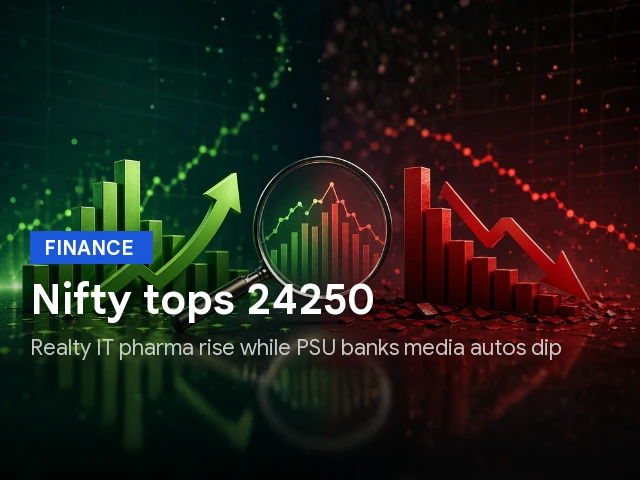
- Nifty share price closed at 24,270.85, up 95.15 points (0.39%).
- Sensex rose to 77,763.91, up 261.79 points (0.34%), with breadth positive across large caps.
- Nifty Realty index jumped 2.19% to 890.80, led by Lodha Developers up 5.08% among realty movers.
- Knack Packaging IPO subscribed 57.46x with price band 161-170 and a minimum lot of 88 shares.
nifty share price momentum continued as barometers extended their winning streak to a third session. The nifty share price at the close was 24,270.85 for the Nifty 50, up 95.15 points or 0.39%, while the Sensex rose 261.79 points to 77,763.91, a gain of 0.34%. Over three sessions, the Sensex has gained 1.68% and the Nifty 1.69%, signaling improving risk appetite despite intraday volatility. The India VIX slid 3.98% to 11.80, signaling a softer near-term volatility environment. In the broader market, the BSE 150 MidCap Index fell 0.25% while the BSE 250 SmallCap Index rose 0.09%, painting a nuanced view of market breadth.
Nifty Share Price Movements: Above 24,250 As Three-Session Rally Continues
Realty, IT, and pharma stocks led the advance as the Nifty Realty index climbed 2.19% to 890.80, continuing a four-session run with an 8.78% gain across the period. Real estate movers included lodging a broad rally: Lodha Developers up 5.08%, Oberoi Realty up 3.45%, Anant Raj up 3.37%, Brigade Enterprises up 3.32%, DLF up 2.73%, Phoenix Mills up 1.95%, Godrej Properties up 1.24%, and Sobha up 0.72%. On the downside, Aditya Birla Real Estate fell 1.06% and Prestige Estates Projects fell 0.27%. These moves underscore a bias toward real estate plays on improving sentiment and funding activity.
Knack Packaging IPO Watch: Subscription Rate And Price Band
The Knack Packaging IPO opened on 01 July 2026 and closed on 03 July 2026. The issue was priced in a band of Rs 161-170 per share and allowed bids for a minimum of 88 equity shares and multiples thereof. Bids received stood at 1,08,97,61,376 against 1,89,64,018 on offer, resulting in a subscription of 57.46 times. This level of oversubscription indicates strong investor interest in the packaging niche and reflects anticipation of solid growth in end-use industries.
Lodha Developers Stock And Real Estate Movers: A Day Of Gains
The real estate space consolidated gains with Lodha Developers stock up 5.08%, contributing to the sector's broader strength. Oberoi Realty rose 3.45%, Anant Raj 3.37%, Brigade Enterprises 3.32%, DLF 2.73%, Phoenix Mills 1.95%, Godrej Properties 1.24%, and Sobha 0.72%–all adding to a positive tone for realty leadership. Meanwhile, Aditya Birla Real Estate declined by 1.06% and Prestige Estates Projects by 0.27%, underscoring that sector rotation included both winners and laggards in a high-beta space.
HCL Technologies Stock Price Action And AI Transformation Deal
The hcl technologies stock surged 5.80% after the company announced an agreement with a Europe-headquartered Fortune Global 50 Firm to transform their global digital workplace and enterprise networks using Artificial Intelligence. This move signals a widening adoption of AI-led modernization in enterprise IT infrastructure, potentially creating spillover benefits across tech services and related software ecosystems. The broader tech space remained responsive to AI-related news as large-cap software names displayed strength in today’s session.
Global Cues And Market Signals: US Jobs Data, PMI Readings, And Brent Crude
Global markets reflected a mixed but cautiously optimistic mood: most European indices traded lower, while Asian markets closed higher as weaker-than-expected US jobs data stoked expectations of a future Federal Reserve rate cut. Japan's services PMI rose to 52.2 in June from 50.0 in May, indicating renewed expansion, while China's services activity remained above the 50-mark with a PMI of 54.1. In the US, the Dow Jones Industrial Average climbed to a record close of 52,900.07 as 57,000 jobs were added in June, below May’s revised 129,000 and below expectations of 110,000; the S&P 500 rose slightly to 7,483.24 and the Nasdaq fell 0.8% to 25,832.67. The Independence Day holiday kept major exchanges closed in the US on this Friday, resuming normal trade on Monday.
Rupee And Commodities Snapshot: USDINR, Brent Crude
The partially convertible rupee hovered around 95.2100 per dollar, versus 95.3550 in the previous session, while Brent crude for Sep 2026 settlement gained 0.24% to $71.97 a barrel, contributing to the energy complex’s mixed but bounded volatility as global demand signals evolved.
Corporate And Market Depth: Key Corporate Moves And Broad Indicators
On the corporate front, Maharashtra Seamless rose 0.77%, and Zydus Lifesciences gained 3.63% after signing a MoU with Apollo Hospitals to introduce Shield, a Multi-Cancer Detection test available in India. Central Bank of India rose 0.68% after reporting YoY growth in global gross advances to Rs 3,54,895 crore as of 30 June 2026, up from Rs 2,75,595 crore as of 30 June 2025. PC Jeweller rallied 3.74% following a ~21% YoY revenue uptick for the quarter ended 30 June 2026. Mahindra & Mahindra Financial Services slipped 1.21% as disbursements were guided to about Rs 15,560 crore with YoY growth around 21% (excluding finance lease). Bajaj Finance gained 1.30% after new loans booked rose 20% YoY to 1.61 crore in Q1 FY27, compared with 1.35 crore in the corresponding quarter last year.
In the broader market, the Dow’s performance was notable with a 594.83-point rise to 52,900.07, a record, while the S&P 500 traded near 7,483 and the Nasdaq hovered around 25,833. The day’s market breadth showed a positive tilt as 2,264 shares rose and 1,975 fell on the BSE, with 206 unchanged, underscoring selective leadership amid broader consolidation. First Published: Jul 03 2026 | 4:16 PM IST.
Frequently Asked Questions
What was the Nifty share price close today and the Sensex level?
The Nifty 50 closed at 24,270.85, up 95.15 points (0.39%), while the Sensex settled at 77,763.91, up 261.79 points (0.34%).
Which sectors led the market today and what was the Nifty Realty index movement?
Realty, IT and pharma shares advanced, with the Nifty Realty index climbing 2.19% to 890.80, contributing to a four-session gain of 8.78%.
How did Knack Packaging perform as an IPO, including subscription rate and price band?
Knack Packaging IPO opened on 01 July 2026 and closed on 03 July 2026, with a price band of Rs 161-170. It was subscribed 57.46 times, with bids of 1,08,97,61,376 against 1,89,64,018 on offer; minimum lot is 88 shares.
What moved HCL Technologies stock today and what deal influenced it?
HCL Technologies stock rose 5.80% after announcing an AI-driven transformation deal with a Europe-headquartered Fortune Global 50 Firm to upgrade their digital workplace and enterprise networks.
What were the key US and global cues affecting markets today?
US job data showed 57,000 jobs added in June, with May revised to 129,000 and expectations around 110,000. The Dow rose to a record close of 52,900.07, while the S&P 500 and Nasdaq were around 7,483 and 25,833 respectively; markets also noted softer near-term volatility as India VIX fell 3.98% to 11.80.
Conclusion
For the retail investor, today’s session reinforces that resilient breadth and sector leadership can coexist with modest volatility, especially as realty, IT, and select pharma names outperformed. The next step is to build a framework that combines price action with fundamental signals from corporate news and macro data: use trend-following rules for broad exposures and selective, risk-managed bets on realty names or tech leaders showing AI-driven order books. To dive deeper into stock-level analysis and tailor ideas to your portfolio, consider Swastika’s Sarthi AI stock assistant, which can help translate today’s price moves into actionable ideas and risk controls: Swastika's Sarthi AI stock assistant.
As you digest these moves, keep a ready watchlist on the nifty share price level around 24,250 to 24,500 and monitor the Nifty Realty, IT, and pharma segments for continued leadership. Use the current data as a baseline to assess how fresh IPO activity, like Knack Packaging’s robust subscription, and AI-driven corporate strategies might shape risk and return in the weeks ahead. The interplay between domestic strength and global cues will likely keep the market range-bound with selective bursts of upside, making disciplined position sizing and scenario planning essential for retail investors.
Latest Articles
.avif)
वैश्विक अर्थव्यवस्था से बेहतर संकेतो के कारण दबाव में कीमती धातुए


सोने और चांदी के भाव पिछले सप्ताह सीमित दायरे में कारोबार करते दिखे। भारतीय बाज़ारों में कामकाजी सप्ताह छोटा रहने के कारण भी कीमती धातुओं के भाव में कारोबार सीमित रहा जिससे भाव सीमित दायरे में बने रहे। पिछले सप्ताह अमेरिका और यूरो जोन से जारी हुए मैन्युफैक्चरिंग पीएमआई के आंकड़े अनुमान से बेहतर दर्ज किये गए है, जो इस उम्मीद को बढ़ा रहे है की अमेरिकी मौद्रिक नीति में सख्ती अगले कुछ और महीने तक जारी रहेंगी। 2024 में ब्याज़ दरों में कटौती के बावजूद, उच्च ब्याज दरें बुलियन में तेज़ी सीमित करेगा। अमेरिकी आर्थिक और ब्याज दर पर मिले संकेतों के कारण को सोने की कीमतों में दबाव बन रहा है, जिससे निवेश की मांग कम है, जबकि चीन के अधिक प्रोत्साहन उपायों के बाद चांदी में बढ़त देखि जा रही है। कीमती धातुए इन उम्मीदों से दबाव में है कि फेडरल रिजर्व इस साल की शुरुआत के बजाय बाद में ब्याज दरों में कटौती करेगा। शेयर बाज़ारो में तेज़ी ने भी सोने की मांग को कम कर दिया, क्योंकि निवेशकों ने अधिक जोखिम-भरी और उच्च-उपज वाली संपत्तियों की ओर रुख किया हुआ है। हालांकि, मिडिल-ईस्ट में ख़राब भू-राजनीतिक परस्थिति कीमती धातुओं को निचले स्तरों पर सपोर्ट कर रही है।
तकनिकी विश्लेषण
इस सप्ताह सोने और चांदी की कीमतों में दबाव रह सकता है। एमसीएक्स फ़रवरी वायदा सोने में सपोर्ट 61000 रुपये पर है और रेजिस्टेंस 64000 रुपये पर है। मार्च वायदा चांदी में सपोर्ट 70000 रुपये पर है और रेजिस्टेंस 74000 रुपये पर है।

Nova AgriTech Limited IPO
Nova AgriTech Limited an agri-input manufacturer and it offer soil health management, crop nutrition and crop protection products focused on tech-based farmer driven solution approach, wherein it mainly offer ecologically sustainable and nutritionally balanced products based on its Research and Development.

OBJECTS OF THE ISSUE
- Funding capital expenditure for the expansion.
- Payment of certain outstanding loans of the company.
- General corporate purposes.
KEY MANAGERIAL PERSONNEL
Adabala Seshagiri Rao
Chairperson and Independent Director of the Company. He holds Degree of Bachelor of Science and Degree of Bachelor of Laws from the Andhra University. He has over 35 years of experience in the banking industry. His last employment before retirement was with the Union Bank of India.
Malathi S
Promoter and Executive Director of the Company. She has completed her Bachelor of Commerce from Kakatiya University. She has been associated with the Company since 2011 and oversees the operations of the Company.
Kiran Kumar Atukuri
Promoter and Managing Director of the Company. He has almost two decades of experience. He is the guiding force behind all the corporate decisions and is responsible for the entire business operations specifically manufacturing and sales operations of the Company.
Gunupudi Kamoji Srinivas
Chief Financial Officer – Finance and Account. He holds a degree in Bachelor of Commerce from Andhra University and is a member of the Institute of Chartered Accountants of India. He has 27 years of experience with several organizations.
Neha Soni
Company Secretary of the Company. She holds a degree of Bachelor in Commerce and Bachelor of Law from Devi Ahilya Vishwavidyalya and is a member of the Institute of Company Secretaries of India (“ICSI”). She has 2 years of experience having worked with C.R. Broadcasting Hyderabad Limited as a Company Secretary.

COMPANY PROFILE
- Nova AgriTech manufactures, distributes, and markets a wide range of product categories consisting of (a) soil health management products; (b) crop nutrition products; (c) biostimulant products; (d) biopesticide products (e) Integrated Pest Management products; (f) new technologies; and (g) crop protection products.
- As of November 30, 2023, it has received a total of 720 product registrations comprising 7 registrations in the soil health management category, 176 registrations in the crop nutrition category, 4 registrations in the biopesticide category, 7 registrations under Technical Indigenous Manufacture, and 526 registrations in the crop protection category.
- It has a total dealer network comprising approximately 11,722 dealers out of which approximately 6,769 dealers are active in the current fiscal year and this network is currently spread across 16 states of India.
- The Company intends to import and distribute Technicals, which will be a prominent factor in the growth of the agriculture sector in India in the near future.
COMPETITIVE STRENGTHS
- One-stop solution for soil health management, crop nutrition, biostimulants, biopesticides, Integrated Pest Management (IPM), and crop protection through a diversified branded product portfolio.
- Established a distribution network across various geographies through many dealers. Strengthening farmer outreach through Nova Kisan Seva Kendra.
- Technology-driven product development and marketing. Experienced Management Team and Promoters.
- Well Equipped Research and development facility.
KEY CONCERNS
- The Company is subject to strict technical specifications, quality requirements, regular inspections, and audits by various authorities and/or regulators.
- The business is subject to climatic conditions. Seasonal variations and unfavorable weather patterns may have an adverse effect on its business.
- It may be subject to fluctuations in prices or any unavailability of the raw materials that it uses in its products.
- A substantial part of the revenue generated by the Company is from the jurisdiction of Andhra Pradesh, Karnataka, and Telangana only.
- The company is currently dependent on a single manufacturing unit located in Telangana.
COMPARISON WITH LISTED INDUSTRY PEERS (AS ON 31ST MARCH 2023)

FINANCIALS (RESTATED CONSOLIDATED)

OUTLOOK & VALUATION
Nova Agritech is an agri-input manufacturer that provides a one- stop solution for the health of soil and crops through its diversified branded product portfolio. It has a strong presence across geographies, and its effective marketing strategy positions the company for continued growth.
Nova Agritech's financial performance has been impressive, with consistent growth over the past three years and expansion plans firmly in place.
However, some key risks require consideration. The company's business is inherently linked to climatic conditions and relies on a limited geographical area for the majority of its revenue.
Additionally, the agri-input sector is highly competitive. However, the issue is valued at a P/E of 13.05x, and its RoNW of 38.27% is also attractive, thus considering all the factors we suggest to Apply for this IPO for listing benefits.

अमेरिका की अर्थव्यवस्था में मजबूती से दबाव में कीमती धातुए।
सोने पर दबाव मुख्य रूप से इन उम्मीदों के घटने से आया है कि फेड मार्च 2024 तक दरों में कटौती शुरू कर देगा। लंबी अवधि के लिए उच्च ब्याज दरों की सम्भावना ने सोने के लिए निरंतर प्रतिकूल परिस्थितियों की ओर संकेत किया है, जो सोने में निवेश की अवसर लागत को बढ़ाती है। सीएमई के फेडवॉच टूल के मुताबिक मार्च में 25 आधार अंको को कटौती की सम्भावना अब 51.9 प्रतिशत रह गई है, जो पिछले सप्ताह की सम्भावना 70 प्रतिशत से काफी कम हो गई है। पिछले सप्ताह अमेरिका से जारी रिटेल सेल्स और बेरोज़गारी के दावे उम्मीद से बेहतर दर्ज किये गए है जो इस बात की सम्भावना को बढ़ा रहा है की ब्याज दरों में कटौती मार्च महीने में नहीं होगी। हालांकि, पिछले सप्ताह के अंत तक सोने की कीमते 61500 रुपये के निचले स्तरों को छूने के बाद कीमतों में सुधार हुआ और भाव 62050 रुपये प्रति दस ग्राम के स्तरों पर रहे। एमसीएक्स सोने की कीमतों में पिछले सप्ताह 0.5 प्रतिशत और एमसीएक्स चांदी में 1 प्रतिशत की साप्ताहिक गिरावट दर्ज की गई है।
इस सप्ताह यूरोपियन सेंट्रल बैंक, जापान और केनेडा की मौद्रिक नीति, अमेरिका और यूरोप के मैन्युफैक्चरिंग पीएमआई और अमेरिका की जीडीपी, कोर पी सी ई प्राइस इंडेक्स के आंकड़े कीमती धातुओं के लिए महत्वपूर्ण रहेंगे।
तकनिकी विश्लेषण
इस सप्ताह सोने और चांदी की कीमते सीमित दायरे में रह सकती है। एमसीएक्स फ़रवरी वायदा सोने में सपोर्ट 61000 रुपये पर है और रेजिस्टेंस 64000 रुपये पर है। मार्च वायदा चांदी में सपोर्ट 70000 रुपये पर है और रेजिस्टेंस 74000 रुपये पर है।
.avif)
EPACK Durable Limited IPO - Date, Price, GMP, Review & Details
EPACK Durable Limited is the second largest room air conditioner original design manufacturer (“ODM”) in India in terms of number of units (indoor units + outdoor units) manufactured in Fiscal 2023. Its current product portfolio currently comprises i) Room air conditioners where it designs and manufactures complete RACs. ii) Small domestic appliances. and iii) Components.

OBJECTS OF THE ISSUE
- Funding capital expenditure for the expansion.
- Payment of certain outstanding loans of the company.
- General corporate purposes.
KEY MANAGERIAL PERSONNEL
Bajrang Bothra
Chairman and Whole-time Director on the Board of the Company. He oversees the business operations and management of the Company. He has a master’s degree in commerce from Shri Ram College of Commerce, University of Delhi, Delhi. He has approximately 27 years of experience in the electronics manufacturing sector.
Ajay DD Singhania
Managing Director and Chief Executive Officer of the Company. He has approximately 24 years of experience in the electronics manufacturing sector. He oversees the sales and marketing, production, supply chain management, and R&D departments of the Company.
Rajesh Kumar Mittal
Chief Financial Officer of the Company. He has been associated with the Company since June 8, 2020. He has approximately 25 years of post-qualification work experience in the finance and accounting.
Esha Gupta
Company Secretary and Compliance Officer of the Company. She has been associated with the Company since April 3, 2023. She has approximately 15 years of experience in the secretarial sector.
COMPANY PROFILE

- Since 2003, EPACK has been on a journey of evolution , where it initially started as an OEM for RAC brands.
- Driven by its focus on product development and innovation , it evolved into an ODM partner for RACs for its customers.
- The company also identified the opportunity to increase its value addition in its offerings to customers, and accordingly, started manufacturing various components such as sheet metal, injection moulded, cross-flow fans, and PCBA components.
- In parallel, it capitalized on its existing manufacturing infrastructure to strategically expand its operations in the small domestic appliances (“SDA”) market.
- The Company has dedicated R&D centers in Greater Noida, Bhiwandi, and Dehradun and it has 4 manufacturing facilities in Dehradun and two other facilities as Bhiwandi Manufacturing Facility and the Sri City Manufacturing Facility.
- Its top customers include Blue Star Limited, Daikin Air conditioning India Private Limited, Carrier Midea India Private Limited, Voltas Limited, Havells India Limited, Haier Appliances (India) Private Limited.
COMPETITIVE STRENGTHS
- Long-standing relationships with established customers.
- Among the key manufacturers in the fast-growing RAC and SDA manufacturing industries.
- Advanced vertically integrated manufacturing operations with a product portfolio aimed at capturing the full spectrum of the RAC and SDA value chain.
- Robust product development and design optimization capabilities.
- Experienced Promoters supported by the senior management team.
KEY STRATEGIES
- Expanding its existing product portfolio.
- Continue to drive operational efficiencies through expansion of its integrated manufacturing capabilities and continued investment in its R&D infrastructure.
- Increase wallet share with existing customers and continue to focus to expand its customer base. Further, explore initiatives to strengthen control over its supply chain.
KEY CONCERNS
- A significant portion of the company’s revenue is generated from its top 5 customers.
- The Company’s customers do not make long-term commitments to it and may cancel or change their sourcing requirements.
- Failure to maintain its quality accreditations and certifications may negatively impact its brand and reputation.
- The industry is competitive and company’s inability to compete effectively may adversely affect its business.
- Its RAC business is subject to seasonal variations and cyclicality.
COMPARISON WITH LISTED INDUSTRY PEERS (AS ON 31ST MARCH 2023)

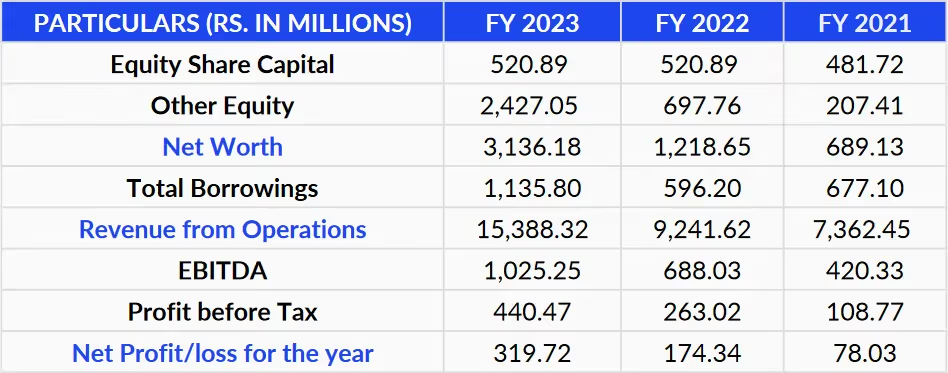
FINANCIALS (RESTATED CONSOLIDATED)
OUTLOOK & VALUATION
EPACK Durable is India's second-largest room air conditioner (RAC) ODM. The company boasts long-standing relationships with top customers, leverages advanced vertically integrated manufacturing and possesses robust product development capabilities. EPACK Durable prioritizes continuous product portfolio expansion. And its consistent financial performance demonstrates operational efficiency and growth potential.
However, some key risks warrant consideration. The company's dependence on a limited number of major customers. Additionally, the RAC industry is highly competitive, and the business experiences seasonal fluctuations.
The issue is fully priced at a P/E valuation of 56.4x; thus, considering all the factors ,we recommend that investors apply for this IPO with a mid- to long-term view. However, they should carefully evaluate their risk tolerance and current market sentiments.
इस सप्ताह फेड की अहम बैठक के अलावा दूसरे ग्लोबल फैक्टर महत्वपूर्ण होंगे
इस सप्ताह फेड की अहम बैठक के अलावा दूसरे ग्लोबल फैक्टर महत्वपूर्ण होंगे| भारतीय शेयर बाजार इस साल ग्लोबलमार्केट से बेहतर प्रदर्शनकर रहे हैं, लेकिन पिछला सप्ताह भारतीय शेयर बाजार के लिए एकशानदार सप्ताह रहा था, जहां निफ्टी और सेंसेक्स ने17,793 और 59,737 के अपने नएउच्चतम स्तर को छुआ, साथही बैंक निफ्टी भी अपने उच्चत्तमस्तर पर पहुंच गयाहै| टेलीकॉम क्षेत्र के लिए राहतपैकेज, बेड बैंक की घोषणा, एफआईआईद्वारा जोरदार खरीदारी, और बड़े पैमानेपर शॉर्ट-कवरिंग भारतीय शेयर बाजारों के बेहतर प्रदर्शनके प्रमुख कारण थे।
कैसा रहेगा यह सप्ताह?
बेहतरप्रदर्शन के बाद भारतीयबाजार के लिए अगलाहफ्ता महत्वपूर्ण होने जा रहा हैक्योंकि ग्लोबल बाजारों में कुछ कमजोरी है जहां 21-22 सितंबरको होने वाली एफओएमसी की बैठक कानतीजा एक महत्वपूर्ण फैक्टरहोगा। ऐसी संभावना है कि यूएसफेड बॉन्ड टेपरिंग की समय-सीमाके बारे में बात कर सकता हैजो नवंबर तक हो सकतीहै और इस वजहसे ग्लोबल इक्विटी बाजारों में सतर्कता देखने को मिल सकतीहै| चीन से मंदी केकुछ संकेत मिल रहे है जो भी चिंता का एक विषयहै, विशेष रूप से मेटल सेक्टरके लिए जहां अधिकांश मेटल शेयरों में पिछले सप्ताह से ही कमजोरी दिखाई देने लगी है। यूएस फेड के अलावा, बैंकऑफ जापान भी 22 सितंबर को अपनी मोनेटरी पॉलिसी जारी करेगा। अमेरिका और अन्य देशों में बढ़ते COVID-19 के मामले भी बाजार के मूड को बिगाड़ सकते हैं।
डॉलर इंडेक्स और अमेरिकी बांड यील्ड पर रहेगी नज़र
डॉलरइंडेक्स का उतार-चढ़ावऔर यूएस बॉन्ड यील्ड भारत जैसे उभरते बाजारों के चाल मेंअहम भूमिका निभाएंगे। डॉलर इंडेक्स 93.5 के महत्वपुर्ण रेसिस्टेन्सस्तर के आसपास कारोबारकर रहा है और अगरयह इस स्तर कोपार करने में सक्षम हो जाता हैतो हमे इसमे तेज उछाल की उम्मीद कर सकते हैं, इसके अलावा यूएस 10-ईयर बॉन्ड यील्ड भी निचले स्तरोसे उछाल के संकेत देरही हैं। यदि डॉलर इंडेक्स और बॉन्ड यील्ड में वृद्धि होगी तो एफआईआई की रणनीति को देखना महत्वपूर्ण होगा क्योंकि हमने पिछले कुछ दिनों में एफआईआई द्वारा बड़ी खरीदारी देखी है और इससेलार्ज-कैप शेयरों में अच्छी तेजी आई है।
टेक्निकलआउटलुक
हमएक मजबूत बुल मार्केट में हैं और हमारा माननाहै कि यह अगले2-3 वर्षों तक जारी रहसकता है, लेकिन लंबे समय के बाद, कुछ फैक्टर ऐसे हैं जो संकेत देते हैं कि बाजार मेंएक शार्ट टर्म करेक्शन देखने को मिल सकताहै| निफ्टी मिडकैप इंडेक्स 30500 के रेजिस्टेंस सेपलट रहा है और निफ्टीमें भी 17800-17850 रेजिस्टेंस जोन के पास कुछ बिकवाली का दबाव देखा गया|
निचे की ओर 17,430-17,250 एक महत्वपूर्ण सपोर्ट क्षेत्र है; इससे नीचे, हमें बाजार में कमजोरी देखने को मिल सकती है और निफ़्टी 16,700 के स्तर की ओर अग्रसर हो सकता है, जबकि अगर निफ्टी 17,800-17,850 क्षेत्र के ऊपर निकलने में कामयाब हो जाता है तो हम उम्मीद कर सकते हैं कि यह 18000 के लेवल तक जा सकता है|

भू-राजनीतिक तनाव के कारण कीमती धातुओं को समर्थन
मिडिल ईस्ट में तनाव बढ़ने के चलते सोने और चांदी के भाव को सपोर्ट मिला हुआ है और कीमते हल्के दबाव के साथ सीमित दायरे में बनी हुई है। अमेरिका से जारी मुद्रास्फीति के आंकड़े अनुमान से बेहतर दर्ज किये गए, लेकिन भू -राजनितिक तनाव के चलते बुलियन की कीमतों में गिरावट सीमित रही। हालांकि, सप्ताह के अंत में सोने की कीमतों में कुछ मजबूती देखी गई, लेकिन अमेरिकी ब्याज दरों को लेकर अनिश्चितता के बीच, कीमते 0.5 प्रतिशत की गिरावट के बाद 62250 रुपये प्रति दस ग्राम रही। चांदी की कीमते भी पिछले सप्ताह 1 प्रतिशत मंदी रहने के बाद 72000 रुपये प्रति किलो पर कारोबार करती रही। उपभोक्ता मूल्य सूचकांक आकड़ो ने पिछले गुरुवार को स्पष्ट किया कि अमेरिकी मुद्रास्फीति दिसंबर में उम्मीद से थोड़ी अधिक बढ़ी, जो श्रम बाजार में हालिया लचीलेपन के साथ मिलकर, फेडरल रिजर्व को ब्याज दरों में जल्दी कटौती शुरू करने के लिए कम प्रोत्साहित कर सकती है। जबकि कई फेड अधिकारियों ने यह भी स्पष्ट किया कि प्रारंभिक दर में कटौती पर दांव अत्यधिक आशावादी है। हालांकि केंद्रीय बैंक द्वारा इस साल के अंत तक ब्याज दरों में कटौती की उम्मीद की जा रही है, लेकिन इस कदम का समय मुद्रास्फीति में कमी और श्रम क्षेत्र में नरमी पर निर्भर करेगा। अमेरिकी मुद्रास्फीति आकड़ो के बाद डॉलर इंडेक्स को सपोर्ट मिला और सोने-चांदी के भाव में स्थिरता रही।
तकनिकी विश्लेषण
इस सप्ताह सोने और चांदी की कीमतों में उछाल देखने को मिल सकता है। एमसीएक्स फ़रवरी वायदा सोने में सपोर्ट 61000 रुपये पर है और रेजिस्टेंस 64000 रुपये पर है। मार्च वायदा चांदी में सपोर्ट 69000 रुपये पर है और रेजिस्टेंस 74000 रुपये पर है।
Big Budget


Popular Articles



.avif)
.avif)

.avif)



START YOUR INVESTMENT JOURNEY
Get personalized advice from our experts
- Dedicated RM Support
- Smooth and Fast Trading App
