


Nifty 50 31 Jul 2026 Morning Market Summary


Key Takeaways
- Prev session close reference: Nifty 50 Pivot 24370.9; R1 24442.1; R2 24500.6; S1 24312.4; S2 24241.2.
- Standout mover: TRANSPEK from 1101.1 -> 1321.3 (+20.00%).
- Biggest loser: NARMADA from 36.19 -> 17.02 (-52.97%).
- Market-wide Index Options PCR: Not available for this session.
Nifty 50 Support And Resistance Levels For 31 Jul 2026
Pivot: 24370.9; R1: 24442.1; R2: 24500.6; S1: 24312.4; S2: 24241.2. The Pivot is the central reference; R1 and R2 above are resistance hurdles, while S1 and S2 below are cushions. All these numbers come from yesterday's close as the basis for today's session.
In plain language, if the price sits above R1, the near-term tone is mildly bullish; above R2, the bias could extend higher; if it slips below S2, the bias could turn bearish. For deeper stock-level insights, Swastika's Sarthi AI stock assistant.
Nifty Bank Pivot Levels For 31 Jul 2026
Pivot: 57271.9; R1: 57404.2; R2: 57543.55; S1: 57132.55; S2: 57000.25. Those levels mirror the same logic as Nifty 50 for the Bank Nifty.


Top 5 Gainers (31 Jul 2026 Session, EQ Series, Liquid Names Only)
| Ticker | From | To | Change |
|---|---|---|---|
| TRANSPEK | 1101.1 | 1321.3 | (+20.00%) |
| UEL | 128.11 | 153.73 | (+20.00%) |
| YASHO | 3215.6 | 3858.7 | (+20.00%) |
| RSDFIN | 92.29 | 110.74 | (+19.99%) |
| DCI | 276.75 | 329.7 | (+19.13%) |
Top 5 Losers (31 Jul 2026 Session, EQ Series, Liquid Names Only)
| Ticker | From | To | Change |
|---|---|---|---|
| NARMADA | 36.19 | 17.02 | (-52.97%) |
| EXPLEOSOL | 906.6 | 802.85 | (-11.44%) |
| THANGAMAYL | 5807.0 | 5226.5 | (-10.00%) |
| ASIANTILES | 60.71 | 54.68 | (-9.93%) |
| SIGNPOST | 311.2 | 283.55 | (-8.88%) |
Market-Wide Index Options PCR
Market-wide Index Options PCR: Not available for this session.
Frequently Asked Questions
Nifty 50 Support and Resistance Levels for 31 Jul 2026
Pivot 24370.9; R1 24442.1; R2 24500.6; S1 24312.4; S2 24241.2. These are reference points for today's trading, derived from yesterday's close.
Nifty Bank Pivot Levels for 31 Jul 2026
Pivot 57271.9; R1 57404.2; R2 57543.55; S1 57132.55; S2 57000.25. These are yesterday's close-based reference levels for today.
Top Gainers on 31 Jul 2026
TRANSPEK: 1101.1 -> 1321.3 (+20.00%); UEL: 128.11 -> 153.73 (+20.00%); YASHO: 3215.6 -> 3858.7 (+20.00%); RSDFIN: 92.29 -> 110.74 (+19.99%); DCI: 276.75 -> 329.7 (+19.13%).
Top Losers on 31 Jul 2026
NARMADA: 36.19 -> 17.02 (-52.97%); EXPLEOSOL: 906.6 -> 802.85 (-11.44%); THANGAMAYL: 5807.0 -> 5226.5 (-10.00%); ASIANTILES: 60.71 -> 54.68 (-9.93%); SIGNPOST: 311.2 -> 283.55 (-8.88%).
PCR for Market-wide Index Options today
Market-wide Index Options PCR: Not available for this session.
Conclusion
Yesterday's close reference levels set the stage for today's open. Nifty 50 pivot at 24370.9 with R1 24442.1 and R2 24500.6; S1 24312.4; S2 24241.2. The standout mover TRANSPEK posted a 20% gain while NARMADA slid 52.97% from 36.19 to 17.02. Market-wide Index Options PCR remains not available for this session. Watch how price interacts with the pivot and resistance/support on open, and consider exploring deeper stock-level insights with Swastika's Sarthi AI stock assistant.
Open your trading and demat account here
Reference :
1 : Nseindia
Latest Articles

Types of Charts in Intraday Trading


Intraday trading is the process of trading financial instruments within a single day. The transactions generally occur within a few minutes to an hour before the market closes for the day. Intraday traders are usually those who wish to make money from short-term price fluctuations in the market. So Today in this blog we will discuss the types of charts in Intraday trading.
Charts are useful because they allow you to see how far prices have moved in relation to each other over time. They show you how far each bar on the chart goes up or down and how many times this has happened before, which is important information for traders who want to know whether a particular price move is unusual or normal for that particular security.
This allows you to analyze whether there were any significant changes in price during each bar, as well as how far they moved from their open or close prices at the end of each bar.
Charts in Intraday Trading
Tick-Trade Chart in Intraday Trading
Tick charts are the most popular type of chart for intraday trading. They show price movements as little ticks on a grid and can be used to track the price action of individual stocks and commodities.
These charts are called tick charts because they show the bid/ask prices for each trade, with each trade being one tick on the chart. The next trade is plotted two ticks away from the last one, and so on.
Hourly Charts in Intraday Trading
Hourly charts are great for day traders who want to see which way the market is trending over a long period of time.
If you're looking at an hourly chart, all the information will be displayed in one grid that shows the hourly price action all in one place.
This makes it easy to see if there's any major upward or downward movements occurring over a long period of time.
Intraday Five-Minute Charts
The five-minute time frame is one of the most popular time frames for intraday traders. It allows them to watch market movements in real time and react quickly to price changes.
The five-minute chart is also ideal for day traders because it allows them to take advantage of short-term price movements.
15-Minute Charts
15-minute charts are best used by swing traders who want to see how their stocks have performed during different periods throughout the day before making a decision on whether or not to buy or sell their positions.
These charts typically only display five candles per candle line, so they're not as detailed as other types of charts, but they can still be helpful when looking at historical price action over time.
A tick chart is appropriate for traders who want to see all of the activity in a single market or security over time, including both large and small moves.
Final Note
Charts analysis is one of the most important aspects of intraday trading. Although it is not required to know charting techniques to take up intraday trading, it helps in making better decisions. The chart gives a lot of information about the market which cannot be obtained from just looking at the quotes on the screen.
Charts show trends and patterns which are very useful for intraday traders as they help them make better decisions. If you want to make your trade successful in intraday, these charts will definitely help you give outstanding returns.

केंद्रीय बैंको के आक्रामक रुख से दबाव में सोना-चांदी।
अमेरिकी मुद्रास्फीति (सीपीआई ) के आंकड़े साल दर साल 8.3 प्रतिशत से बढ़कर 8.6 प्रतिशत हो गए है जिससे प्रमुख केंद्रीय बैंको द्वारा मौद्रिक नीति को लेकर आक्रामक रुख बरकार रखने की उम्मीद बढ़ गई है।
और सोने-चांदी के भाव में दबाव बना हुआ है। लेकिन, अमेरिकी फेड द्वारा लगातार ब्याज दरे बढ़ाने के बावजूद मुद्रास्फीति में बढ़ोतरी हो रही है जो कीमती धातुओं को निचले स्तरों पर सपोर्ट कर रहा है। दुनिया में बढ़ता ऊर्जा और खाद्य संकट, मुद्रास्फीति में बढ़ोतरी की मुख्य वजह है।
यूरोपीय सेंट्रल बैंक (ईसीबी) ने पिछले सप्ताह हुई मौद्रिक नीति में जुलाई में ब्याज दर एक तिमाही से बढ़ाने का कहा और सितम्बर में फिर से दूसरी बार दरें बढ़ाने के संकेत दिए है। बढ़ती हुई मुद्रास्फीति को नियंत्रित करने के लिए अन्य प्रमुख केंद्रीय बैंको के साथ यूरोपीय सेंट्रल बैंक द्वारा मौद्रिक नीति को कठोर करना शुरू कर दिया है। ईसीबी ने यह भी कहा कि वह 1 जुलाई को शुद्ध संपत्ति खरीद को भी समाप्त कर देगा।
यूरोज़ोन में मुद्रास्फीति अब 8 प्रतिशत से अधिक हो गई है। घरेलु बाजार में मुद्रास्फीति को नियंत्रित करने के लिए भारतीय रिज़र्व बैंक द्वारा भी रेपो रेट 0.5 प्रतिशत बढ़ा दिया है। जिसके कारण पिछले सप्ताह सोने और चांदी के भाव दबाव में रहते हुए सीमित दायरे में बने रहे।
अमेरिका के शुरुआती बेरोजगार दावे पिछले हफ्ते लगभग पांच महीनों में उच्चतम स्तर तक बढ़ गए है, जो सुझाव देता है ब्याज दर वृद्धि से नौकरी बाजार तंग हो रहा है। यूएस ट्रेजरी सेक्रेटरी येलन ने अपने बयांन में विकास दर धीमी रहने की बात कही, लेकिन उपभोक्ता खर्च और निवेश में मजबूती को बरक़रार बताया है।
डॉलर, जो सोने के विपरीत दिशा में चलता है, पिछले सप्ताह में 1 प्रतिशत से ज्यादा मजबूत हुआ है। जबकि यूएस बेंचमार्क ट्रेज़री यील्ड लगातार दूसरे सप्ताह बढ़कर 3 प्रतिशत के ऊपर पहुंच गई है।
इस सप्ताह अमेरिकी फ़ेडरल रिज़र्व की बैठक है जिसमे 0.50 प्रतिशत ब्याज दरे बढ़ाने की बात कही गई है जिससे सोने-चांदी के भाव में बिकवाली का दबाव बना हुआ है। पिछले सप्ताह घरेलु वायदा बाजार में सोना 0.55 प्रतिशत और चांदी 2 प्रतिशत तक टूटी है।
तकनीकी विश्लेषण:
सोने और चांदी के भाव में इस सप्ताह बिकवाली का दबाव रहने की सम्भावना है। सोने में 49500 रुपये पर सपोर्ट है और 51500 पर प्रतिरोध है। चांदी में 58000 रुपये पर सपोर्ट और 63000 रुपये पर प्रतिरोध है।
Types of ETFs in India
Investors in India have been investing in ETFs for the past few years. The popularity of these exchange-traded funds has increased because they are very similar to mutual funds but with lower expenses and more tax benefits, making them a great option for long-term investors.
Talk to our experts to know more about ETFs in India - 01204400700
What are ETFs?
Exchange-Traded Fund (ETF) is a type of investment that is bought and sold on stock exchanges. This is a way to make money from the movement in the market without actually owning any stocks.
ETFs are usually based on an index, such as the Nifty or Sensex. The price of an ETF changes as the value of its underlying assets change.
In this blog, we will look at different types of ETFs available in India and their uses:
Types of ETFs in India
Index Fund ETF in India
These funds track a specific index, like the Nifty 50 or Sensex, and they are likely to perform in line with the index. For example, if the Sensex goes up by 10 per cent, then your fund will also go up by 10 percent.
Index Fund ETFs offer investors the opportunity to invest in large companies that trade on the stock market with minimal risks. They are suitable for long-term investors who do not mind taking only moderate returns.
Gold ETFs in India
The sole purpose of Gold ETF is to track the domestic physical gold prices. They are passive investment instruments which are completely dependent on gold prices and invest in gold bullion.
Gold ETFs represent units in the form of physical gold which is available in paper or dematerialized form. Let’s understand it with an example: 1 Gold ETF unit is equal to 1 Gram of gold. Gold ETFs combine the flexibility of investment and simplicity of gold investments.
Also Read - Tax on Gold Investment
Bond ETFs In India
Bond ETFs invest in fixed income assets such as bonds and debt instruments issued by companies or governments. Bond ETFs may be geared or ungeared and include government bond ETFs, corporate bond ETFs, municipal bond ETFs and emerging market bond ETFs among others.
Currency ETF in India
Currency ETFs allow you to invest in the currencies of different countries. The value of your investment will rise or fall as the currency rates change against the US dollar.
In India, we have a currency ETF that allows us to invest in currencies other than the Indian rupee. This is a smart move for investors who want to diversify their portfolios by investing in other currencies.
Benefits of Investing in ETFs in India
A lot of investors have been asking me about the benefits of investing in ETFs. So I thought I would write down my thoughts and list out some of the benefits that investors can expect when they invest in an ETF.
Diversification: One of the biggest benefits of buying an ETF is diversification. You get exposure to a basket of stocks and bonds, which helps reduce risk. If one company goes down, it's possible that another may go up.
No Need to Monitor Individual Stocks: If you buy an ETF, you don't need to keep monitoring individual stocks or bonds every day or week because the fund manager does all that for you! You just need to check once in a while if there are any changes in the holdings or fees charged by your fund manager.
Lower Management Fees: The management fees charged by mutual funds are typically much higher than those charged by ETFs, making them more cost-effective for investors with smaller portfolios who are looking for diversification without taking too much risk or volatility.
Final Note
Exchange Traded Funds (ETFs) are a great way to invest in stocks, commodities and bonds without having to buy the underlying asset. It's a passive investment vehicle that tracks the performance of an index or commodity.

Best Commodities for Trading in India
Commodity trading has been around for centuries. However, it gained popularity in modern times when companies began to use it to hedge against inflation or deflation.
Traders are often known to be speculators, as they invest in commodities with the hope that the price of these commodities will rise.
There are 6 major commodity trading exchanges in India through which you can trade on commodities.
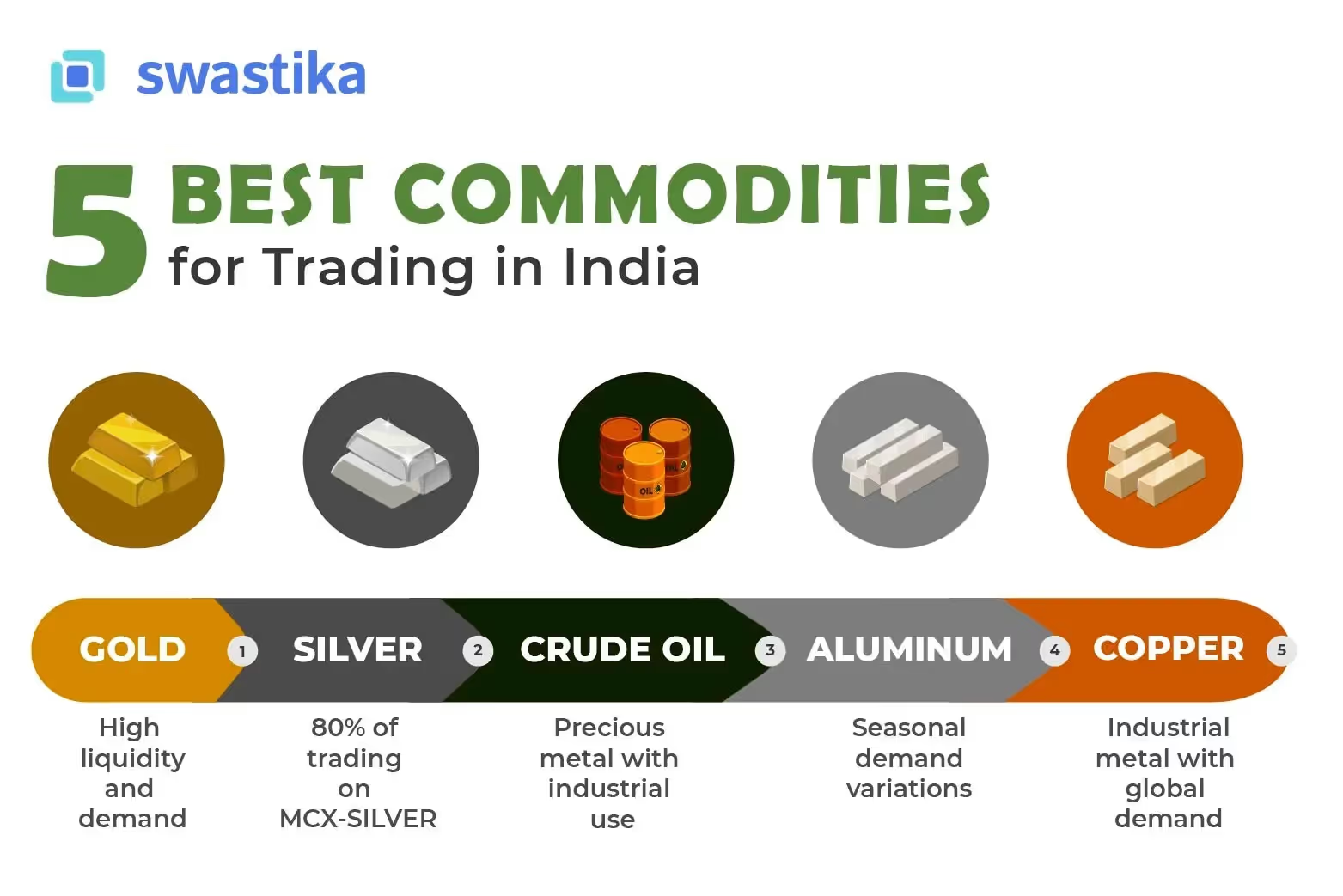
Top Commodities for Trading in India as Per Volume and Movement
Gold
The best commodity to trade in India is gold. The reason is that it is the only commodity that has a very strong correlation with the rupee. Also, it is considered one of the safest investment options in India.
Investors looking to invest in gold directly can purchase the physical asset, buy shares of a mutual or exchange-traded fund that replicates the price of gold, or trade futures and options in the commodities market.
Also Read - Tax on Gold Investment
Silver
The second best commodity to trade in India is Silver. Silver has always been a very stable asset with good returns in the long term, but due to its low liquidity and high transaction costs, it was not considered an investment option by many people.
However, with the launch of the MCX-SILVER exchange, this has changed completely, and now more than 80% of total trading in Silver happens on this exchange.
The MCX offers four silver contracts for trading. The most popular is the Big Silver futures contract, traded in lot sizes of 30 kg. Mini Silver, a 5 kg lot size, is the second most popular contract.
Also Read - ETFs of Silver – A Good Investment
Crude Oil
Thirdly, we have crude oil, which is also considered one of the best commodities for trading because it strongly correlates with other commodities like Gold and Silver. There are also many other factors like production cost, etc. which are also considered while trading in crude oil.
Investors interested in trading futures and options on oil can do so by purchasing them directly on a commodities exchange. However, the most common way for the average investor to get exposure to oil is to buy shares of an ETF that tracks the price of oil or a basket of related companies.
Also Read - How to read crude oil inventory data
Aluminum
Aluminum is one of the most widely traded commodities globally and has a huge impact on the global economy.
Aluminum is used in many industries, from aerospace to construction materials to food packaging. Aluminum is also used in transportation, building and construction, electrical equipment, machinery, and much more.
Copper
Copper is another popular metal and is considered one of the best metals to trade. It's used in everything from wiring to plumbing to roofing materials. Copper is also used in jewelry making and other industrial applications.
Copper demand will be high, which means that copper futures are likely to rise in value. Trading in these futures is done on Indian commodity exchanges like the Multi-Commodity Exchange (MCX).
Final Note
When it comes to commodities investing, there are a lot of factors to consider. Commodities can be volatile, they're not as liquid as stocks and bonds, and they don't offer the same predictability that stocks do. But if you pick the right ones and diversify your portfolio correctly, commodities can provide solid returns over time.

Successful Intraday Trading Strategies: A Simple Guide
Intraday trading, also known as day trading, involves buying and selling financial instruments within the same trading day. The goal is to capitalize on small price movements in the market. While it can be profitable, intraday trading requires a solid strategy and a disciplined approach to succeed. In this guide, we’ll explore some tried-and-tested intraday trading strategies in simple language to help you navigate this fast-paced world.
1. Understanding Intraday Trading
Before diving into strategies, it’s crucial to understand what intraday trading entails. Unlike long-term investing, where you hold assets for months or years, intraday trading involves making quick decisions and closing all positions before the market closes. The objective is to make profits from small price fluctuations within the day.
2. Key Elements of Intraday Trading
- Volatility: Look for stocks or assets that show significant price movements during the day.
- Liquidity: Choose stocks or assets with high trading volumes, ensuring that you can buy and sell them easily.
- Time Frame: Intraday trading typically operates within short time frames, ranging from a few minutes to a few hours.
3. Top Intraday Trading Strategies
Here are some of the most popular and successful intraday trading strategies:
a) Scalping
Scalping is one of the most common intraday trading strategies. The idea is to make multiple trades throughout the day, each aiming to gain a small profit. Traders who scalp look for small price changes and capitalize on them repeatedly.
- How it works: Scalpers enter and exit trades within minutes or even seconds, aiming for small gains that accumulate over time.
- Key to success: Speed and precision are essential. You need to be able to make quick decisions and have a fast trading platform.
b) Momentum Trading
Momentum trading involves riding the wave of a stock that is showing a strong upward or downward trend. The strategy is based on the belief that a stock that is moving strongly in one direction will continue to do so for a period.
- How it works: Identify stocks with strong momentum (sharp price movements) and enter trades in the direction of the trend.
- Key to success: Timing is crucial. Entering the trade at the right moment and exiting before the momentum fades is essential.
c) Breakout Trading
Breakout trading focuses on identifying key levels where the price of an asset is likely to break out of a range. This could be a resistance level (a price ceiling where the stock struggles to rise above) or a support level (a price floor where the stock struggles to fall below).
- How it works: When the price breaks through a key resistance or support level, it often leads to a significant price movement. Traders enter the trade at the breakout point.
- Key to success: Identifying genuine breakouts and avoiding false signals is critical.
d) Reversal Trading
Reversal trading, also known as counter-trend trading, involves identifying points where a current trend is likely to reverse. This strategy is more challenging as it requires you to predict when a trend is about to change direction.
- How it works: Traders look for signs that a trend is losing strength and prepare to enter a trade in the opposite direction.
- Key to success: Strong analytical skills and the ability to recognize early signals of a trend reversal are vital.
e) Gap and Go Strategy
This strategy involves trading stocks that have a significant price gap between the previous day’s closing price and the current day’s opening price. The idea is to capitalize on the momentum that often follows these gaps.
- How it works: Identify stocks with large gaps at the market open and enter trades based on the direction of the gap.
- Key to success: Quick analysis and decision-making at the market open are essential for this strategy.
4. Tips for Successful Intraday Trading
- Develop a Plan: Always trade with a well-defined plan, including entry and exit points, and stick to it.
- Manage Risk: Use stop-loss orders to limit potential losses. Never risk more than you can afford to lose.
- Keep Emotions in Check: Stay calm and avoid making impulsive decisions based on fear or greed.
- Practice with Paper Trading: Before risking real money, practice your strategies with paper trading or a demo account.
- Stay Informed: Keep an eye on market news, economic indicators, and other factors that can influence price movements.
5. Conclusion
Intraday trading can be highly rewarding, but it requires a deep understanding of market dynamics, disciplined execution of strategies, and constant learning. By employing these successful intraday trading strategies and following the tips provided, you can increase your chances of making consistent profits. Remember, patience and practice are key to becoming a successful intraday trader.
Happy trading!
.avif)
How to Earn Rs 1,000 per Day from the Stock Market
Many people see the stock market as a great way to make quick money. While it’s possible to earn Rs 1,000 daily, it can be challenging, especially for beginners. Often, people struggle because they don’t fully understand how the market works.
The stock market can change rapidly, and making money requires more than just luck. You need to do your research, have a plan, and sometimes get advice from experts. While trading might seem like gambling, it can be a reliable way to make money if done right.
So, how can you earn Rs 1,000 per day from the stock market? Here are some simple strategies to help you get started.
1. Aim for Small Profits from Multiple Trades
Instead of trying to make a big profit from one trade, focus on making small profits from several trades throughout the day. Expecting a big return from just one trade is unrealistic. By spreading your trades across different stocks, you increase your chances of making a profit.
The key is to take advantage of small gains. If you see a small profit, take it rather than waiting for a bigger one that may never come.
2. Trade High-Volume Stocks
High-volume stocks are those that are bought and sold a lot during the day. These stocks are easier to trade because there’s always someone willing to buy or sell. This is important for intraday trading, where you need to close your trades by the end of the day.
Do some research and make a list of 8-10 high-volume stocks to trade. This will help you make better decisions and increase your chances of hitting your daily profit goal.
3. Focus on Stocks in the News
Stocks that are in the news often move up or down quickly, creating opportunities to make money. News about new products, earnings reports, or economic changes can cause a stock’s price to change significantly.
Keep an eye on current events and focus on trading stocks that are making headlines. The extra attention these stocks get can help you achieve your Rs 1,000 per day target.
4. Use Stop-Loss Orders
A stop-loss order is a tool that helps you limit your losses. It automatically sells a stock if its price drops to a certain level, protecting you from losing too much money. Setting a stop-loss helps you avoid holding onto a losing trade for too long.
By using stop-loss orders, you can protect your profits and stay on track to reach your daily earnings goal.
5. Keep Trading Costs Low
Trading costs like brokerage fees and taxes can reduce your profits. To maximize your earnings, try to keep these costs as low as possible. Choose a brokerage that charges low fees and be aware of other expenses that come with each trade.
By minimizing your trading costs, you’ll keep more of your profits and make it easier to earn Rs 1,000 each day.
6. Start with a Small Capital and Gradually Increase
If you're new to trading, it's wise to start with a small amount of money. This way, you can learn without risking too much. As you gain experience and confidence, you can gradually increase the amount you invest. This cautious approach helps you avoid significant losses early on and builds your skills over time.
7. Learn Technical Analysis Basics
Understanding technical analysis can give you an edge in trading. It involves studying price charts and using indicators to predict future stock movements. Basic tools like moving averages, support and resistance levels, and trend lines can help you make more updated trading decisions. Even a basic understanding of these concepts can improve your trading strategy.
8. Practice Discipline and Emotional Control
The stock market can be emotional, with prices going up and down quickly. To succeed, you need to stay disciplined and not let emotions like fear or greed drive your decisions. Stick to your plan, take profits when they come, and don’t chase losses. Emotional control is crucial to consistent success in the stock market.
9. Use Paper Trading to Practice
Before you start trading with real money, consider practicing with a paper trading account. This allows you to simulate trading in real-time with virtual money. It’s a great way to test your strategies and get comfortable with the trading platform without any financial risk. Once you’re confident in your approach, you can start trading with real money.
10. Keep Up with Market Trends and News
The stock market is influenced by many factors, including economic data, global events, and industry trends. Keeping yourself updated with the latest news and market trends can help you anticipate movements and make better trading decisions. Subscribe to financial news channels, follow market experts on social media, and regularly read financial newspapers or websites.
11. Join Trading Communities
Being part of a trading community can provide valuable insights and support. You can learn from the experiences of other traders, get tips, and even discuss your strategies. Online forums, social media groups, or local meetups can be great places to connect with fellow traders and stay motivated.
12. Avoid Overtrading
While it’s important to make multiple trades to achieve your daily profit goal, be careful not to overtrade. Overtrading can lead to higher costs and increased stress, which might reduce your overall profitability. Focus on quality trades rather than quantity, and make sure each trade aligns with your strategy.
Conclusion
Earning Rs 1,000 per day from the stock market is achievable with patience, discipline, and a well-thought-out strategy. Start small, learn the basics, and gradually refine your approach as you gain experience. Keep an eye on market trends, stay updated, and remember that consistency is key. With these strategies, you can build a steady income stream from the stock market over time.
Big Budget


Popular Articles





.avif)

.avif)



START YOUR INVESTMENT JOURNEY
Get personalized advice from our experts
- Dedicated RM Support
- Smooth and Fast Trading App
