


Infosys Share Price Outlook: AI Momentum, Q1 FY27 Trends, And The Indian IT Stock Landscape


Key Takeaways
- Q1 FY27 delivered sector stability with deal wins underpinning growth.
- Infosys stood out as an exception to broadly stable performance.
- AI adoption adds volatility but promises a larger TAM by 2030.
- BFSI and Healthcare remained the strongest verticals, with manufacturing facing delays.
Infosys Share Price sits at the center of a shifting AI-driven narrative in Indian IT stocks. As the sector posted a largely stable first quarter, deal wins and improving margins supported earnings trajectories, even as discretionary technology spend remained selective. Infosys, in particular, stood out as an exception to a broadly stable performance across the peer group, underscoring a company-specific dynamic in a market still learning to price AI's long-term value against near-term uncertainties.
For investors, the question isn't just about the number on a screen; it's about which structural bets will outlast the AI cycle. Deal wins and ramp-ups on large contracts supported the sector's outlook, while continuing demand for cloud, data, and AI-enabled services provided a cushion against softer discretionary demand. Margins remained broadly in line with or ahead of expectations thanks to higher utilization and productivity gains, helping preserve profitability in a quarter that otherwise carried caution on the spending front.
Infosys Share Price And IT Sector Outlook After Q1 FY27 Results
The first-quarter results painted a mixed picture for the Indian IT space. Most companies posted growth broadly in line with expectations and retained their FY27 guidance, although Infosys was an exception to that trend. The broader market is being guided by deal wins, ramp-ups of large contracts, and sustained demand for cloud, data, and AI-enabled services, all of which bode well for the sector's earnings trajectory into Q2. Nuvama Institutional Equities notes that margins across the sector were broadly in line with or ahead of expectations, supported by higher employee utilization and efficiency gains.
As investors monitor Infosys stock performance versus its peers, the AI narrative remains a major driver of price reactions. The market is increasingly sensitive to enterprise AI architectures–systems that protect data while staying model-agnostic so firms can swap AI models and optimize token costs. This architectural flexibility is likely to create incremental opportunities for Indian IT services players as generative AI adoption expands. The immediate takeaway is not just a quarterly number, but how the AI layer translates into contract wins and client spending.
AI Momentum Driving Volatility In Indian IT Stocks
The AI theme has been a major contributor to stock volatility in the IT space. The quarter's commentary and deal-flow signals suggest that investors are weighing AI-enabled revenue ramps against any near-term cannibalization of existing offerings. Nuvama highlights that deals and the ramp-up of large contracts are key to sustaining growth momentum, while discretionary spending remains selective. This environment means valuations may swing in response to AI headlines even as underlying execution remains solid for most players.
From a technology architecture perspective, large enterprises are seeking application layers that can protect data while remaining independent of the underlying large language model. That means Indian IT service providers with strength in integration, cloud migration, and AI optimization stand to capture incremental demand, particularly as corporates evaluate different AI models and manage token costs. The long-run opportunity for Indian IT players could widen the total addressable market significantly by enabling bespoke AI solutions and enterprise-grade AI governance frameworks.


BFSI And Healthcare Verticals Remain The Strongest In Q1
Verticals matter for the near-term demand mix. BFSI and Healthcare remained the strongest verticals, providing stability for the sector and supporting steady top-line execution in the quarter. Retail demand was described as stable, while Manufacturing faced continued pressure, especially in automotive segments where investment decisions were delayed. Demand from the high-tech sector was mixed, underscoring the unevenness of a technology cycle that is being re-shaped by AI and cloud-based modernization projects.
The sector's leading verticals are driving the largest engagements and are likely to be the main anchors of growth in Q2. System integrators are expected to retain a pivotal role in enterprise technology programs, particularly where customized software components for AI deployment are required.
Medium-Term Growth Outlook And The TAM Expansion To 2030
Looking beyond the next quarter, the medium-term outlook remains positive. Nuvama expects the sector to face some revenue cannibalisation from AI in the near term before reaching an inflection point. They estimate the opportunity could eventually expand the industry's total addressable market to 300-400 billion USD by 2030. This expansion reflects enterprises investing in AI architecture, data governance, and integration layers to scale AI across functions while controlling costs.
For Indian IT players, this implies that the AI opportunity is not just about replacing existing software, but about building platforms that can support multiple AI models and workflows. Large deals and multi-year contracts will likely provide more visibility as AI adoption matures, even as near-term price movements continue to reflect AI headlines rather than fundamentals alone.
What To Watch In Q2: Deal Ramp-Ups, Large Contracts, And Client Spending Trends
With the second quarter approaching, deal ramp-ups, new contract wins, and client spending trends will remain important indicators of the earnings trajectory. The pace of large contract execution, the mix of cloud and AI services, and cross-sell momentum across verticals will influence margins and growth. While the AI narrative adds volatility in the short run, the earnings trajectory remains anchored by structural demand for cloud, data, and AI-enabled services across BFSI, Healthcare, and other verticals.
Investors should keep an eye on the industry-wide shift toward enterprise AI architectures–solutions that support data protection, model-switching capability, and efficient token cost management. Such architectures are likely to shape the competition among Indian IT service providers in the coming quarters, and successful players could leverage this to win larger, longer-duration deals.
Is Infosys A Good Buy In The AI-Driven Market?
Long-term prospects for Infosys look positive within an AI-driven market, though near-term volatility may persist as the sector negotiates AI's impact on revenue mix and discretionary spending. The broad view from Nuvama is that Indian IT companies should prosper over the medium to long term, even as stock prices remain volatile in the near term. The decision to buy hinges on your time horizon: if you can hold through AI-induced fluctuations, the rising AI demand and transform actions by large enterprises could support a favorable earnings trajectory.
Investors might also consider Infosys's dividend policy and payout track record as part of a total return framework. While this article does not provide dividend specifics, a stable dividend is a factor some investors weigh alongside growth prospects. For practical decision support, you can explore deeper analytics with Swastika's Sarthi AI stock assistant: Swastika's Sarthi AI stock assistant.
Related Reads
- Infosys Share Price Today: A Practical Guide For Retail Investors
- Infosys Share Price: Trends, Dividend Insights, And Strategic Moves For Indian Retail Investors
- Infosys Share Price: Buybacks, Dividends, And Quarterly Results Shaping The Retail Investor Outlook
Frequently Asked Questions
What factors drive Infosys stock volatility?
AI momentum, deal wins, and sector dynamics influence price movements as investors weigh AI-enabled growth against near-term discretionary spending.
Which verticals led demand in Q1?
BFSI and Healthcare remained the strongest verticals, while Manufacturing faced pressure and automotive investments were delayed.
What is the TAM projection for AI adoption by 2030?
Nuvama expects the total addressable market for AI-enabled services to expand to about 300-400 billion USD by 2030.
What should investors watch in Q2?
Deal ramp-ups, new contract wins, and client spending trends will be the key indicators for the earnings trajectory.
Is Infosys a good buy in the AI-driven market?
Long-term prospects look positive, but near-term volatility may persist as AI-driven demand shifts and discretionary spending remain selective.
Conclusion
Short and long-term, the IT sector's AI turbocharge means retail investors should stay focused on the structural shifts rather than day-to-day price moves. The Q1 FY27 results underscore that AI-enabled demand, deal momentum, and sector-wide efficiency gains can sustain earnings growth, even as near-term volatility persists. The larger takeaway is that the AI story is expanding the TAM and shifting how enterprise software is architected, which should benefit teams with execution strength and client-ready AI capabilities.
Latest Articles

युद्ध बढ़ने की चिंताओं से बढ़ी सेफ हैवन मांग।


इजराइल-हमास युद्ध की चिंताओं के कारण लगातार सुरक्षित निवेश की मांग ने सोने की कीमतों को तीन महीने के उच्चतम स्तर पर पंहुचा दिया है, जबकि अमेरिकी ब्याज दरों पर कुछ हद तक मिश्रित संकेतों ने डॉलर और ट्रेजरी पैदावार में तेजी को रोक दिया है। सोने में लगातार दूसरे सप्ताह जोरदार बढ़त दर्ज की गई, कॉमेक्स सोने का वायदा भाव 2,000 डॉलर प्रति औंस के स्तर के करीब आ गया है, क्योंकि मिडिल-ईस्ट में व्यापक संघर्ष की आशंका के कारण पारंपरिक सुरक्षित ठिकानों की मांग से सोने की चमक बढ़ गई है। डॉलर इंडेक्स और ट्रेजरी यील्ड में पिछले सप्ताह के अंत में आई कमजोरी से सोने को प्रोत्साहन मिला, क्योंकि फेडरल रिजर्व के अध्यक्ष जेरोम पॉवेल ने कहा कि पैदावार में हालिया बढ़ोतरी वित्तीय स्थितियों को सख्त कर रही है, जिससे फेड द्वारा अधिक कार्रवाई की आवश्यकता कम हो सकती है। जबकि पॉवेल ने अभी भी इस वर्ष कम से कम एक और ब्याज दर बढ़ोतरी के लिए दरवाजा खुला रखा है, बाजार ने उनकी टिप्पणियों को एक संकेत के रूप में लिया कि फेड ने ब्याज दरें बढ़ाने का काम पूरा कर लिया है। इससे अमेरिकी डॉलर इंडेक्स और बेंचमार्क ट्रेज़री यील्ड उच्च स्तरों से पीछे हट गई, हालांकि 10 साल ट्रेज़री यील्ड की दर अभी भी 5 प्रतिशत के स्तर के करीब बनी हुई है। भारत में त्योहारों का सीज़न शुरू होना और दिवाली करीब होने के कारण भी ज्वेलर्स की खरीद सोने की कीमतों को चमका रही है। पिछले सप्ताह, एमसीएक्स में दिसंबर वायदा सोना 2.2 प्रतिशत तेज़ हो कर 60700 रुपये प्रति दस ग्राम, और चांदी 1 प्रतिशत तेज़ हो कर 72400 रुपये प्रति किलो पर कारोबार करती दिखी।
तकनिकी विश्लेषण
इस सप्ताह कीमती धातुओं के भाव में तेज़ी जारी रह सकती है। एमसीएक्स दिसंबर वायदा सोने में सपोर्ट 59000 रुपये पर है और रेजिस्टेंस 61800 रुपये पर है। दिसंबर वायदा चांदी में सपोर्ट 70000 रुपये पर है और रेजिस्टेंस 76000 रुपये पर है।

IRM Energy IPO Date, Price, GMP, Review
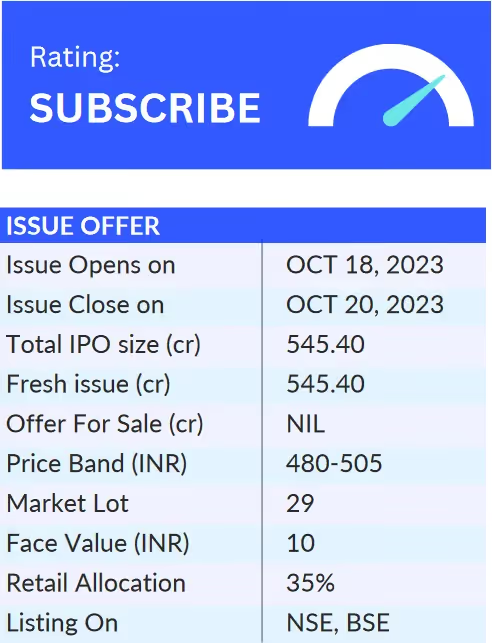
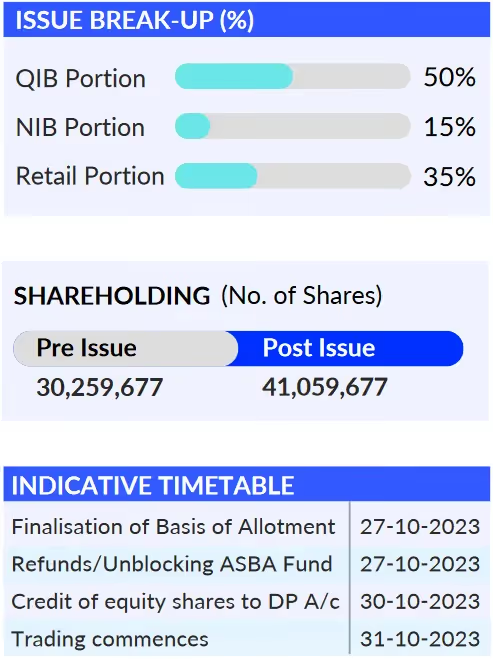
IRM Energy Limited is a gas distribution company. The company is involved in developing, operating, and expanding of local natural gas distribution network. IRM Energy is a value-driven energy enterprise serving industrial, commercial, domestic, and automobile customers.
OBJECTS OF THE ISSUE
- Funding capital expenditure requirements for the development of the City Gas Distribution network.
- Repayment of all or a portion of certain outstanding borrowings availed by the Company.
KEY MANAGERIAL PERSONNEL
Maheswar Sahu
He is a Non-Executive Director of the Company and the Chairman of the Board of Directors of company. He had active involvement in handling various portfolios in Government including PSU management.
Karan Kausha
He is Chief Executive Officer (CEO) of the Company on July 13, 2020. He has been associated with the Company since September 5, 2016. He has 16 years of experience in the field of General Management, Strategy, Business Development and Project Management.
Harshal Anjaria
Harshal Anjaria was appointed as the Chief Financial Officer (CFO) of the Company on July 13, 2017. He has been associated with the Company since July 11, 2016. He has been associated with the Company since July 11, 2016.
Shikha Jain
Shikha Jain was appointed as the Company Secretary and Compliance Officer of the Company on January 4, 2020 and November 7, 2022, respectively. She has been associated with the Company since September 2, 2019. She has over 5 years of experience in corporate secretarial and other related compliances.
COMPANY PROFILE
- Company develop natural gas distribution projects in the geographical areas (“GAs”) for industrial, commercial, domestic and automobile customers.
- The company has marked its presence in Banaskantha District in the state of Gujarat, Fatehgarh Sahib in the state of Punjab, and Diu & Gir-Somnath in the Union Territory of Daman & Diu and the state of Gujarat.
- The company is fulfilling the natural gas requirements of 48172 domestic clients, 179 industrial units, and 248 commercial clients.
- As of September 2022, the company has 216 CNG gas stations across its operating geographical areas.
- The company has received an award of City Gas Distribution- Growing Company of the Year 2020 from the Federation of Indian Petroleum Industries.
- Company supply natural gas to two primary set of customer segments that are CNG and PNG.
COMPETITIVE STRENGTHS
- Exclusivity in CNG and PNG supply in the awarded geographical areas.
- Diverse customer portfolio and distribution network of CNG and PNG.
- Strong parentage, experienced board and management team and strong execution team.
- Technology adoption and digital initiatives for efficient and optimal operations.
- Connectivity to gas pipelines and establishing cost-effective gas sourcing arrangements.
- Strong financial performance with consistent growth and profitability supported by healthy operating efficiency and favourable regulations.
KEY STRATEGIES
- Expand company’s presence in existing and newer geographical areas through an improved captive distribution channel.
- Infrastructure roll-out for development and operation of the new licensed geographical areas of Namakkal & Tiruchirappalli, Tamil Nadu.
- Technology adoption to increase operational efficiency and enhance customer value.
- Business integration for transition into a complete energy solution provider.
KEY CONCERNS
- Transporting natural gas is hazardous and could result in accidents, which could adversely affect the company’s reputation, business, financial condition, results of operations, and cash flows.
- The Company typically requires 15-18 months to generate revenue in its geographical areas. Any further delay in realizing revenue may affect projections, results of operations, and cash flows.
- Its operations are restricted to defined geographical boundaries and the natural gas requirements in these regions may be affected by various factors.
- Companies require various licenses and approvals for undertaking their businesses.
- The company is heavily reliant on CNG and industrial PNG supply operations and any decrease in the sales may have an adverse effect on the business.
- The company is dependent on Government policies for the allocation of natural gas and the cost of gas supplied for CNG and domestic PNG customers.
COMPARISON WITH LISTED INDUSTRY PEERS (AS ON 31ST MARCH 2023)

FINANCIALS (RESTATED CONSOLIDATED)
OUTLOOK & VALUATION
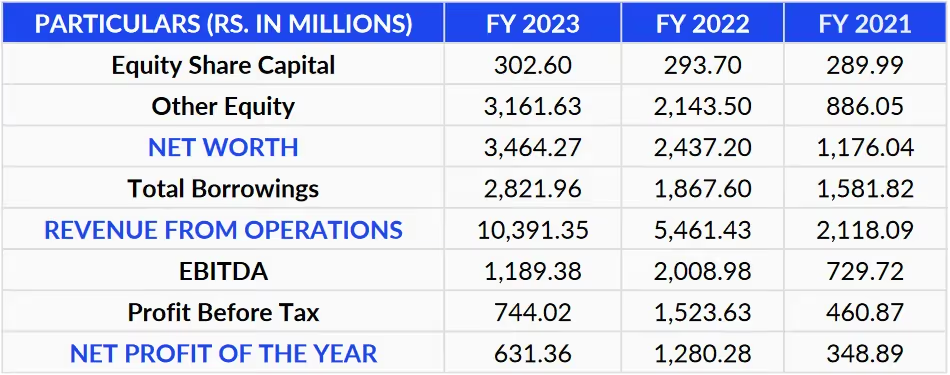
IRM has showcased consistent development of its gas distribution business in its key GAs. The company has a diverse customer portfolio and distribution network of CNG and PNG and a strong relationship with its customers. It has also reported strong financial performance in the last few years, except in FY23, when profit was impacted by a rise in gas prices due to geopolitical situations.
The company is still in the early stages of growth and may be impacted by unforeseen factors and other risks like limited geographic reach, government policies, delayed revenue generation, etc.
The issue is coming at a P/E valuation of 24.12x, which appears fairly priced. Thus, considering all these factors and the positive growth outlook, we will recommend a Subscribe rating to this IPO.
DISCLAIMER:
The information contained herein are strictly confidential and are meant solely for the information of the recipient and shall not be altered in any way, transmitted to, copied or distributed, in part or in whole, to any other person or to the media or reproduced in any form, without prior written permission of Swastika Investmart Ltd. (“SIL”). The contents of this document are for information purpose only. This document is not an investment advice and must not alone be taken as the basis for an investment decision. Before taking any decision to invest, the recipient of this document must read carefully the Red Herring Prospectus (“RHP”) issued to know the details of IPO and various risks and uncertainties associated with the investment in the IPO of the Company. All recipients of this document must before acting on the given information/details, make their own investigation and apply independent judgment based on their specific investment objectives and financial position. They can also seek appropriate professional advice from their own legal and tax consultants, advisors, etc. to understand the risks and investment considerations arising from such investment. The investor should possess appropriate resources to analyze such investment and the suitability of such investment to such investor’s particular circumstances before making any decisions on the investment. The Investor shall be solely responsible for any action taken based on this document. SIL shall not be liable for any direct or indirect losses arising from the use of the information contained in this document and accept no responsibility for statements made otherwise issued or any other source of information received by the investor and the investor would be doing so at his/her/its own risk. The information contained in this document should not be construed as forecast or promise or guarantee or assurance of any kind. The investors are not being offered any assurance or guaranteed or fixed returns on their investments. The users of this document must bear in mind that past performances if any, are not indicative of future results. The actual returns on investment may be materially different than the past. Investments in Securities market products and instruments including in the IPO of the Company are highly risky and they are generally not an appropriate avenue for someone with limited resources/ limited investment and low risk tolerance. Such Investments are subject to market risks including, without limitation, price, volatility and liquidity and capital risks. Therefore, the users of this document must carefully consider all the information given in the RHP including the risks factors before making any investment in the Equity Shares of the Company.
Swastika Investmart Ltd or its analysts did not receive any compensation or other benefits from the companies mentioned in the report or third party in connection with preparation of the research report. Accordingly, neither Swastika Investmart Ltd nor Research Analysts have any material conflict of interest at the time of publication of this report. Compensation of our Research Analysts is not based on any specific merchant banking, investment banking or brokerage service transactions. Swastika Investment Ltd may have issued other reports that are inconsistent with and reach different conclusion from the information presented in this report. Research entity has not been engaged in market making activity for the subject company. Research analyst has not served as an officer, director or employee of the subject company. We have not received any compensation/benefits from the Subject Company or third party in connection with the Research Report.
CORPORATE & ADMINISTRATIVE OFFICE - 48, Jaora Compound, M.Y.H. Road, Indore - 452 001 | Phone 0731 - 6644000
Compliance Officer: Ms. Sheetal Duraphe Email: compliance@swastika.co.in Phone: (0731) 6644 241
Swastika Investmart Limited, SEBI Reg. No. : NSE/BSE/MSEI: INZ000192732 Merchant Banking: INM000012102 Investment Adviser: INA000009843 MCX/NCDEX: INZ000072532 CDSL/NSDL: IN-DP-115-2015 RBI Reg. No.: B-03-00174 IRDA Reg. No.: 713.

डॉलर इंडेक्स में मजबूती से दबाव में सोना-चांदी।
ब्याज दरों के लंबे समय तक ऊंचे रहने की संभावनाओं के बीच अमेरिकी डॉलर 10 महीने की उचाई पर है और ट्रेजरी यील्ड में उछाल आया है जिसके कारण सोने के भाव 7 महीने के निचले स्तरों पर पहुंच गए है। दुनिया के सबसे बड़े सोना-समर्थित एक्सचेंज-ट्रेडेड फंड, एसपीडीआर गोल्ड ट्रस्ट की होल्डिंग्स चार साल से अधिक के निचले स्तर पर पहुंच गई है। जब ब्याज दरें अधिक हो जाती हैं, तो वे बांड जैसे अन्य ब्याज-युक्त निवेश को अधिक आकर्षक बना देते हैं, जिससे निवेशक ब्याज देने वाले निवेश की तरफ आकर्षित हुए है। उच्च ब्याज़ दरों की स्थिति में, सोने के विपरीत दिशा में चलने वाला डॉलर इंडेक्स में तेज़ी भी सोने के भाव में दबाव बना रही है। इस साल ब्याज दरों में एक बार और बढ़ोतरी होने के संकेत के साथ अगले साल उच्च ब्याज दरें क़ायम रहने के अनुमान के चलते कीमती धातुए निवेश के लिए कम आकर्षित हो गई है। अमेरिकी रोज़गार बाज़ार के बेहतर आकड़ो से लेबर इन्फ्लेशन बढ़ने का अनुमान है जिससे मुद्रास्फीति में बढ़ोतरी की सम्भवनाए बन रही है। बाजार ने दूसरी तिमाही के दौरान अमेरिकी अर्थव्यवस्था में मजबूत वृद्धि का संकेत देने वाले आंकड़ों पर प्रतिक्रिया दी है, जिससे ब्याज दरों में बढ़ोतरी की उम्मीद बढ़ गई है। पिछले सप्ताह दिसंबर वायदा सोने में 2.25 प्रतिशत की गिरावट के बाद कीमते 58050 रुपये प्रति दस ग्राम के स्तरों पर कारोबार करती रही। दिसंबर वायदा चांदी में 2 प्रतिशत की साप्ताहिक गिरावट के बाद कीमते 71800 रुपये प्रति किलो पर रही। इस सप्ताह अमेरिकी पैरोल के आंकड़े कीमती धातुओं के लिए महत्वपूर्ण रहेंगे।
तकनिकी विश्लेषण :
इस सप्ताह कीमती धातुओं के भाव में सुधार देखने को मिल सकता है। एमसीएक्स दिसंबर वायदा सोने में सपोर्ट 57500 रुपये पर है और रेजिस्टेंस 58800 रुपये पर है। दिसंबर वायदा चांदी में सपोर्ट 70500 रुपये पर है और रेजिस्टेंस 73500 रुपये पर है।

मजबूत बांड यील्ड से दबाव में सोना।
त्यौहार के सीजन से पहले कठोर मौद्रिक नीति के संकेतो से सोने और चांदी के भाव सस्ते हो गए है। और भारत में त्यौहार पर रीती रिवाज़ों के चलते पितृपक्ष के बाद सस्ते भाव होने के कारण इनकी हाज़िर मांग को अच्छा सपोर्ट देखने को मिल सकता है। भारत में पहली तिमाही में सोने की मांग में गिरावट देखने को मिली थी जबकि दूसरी तिमाही में मांग 4 प्रतिशत से बढ़ने का अनुमान है। हालांकि, बांड यील्ड में लगातार बढ़ोतरी होने के कारण गैरउपज वाली संपत्ति सोने से निवेशको ने छोटी अवधि के लिए दुरी बना रखी है। एसपीडीआर गोल्ड ट्रस्ट की सोने में होल्डिंग घट कर चार साल के निचले स्तरों पर पहुंच गई है। अमेरिका में आर्थिक मंदी का डर कम होने के बाद से ही निवेशक लम्बी अवधि के गवर्नमेंट बांड यह मान कर बेच रहे है की अर्थव्यवस्था ज्यादा नहीं सिकुड़ेगी। जबकि चीन, जो अमेरिकी ट्रेज़री का सबसे बड़ा होल्डर है, में आर्थिक मंदी रहने के कारण ट्रेज़री में नई खरीद नहीं हो रही है और अमेरिकी डेब्ट की रेटिंग घटने के बाद फेड द्वारा भी बांड खरीद कम हुई है जिससे बांड यील्ड में बढ़ोतरी हुई है और कीमती धातुओं के भाव में दबाव बना हुआ है। रोज़गार बाजार और मुद्रास्फीति में स्थिरता ब्याज दरों को लम्बी अवधि के लिए उच्च स्तरों पर बनाये रख सकता है, हालांकि ग्लोबल अर्थव्यवस्था की सुस्त चाल और भूराजनीतिक मुद्दो के रहते सोने में लम्बी अवधि की तेज़ क़ायम रह सकती है। पिछले सप्ताह एमसीएक्स दिसंबर वायदा सोने में 2 प्रतिशत की गिरावट के बाद भाव 56500 रुपये प्रति दस ग्राम और चांदी में 4.5 प्रतिशत की गिरावट के बाद भाव 66800 रुपये प्रति किलो पर रहे।
तकनिकी विश्लेषण :
इस सप्ताह कीमती धातुओं के भाव सीमित दायरे में रह सकते है। एमसीएक्स दिसंबर वायदा सोने में सपोर्ट 55000 रुपये पर है और रेजिस्टेंस 58000 रुपये पर है। दिसंबर वायदा चांदी में सपोर्ट 62000 रुपये पर है और रेजिस्टेंस 70000 रुपये पर है।

Plaza Wires Limited IPO details
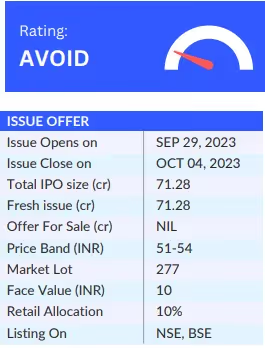

Plaza Wires Limited is engaged in the business of manufacturing and selling wires, and selling and marketing LT aluminum cables and fastmoving electrical goods (“FMEG”) under its flagship brand “PLAZA CABLES” and home brands such as “Action Wires” and “PCG”. Its product mix comprises different type of wires and cables, and FMEG such as electric fans, water heaters, switches and switchgear, PVC insulated electrical tape, and PVC conduit pipe & and accessories.
OBJECTS OF THE ISSUE
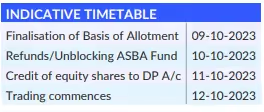
- Funding capital expenditure requirements of the Company. Funding the working capital requirements of the company.
- General corporate purposes.
Mr. Sanjay Gupta
Managing Director and one of the Promoters of the Company. He has been on the Board of Directors of the Company since March 12, 2008 and was appointed as the Managing Director and Chairman of the Company since March 10, 2022. He possesses approximately 26 years of experience in the electrical industry.
Mrs. Sonia Gupta
Whole-time Director and one of the Promoters of the Company. She has been on the Board of Director of the Company since March 21, 2008. She has approximately 26 years of work experience in the electrical industry. She has been instrumental in planning and formulating the overall business and commercial strategy and managing the financial planning of the Company.
Mr. Ajay Kumar Batla
Chief Financial Officer of the Company. He joined the Company on April 1, 2009. He has been appointed as CFO of the Company with effect from March 10, 2022. He participates in the key decisions of the Company and inter-alia develops financial and tax strategies and monitors budgeting of the Company.
Ms. Bhavika Kapil
Company Secretary and Compliance Officer of the Company. She was appointed as the Company Secretary and Compliance Officer of the Company with effect from March 10, 2022. She is responsible for handling secretarial compliances in the Company. She has a work experience of approximately 3.5 years as she was appointed in Fiscal 2022.
COMPANY PROFILE
- Plaza Wires Limited’s key products in the wires and cables segment include house wires, single & and multicore round flexible industrial cables, and industrial cables for submersible pumps & and motors up to 1.1kv grade.
- The company also provides other wires and cable products such as LT power control cables, TV dish antenna co-axial cables, telephone & and switchboard industrial cables, computer & LAN networking cables, close circuit television cables and solar cables, PVC insulated tape, and PVC conduit pipe & accessories, through third-party manufacturers.
- The Company sells its products through a variety of distribution channels depending on the geography and industry norms and trends. Its business model includes 1) Its dealer & and distribution network. 2) Securing government tenders, and 3) Direct sales to infrastructure projects
- The existing Manufacturing Unit is located at Baddi, Himachal Pradesh with an installed production capacity of 12,00,000 coils per annum.
COMPETITIVE STRENGTHS
- Product portfolio focused on various customer segments and markets. Distribution network.
- Management and dedicated employee base. Strategically located Manufacturing Facility.
KEY STRATEGIES
- Setting up the Proposed Manufacturing Unit to widen its product portfolio and increase its capacity. Enhance its position in the Wires and Cables Industry.
- Expand its dealer network in existing markets and enter new geographical markets. Strengthen its brand value.
- To use technology to further optimize its sales & and marketing operations.
KEY CONCERNS
- Inadequate or interrupted supply and price fluctuation of its raw materials and packaging materials could adversely affect its business.
- The company requires significant amounts of working capital.
- Its existing and proposed manufacturing facilities are concentrated in a single region.
- The industry segments in which it operates are fragmented, and it face competition from large players.
- It relies on certain third-party manufacturers for manufacturing some of its products.
- Pricing pressure from dealers and distributors may affect its gross margins and ability to increase its prices.
- The Company does not have any long-term or definitive agreements with its dealers or customers.
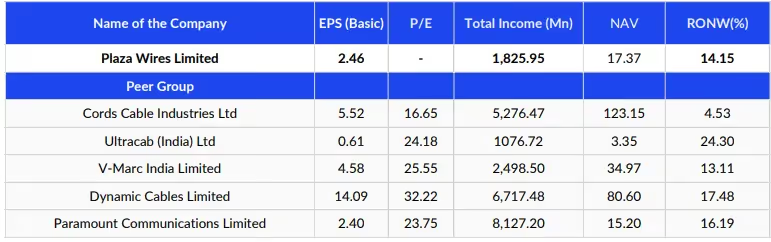
COMPARISON WITH LISTED INDUSTRY PEERS (AS ON 31ST MARCH 2023)
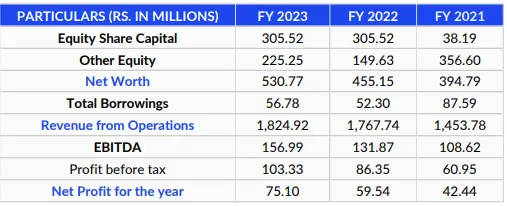
FINANCIALS (RESTATED CONSOLIDATED)
OUTLOOK & VALUATION
Plaza Wires operates in the wires and cables segment, and it also offers fast-moving electrical goods. The company is focused on various customer segments and has a large distribution network. Its financial performance has been stable.
However the company relies on certain third-party manufacturers for some of its products, and it also faces competition from large players in the industry. Also, it does not have any long-term contracts with its dealers and customers.
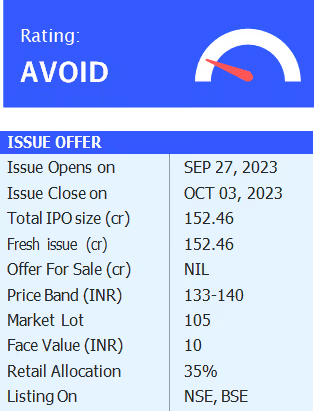
Though the IPO is coming at a fair P/E valuation of 21.95x, considering its small issue size, current market conditions, and other related risks, we will avoid this IPO.
DISCLAIMER:
The information contained herein are strictly confidential and are meant solely for the information of the recipient and shall not be altered in any way, transmitted to, copied or distributed, in part or in whole, to any other person or to the media or reproduced in any form, without prior written permission of Swastika Investmart Ltd. (“SIL”). The contents of this document are for information purpose only. This document is not an investment advice and must not alone be taken as the basis for an investment decision. Before taking any decision to invest, the recipient of this document must read carefully the Red Herring Prospectus (“RHP”) issued to know the details of IPO and various risks and uncertainties associated with the investment in the IPO of the Company. All recipients of this document must before acting on the given information/details, make their own investigation and apply independent judgment based on their specific investment objectives and financial position. They can also seek appropriate professional advice from their own legal and tax consultants, advisors, etc. to understand the risks and investment considerations arising from such investment. The investor should possess appropriate resources to analyze such investment and the suitability of such investment to such investor’s particular circumstances before making any decisions on the investment. The Investor shall be solely responsible for any action taken based on this document. SIL shall not be liable for any direct or indirect losses arising from the use of the information contained in this document and accept no responsibility for statements made otherwise issued or any other source of information received by the investor and the investor would be doing so at his/her/its own risk. The information contained in this document should not be construed as forecast or promise or guarantee or assurance of any kind. The investors are not being offered any assurance or guaranteed or fixed returns on their investments. The users of this document must bear in mind that past performances if any, are not indicative of future results. The actual returns on investment may be materially different than the past. Investments in Securities market products and instruments including in the IPO of the Company are highly risky and they are generally not an appropriate avenue for someone with limited resources/ limited investment and low risk tolerance. Such Investments are subject to market risks including, without limitation, price, volatility and liquidity and capital risks. Therefore, the users of this document must carefully consider all the information given in the RHP including the risks factors before making any investment in the Equity Shares of the Company.
Swastika Investmart Ltd or its analysts did not receive any compensation or other benefits from the companies mentioned in the report or third party in connection with preparation of the research report. Accordingly, neither Swastika Investmart Ltd nor Research Analysts have any material conflict of interest at the time of publication of this report. Compensation of our Research Analysts is not based on any specific merchant banking, investment banking or brokerage service transactions. Swastika Investment Ltd may have issued other reports that are inconsistent with and reach different conclusion from the information presented in this report. Research entity has not been engaged in market making activity for the subject company. Research analyst has not served as an officer, director or employee of the subject company. We have not received any compensation/benefits from the Subject Company or third party in connection with the Research Report.
CORPORATE & ADMINISTRATIVE OFFICE - 48, Jaora Compound, M.Y.H. Road, Indore - 452 001 | Phone 0731 - 6644000
Compliance Officer: Ms. Sheetal Duraphe Email: compliance@swastika.co.inPhone: (0731) 6644 241
Swastika Investmart Limited, SEBI Reg. No. : NSE/BSE/MSEI: INZ000192732 Merchant Banking: INM000012102 Investment Adviser: INA000009843 MCX/NCDEX: INZ000072532 CDSL/NSDL: IN-DP-115-2015 RBI Reg. No.: B-03-00174 IRDA Reg. No.: 713.

Valiant Laboratories IPO Review - GMP, Price, Details
Valiant Laboratories Limited is an Active Pharmaceutical Ingredient (“API”) / Bulk Drug manufacturing company with having focus on the manufacturing of Paracetamol. The Company manufactures Paracetamol in various grades such as IP/BP/EP/USP, as per the pharmacopeia requirements of its customers.
OBJECTS OF THE ISSUE
- Investment in its wholly-owned subsidiary VASPL for its capital expenditure and working capital requirements.
- General corporate purposes.

Velji Karamshi Gogri
Chairman, Independent and Non- Executive Director of the Company. He has experience of more than 45 years in the Chemical Industry involved in setting up and operating bulk drugs intermediates and fine chemicals manufacturing units and handling different chemical processes and equipment.
Santosh Shantilal Vora
Managing Director of the Company. He has experience of over 7 years in the chemical industry. He is one of the founding members of the Company and looks after the day- to-day affairs of the Company. He handles the responsibility of looking after new product development, infusion and upgradation of technology in operations and production process of the Company.
Paresh Shashikant Shah
Executive Director and Chief Financial Officer of the Company. He has been associated with the Company since 1985. He has experience of over four decades in the chemical industry. He is also one of the founding members of the Company and a director on the Board since incorporation.
Saloni Mehta
The Company Secretary & Compliance Officer of the Company. She is a qualified Company Secretary and is an associate member of the Institute of Company Secretaries of India. She has over two years of experience in the field of company law and SEBI Listing Regulations related compliance. She has been associated with the Company since November 30, 2021
COMPANY PROFILE
- Valiant Laboratories Limited was originally formed in year 1980 as a partnership firm under the name and style of “M/s. Bharat Chemicals” and gradually, commenced manufacturing of Paracetamol by late 1982.
- Its manufacturing unit is located in Palghar, Maharashtra, spread over 2,000 sq. mts. of land with an aggregate annual installed capacity of 9,000 MT per annum.
- Within its Manufacturing Facility located at Tarapur Industrial Area, Palghar, Maharashtra it also has an in-house R&D infrastructure.
- The Company, through its wholly-owned subsidiary, Valiant Advanced Sciences Private Limited intends to establish a greenfield project at Saykha Industrial Area, Bharuch, Gujarat. which shall venture into the manufacture of specialty chemicals and assist it in the backward integration process.
COMPETITIVE STRENGTHS
- Experienced promoters and strong management team.
- Strong financial performance.
- Reducing dependence on import of raw materials.
- Strategically located Manufacturing Facility.
KEY STRATEGIES
- Diversification into new chemistries and industry. Increase in market share.
- Improve operational efficiencies through backward integration of the Proposed Facility. Increase its penetration into international markets including regulated markets.
KEY CONCERNS
- It is a single-product manufacturing company and any changes to the paracetamol API industry or its product demand will adversely affect its business.
- The Company operates out of a single Manufacturing Facility. Any significant social, political, or economic disruption natural calamities, or civil disruptions in this region may impact its business. Subject to strict quality requirements, regular inspections, and audits by our customers and any failure to comply with quality standards may lead to cancellation of existing and future orders. limited number of suppliers for its raw materials which are highly concentrated in the western region of India.
- Dependent on a few customers for a major part of its revenues. The pharmaceutical industry is intensely competitive.
COMPARISON WITH LISTED INDUSTRY PEERS (AS ON 31ST MARCH 2023)
.avif)
FINANCIALS (RESTATED CONSOLIDATED)
.avif)
OUTLOOK & VALUATION
Valiant Laboratories is a 40-year-old pharmaceutical ingredient manufacturing company with a main focus on paracetamol. Currently, it operates from its only manufacturing unit in Palgarh, Maharashtra; however, it is planning to establish a new project in Gujarat through its subsidiary. Its financial performance has been improving, and it has the benefit of experienced promoters.
But it is a single-product manufacturing company. Secondly, it is dependent on a limited number of suppliers as well as customers. Also, there is intense competition in this industry along with high regulations. The issue is coming at a P/E valuation of 15.7, which seems fair, but considering other risks and current market volatility, we will avoid this IPO.
DISCLAIMER:
The information contained herein are strictly confidential and are meant solely for the information of the recipient and shall not be altered in any way, transmitted to, copied or distributed, in part or in whole, to any other person or to the media or reproduced in any form, without prior written permission of Swastika Investmart Ltd. (“SIL”). The contents of this document are for information purpose only. This document is not an investment advice and must not alone be taken as the basis for an investment decision. Before taking any decision to invest, the recipient of this document must read carefully the Red Herring Prospectus (“RHP”) issued to know the details of IPO and various risks and uncertainties associated with the investment in the IPO of the Company. All recipients of this document must before acting on the given information/details, make their own investigation and apply independent judgment based on their specific investment objectives and financial position. They can also seek appropriate professional advice from their own legal and tax consultants, advisors, etc. to understand the risks and investment considerations arising from such investment. The investor should possess appropriate resources to analyze such investment and the suitability of such investment to such investor’s particular circumstances before making any decisions on the investment. The Investor shall be solely responsible for any action taken based on this document. SIL shall not be liable for any direct or indirect losses arising from the use of the information contained in this document and accept no responsibility for statements made otherwise issued or any other source of information received by the investor and the investor would be doing so at his/her/its own risk. The information contained in this document should not be construed as forecast or promise or guarantee or assurance of any kind. The investors are not being offered any assurance or guaranteed or fixed returns on their investments. The users of this document must bear in mind that past performances if any, are not indicative of future results. The actual returns on investment may be materially different than the past. Investments in Securities market products and instruments including in the IPO of the Company are highly risky and they are generally not an appropriate avenue for someone with limited resources/ limited investment and low risk tolerance. Such Investments are subject to market risks including, without limitation, price, volatility and liquidity and capital risks. Therefore, the users of this document must carefully consider all the information given in the RHP including the risks factors before making any investment in the Equity Shares of the Company.
Swastika Investmart Ltd or its analysts did not receive any compensation or other benefits from the companies mentioned in the report or third party in connection with preparation of the research report. Accordingly, neither Swastika Investmart Ltd nor Research Analysts have any material conflict of interest at the time of publication of this report. Compensation of our Research Analysts is not based on any specific merchant banking, investment banking or brokerage service transactions. Swastika Investment Ltd may have issued other reports that are inconsistent with and reach different conclusion from the information presented in this report. Research entity has not been engaged in market making activity for the subject company. Research analyst has not served as an officer, director or employee of the subject company. We have not received any compensation/benefits from the Subject Company or third party in connection with the Research Report.
CORPORATE & ADMINISTRATIVE OFFICE - 48, Jaora Compound, M.Y.H. Road, Indore - 452 001 | Phone 0731 - 6644000
Compliance Officer: Ms. Sheetal Duraphe Email: compliance@swastika.co.inPhone: (0731) 6644 241
Swastika Investmart Limited, SEBI Reg. No. : NSE/BSE/MSEI: INZ000192732 Merchant Banking: INM000012102 Investment Adviser: INA000009843 MCX/NCDEX: INZ000072532 CDSL/NSDL: IN-DP-115-2015 RBI Reg. No.: B-03-00174 IRDA Reg. No.: 713.
Big Budget






.avif)



START YOUR INVESTMENT JOURNEY
Get personalized advice from our experts
- Dedicated RM Support
- Smooth and Fast Trading App
