


Yes Bank Share Price And The Yen-Rupee Trade Pivot For Indian Investors


Key Takeaways
- Direct yen-rupee settlements could reduce USD reliance in India-Japan trade.
- Bilateral trade reached $27.5 billion in FY2025/26, with Japan's India investment totaling $3.2 billion in 2025.
- Indonesia’s 2019 precedent shows local-currency deals can scale, with $7.7 billion in 2025 transactions.
- Monitor yes bank share price and cross-border exposure as policy evolves.
Direct yen-rupee trade settlement could reduce reliance on the US dollar for India’s bilateral trade with Japan, reshaping payments and hedging strategies for banks and corporates alike. As the 16th India-Japan annual summit unfolds in New Delhi from July 1 to July 3, 2026, officials are weighing a new local-currency settlement framework that would allow direct yen-rupee transactions. If adopted, this would be the first instance of currency cooperation embedded in a leaders’ joint statement. Investors are watching yes bank share price as this policy backdrop evolves because banks could be exposed to shifts in cross-border flows.
How A Direct Yen-Rupee Trade Settlement Could Reshape Indian Exports To Japan
The proposed framework would allow direct yen-rupee settlements for bilateral commerce, removing the US dollar as the default intermediary for such trades. This could lower hedging costs for exporters and importers, while increasing the cadence of settlements in the two currencies. The scale matters: India-Japan bilateral trade reached $27.5 billion in FY2025/26, providing a sizable anchor for any currency settlement arrangement. With roughly 1,400 Japanese companies operating in India, and nearly half of them in manufacturing, the potential cross-border flows could be substantial. A move toward local-currency settlement might positively influence the working capital cycles of Indian manufacturers and Japanese suppliers alike.
India-Japan Summit Currency Cooperation And The Local Currency Settlement Framework
Officials suggest the Joint Statement after the Modi-Takaichi meeting could include a formal mention of currency cooperation. The Ministry of External Affairs notes that Prime Minister Takaichi will be in New Delhi for the 16th annual summit from July 1 to July 3, 2026. The language would emphasize strengthening mutually complementary cooperation under the Japan-India Joint Vision for the Next Decade. The Indonesia precedent from 2019 shows such local-currency arrangements are possible and can scale; bilateral transactions under that framework reached about $7.7 billion in 2025, underscoring the potential scale of currency channels to grow alongside trade.
Yes Bank Share Price Outlook In A Shifting Currency Landscape
While the currency shift aims to ease USD dependence, it also exposes Indian banks to new currency and funding dynamics. For a retail investor, the yes bank share price narrative becomes a proxy for how the broader private banking sector might adapt to cross-border payment reforms and the changing mix of trade finance. The 1,400 Japanese companies operating in India and the $27.5 billion yearly trade with Japan create three revenue avenues for Indian lenders: cross-border lending, import/export financing, and cash management. The recent yes bank stake sale indicates cross-border investment interest in Indian banks, a marker for the sector’s exposure to macro shifts. The long-term target of 10 trillion yen in India over a decade signals a sustained wave of Japanese capital, which could have knock-on effects on market sentiment and bank earnings. Investors watching yes bank share price should consider not only the bank’s fundamentals but also how currency reform policies might alter funding costs and cross-border risk premiums.
Japan’S Investment Ambition In India: 10 Trillion Yen Target And What It Means For Local Markets
Even as the yen-rupee discussion unfolds, the broader relationship ticks up: Japan’s investment in India totaled $3.2 billion between April and December 2025, and the bilateral trade scope remains robust. The long-term target of 10 trillion yen to be invested in India over a decade translates to roughly ₹60,000 crore, according to current exchange rates, which underscores the scale of ambition. With around 1,400 Japanese companies already in India and nearly half in manufacturing, the energy of Japanese capital could support a gamut of sectors–from automotive to electronics–and influence valuation multiples for Indian equities. The market will watch not only the macro headline but also how the yen-linked framework interacts with sector earnings and capital flows. The new currency settlement design would require banks to align with cross-border transfer protocols, and it could rewire short-term liquidity in the banking system.
Yes Bank Stake Sale And The Indian Banking Sector’S Response To Cross-Border Trade Initiatives
The Yes Bank stake sale recently closed with a deal valued at about $1.6 billion for a 20% stake, illustrating cross-border investor appetite and the sector’s ability to attract strategic investments even in a changing currency environment. While this specific deal is separate from the yen-rupee framework, it demonstrates how cross-border capital flows can affect Indian lenders’ growth trajectories and equity performance. In the larger picture, a deeper bilateral economic relationship with Japan–anchored by direct yen-rupee settlements–could influence the earnings mix of Indian banks, their fee income from trade finance, and their ability to fund cross-border lending at favorable costs. For a retail investor, these dynamics imply staying engaged with the sector’s fundamentals and watching stock prices like yes bank share price as the policy backdrop evolves.
Frequently Asked Questions
What is the proposed local-currency settlement framework between India and Japan?
It would enable direct yen-rupee settlements for bilateral trade, allowing transactions to bypass the US dollar and requiring Indian banks to accommodate accounts for Japanese non-residents.
When could currency cooperation be included in the leaders' joint statement?
It could be included in the Joint Statement issued after the Modi-Takaichi meeting during the 16th India-Japan annual summit in New Delhi from 1 July to 3 July 2026.
What are the latest trade, investment, and banking figures mentioned?
Bilateral trade reached $27.5 billion in FY2025/26; Japanese investment in India totalled $3.2 billion between April and December 2025; a recent investment deal valued at $1.6 billion for a 20% stake in Yes Bank; the long-term target is 10 trillion yen in India over a decade, with about 1,400 Japanese companies in India (roughly half in manufacturing).
What is the Indonesia precedent and its relevance?
Japan implemented a similar local-currency settlement arrangement with Indonesia in 2019; bilateral transactions under that framework reached about $7.7 billion in 2025, illustrating the potential scale of currency-cooperation programs.
What does this mean for Yes Bank and the broader banking sector?
The currency framework could influence cross-border trade financing and funding costs for Indian banks. The Yes Bank stake sale demonstrates cross-border investment interest; investors should monitor bank fundamentals and cross-border exposure as policy developments unfold.
Conclusion
What this story means for the retail investor today is simple: currency cooperation between India and Japan could tilt cross-border trade financing toward the domestic banking system and reduce USD friction, which can translate into more predictable revenue streams for banks engaged in import-export finance. The strategic upshot is to monitor how the yen-rupee framework interacts with the performance of Indian lenders and exporters, particularly those with deep ties to Japanese investment and supply chains. A practical mental model: treat cross-border currency arrangements as a macro overlay on earnings quality, capital markets, and growth narratives. As always, keep a close eye on yes bank share price and other bank stocks as clarity on policy emerges, and consider using Swastika's Sarthi AI stock assistant for disciplined stock research before taking action.
In short, the India-Japan currency cooperation momentum could offer a structural tailwind for sectors connected to trade and manufacturing. Retail investors should plan their approach by assessing exposure to banks with large cross-border operations, diversifying across sectors reliant on Japan's capital commitments, and setting guardrails for currency risk. The next step is to map your stock ideas against the evolving cross-border policy backdrop, then use a robust research tool to drill into the specifics of individual names before trading. Swastika's Sarthi AI stock assistant for proactive stock research.
Latest Articles

What is Prospectus?


A prospectus is a formal document that gives information about an investment offering to the public and is required by the Securities and Exchange Commission (SEC) to be filed. Bonds, mutual funds, and stock offers need the filing of a prospectus. Because it includes a wealth of pertinent information about the investment or security, the prospectus can assist investors in making better-informed investing decisions.
- Preliminary Prospectus
This is the initial offering document provided by the company. It contains most details about the business and the transaction. However, it doesn't include the number of shares or the price.
- Final Prospectus
This document provides all the details of the investment offering to the public. It includes background information, the number of shares or certificates to be issued, and the offering price.
Prospectus Example
In mutual funds, the prospectus covers objectives, investment strategies, risks, and performance, fees, and fund management details.
Requirements for Issuing a Prospectus
To issue a prospectus, a company must:
- File it with local regulatory bodies like SEBI and stock exchanges.
- It must be dated and signed.
- Include all necessary information outlined in the Companies Act 2013.
- Avoid providing misleading information.
Why Read a Prospectus? Here's Why It Matters:
An SEC-mandated prospectus gives investors crucial information regarding an offering of securities.
It disseminates risk information to the public and compiles important details about the investment and the business being invested in.
Investors should take into account the type and degree of risk involved, which is why those facts are usually included early in the prospectus and in more depth later on.
Investors want to know that the firm they are investing in is financially stable enough to fulfill its obligations, therefore the financial standing of the business is also crucial.
Types of Prospectuses
- Red Herring Prospectus: Filed with the registrar before offering shares. Usually lacks details like quantity or price.
- Abridged Prospectus: A brief summary with essential offer details. Must include all documents needed for purchasing the security.
- Deemed Prospectus: Considered deemed if it details the company’s investment offer to the public.
- Shelf Prospectus: Distributed by banks or financial institutions, containing details of multiple investment types.
Details Included in a Prospectus
A prospectus contains the following details:
- Company Information: Name, registered office address, objectives, and background.
- Offer Details: Number of shares or certificates to be issued, offering price, and any minimum subscription amount.
- Financial Information: Audited financial reports, including profit and loss statements, balance sheets, and cash flow statements.
- Management Details: Information about the company's directors, management team, and key personnel.
- Risk Factors: An overview of the risks associated with the investment, including market risks, regulatory risks, and operational risks.
- Legal and Regulatory Information: Details of any legal proceedings, regulatory compliance, and agreements relevant to the offering.
- Use of Proceeds: How the funds raised from the offering will be used by the company.
- Fees and Expenses: Details of any fees, expenses, or charges associated with the investment, including management fees and transaction costs.
- Offering Structure: Any special terms or conditions of the offering, such as underwriting arrangements or distribution channels.
- Other Relevant Information: Any additional information deemed relevant to investors, such as industry trends, competitive landscape, and future growth prospects.
Conclusion
By reading the prospectus carefully, you can:
- Compare different investment options.
- Spot any potential risks.
- See if the investment aligns with your goals and risk tolerance

What is a Covered Call? Overview of a Covered Call Strategy
As an investor, navigating the stock market can often involve balancing potential profits with risks. One strategy that stands out for its is the Covered Call Strategy. This approach allows you to generate income from your stock holdings Let's dive into what a covered call is and how this strategy can benefit you as an investor.
Understanding a Covered Call Strategy
Imagine you own shares of a company. You believe the stock may rise in the long run but don't expect gains in the near term. However, you still want to earn some income from these shares in the meantime. This is where a covered call strategy comes in
In a covered call strategy, an investor sells a call option on a stock they already own. This nets them a premium from the sale of the option. the call option is sold as an Out of The Money (OTM) call, meaning the option's strike price is higher than the current stock price. The call option would not get exercised unless the stock price increases above the strike price. Until then, the investor retains the premium as income, making this strategy attractive for those who are neutral to moderately bullish about their stock.
How a Covered Call Strategy Works
To use a covered call option strategy, you must first own the stock of a company. Let's assume you already hold the stock, showing a bullish movement. Over time, you become unsure about the stock's short-term upside potential and don't expect a significant price increase. Here's what you can do:
- Sell a Call Option: You sell a call option contract at a strike price higher than your stock's purchase price. The buyer of the call option pays you a premium for this contract.
- Collect the Premium: Regardless of whether the option is exercised, you keep the premium. This becomes your immediate income from the stock.
- Outcome Scenarios: After executing a covered call strategy, one of three scenarios can occur:some text
- Stock Price Remains Stable or Falls: The call option expires worthless, and you keep both the premium and your shares.
- Stock Price Rises Slightly: The stock price increases but remains below the strike price. The call option still expires worthless, allowing you to keep the premium and benefit from the stock's appreciation.
- Stock Price Rises Significantly: The stock price rises above the strike price. The call option is exercised, and you must sell your shares at the strike price. You keep the premium and receive the strike price for your shares, potentially missing out on further gains beyond the strike price.
When to Use a Covered Call
The covered call strategy works particularly well in the following situations:
Generating Income
The primary use of the covered call strategy is to generate income. If you own assets like stocks or ETFs that you're willing to sell at a certain price, selling a covered call can help generate additional income.
Neutral or Slightly Bullish Market
The covered call strategy is effective in a neutral or slightly bullish market. If you expect the price of an asset to remain relatively stable or increase slightly, selling a covered call can allow you to generate income while still owning the asset and benefiting from modest price increases.
Reducing Risk/Hedging
By selling a call option, you can theoretically limit downside risk if the price of the underlying stock falls. If the stock price drops below the strike price of the call option, the option will expire worthless, and you'll still own the underlying stock, which you can sell or hold for potential future gains.
When to Avoid a Covered Call
A covered call should be avoided in the following situations:
Expecting a Stock Price Rise
If you expect the stock to rise significantly in the near future, selling a covered call may limit your potential upside. It's better to hold onto the stock and let it appreciate.
Facing Serious Downside
If the stock looks like it's going to drop significantly, using a covered call to get extra cash might not be wise. In such cases, it’s probably best to sell the stock or consider short selling to profit from its decline.
Advantages of a Covered Call Strategy
- Generates Income: Covered calls generate income from holdings that wouldn't otherwise provide a cash flow stream.
- Adds to Returns: Investors periodically sell covered call options to enhance a position's return.
- Acts as a Hedge: A covered call offers some protection by reducing the breakeven price due to the premium.
- Low-Risk Strategy: Selling covered calls is easy and low-risk because the stock position "covers" the short call.
Conclusion
In summary, covered calls can be a strategy for investors looking for risk management and income generation. By merging stock ownership with the sale of call options, investors can increase their potential returns in a moderate appreciation of stock price. This strategy provides a balance between earning additional income and managing risks, making it a valuable tool for an investor.
Learn more about financial terminologies with Swastika!

How to Use Open Interest for Intraday Trading
What is Open Interest?
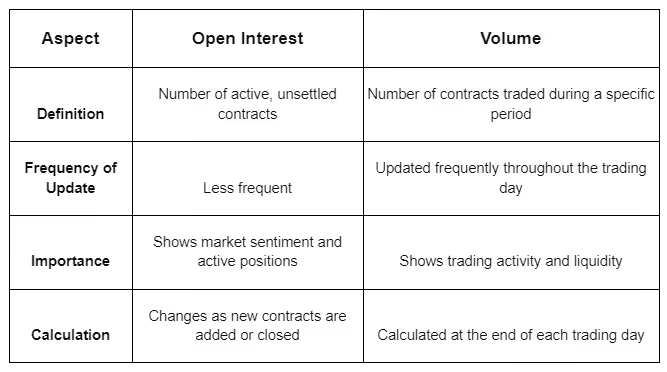
Open interest refers to the total number of outstanding options and futures contracts that have not been settled, closed out, or exercised. In simple terms, it's the number of active positions in options and futures contracts. For example, if a buyer and a seller enter into a new call option contract, open interest increases by one. Conversely, if the same buyer and seller close their contract by taking an opposite position, open interest decreases by one. If the buyer sells their contract to another buyer, the open interest remains unchanged, as there is no net change in open positions.
How to Use Open Interest for Intraday Trading
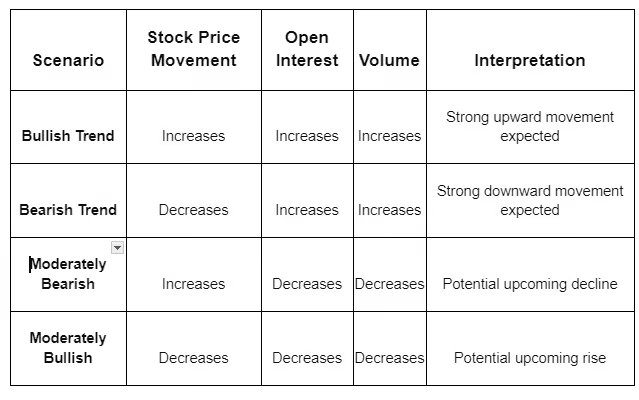
- Bullish Trend: If the stock price rises along with an increase in open interest and volume, it shows a bullish trend.
- Bearish Trend: If the stock price falls along with an increase in open interest and volume, it shows a bearish trend.
- Moderately Bearish: If the stock price rises but open interest and volume decrease, it shows a moderately bearish trend.
- Moderately Bullish: If the stock price falls but open interest and volume decrease, it shows a moderately bullish trend.
Open Interest vs. Volume
Importance of Open Interest
Monitoring open interest provides valuable insights for making decisions in financial markets. Here are some key points:
- Market Sentiment Indicator: Changes in open interest shows bullish or bearish sentiment of the market.
- Price Trend Confirmation: Rising open interest signal uptrends, while falling open interest may signal downtrends.
- Reversal Indication: Sudden changes in open interest can hint at trend reversals.
- Liquidity and Trading Activity: High open interest shows increased market liquidity and trading activity.
- Options Expiry Consideration: Important in options trading, helps in influencing decisions around expiry dates.
- Contrarian Indicator: Analyses extreme open interest situations for potential contrarian trading opportunities.
Example in INR
Suppose an investor is tracking a stock with the following details:
- Current Stock Price: ₹500
- Open Interest: 10,000 contracts
- Volume: 5,000 contracts
Conclusion
By analyzing open interest along with volume and price action, you can identify market trends. Once you've identified the trend, you can take appropriate positions. To get specific open interest data for an asset, use an open interest calculator, which is often available online for free.

Stock Market Vs Commodity Market
What is the Equity Market?
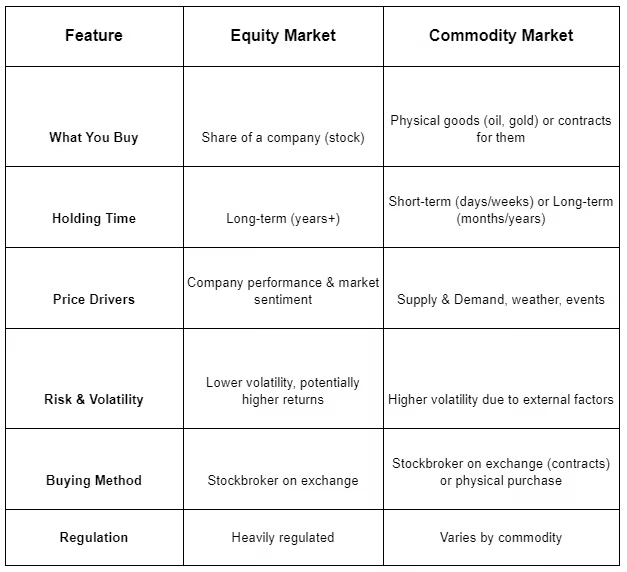
The equity market, commonly known as the stock market or share market, is a platform where people buy and sell shares of companies. In India, these shares are traded on stock exchanges or directly between individuals. To trade shares online in India, you need a "demat account" and a "trading account." These accounts function like digital wallets for your shares.
What is the Commodity Market?
Commodities are important resources that can be traded for other commodities of the same type. They are divided into two categories: hard commodities like gold and oil, and soft commodities like agricultural products and cattle. The commodity market is a place where these commodities are bought and sold, either physically or virtually. Investments in commodities can be made directly or through commodity futures contracts.
Key Differences: Equity Market vs. Commodity Market
Knowing the differences between these two markets can help you decide which one suits your investment goals better. Here are some key differences:
Performance Comparison
The stock market and commodity market can perform differently:
- Stock Market: Historically, the stock market has provided higher returns, with an average annual return of around 10% over the last 100 years.
- Commodity Market: The commodity market has averaged around 3% annual returns.
Factors influencing these markets differ as well. Stock market performance is driven by company earnings, economic growth, interest rates, and geopolitical events. Meanwhile, the commodity market is influenced by supply and demand factors like weather conditions, production levels, and geopolitical events.
Which Market Should You Choose?
Choosing between the stock market and the commodity market depends on your investment goals, risk tolerance, and investment horizon:
- Long-Term Growth: The stock market may be better for long-term growth and capital appreciation.
- Short-Term Speculation: The commodity market may be suitable for short-term speculation and hedging against inflation.
Both markets carry risks. The stock market is subject to market volatility and company-specific risks, while the commodity market is influenced by supply and demand factors and geopolitical risks. It's essential to conduct thorough research and consult with a financial advisor before making any investment decisions.
Example: Comparing Returns in INR
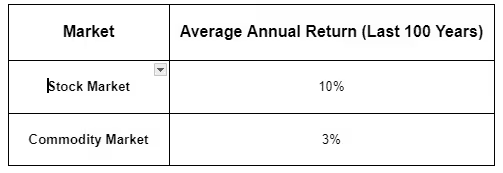
For instance, if you invested ₹1,00,000 in the stock market, you could expect an average return of ₹10,000 annually. In contrast, the same investment in the commodity market would yield around ₹3,000 annually.
Conclusion
Both the equity and commodity markets offer unique opportunities and risks. Understanding these differences and how each market works can help you make informed investment decisions. Whether you're looking for long-term growth in the stock market or short-term gains in the commodity market, it's crucial to align your investments with your financial goals and risk tolerance.

Understanding Commodity Transaction Tax (CTT): A Comprehensive Guide
In the realm of financial markets, various taxes and fees play a crucial role in regulating transactions and generating revenue for the government. One such tax that impacts commodity trading in India is the Commodity Transaction Tax (CTT). In this comprehensive guide, we will delve into the details of CTT, exploring its purpose, impact, and implications for traders and investors.
What is Commodity Transaction Tax (CTT)?
Commodity Transaction Tax (CTT) is a tax imposed by the Indian government on transactions executed on commodity exchanges. Introduced in the Finance Act, 2013, CTT is similar to the Securities Transaction Tax (STT) imposed on equity transactions. The primary objective of CTT is to generate revenue for the government and discourage speculative trading in commodity markets.
How Does CTT Work?
- CTT is imposed on the value of taxable commodities transactions conducted on recognized commodity exchanges in India. The tax rate varies depending on the type of commodity and the nature of the transaction. As of the latest guidelines, the following rates apply:
- CTT tax is 0.01% for non-agricultural commodities futures contracts and 0.05% for non-agricultural commodities options contracts. While agricultural commodities are exempt.
- CTT is typically collected by the commodity exchange at the time of the transaction and passed on to the government. It is applied to both buy and sell transactions, thereby impacting both buyers and sellers in the commodities market.
Purpose and Objectives of CTT
The imposition of CTT serves several purposes and objectives, including:
- Revenue Generation: CTT serves as a source of revenue for the government, contributing to the overall tax collection and fiscal management.
- Discouraging Speculative Trading: By imposing a tax on commodities transactions, especially in non-agricultural commodities, CTT aims to discourage speculative trading and promote more stable and orderly commodity markets.
- Level Playing Field: CTT helps create a level playing field between different asset classes by subjecting commodity trading to similar taxation as equity trading, where STT is applicable.
- Regulatory Oversight: CTT also serves as a regulatory tool, enabling authorities to monitor and regulate commodities transactions more effectively.
Impact of CTT on Traders and Investors
The imposition of CTT has several implications for traders and investors active in commodity markets:
- Cost of Transactions: CTT adds to the overall cost of trading in commodities, as traders are required to pay the tax on every transaction executed on the exchange.
- Impact on Trading Volumes: The introduction of CTT may have an impact on trading volumes in commodity markets, as it could discourage high-frequency traders and speculators from participating in the market.
- Risk Management: Traders and investors need to factor in the impact of CTT when creating their trading strategies and risk management plans. The tax can influence decision-making regarding position sizing, trading frequency, and holding periods.
- Market Liquidity: CTT may affect market liquidity in commodity markets, as it could lead to reduced trading activity and narrower bid-ask spreads.
- Compliance Requirements: Market participants need to ensure compliance with CTT regulations and reporting requirements to avoid penalties and legal repercussions.
Challenges and Criticisms of CTT
While CTT serves certain objectives, it has also faced criticism and challenges:
- Impact on Market Efficiency: Critics argue that CTT may hamper market efficiency by reducing liquidity and increasing transaction costs, especially for small investors and hedgers.
- Competitive Disadvantage: Some stakeholders believe that the imposition of CTT puts Indian commodity exchanges at a competitive disadvantage compared to global counterparts where similar taxes are not levied.
- Need for Review: There have been calls for a review of CTT rates and structures to ensure that they strike the right balance between revenue generation and market development.
Conclusion
In conclusion, Commodity Transaction Tax (CTT) is a tax levied on transactions conducted on commodity exchanges in India. It serves various purposes, including revenue generation, discouraging speculative trading, and promoting regulatory oversight. While CTT has implications for traders and investors in commodity markets, it also faces challenges and criticisms regarding its impact on market efficiency and competitiveness. As the commodities market continues to evolve, it remains essential for policymakers to review and adapt CTT regulations to ensure a balance between revenue objectives and market development goals.
Start Investing Today!

Trend Analysis in Share Market for Better Stock Picks
Spotting the Trend: How Trend Analysis Can Help You Pick Winning Stocks
The stock market can feel like a wild ride sometimes, with prices constantly going up and down. But what if you could predict these ups and downs, at least a little bit? Well, that's where trend analysis comes in!
What is Trend Analysis?
Trend analysis is like looking at the flow of the water. Is it uptrend? Is it sideways trend? Or is it downtrend?
By analyzing past price movements and trading volume, trend analysis helps you understand the overall direction of a stock's price. It is a technique used to examine data points over time to identify patterns and predict future movements.
Here's a breakdown of the key ideas:
- Data Points: This could be anything from stock prices to website traffic, depending on what you're analyzing.
- Patterns: By looking at past data points, you can see if there are any recurring trends, like prices going up and down in a specific cycle.
- Predictions: Based on the identified patterns, you can make an educated guess about what might happen in the future.
Types of Trends
There are three main types of trends in the stock market:
- Upward Trend (Bull Market Trend): Prices are generally moving higher over time. This is a good sign for investors looking to buy stocks.
- Downward Trend (Bear Market Trend): Prices are generally moving lower over time. This can be a time to be cautious or even sell some stocks.
- Sideways Trend: Prices are fluctuating within a certain range. This can be a time to wait and see before making a move.
How to Use Trend Analysis
There are many types of trend analysis tools and techniques, but here are two simple ways to get started:
- Moving Averages: This is a line on a stock chart that shows the average price over a certain period (like 50 days or 200 days). An upward sloping moving average suggests an uptrend, while a downward sloping suggests a downtrend.
Picture a line on a stock chart that shows the average price of a stock over a certain period, like the past 50 days or 200 days. If this line is going up, it means the average price is rising, suggesting the stock is on an uptrend. For example, if a stock's 50-day moving average is slowly increasing and is currently at ₹100, while the current price is ₹110, it indicates an uptrend. On the other hand, if the moving average is sloping downward and is at ₹100, while the current price is ₹90, it signals a downtrend.
- Support and Resistance Levels: These are price levels where the stock price has historically found difficulty breaking through. Support levels are areas where the price tends to bounce back up, while resistance levels are areas where the price tends to get rejected and fall back down. Imagine certain price points where a stock tends to bounce back up after falling (support) or struggles to break through and falls back down (resistance).
Let’s say a stock has a support level at ₹120. Whenever the price drops to ₹120, it tends to bounce back up because investors see it as a good buying opportunity. Similarly, if there's a resistance level at ₹150, whenever the price approaches ₹150, it struggles to go higher as investors start selling their shares, causing the price to fall back down.
How to Use Trends to Pick Stocks
Here's how you can use trend analysis to pick better stocks:
- Spot the Trend: First, find out if a stock is on the rise (uptrend) or falling (downtrend). That tells us if it's a good time to buy or sell.
- Double-Check: Use different tools to make sure you're seeing the trend right.
- Time Your Moves: Wait for the right moment to buy or sell.
- Stay Safe: Always have a plan to protect your money. Use stop-loss and take that much risk what you can afford to lose.
Trend analysis can be a powerful tool for stock pickers, but it's important to use it alongside other investment strategies. By understanding trends, you can increase your chances of making profitable investments.
Conclusion
Trend analysis is a valuable tool for identifying stock market movements and making informed investment decisions. By analyzing patterns, using moving averages, and identifying support and resistance levels, investors can spot potential opportunities. However, it should be combined with other strategies and risk management techniques for better results. Understanding trends can enhance decision-making and improve the chances of picking winning stocks.
Learn more about financial terminologies with Swastika!
Big Budget


Popular Articles




.avif)
.avif)

.avif)




START YOUR INVESTMENT JOURNEY
Get personalized advice from our experts
- Dedicated RM Support
- Smooth and Fast Trading App
