Qualcomm Share Price Outlook After The Double-Digit Hike



Key Takeaways
- Qualcomm plans double-digit price hikes as supplier costs rise and shortages bite the tech supply chain.
- Price changes take effect for shipments after Sept 1, signaling near-term revenue impact.
- Qualcomm shares traded around $168.49 as of 12:47 p.m. ET after intraday moves.
- TSMC remains a critical chokepoint shaping Qualcomm's pricing power in a tight global chip market.
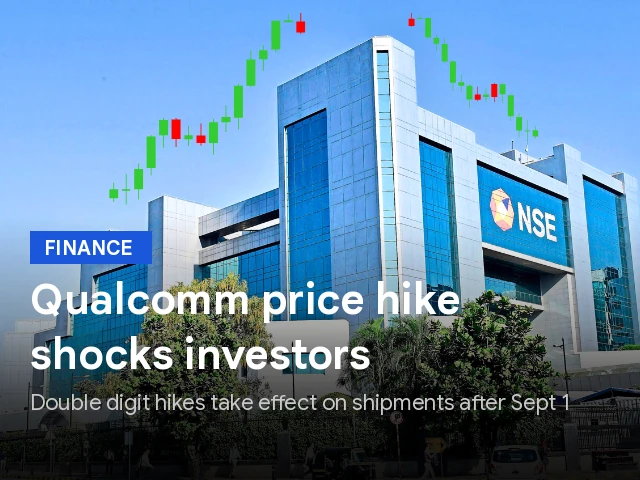
When a pioneer in smartphone processors signals a fresh wave of price increases, the ripple effects reach far beyond the balance sheet. Qualcomm has announced double-digit price hikes on its products, with changes taking effect on shipments after Sept. 1. The company says it can no longer absorb higher supplier costs and has pursued alternative components from new sources, underscoring a broader industry squeeze that could move the qualcomm share price as investors reassess margins and demand.
Qualcomm Share Price Outlook After The Double-Digit Hike
The move to raise prices is designed to offset elevated input costs from suppliers and to protect margins in a market where AI-driven demand is straining memory and other semiconductors. The percentage is described as double digits rather than disclosed, and it will apply to products shipped after Sept. 1. If demand remains resilient and suppliers can maintain supply, the qualcomm share price could find support on the earnings uplift. On the other hand, higher prices could pressure device makers and potentially slow consumer demand if customers push back on device pricing. In either case, this episode highlights a pricing power dynamic in a industry still battling a historic supply crunch, especially for memory components used in advanced chips.


Qualcomm Inc Stock Price Dynamics Amid Supply Shortages
In market chatter, the qualcomm inc stock price has moved in response to the supply constraints and the pricing move. The shares had been down as much as 2.7% on Friday, and were around $168.49 as of 12:47 p.m. ET. This price action underscores a tension between near-term earnings visibility from higher prices and the risk of demand erosion if supply delays propagate into device timelines. Wall Street estimates that the memory-chip crunch will drag into next year, complicating an immediate upside from price hikes even as Qualcomm maintains leadership in high-end processors for smartphones and AI devices. The company remains a central player in a market where TSMC and other contract manufacturers set the pace for supply and pricing.
The Role Of Taiwan Semiconductor Manufacturing Co. In Qualcomm's Pricing And The Global Chip Shortage
TSMC is the top provider of outsourced chipmaking and a major supplier to Qualcomm, Samsung, and other device makers. The global electronics ecosystem has faced a chokepoint in memory chips and advanced processes as AI data center expansion surges, placing pressure on production and inventories. Qualcomm's pricing decisions are shaped by this environment: if TSMC can scale supply, margins can improve, while continued shortages could keep pricing power firmly in the hands of chip manufacturers who can pass costs through to customers. The broader effect is a cycle of price adjustments that ripple through smartphones, wearables, and enterprise hardware.
Qualcomm AI Chips And The AI Data Center Demand
The AI data-center build-out has driven demand for high-end semiconductors, including qualcomm ai chips that power edge and cloud workloads. The sustained demand for memory and processing elements helps justify price-increase decisions, as manufacturers seek to protect margins in a tight supply environment. While consumer device volumes may fluctuate, AI workloads and related infrastructure spending have provided a floor for chipmakers. The combination of strong AI demand and supply constraints suggests pricing power may persist, but it will depend on continued access to critical components and health of the broader semiconductor supply chain.
For readers seeking deeper stock-level insight, consider a quick check with Swastika's Sarthi AI stock assistant for institutional-grade analysis on Qualcomm and peers.
Sept. 1 Implementation Timeline And Retail Investor Considerations
The price hike goes into effect for products shipped after Sept. 1, creating a near-term catalyst for the qualcomm share price narrative. Retail investors should watch how end-market demand responds to higher device costs, how supply constraints evolve, and whether AI-data-center cycles sustain pricing power. If supply improves, margins could stabilize; if not, the price increase may be partially offset by slower volumes. Regardless, this development demonstrates the ongoing tension between costs, pricing, and demand in the semiconductor ecosystem.
Frequently Asked Questions
Why Is Qualcomm Increasing Prices By Double Digits?
Qualcomm says it has exhausted its ability to absorb higher supplier costs and is seeking alternative components to meet demand. The price hike is designed to offset elevated input costs amid a broader tech supply crunch, including AI data center demand and memory-chip shortages.
When Will The Price Increase Take Effect?
The increases apply to products shipped after Sept. 1.
How Did Qualcomm's Stock React To The News?
Qualcomm shares traded around $168.49 as of 12:47 p.m. ET after intraday moves, having been down as much as 2.7% on Friday.
What Role Does TSMC Play In This Dynamic?
TSMC is the top provider of outsourced chipmaking and a key supplier to Qualcomm. The global memory-chip shortage and AI-driven demand have made TSMC a chokepoint that influences pricing and supply across the semiconductor ecosystem.
What Should Retail Investors Watch Next?
Watch how demand responds to higher prices, whether supply constraints ease, and how memory-chip bottlenecks evolve into next year. This will influence the qualcomm inc stock price trajectory and the longer-term risk/return profile.
Conclusion
Qualcomm's decision to implement a double-digit price increase signals a pricing-power dynamic in a highly supply-constrained market, a factor investors should monitor as they assess the qualcomm share price trajectory in the months ahead. The near-term implication is a potential margins uplift, contingent on continued access to critical components and resilient demand for AI-enabled devices and data-center hardware. A practical approach is to track input-cost trends and AI-driven demand signals, while using institutional-grade tools like Swastika's Sarthi AI stock assistant to translate price moves into actionable investment ideas.
In short, this episode is a reminder that margins in semiconductors are as much about supply discipline as product innovation. The best next step for retail investors is to calibrate risk and price sensitivity, incorporating the Sarthi AI stock assistant into your research toolkit to stay ahead of the qualcomm inc stock price trajectory as the supply landscape evolves.
Latest Articles

Metro Brands Limited IPO


Rating
SUSBCRIBE (Only Long-Term Investors)Issue Offer
Issue Opens on Dec 10, 2021Issue Close on Dec 14, 2021Total IPO size (cr) 1,367.51Fresh issue 295.00Offer For Sale (cr) 1072.51Price Band (INR) 485-500Market Lot 30Face Value (INR) 5Retail Allocation 35%Listing On NSE, BSE
Objects of the issue
⮚ For meeting Capex requirements.
⮚ For general corporate purposes.Issue Break-up (%)QIB Portion 50NIB Portion 15Retail Portion 35
Established in 1955, Metro Brands Limited is one of the largest Indian footwear speciality retailers. Customers' footwear demands are met by a diverse assortment of branded products of Company for men, women, unisex, and children, as well as for various events. The company targets the mid and premium segments in the footwear market which have a higher presence of organized players and growth in the overall footwear industry. Metro, Mochi, Walkway, Da Vinchi, and J. Fontini, as well as Crocs, Skechers, Clarks, Florsheim, and Fitflop, are among the company's well-known brands. The company follows the "company owned and company operated" (COCO) model of retailing through their own Multi Brand Outlets (MBOs) and Exclusive Brand Outlets (EBOs), to manage their stores.
⮚ The company’s total store count has grown from 504 in 116 cities as of March 31, 2019, to 586 stores across 134 cities as of March 31, 2021, and to 598 stores across 136 cities as of September 30, 2021, also Company had the third-highest number of exclusive retail outlets in India, in Fiscal 2021
⮚ The company also offers accessories such as belts, bags, socks, masks and wallets, at its stores. It also offers foot care and shoe care products at stores through its joint venture, M.V. Shoe Care Private Limited, making it a ‘one-stop-shop’ for all footwear and related accessories for customers.
⮚ In Fiscal 2021, In-Store Product Sales, Online Product Sales, and Omni-Channel Product Sales represented 91.93%, 6.15%, and 1.09%, of the Company’s revenue from operations, respectively.
⮚ The company’s retail operations are carried out through stores and distributors as well as through online channels. It primarily follows the ‚company owned and company operated‛ (COCO) model of retailing through its own Multi Brand Outlets (MBOs) and Exclusive Brand Outlets (EBOs), to better manage customer experience at stores.
Outlook & Valuation:
The company's revenue dropped by 33% in the
Shareholding (No. of Shares)
Pre Issue 265,607,426Post Issue 271,507,426
Indicative Timetable
Finalisation of Basis of Allotment 17-12-2021Refunds/Unblocking ASBA Fund 20-12-2021Credit of equity shares to DP A/c 21-12-2021Trading commences 22-12-2021
Year FY21 to Rs 878 cr from Rs 1311 cr in FY20 on the back of the Covid-19 pandemic. Similarly, profit also declined from Rs. 160.5 cr in the year FY20 to Rs. 64.61 cr in the FY21. The margin of the company was flat in FY19 and FY20 while it dropped since COVID. Metro Brands Limited has demonstrated its growth, profitability, and financial discipline in the past as one of India's leading pan-India footwear retailers. The sector is mostly under-rated and may see a re-rating. The majority of their revenue is from third parties and the company has an asset-light business model however we believe that the IPO is priced aggressively. The IPO is arriving at PE of 205x and P/BV of 16x while if we annualized the FY22 earnings PE works out to be 157x.
SME-IPO Note
METRO BRANDS LIMITED
KEY MANAGERIAL PERSONNEL
⮚ Rafique A. Malik is the Chairman of the Company’s Board. He has been associated with this Company as a director since January 19, 1977. He has over 50 years of experience in the field of footwear retail.
⮚ Farah Malik Bhanji is the Managing Director of the Company. She has been associated with the Company as a director since December 5, 2000. She has over 20 years of experience in the field of footwear retail.
⮚ Mohammed Iqbal Hasanally Dossani is the Whole-time Director of the Company. He holds a bachelor’s degree in commerce, Financial Accounting and Auditing.
⮚ Utpal Hemendra Sheth is the Non-Executive Director of the Company. He holds a bachelor’s degree in commerce. He was first appointed as an alternate director in the Company on March 14, 2007.
⮚ Manoj Kumar Maheshwari is the Independent Director of the Company. He has been associated with the Company as an Independent Director since July 24, 2009.
⮚ Aruna Bhagwan Advani is the Independent Director of the Company. She has been associated with the Company as an Independent Director since July 27, 2010.
⮚ Arvind Kumar Singhal is the Independent Director of the Company. He has been associated with the Company as an Independent Director since August 12, 2016.
⮚ Vikas Vijaykumar Khemani is the Independent Director of the Company. He has been associated with the Company as an Independent Director since March 12, 2019. He is an associate of the Institute of Chartered Accountants of India
⮚ Tina Srikanth Velamakanni is the Independent Director of the Company. He has been associated with the Company as an Independent Director since March 25, 2021.
COMPETITIVE STRENGTHS
⮚ One of India's largest footwear retailers brands.
⮚ Wide range of brands and products catering to all occasions across age groups and market segments
⮚ Efficient operating model through deep vendor engagements and TOC based supply chain.
⮚ Asset light business with an efficient operating model leading to sustained profitable growth
⮚ Presence across multiple formats and channel
⮚ Strong track record of growth and profitability and financial discipline
⮚ Strong promoter background and an experienced and entrepreneurial management team
KEY STRATEGIES
⮚ Expand the store network in existing and new Indian cities.
⮚ Increase the contribution of e-commerce and omnichannel sales as a proportion of the sales.
⮚ Expand the portfolio of accessories and grow other allied businesses
KEY CONCERNS
⮚ The ongoing COVID-19 epidemic has had a substantial impact on their business.
⮚ All of their stores and warehouses are leased spaces.
⮚ For the production of all the items they sell, they rely on third parties.
⮚ They may not be effective in maintaining and increasing brand visibility.
⮚ The selling of third party brands accounts for a major amount of their revenues.
For additional information & risk factors please refer to the Red Herring Prospectus
IPO NoteMETRO BRANDS LIMITEDCOMPARISON WITH LISTED INDUSTRY PEERS (AS OF 31ST MARCH 2021)Name of the Company EPS (Basic) NAV P/E Total Income (Mn) RoNW (%)Metro Brands Limited 2.43 31.17 205 8,785.38 8.24Peer GroupBata India Limited (6.95) 136.79 - 18,025.65 (5.08)Relaxo Footwears Limited 11.74 63.29 118 23,819.20 18.54FINANCIALS (RESTATED CONSOLIDATED)Particulars (Rs. In Millions) FY 2021 FY 2020 FY 2019Equity Share Capital 1,327.67 1,327.67 1,327.67Other Equity 6,948.03 6,745.22 5,170.99Net Worth 8,275.70 8,072.89 6,498.66Total Borrowings 14.06 115.23 98.56Revenue from Operations 8,000.57 12,851.62 12,170.65EBITDA 1709.3 3535.1 3373.3Profit Before Tax 845.05 2,184.17 2,281.28Net Profit for the year 646.19 1,605.75 1,527.30

Upcoming IPOs in December 2021
The period of November saw a series of IPOs delivering, leaving the financial investors happy. India's greatest IPO to date, PAYTM, worth Rs 18,300 Crores opened up to the world in November 2021.
Sigachi Industries, which opened up to the world on the fifteenth November 2021, returned over 250% on opening, making it one of the top-performing SME-IPOs of the Month.
The COVID-19 pandemic has been unpleasant for the worldwide economy, yet India's market has recuperated rapidly. Right now, the securities exchange is enjoying some real success, and firms are attempting to receive its rewards by opening up to the world in this time frame.
Checking out this, here we bring to you the following IPOs that are lined up to open up to the world in December 2021.
Let’s take a detailed insight into the companies that are going live in December 2021:
Company Name IPO Size Date of Launching Go Airlines Rs 3,600 Crores To Be Announced RateGain Rs 375 Crore7 Dec-9 Dec 2021Anand Rathi WealthRs 660 Crore2 December - 6 DecemberEmcure PharmaceuticalsRs 4,500 CroresTo Be AnnouncedStar Health & Allied InsuranceRs 3000 CroreTo Be AnnouncedJana Small Finance BankRs 2000 CroreTo Be AnnouncedCMS InfosystemsRs 2000 CroreTo Be AnnouncedMobiKwikRs 1,990 CroreTo Be AnnouncedArohan FinancialsRs 1800 CroreTo Be AnnouncedNorthern Arc CapitalRs 1,800 CroreTo Be AnnouncedIxigoRs 1,600 CroreTo Be AnnouncedPenna CementRs 1,500 CroreTo Be AnnouncedEuro PanelINR 7014-16 DecemberSterlite Power Transmission--To Be AnnouncedRategain TRavel Technologies--To Be AnnouncedESAF Small Finance Bank--To Be AnnouncedShriram Properties--To Be AnnouncedShri Bajrang Power & Ispat--To Be AnnouncedStudds Accessories Limited--To Be Announced
Euro Panel
Also known as Archer trading house Pvt limited, Euro Panel is known for manufacturing several Aluminium composite panels in different designs, colors and textures.
ACPs are majorly used for the exterior covering of commercial buildings.
The subscription date of Euro panel is 14 -16 December. The OFS for the company is 8,28,000 shares whereas the fresh issue of shares is 56,72,000 shares. The lot size of the company is of total 2000 shares.
RateGain Travel Technologies
The company is a prominent name in distribution technology globally and also, it is the SAAS provider company in the travel and hospitality industry in India. It offers services like travel and hospitality services across different vertices like hotels, airlines, package providers, car rentals, cruises, hotels and ferries.
Anand Rathi Wealth
Anand Rathi wealth is a leading non-wealth solution company in India and has been ranked amongst the top three non-bank mutual fund distributors in India by gross commission earned in Fiscal 2020.
It serves a wide spectrum of clients via wealth solutions, financial product distribution and technology solutions.
Emcure Pharmaceuticals
Emcure Pharmaceuticals is a leading organization in the pharmaceutical industry that has plans to open up to the world about an IPO of about Rs. 4,500 crores.
This IPO will involve both new equity shares and an OFS.
Around 18 million shares will be accessible under an offer for sale by the organization advertisers and existing shareholders.
While the new issue value will incorporate an offer of about Rs. 1,100 crores.
The primary goal of this public offering is to reimburse the current debts of the organization.
Go Airlines
GO Airlines is one of India's leading aircraft organizations and is all set to launch its IPO of Rs. 3,600 crores on 8 December 2021. This public issue holds the only fresh issue of equity shares at a face value of Rs. 10 per share.
Furthermore, the organization also plans an anchor investment of Rs. 1,500 crores.
The primary goal of this public offering is to assist the organization with paying off its present debts and meet general corporate purposes.
Star Health and Allied Insurance Co. Ltd.
Star Health and Allied Insurance Co. Ltd. is one of India's leading insurance providers. They are driving the rundown of India's private insurance cover provider with a market share of 15.8%.
The organization has submitted its DRHP to the Securities and Exchange Board of India. This public issue has a company valuation of about Rs. 3,000 crores.
The IPO consists of a fresh issue of equity trading shares of Rs 2000 Crore and 6 Crore equity shares under OFS.
In the last monetary year, Star Health has acquired a gross return premium of Rs. 9,438.95 crores.
According to its DRHP, this IPO will help the organization keep its solvency levels and develop its present capital base.
Jana Small Finance Bank
Jana Small Finance Bank is one of the leading finance banks of this country.
According to its DRHP, Jana Small Finance Bank's IPO will have a valuation of Rs. 2,000 crores, involving OFS and new fresh equity issue. The proposal available to be purchased should assemble Rs. 1,300 crores, and the fresh issue equity shares offers will produce the leftover Rs. 700 crores.
CMS Info Systems
CMS Info System is a notable name in the business vertical of cash management services. Its customers are spread across the financial sector.
CMS Info System has submitted its DRHP for an IPO of Rs. 2,000 crores with the Securities and Exchange Board of India. Also, this IPO will just involve a proposal available to be purchased and no new fresh issue of equity shares.
Ruchi Soya
Among this IPO fest, Ruchi Soya is an exemption with its subsequent public proposition. The organization is starting an FPO with a valuation of about Rs. 4,300 crores.
Among this IPO fest, Ruchi Soya is starting an FPO with a valuation of about Rs. 4,300 crores.
Arohan Financial Services
Arohan Financial Services has filed its DRHP record with SEBI, the organization's first sale of stock will be worth Rs. 1,800 crores. It will have a new issue of equity shares adding up to Rs. 850 crores, and an OFS of 27,055,893 value shares by current stakeholders
Penna Cement
The IPO of Penna Cement according to its DRHP will be worth Rs. 1,550 crores. It will involve a fresh issue of equity shares adding up to Rs. 1,300 crores and make available for the purchase of Rs. 250 crores.
Utkarsh Small Finance Bank
This IPO will have a valuation of Rs. 1,350 crores. This incorporates an OFS of Rs. 600 crores and a fresh issue of equity shares of Rs. 750 crores.
Fincare Small Finance Bank
According to their DRHP, this IPO will have a valuation of about Rs. 1,330 crores, including a new fresh issue of equity shares of Rs. 330 crores and OFS of Rs. 1,000 crores by the company promoters.
ESAF Small Finance Bank Ltd
ESAF Small Finance Bank is one more SFB that is going public in FY2022. At first, the monetary organization had plans to go public in mid-2021, yet the pandemic halted that progress.
The DRHP of this IPO will have a valuation of Rs. 998 crores. This will incorporate fresh issue equity shares of Rs. 800 crores, and the leftover Rs. 198 crores are through and OFS.
Takeaway
Since many IPOs are knocking at your doors in the last of the Year 2021, it would be imperative for you to make yourself prepared and get the chance to put resources into new age technology-empowered companies. However, before investing, you must have a Demat Account with a SEBI enrolled stock broker!

Shriram Properties Limited IPO
RatingSUSBCRIBE (Only Aggressive Investors)Issue OfferIssue Opens on Dec 08, 2021Issue Close on Dec 10, 2021Total IPO size (cr) 600Fresh issue 250Offer For Sale (cr) 350Price Band (INR) 113-118Market Lot 125Face Value (INR) 10Retail Allocation 10%Listing On NSE, BSEObjects of the issue ⮚ For repayment of borrowings. ⮚ For general corporate purposes.Issue Break-up (%)QIB Portion 75NIB Portion 15Retail Portion 10⮚ Shareholding (No. of Shares)Pre Issue 148,411,448Post Issue 169,597,889Indicative TimetableFinalisation of Basis of Allotment 15-12-2021Refunds/Unblocking ASBA Fund 16-12-2021Credit of equity shares to DP A/c 17-12-2021Trading commences 20-12-2021
- Incorporated in 2000, Shriram Properties is a part of the Shriram Group and is one of the leading residential real estate development companies in South India.
- The company primarily focuses on the mid-market and affordable housing segments. The company is also present in the mid-market premium and luxury housing categories as well as commercial and office space categories.
- Bengaluru and Chennai are the key markets for the company. The company also has operations in Coimbatore, Visakhapatnam, and Kolkata. It is among the top five residential real estate companies in South India in terms of the number of units launched between the calendar years 2012 and the third quarter of 2021 across Tier 1 cities of South India including Bengaluru, Chennai and Hyderabad.
- It is a part of the Shriram Group, which is a prominent business group with four decades of operating history in India and a well-recognized brand in the retail financial services sector and several other industries.
- The company has been focused on the mid-market and affordable housing categories as its target segment within the residential housing market. The mid-market and affordable housing categories have accounted for a significant share of overall market absorption in India in recent years. According to the JLL Report, these housing categories accounted for 75.00%, 72.00% and 74.00% of overall residential unit absorption during calendar years 2018, 2019 and 2020, respectively.
- As of September 30, 2021, it has a total portfolio of 35 projects in Ongoing Projects, Projects under Development and Forthcoming Projects aggregating to 46.72 million square feet of estimated Saleable Area.
Outlook & Company Valuation:
The company's financials have been on a weaker note where revenues of the company are declining while the company turned loss-making since FY20. The company's revenues in FY19 were Rs. 723 cr, which fell to Rs 501 cr in FY21, while it made a profit of Rs 48 cr in FY19 and a loss of Rs 67 cr in FY21.
Despite strong brand recognition, the company has suffered losses during the COVID, when real estate and housing were booming. Being a loss-making company retail portion is 10%.
The SME IPO is arriving at a P/BV of 2.09x while the industry average is 3.69x which might attract minor listing gain. However, we believe that there are many reputable listed companies such as Sobha, Brigade, Prestige, etc., and only "AGGRESSIVE INVESTORS" should apply for the IPO.
IPO Note
SHRIRAM PROPERTIES LIMITED
KEY MANAGERIAL PERSONNEL
⮚ M. Murali is the Chairman and Managing Director and individual Promoter of the Company. He has over 17 years of work experience with this Company and was first appointed as a Director on March 30, 2003.
⮚ S. Natarajan is a Non-Executive Director of the Company.
He is a member of the Institute of Chartered Accountants of India since 1975. He has been associated with the Shriram group for over 17 years and has been a Director of the Company since March 30, 2003.
⮚ Raphael Dawson is a Non-Executive Nominee Director of the Company. He has more than 15 years of work experience.
⮚ Gautham Radhakrishnan is a Non-Executive Nominee Director of the Company. His career has been exclusively in private equity and corporate finance.
⮚ T.S. Vijayan is an Independent Director of the Company. He has many years of experience in the insurance sector and was formerly the Chairman of the Life Insurance Corporation of India.
⮚ K.G. Krishnamurthy is an Independent Director of the Company. He has over 38 years of experience in the real estate sector.
⮚ Anita Kapur is an Independent Director of the Company. She has been a director of the Company since November 14, 2018.
⮚ Professor R. Vaidyanathan is an Independent Director of the Company. He has been a director of the Company since December 13, 2018.
COMPETITIVE STRENGTHS
⮚ Part of the Shriram Group and Backed by Marquee Investors.
⮚ One of the Leading Residential Real Estate Development Companies in South India with a Focus on Mid-market and Affordable Housing Categories.
⮚ Demonstrated Capabilities in Project Identification and Strong Execution Track Record
⮚ Established Strategic Relationships
⮚ Scalable and Asset Light Business Model supported by our Strong Financial Position
⮚ Well Positioned to Benefit from Regulatory and Industry Developments
⮚ Experienced and Professional Management Team
⮚ The company has strong, proven capabilities in the identification and execution of projects.
KEY CONCERNS
⮚ Their business is capital intensive and is significantly dependent on the availability of real estate financing in India.
⮚ Shortages or disruption in the supply of labor and key building materials could affect the estimated construction cost and timelines.
⮚ They depend on landowners or developers for obtaining certain regulatory approvals for the development management business any failure in that may adversely affect the business.
⮚ The Indian real estate sector is heavily regulated. Changing laws, rules and regulations and legal uncertainties.
⮚ An increase in competition in the Indian real estate sector may adversely affect profitability.
⮚ The company has a significant amount of debt which could affect its ability to obtain future financing or pursue its growth strategy.
IPO Note
SHRIRAM PROPERTIES LIMITED
COMPARISON WITH LISTED INDUSTRY PEERS
Name of the Company EPS (Basic) NAV P/E P/BV Total Income (mn)c Shriram Properties Limited (4.60) 56.44 - 2.09 5,013.08 Peer Group Sobha Limited 6.57 255.97 133.13 3.32 21,904.00Prestige Estates Projects Limited 36.32 166.52 12.86 2.68 75,018.00Brigade Enterprises Limited (2.24) 111.32 - 4.08 20,103.90Godrej Properties Limited (7.48) 299.32 - 6.70 13,330.90Oberoi Realty Limited 20.33 257.68 45.29 3.24 20,905.87Sunteck Realty Limited 2.98 19.75 160.64 2.28 6,308.42
FINANCIALS (RESTATED CONSOLIDATED)
Particulars (Rs. In Millions) FY 2021 FY 2020 FY 2019Equity Share Capital 1,481.10 1,481.10 1,481.10Other Equity 6,791.78 7,459.82 8,215.10 Net Worth 8,272.88 8,940.92 9,696.20Total Borrowings 7,271.69 7,372.47 8,456.65 Revenue from Operations 5,013.08 6, 318.43 7,237.80 EBITDA 1,210.53 904.14 799.30Profit Before Tax (452.00) (816.58) 829.21 Net Profit for the year (674.80) (864.25) 480.62

Impact of FIIs Selling
FIIs Selling in India
In this Blog, we will discuss the Impact of FIIs Selling. In the last few days, foreign investors have sold sharply in the Indian stock market. They have withdrawn more than 17,000 crore rupees in just 5 days. Experts say investors have a good chance of buying every fall.
The Indian stock market has been declining for the past month. Experts say the selling round may continue next month. However, FIIs are expected to return in the new year. Since then the market has been in a downward trend. it has fallen to 58680 levels. The Sensex has lost 3581 points.
Foreign Investors withdraw 87,000 crore rupees from the Indian Stock Market
According to information on SEBI's website, foreign investors sold for Rs 17900 crore in November. 87,000 crore has been withdrawn from the Indian stock market since the current financial year i.e. April 1.
On the other hand, domestic investors have made purchases worth Rs 13,000 crore in November. While shares worth Rs 69,000 crore have been purchased this fiscal.
Why did this happen?
Stock market experts said that the US is the main reason for foreign investors withdrawing money from India.
Reason Foreign Investors withdrawing Money from India
In the First place, experts revealed that the US central bank, the Federal Reserve, had given a relief package to bail out the economy from the corona. Under this package, the amount was directly received by the general public. Many more steps were taken for the economy at that time.
Secondly, those relief steps are set to be withdrawn. One of these is the decision on the interest rate. next month the US the central bank could raise federal reserve interest rates. In such a situation, the Indian markets will not be very beneficial for investing money.
The U.S. dollar will rise. This will increase the weakness in the rupee. That's why investors are returning to the U.S. markets. benchmark US 10-year treasury yields rose sharply, reducing the yield gap between the US and India.
Now, the situation is like FIIs are relocating their assets to the United States because of the dollar's strength over other currencies. This permits homegrown financial investors to buy Indian equities at a flexible discount, bringing about the inconsistency between DII inflows and FII outflows.
All through this fiscal year, the Federal Reserve has been out of a way for the clearing post-pandemic time, remembering a decrease for bond buys.
At last, US 10-year depository yields expanded all the more quickly, shutting the yield divergence between the US and India. This caused FIIs to pull out certain funds, while domestic investors maintained their positions very well, another analyst said.
What to Do now Indian Investors?
Many stock market research analysts said that small investors have a good chance of buying Indian stocks. Hence, it would be the right decision to invest money in the shares of banking and financial companies.
Which countries do people invest money in the Indian Stock Market?
The US has a 34 per cent stake in foreign investors investing money in India. it is followed by Mauritius (11 per cent), Singapore (8.8 per cent), Luxembourg (8.6 per cent), Britain (5.3 per cent), Ireland (4 percent), Canada (3.4 per cent), Japan (2.8 per cent) and Norway and the Netherlands (2.4 per cent).
These 10 countries hold 83 per cent of Indian FPI investment. Coming to equity trading investment, the US accounts for 37 per cent, followed by Mauritius with 11 per cent. Singapore (29 per cent) tops debt investment and Luxembourg (11 per cent) is second.
Key Takeaways
Authorities on the matter agree worldwide that the move would diminish interest rates dissimilarity between the US and developing business markets like India, making them less appealing compared to others.

ओमीक्रॉन संस्करण से निवेशकों की नज़रे सोने के निवेश पर
सोने और चांदी के भाव में पिछले सप्ताह भी गिरावट दर्ज की गई है। कीमती धातुओं के भाव कोरोना वायरस के नए संस्करण ओमीक्रॉन आने के कारण निचले स्तरों पर सपोर्ट लेते दिखे और एक सीमित दायरे में रहे। साउथ अफ्रीका में बदले हुए वायरस के इस रूप के कारण निवेशक जोखिम भरी संपत्ति में निवेश से पीछे हटते दिखे।
वायरस के नए संस्करण का फैलाव कई देशो में हो चुका है और इसके बढ़ते प्रभाव के कारण कीमती धातुओं की मांग मजबूत होने की सम्भावना बढ़ने लगी है। भारत में भी ओमीक्रॉन के मामले मिल चुके है और प्रभावितो की कोई ट्रेवल हिस्ट्री नहीं थी जिससे यह अनुमान है की इसके फैलने की गति तेज़ है। आने वाले दिनों में वायरस का प्रभाव बढ़ता है तो यह सोने के भाव को सपोर्ट कर सकता है। अभी इसके कोई ज्यादा घातक परिणाम सामने नहीं आये है लेकिन यह अर्थव्यवस्था की गति को धीमा करने में सक्षम है जिसके कारण कीमती धातुओं में निवेश की मांग बढ़ सकती है।
जबकि अमेरिकी फेड के इन संकेतो से कि मुद्रास्फीति के दबाव को कम करने के लिए उम्मीद से पहले परिसंपत्ति की कमी और ब्याज दरों में वृद्धि की गति को तेज करेगा, जिससे सोने और चांदी के भाव में दबाव बना हुआ है। इस बीच, गुरुवार को जारी अमेरिकी आंकड़ों से पता चला है कि पूरे सप्ताह में 222,000 प्रारंभिक बेरोजगार दावे दायर किए गए, जो अनुमान से बेहतर रहे।
जबकि अमेरिकी नॉनफार्म एम्प्लॉयमेंट चेंज के आंकड़े अनुमान से कमजोर दर्ज किये गए जिससे सोने और चांदी के भाव को सपोर्ट मिला है। सोने के विपरीत चलने वाला, डॉलर में अभी मजबूती बनी हुई है जबकि अमेरिकी बॉन्ड यील्ड में अस्थिरता है। इस सप्ताह मुद्रास्फीति के आंकड़े कीमती धातुओं के लिए महत्वपूर्ण होंगे।
तकनीकी विश्लेषण
इस सप्ताह सोने और चांदी के भाव सीमित दायरे में रह सकते है। फ़रवरी वायदा सोने में 47000 रुपए पर सपोर्ट और 48600 रुपए पर प्रतिरोध है। मार्च वायदा चांदी में 59800 रुपए पर सपोर्ट और 62700 रुपए पर प्रतिरोध है।
RateGain Travel Technologies Limited IPO
IPO Note : RATEGAIN TRAVEL TECHNOLOGIES LTD.
KEY MANAGERIAL PERSONNEL
⮚ Bhanu Chopra is the Chairman and Managing Director of the Company. He is also one of the Promoters of the Company and has been a member of the company’s Board since incorporation. He is an entrepreneur with experience of over 15 years.
⮚ Megha Chopra is an Executive Director of the Company. She is also one of the Promoters of the Company and has been a member of the Company’s Board since incorporation. Prior to her directorship in this Company, she was associated with HCL Infosystems Limited.
⮚ Nishant Kanuru Rao is a Non-Executive Nominee Director of the Company. Currently, he is a partner at Avataar Venture Partners, which was founded by him in 2019.
⮚ Girish Paman Vanvari is an Independent Director of the Company. He was appointed to the Board of the Company on June 29, 2021.
Previously, he has been associated with KPMG, India as the national head of tax. Currently, he is a partner at Transaction Square, which was founded by him in 2018.
⮚ Aditi Gupta is an Independent Director of the Company. She was appointed to the Board of the Company on July 15, 2021. She has experience of over 10 years as a company secretary.
⮚ EC Rajakumar Konduru is an Independent Director of the Company. He was appointed to the Board of the Company on July 15, 2021. He is a venture capitalist with an experience of over 13 years in equity investments.
COMPETITIVE STRENGTHS
⮚ Marquee global customers with long-term relationships
⮚ Innovative AI-driven industry-relevant SaaS solutions.
⮚ Diverse and comprehensive portfolio of revenue maximization and business-critical solutions
⮚ Strong financial performance with a track record of successful acceleration post acquisitions
⮚ Strong Global and diverse management team with relevant technology and domain expertise and focus on employee welfare
KEY STRATEGIES
⮚ New product development capabilities.
⮚ Continue to scale DaaS and Distribution offerings through cross-selling and geographical expansion in existing and adjacent verticals
⮚ Focus on MarTech solutions for the hospitality and travel sector
⮚ Continue to leverage unique data assets to create new AI product offerings
⮚ Pursue strategic investment and acquisition opportunities
KEY CONCERNS
⮚ The company is running at a loss for the last two financial years.
⮚ The hotel and travel industry has suffered a lot due to the COVID epidemic.
⮚ The activities of a small number of marketplaces account for a substantial percentage of their revenue.
⮚ Exchange rate changes may negatively affect their results of operations.
⮚ Failure to defend their intellectual property rights may have a negative impact on their business and brand
⮚ Failure to deliver excellent customer service and assistance may have a negative impact on their existing client relationships.
COMPARISON WITH LISTED INDUSTRY PEERS
There are no listed companies in India that engage in a business similar to that of the Company. Accordingly, it is not possible to provide an industry comparison in relation to the Company
FINANCIALS (RESTATED CONSOLIDATED)
Particulars (Rs. In Millions) FY 2021 FY 2020 FY 2019Equity Share Capital 6.55 6.55 6.55Instrument entirely equity in nature 1.48 0.85 0.85Other Equity 2,441.18 1,369.84 1,424.89Net Worth 2449.21 1377.24 1432.29Total Borrowings 1117.93 1158.08 244.19Revenue from Operations 2,507.93 3,987.14 2,615.74EBITDA 194.57 338.59 328.84Profit Before Tax (246.28) (177.62) 94.87Net Profit for the year (285.75) (201.04) 110.34
Big Budget


Popular Articles





.avif)
.avif)

.avif)



START YOUR INVESTMENT JOURNEY
Get personalized advice from our experts
- Dedicated RM Support
- Smooth and Fast Trading App