

SpaceX IPO Could Break History with $75 Billion Raise : Is This the Biggest Listing Ever?


.png)

 Add Swastika as preferred source
The buzz around the SpaceX IPO is growing rapidly, and for good reason. Reports suggest that SpaceX could raise up to $75 billion, making it one of the largest public listings in global financial history. For Indian investors tracking global opportunities, this potential IPO is more than just hype. It signals a shift in how private tech giants are approaching capital markets.
Let’s break down what this means, how it compares to past IPOs, and whether Indian investors should pay attention.
Quick Takeaways
- SpaceX IPO could raise up to $75 billion, potentially the largest ever
- Strong interest from sovereign funds like Public Investment Fund
- May surpass historic IPOs like Saudi Aramco
- Indian investors may gain indirect exposure through global funds and platforms
Why the SpaceX IPO Is a Big Deal
Unprecedented Valuation and Demand
SpaceX, led by Elon Musk, has remained private for years despite massive growth. Its valuation has surged due to innovations in reusable rockets, satellite internet via Starlink, and strong government contracts.
If the IPO raises $75 billion, it could surpass the record set by Saudi Aramco’s $29.4 billion listing in 2019. That would make it the biggest IPO ever globally.
Anchor Investors and Global Interest
Reports indicate that Saudi Arabia’s Public Investment Fund is considering a $5 billion anchor investment. This level of institutional backing shows confidence in SpaceX’s long-term growth story.
Large IPOs often rely on anchor investors to stabilize demand and pricing. This is similar to how IPOs in India are supported under Securities and Exchange Board of India guidelines.
How Does It Compare to Previous Mega IPOs?
Historically, the biggest IPOs have come from energy and tech sectors. Saudi Aramco still holds the top position, followed by companies like Alibaba.
However, SpaceX stands out because it operates in the emerging space economy. This includes satellite internet, space exploration, and defense contracts, making it a unique investment opportunity.
For Indian investors, this is comparable to how tech IPOs like Zomato or Paytm reshaped local markets, though on a much larger global scale.
Can Indian Investors Invest in SpaceX IPO?
Direct Investment Challenges
Indian investors cannot directly invest in US IPOs unless they use international brokerage platforms and comply with Reserve Bank of India regulations under the Liberalised Remittance Scheme.
Indirect Investment Routes
There are still ways to gain exposure:
- Investing in global mutual funds or ETFs that may include SpaceX
- Tracking listed companies with partnerships or exposure to SpaceX
- Using international investing platforms offered by brokers
Platforms like Swastika Investmart help investors explore global opportunities with research-backed insights, making it easier to understand such complex investments.
Risks to Consider Before Investing
Even though the hype is strong, investors should remain cautious.
High Valuation Risk
A $75 billion raise implies a massive valuation. If growth slows, returns may not justify the price.
Regulatory and Geopolitical Risks
SpaceX operates in sensitive sectors like defense and satellite communications, which can face regulatory scrutiny.
Market Volatility
Large IPOs often see price swings post-listing. Investors should avoid rushing in during peak hype.
This is where research-driven platforms like Swastika Investmart add value through expert analysis and advisory tools.
Why This IPO Matters for Indian Markets
The SpaceX IPO reflects a broader trend of innovation-driven companies dominating capital markets. It also highlights increasing global participation from sovereign funds and retail investors.
Indian regulators like SEBI are also pushing for more transparency and investor protection, ensuring that local IPO markets evolve alongside global trends.
For Indian investors, staying informed about such mega listings helps in building a diversified and future-ready portfolio.
Frequently Asked Questions
What is the expected size of the SpaceX IPO?
The SpaceX IPO could raise up to $75 billion, potentially making it the largest IPO in history.
Can Indian investors buy SpaceX shares?
Yes, but only through international investment routes under RBI’s Liberalised Remittance Scheme.
Is SpaceX IPO bigger than Saudi Aramco?
If it reaches $75 billion, it will surpass Saudi Aramco’s $29.4 billion IPO.
Is it safe to invest in SpaceX IPO?
Like any IPO, it carries risks including valuation concerns and market volatility. Proper research is essential.
Final Thoughts
The SpaceX IPO could redefine global capital markets if it achieves its projected scale. While it presents exciting opportunities, it also comes with significant risks that investors must evaluate carefully.
For Indian investors, the key is not just access but understanding. Platforms like Swastika Investmart provide the research, tools, and support needed to navigate such global opportunities with confidence.
If you are looking to explore smarter investing strategies and stay ahead of market trends, you can get started here:
Big Budget



.webp)
.webp)
.webp)
.webp)
.webp)









.webp)
.webp)
.webp)
.webp)
Latest Articles
.webp)
Travel, Hospitality & Aviation: Will They Shine During the Christmas–New Year Rush?


Key Takeaways
- December holiday travel demand in India is expected to hit multi-year highs.
- Airlines, hotels, OTAs & tourism-linked stocks may see near-term momentum.
- Rising fares and strong occupancy could support Q3 earnings.
- Global crude trends & regulatory updates remain key risks.
- Investors should track fundamentals before taking positions.
The Christmas–New Year period is traditionally the strongest travel season in India. Flight searches jump, hotel bookings surge, and tourist hubs—from Goa to Kashmir—record their highest footfall of the year.
But the big question for investors is: Will the holiday rush translate into meaningful upside for Indian travel, hospitality, and aviation stocks in 2025?
This analysis explores demand indicators, sector-wise expectations, regulatory context, and how the festive rush could shape the outlook for listed companies on the Indian stock market.
Why the Holiday Season Matters for Markets
The December quarter (Q3 FY25) is historically strong for tourism and aviation players. For listed companies, this period often contributes significantly to cash flows, margins, and sentiment-driven stock movements.
Some notable examples from past festive seasons:
- InterGlobe Aviation (IndiGo) consistently reports its highest passenger load factors (PLF) in Q3.
- Indian Hotels Company Ltd. (Taj) and Lemon Tree Hotels usually post stronger occupancy vs. other quarters.
- Easemytrip & MakeMyTrip see peak app traffic and booking revenue during this period.
This year, early data from travel platforms suggests higher-than-usual advance bookings, driven by long weekends, cooler weather, and a rise in domestic leisure spending.
Travel & Tourism Demand: Multi-Year High Expected
Domestic Travel Surge Continues
According to industry travel trackers and airline booking patterns, the December 20–January 5 window is expected to be one of the busiest in the last five years.
Key demand signals:
- Record flight searches for popular routes like Delhi–Goa, Mumbai–Kochi, Bengaluru–Jaipur, and Delhi–Bagdogra.
- Hotel occupancy in Goa, Udaipur, Manali, and Kochi projected above 85–90%.
- Rise in premium hotel bookings, indicating strong discretionary spending.
- Higher international departures to Dubai, Singapore, Bali & Thailand.
For investors, strong domestic consumption often provides near-term support to sector stocks, especially those with robust balance sheets and diversified revenue streams.
Aviation Sector: Will Airlines Benefit?
Airlines typically gain from festive demand, but profitability depends on several variables.
1. Passenger Traffic & Load Factors
High demand usually leads to:
- Strong PLF levels
- Higher yield per passenger
- Better route economics
IndiGo and Air India could see strong numbers in December–January due to increased leisure travel and corporate travel returning to pre-holiday activity.
2. Airfare Trends Support Margins
Spot fares on popular holiday routes are already showing elevated levels, which could support airline revenue.
Aviation-linked companies that might benefit include:
- InterGlobe Aviation (IndiGo)
- SpiceJet (subject to operational consistency)
- Air India’s ecosystem players (though not all listed)
3. Watch Out for Crude Oil Volatility
A key risk: ATF (Aviation Turbine Fuel) prices, influenced by global crude benchmarks.
If crude rises sharply, cost pressure could offset gains from festive demand.
The DGCA's regulatory oversight and new safety norms also impact operational cost structures—important for investors tracking the aviation theme.
Hospitality Sector: Strongest Beneficiary of Holiday Travel
Hotels are typically the biggest winners of the holiday season.
1. Premium Hotels Driving Growth
Listed hospitality companies continue to show growth in:
- RevPAR (Revenue per available room)
- Food & Beverage revenue
- Banquet/Events demand
Companies likely to gain:
- Indian Hotels Company Ltd. (IHCL)
- Lemon Tree Hotels
- EIH Ltd. (Oberoi Group)
- Chalet Hotels
These firms benefit from strong brand equity, high occupancy rates, and pricing power during peak festive weeks.
2. Asset-Light Models Strengthen Profitability
Many listed hotel chains have been expanding via management contracts, reducing capex pressures.
This boosts:
- Margin stability
- Expansion pace
- Resilience across cycles
3. International Tourist Arrivals Pick Up
Inbound tourism is recovering steadily, especially from Europe, UAE, and Southeast Asia.
This supports hotels in metros and cultural circuits like Jaipur, Delhi, and Mumbai.
Online Travel Agencies (OTAs): Strong Festive Momentum
OTAs are likely to see:
- Higher traffic
- Increased hotel + flight bundle bookings
- Boost in commissions and service fees
Market-relevant examples include:
- EaseMyTrip (listed)
- MakeMyTrip (listed overseas)
Strong booking volumes can support revenue growth for Q3, though margins depend on promotional expenses and competitive pricing.
Sector-Wide Risks Investors Should Track
Even with strong demand, several risks may influence stock performance:
Crude Oil & ATF Prices
Sudden jumps in crude can weaken aviation profitability.
Global Economic Uncertainty
Geopolitical tensions may impact international travel demand.
Regulatory Updates
DGCA norms, hotel industry GST policies, and airline operational guidelines can impact cost structures.
Competition & Pricing Pressure
New airline routes, aggressive discounting by OTAs, and hotel price wars may affect margins.
Impact on the Indian Stock Market
The holiday season often boosts sentiment-driven trades in travel-related stocks.
However, long-term investors should assess:
- Balance sheet strength
- Cost management
- Capacity expansion plans
- Revenue diversification
In the broader market, increased consumption and services-sector activity can support indices linked to:
- Discretionary consumption
- Aviation services
- Hospitality
- Tourism infrastructure
While the festive spike is positive, sustainable performance depends on post-season demand and cost dynamics.
FAQs
1. Do aviation stocks usually rise during the festive season?
They often see positive sentiment due to strong passenger traffic, but crude oil prices and operational costs play a major role in actual profitability.
2. Are hotel stocks a good pick before the holiday season?
Hotel chains typically benefit from high occupancy and premium pricing in December–January, supporting short-term performance.
3. Which sectors benefit the most from Christmas–New Year travel?
Hospitality, airlines, OTAs, tourism services, and select consumer discretionary companies see strong seasonal demand.
4. What risks should investors watch before investing in travel or aviation stocks?
Crude oil volatility, regulatory changes, competitive pricing, and global travel disruptions are key risks.
5. Does the festive season impact the broader Indian market?
Yes. Strong travel spending boosts discretionary consumption indicators, which can support certain sectoral indices.
Conclusion
The Christmas–New Year travel rush is expected to be strong this year, indicating potential momentum for travel, hospitality, and aviation-related stocks. However, investors should balance festive optimism with a clear view of fundamentals, cost pressures, and regulatory changes.
For investors seeking research-backed decisions, seamless investing tools, and reliable support, Swastika Investmart offers SEBI-registered advisory, robust research insights, and an easy-to-use trading platform.
👉 Open your account with Swastika Investmart today
today and stay informed as the story unfolds.
%20(2)%20(6).webp)
Russia–Ukraine Peace Talks: What Indian Investors Should Watch Right Now
Key Takeaways
- Hopes for a Russia–Ukraine peace deal are pushing oil supply expectations, which can lower crude prices, affecting energy-linked investments.
- A peace breakthrough might ease geopolitically-driven risk premium, influencing global equity flows and emerging-market sentiment.
- For India, cheaper oil (if sanctions ease) could help control inflation, but risks remain if talks fail or reverse.
- Currency markets (INR) and interest rates may shift, depending on macro-risk and capital inflows.
- Investors in India should watch: oil futures, energy equities, FII flows, and geopolitical news. Tools from a trusted broker (like Swastika Investmart) can be very helpful.
Why These Peace Talks Matter for Markets
The ongoing Russia–Ukraine negotiations are not just about geopolitics. They have direct financial-market consequences. For Indian investors, the outcome could reshape commodity prices, capital flows, and risk perceptions.
Russia remains a major oil exporter, and any easing of sanctions could boost its supply to global markets, cooling down crude. That’s exactly what markets are now pricing in: during recent talks, oil prices dropped as investors anticipated higher Russian output.
At the same time, the peace dialogue interacts with macro risks like U.S. interest rates, trade policy, and liquidity. For India which imports a significant chunk of its crude these shifts matter deeply.
Key Market Channels That Indian Investors Should Monitor
1. Oil & Commodity Markets
- Supply Outlook: If peace talks succeed, Russia could send more crude into the market, easing supply tightness. This possibility has already weighed on Brent and WTI.
- Oil Imports for India: Lower crude price could reduce India’s import bill, helping control domestic inflation.
- Volatility Risk: But if talks collapse, geopolitical risk returns — premium on energy could spike again.
2. Rupee & Capital Flows
- When global risk eases (on peace optimism), foreign investors may rotate back into emerging markets. That could strengthen the Indian rupee.
- Conversely, renewed sanction risk or geopolitical instability may push money out and put pressure on INR. As per Exim Bank’s report, volatility in oil and uncertainty has previously weighed on the rupee.
- Also watch FII (Foreign Institutional Investors) inflows into Indian equities and debt, which respond strongly to global risk-on/risk-off moves.
3. Equities — Sectoral Impact
- Energy Companies: Pure-play energy firms may suffer if oil prices fall sharply. On the other hand, lower oil could help downstream and refining plays.
- Capital Goods & Infrastructure: Better global risk sentiment might benefit construction, infrastructure, and industrial companies if financing conditions improve.
- Exporters: Lower input costs (especially oil) can boost margins — but currency strength may hurt export competitiveness.
4. Inflation and Interest Rates
- Lower crude prices could moderate imported inflation, giving the Reserve Bank of India (RBI) more space.
- If inflation cools, RBI may feel less pressure to raise rates aggressively — potentially supporting growth.
- But lingering geopolitical risks or an unstable peace process could inject a risk premium back into financial markets, forcing the RBI to tread cautiously.
Real-World Scenarios & Examples
- In March 2025, crude oil in India fell after optimism over Russia–Ukraine talks, as markets expected a surge in Russian exports.
- According to ET Energy World, oil prices hit a one-month low in November 2025 as US-led peace efforts raised hopes for increased supply.
- At the same time, experts caution: even if talks succeed, removal of all sanctions may be gradual, and geopolitical risk won’t vanish overnight.
- From an Indian macro perspective, Exim Bank analysis highlights that geopolitical volatility drives inflation, affects the rupee, and could widen the current account deficit.
What Should Indian Investors Do Right Now?
- Use Hedging or Macro Strategies Wisely
- Consider hedging exposure in energy commodities or using derivative products if you believe peace could drive crude lower.
- Use macro / thematic funds or ETFs that can benefit from a shift in global sentiment.
- Stay Informed with Quality Research
- Track developments in peace talks, OPEC+ decisions, and geopolitical headlines.
- Monitor broker-provided research for actionable insights. This is where a broker like Swastika Investmart shines — with SEBI registration, deep research tools, and a focus on investor education, you can make informed calls based on real-time analysis.
- Diversify Across Sectors
- Don’t just bet on energy. Build a balanced portfolio: combine energy exposure (for risk) with cyclical names (infrastructure, capital goods) and defensives.
- For export-oriented or commodity-sensitive sectors, analyze how currency moves and input costs could change under different peace outcomes.
- Monitor Macro Levers
- Keep a close eye on inflation data, RBI statements, and FII flows.
- Use broker dashboards that provide macro-risk tracking — especially as geopolitical developments could swing investor sentiment quickly.
Frequently Asked Questions
Q: How likely is it that peace talks will bring back full Russian oil supply?
A: While optimism has risen, full normalization is uncertain. Sanctions may ease in phases, but structural and regulatory hurdles remain.
Q: If oil prices drop due to peace, will Indian oil companies suffer?
A: Possibly in export/refining segments, but domestic demand could benefit, and input inflation may ease for many sectors.
Q: Should I exit energy exposure now?
A: Not necessarily. A prudent approach is to review your exposure, hedge where you can, and diversify. Sudden shifts in geopolitics could reverse gains or losses.
Q: How will this affect the rupee?
A: A successful peace deal could boost global risk appetite, strengthening the rupee. But a breakdown or renewed tension could reverse the trend.
Q: Can individual investors leverage Swastika Investmart for these macro calls?
A: Yes Swastika Investmart offers research, analyst commentary, and tools for macro and thematic investing, backed by SEBI regulation and strong support.
Conclusion
The Russia–Ukraine peace talks don’t just carry political weight — they are a major lever for commodity markets, investor flows, and macro stability, all of which directly impact Indian investors. While a successful deal could drive down oil prices and ease inflation, the road ahead is fraught with risk.
To navigate this complexity, access to high-quality analysis and a trusted broker becomes crucial. Swastika Investmart, with its SEBI registration, tech-enabled platform, strong research team, and emphasis on investor education, is well-equipped to help investors stay ahead.
Want to start building a strategy?
👉 Open your account with Swastika Investmart today
today and stay informed as the story unfolds.
.webp)
Vedanta Demerger Explained: What the Split Means for Shareholders in 2025
Key Takeaways
- Vedanta’s shareholders and creditors have approved splitting the company into five independent entities.
- Every Vedanta shareholder is expected to receive 1 share in each of the demerged business units.
- The demerger has been delayed to March 2026, citing pending NCLT and government approvals.
- There are regulatory concerns: the government has flagged risk around certain demerged entities (e.g., Malco Energy) potentially going into liquidation.
- For investors, the split could unlock long-term value by allowing more focused businesses, but it’s not without risk — making a reliable broker with strong research (like Swastika Investmart) more important than ever.
Why Vedanta Is Splitting Up
Vedanta Ltd, one of India’s most diversified natural-resources companies with stakes across aluminium, oil & gas, power, steel, and base metals, has embarked on a bold demerger plan. The idea? To spin off its business verticals into specialized listed entities, unlocking value, improving operational focus, and making each business more investable.
Anil Agarwal, Vedanta’s chairman, has called this a “3D” strategy. Demerger, Diversification, and Deleveraging to double the size of Vedanta. The demerger is not just financial housekeeping; it's a long-term play to let each business chart its own course, raise capital independently, and attract investors with very different risk appetites.
What the Demerger Looks Like: The Structure
Originally, Vedanta proposed a six-way split. But after revising the plan, it now aims for five demerged companies:
- Vedanta Aluminium : Aluminium business
- Vedanta Oil & Gas : Upstream and oil assets
- Vedanta Power : Power generation
- Vedanta Iron & Steel : Ferrous portfolio
- Vedanta Limited : This entity will hold Hindustan Zinc (zinc, silver) and act as an incubator for new verticals, including technology.
Each shareholder will get one additional share in each of the four new companies (i.e., in addition to their existing Vedanta shares).
What This Means for Shareholders
1. Potential for Value Unlock
- By unbundling different business verticals, Vedanta is giving investors more control: you can choose to hold just the aluminium company, or stay exposed to oil & gas, or keep everything via the parent entity.
- Separate companies may attract specialist investors or strategic partners, which could help each vertical scale faster.
- With focused management and capital allocation, each business has a clearer growth roadmap — this is particularly useful in capital‐intensive sectors like steel or oil.
2. Liquidity and Listing Upside
- Once demerged, each business could be independently listed. This may increase liquidity and potentially re-rate each vertical based on its fundamentals.
- Standalone valuations might reflect the true potential of each business, rather than being diluted in a conglomerate structure.
3. Risks to Watch
- The demerger timeline has been extended. Vedanta now expects completion by March 31, 2026, citing pending approvals from the NCLT and other regulatory authorities.
- The Indian government has raised concerns about some demerged units for example, it has argued that Malco Energy (oil & gas entity) might struggle with asset coverage, raising the risk of default or liquidation.
- Operational risk remains: once the businesses are separate, they lose the internal “cross-subsidy” that a conglomerate enjoys. Some verticals may face tougher market cycles.
4. Regulatory and Approval Risk
- The National Company Law Tribunal (NCLT) must approve the scheme.
- Government agencies, especially in the energy sector, are scrutinizing disclosures, particularly in the oil & gas and power verticals.
- These approvals are non-trivial — any delay or negative ruling could derail or dilute the value proposition of the demerger.
Real-World Context & Impact on Indian Markets
- Debt Relief for the Parent: Vedanta’s parent (Vedanta Resources) has a substantial debt burden. By splitting into verticals, Vedanta hopes to ring-fence riskier units and raise capital separately, which could ultimately strengthen the parent’s balance sheet.
- Sectoral Clarity: In India’s capital-intensive sectors like metals and power, the demerger could help each business raise focused capital or form partnerships. For instance, the aluminium business could attract global metal investors, while the power unit might collaborate with clean-energy firms.
- Investor Choice: Retail and institutional investors now get more choice. A conservative investor might prefer stable aluminium or zinc exposure; a growth investor could bet on oil & gas or power.
- Regulatory Oversight: The demerger also highlights the role of regulators NCLT, government ministries, and creditors will all play a key role, which could set precedents for other large conglomerates considering similar restructuring.
Frequently Asked Questions (FAQ)
Q1: When will the demerger actually complete?
A1: Vedanta has extended its demerger timeline to March 31, 2026, because it is still waiting for NCLT approval and approvals from various government bodies.
Q2: How many shares will I get in the new companies?
A2: According to the demerger scheme, every existing Vedanta shareholder will receive 1 share in each of the four newly demerged companies on completion.
Q3: What are the major risks for shareholders?
A3: Key risks include regulatory delays, possible financial stress in demerged units (e.g., the government has flagged Malco Energy’s viability), and loss of cross-business support once splitting occurs.
Q4: Why did Vedanta drop its base metals demerger plan?
A4: Vedanta revised its earlier 6-way demerger plan and decided not to demerge base metals for now. They may consider it later when the business matures further.
Q5: How can I monitor the progress of the demerger?
A5: Keep an eye on Vedanta’s stock-exchange filings (e.g., BSE/NSE announcements), NCLT updates, and trusted financial news portals. You can also consult your broker’s research tools for detailed corporate-action tracking.
Conclusion & What It Means for You
Vedanta’s 2025 demerger is a landmark restructuring, aimed at unlocking hidden value and giving each business vertical enough room to grow independently. For shareholders, it presents both an exciting opportunity (more control, potential re-rating) and real risks (regulatory delays, financing issues).
If you're an investor looking to navigate this transformation, having a reliable broker is key. That’s where Swastika Investmart comes in: SEBI-registered, backed by strong research tools, tech-enabled investing platforms, and a deep commitment to investor education and support.
Ready to act?
👉 Open your account with Swastika Investmart today
today and stay ahead as Vedanta writes its next chapter.
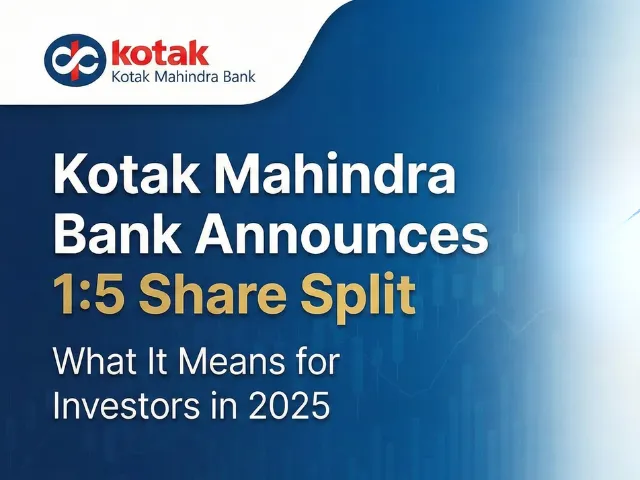
Kotak Mahindra Bank Announces 1:5 Share Split: What It Means for Investors in 2025
Key Takeaways
- Kotak Mahindra Bank announces a 1:5 share split to enhance liquidity and accessibility.
- The split reduces face value and increases the number of shares without altering total investment value.
- Market analysts expect higher retail participation post-split due to affordability.
- Share splits don’t change fundamentals; long-term returns depend on earnings and growth.
- Investors should evaluate the bank’s financial trajectory before making allocation decisions.
Kotak Mahindra Bank has announced a 1:5 share split, making it one of the biggest corporate actions in the Indian banking sector for 2025. As one of India’s most respected private-sector banks, Kotak’s decision has drawn strong interest from both long-term investors and short-term traders.
But what does this share split really mean for your portfolio? Does it create value, or is it simply a psychological boost? This detailed guide breaks down the implications, market context, and what smart investors should consider before the ex-split date.
What Is a Share Split and Why Do Companies Do It?
A share split increases the number of outstanding shares by reducing the face value of each share. The move doesn’t change the company’s market capitalization or the value of an investor’s holdings immediately.
Here’s what happens in a 1:5 split:
- Face value reduces, for example, from ₹10 to ₹2.
- For every share held, shareholders receive five shares.
- The stock price adjusts proportionately.
The primary reasons companies pursue share splits include:
- Making the stock more affordable for retail investors
- Enhancing liquidity and trading volumes
- Increasing participation from new investors
- Improving market depth and visibility
Indian companies usually announce splits when their share prices have risen significantly over time, making the stock relatively expensive compared to peers.
Kotak Mahindra Bank’s 1:5 Share Split: Why Now?
Kotak Mahindra Bank has traditionally traded at a premium to many bank stocks due to its strong asset quality, prudent lending practices, and robust CASA franchise. After years of consistent growth, its stock price became relatively high, making it less accessible to small investors.
The split aligns with three key objectives:
- Enhancing retail participation
- Improving liquidity in daily trading
- Attracting long-term investors who have been waiting for a more affordable entry point
Additionally, with the banking sector expected to see strong credit growth in 2025–26, the timing could help Kotak position itself for broader market participation.
How the 1:5 Share Split Works: A Real Example
Let’s take a simple scenario.
Before the split:
- Shares owned: 20
- Price per share: ₹1,800
- Investment value: ₹36,000
After the split:
- New shares: 20 × 5 = 100
- Expected price: ₹360
- Investment value: ₹36,000
Your wealth does not change immediately. But the stock becomes more accessible to retail investors who may have previously found it expensive.
Impact on the Stock and Market Sentiment
Share splits often generate excitement, but it’s important to separate perception from reality. Still, splits like Kotak’s tend to have meaningful short-term and long-term effects.
Short-Term Effects
- Higher volatility around the record date
- A spike in trading volumes
- Increased participation from young and first-time investors
Long-Term Effects
- Improved liquidity can lead to more efficient price discovery
- Stock affordability may support broader ownership
- The bank’s earnings growth, NIM stability, asset quality, and digital expansion remain the real drivers of market performance
Market analysts believe Kotak’s move aligns with its long-term growth cycle and strengthens its positioning among India’s major private-sector banks.
Regulatory Context from SEBI and Indian Exchanges
Corporate actions like share splits must comply with SEBI’s listing norms and disclosure guidelines. Companies must:
- Announce the record date
- Provide clear rationale for the split
- Follow standardized timelines for approval
- Ensure transparent communication with shareholders
Kotak Mahindra Bank’s announcement follows these regulatory norms, contributing to investor confidence.
Does a Share Split Create Value?
Not directly. A share split does not increase EPS, book value, net profit, or market cap. It merely divides the existing equity into more units.
However, share splits may:
- Improve liquidity
- Attract more investors
- Support better long-term price discovery
The real value creation still depends on the bank’s financial performance, credit growth, margins, and risk management.
How Investors Should Approach Kotak’s Share Split
1. Don’t Buy a Stock Only Because of a Split
A split is not a sign of superior performance. Fundamentals matter more.
2. Evaluate Long-Term Earnings Potential
Kotak’s digital push, capital efficiency, and strong risk controls remain central to its story.
3. Be Aware of Short-Term Volatility
Around the ex-split date, trading activity tends to spike.
4. Keep Tax Rules in Mind
There are no special tax benefits for share splits. Capital gains are taxed as usual based on the holding period.
5. Monitor Liquidity Post-Split
Liquidity improvements can help both traders and long-term investors.
Why Investors Prefer Platforms With Strong Research Support
Corporate actions often encourage new investors to enter the market. For those navigating such events, having access to a robust research-driven investment platform makes a significant difference.
This is where Swastika Investmart, a SEBI-registered brokerage, stands out with:
- Reliable research insights
- Tech-enabled trading and investing platforms
- Strong customer support
- Portfolio-building tools
- Educational resources for beginners and experienced investors
To participate in upcoming opportunities and build a disciplined investment approach, you can open an account easily here:
👉 Open your account with Swastika Investmart today
Frequently Asked Questions
1. Does a 1:5 share split increase my investment value?
No. The split only increases the number of shares while reducing the price proportionately. Your total investment value remains unchanged immediately.
2. Is the Kotak Mahindra Bank share split good for long-term investors?
It can be beneficial indirectly by improving liquidity and accessibility, but long-term returns depend on the bank’s financial performance.
3. What happens if I buy Kotak shares after the record date?
You will not be eligible for the split. Only shareholders before the ex-date receive additional shares.
4. Do share splits have tax benefits?
No. Taxation works as usual based on capital gains when you sell your shares.
5. Why do companies split shares?
Primarily to make stocks more affordable, boost liquidity, and attract wider participation.
Conclusion
Kotak Mahindra Bank’s 1:5 share split is a strategic step that enhances affordability and supports broader participation in one of India’s leading private-sector banks. While the split itself doesn’t add intrinsic value, it can create an environment that supports smoother price discovery and long-term investor engagement.
If you want to navigate such corporate actions with clarity and research-backed tools, Swastika Investmart offers a dependable ecosystem for traders and investors.
Open your Demat & Trading account here and start investing with confidence:
%20(13).webp)
What Investors Should Know About the HDFC AMC 1:1 and Thyrocare 2:1 Bonus Issues in November 2025
Key Takeaways
- HDFC AMC announces a 1:1 bonus issue; Thyrocare announces a 2:1 bonus issue in Nov 2025.
- Bonus shares increase the number of shares but do not change total portfolio value instantly.
- Short-term volatility is common around record dates due to retail participation.
- Both companies aim to improve liquidity and attract more long-term investors.
- Investors must review fundamentals and not view bonus issues as guaranteed value creators.
Bonus issues have again taken center stage in the Indian markets as HDFC AMC and Thyrocare Technologies announce generous bonus ratios for November 2025. While these moves have sparked excitement among retail investors, it’s important to look beyond the headline ratios and understand what these bonus issues mean for valuation, liquidity, taxation, and long-term investment decisions.
To help you make an informed choice, here’s a detailed breakdown of both corporate actions, their market context, and what smart investors should keep in mind.
Understanding Bonus Issues: A Quick Refresher
A bonus issue is when a listed company issues additional shares to existing shareholders for free by capitalizing its reserves. This typically improves liquidity and makes the stock price more affordable without affecting the company's underlying fundamentals.
For example, if you hold 50 shares, and the company declares a 1:1 bonus, you will receive 50 additional shares, doubling your share count.
However, the market value of the investment remains broadly the same on the ex-bonus date because the stock price adjusts proportionately.
HDFC AMC 1:1 Bonus Issue : What It Means for Investors
HDFC AMC’s announcement of a 1:1 bonus issue has drawn attention because it comes at a time when the asset management industry is witnessing record inflows, especially through SIPs and equity-oriented schemes.
Why the Bonus Now?
- AMC stocks tend to attract long-term investors due to stable cash flows.
- A bonus issue can expand the retail shareholder base by reducing the post-bonus stock price.
- It may strengthen liquidity ahead of anticipated growth in the mutual fund industry.
Market Impact
Short-term traders may witness:
- Increased volatility around the record date
- Higher volumes as new retail buyers enter post-price adjustment
- Improved market depth
From a regulatory angle, SEBI mandates transparent disclosures of bonus ratios, record dates, and corporate action timelines. HDFC AMC’s bonus announcement follows these norms, and market analysts expect healthy participation.
Example Scenario
Before bonus:
- Shares held: 40
- Share price (hypothetical): ₹3,000
- Value: ₹1,20,000
After 1:1 bonus:
- Shares: 80
- Expected price: ~₹1,500
- Approx value: ₹1,20,000
No immediate monetary gain — but future growth potential remains intact.
Thyrocare 2:1 Bonus Issue - A More Aggressive Ratio
Thyrocare’s 2:1 bonus (two additional shares for each existing one) is more aggressive and usually seen as a signal of strong reserve position and confidence in future earnings visibility.
Why Investors Are Excited
- A 2:1 bonus drastically increases the share count.
- The adjusted stock price typically becomes far more attractive to retail investors.
- Liquidity jumps significantly post-issue, helping bring tighter bid-ask spreads.
Business Context
Thyrocare has been expanding its diagnostics footprint, leveraging rising demand for preventive health checks in India. Increased retail participation could benefit the stock’s long-term price discovery.
Example Scenario
Before bonus:
- Shares held: 20
- Price (hypothetical): ₹1,200
- Value: ₹24,000
After 2:1 bonus:
- Shares: 60
- Expected price: ~₹400
- Value: ₹24,000
Again, no immediate value addition but improved liquidity and psychological affordability may help long-term valuations.
How Bonus Issues Affect the Broader Indian Market
Bonus announcements often generate short-term enthusiasm in the index-heavy segments if large companies are involved. In this case:
- HDFC AMC, being part of the broader financial ecosystem, can influence sentiment in financial services stocks.
- Thyrocare’s announcement may draw attention toward healthcare and diagnostics stocks.
Additionally, rising bonus activity is sometimes viewed as a sign of strong corporate balance sheets and improving business confidence across sectors.
However, investors must remember that bonus issues do not improve fundamentals. They simply increase share count and improve liquidity.
Key Things Investors Should Keep in Mind
1. No Change in Intrinsic Value
A bonus issue does not change the company’s profitability, cash flows, or intrinsic worth.
2. Short-Term Volatility
Prices may fluctuate around the record date as speculative traders enter and exit.
3. Taxation
Bonus shares have zero acquisition cost, and taxation depends on the holding period from the date of allotment.
4. Record Date Importance
Holding shares before the ex-date is essential to be eligible for the bonus.
5. Fundamentals Matter More Than Bonus Ratios
A company giving a high bonus ratio is not always a sign of superior performance.
Are Bonus Issues Good for Long-Term Investors?
They can be provided the company continues to execute well on earnings, margins, and growth. Bonuses generally:
- Improve liquidity
- Make stock price psychologically attractive
- Enhance participation from new retail investors
But the real returns come from earnings growth, not corporate actions.
Why Many Investors Prefer Platforms With Strong Research Support
Bonus issues can attract many new investors looking to capitalize on post-bonus opportunities. This is where research-backed guidance, transparent tools, and reliable trading platforms play an important role.
Platforms like Swastika Investmart, a SEBI-registered brokerage firm, support investors with:
- Advanced research insights
- Tech-enabled trading solutions
- Responsive customer support
- Educational tools for informed decision-making
This helps investors avoid hype-driven decisions and stay aligned with fundamentals.
Frequently Asked Questions
1. Do bonus shares increase the value of my portfolio?
No. Your portfolio value remains nearly the same immediately after the bonus because the stock price adjusts in proportion to the bonus ratio.
2. What is the difference between a 1:1 and 2:1 bonus?
A 1:1 bonus gives one extra share for every share held. A 2:1 bonus gives two extra shares for every share held — tripling the share count.
3. Do I need to pay tax on bonus shares?
Bonus shares are tax-free upon receipt. Capital gains tax applies only when you sell them, based on the holding period.
4. Is it mandatory to buy shares before the record date?
Yes. Only shareholders who hold shares before the ex-date set by the company are eligible for bonus allotment.
5. Do bonus issues mean a company is performing well?
Not necessarily. They only indicate that the company has sufficient reserves. The company’s financial health still depends on earnings and business metrics.
Conclusion
Bonus issues like those announced by HDFC AMC (1:1) and Thyrocare (2:1) often generate excitement but should be evaluated with a balanced perspective. They improve liquidity and accessibility but do not inherently create new value. Long-term investors should focus on fundamentals, industry trends, and disciplined investing frameworks.
If you’re exploring bonus plays or long-term investment opportunities, a trusted, research-driven platform can make all the difference.
Open your account with Swastika Investmart and start investing with confidence:
.webp)
Nvidia Results Explained: What They Mean for Indian Markets, IT Giants & Semiconductor Plans
Key Takeaways
- Nvidia posted a record $57 billion revenue in Q3 FY26, driven by explosive demand for Blackwell AI chips.
- Its data-center segment surged 66% YoY, underlining its dominance in high-performance computing.
- Positive earnings strengthen the AI infrastructure narrative, potentially boosting semiconductor investments globally — including in India.
- Indian IT giants (like TCS, Infosys) could benefit indirectly through increased demand for AI services, while India’s semiconductor push gains momentum.
- Platforms like Swastika Investmart, with SEBI-registration and strong research tools, can help Indian investors tap Nvidia’s growth safely.
Nvidia’s Latest Earnings: What Went Down
Nvidia’s Q3 fiscal-2026 results were nothing short of spectacular. The company clocked $57.0 billion in revenue, a 22% increase quarter-over-quarter and a massive 62% year-over-year jump.
The data-centre business, which fuels much of Nvidia’s strength, reported $51.2 billion — up 25% sequentially and a whopping 66% YoY.
Earnings per share (diluted) stood at $1.30, beating market expectations. Gross margins remained healthy: ~73.4% on a GAAP basis and ~73.6% on non-GAAP.
Jensen Huang, Nvidia’s CEO, painted a bold picture: “Blackwell sales are off the charts, and cloud GPUs are sold out … We’ve entered the virtuous cycle of AI.”
On the capital return front, Nvidia has distributed $37 billion to shareholders via buybacks and dividends in the first nine months of fiscal 2026, while still retaining $62.2 billion under its repurchase authorization.
Why This Matters for Indian Markets
Surge in AI Infrastructure & Cloud Demand
Nvidia’s blazing growth is a clear sign that AI infrastructure is scaling up rapidly. For Indian cloud service providers, startups, and large enterprises, this means greater access to powerful compute — and hence more opportunity to build or scale AI-driven products, whether in generative AI, autonomous systems, or large-language-model applications.
Boost for Indian IT Giants
IT services companies such as TCS, Infosys, HCL Tech, and Wipro stand to benefit in multiple ways:
- AI Consulting & Implementation: As global firms lean into Nvidia-powered deployments, Indian IT firms can win more AI transformation projects.
- Edge Deployment: Nvidia’s edge computing push (AI at the edge) aligns well with telecom-led, localized AI deployments in India.
- Partnerships: These IT companies often partner with cloud hyperscalers; increases in data-centre investments could indirectly boost consulting and integration revenue.
Semiconductor Ambitions in India
India has long expressed ambitions to build a vibrant semiconductor ecosystem. Nvidia’s strong earnings fuel confidence in the global semiconductor demand outlook — which may in turn accelerate semiconductor-related investments in India.
- Government Push: In recent years, India has introduced incentive schemes (e.g., PLI for chip manufacturing) to attract global semiconductor players.
- Local Manufacturing: A continued boom in AI chips makes it more feasible for India to host fabs or assembly units, especially as global supply chains diversify.
- Talent Leverage: India’s deep engineering talent pool could feed specialized roles in design, testing, and AI compute research.
Broader Implications & Risks
While Nvidia’s results are a vote of confidence in the AI era, Indian investors and companies should also remain aware of potential headwinds:
- Regulatory Risk: Export controls, especially restrictions on chip technologies, could affect supply chains.
- Valuation Risk: Nvidia’s business is growing fast, but high expectations mean any missteps might trigger sharp market reactions.
- Competition: Other semiconductor players (both in the U.S. and Asia) are vying for a piece of the AI compute pie — and India’s own semiconductor strategy must be realistic and capital-efficient.
- Macroeconomic Conditions: Global interest rates, currency fluctuations, and supply-chain disruptions could influence profitability and investments.
How Indian Investors Can Navigate This
For Indian investors looking to play the Nvidia or AI-infrastructure story:
- Direct Exposure via US Markets: Buy Nvidia (NVDA) or related semiconductor stocks through brokerages with international access.
- Indirect Exposure via Indian Tech Stocks: Consider Indian IT firms that could gain from increased AI consulting, cloud migration, and data-centre deployment.
- ETFs & Themed Funds: Look for mutual funds or ETFs focused on AI, cloud, or semiconductor sectors.
- Research Tools Matter: Use a platform with robust research capabilities — like Swastika Investmart — to track earnings, sentiment, and global tech trends.
FAQ
Q1. Does Nvidia’s strong result mean an “AI bubble” is safe to ignore?
Not entirely. While Nvidia’s performance reinforces real demand, investors should maintain a balanced view — growth is strong, but it’s not without risks like supply chain bottlenecks, valuation, and geopolitical concerns.
Q2. How exactly will Indian semiconductor manufacturing benefit from Nvidia’s growth?
Higher global demand for AI chips strengthens the case for semiconductor investments in India. This could encourage more fabs, design centres, and collaborations if Indian policy and capital conditions align.
Q3. Should I invest in Nvidia directly or via Indian IT companies?
Both routes have merit. Direct exposure (NVDA shares) gives pure-play access, but investing in Indian IT companies offers leverage to India’s AI ecosystem growth, possibly with lower volatility and regulatory simplicity.
Q4. How does Swastika Investmart help in this context?
Swastika Investmart is SEBI-registered, offers powerful research tools, and supports international investing. Use its platform for guided insights, risk analysis, and thematic portfolios around AI/semiconductors.
Conclusion
Nvidia’s Q3 earnings are a resounding signal that AI infrastructure is accelerating, and the ripple effects could meaningfully shape the future of Indian technology markets. For Indian investors and corporations alike, this is more than just a U.S. company doing well — it’s an opportunity that aligns with India’s tech ambitions, semiconductor goals, and digital transformation journey.
If you’re looking to position yourself for this wave, Swastika Investmart offers the tools, trust, and technology to help you navigate global markets smartly. Open an account today and explore:
👉 Open your account with Swastika Investmart today


.webp)
.webp)

.webp)





START YOUR INVESTMENT JOURNEY
Get personalized advice from our experts
- Dedicated RM Support
- Smooth and Fast Trading App
