

SpaceX IPO Could Break History with $75 Billion Raise : Is This the Biggest Listing Ever?


.png)

 Add Swastika as preferred source
The buzz around the SpaceX IPO is growing rapidly, and for good reason. Reports suggest that SpaceX could raise up to $75 billion, making it one of the largest public listings in global financial history. For Indian investors tracking global opportunities, this potential IPO is more than just hype. It signals a shift in how private tech giants are approaching capital markets.
Let’s break down what this means, how it compares to past IPOs, and whether Indian investors should pay attention.
Quick Takeaways
- SpaceX IPO could raise up to $75 billion, potentially the largest ever
- Strong interest from sovereign funds like Public Investment Fund
- May surpass historic IPOs like Saudi Aramco
- Indian investors may gain indirect exposure through global funds and platforms
Why the SpaceX IPO Is a Big Deal
Unprecedented Valuation and Demand
SpaceX, led by Elon Musk, has remained private for years despite massive growth. Its valuation has surged due to innovations in reusable rockets, satellite internet via Starlink, and strong government contracts.
If the IPO raises $75 billion, it could surpass the record set by Saudi Aramco’s $29.4 billion listing in 2019. That would make it the biggest IPO ever globally.
Anchor Investors and Global Interest
Reports indicate that Saudi Arabia’s Public Investment Fund is considering a $5 billion anchor investment. This level of institutional backing shows confidence in SpaceX’s long-term growth story.
Large IPOs often rely on anchor investors to stabilize demand and pricing. This is similar to how IPOs in India are supported under Securities and Exchange Board of India guidelines.
How Does It Compare to Previous Mega IPOs?
Historically, the biggest IPOs have come from energy and tech sectors. Saudi Aramco still holds the top position, followed by companies like Alibaba.
However, SpaceX stands out because it operates in the emerging space economy. This includes satellite internet, space exploration, and defense contracts, making it a unique investment opportunity.
For Indian investors, this is comparable to how tech IPOs like Zomato or Paytm reshaped local markets, though on a much larger global scale.
Can Indian Investors Invest in SpaceX IPO?
Direct Investment Challenges
Indian investors cannot directly invest in US IPOs unless they use international brokerage platforms and comply with Reserve Bank of India regulations under the Liberalised Remittance Scheme.
Indirect Investment Routes
There are still ways to gain exposure:
- Investing in global mutual funds or ETFs that may include SpaceX
- Tracking listed companies with partnerships or exposure to SpaceX
- Using international investing platforms offered by brokers
Platforms like Swastika Investmart help investors explore global opportunities with research-backed insights, making it easier to understand such complex investments.
Risks to Consider Before Investing
Even though the hype is strong, investors should remain cautious.
High Valuation Risk
A $75 billion raise implies a massive valuation. If growth slows, returns may not justify the price.
Regulatory and Geopolitical Risks
SpaceX operates in sensitive sectors like defense and satellite communications, which can face regulatory scrutiny.
Market Volatility
Large IPOs often see price swings post-listing. Investors should avoid rushing in during peak hype.
This is where research-driven platforms like Swastika Investmart add value through expert analysis and advisory tools.
Why This IPO Matters for Indian Markets
The SpaceX IPO reflects a broader trend of innovation-driven companies dominating capital markets. It also highlights increasing global participation from sovereign funds and retail investors.
Indian regulators like SEBI are also pushing for more transparency and investor protection, ensuring that local IPO markets evolve alongside global trends.
For Indian investors, staying informed about such mega listings helps in building a diversified and future-ready portfolio.
Frequently Asked Questions
What is the expected size of the SpaceX IPO?
The SpaceX IPO could raise up to $75 billion, potentially making it the largest IPO in history.
Can Indian investors buy SpaceX shares?
Yes, but only through international investment routes under RBI’s Liberalised Remittance Scheme.
Is SpaceX IPO bigger than Saudi Aramco?
If it reaches $75 billion, it will surpass Saudi Aramco’s $29.4 billion IPO.
Is it safe to invest in SpaceX IPO?
Like any IPO, it carries risks including valuation concerns and market volatility. Proper research is essential.
Final Thoughts
The SpaceX IPO could redefine global capital markets if it achieves its projected scale. While it presents exciting opportunities, it also comes with significant risks that investors must evaluate carefully.
For Indian investors, the key is not just access but understanding. Platforms like Swastika Investmart provide the research, tools, and support needed to navigate such global opportunities with confidence.
If you are looking to explore smarter investing strategies and stay ahead of market trends, you can get started here:
Big Budget











.webp)
.webp)
.webp)
.webp)
.webp)
















.webp)
.webp)
.webp)
.webp)
Latest Articles

The 12 Stock Market Movies You Must Watch


The stock market is a fascinating world filled with drama, mystery, and high stakes. It’s no wonder that Hollywood has produced some incredible movies centered around the financial world. Whether you're a seasoned investor or just curious about the stock market, these movies offer valuable insights and a dose of entertainment. Here are 12 must-watch stock market movies that provide a thrilling look into the highs and lows of trading, investing, and the world of finance.
1. Wall Street (1987)
- Director: Oliver Stone
- Synopsis: This classic movie follows the story of Bud Fox, a young and ambitious stockbroker, who becomes entangled with the ruthless corporate raider Gordon Gekko. Gekko's famous mantra, "Greed is good," captures the essence of the 1980s financial world.
- Why Watch: "Wall Street" is a compelling tale of ambition, greed, and the moral dilemmas faced by those in the high-stakes world of finance. Michael Douglas’s portrayal of Gordon Gekko won him an Academy Award.
2. The Wolf of Wall Street (2013)
- Director: Martin Scorsese
- Synopsis: Based on the true story of Jordan Belfort, this film narrates his rise and fall as a stockbroker who engages in corruption and fraud on Wall Street. It’s a wild ride through the excesses and indulgence of the financial world.
- Why Watch: With Leonardo DiCaprio’s electrifying performance and Scorsese’s masterful direction, this film offers an steadfast look at the darker side of Wall Street. It's both hilarious and horrifying.
3. Margin Call (2011)
- Director: J.C. Chandor
- Synopsis: Set during the early stages of the 2008 financial crisis, "Margin Call" follows key employees at an investment bank over a 24-hour period as they realize the impending disaster.
- Why Watch: This movie provides a gripping and realistic portrayal of the decisions and panic that led to the financial meltdown. The ensemble cast, including Kevin Spacey and Jeremy Irons, delivers powerful performances.
4. The Big Short (2015)
- Director: Adam McKay
- Synopsis: Based on Michael Lewis’s book, "The Big Short" tells the story of a group of investors who predicted the 2008 financial crisis and bet against the housing market, making a fortune in the process.
- Why Watch: This film explains complex financial concepts in an accessible and entertaining way. With a star-studded cast including Christian Bale, Steve Carell, and Ryan Gosling, it’s both educational and highly engaging.
5. Guru (2007)
- Director: Mani Ratnam
- Synopsis: Inspired by the life of businessman Dhirubhai Ambani, "Guru" follows the journey of Gurukant Desai, a village boy who rises to become a powerful tycoon. The film explores his ambition, ethics, and the challenges he faces in building his business empire.
- Why Watch: "Guru" offers a compelling narrative about entrepreneurship, ambition, and the complexities of business ethics. Abhishek Bachchan's portrayal of Gurukant Desai and Aishwarya Rai's performance as his supportive wife add depth to the story.
6. Scam 1992: The Harshad Mehta Story (2020, Web Series)
- Director: Hansal Mehta
- Synopsis: Based on the true story of Harshad Mehta, a stockbroker who was involved in India's largest financial scam in the 1990s. The series chronicles his rise and fall, exploring the complexities of the stock market and the allure of wealth.
- Why Watch: "Scam 1992" is a critically acclaimed series that provides a detailed and nuanced portrayal of the stock market boom and subsequent crash. Pratik Gandhi's performance as Harshad Mehta received widespread praise for its depth and authenticity.
7. The Big Bull (2021)
- Director: Kookie Gulati
- Synopsis: Loosely based on the life of Harshad Mehta, "The Big Bull" portrays the journey of a small-time stockbroker who becomes a financial wizard. The film explores his meteoric rise, manipulation of the stock market, and eventual downfall.
- Why Watch: "The Big Bull" offers a dramatized account of the events surrounding Harshad Mehta's life, providing insights into the stock market's workings and the ethical dilemmas faced by traders. Abhishek Bachchan's performance as the protagonist is captivating.
8. Trading Places (1983)
- Director: John Landis
- Synopsis: This comedy classic tells the story of a snobbish investor and a street hustler whose lives are swapped as part of a bet by two wealthy brothers. The film explores themes of social class and the mechanics of the commodities market.
- Why Watch: "Trading Places" is a hilarious yet insightful look at the financial world. Eddie Murphy and Dan Aykroyd deliver memorable performances in this timeless comedy.
9. Boiler Room (2000)
- Director: Ben Younger
- Synopsis: A college dropout gets a job at a suburban investment firm, where he discovers the firm’s questionable business practices. He quickly rises through the ranks, only to face moral and legal dilemmas.
- Why Watch: "Boiler Room" offers a look at the high-pressure world of stock brokerage firms and the ethical challenges faced by brokers. It’s a thrilling and thought-provoking film.
10. Glengarry Glen Ross (1992)
- Director: James Foley
- Synopsis: Based on David Mamet’s play, this film follows a group of real estate salesmen who are under intense pressure to close deals. The story delves into their desperation and unethical tactics.
- Why Watch: With a stellar cast including Al Pacino, Jack Lemmon, and Alec Baldwin, "Glengarry Glen Ross" is a powerful exploration of the cutthroat nature of sales and the impact of capitalism on individuals.
11. Rogue Trader (1999)
- Director: James Dearden
- Synopsis: This film is based on the true story of Nick Leeson, a derivatives broker who caused the collapse of Barings Bank through unauthorized and risky trades.
- Why Watch: "Rogue Trader" provides a real-world cautionary tale about the dangers of unchecked trading and the consequences of financial recklessness. Ewan McGregor’s portrayal of Leeson is compelling.
12. Equity (2016)
- Director: Meera Menon
- Synopsis: This film centers around a senior investment banker who is navigating the world of IPOs while facing pressures from both her personal and professional life.
- Why Watch: "Equity" is one of the few films that focus on women in finance. It offers a unique perspective on the challenges faced by women in a male-dominated industry and is a gripping drama.
Conclusion
These 12 movies provide a captivating glimpse into the world of finance, each from a unique angle. From comedies to intense dramas and real-life stories, they explore the motivations, challenges, and ethical dilemmas faced by those in the stock market. Whether you’re an aspiring trader, an experienced investor, or simply someone interested in the financial world, these films are both entertaining and educational. They highlight the high stakes, the allure of wealth, and the potential pitfalls of the financial industry. So, grab some popcorn and get ready to dive into the fascinating world of stock market cinema!

How Does Monsoon Impact the Economy and Stock Market?
Monsoon season, with its heavy rains and thunderstorms, is a crucial period for many countries, especially those heavily reliant on agriculture like India. This season significantly impacts the economy and stock market. Let's break down how this happens in simple terms.
1. Impact on Agriculture
a. Crop Production:
Monsoons are essential for watering crops. A good monsoon means enough water for rice, wheat, sugarcane, and other important crops.
When there is enough rain, crops grow well, leading to a good harvest. This means farmers have more produce to sell, which boosts their income.
Conversely, if the monsoon is weak (less rain) or too strong (flooding), crops can be damaged, leading to a poor harvest. This can reduce farmers' incomes and increase food prices.
b. Rural Economy:
A large portion of the population in countries like India lives in rural areas and depends on agriculture for their livelihood.
A good monsoon improves rural incomes, leading to higher spending on goods and services. This increased spending supports local businesses and stimulates economic growth.
2. Impact on Industry
a. Raw Material Supply:
Industries that rely on agricultural products, such as food processing, textiles, and beverages, are directly affected by monsoon performance.
A good harvest ensures a steady supply of raw materials at stable prices, which benefits these industries. Poor monsoons can disrupt supply chains and increase costs.
b. Consumer Goods:
Higher rural incomes from a good monsoon increase the demand for consumer goods, such as electronics, clothing, and household items.
Companies manufacturing these goods see higher sales and profits, positively affecting their stock prices.
3. Impact on Inflation
Inflation is the rate at which prices for goods and services rise. Food prices are a major component of inflation.
A good monsoon keeps food production high and prices low, controlling inflation.
Poor monsoon leads to lower food production, higher prices, and increased inflation, which can affect the entire economy.
4. Impact on Government Finances
The government often has to step in to support farmers during bad monsoon years through subsidies and relief packages.
This additional spending can strain the government's budget and increase public debt.
5. Impact on Stock Market
a. Agricultural Stocks:
Companies directly related to agriculture, like those producing fertilizers, pesticides, and tractors, benefit from a good monsoon. Their stock prices tend to rise as investors anticipate higher sales.
Conversely, a poor monsoon can lead to lower demand for these products, causing stock prices to fall.
b. Consumer Goods Companies:
Companies producing consumer goods see increased sales in rural areas during a good monsoon, leading to higher stock prices.
If the monsoon is poor, reduced rural spending can negatively impact their sales and stock prices.
c. Overall Market Sentiment:
The stock market is influenced by investor sentiment. A good monsoon boosts investor confidence, leading to higher stock prices across various sectors.
A poor monsoon can create uncertainty and lower investor confidence, leading to market volatility and lower stock prices.
6. Impact on Interest Rates
Central banks monitor inflation closely. A good monsoon can lead to lower inflation, allowing central banks to keep interest rates low.
Low-interest rates make borrowing cheaper for businesses and individuals, stimulating economic activity.
High inflation from a poor monsoon might force central banks to raise interest rates to control prices, making borrowing more expensive and potentially slowing down economic growth.
Conclusion
The monsoon season plays a pivotal role in shaping the economy and stock market, particularly in agrarian countries. Good monsoons lead to increased agricultural output, stable inflation, and positive investor sentiment, benefiting the overall economy and stock market. Conversely, poor monsoons can disrupt economic stability, increase inflation, and cause market volatility. Understanding these dynamics helps investors, policymakers, and businesses make smart decisions during the monsoon season.

How to Start Investing in Stock Market in 2024
Whether you’re new to the investing world or have some experience under your belt, understanding the stock market can be a difficult task. With so many options, strategies, and risks involved, it’s important to have a clear understanding of how to invest wisely. In this blog post, we’ll break down the basics of investing in the Indian stock market for beginners, providing you with the knowledge and tools you need to get started.
Understanding the Stock Market
Before diving into stock investing, it’s important to understand what the stock market is and how it works. Simply put, the stock market is a place where you can buy and sell shares of publicly traded companies. It plays a vital role in the global economy by allowing companies to raise capital and enabling investors to own a piece of these companies and potentially profit from their success.
In India, the major stock exchanges facilitating these transactions are the Bombay Stock Exchange (BSE) and the National Stock Exchange (NSE). These exchanges provide a platform for trading shares, making it easier for investors to participate and for companies to secure funding.
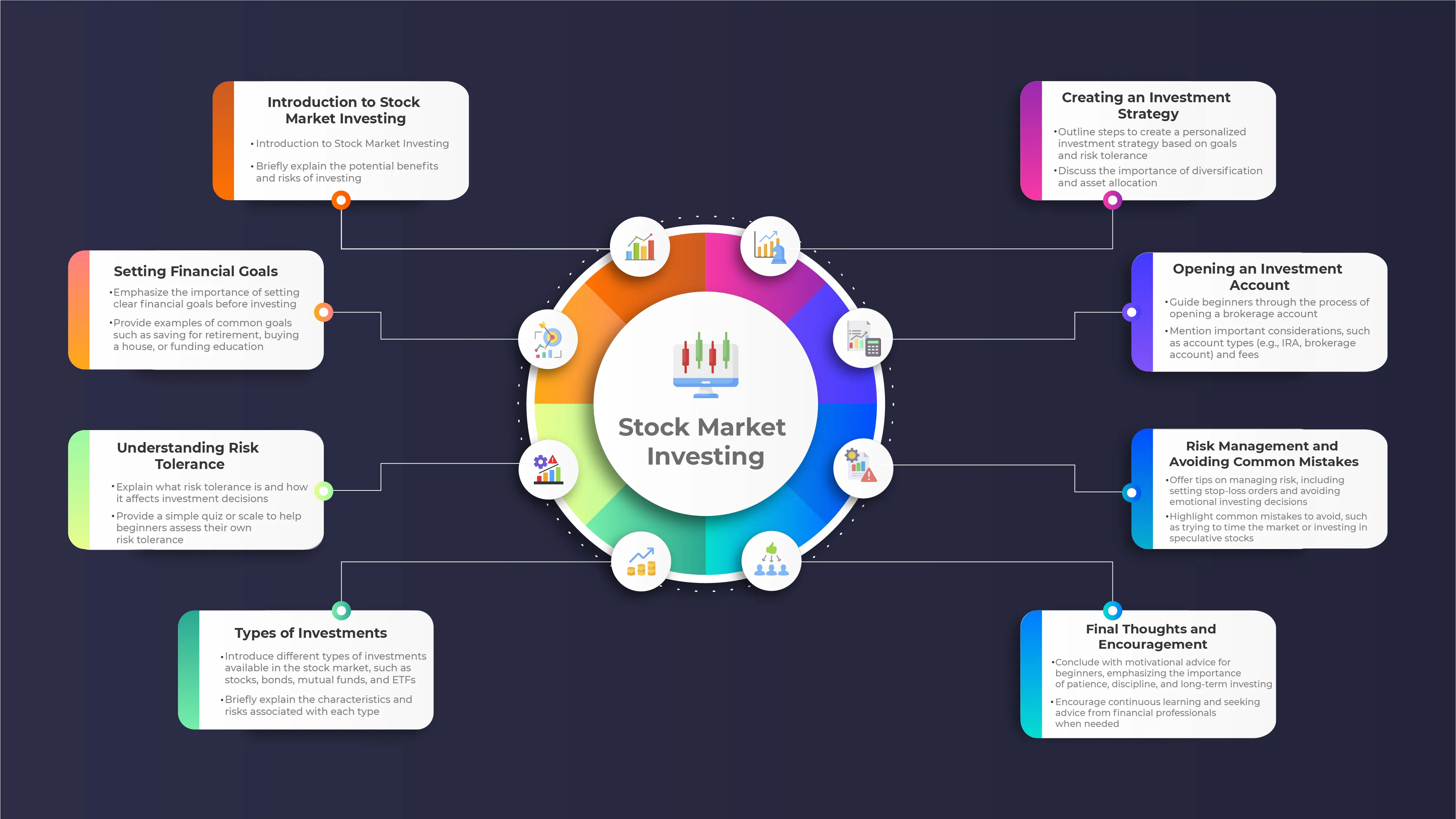
Why Invest in Stocks?
Step 1. Set Your Investment Goals
Before you start investing, it’s important to define your investment goals. Are you looking to build long-term wealth, save for retirement, or generate passive income? By setting clear goals, you can develop a strategy that aligns with your objectives and risk tolerance.
Step 2.Determine How Much You Can Afford to Invest in Stocks
Before you start investing in stocks, it's important to figure out how much money you can comfortably set aside. First, look at your monthly income and expenses to see how much you have left over. Then, decide on an amount that won’t affect your day-to-day finances or other financial goals. Only invest money you won't need soon, as the market can be unpredictable. This careful planning helps you invest without risking your financial stability.
Step 3. Determine Your Investing Style
Your investing style shapes how you approach the market. Consider your preference: do you enjoy researching stocks and market trends, or do you prefer a more hands-off strategy?
There are three main investing styles:
- Active Investing: You actively manage your portfolio, choosing and trading stocks, bonds, and other assets using advanced brokerage tools. Pros include potential for higher returns and full control, but it's time-consuming and requires extensive research.
- Passive Investing: You invest in index funds, ETFs, or mutual funds through low-cost brokerage accounts. Pros include less time commitment, lower fees, and diversification, though potential returns may be lower compared to active trading.
- Professional Guidance: Working with a financial advisor offers personalized advice and expert management of your investments. Pros include tailored guidance, but cons include advisory fees and less direct control over investment decisions. Choose the style that best fits your goals and comfort level with risk and involvement.
Step 4: Choose the Right Investment Accounts
Selecting the right type of investment account is crucial for maximizing your returns and achieving your financial goals.
Types of Investment Accounts
- Demat Account: A Demat account holds your shares electronically instead of physical certificates. It's necessary for trading in the Indian stock market, providing convenience and security. However, there may be maintenance charges associated with maintaining this account.
- Trading Account: A trading account is used specifically for buying and selling securities in the stock market. It's essential for executing trades and managing your investments effectively. However, brokerage charges may apply for each transaction made through this account.
These accounts serve different purposes and cater to varying financial goals. Choosing the right one depends on your investment horizon, risk tolerance, and financial objectives.
5: Choose Your Investments
- Stocks: Stocks are pieces of ownership in individual companies. They can give you high returns, but they come with higher risk and you need to do your homework to choose wisely.
- Bonds: Bonds are like loans you give to companies or the government. They are safer than stocks and give you steady income, but the returns are usually lower.
- Mutual Funds: Mutual funds collect money from many people to invest in a variety of stocks and bonds. They spread out the risk and are managed by professionals, making them easier for beginners. However, you have to pay management fees and have less say in what gets bought or sold.
- Exchange-Traded Funds (ETFs): ETFs are funds that you can buy and sell on the stock exchange, just like stocks. They offer a mix of investments, usually at lower fees. However, they can have trading costs and can be a bit tricky to understand at first.
6: Tax Implications on Different Account Types
Consider the Tax Implications: Different accounts have different tax rules:
- Taxable Accounts: You pay taxes on any profits you make from selling investments, but you can add or take out money whenever you want.
- Tax-Deferred Accounts: Contributions to traditional IRAs and 401(k) s lower your taxable income now. You pay taxes on the money later when you take it out.
- Tax-Free Accounts: Roth IRAs and Roth 401(k) s are funded with money you've already paid taxes on. Your money grows tax-free, and you won't owe taxes when you take it out in retirement.
Choosing the right investment account depends on your financial goals, how much risk you're comfortable with, and the tax implications you prefer. Each account type has its own benefits and considerations that can impact your investment strategy and long-term financial plans.
Open a Brokerage Account
To begin investing, opening a brokerage account is essential. A brokerage account allows you to buy and sell stocks, bonds, ETFs, and mutual funds through a platform provided by the brokerage firm.
Swastika Investmart offers a range of investment options and personalized services, making it suitable for investors seeking customized solutions and local market expertise. However, its platform may be perceived as less technologically advanced compared to other brokerages listed. Choosing the right brokerage account depends on your specific needs and preferences, whether you prioritize low fees, advanced tools, or specialized customer support.
7: Build a Diversified Portfolio
Diversification helps manage risk by spreading investments across various asset classes.
How to Diversify
- By Asset Class:
- Stocks: Invest in a mix of different sectors and industries.
- Bonds: Include a variety of corporate, government, and municipal bonds.
- Other Assets: Consider real estate, commodities, and alternative investments.
- By Geography:
- Domestic: Invest in companies within your own country.
- International: Include investments in foreign market.
8: Monitor and Rebalance Your Portfolio
Regularly monitoring and rebalancing your portfolio ensures it stays aligned with your goals.
- Monitoring Your Portfolio
- Performance Review: Check the performance of your investments periodically.
- News and Updates: Stay informed about market trends and news affecting your investments.
- Rebalancing
- Frequency: Review and rebalance your portfolio annually or semi-annually.
- Adjustments: Sell over performing assets and buy underperforming ones to maintain your target allocation.
9. Stay Updated &Educate Yourself
One of the most important steps in investing is educating yourself about the basics of investing, different investment options, and the risks involved. There are plenty of resources available online, such as blogs, books, and investment websites like Investopedia, where you can learn more about investing.
Finally, it’s important to stay informed about the stock market and economic trends that may impact your investments. Read financial news, follow market updates, and stay up-to-date on company earnings reports to make informed investment decisions. By staying informed, you can make smarter investment choices and take advantage of profitable opportunities.
Conclusion
Starting to invest in stocks in 2024 requires a clear understanding of the basics, a determination of how much you can afford to invest, an assessment of your risk tolerance, and a defined investing style. By choosing the right investment accounts, selecting diversified investments, and continuously educating yourself, you can build a robust investment portfolio that helps you achieve your financial goals. Remember to regularly monitor and rebalance your portfolio to ensure it stays aligned with your objectives.
.webp)
Difference Between FDI and FII
Introduction
In the world of finance and investment, you might come across terms like Foreign Direct Investment (FDI) and Foreign Institutional Investment (FII). Both are crucial for a country's economy, but they serve different purposes and have distinct characteristics. In this blog, we’ll break down what FDI and FII are, their differences, and their impact on the economy.
What is Foreign Direct Investment (FDI)?
Foreign Direct Investment (FDI) refers to investments made by a company or individual in one country in business interests in another country, in the form of either establishing business operations or acquiring business assets in the foreign country.
Key Features of FDI:
- Long-Term Investment: FDI usually involves a long-term commitment to the foreign market. It is often used to set up manufacturing plants, sales offices, or other business operations.
- Control and Management: The investor often has a significant degree of control over the operations in the foreign country.
- Examples: Multinational companies like Tata Motors setting up manufacturing units in other countries or Samsung investing in a new production facility abroad.
What is Foreign Institutional Investment (FII)?
Foreign Institutional Investment (FII) refers to investments made by foreign institutions in the financial markets of a country. These institutions could be mutual funds, pension funds, insurance companies, or other large investment firms.
Key Features of FII:
- Short-Term Investment: FIIs typically make short-term investments in a country’s stock market or other financial markets. They are more focused on achieving high returns on their investments in a shorter time frame.
- No Control: FIIs do not have any management control or significant influence over the companies they invest in. They invest in securities but do not participate in the day-to-day management.
- Examples: Foreign investment in Indian stock markets by entities like Goldman Sachs or Morgan Stanley.
Differences Between FDI and FII
Impact on the Economy
- FDI Impact: FDI can lead to economic growth, job creation, and infrastructure development. For instance, when companies like Volkswagen invest in manufacturing units in India, it boosts local employment and contributes to technological advancements.
- FII Impact: While FIIs contribute to market liquidity and help in the efficient functioning of financial markets, they can also lead to market volatility due to their short-term investment nature. For example, large-scale sell-offs by FIIs can lead to sharp declines in stock market indices.
Conclusion
Both FDI and FII play important roles in the global economy. FDI provides long-term benefits and fosters economic development, while FII adds liquidity to financial markets and can influence market dynamics. Understanding the differences between them helps in grasping how foreign investments impact economic growth and market stability.

What is PE Ratio? Understanding the Price-to-Earnings Ratio
The Price-to-Earnings (PE) ratio is one of the most widely used metrics in the world of investing. It helps investors evaluate whether a stock is overvalued, undervalued, or fairly priced. In this detailed blog, we will explore what the PE ratio is, how it is calculated, its significance, types, and limitations, and provide some practical examples to help you understand this fundamental concept better.
What is PE Ratio?
The PE ratio, or Price-to-Earnings ratio, is a valuation metric that compares a company's current share price to its per-share earnings. It essentially tells investors how much they are paying for each dollar of earnings.
Formula:
PE Ratio = Market Price per Share Earning per Share (EPS)
Example:
If a company's stock is trading at ₹100 and its Earnings per Share (EPS) is ₹10, the PE ratio would be:
PE Ratio = ₹1oo₹1o = 10
This means investors are willing to pay ₹10 for every ₹1 of earnings.
Why is the PE Ratio Important?
The PE ratio is important because it provides a quick snapshot of a company's valuation relative to its earnings. Here are a few reasons why it matters:
- Valuation Measure: It helps determine if a stock is overvalued, undervalued, or fairly valued compared to its earnings.
- Comparative Tool: Investors can use the PE ratio to compare the valuation of companies within the same industry or sector.
- Investment Decisions: It assists investors in making informed decisions by indicating the market's expectations of a company's future earnings growth.
Types of PE Ratios
There are two main types of PE ratios: the trailing PE ratio and the forward PE ratio.
- Trailing PE Ratio: This is calculated using the earnings per share (EPS) from the past 12 months. It provides a historical perspective on the company's performance.
- Forward PE Ratio: This uses projected earnings for the next 12 months. It gives an insight into what investors expect the company's earnings will be in the future.
Example:
If a company's stock is trading at ₹150, its trailing 12-month EPS is ₹15, and its projected EPS for the next 12 months is ₹20:
Trailing PE Ratio: ₹15o₹15 = 10
Forward PE Ratio: ₹15o₹20 = 7.5
How to Interpret the PE Ratio?
Interpreting the PE ratio involves understanding what a high or low PE ratio signifies:
High PE Ratio:
- Indicates that investors are ready to pay more expecting higher growth in the future.
- Can also suggest that the stock is overvalued.
- Common in high-growth industries like technology.
Low PE Ratio:
- Suggests that the stock might be undervalued.
- Could also indicate that the company is experiencing difficulties or is in a low-growth industry.
- Often found in mature industries like utilities.
Limitations of the PE Ratio
While the PE ratio is a useful tool, it has its limitations:
- Earnings Manipulation: Companies can manipulate earnings through accounting practices, affecting the reliability of the PE ratio.
- Industry Differences: The PE ratio varies across industries, making it less effective for comparing companies in different sectors.
- Growth Rates: It does not account for differences in growth rates between companies.
- Debt Levels: Companies with high debt levels may have artificially inflated or deflated PE ratios.
Example:
A high-growth tech company and a stable utility company will naturally have different PE ratios due to their differing growth prospects and risk profiles. Comparing them directly using PE ratios might lead to incorrect conclusions.
Practical Examples
Let's look at some practical examples to understand how to use the PE ratio:
- Comparing Two Companies in the Same Industry
- Company X: Current stock price is ₹200, EPS is ₹20, PE ratio is 10.
- Company Y: Current stock price is ₹150, EPS is ₹15, PE ratio is 10.
Both companies have the same PE ratio of 10, indicating they are valued similarly based on their earnings. Investors might look at other factors like growth prospects, management quality, and market conditions to make investment decisions.
- Identifying Overvaluation or Undervaluation
- Company A: PE ratio is 30.
- Industry Average PE Ratio: 15.
Company A's PE ratio is significantly higher than the industry average, suggesting it might be overvalued unless it has substantial growth prospects to justify the higher valuation.
- Evaluating Growth Prospects
- Company B: Trailing PE ratio is 8, Forward PE ratio is 5.
Company B's forward PE ratio is lower than its trailing PE ratio, indicating that investors expect higher earnings in the future, possibly making it an attractive investment opportunity.
PE Ratio and Market Sentiment
The PE ratio can also reflect market sentiment:
- Bull Markets: PE ratios tend to be higher as investor optimism drives up stock prices.
- Bear Markets: PE ratios tend to be lower as investor pessimism leads to lower stock prices.
Example:
During a bull market, investors might accept higher PE ratios because they expect continued growth and higher future earnings. Conversely, in a bear market, even strong companies might have lower PE ratios due to widespread negative sentiment.
Conclusion
The PE ratio is a vital tool for investors to assess the valuation of a company relative to its earnings. By understanding the PE ratio, its types, and how to interpret it, investors can make savvy decisions. However, it's essential to consider the limitations of the PE ratio and use it in conjunction with other financial metrics and qualitative factors for a comprehensive analysis.
Remember, the PE ratio is just one piece of the puzzle. To make well-rounded investment decisions, it's crucial to look at the bigger picture, including a company's growth prospects, industry trends, and overall market conditions. Staying informed and using a variety of tools will help you navigate the complex world of investing more effectively.

What is Right Issue of Shares? Meaning, Examples, Features
The right issue of shares is a common method used by companies to raise additional capital. This strategy offers existing shareholders the opportunity to purchase additional shares at a discounted price before the company offers them to the general public. In this blog, we'll explore the meaning of the right issue of shares, provide examples, and outline its key features in simple language to help you understand this important financial concept.
What is a Right Issue of Shares?
A right issue of shares is a way for companies to raise additional capital by offering existing shareholders the right to buy more shares at a discounted price. This method is often used when companies need to fund new projects, pay off debt, or improve their balance sheets.
Key Points:
- Rights: Existing shareholders are given the right (but not the obligation) to buy additional shares.
- Discount: These shares are offered at a price lower than the current market price.
- Proportionate: The number of new shares that a shareholder can buy is usually proportionate to their existing holdings.
Example: If you own 100 shares of a company and the company announces a 1:2 right issue, you have the right to buy 50 additional shares (1 new share for every 2 existing shares you own) at a discounted price.
Why Do Companies Opt for a Right Issue?
Companies choose to go for a right issue for various reasons:
- Raising Capital: The primary reason is to raise capital for expansion, new projects, or acquisitions.
- Debt Reduction: Companies might use the proceeds from a right issue to pay off existing debt.
- Strengthening Balance Sheets: Improving the company’s financial health by increasing equity.
- Avoiding Loans: A right issue is an alternative to taking loans, thus avoiding interest payments and increasing debt burden.
How Does a Right Issue Work?
Here’s a step-by-step breakdown of how a right issue typically works:
- Announcement: The company announces the right issue, detailing the number of shares to be issued, the price, and the ratio (e.g., 1:2, 1:3).
- Record Date: A record date is set to determine which shareholders are eligible to receive the rights.
- Offer Period: Shareholders are given a specific period during which they can exercise their rights to buy the new shares at the discounted price.
- Trading of Rights: Sometimes, the rights themselves can be traded on the stock exchange. Shareholders who do not wish to buy more shares can sell their rights to other investors.
- Subscription: Eligible shareholders subscribe to the new shares by paying the required amount.
- Issuance: The new shares are issued to the shareholders who exercised their rights.
Features of a Right Issue
Several features define a right issue of shares:
- Discounted Price: Shares are offered at a price lower than the current market price.
- Proportionate Allocation: The number of shares offered is proportionate to the shareholder's existing holdings.
- No Obligation: Shareholders are not obligated to buy the new shares; they can choose to let their rights lapse or sell them.
- Capital Structure Impact: A right issue increases the company's share capital and can dilute the ownership percentage of existing shareholders who do not participate.
- Market Reaction: The announcement of a right issue can impact the company’s stock price, often leading to a temporary decline due to the anticipated dilution.
Examples of Right Issue
Tata Motors
In 2020, Tata Motors announced a right issue to raise capital to strengthen its balance sheet. The company offered its shareholders the right to buy 1 new share for every 6 existing shares they held at a discounted price. This allowed Tata Motors to raise the necessary funds without taking on additional debt.
Reliance Industries
Reliance Industries announced one of the largest right issues in India in 2020. The company offered its shareholders the right to buy 1 new share for every 15 existing shares at a discounted price. This move helped Reliance Industries raise substantial capital to reduce its debt and invest in new ventures.
Advantages of Right Issue
- Cost-Effective: Raising capital through a right issue is generally more cost-effective compared to other methods like public offerings.
- Loyalty Reward: It rewards existing shareholders by giving them the opportunity to buy additional shares at a discount.
- Debt-Free Capital: Helps the company raise capital without increasing its debt burden.
- Positive Signal: It can signal the company’s confidence in its future prospects, as it relies on existing shareholders for funding.
Disadvantages of Right Issue
- Dilution of Ownership: Shareholders who do not participate in the right issue may see their ownership percentage diluted.
- Market Perception: Sometimes, a right issue may be perceived as a sign of financial distress, leading to a negative impact on the company’s stock price.
- Temporary Price Drop: The stock price often drops temporarily after a right issue announcement due to the anticipated dilution.
Impact on Shareholders
For Participating Shareholders:
Benefit: They can buy additional shares at a discount, potentially increasing their total investment value if the stock price rises.
Maintaining Ownership: By exercising their rights, they can maintain their ownership percentage in the company.
For Non-Participating Shareholders:
- Dilution: Their ownership percentage may decrease, which can dilute their voting power and future dividends.
- Opportunity Cost: They miss out on the opportunity to buy shares at a discounted price.
Conclusion
A right issue of shares is an effective way for companies to raise additional capital by offering existing shareholders the opportunity to purchase more shares at a discounted price. It can be beneficial for both the company and participating shareholders. However, it also has potential downsides, such as dilution of ownership for those who do not participate. Understanding the mechanics and implications of a right issue can help investors make decisions easily and take advantage of the opportunities it presents.
Whether you're a seasoned investor or just starting, being aware of corporate actions like the right issue is essential for making informed investment choices. As always, it's important to stay updated and consider both the potential benefits and risks associated with such financial strategies.
Learn more about financial terminologies with Swastika!


.webp)
.webp)

.webp)






START YOUR INVESTMENT JOURNEY
Get personalized advice from our experts
- Dedicated RM Support
- Smooth and Fast Trading App
