

The Power of Compounding – Why Starting Early Matters




Introduction
Albert Einstein reportedly called compound interest the "eighth wonder of the world." Whether or not he actually said it, the math is undeniable. Compounding is the process where your investment returns begin earning their own returns — and over time, this snowball effect becomes truly extraordinary.
The catch? Compounding needs one essential ingredient: time.
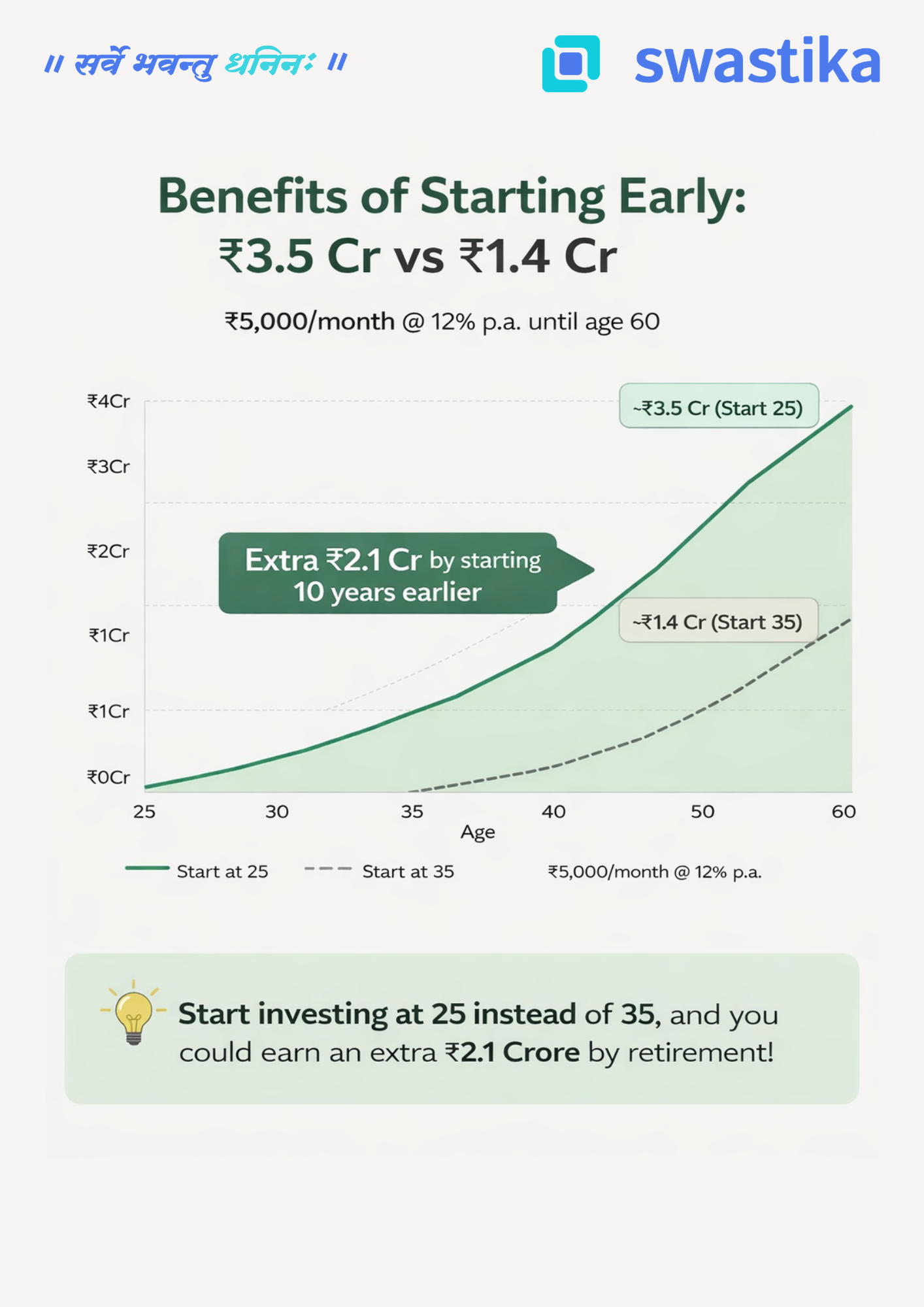
The more years you give your money to grow, the more dramatic — and life-changing — the results become. This is exactly why starting your investment journey early, even with a modest amount, can make a difference of crores by the time you retire.
A Tale of Two Investors: Arjun vs Priya
Let's bring this concept to life with a simple, real-world example.
Meet Arjun and Priya. Both are sensible, disciplined investors. Both invest ₹5,000 every month through a SIP (Systematic Investment Plan) in equity mutual funds, earning an average annual return of 12%. Both stop investing at age 60.
The only difference? Arjun starts at 25. Priya starts at 35.
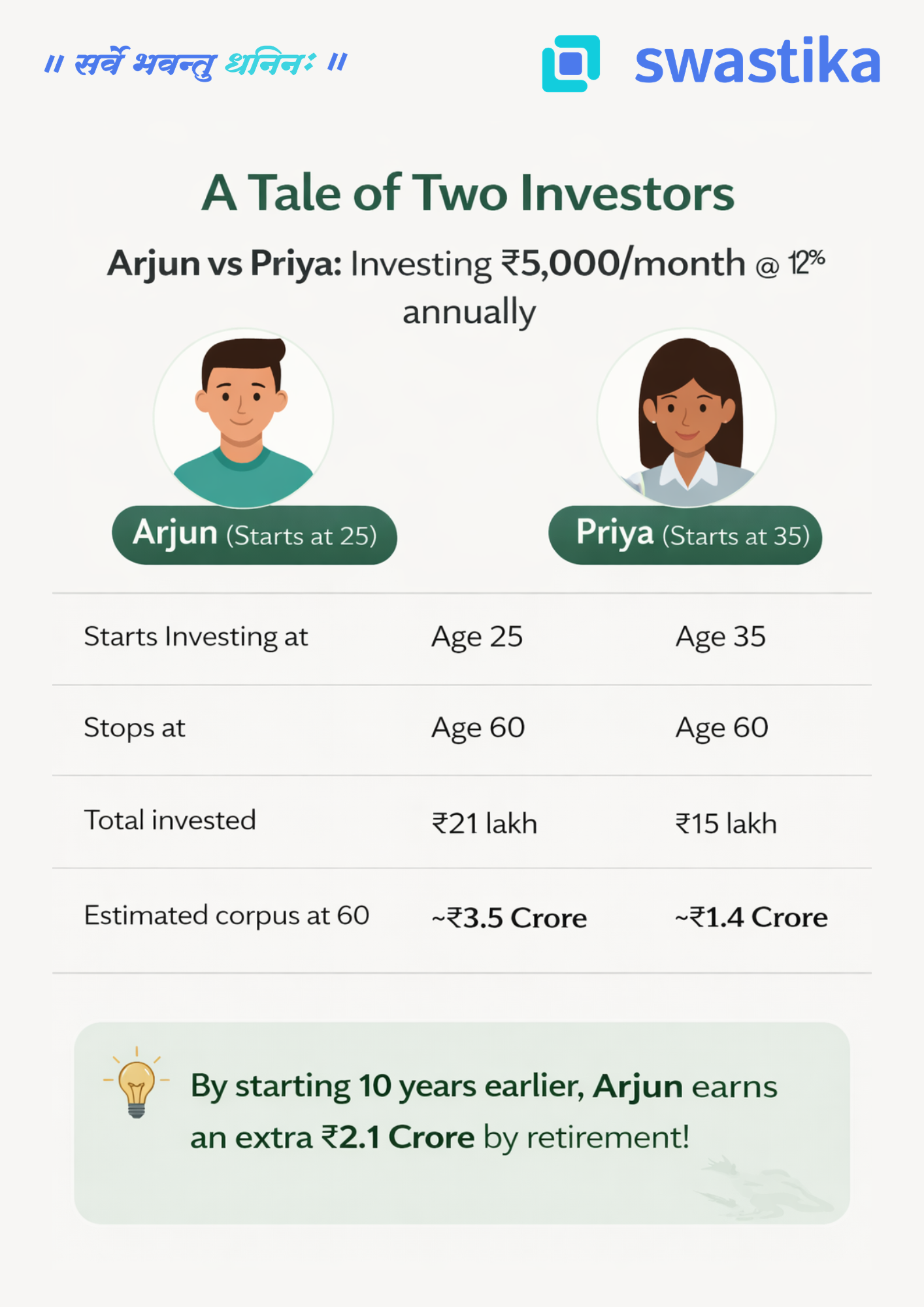
The numbers are striking. Arjun invests just ₹6 lakh more than Priya in absolute terms — yet walks away with ₹2.1 Crore more at retirement.
That extra ₹2.1 Crore didn't come from investing more aggressively or taking bigger risks. It came purely from starting 10 years earlier.
Why Does Time Make Such a Huge Difference?
This is where the magic of compounding reveals itself.
In the early years of investing, growth looks modest and almost unimpressive. But as the years pass, your corpus grows not just on your original investment, but on all the accumulated returns from previous years. The curve goes from almost flat to steeply exponential — and that steep climb happens in the later years.
When Arjun starts at 25, his money has 35 years to ride that exponential curve. Priya's money, starting at 35, only catches the last 25 years — and critically, it misses the steepest part of the climb in the final decade.
Think of it this way: the last 10 years of compounding are worth more than the first 20. That is the counterintuitive truth at the heart of long-term investing.
The Real Cost of Waiting
Many young earners tell themselves, "I'll start investing once I'm more settled — once the salary improves, once the EMI is paid off, once life is a bit easier."
But the numbers show that every year of delay is extraordinarily expensive — far more expensive than any EMI or lifestyle expense. Priya didn't invest carelessly. She invested faithfully for 25 years. Yet she ends up with less than half of what Arjun accumulated — not because she did anything wrong, but simply because she started a decade late.
The cost of waiting 10 years wasn't ₹6 lakh in additional contributions. The cost was ₹2.1 Crore in lost wealth.
Three Principles to Remember
1. Start now, not later.The best time to start investing was yesterday. The second best time is today. Even a SIP of ₹1,000–₹2,000 per month in your 20s is infinitely better than waiting for the "right time."
2. Consistency beats intensity.You don't need to invest large sums all at once. A small, steady, monthly commitment — maintained without interruption — is what unlocks the full power of compounding over decades.
3. Stay invested through market cycles.Compounding works only if you let it work. Exiting during market corrections or stopping your SIP in tough months breaks the chain. Time in the market, not timing the market, is what builds wealth.
The Bottom Line
If you are in your 20s or early 30s, you hold an asset that no amount of money can buy later: time. Use it. Start a SIP today — even a small one. Let compounding do its slow, steady, powerful work.
Because the difference between starting at 25 and starting at 35 is not just 10 years. As Arjun and Priya's story shows, that difference is ₹2.1 Crore.
Big Budget












.webp)
.webp)
.webp)
.webp)
.webp)















.webp)
.webp)
.webp)
.webp)
Latest Articles
.webp)
Top 5 Features to Look for in an Online Trading Platform


The world of online trading is an exciting one, offering the potential for growth and financial independence. But with a plethora of platforms available, choosing the right one can feel overwhelming. Fear not, aspiring investor! This guide dives into the top 5 features you should prioritize when selecting your online trading platform.
1. User-Friendly Interface: Simplicity is Key
Imagine navigating a maze blindfolded. That's what a complex trading platform can feel like, especially for beginners. Look for a platform with a clean, intuitive interface that's easy to navigate. Here are some key aspects to consider:
- Clear Layout: Menus and buttons should be well-organized and easy to find.
- Visually Appealing Design: A clutter-free interface reduces information overload and keeps you focused.
- Customization Options: The ability to personalize your workspace with preferred features and layouts can enhance your experience.
2. Robust Research and Education Tools: Empowering Your Decisions
Knowledge is power in the trading world. expand more. A good platform should equip you with the resources you need to make informed investment decisions. Look for features like:
- Real-Time Market Data: Monitor stock prices, charts, and news feeds to stay on top of market movements.
- Financial Analysis Tools: Utilize fundamental and technical analysis tools to research potential investments.
- Educational Resources: Access articles, tutorials, and webinars on various trading topics, catering to all experience levels.
3. Diverse Investment Options: Building a Well-Rounded Portfolio
Diversification is a cornerstone of successful investing. Choose a platform that offers a wide range of assets to invest in, including:
- Stocks: Invest in individual companies or a variety of stocks through ETFs (Exchange-Traded Funds).
- Options: For experienced traders, options contracts can provide advanced strategies for managing risk and potentially increasing returns.
- Mutual Funds: Invest in a professionally managed mutual funds online for a more hands-off approach.
- Bonds: Consider bonds for a more stable, income-generating portion of your portfolio.
4. Reliable Execution and Competitive Fees: Every Penny Counts
When it's time to execute a trade, speed and reliability are crucial. Look for features like:
- Fast Order Execution: Ensure your orders are filled promptly to minimize the impact of market fluctuations.
- Transparent Fee Structure: Understand all associated costs, including commissions, account fees, and inactivity fees.
- Multiple Order Types: Utilize various order types like market orders, limit orders, and stop-loss orders to manage your entries and exits strategically.
5. Advanced Features for the Aspiring Pro: Growing with Your Goals
As your trading experience evolves, your platform should too. Look for features that cater to advanced traders, such as:
- Advanced Charting Tools: Analyze technical indicators and utilize drawing tools to identify potential trading opportunities.
- Level 2 Order Book: Gain insights into order flow and potential market depth.
- Paper Trading: Test your strategies without risking real capital before deploying them in the live market.
Bonus Tip: Consider Mobile Compatibility
In today's fast-paced world, the ability to monitor your stock trading and investment on the go is invaluable. Look for a platform with a user-friendly mobile app that offers core functionalities like placing orders, viewing account balances, and accessing real-time market data.
Conclusion
Selecting the right online trading platform is a crucial first step in your investment journey. By prioritizing features that cater to your experience level, investment goals, and preferred trading style, you can empower yourself to navigate the exciting world of online trading with confidence. Remember, don't hesitate to take advantage of demo accounts or free trials offered by many online trading platforms to test-drive their features before committing. With the right tools and knowledge at your disposal, you're well on your way to achieving your financial objectives!
.webp)
10 Common Mistakes to Avoid in Currency Trading
In the fast-paced world of currency trading, success often hinges on the ability to navigate the markets with skill and precision. However, even the most seasoned traders can fall prey to common pitfalls that hinder their profitability and success. By understanding and avoiding these mistakes, you can significantly improve your chances of thriving in the currency trading arena. Let's delve into the 10 most common mistakes to steer clear of:
Overleveraging
One of the gravest errors a trader can make is overleveraging their positions. While leverage can amplify gains, it also magnifies losses. It's crucial to use leverage judiciously and never risk more than you can afford to lose.
Ignoring Risk Management
Failing to implement proper risk management techniques is a recipe for disaster in currency trading. Traders should establish stop-loss orders, set realistic profit targets, and diversify their portfolios to mitigate risk effectively.
Trading Without a Plan
Trading without a well-defined strategy is akin to sailing without a compass. Every successful trader has a meticulously crafted trading plan that outlines entry and exit points, risk tolerance, and position sizing.
Emotional Trading
Allowing emotions to dictate trading decisions is a surefire way to incur losses. Fear, greed, and impatience can cloud judgment and lead to impulsive actions. It's essential to maintain discipline and stick to the trading plan, regardless of market fluctuations.
Chasing Losses
Attempting to recoup losses by increasing trade sizes or taking undue risks often exacerbates the situation. It's crucial to accept losses as part of the trading process and refrain from chasing the market in a desperate bid for redemption.
Overtrading
Trading excessively can exhaust both financial resources and mental energy. Quality over quantity should be the mantra, with traders focusing on high-probability setups rather than constantly seeking action in the markets.
Neglecting Fundamental Analysis
While technical analysis is valuable, neglecting fundamental analysis can leave traders blindsided by significant market-moving events. It's essential to stay abreast of economic indicators, geopolitical developments, and central bank policies that impact currency prices.
Lack of Patience
Success in currency trading requires patience and perseverance. Rushing into trades or expecting instant results is unrealistic and often leads to poor decision-making. Traders must cultivate patience and wait for optimal trading opportunities to present themselves.
Failing to Adapt
Markets are dynamic and ever-changing, requiring traders to adapt their strategies accordingly. Stubbornly clinging to a single approach without flexibility can result in missed opportunities and losses. Being adaptable and open-minded is key to long-term success.
Ignoring the Importance of Education
Continuous learning is essential for staying ahead in the competitive world of currency trading. Traders who neglect to educate themselves on market dynamics, trading strategies, and risk management principles are at a significant disadvantage.
In conclusion, avoiding these common mistakes is crucial for achieving success in forex trading online. By prioritizing risk management, adhering to a well-defined trading plan, and cultivating discipline and patience, traders can tilt the odds of success in their favor. Remember, trading is a marathon, not a sprint, and consistent, prudent decision-making is the key to long-term profitability.
.webp)
Margin Funding in a Volatile Market: Strategies for Stability
In the ever-shifting landscape of financial markets, volatility can be both a boon and a bane for investors. While it presents opportunities for profit, it also brings heightened risks that can unsettle even the most seasoned traders. Amidst such turbulence, margin funding emerges as a tool that investors can wield to navigate these uncertain waters with greater stability.
Understanding Volatility and Its Implications
Volatility, in simple terms, refers to the degree of variation in the price of a financial asset over time. In a volatile market, prices can swing dramatically in either direction, driven by factors such as economic indicators, geopolitical events, or market sentiment.
For investors utilizing margin funding, volatility introduces added complexity. While leverage can amplify gains during upswings, it also magnifies losses during downturns. Therefore, it becomes imperative for investors to adopt strategies that mitigate risk and promote stability.
Diversification: Spreading Risk Across Assets
One of the most effective strategies for stability in a volatile market is diversification. By spreading investments across a variety of assets, sectors, and geographical regions, investors can reduce the impact of adverse movements in any single investment.
When employing margin funding, diversification becomes even more critical. By allocating borrowed funds across a diversified portfolio, investors can cushion themselves against significant losses in any individual position. This approach helps to smooth out returns and enhance the overall stability of the investment strategy.
Risk Management: Setting Clear Limits
In times of heightened volatility, risk management takes center stage. Establishing clear risk parameters, such as maximum leverage ratios and stop-loss orders, can help investors maintain control over their margin-funded positions.
Setting conservative leverage levels ensures that investors do not overextend themselves, reducing the risk of margin calls and forced liquidations during market downturns. Additionally, implementing stop-loss orders allows investors to limit potential losses by automatically exiting positions if they reach predetermined price thresholds.
Active Monitoring and Adaptation
Volatile markets require constant vigilance and adaptability. Investors utilizing margin funding must actively monitor their positions and market conditions to identify emerging risks and opportunities promptly.
Regularly reassessing the portfolio's composition and risk exposure enables investors to make timely adjustments to their margin funding strategy. Whether rebalancing allocations, reducing leverage, or hedging against downside risks, proactive measures can help maintain stability and preserve capital in volatile market environments.
In conclusion, volatility in financial markets presents both challenges and opportunities for investors. While margin funding can amplify returns, it also magnifies risks, particularly in turbulent times. However, by employing prudent strategies focused on diversification, risk management, and active monitoring, investors can navigate volatile markets with greater stability and resilience.
Ultimately, success in margin-funded investing during volatile periods hinges on discipline, foresight, and adaptability. By adhering to sound investment principles and remaining vigilant in the face of uncertainty, investors can harness the power of margin funding to pursue their financial goals while safeguarding against the inherent risks of volatile markets.

7 Benefits of Trading through an Online Trading Platform
In today's fast-paced digital world, online trading platforms have revolutionized the way individuals participate in financial markets. With just a few clicks, traders can access a plethora of investment opportunities and execute trades from the comfort of their homes or on the go. Here are seven compelling benefits of trading through an online platform:
Accessibility and Convenience:
Online trading platforms offer unparalleled accessibility and convenience. Traders can access their accounts 24/7 from anywhere with an internet connection, eliminating the need to rely on traditional stock brokerage firms with limited trading hours.
Lower Costs:
Online trading platforms typically have lower fees and commissions compared to traditional brokerages. With reduced overhead costs, these platforms can pass on the savings to their users, allowing traders to retain a higher portion of their profits.
Diverse Investment Options:
From stocks and bonds to forex and cryptocurrencies, online trading platforms provide access to a wide range of investment options. Traders can diversify their portfolios easily, spreading risk across different asset classes and maximizing potential returns.
Real-Time Market Data:
One of the key advantages of online trading platforms is access to real-time market data. Traders can monitor price movements, track trends, and execute trades instantly, empowering them to make informed decisions and capitalize on market opportunities as they arise.
Advanced Trading Tools:
Modern online trading platforms come equipped with a variety of advanced trading tools and features. From technical analysis indicators to customizable charting tools, these platforms provide traders with the resources they need to analyze markets effectively and execute successful trades.
Enhanced Control and Flexibility:
Online trading platforms offer traders greater control over their investments and trading strategies. With customizable settings and order types, traders can tailor their trading experience to suit their individual preferences and risk tolerance levels.
Educational Resources and Support:
Many online trading platforms offer educational resources and support to help traders enhance their skills and knowledge. From beginner tutorials to advanced trading courses, these platforms empower traders to learn and grow, ultimately improving their overall trading performance.
In conclusion, an online trading platform offers numerous benefits, including accessibility, lower costs, diverse investment options, real-time market data, advanced trading tools, enhanced control and flexibility, and access to educational resources and support. Whether you're a seasoned trader or just starting, leveraging the power of online trading platforms can help you achieve your financial goals more efficiently and effectively than ever before.

Mastering Forex Trading: Essential Tips for Success
Are you interested in Forex trading? It's the world's biggest financial market, where trillions of dollars are traded every day. Many people want to be successful traders because of the potential for big profits. But it's not just about luck. You need skill, discipline, and a good understanding of how the market works. In this article, we'll share some important tips to help you get started on your Forex trading journey.
Educate Yourself: Before diving into currency trading, invest time in learning the fundamentals. Understand how the Forex market operates, familiarize yourself with key terminologies, and grasp the principles of technical and fundamental analysis.
Choose the Right Broker: Selecting the right broker is crucial. Look for a reputable broker with a user-friendly trading platform, competitive spreads, reliable execution, and robust security measures. Ensure they are regulated by a reputable financial authority.
Develop a Trading Plan: Successful currency traders operate with a well-defined trading plan. Define your trading goals, risk tolerance, and preferred trading style. Establish clear entry and exit strategies and adhere to risk management principles to protect your capital.
Practice with a Demo Account: Before risking real money, practice trading with a demo account. Demo accounts simulate real market conditions, allowing you to hone your skills, test different strategies, and gain confidence without financial risk.
Start Small and Scale Up: When you're ready to trade with real money, start with a small investment. Resist the temptation to over leverage your account. Focus on preserving capital and gradually increase your position sizes as you gain experience and confidence.
Master Risk Management: Effective risk management is paramount in Currency trading. Never risk more than you can afford to lose on any single trade. Utilize stop-loss orders to limit potential losses and employ proper position sizing techniques to manage risk effectively.
Stay Informed: Stay updated on market developments, economic indicators, and geopolitical events that can impact currency prices. Subscribe to reliable financial news sources, follow market analysis, and remain adaptable to changing market conditions.
Emotional Discipline: Emotions have no place in Forex trading online. Avoid making impulsive decisions driven by fear or greed. Stick to your trading plan, remain disciplined, and avoid overtrading. Accept that losses are part of the trading process and focus on long-term profitability.
Continuous Learning: The Forex market is dynamic and constantly evolving. Commit to continuous learning and improvement. Explore advanced trading strategies, analyze your trading performance, and learn from both successes and failures.
Patience and Persistence: Success in Forex trading doesn't happen overnight. It requires patience, persistence, and dedication. Stay committed to your goals, stay disciplined in your approach, and never stop learning and adapting.
In conclusion, becoming a successful Forex trader is achievable with the right mindset, education, and approach. By following these essential tips, you can navigate the complexities of the Forex market with confidence and increase your chances of long-term success. Remember, consistency and discipline are the keys to unlocking your potential in the world of Forex trading.

How Sentiment Analysis is Used in Algo Trading
Sentiment analysis is a powerful tool in finance. It helps understand how people feel about the market, affecting their decisions and the market's direction. This has led to the rise of Algorithmic Trading based on Sentiment Analysis.
Understanding Sentiment Analysis:
Sentiment analysis uses technology to figure out public feelings, emotions, and opinions from written information. It looks at things like social media, financial reports, and online news to understand what people think.
Scores are given to different types of writing to see if they're positive, neutral, or negative. This helps figure out the overall mood in the market, which is crucial for predicting market trends.
Using Sentiment Analysis in Algo Trading
Traditional trading methods mainly focus on numbers like volume, price patterns, and past data. But they often overlook human psychology.
Financial markets don't just move because of numbers. Breaking news, public opinions, and human behavior also play big roles.
Sentiment analysis lets traders add qualitative data to their quantitative models. This gives them a deeper understanding of the market's mood and helps predict price changes.
By using sentiment analysis, traders can see if the market is too optimistic, leading to lots of buying. It can also predict market drops by tracking negative sentiment.
Including sentiment analysis in trading models helps traders take advantage of psychology-driven behaviors. This can lead to smarter decisions and better profits.
Methods of Sentiment Analysis:
There are different ways to do sentiment analysis in algo trading:
Lexicon-Based Sentiment Analysis
This method looks at how often certain words appear in text to figure out sentiment.
Machine Learning-Based Sentiment Analysis
Advanced computer models use huge amounts of data to understand sentiment. They learn from past data to predict future sentiment.
Combined Approaches
Traders often use a mix of both methods to make their models stronger.
Benefits and Challenges:
Sentiment analysis is great for trading because it helps predict market moves and manage risks. But it might miss things like sarcasm or context. It's also affected by changes in the market. So, having good, accurate data is crucial for consistent results.
Final Thoughts:
Sentiment analysis is a useful tool in algo trading platforms. By understanding people's emotions, traders can make better decisions. But it's not perfect and needs to be balanced with other methods. It gives a more detailed look at the market but should be part of a bigger strategy.


.webp)
.webp)

.webp)






START YOUR INVESTMENT JOURNEY
Get personalized advice from our experts
- Dedicated RM Support
- Smooth and Fast Trading App
