Google Share Price: A Retail Investor's Comprehensive Guide To Alphabet




Key Takeaways
- Google Share Price is dynamic and influenced by earnings, buybacks, and macro signals.
- Alphabet's Market Capitalization evolves with price and outstanding shares.
- Alphabet's Earnings and Quarterly Results drive long-term value more than single-day moves.
- Alphabet has not paid a cash dividend; Buybacks are used to return capital.
What if one price could unlock the best decision of your week? The Google Share Price isn't just a price–it's a pulse of Alphabet's ambitions and a tool for smart retail investors to size up risk and opportunity. Alphabet's stock trades under two ticker symbols: GOOGL for Class A shares with voting rights and GOOG for Class C shares without voting rights. The Google Share Price you see on your screen is a live reflection of investor expectations about Alphabet's earnings, capital allocation, and long-term growth prospects.
To interpret that pulse, you start with the basics: what the company earns, what it spends to grow, and how many shares are available for trading. The price you see is the capstone of those numbers–one data point in a broader story about how investors value Alphabet's business today and what they expect in the next 12 to 36 months. This article unpacks the key drivers of the Google share price, explains what to watch in earnings and quarterly results, and shows you practical steps to participate as a retail investor in India. We'll also touch on how to think about the Google Market Cap, Google's dividend policy, Google buyback activity, and Alphabet google earnings to interpret price moves more accurately.
Google Share Price: What The Market Is Saying About Alphabet
The Google share price movement isn't random; it reflects the market's view of Alphabet's growth across its major businesses and the expectations around them. Advertising remains the largest revenue driver; growth in Google Cloud and YouTube can shift multiples, and AI initiatives can accelerate long-term growth. The stock's price also reacts to regulatory developments and macroeconomic signals that affect the tech sector as a whole. In practice, you observe price action as a barometer of expectations about near-term profitability versus long-term potential.
- GOOGL and GOOG: Class A and Class C shares, with different voting rights and liquidity; the Google Share Price for both tracks the underlying business but can diverge slightly due to liquidity and corporate actions.
- Key price drivers include earnings surprises, margin expansion, cloud growth, ad demand, AI developments, and capital allocation signals such as buybacks.
- Market mood and macro signals can swing the price even when fundamentals are steady, so context matters.
For a deeper, data-driven view, consider Swastika's Sarthi AI stock assistant: Swastika's Sarthi AI stock assistant.


How Alphabet’s Market Capitalization Shapes Investment Decisions
Market capitalization is the product of share price and shares outstanding. It helps you gauge scale, liquidity, and the space Alphabet occupies in the market.
Market Cap = Share Price Outstanding Shares (adjusted for splits and float). Buybacks reduce the float, potentially supporting the price even if earnings are unchanged. For retail investors, a larger market cap often means better liquidity for entering or exiting a position without significantly moving the price.
By itself, market cap doesn't tell you everything; you must pair it with growth trajectories, earnings power, and margin dynamics. Alphabet's massive size gives it resilience but also imposes challenges in sustaining hyper-growth in every segment. The Google Market Cap is a moving target, shifting as the stock price moves and as Alphabet issues more or fewer shares through buybacks or equity-based compensation. When you compare Alphabet to peers, the market cap helps you gauge relative scale and the potential for long-term compounding.
- Market Cap = Price x Shares Outstanding (float adjusted).
- Buybacks reduce the float, which can support the share price in rising markets.
- Liquidity considerations improve with higher market cap, aiding institutional participation.
Decoding Alphabet Earnings And Quarterly Results
Alphabet's earnings are the backbone of the picture; quarterly results give you the snapshot of how the business is performing across segments: Advertising, Google Cloud, YouTube, and Other Bets. The Google earnings measurement includes operating income, net income, revenue by segment, and free cash flow, and guidance for the future. The quarterly results reveal whether ad demand and cloud adoption are accelerating or decelerating, and how capital allocation decisions influence margins.
- Earnings drivers: ad revenue growth, cloud profitability, and efficiency improvements across operations.
- Quarterly results matter because they set market expectations for the next year.
- When earnings miss consensus, the price often moves to reprice valuations; when beat, price can rally.
Understanding the narrative requires looking beyond the headline numbers to subtleties such as earnings per share (EPS) growth, operating margins, capex, and free cash flow generation. If you prefer to focus on the near-term, watch the commentary on AI initiatives and regulatory risk, which can materially affect investor appetite and the multiple assigned to Alphabet's stock.
Dividends, Buybacks, And The Stock Trajectory
Alphabet has not paid a cash dividend historically. Instead, it uses capital allocation to fund growth and to repurchase its own shares. The presence of a buyback program can: reduce the float; signal management's confidence in the business; and provide a floor for the stock price during periods of volatility. While dividends are a common expectation for many blue-chip tech giants, Alphabet has prioritized reinvestment, which a particular investor might interpret as a bet on higher long-term returns tied to the company's expansion into AI, cloud, and other "Other Bets" ventures.
- Google Buyback: A buyback program reduces the float; the effect on price is not automatic but can be supportive in the presence of strong demand.
- Google Dividend: Alphabet does not pay dividends; you should plan for capital gains via price appreciation and buybacks rather than cash yield.
- Stock trajectory: The price path depends on growth momentum, product mix, and capital allocation choices.
For retail investors, aligning expectations with the company's capital allocation policy helps manage risk and avoid misinterpretation of short-term price swings.
Real-Time Tracking Of Alphabet Shares
For Indian retail investors, tracking Alphabet's shares means watching both GOOGL (Class A) and GOOG (Class C). The Google share price will move in response to earnings, AI announcements, regulatory news, and macro factors. Real-time quotes are widely available on broker platforms and major financial portals. Use price movements across time windows–intraday, daily, weekly–to separate noise from trend.
Look at valuation multiples like price-to-earnings and price-to-sales; The price is a piece of the puzzle; You should also monitor earnings growth and free cash flow yields to determine if the price reflects a reasonable risk-reward for your time horizon.
To go deeper into stock ideas and to analyze Alphabet's risk and opportunities in the context of your portfolio, try Swastika's Sarthi AI stock assistant.
Related Reads
- Google Share Price: A Retail Investor's Guide To Alphabet's Stock Moves
- Google Share Price Insights: A Retail Investor's Guide To Alphabet Stock
- Google Share Price: A Retail Investor's Practical Guide To Tracking Alphabet On Global Markets
Frequently Asked Questions
What Is Alphabet's Current Share Price?
The price you see is a live quote that changes by the second. For the exact figure, check a real-time feed via your broker's dashboard or major finance portals.
What Is Alphabet's Market Cap?
Alphabet's market capitalization changes with its share price and the number of shares outstanding. It is calculated as Price × Shares Outstanding and is shown on most broker research pages.
Does Google Pay Dividends?
Alphabet has not historically paid a cash dividend. Instead, it uses capital allocation to fund growth and to repurchase its own shares.
What Are Alphabet Earnings And Quarterly Results?
Alphabet reports quarterly results detailing revenue by segments (advertising, Google Cloud, YouTube, and Other Bets). Earnings releases and investor calls discuss growth, margins, and future guidance.
How Can I Track The Alphabet Share Price?
Use real-time quotes from your broker or major finance portals, and compare Class A (GOOGL) and Class C (GOOG) prices to understand liquidity and valuation.
Conclusion
For the Indian retail investor, the Google Share Price is not just a momentary quote; it's a window into Alphabet's ability to monetize digital platforms and allocate capital for long-term growth. The essential approach is to combine price tracking with fundamental context: track earnings across segments, monitor buyback activity, and consider how changes in the macro environment affect risk and opportunities. Build a watchlist and set rules for entry and exit that align with your risk tolerance and horizon.
Next steps: open a watchlist for Alphabet (GOOGL/GOOG). Use the Sarthi to analyze stock ideas, compare valuations, and test scenarios. The price will keep moving; the time to act is when your framework says the risk-reward is favorable, not because a headline changed in the moment.
Open your trading and demat account here
Reference :
1 : Google
Latest Articles

Bharti Airtel Share Price: Market Rally Fueled By Global Cues


Key Takeaways
- Sensex jumped over 400 points to trade above 78,800 as Nifty 50 crossed 24,600 and VIX cooled to 11.85.
- Oil prices fell below 80 dollars per barrel amid peace-deal optimism and easing geopolitical risk.
- Rupee strengthened to 94.89 per dollar on steady FII inflows and lower oil, while yields cooled.
- Heavyweights including Bharti Airtel, IndiGo, L&T, M&M and UltraTech Cement led gains; Titan stock lagged.
Can a broad market rally withstand the crosswinds of geopolitics and policy shifts? Sensex jumped over 400 points to trade above 78,800, while Nifty 50 rose above 24,600 as the India VIX slumped 3% to 11.85. Heavyweight movers including Bharti Airtel Share Price, IndiGo, L&T, M&M and UltraTech Cement propelled the top indices, while Titan stock slipped nearly 1% to lead losses. The broader market found buyers too, with Nifty Midcap 100 and Nifty Smallcap 100 rising up to 0.5%. The session underscored a market brimming with optimism, underpinned by a mix of macro cues and stock-specific moves thatRetail investors should monitor closely.
Market Snapshot
| Metric | Value |
|---|---|
| Sensex | Above 78,800 |
| Nifty 50 | Above 24,600 |
| India VIX | 11.85 |
| Brent Crude | USD 78 per barrel |
| WTI Crude | Below USD 75 per barrel |
| Rupee / USD | 94.89 |
| FII Net Buy | Rs 2,446 crore |
| US 10-Year Yield | 4.601% |
| US 2-Year Yield | 4.187% |
| US 30-Year Yield | 5.154% |
| Advances / Declines | 1,935 / 488 |
| Unchanged | 101 |
| Nifty Midcap 100 / Nifty Smallcap 100 | Up to 0.5% |
As a quick snapshot of the day, Bharti Airtel shares joined the chorus of gainers, signaling telco leadership in the current risk-on setup. The breadth of the advance–nearly two thousand stocks higher against a handful of decliners–points to a broad-based bid rather than a narrow rally. The combination of a stronger rupee, softer oil, and persistent FII buying has kept risk appetite intact, at least for now.
Eight key factors helped lift sentiment on Dalal Street today. Reading through them gives retail investors a sense of where the rally could sustain or fade. First, Iran-US peace deal hopes created a backdrop of geopolitical easing, with expectations that the Strait of Hormuz could reopen soon. Second, Brent crude fell to around USD 78 and WTI hovered below USD 75, supporting a lower energy bill and potentially boosting global liquidity. Third, the rupee rose to 94.89 per dollar as foreign funds steadied, contributing to a calmer domestic macro setup. Fourth, foreign institutional investors remained net buyers for a fifth straight session, adding Rs 2,446 crore to the market. Fifth, strong global cues–Nasdaq and S&P 500 rallied in the US and major Asian indices advanced–lifted risk appetite. Sixth, US yields moved lower, enhancing equity valuations. Seventh, the Q1 earnings season started strong for many index constituents, reinforcing expectations of resilient FY27 earnings growth. Eighth, investors kept a close eye on the RBI MPC meet outcome for any policy signal that could extend or curb the rally.
To dive deeper into stock-level insights, you may want to explore Swastika's Sarthi AI stock assistant for institutional-grade research tailored to retail investors. Swastika's Sarthi AI stock assistant can help you sift signals from noise and align trades with your risk framework.
Bharti Airtel Share Price: Reading The Market's Telco Tilt
Today, Bharti Airtel shares gained 1-2%, reinforcing the telco sector’s leadership in the current market rhythm. Bharti Airtel Share Price movements are being watched as a bellwether for how telecoms respond to macro-driven flows and earnings momentum. In a market environment where large-cap movers drive the headline indices, telco strength can offer a cushion against any hiccup in the broader risk-on narrative. Retail investors should interpret telco strength as a signal of sectoral rotation–where high-quality telecom names can help balance portfolio beta during global uncertainty.
Other heavyweight contributors such as IndiGo, L&T, M&M and UltraTech Cement supported the gains, while Titan stock declined nearly 1% to lead losses. The broader market breadth turning positive–1,935 advances to 488 declines and 101 unchanged–indicates a broad-based uplift rather than a narrow rally driven by a handful of stocks.
L&AmpT Share Price: The Weight Of A Heavyweight In The Index
Larsen & Toubro has moved in a manner that suggests investors are pricing a steadier growth trajectory in infrastructure and industrial capex. L&T Share Price strength can be read as a proxy for the domestic investment cycle and the sector’s ability to translate macro optimism into earnings momentum. As capex sentiment improves, industrials and engineering names may continue to lead, reinforcing the case for selective sector rotation within the broader rally.
Market participants will be watching how L&T interacts with the RBI policy stance and global growth signals. A sustained up-move in L&T would bolster the broader narrative of domestic investment revival and could provide a tailwind to other industrials and capital goods names.
Titan Stock: Reading Titan's Price Action In A Bullish Setup
Titan stock declined nearly 1% today, becoming a reminder that even in a broad market rally, stock-specific moves can carve divergent paths. Titan Stock action underscores the importance of distinguishing between macro-driven gains and stock-specific dynamics. Traders should consider Titan alongside other consumer discretionary and lifestyle brands to gauge whether observed strength is location-specific or part of a wider consumer themes rally.
While Titan’s performance may temper some investor enthusiasm, the overall market momentum remains supported by earnings resilience and favorable global cues. The stock’s reaction offers a case study in how momentum can shift on sector rotations even in a rising tide environment.
InterGlobe Aviation Stock: Tracking The Airline Rally
InterGlobe Aviation Stock sits in focus as travel demand resumes and airline profitability improves. In a global environment where travel and leisure are re-establishing their earnings narratives, InterGlobe Aviation Stock can act as a proxy for the health of the travel sector. Investors may look at how the stock responds to broader macro and domestic policy signals to infer the pace of travel-led earnings upgrades in the near term.
The sector’s synergy with the broader market rally suggests that airline names could benefit if global demand conditions stay supportive and crude prices remain favorable. InterGlobe Aviation Stock’s price movement, therefore, warrants closer monitoring as part of a diversified liquidity-friendly strategy.
UltraTech Cement Stock: Cement Sector Momentum In The Nifty
UltraTech Cement Stock led gains among cement peers, with the stock rising roughly 1-2% as the sector’s momentum appeared supportive of the real estate and infrastructure cycle. Cement stocks often reflect the trend in construction activity and policy support for capex, so UltraTech Cement Stock movement can offer a read on both demand trends and inflation expectations that impact builders and developers alike.
In practical terms, a continuing cement upmove would bolster sentiment around the broader realty and infrastructure theme. Investors eyeing sector-specific plays should weigh price action in UltraTech against other cement names and monitor the policy stance and macro data for hints on capex momentum.
M&AmpM Stock: Banking And Industrial Momentum On A Rise
M&M Stock contributed to the broader risk-on mood, supported by improvements in earnings momentum and rotation into high-quality industrial and financials. The M&M Stock price movement is indicative of how investors are pricing resilience in the consumer and financial ecosystem amid macro uncertainty. A steady stream of positive earnings signals could lift M&M stock higher as risk appetite remains intact.
The market’s earnings narrative–especially with Q1 results coming in stronger than expected–could lift the bank/finance subset as FIIs remain buyers. As always, investors should pair stock-specific insights with macro clues such as RBI policy guidance and global financial conditions to manage risk and identify potential entry points.
Bharti Airtel Stock: Telecom Leadership In The Market
Bharti Airtel Stock remains a focal point for retail investors tracking telecom sector leadership within the broader market rally. The stock’s price action can reflect both the sector’s fundamentals and the market’s appetite for defensive growth in a period of macro uncertainty. Telecom leadership often correlates with stable cash flows and price discipline in a volatile environment, making Bharti Airtel Stock a meaningful barometer for investors watching telcos alongside heavyweight industrials and financials.
Technical View On Nifty: Levels To Watch After The Rally
Technical commentary suggests Nifty could test higher toward 24,775 if the current rhythm sustains, with a near-term support around 24,530. The gap between intraday close points and the closing price that marked today’s action has raised some questions about closing-price mechanics, but the broader trend appears to favor a continuation of the upside unless macro cues deteriorate. Traders should monitor the RBI policy commentary and the pace of earnings upgrades for confirmation of the next leg higher.
From a practical trading standpoint, a disciplined approach–watching price action around key resistance and support levels, confirming breakouts with volume, and staying mindful of macro shifts–remains essential. The convergence of favorable global cues, falling oil prices, and steady FIIs could sustain the uptrend, but a policy surprise could prompt swift risk-off moves.
Related Reads
- Bharti Airtel Share Price And Free OTT Platforms In India: A Retail Investor's Guide
- Bharti Airtel Share Price Today: Q1FY27 Results, Revenue Growth, And Near-Term Outlook
- Bharti Airtel Share Price Insights: Q1 Earnings, ARPU Growth, And Quarterly Results
Frequently Asked Questions
What are the eight factors boosting sentiment on Dalal Street today?
Iran-US peace deal hopes; Oil prices fall below 80 per barrel; Rupee gains to 94.89; FII buying continued; Strong global cues; Bond yields fall; Strong Q1 earnings season; All eyes on RBI MPC meet outcome.
What are the current index levels mentioned in the article?
Sensex is above 78,800 and Nifty 50 is above 24,600.
Which stocks led gains and losses in today’s session?
Bharti Airtel, IndiGo, L&T, M&M and UltraTech Cement led gains; Titan stock declined nearly 1% to lead losses.
What was the foreign institutional investor (FII) activity today?
FIIs were net buyers, with Rs 2,446 crore of purchases, extending a five-day buying streak.
What is the RBI policy outlook mentioned in the article?
Investors are awaiting the RBI MPC meet outcome, with expectations that policy rates will likely be unchanged and the commentary watched closely for guidance on liquidity and guidance.
Conclusion
For the retail investor, today’s session reinforces a simple reality: macro catalysts and earnings resilience can create a sustainable rally, but the RBI’s policy stance will be the deciding factor for how far this rally extends. The practical takeaway is to blend macro awareness with stock-specific signals–watch Bharti Airtel Share Price as a telco bellwether, observe heavyweight movers like L&T and UltraTech Cement for sector leadership, and keep a close eye on the RBI commentary for policy clarity. A disciplined approach will help you avoid chasing momentum and instead align allocations with price-driven opportunities.
Open your trading and demat account here
Reference :
1 : Economictimes

PNB Housing Finance Stock Price Momentum After Q1 FY27 Results
Key Takeaways
- PNB Housing Finance stock price hit a fresh 52-week high of Rs 1,138.
- In morning trades, it was around Rs 1,123.20, up 6.97%.
- Q1 FY27 net profit rose 4.5% YoY to Rs 557 crore, with total income of Rs 2,265 crore.
- Retail loan book grew 16% YoY to Rs 89,178 crore, aided by 27% growth in Affordable and Emerging Markets.
The PNB Housing Finance stock price climbed to a fresh 52-week high of Rs 1,138, rising as much as 8.38% intraday. At 9:27 am, the stock was trading about 6.97% higher at Rs 1,123.20, while the Sensex rose 0.47% to 78,795.59. The morning price action reflects a positive reception to the Q1 FY27 earnings and the company’s growth trajectory despite a challenging operating environment.
In Q1 FY27, the housing finance company reported a steady set of earnings against a challenging environment. Net profit rose 4.5% year-on-year to Rs 557 crore, while total income advanced 9% to Rs 2,265 crore. The assets under management (AUM) rose 13% year-on-year to Rs 93,021 crore as of June 30, 2026. The retail loan book rose 16% year-on-year to Rs 89,178 crore, accounting for 99.5% of the total loan portfolio.
Significant traction came from the Affordable and Emerging Markets segments, which posted 27% growth and contributed 41% to the retail loan book. Overall disbursements rose 18% from a year earlier, even after accounting for a one-time change in the recognition of disbursement from cheque handover to cheque realisation. The asset quality remained healthy, with gross non-performing assets (GNPA) at 0.95%, and healthy recoveries from the written-off pool supported profitability, resulting in a negative credit cost of 12 basis points.
According to Ajai Shukla of PNB Housing Finance Ltd, “We have started FY27 on a steady note, with AUM growing 13% year-on-year to INR 93,021 crore and our Retail loan book growing 16% year-on-year. The Affordable and Emerging Markets segments continued to be key growth driver, registering 27% growth and contributing 41% to the Retail loan book. Asset quality continued to be strong, with GNPA at 0.95%, while healthy recoveries from the written-off pool supported our profitability.”
Reference :
1 : Ndtvprofit
We remain focused on strengthening our distribution network and digital capabilities. Our ongoing digital transformation initiatives across sourcing, underwriting, servicing and collections are helping enhance customer experience, improve operational efficiency and support scalable growth. Backed by a strong capital position and prudent risk management practices, we remain well positioned to drive sustainable growth and create long-term value for our stakeholders.
For deeper stock research, try Swastika's Sarthi AI stock assistant.
Swastika's Sarthi AI stock assistant
PNB Housing Finance Stock Price Momentum After Q1 FY27 Results
The intraday price action shows accelerated momentum around the Q1 FY27 release, with the stock hitting a fresh 52-week high. Investors should assess whether the sustainability of net profit, AUM expansion, and disbursement growth can sustain the rally beyond the immediate post-earnings window.
PNB Housing Finance Results Q1 FY27 Highlights
The company posted a net profit of Rs 557 crore in Q1 FY27, up 4.5% YoY, while total income stood at Rs 2,265 crore. AUM increased 13% YoY to Rs 93,021 crore as of June 30, 2026. Retail loan book grew 16% YoY to Rs 89,178 crore, comprising 99.5% of total loans. The 52-week high price and the morning trading strength align with these earnings highlights.
PNB Housing Finance Earnings And Profitability
The earnings performance underpins a steady profitability trajectory, supported by strong recoveries from the written-off pool and prudent risk management. The quarterly figures demonstrate resilience in a challenging operating environment, with disciplined cost management and digital-led efficiency gains helping sustain margins.
PNB Housing Finance AUM Growth And Retail Loan Book Momentum
AUM rose 13% YoY to Rs 93,021 crore. The retail loan book expanded 16% YoY to Rs 89,178 crore, and the Affordable and Emerging Markets segment grew 27% YoY, contributing 41% to the retail loan book. Disbursements rose 18% YoY, aided by digital enhancements spanning sourcing, underwriting, servicing and collections.
PNB Housing Finance Dividend And Payout Details
The company announced a final dividend of Rs 8 per equity share, reflecting capital return to shareholders alongside sustaining growth investments.
PNB Housing Finance Loan Book Breakdown
The retail loan book remains the primary growth engine, with Rs 89,178 crore as of June 30, 2026. The Affordable and Emerging Markets segment posted 27% YoY growth and contributed 41% to the retail loan book, underscoring the segmental strength in driving overall retail growth.
Asset Quality And Management Outlook
Asset quality stayed healthy, with GNPA at 0.95%. Healthy recoveries from the written-off pool supported profitability, and the company reported a negative credit cost of 12 bps for the quarter, highlighting the benefit of recoveries and prudent risk controls.
Management Outlook For FY27 And Growth Drivers
Ajai Shukla, Managing Director and CEO, stated that the company has started FY27 on a steady note, with AUM growing 13% YoY to Rs 93,021 crore and the Retail loan book growing 16% YoY. The Affordable and Emerging Markets segments continued to be key growth drivers, registering 27% growth and contributing 41% to the Retail loan book. Asset quality remains strong with GNPA at 0.95% and healthy recoveries from the written-off pool supporting profitability.
Price Action Context And Market Backdrop
The stock price move occurred amid a constructive market backdrop, with the Sensex up 0.47% to 78,795.59, indicating supportive conditions for financials and mid-cap banks during the earnings period.
Frequently Asked Questions
What were PNB Housing Finance's Q1 FY27 results?
The company reported a net profit of Rs 557 crore in Q1 FY27, up 4.5% YoY, with total income of Rs 2,265 crore. AUM stood at Rs 93,021 crore, up 13% YoY. The retail loan book reached Rs 89,178 crore, up 16% YoY (99.5% of total loans). GNPA was 0.95% and disbursements grew 18% YoY.
How did the PNB Housing Finance stock price move after the Q1 FY27 results?
The stock price rose as much as 8.38% to a fresh 52-week high of Rs 1,138, and was around Rs 1,123.20 at 9:27 am, up about 6.97%.
What contributed to growth in the retail loan book?
The retail loan book grew 16% year-on-year to Rs 89,178 crore, with the Affordable and Emerging Markets segment up 27% and accounting for 41% of the retail loan book.
What is the GNPA ratio and credit cost status?
GNPA stood at 0.95%, and credit cost was negative 12 basis points due to recoveries from the written-off pool.
What dividend did PNB Housing Finance declare?
The company declared a final dividend of Rs 8 per equity share.
What did management say about FY27 outlook?
Ajai Shukla, Managing Director and CEO, said FY27 started on a steady note with AUM growth of 13% YoY to Rs 93,021 crore and a 16% YoY rise in the retail loan book; the Affordable and Emerging Markets segment grew 27% and contributed 41% to the Retail loan book, with GNPA at 0.95%.
Conclusion
The Q1 FY27 performance reinforces that the company has begun FY27 on a resilient footing with scalable growth in the retail loan space. For a retail investor, the next step is to monitor quarterly disbursement trends and GNPA trajectories while watching how digital enhancements translate into underwriting efficiency and customer acquisition. The stock price momentum suggests positive sentiment, but the key will be maintaining asset quality and disciplined capital allocation in the quarters ahead.

Infosys Share Price: Trends, Dividend Insights, And Strategic Moves For Indian Retail Investors
Key Takeaways
- Infosys Share Price fluctuates with IT demand and quarterly results.
- Infosys Stock NSE data helps compare intraday moves across exchanges and regions.
- Infosys Price Today reflects macro trends and company fundamentals.
- Use Swastika's Sarthi AI stock assistant for deeper, institutional-grade insights.
What if the next move in Infosys Share Price reveals more about the IT industry than any earnings report alone? For retail investors in India, decoding the price action of Infosys stock is a practical way to translate macro signals into a decision to buy, hold, or wait. This isn't just about the number on the screen; it's a lens into the health of one of India's biggest IT service exporters and the global demand that powers it.
What Is Infosys Share Price And What Drives It
Infosys Share Price is the price at which Infosys Ltd. shares trade on Indian stock exchanges, notably the NSE and BSE. It moves in real time as buyers and sellers interact, and it is influenced by a blend of company performance, sector dynamics, currency movements, and broader market sentiment. A single price snapshot can be informative, but the longer-term signal comes from earnings growth, cash generation, and the company’s ability to translate those fundamentals into dividends, buybacks, or strategic investments. The stock’s momentum often follows the narrative around quarterly results and management commentary, but a rapid shift in valuation can occur if market participants re-price growth expectations or if macro conditions change. For retail investors, the key is to track both the price action and the underlying fundamentals–revenue growth, margin discipline, and cash flow quality–that determine sustainable value.
Infosys Stock NSE: How The Indian Exchange Affects Price Data
Infosys Stock NSE is the live feed that reflects all trades on India’s National Stock Exchange. The price you see on NSE is produced by intraday orders, liquidity, and the speed of information flow; prices on other exchanges (like BSE and global feeds) may diverge briefly due to timing, settlement, and liquidity differences. For a retail investor, monitoring the Infosys Stock NSE alongside other feeds can help you understand intraday volatility and liquidity, while also identifying gaps that may present short-term opportunities. The two exchanges together create a robust picture of demand for Infosys shares and can influence the timing of entry or exit decisions.
Infosys Price Today: Reading Real-Time Moves For Retail Investors
Infosys Price Today captures the intraday movement as traders react to news, results, and macro signals. When you look at today’s price, compare it with the previous close, the day’s high and low, and the 52-week range to gauge momentum and potential reversals. Remember that real-time price is just a moment in a broader narrative–longer-term investors should anchor decisions in fundamentals like revenue growth, profit margins, and free cash flow rather than chasing rapid intraday swings. Always cross-check price quotes with official exchange feeds and the company’s investor relations communications for accuracy and context. For investors who rely on technical analysis, price today can be supplemented with simple indicators such as moving averages, momentum oscillators, and volume spikes to spot potential trend changes.
Infosys Dividend: Yield, Stability, And Payout Strategy
Infosys Dividend represents the cash payouts the company makes to shareholders as a return on profits. The payout policy is set by the board and is influenced by cash flow, capital allocation priorities, and the overall financial health of the business. A stable or rising dividend can be a signal of confidence in the company’s ability to generate cash, while dividend cuts or delays may signal a need to preserve capital for growth or debt management. If you’re evaluating Infosys as a dividend investment, consider the consistency of payout history, the dividend yield, ex-dividend dates, and the policy trajectory for future distributions. Always verify the most recent dividend news from the company’s investor relations page. Investors often compare dividend yield against risk, growth opportunities, and the stock’s price to determine the overall total return potential.
Infosys Quarterly Results And Financials: What To Watch
Infosys Quarterly Results are a focal point for investors looking to validate growth expectations. Key metrics to monitor include revenue growth, operating margins, net profit, and cash flow. Management commentary on client wins, vertical mix, and investments in automation and efficiency can influence price behavior even before formal guidance is updated. While the numbers matter, the story of execution–how the company is delivering on its strategy–can be equally important for understanding how the stock might perform in the coming quarters. A disciplined investor will also track free cash flow generation, capital allocation decisions, and any commentary on currency exposures, as these can materially affect profitability in IT services firms like Infosys.
Putting It All Together: When To Buy Or Sell Infosys Stock
Decision making around Infosys stock should align with your investment horizon, risk tolerance, and a disciplined framework. A simple approach is to evaluate price relative to moving averages (for example, the 50-day and 200-day lines), watch for price action around established support and resistance levels, and weigh the impact of quarterly guidance and dividend expectations on valuations. If the stock breaks above a defined resistance with strong volume, some traders view that as a bullish signal; conversely, a break below support with high selling pressure can raise risk of further downside. Scenario thinking helps–what if results beat or miss expectations? What if currency moves shift profitability? Always maintain a clear risk management plan and avoid chasing momentum. To deepen your understanding, consider Swastika's Sarthi AI stock assistant for nuanced, data-driven insights into Infosys and its peers.
Related Reads
- Infosys Share Price Today: A Practical Guide For Retail Investors
- Infosys Share Price And Market Pulse: A Retail Investor's Guide
- Ashiss Kumar Dash To Become Infosys CEO: What It Means For The Infosys Share Price
Frequently Asked Questions
What is Infosys share price today?
Infosys share price today is the current price at which Infosys shares trade on the NSE and BSE. It changes throughout market hours as buyers and sellers transact, and for precise quotes you should check your trading platform or the official exchange feeds.
How did Vishal Sikka's resignation affect Infosys stock price?
Vishal Sikka resigned as Infosys CEO in August 2017. The stock experienced notable volatility around leadership changes and strategic shifts, with price movements reflecting investor reassessment until new leadership stabilized and the company clarified its strategy.
What is Infosys dividend?
Infosys dividend refers to the cash payouts the company makes to shareholders as a return on profits. The amount and timing are decided by the board and depend on cash flow, policy, and overall financial health; consult the latest dividend announcements for exact figures.
What should I watch in Infosys quarterly results?
Look for revenue growth, operating margins, net profit, and cash flow. Guidance for future quarters, client wins, vertical mix shifts, and efficiency initiatives also influence the stock's trajectory.
Where can I check Infosys stock price on NSE?
Infosys stock price on NSE is published on the National Stock Exchange's official feeds and your broker's trading platform. Prices may vary slightly across exchanges due to timing and liquidity.
Conclusion
For retail investors today, Infosys Share Price is not just a number–it is a signal about the pace of digital transformation, the health of the software services ecosystem, and the company’s ability to convert growth into cash returns for shareholders.
The practical takeaway is to pair price signals with fundamentals and to use a structured framework for entry, risk, and exit. By combining disciplined price analysis with dividend and quarterly results awareness, you can make more informed decisions about Infosys stock in an Indian market that rewards both patience and prudence.
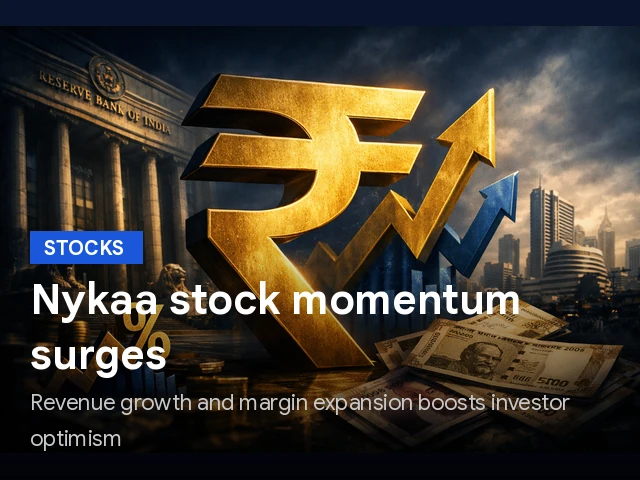
Nykaa Share Price Momentum After Q1 FY28: Growth, Margin Expansion, And Price Targets
Key Takeaways
- Nykaa’s Q1 FY28 revenue rose 29% YoY to Rs 2,782 crore and EBITDA climbed 68% to Rs 236 crore.
- EBITDA margin improved to 8.5% in Q1 FY28, the highest in the last 12 quarters.
- Analysts raised price targets, with Nomura at Rs 411 and Nuvama at Rs 414.
- Nykaa stock traded around Rs 342.50 on NSE, with 2026 gains and a market cap above Rs 98,088 crore.
Nykaa share price has become a focal point for retail investors after Nykaa reported a robust Q1 FY28. Revenue from operations rose over 29% YoY to Rs 2,782 crore, while EBITDA surged 68% YoY to Rs 236 crore during the quarter under review. Its EBITDA margin improved to 8.5% in the first quarter of the ongoing financial year, up from 6.5% reported in the corresponding period of FY26.
According to Falguni Nayar of Nykaa, "Q1 marked continued acceleration in the company’s growth momentum and EBITDA margins, both reaching their highest levels in the last 12 quarters. Our AI-led initiatives are beginning to create meaningful consumer experiences, with Virtual Closet already driving 2x higher conversion and AskNykaa, our conversational search engine, emerging as a trusted beauty advisor on the platform. We remain focused on building with discipline, innovation, and long-term value creation," she added.
Reference :
1 : Economictimes
The quarter’s results reinforce Nykaa’s multi-brand strategy, where premiumization, strong brand partnerships, and the expansion of own brands are beginning to translate into profitability. The management commentary underscores how AI-led features are shifting consumer experiences–from discovery to decision–helping convert higher-value orders and deepen engagement across beauty and personal care (BPC) and fashion segments.
Nykaa Share Price Momentum After A Strong Q1 FY28 Performance
The Q1 FY28 results signal a durable growth trajectory for Nykaa, as revenue growth and margin expansion combine with operating leverage. The company’s performance highlights the power of its Beauty and Personal Care moat–supported by 10,000+ brands, 324 stores across 105 cities, and a growing set of owned brands and partnerships. This momentum aligns with the expectation that premiumization and scale in the fashion and BPC categories will sustain profitability into FY28 and beyond.
Investors are tracking the stock's reaction in the context of a broader momentum play driven by premium offerings and omnichannel expansion. Nykaa’s post-market results release was followed by a near-term stock price movement; the stock closed nearly 1% lower at Rs 342.50 on NSE on the day of the report. The market has rewarded the growth narrative with a mix of near-term consolidation and longer-term upside potential, as reflected in multiple broker targets discussed below. In the meantime, Nykaa’s ongoing expansion plans–especially in tier 2 and tier 3 cities–remain central to its growth thesis and stock-price trajectory.
Nykaa Share Price Target: Analysts See Upside After Margin Expansion
Analysts are revisiting Nykaa’s valuation and the upside potential as margin levers gain traction. Nomura raised its Nykaa share price target to Rs 411 from Rs 343, signaling nearly 20% upside potential. The brokerage expects Nykaa to sustain its strong growth momentum with margin expansion driven by premiumization, increasing brand partnerships, scale-up of own brands, and an intensified physical expansion in tier 2 and 3 cities. Notably, Nomura also lifted its FY28 revenue estimates for Nykaa, with EBITDA margin guidance largely unchanged.
Nuvama Institutional Equities echoed the positive tone, lifting Nykaa’s target price to Rs 414 from Rs 351, about a 21% upside. The firm noted the BPC business remained steady while the Fashion segment delivered a standout quarter, with profitability improving in BPC and the Fashion segment approaching breakeven. These dynamics reinforce the case for a continued earnings-margin upgrade behind Nykaa’s evolving mix.
Motilal Oswal Financial Services joined the chorus by raising its target price to Rs 370 while maintaining a Neutral rating. The broker stressed that premiumization in beauty is playing out more intensely, and it projects Nykaa to reach around 5x consolidated EBITDA by FY30. This view is anchored by improving EBITDA margins in Fashion–expected to rise to about 10.1% from near zero today–and an improving BPC margin, supported by stronger ROCE and disciplined working capital management.
Beyond price targets, the brokerages highlighted Nykaa’s moat in Beauty and Personal Care–underpinned by 10,000+ brands, 324 stores across 105 cities, and a portfolio of strong owned brands and brand partnerships. They also pointed to Nykaa’s expanding Fashion vertical, with marquee collaborations such as Nike, H&M Move, and Birkenstock strengthening its long-term positioning.
As the market digests these upgrades, investors should watch how the AI-driven consumer experiences translate into real-world conversion gains and basket sizes. The company’s emphasis on premiumization, brand partnerships, and owned-brand development could become the primary engines for sustained EBITDA expansion, particularly if tier-2/3 expansion accelerates and the fashion segment achieves higher-margin growth.
Nykaa Market Cap: Valuation Snapshot After The Quarter
Nykaa’s market capitalization stands at more than Rs 98,088 crore, reflecting the market’s view of its growth potential and the earnings leverage from its expanding product mix. The size of Nykaa’s market cap, together with the improving margin profile, supports a narrative of earnings resilience even as the company continues to invest in brand-building and store growth. As the company broadens its footprint across India’s tier-2 and tier-3 cities, the long-term value proposition hinges on sustainable cash generation and the monetization of its digital and offline assets.
Nykaa Stock NSE: Trading Pattern And Liquidity Outlook
Nykaa stock is actively traded on the NSE, with price movements reflecting both quarterly results and evolving analyst sentiment. The stock’s performance in 2026 has been strong, with a 29% gain to date, following a 5% gain in a week and a 10% gain in a month. The current price context sits around Rs 342–343 per share, framing a valuation that is buoyed by Nykaa’s diversified business mix and the potential upside from margin improvements and brand partnerships. Investors should consider the stock’s liquidity as well as macroeconomic conditions affecting consumer discretionary names when evaluating entry or exit points.
Nykaa Growth Drivers: AI, Premiumization, And Tier-2/3 Expansion
The growth trajectory for Nykaa is anchored in its ability to convert premium consumer demand into sustainable profitability. AI-led features such as Virtual Closet and AskNykaa are designed to enhance discovery-to-purchase experiences, which could translate into higher average order values (AOVs) and higher conversion rates. The company’s focus on premiumization–bolstering high-margin Beauty offerings and strengthening brand partnerships–should support margin expansion as consumer wallets tilt toward premium products. In addition, a robust Tier-2/3 city expansion and the continued scaling of own brands could provide the operating leverage needed to propel EBITDA growth higher over the next few fiscal years.
Analysts have also highlighted the potential for Nykaa to deliver on a 5x consolidated EBITDA target by FY30, a central pillar of Motilal Oswal’s view. Such a milestone would imply meaningful margin progression across the Fashion and BPC segments, with a concurrent improvement in ROCE and working-capital efficiency. The combination of a broad brand ecosystem, deep assortment intelligence in Fashion, and a growing offline footprint positions Nykaa to sustain a multi-year growth narrative that supports the Nykaa share price over time.
Nykaa Q1 FY28 Revenue Growth And Margin Expansion: A Deep Dive
Nykaa’s Q1 FY28 results underscore a disciplined execution in a competitive consumer landscape. Revenue from operations rose 29% year-on-year to Rs 2,782 crore, while EBITDA jumped 68% YoY to Rs 236 crore. The EBITDA margin rose to 8.5% in Q1 FY28, up from 6.5% in the corresponding period of FY26, signaling meaningful margin expansion behind improved mix and operating leverage. Nykaa’s leadership attributes this improvement, in part, to AI-driven consumer experiences that are driving higher conversions and stronger engagement in both BPC and Fashion categories.
The quarterly performance aligns with the company’s strategic focus on premiumization and brand partnerships. The management commentary emphasizes long-term value creation and disciplined, innovative growth. The strategic emphasis on physical expansion in tier-2 and tier-3 cities, along with a strong portfolio of owned brands, is expected to support continued top-line growth and incremental margins as scale increases.
Related Reads
Frequently Asked Questions
What drove Nykaa's Q1 FY28 growth?
Nykaa's Q1 FY28 revenue rose 29% YoY to Rs 2,782 crore and EBITDA rose 68% YoY to Rs 236 crore, with EBITDA margins improving to 8.5% from 6.5% in the prior year period.
What is Nykaa's current market cap after the quarter?
Nykaa's market capitalization is more than Rs 98,088 crore.
Which analysts raised Nykaa share price targets and what are the levels?
Nomura raised its target to Rs 411, Nuvama raised to Rs 414, and Motilal Oswal raised to Rs 370; all indicating upside potential.
Where is Nykaa stock traded and what is its recent NSE price?
Nykaa shares closed around Rs 342.50 on NSE; the stock has shown notable movement with 5% weekly gains, 10% monthly gains, and 29% gains in 2026 so far.
What growth drivers are expected to support Nykaa's future profits?
Growth drivers include AI-led consumer experiences (e.g., Virtual Closet, AskNykaa), premiumization in Beauty, strong brand partnerships, expansion of own brands, and tier-2/3 city penetration alongside a growing Fashion vertical with marquee partnerships.
Conclusion
Nykaa’s Q1 FY28 performance signals a renewed growth trajectory underpinned by margin expansion and multi-brand expansion. For retail investors, the combination of revenue growth, margin resilience, and upgraded price targets from multiple global and domestic brokers points to a promising risk-reward dynamic for Nykaa share price in the near to medium term. As the company leverages AI-enabled consumer experiences and tier-2/3 expansion to drive both top-line growth and profitability, investors may consider a measured approach that weighs the upside potential against macro headwinds in consumer discretionary spaces.
For deeper stock research and a data-driven view, consider engaging Swastika's Sarthi AI stock assistant: Swastika's Sarthi AI stock assistant.
.jpg)
Top Stocks to Watch (5 August 2026): Stock Updates, Market Setup & Q1 Results
Looking for the stock market update today? Here's your complete daily market update for 5 August 2026, covering the latest Indian stock market news today, market outlook today, stocks to watch today, stocks in news today, and Q1 results today. Whether you're following the stock market NSE BSE Nifty 50, checking the latest share market news live, or looking for the best stocks to watch today, this Trader's Breakfast brings together the key market developments, technical outlook, corporate updates, and earnings calendar before the opening bell.
TRY SARTHI – YOUR AI STOCK ASSISTANT
Key Takeaways
- Positive global cues, including a strong US market close and a firm GIFT Nifty, indicate a constructive start for the Indian market.
- Indian Bank, SAIL, and Siemens are among the stocks to watch today based on favourable technical structures and supportive sectoral developments.
- Bharti Hexacom, Power Grid, Caliber Mining, and FSN E-Commerce are among the major stocks in news today.
- Nifty continues to trade with a positive bias, while Bank Nifty remains on track to test higher resistance levels.
- Several companies, including Aurobindo Pharma, Biocon, Cummins India, Policybazaar, Power Grid, Whirlpool, Berger Paints, and Bikaji Foods, are scheduled to announce their quarterly results today.
Watch Today's Complete Market Outlook
Watch today's Trader's Breakfast with Santosh Meena, Head of Research, Swastika Investmart, for an in-depth market outlook today, technical analysis, and today's stocks to watch.
Stocks to Watch Today
Indian Bank
Indian Bank tops today's watchlist as the PSU banking segment continues to attract attention amid improving global risk sentiment. Softer crude oil prices, declining US bond yields, and a weaker US Dollar Index have created a supportive backdrop for financial stocks. Adding to the positive sentiment, the bank recently reported healthy quarterly earnings, which has strengthened confidence around the stock.
On the charts, Indian Bank has consolidated after its recent rally and is now approaching a crucial resistance area. The stock is expected to trade above both its 100-day and 200-day moving averages, indicating that the broader trend remains constructive. A move above the immediate resistance could further improve momentum.
Technical View
According to today's discussion:
- ₹857 remains the immediate breakout level.
- A sustained move above ₹857 may trigger fresh buying interest and short covering.
- The next upside levels to monitor are around ₹880, followed by the ₹900+ zone.
- ₹830 is expected to provide immediate support for the current setup.
SAIL
SAIL is another stock to watch today as the metal sector continues to witness improving sentiment. Strength in international steel prices has supported the outlook for steel producers, while PSU metal companies have also seen renewed market interest in recent sessions.
From a technical perspective, the stock has established a solid base near its 200-day moving average and formed a rounding bottom pattern, reflecting improving price structure. If buying momentum continues, SAIL may remain in focus during today's trading session.
Technical View
According to today's discussion:
- ₹188 is the immediate upside level to watch.
- ₹167 is likely to act as the key support level.
- The stock remains on the radar due to its constructive chart pattern and improving momentum.
Siemens
Siemens completes today's list of stocks to watch as the capital goods and power sectors continue to exhibit relative strength. Ongoing infrastructure investments and continued focus on power generation have kept the sector in the spotlight.
Technically, Siemens has delivered a multi-month breakout and is trading near its all-time high after crossing the key ₹4,000 mark. The prevailing trend remains positive as long as the stock sustains above this breakout zone.
Technical View
According to today's discussion:
- ₹4,000 remains the important level to sustain above.
- ₹4,200 is the next resistance level to monitor.
- A sustained move beyond that could gradually open the path towards ₹4,400.
- The stock continues to remain on traders' radar due to its strong technical setup.
Stocks in News Today
Bharti Hexacom
Bharti Hexacom reported a robust performance for the June quarter, with net profit rising more than 23% year-on-year, supported by healthy revenue growth and improved operating profitability.
Power Grid
Power Grid commissioned the transmission system for the evacuation of power from the Rajasthan Renewable Energy Zone under Phase III Part H, further strengthening its transmission network.
Caliber Mining
Caliber Mining received a rating upgrade from CRISIL, with its long-term rating revised to CRISIL A-/Positive from CRISIL BBB+/Stable. The company's short-term rating was also upgraded to CRISIL A2+ from CRISIL A2.
FSN E-Commerce
FSN E-Commerce, the parent company of Nykaa, reported a significant improvement in profitability for the June quarter. Consolidated net profit increased to ₹79.7 crore, compared with ₹24.4 crore in the corresponding quarter of the previous year, reflecting strong year-on-year growth.
Market Setup Today (5 August 2026)
Global Markets
- US markets ended higher, with the Dow Jones gaining 907 points.
- Dow Futures were trading higher by 176 points.
- Asian markets traded with a positive bias during early trade.
- GIFT Nifty: +186 points, indicating a firm opening for domestic equities.
Data Analysis
Cash Market
- FII: +₹2,446 crore
- DII: -₹936 crore
- Net: +₹1,510 crore
F&O Data
- Nifty PCR: 0.99 vs 1.40
- India VIX: 12.19 (+2.22%)
- Highest Open Interest (11-Aug-26): 24,600 CE & 24,000 PE
- Max Pain (11-Aug-26): 24,500
FII Index Derivatives (Change in Number of Contracts)
- Future Long: -844
- Future Short: +2,113
- Call Long: -93,462
- Call Short: -56,995
- Put Long: -230,462
- Put Short: -282,795
Interpretation: FII data suggests fresh short positions in index futures, while weekly options data may not provide a meaningful directional signal because of the ongoing expiry cycle.
Stock Market Technical Outlook
Nifty (Spot)
Nifty continues to maintain a positive undertone and is expected to test the 24,600 resistance level during today's session. A sustained move above this level could pave the way towards the 200-day moving average near 24,775, followed by the 25,000–25,180 zone. On the downside, 24,600–24,530 is likely to act as the immediate support range.
Bank Nifty (Spot)
Bank Nifty continues to exhibit improving momentum, with 58,600 emerging as the immediate hurdle. A decisive move above this level may lead to the next resistance zone around 59,000–59,275. Immediate support is expected between 57,800 and 57,500.
Q1 Results Today
F&O Companies
Frequently Asked Questions (FAQs)
Which stocks are worth watching today?
Based on today's discussion, Indian Bank, SAIL, and Siemens are the key stocks to watch today due to their technical setups and favourable sector-specific developments.
Why is Indian Bank on today's watchlist?
Indian Bank has reported healthy quarterly earnings and is approaching an important breakout level around ₹857 while trading above its key moving averages, making it one of the notable PSU banking stocks to monitor.
Why is SAIL in focus today?
SAIL has formed a rounding bottom pattern near its 200-day moving average, while improving global steel prices have strengthened sentiment across the metal sector.
Why is Siemens being watched today?
Siemens continues to trade near its all-time high following a multi-month breakout, supported by ongoing strength in the capital goods and power sectors.
Which companies are announcing Q1 results today?
Key companies scheduled to announce quarterly earnings today include Aurobindo Pharma, Biocon, Cummins India, Policybazaar, Power Grid, Berger Paints, Bikaji Foods, Whirlpool India, Navin Fluorine, and JK Lakshmi Cement, among others.
Over to You
Today's market setup reflects supportive global cues and improving sentiment across select sectors. Indian Bank, SAIL, and Siemens remain among the stocks to watch today, supported by constructive technical structures and favourable sectoral developments. At the same time, corporate announcements from companies such as Bharti Hexacom, Power Grid, Caliber Mining, and FSN E-Commerce, along with a busy Q1 results calendar today, are expected to keep stock-specific action in focus.
As always, traders should monitor price action around key technical levels, keep an eye on broader market trends, and follow disciplined risk management while making trading or investment decisions. For more daily stock market updates, technical analysis, market outlook, and share market news live, keep following Swastika Investmart.

HDFC Bank Share Price Outlook As Bank Nifty Futures Rise Ahead Of RBI MPC
Key Takeaways
- Bank Nifty August futures rose 0.64% to 58,083.80, with open interest down 987 contracts to 70,610.
- HDFC Bank August futures fell 0.11% to Rs 742.85, with open interest up by 3,746 contracts to 465,508.
- Axis Bank August futures gained 0.74% to Rs 1,261.30; open interest slipped by 31 contracts to 128,822.
- 58,000 strike options dominate the setup, with calls concentrated at 58,000 and puts nearby ahead of the RBI decision.
In the run-up to the RBI's policy decision, retail traders are watching the Bank Nifty futures with heightened interest. The Bank Nifty's August futures rose 0.64% to 58,083.80, while open interest slipped by 987 contracts to 70,610, signaling short covering in the banking complex as participants position ahead of the policy outcome. The RBI is widely anticipated to keep the repo rate unchanged at 5.25%, with inflation still within the central bank's tolerance band of 2% to 6%. However, policymakers will closely assess whether elevated fuel costs could seep into broader prices, given energy markets remain under pressure from the Middle East conflict. For retail investors, a quick takeaway from today's session is how the HDFC Bank Share Price may respond to this macro environment, alongside price action in other large lenders.
Bank Nifty Futures Rise Ahead Of RBI MPC: Short Covering Signals In The Banking Pack
The session showed a broad-based move higher in Bank Nifty futures, with short covering observed across several banking heavies. Axis Bank's August futures rose 0.74% to Rs 1,261.30, while open interest slipped by 31 contracts to 128,822. Bank of Baroda also advanced, with August futures up 1.45% at Rs 250.21 and open interest down by eight contracts to 44,571. Bank of India joined the up-move, up 1.68% to Rs 142.60, with open interest falling by 115 contracts. Bandhan Bank followed suit, up 1.08% to Rs 175.12, as OI declined by 95 contracts. These moves point to a nuanced mix of fresh long positions and profit-taking in a sector navigating policy ambiguity.
HDFC Bank Share Price Context: What The Bank Nifty Move Signals For Retail Investors
HDFC Bank August futures dipped 0.11% to Rs 742.85, even as open interest expanded by 3,746 contracts to 465,508. This price-OI divergence suggests fresh long accumulation in HDFC Bank futures, potentially reflecting upbeat sentiment on near-term performance or policy-driven re-rating. While the article focuses on futures data, it’s common for retail investors to monitor the HDFC Bank Share Price movement as a sentiment gauge for the underlying stock, especially when macro catalysts loom. If you are weighing this for a trading idea, consider how the futures curve for HDFC Bank aligns with broader Bank Nifty dynamics and the RBI policy trajectory.
ICICI Bank Stock And The Bank Index: How The Sector Fares In This Setup
ICICI Bank's August futures rose 0.45% to Rs 1,452, with open interest at 148,542 contracts. This data point signals sustained interest in one of India’s largest private lenders, potentially drawing flow into the ICICI Bank Stock alongside Bank Nifty movements. In a macro backdrop where energy costs and inflation remain focal, ICICI Bank Stock performance may serve as a barometer for private-sector lenders’ resilience as traders position for RBI clarity. Retail investors should watch whether ICICI Bank stock strengthens in tandem with the index or diverges due to idiosyncratic news or earnings signals.
Bank Of Baroda Stock And Bandhan Bank Stock: Other Movers In The RBI MPC Window
Bank of Baroda’s August futures climbed 1.45% to Rs 250.21, with open interest down by eight contracts to 44,571. Bandhan Bank’s August contract rose 1.08% to Rs 175.12, while open interest declined by 95 contracts. These movements illustrate how different banks contribute to the overall sector narrative even as OI signals whether new positions are being established or existing bets unwound. For a retail trader, this is a reminder that strength in one lender does not automatically translate into broad-based gains across the entire HDFC Bank share price or ICICI Bank Stock, as sector leadership can rotate under policy uncertainty.
Kotak Mahindra Bank Stock And AU Small Finance Bank Stock: Sector Leaders In Focus
Kotak Mahindra Bank futures rose about 0.8% in the session, though the article does not publish the exact price, and AU Small Finance Bank stock moved higher with similar micro-movements noted in the broader market. The juxtaposition of these two names underscores the heterogeneity within the banking universe: Kotak Mahindra Bank Stock often tracks the premium banks’ risk-on moves, while AU Small Finance Bank stock can react differently to emerging market cues and liquidity conditions. Retail investors should keep an eye on price action and open interest for these names to gauge leadership shifts within the sector and potential implications for the HDFC Bank Share Price.
Axis Bank Futures Trends And The Broader Banking Sector: A Close Look
Axis Bank futures’ rise to Rs 1,261.30 (+0.74%) was accompanied by a fall in open interest by 31 contracts to 128,822, a tell that short-covering was taking place rather than a broad new long build across the sector. Bank of Baroda’s movement and Bank of India’s ascent (both in August futures) reinforce that the sector is oscillating between risk-on mood and cautious hedging ahead of policy signals. The resilience of the Bank Nifty amid inflation considerations and energy-cost risk suggests that the sector could remain range-bound until the RBI communicates its stance more clearly. For a retail investor, this means watching the relative strength of major banks and the direction of the HDFC Bank Share Price alongside the rest of the financials universe.
Options Positioning Around 58,000: What It Signals For Bank Nifty And The RBI Decision
Option positioning around the 58,000 strike is notable: the largest call open interest sits at 58,000, while put open interest is concentrated near the same strike. This setup designates 58,000 as a key zone ahead of the RBI decision, implying that traders expect limit upside near that level and are protecting against downside around this anchor. In addition, September contracts show higher open interest alongside a lower futures price, and October contracts record a 12.76% rise in open interest as futures declined, signaling evolving expectations across maturities. For investors, this framework means risk management around the 58,000 zone is prudent, and the Sarthi AI stock assistant can help translate such option signals into actionable ideas
For deeper stock-level insights and a strategic lens on your next move, explore Swastika's Sarthi AI stock assistant: Swastika's Sarthi AI stock assistant.
Related Reads
- HDFC Bank Share Price And The Market Valuation Erosion Of India's Top Firms: A Bear Week Deep Dive
- HDFC Bank Share Price And Banking Sector Signals For Retail Investors
- Sensex Share Price Momentum: July 28–30, 2026 Market Pulse And Stock Watch
Frequently Asked Questions
What is the latest Bank Nifty August futures price and open interest?
Bank Nifty August futures were at 58,083.80, up 0.64%, with open interest at 70,610 contracts (down 987).
What is the current HDFC Bank Share Price according to the article?
The article reports HDFC Bank August futures at Rs 742.85 with open interest at 465,508; it does not provide the spot HDFC Bank share price.
Which banks showed rising August futures and how did their open interest change?
Axis Bank rose 0.74% to Rs 1,261.30 with OI down 31 contracts to 128,822; Bank of Baroda rose 1.45% to Rs 250.21 with OI down 8 to 44,571; Bank of India rose 1.68% to Rs 142.60 with OI down 115; Bandhan Bank rose 1.08% to Rs 175.12 with OI down 95; ICICI Bank rose 0.45% to Rs 1,452 with OI at 148,542; HDFC Bank fell 0.11% with OI up by 3,746.
What does the 58,000 options zone indicate ahead of the RBI decision?
The largest call open interest sits at 58,000 and puts are concentrated near the same strike, marking 58,000 as a key zone ahead of the RBI decision.
What is the practical takeaway for retail investors from this data?
The data suggests short-covering in Bank Nifty and mixed bank-futures moves ahead of policy; inflation and energy-cost risk remain the main drivers, so hedging and monitoring 58,000 zone plus stock-specific signals (via tools like Swastika's Sarthi AI stock assistant) can aid decision-making.
Conclusion
In this RBI MPC window, retail investors should watch how the Bank Nifty and key lenders react to the evolving inflation picture and energy-cost risks. The 58,000 zone is a critical battleground for options positioning, with calls concentrated at the strike and puts nearby, signaling a cautious but not bearish stance on the sector. For HDFC Bank Share Price and other bank stocks, the near-term direction may hinge on policy signals and the market's read of inflation persistence, rather than any single data point.
Open your trading and demat account here
Reference :
1 : Ndtvprofit
Big Budget


Popular Articles





.avif)
.avif)

.avif)



START YOUR INVESTMENT JOURNEY
Get personalized advice from our experts
- Dedicated RM Support
- Smooth and Fast Trading App