

FII FPI & DII Trading Activity on 1 April 2026 : Key Insights from April 1, 2026


%20(3).webp)

Understanding FII DII trading activity today is crucial for decoding market direction in India. On April 1, 2026, the data shows a sharp contrast between foreign and domestic institutional investors, offering valuable signals for traders and long-term investors alike.
Quick Takeaways
- DIIs remained strong net buyers, supporting market stability
- FIIs continued aggressive selling, creating downward pressure
- Domestic liquidity is currently offsetting foreign outflows
- Market sentiment remains cautious but not weak
What Happened on April 1, 2026
The latest data highlights a clear divergence between institutional players:
- DII Activity (NSE Capital Market): Net buying of ₹7,019 crore
- FII Activity (NSE Capital Market): Net selling of ₹8,072 crore
When combining NSE, BSE, and MSEI data:
- DIIs: Net buyers of ₹7,171 crore
- FIIs: Net sellers of ₹8,331 crore
This pattern reflects a familiar trend where domestic institutions absorb selling pressure from foreign investors.
Why Are FIIs Selling?
Foreign Institutional Investors often react to global cues. Some key reasons include:
Global Interest Rate Outlook
With central banks like the US Federal Reserve maintaining a cautious stance, capital tends to flow back to safer assets. This impacts emerging markets like India.
Currency Fluctuations
The Indian rupee’s volatility can reduce returns for FIIs when converted back to their home currency.
Risk-Off Sentiment
Geopolitical tensions and global uncertainty often trigger FII outflows.
Why DIIs Are Buying Aggressively
Domestic Institutional Investors, including mutual funds and insurance companies, are playing a stabilizing role.
Strong SIP Inflows
Retail participation through Systematic Investment Plans continues to provide steady liquidity.
Confidence in Indian Growth
India’s long-term growth story remains intact, supported by government policies and economic reforms guided by institutions like SEBI and RBI.
Valuation Opportunities
Market corrections due to FII selling often create attractive entry points for DIIs.
What This Means for Retail Investors
Understanding FII DII trading activity today helps you make smarter decisions:
Market Direction Is Not One-Sided
Even though FIIs are selling, strong DII buying prevents sharp crashes.
Focus on Fundamentals
Short-term volatility should not distract from long-term investment goals.
Sectoral Opportunities
DII buying often focuses on fundamentally strong sectors like banking, infrastructure, and manufacturing.
Role of Regulations and Market Stability
The Indian stock market operates under strict regulatory oversight by SEBI, ensuring transparency in institutional trades. RBI policies also influence liquidity and currency stability, indirectly affecting FII flows.
This strong regulatory framework makes India one of the most resilient emerging markets.
How Swastika Investmart Helps You Navigate Markets
In times of mixed signals like these, having the right platform matters. Swastika Investmart stands out with:
- SEBI-registered credibility ensuring trust and compliance
- Advanced research tools that decode FII and DII trends
- Reliable customer support for timely assistance
- A tech-driven platform designed for modern investors
- Strong focus on investor education
These features help investors interpret market data and act with confidence.
Common Questions on FII DII Activity
1. Why is FII selling considered negative for markets?
FII selling often leads to short-term volatility because of large capital outflows, but it does not always signal a long-term downturn.
2. Can DII buying fully offset FII selling?
In many cases, yes. Strong domestic inflows, especially through mutual funds, can stabilize markets.
3. Should retail investors follow FII trends?
FII trends are important but should not be the only factor. Always consider fundamentals and long-term goals.
4. Is this a good time to invest?
Market dips caused by FII selling can offer good opportunities if the underlying fundamentals remain strong.
Final Thoughts
The FII DII trading activity today clearly shows a tug of war between global caution and domestic confidence. While FIIs continue to pull out funds, DIIs are stepping in with strong buying support, keeping the market balanced.
For investors, this is not a time for panic but for informed decision-making. Staying updated with institutional trends and focusing on long-term growth remains key.
If you want deeper insights and smarter investing tools, explore Swastika Investmart here:
Big Budget









.webp)
.webp)
.webp)
.webp)
.webp)














.webp)
.webp)
.webp)
.webp)
Latest Articles
FII FPI & DII Trading Activity on 4 March 2026 | What It Signals for Indian Markets


Summary
- On 4th March 2026, FIIs were net sellers while DIIs were strong net buyers.
- DII buying helped absorb foreign outflows and support the market.
- Institutional flows influence Nifty, Sensex, and sectoral trends.
- Tracking daily FII DII data helps retail investors understand market sentiment.
FII DII Data Today 4th March 2026: What It Signals for Indian Markets
FII DII data today, 4th March 2026, gives a clear snapshot of institutional sentiment in the Indian stock market. While foreign investors continued to book profits, domestic institutions stepped in with strong buying support.
Understanding these daily numbers is important because institutional flows often set the tone for short term market direction. Let us decode what the data from 4th March 2026 indicates and how it may impact investors.
FII DII Data Today 4th March 2026 – Key Highlights
As per the latest exchange data for 4th March 2026:
Capital Market Segment (NSE)
- DII Buy Value: ₹24,412.84 crore
- DII Sell Value: ₹13,174.06 crore
- DII Net Buying: ₹11,238.78 crore
- FII Buy Value: ₹18,568.71 crore
- FII Sell Value: ₹26,860.77 crore
- FII Net Selling: ₹8,292.06 crore
Combined Data (NSE, BSE, MSEI)
- DII Net Buying: ₹12,068.17 crore
- FII Net Selling: ₹8,752.65 crore
The data clearly shows strong domestic institutional participation offsetting foreign selling pressure.
What Does This Mean for Nifty and Sensex?
When FIIs are net sellers, it can create downward pressure on benchmark indices like the Nifty 50 and Sensex, especially in large cap stocks where foreign ownership is high.
However, on 4th March 2026, heavy DII buying of over ₹12,000 crore across exchanges suggests domestic confidence in the market.
1. Strong Domestic Cushion
Domestic institutions, including mutual funds and insurance companies, absorbed foreign selling. This often prevents sharp intraday falls and reduces volatility.
2. Possible Sector Rotation
FII selling does not always mean overall market weakness. Sometimes it indicates sectoral rotation. For example, FIIs may trim positions in IT or banking while reallocating funds elsewhere.
3. Short Term vs Long Term View
Foreign investors are sensitive to global triggers such as US interest rates, dollar strength, and geopolitical developments. Domestic investors, on the other hand, are more aligned with India’s growth outlook.
Why Are FIIs Selling?
Foreign Institutional Investors typically react to:
- US Federal Reserve rate expectations
- Movement in US bond yields
- Dollar index strength
- Global risk sentiment
- Crude oil prices
If global markets turn cautious, emerging markets like India may witness temporary outflows.
That said, India’s macro fundamentals remain relatively strong, supported by GDP growth, stable inflation trends, and continued retail participation.
DII Buying: A Structural Shift in Indian Markets
Over the last few years, domestic flows have grown significantly due to:
- Rising SIP inflows
- Increasing financial awareness
- Strong participation from retail investors
- Regulatory transparency under the Securities and Exchange Board of India
On 4th March 2026, DII net buying above ₹12,000 crore across exchanges reflects this structural strength.
This trend shows that Indian markets are no longer entirely dependent on foreign capital, which is a positive sign for long term stability.
How Retail Investors Should Read FII DII Data Today
Instead of reacting emotionally to headlines like “FIIs Sell ₹8,000+ Crore”, investors should interpret the complete picture.
Look at the Net Difference
On 4th March 2026:
- FII net selling: around ₹8,700 crore
- DII net buying: over ₹12,000 crore
Net domestic buying exceeded foreign selling. That signals underlying demand.
Track the Trend, Not Just One Day
A single day’s data does not define the market trend. Watch weekly and monthly cumulative flows.
Combine with Technical and Fundamental Analysis
Institutional flow data works best when combined with:
- Support and resistance levels
- Earnings announcements
- Budget and policy developments
- RBI monetary policy signals
Real Market Context: Why This Matters Now
In recent market phases, Indian equities have shown resilience despite global volatility. Strong domestic inflows have limited deeper corrections.
For example, even when global markets react negatively to US macro data, Indian indices often recover faster due to DII support.
The 4th March 2026 data reinforces this trend of domestic dominance.
Sectoral Impact to Watch
Given the scale of institutional flows, investors should monitor:
- Banking and financial stocks
- IT companies
- Capital goods and infrastructure
- Large cap blue chip stocks
Heavy institutional activity in these sectors often drives index movement.
The Bigger Picture for Indian Investors
FII DII data today, 4th March 2026, highlights an important shift. While foreign investors remain cautious, domestic institutions continue to show confidence in India’s long term growth story.
India’s expanding digital economy, infrastructure push, manufacturing initiatives, and rising middle class consumption create strong structural drivers.
Short term volatility may continue, but long term fundamentals remain intact.
Frequently Asked Questions
1. What is FII DII data today 4th March 2026?
It shows that FIIs were net sellers of around ₹8,700 crore, while DIIs were strong net buyers of over ₹12,000 crore across exchanges.
2. Does FII selling mean the market will fall?
Not necessarily. Strong DII buying can offset foreign outflows and stabilize the market.
3. Why are DIIs buying heavily?
Domestic institutions are supported by steady SIP inflows and long term confidence in India’s growth story.
4. Should retail investors follow FII DII data daily?
Yes, but as part of a broader strategy that includes technical and fundamental analysis.
Conclusion: Decode Institutional Flows, Invest Smarter
The FII DII data today, 4th March 2026, clearly shows foreign selling being absorbed by strong domestic buying. This reflects the growing maturity and depth of Indian capital markets.
For retail investors, tracking institutional flows can provide valuable insight into market sentiment. But informed decision making requires the right research, technology, and expert guidance.
Swastika Investmart, a SEBI registered stock broker, offers robust trading platforms, research backed insights, investor education, and dedicated support to help you navigate market volatility with confidence.
Start your investing journey today
Invest with discipline. Invest with knowledge. Invest with Swastika Investmart.

Understanding the Different Types of Business risk
TL;DR
- Business risk analysis is crucial before investing in any stock.
- Operational, financial, regulatory, and market risks directly impact profitability.
- High debt, customer concentration, and poor governance increase downside risk.
- Indian markets react sharply to unmanaged business risks.
- Research-backed investing reduces emotional decision-making.
Types of Business Risk: A Complete Guide for Fundamental Analysis
When investors analyse a company, most focus on revenue growth and profit margins. But experienced investors know that understanding types of business risk is even more important than studying earnings.
Risk determines whether a company can survive tough times. In Indian markets, many fundamentally strong-looking companies have collapsed due to hidden risks. That is why business risk assessment forms the backbone of sound fundamental analysis.
Let us break this down in a practical and structured way.
Why Understanding Types of Business Risk Matters
Every business operates in uncertainty. Interest rates change. Government policies evolve. Technology disrupts industries. Consumer behavior shifts.
If risks are not identified early:
- Earnings can collapse
- Debt can become unmanageable
- Stock prices can crash
- Investor wealth can erode
On the other hand, companies that manage risk efficiently tend to command premium valuations in the stock market.
Operational Risk: The Execution Challenge
Operational risk arises from internal failures in systems, processes, or people.
Real Example in Indian Context
A manufacturing company facing supply chain disruptions or raw material shortages may see production delays. During the pandemic, many Indian auto and electronics companies struggled due to semiconductor shortages.
Poor execution affects:
- Margins
- Delivery timelines
- Customer trust
Investors should check inventory turnover, operating margins, and management commentary in annual reports.
Financial Risk: The Debt Burden Factor
Financial risk is linked to leverage and cash flow management.
What to Evaluate
- Debt to equity ratio
- Interest coverage ratio
- Free cash flow consistency
In India, several infrastructure and real estate companies suffered in the past because excessive borrowing became unsustainable when interest rates rose.
The Reserve Bank of India’s monetary policy decisions directly influence companies with high debt. Rising repo rates increase interest costs, squeezing profits.
Market Risk: Industry and Demand Cycles
Market risk refers to fluctuations in demand, competition, and pricing power.
Cyclical sectors like steel, cement, and real estate are highly sensitive to economic cycles. When GDP growth slows, demand drops.
For example, when commodity prices fall globally, Indian metal companies experience margin compression. Stock prices react even before quarterly results reflect the slowdown.
Investors should study industry trends, competitive landscape, and pricing power.
Regulatory and Political Risk
India has a dynamic regulatory environment. Changes in taxation, environmental norms, or compliance rules can impact entire sectors.
Examples
- Banking and NBFC sectors are heavily regulated by RBI
- Telecom companies are affected by spectrum pricing policies
- Pharmaceutical firms must comply with US FDA regulations
Unexpected regulatory tightening can significantly impact valuations.
Companies with strong compliance records and transparent disclosures generally face lower regulatory risk.
Economic and Macro Risk
Macroeconomic factors influence all businesses to some extent.
Key elements include:
- Inflation
- Interest rates
- Currency fluctuations
- Global recession risks
Export-oriented companies benefit from a weaker rupee but suffer when global demand declines.
Oil price spikes due to geopolitical tensions can increase input costs for multiple sectors, affecting corporate earnings and stock indices like Nifty and Sensex.
Technological Risk: Disruption Threat
Technology evolves rapidly. Businesses that fail to adapt lose relevance.
For example:
- Digital payments disrupted traditional banking models
- E-commerce reshaped retail
- Electric vehicles are challenging conventional automobile manufacturers
Investors should evaluate R&D spending, innovation pipeline, and adaptability of management.
Credit and Concentration Risk
Credit risk arises when customers delay or default on payments. This is critical for banks, NBFCs, and B2B companies.
High receivable days indicate potential stress.
Concentration risk occurs when revenue depends heavily on:
- A single customer
- One product
- One geography
If that customer exits or the geography faces political instability, revenue may drop sharply.
Diversified companies generally carry lower risk.
Management and Governance Risk
Perhaps the most important risk is management quality.
Corporate governance failures have destroyed shareholder wealth in India before. Investors must examine:
- Promoter shareholding patterns
- Related party transactions
- Auditor observations
- Capital allocation decisions
Companies with ethical leadership and transparent disclosures build long term trust.
SEBI regulations require detailed disclosures, but investors must read between the lines.
Impact on Indian Stock Market
When business risks materialize, markets react quickly.
- High leverage companies fall sharply during rate hikes
- Regulatory crackdowns trigger sector-wide corrections
- Governance concerns lead to immediate stock price declines
That is why risk-adjusted returns matter more than absolute returns.
A moderately growing company with controlled risk often delivers better long term returns than a high-growth but risky business.
How Investors Can Use Business Risk Analysis
Before investing, ask:
- What can go wrong in this business?
- Is the balance sheet strong enough to handle shocks?
- Is revenue diversified?
- Does management have a credible track record?
Using structured research tools and professional insights can simplify this process.
Swastika Investmart, a SEBI-registered stock broker, provides in-depth research reports, sector analysis, real-time tracking tools, and dedicated customer support to help investors evaluate risks more effectively.
Their tech-enabled platform and investor education initiatives support informed decision-making in volatile markets.
Frequently Asked Questions
What are the main types of business risk in fundamental analysis?
The main types include operational, financial, market, regulatory, economic, technological, credit, concentration, and management risk.
Why is financial risk important for investors?
High debt increases vulnerability during economic slowdowns and rising interest rate cycles.
How does regulatory risk impact Indian companies?
Policy changes from SEBI, RBI, or the government can directly affect compliance costs, profitability, and valuations.
Can business risk be completely avoided?
No business is risk-free. However, risks can be identified, measured, and managed effectively.
Which risk is most critical for long term investors?
Management and governance risk is often the most critical because poor leadership can amplify all other risks.
Conclusion
Understanding the types of business risk is not optional. It is essential for smart investing. Earnings growth attracts investors, but risk management sustains wealth.
Indian markets reward disciplined, research-backed investors who focus on fundamentals and governance.
If you want structured research, powerful analysis tools, and expert support, consider opening your trading and demat account with Swastika Investmart.
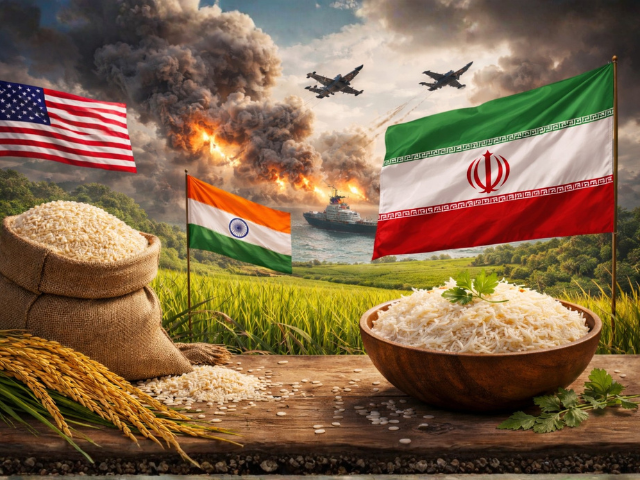
$6 Billion at Risk: How the US–Iran War Is Threatening India’s Basmati Rice Exports
TL;DR
- The US–Iran war is threatening nearly $6 billion worth of India’s basmati rice exports.
- Iran is one of the largest buyers of Indian basmati rice.
- Payment disruptions, sanctions, and shipping risks may hit exporters’ margins.
- Indian agri stocks and rupee movement could see short-term volatility.
- Diversification and research-backed investing remain key in uncertain times.
$6 Billion at Risk: How the US–Iran War Is Threatening India’s Basmati Rice Exports
The US–Iran war has once again brought geopolitical risk to the center of global trade. For India, the biggest concern is not oil this time. It is rice. Specifically, basmati rice exports to Iran, a market that contributes significantly to India’s agricultural export basket.
With nearly $6 billion in trade exposure linked directly and indirectly to the region, exporters, policymakers, and investors are watching closely.
Let us understand what is at stake and how it may impact Indian markets.
Why the US–Iran War Matters for India’s Basmati Trade
Iran has traditionally been one of the largest importers of Indian basmati rice. Indian exporters ship premium long-grain rice varieties to Iranian buyers under government-approved trade mechanisms.
However, the US–Iran war raises three major concerns:
1. Payment Channel Disruptions
Due to US sanctions, trade with Iran often operates under restricted banking channels. If tensions escalate, payment settlements may get delayed. In previous sanction phases, Indian exporters faced months-long payment cycles.
Delayed payments mean:
- Higher working capital requirements
- Increased borrowing costs
- Pressure on profit margins
For mid-sized rice exporters, this can create liquidity stress.
2. Shipping and Insurance Risks
War-like situations increase freight costs and insurance premiums. If the Strait of Hormuz faces disruption, shipping routes may become expensive or delayed.
Higher logistics costs directly reduce export competitiveness.
3. Currency Volatility
Geopolitical tensions typically strengthen the US dollar and weaken emerging market currencies. While a weaker rupee can help exporters in theory, volatility creates uncertainty in contract pricing and hedging.
How Big Is India’s Exposure
India is the world’s largest exporter of basmati rice. Iran consistently ranks among the top buyers along with Saudi Arabia and Iraq.
In some years, Iran alone has accounted for a substantial share of India’s basmati exports. If trade slows or payment defaults increase, the impact may ripple through:
- Rice millers in Haryana and Punjab
- Export houses listed on Indian stock exchanges
- Rural incomes linked to basmati cultivation
For farmers who shifted acreage toward premium basmati varieties, demand disruption can affect mandi prices.
Impact on Indian Stock Market
The US–Iran war does not affect only agri trade. It has broader market implications.
1. Agri and Export-Oriented Stocks
Companies involved in rice exports may witness short-term stock price volatility. Investors often react quickly to geopolitical headlines.
If earnings visibility reduces, valuations may correct.
2. Oil Price Movement
Any conflict in the Middle East usually pushes crude oil prices higher. India imports a majority of its crude oil needs.
Higher oil prices mean:
- Inflation pressure
- Widening current account deficit
- Potential pressure on the Indian rupee
This can indirectly impact FMCG, logistics, aviation, and manufacturing sectors.
3. Broader Market Sentiment
The Nifty and Sensex often see knee-jerk reactions during geopolitical crises. Foreign institutional investors may turn cautious in the short term.
However, history shows that markets eventually stabilize once clarity emerges.
Regulatory and Policy Angle
The Government of India and the Reserve Bank of India play a crucial role during such times.
- RBI may intervene in currency markets to manage volatility.
- Trade settlements may be routed through special mechanisms if sanctions intensify.
- The Directorate General of Foreign Trade monitors export policies to ensure stability.
India has previously used rupee-based trade settlement mechanisms to continue limited trade with sanctioned nations.
Policy support can cushion some impact, but uncertainty remains a risk.
Real-World Example from Past Sanction Phases
During earlier sanction periods on Iran, Indian exporters faced payment delays of several months. Some shipments were held up due to banking restrictions.
Stock prices of certain export-focused companies corrected sharply during that phase. However, once alternate payment arrangements were established, business resumed gradually.
This pattern suggests that while disruptions can be real, they may not always be permanent.
What Should Investors Do
Geopolitical events are unpredictable. But investment decisions should not be emotional.
Here are practical steps investors can consider:
- Avoid panic selling on headlines alone
- Evaluate company balance sheets and debt levels
- Focus on diversified portfolios
- Track oil prices and rupee movement
- Monitor quarterly earnings commentary
If you are investing in export-driven businesses, assess their geographic diversification. Companies heavily dependent on a single country carry higher risk.
Why Research-Backed Investing Matters
In volatile times like the US–Iran war situation, access to reliable research becomes critical.
Swastika Investmart, a SEBI-registered stock broker, offers:
- In-depth sector research
- Real-time market updates
- Risk management insights
- Dedicated customer support
- Tech-enabled investing platforms
- Investor education initiatives
Instead of reacting to noise, informed investors rely on structured analysis and disciplined strategies.
Frequently Asked Questions
How much of India’s basmati exports go to Iran?
Iran has historically been among the top buyers of Indian basmati rice, contributing a significant share of total exports in certain years.
Will the US–Iran war stop exports completely?
Not necessarily. Trade may slow due to payment and shipping challenges, but alternative mechanisms can sometimes keep exports partially active.
How does this affect Indian farmers?
If demand from Iran reduces sharply, mandi prices for basmati varieties may face short-term pressure.
Can oil prices impact rice exports?
Indirectly, yes. Higher oil prices increase logistics costs and inflation, affecting overall trade economics.
Should investors avoid agri export stocks?
Investment decisions should depend on fundamentals, diversification, and risk tolerance rather than short-term headlines.
Conclusion
The US–Iran war is more than a geopolitical headline for India. It puts nearly $6 billion worth of basmati rice exports at potential risk and may create ripple effects across agri markets, currency movement, and stock prices.
However, markets reward patience and research-driven decisions. Short-term volatility often creates long-term opportunities for disciplined investors.
If you want expert research, real-time updates, and a technology-driven investing experience, consider opening your account with Swastika Investmart.

Why Defence Stocks Are Gaining Momentum After ₹5,083 Crore Deals and Rising Middle East Tensions
Why Defence Stocks Are Gaining Momentum After ₹5,083 Crore Deals and Rising Middle East Tensions
Key Takeaways
• Defence stocks are rising after fresh ₹5,083 crore government deals and higher geopolitical tensions.
• Middle East conflict has increased focus on defence preparedness and exports.
• Order visibility and strong government backing support long term growth.
• Short term volatility may continue due to broader market sentiment.
Why Defence Stocks Are Gaining Momentum After ₹5,083 Crore Deals and Rising Middle East Tensions
Indian defence stocks are back in focus. Fresh defence contracts worth ₹5,083 crore, combined with rising Middle East tensions, have triggered renewed investor interest in the sector. At a time when broader markets remain volatile, defence shares are showing relative strength.
This momentum is supported by strong order inflows, policy backing, and India’s push for self reliance in defence manufacturing.
Why ₹5,083 Crore Defence Deals Matter
Large defence orders provide earnings visibility. When companies secure confirmed contracts from the Ministry of Defence, it improves revenue predictability over the coming years.
For listed players involved in missiles, radars, electronics, ammunition, and aerospace systems, fresh orders expand their order book and strengthen future cash flow expectations.
In capital intensive industries like defence manufacturing, order pipeline plays a crucial role in valuation re rating.
How Rising Middle East Tensions Add Fuel
Geopolitical risks often result in increased defence spending globally. As tensions escalate in West Asia, governments accelerate procurement and review preparedness strategies.
India continues to allocate a significant share of its Union Budget to defence. With rising global uncertainty, focus on indigenous manufacturing and faster execution has intensified.
This creates a dual opportunity for companies through domestic demand and defence exports.
Real Market Reaction
In recent sessions, several defence stocks have outperformed benchmark indices even as broader markets reacted to oil price volatility and global risk aversion.
This indicates sector specific strength driven by structural demand rather than short term speculation alone. However, elevated valuations in select counters suggest that investors should remain selective.
Key Drivers Behind the Defence Sector Rally
Government Push for Self Reliance
Import restrictions and indigenisation lists ensure domestic companies receive priority in procurement.
Rising Capital Expenditure
Consistent growth in defence capital outlay supports long term order visibility.
Export Growth Momentum
Indian defence exports have expanded significantly, opening new revenue streams beyond domestic contracts.
Private Sector Participation and Technology
Increasing private participation and technological advancements are strengthening the defence ecosystem.
Impact on Indian Markets
Defence stocks often act as thematic plays during geopolitical stress. While the overall weight of the sector in major indices remains limited, individual stocks can deliver sharp moves.
From a macro perspective, rising global tensions may increase crude oil prices and inflation, impacting other sectors. In such scenarios, defence stocks may provide partial diversification benefits within portfolios.
Regulatory and Policy Environment
The Ministry of Defence and the Department of Defence Production play a key role in shaping procurement and export policies. Budget allocations, procurement reforms, and production incentives directly influence sector growth.
Investors should closely monitor government announcements and capital expenditure trends.
What Should Investors Do Now
While momentum remains strong, disciplined investing is essential. Investors should evaluate order book strength, execution track record, margin stability, and valuation comfort before taking exposure.
At Swastika Investmart, a SEBI registered stock broker, investors gain access to research backed analysis, advanced trading platforms, strong customer support, and investor education resources. Our technology enabled investing tools help clients track sector themes and manage risk efficiently.
FAQs
Why are defence stocks rising now?
Defence stocks are gaining momentum due to fresh ₹5,083 crore contracts and rising Middle East tensions, which increase focus on defence spending.
Are defence stocks suitable for long term investing?
They offer long term potential due to policy support and strong order books, but investors must consider valuations and execution risks.
How do geopolitical tensions benefit defence companies?
Higher tensions often lead to increased defence budgets and accelerated procurement cycles.
Is the current rally sustainable?
Sustainability depends on continued order inflows, earnings growth, and reasonable valuations. Short term volatility is possible.
Conclusion
The rally in defence stocks after ₹5,083 crore deals and rising Middle East tensions reflects both structural strength and heightened geopolitical awareness. Government support, export growth, and strategic importance make the sector attractive, but careful stock selection remains crucial.
To explore defence opportunities with expert guidance and research driven insights, open your account with Swastika Investmart today:

Iran War Impact on Oil Prices, World Politics, World Economy and the Strait of Hormuz Copy
Strait of Hormuz Crisis: What It Means for Oil Supply, Prices, and Energy Stocks
TL;DR
• Nearly 20 percent of global oil passes through the Strait of Hormuz, making it a critical energy chokepoint.
• Rising US Iran tensions have pushed Brent crude above 82 dollars per barrel.
• India’s LNG supply chain faces risk due to Qatar disruptions and force majeure notices.
• Upstream companies may benefit from higher crude prices, while OMCs and city gas players face margin pressure.
Strait of Hormuz Crisis: What It Means for Oil Supply, Prices, and Energy Stocks
The Strait of Hormuz crisis has once again brought global energy markets into sharp focus. This narrow sea passage between Iran and Oman handles a significant share of the world’s oil and liquefied natural gas shipments. Any disruption here can ripple through crude oil prices, shipping routes, and stock markets worldwide.
For India, which imports more than 80 percent of its crude oil and a large portion of its LNG, developments in this region are not distant geopolitical headlines. They directly impact fuel prices, inflation, corporate earnings, and stock market performance.
Why the Strait of Hormuz Matters So Much
The Strait of Hormuz connects the Persian Gulf to global markets. Countries like Saudi Arabia, Iraq, the UAE, and Qatar rely on this route to export oil and gas. When tensions rise, traders immediately price in supply risk.
Recently, Brent crude crossed 82 dollars per barrel amid escalating US Iran tensions. Higher crude prices increase shipping insurance, freight costs, and global risk premiums.
In simple terms, when ships feel unsafe, markets feel nervous.
How the US Iran Conflict Is Affecting Gas Supply
The current escalation has gone beyond oil. Brokerage firm Citi has warned that India’s gas value chain faces greater near term risk. Qatar Energy, one of the largest LNG producers globally, has announced stoppage of production and invoked force majeure to offtakers like Petronet LNG.
Petronet LNG has in turn passed on force majeure notices to GAIL, Indian Oil and BPCL. Qatar has been supplying nearly 40 to 50 percent of India’s LNG imports in recent years. Replacing such large volumes in a tight global gas market is not easy.
According to sources cited by CNBC TV18, Gujarat Gas has cut 50 percent of its gas supply to the industrial sector. The company depends heavily on imported LNG, with around 70 percent of its gas basket coming mostly from Qatar.
Impact on Indian Energy Stocks
The Strait of Hormuz crisis is not just about oil prices. It reshapes earnings expectations for energy companies.
Upstream Oil Producers
Companies like ONGC benefit when crude prices rise. Higher realizations can improve revenue and profitability, provided there is no reimposition of windfall tax.
Oil Marketing Companies
HPCL, BPCL and IOC face margin headwinds when crude rises sharply, especially if retail fuel prices are not adjusted immediately. Their marketing margins can shrink, affecting quarterly earnings. Shares of IOC, HPCL and BPCL recently declined 3 to 4 percent as crude surged.
Gas Transmission and Trading
GAIL may see some pressure on transmission volumes if LNG supplies tighten. However, partial offsets may come from diversified operations and potentially stronger trading margins.
LNG Importers
Petronet LNG could face elevated volume risk because Qatar accounts for nearly half of its overall volumes.
City Gas Distribution
Gujarat Gas appears more vulnerable due to its high dependence on Qatar and spot LNG. Industrial demand cuts could impact growth in the near term.
Integrated Energy Giants
Reliance Industries may benefit from stronger refining margins, especially in diesel. Its Oil to Chemicals business could gain from favorable spreads during supply tightness.
The Bigger Picture for Indian Markets
India imports the majority of its energy needs. A sustained Strait of Hormuz crisis can lead to higher crude prices, rising inflation, pressure on the current account deficit, volatility in the rupee, and sector rotation within equities.
Historically, sharp spikes in oil prices have led to market corrections, especially in rate sensitive sectors. However, selective energy and upstream stocks often outperform during such phases.
How Investors Can Navigate This Volatility
Geopolitical risks are unpredictable. Diversification across sectors and disciplined risk management are essential. Investors should evaluate exposure to crude price movements, margin sensitivity, debt levels, and policy risks before making decisions.
At Swastika Investmart, a SEBI registered stock broker, investors gain access to robust research tools, sector insights, strong customer support, and tech enabled investing solutions. Our investor education initiatives help clients understand global risks and position portfolios strategically.
FAQs
What is the Strait of Hormuz and why is it important?
It is a key global oil and LNG shipping route. Any disruption can affect global supply and energy prices.
How does it impact Indian markets?
Higher oil prices can increase inflation and pressure oil marketing companies while benefiting upstream producers.
Which stocks are most affected?
ONGC may benefit from higher crude. IOC, BPCL and HPCL may face margin pressure. Petronet LNG, GAIL and Gujarat Gas could face supply risks.
Can the government intervene?
Yes. The government can adjust fuel taxes or windfall taxes to manage inflation and fiscal impact.
Conclusion
The Strait of Hormuz crisis shows how global geopolitics can influence Indian fuel prices, corporate earnings, and stock market trends. Investors who understand these linkages are better prepared to manage volatility.
To invest with confidence and research backed insights, open your account with Swastika Investmart today:
Bloodbath on Dalal Street Today 4th March 2026 ! Sensex Tanks 1,700 Points, Nifty Below 24,400 Panic or Buying Opportunity?
Summary
• Sensex crashed 1,700 points while Nifty fell below 24,400 amid broad selling
• Banking and heavyweight stocks led the decline
• Global cues and FII selling triggered the sharp fall
• Long term investors may see this as a staggered buying opportunity
Bloodbath on Dalal Street!
Indian markets witnessed a sharp selloff as the Sensex plunged nearly 1,700 points and the Nifty 50 slipped below the 24,400 mark. The sudden fall sparked panic among retail investors and traders across Dalal Street.
Whenever markets correct sharply in a single session, fear spreads quickly. But seasoned investors know that volatility is part of equity investing. The key question now is simple. Is this the beginning of a deeper correction, or a healthy pullback offering opportunities?
Let us break it down calmly and logically.
What Triggered the Bloodbath on Dalal Street?
Global Market Weakness
Indian equities often react to global cues. Weakness in US and Asian markets due to interest rate concerns and growth fears affected sentiment. When global investors turn risk averse, emerging markets like India feel the pressure first.
FII Selling Pressure
Foreign Institutional Investors play a major role in daily liquidity on exchanges like the NSE and BSE. Heavy selling by FIIs in frontline stocks amplified the fall. Large cap stocks with high index weightage saw sharp declines.
Banking Sector Drag
Financial stocks bore the brunt of the selling. Since banks and NBFCs hold significant weight in benchmark indices, weakness here dragged both Sensex and Nifty lower.
Profit Booking After Rally
Indian markets have delivered strong gains over the past year. After such rallies, corrections are natural. Many traders chose to lock in profits, accelerating the downward move.
Sector Wise Impact on Indian Markets
Banking and Financial Services
Private banks and select PSU banks witnessed strong selling. Rising global bond yields and uncertainty typically affect financial stocks first.
IT and Export Oriented Stocks
Information technology stocks showed relative resilience but still ended lower. Currency fluctuations and global demand outlook influence this sector significantly.
Midcap and Smallcap Stocks
Broader markets also corrected. Retail participation in midcaps and smallcaps has increased in recent years, which often leads to sharper swings during volatile sessions.
Is This a Market Crash or a Normal Correction?
A 1,700 point fall in Sensex sounds dramatic. However, in percentage terms, this move remains within historical correction ranges seen even during bull markets.
Consider past examples:
• During strong bull runs, Nifty has corrected 5 to 10 percent multiple times
• Even in 2023 and 2024, sharp single day falls were followed by recoveries
• Long term wealth creation continued despite interim volatility
India’s macroeconomic fundamentals remain stable:
• GDP growth remains among the strongest globally
• Inflation is within the Reserve Bank of India’s tolerance band
• Corporate earnings growth is steady in key sectors
• Banking balance sheets are healthier compared to previous cycles
The Securities and Exchange Board of India ensures transparent market operations, while the Reserve Bank of India monitors systemic stability. These regulatory frameworks provide confidence to investors.
How Should Retail Investors Respond?
Do Not Panic Sell
Emotional decisions often lead to wealth destruction. Selling quality stocks during panic phases locks in losses.
Review Your Asset Allocation
Check if your portfolio matches your risk profile. A balanced mix of equity, debt, and gold can reduce volatility.
Stagger Investments
Instead of investing lump sum amounts, consider systematic investment plans. SIP investing helps average out costs during volatile phases.
Focus on Quality
Companies with strong cash flows, manageable debt, and consistent earnings growth tend to recover faster.
Technical View: Levels to Watch
Markets often react near key support zones. If Nifty sustains above critical support levels, consolidation may follow. A breakdown below major technical levels could lead to further short term pressure.
Traders should maintain strict stop losses. Long term investors should focus more on business fundamentals rather than daily index movements.
What Does This Mean for the Indian Economy?
Stock markets reflect expectations. A sharp fall does not automatically signal economic collapse. Sometimes it reflects temporary uncertainty or repositioning by institutional investors.
Domestic institutional investors and rising SIP inflows provide structural support to Indian equities. Retail participation has deepened market resilience compared to earlier decades.
Panic or Buying Opportunity?
The answer depends on your investment horizon.
For short term traders, volatility means risk. For long term investors, disciplined accumulation during corrections can enhance returns over time.
History shows that markets reward patience, not panic.
Frequently Asked Questions
Why did Sensex fall 1,700 points today?
The fall was triggered by global market weakness, heavy FII selling, banking sector pressure, and profit booking after recent rallies.
Is Nifty below 24,400 a warning sign?
It signals short term weakness, but long term direction depends on earnings growth, macroeconomic stability, and global trends.
Should I invest during market crashes?
If you are a long term investor with proper asset allocation, corrections can provide opportunities. However, avoid investing without research and risk planning.
How are Indian investors protected during volatility?
Markets are regulated by SEBI, while the RBI monitors financial stability. Exchanges like NSE and BSE operate under strict compliance systems.
Conclusion
The bloodbath on Dalal Street has shaken investor confidence, but sharp corrections are part of market cycles. Sensex falling 1,700 points and Nifty slipping below 24,400 may look alarming, yet fundamentals of the Indian economy remain relatively stable.
The real edge lies in staying informed, disciplined, and research driven.
At Swastika Investmart, we help investors navigate volatility with research backed insights, advanced trading tools, and strong customer support. As a SEBI registered stock broker, we are committed to transparent and technology driven investing along with continuous investor education initiatives.
If you are looking to invest confidently in Indian markets, this may be the right time to act wisely.
Open your trading and demat account here


.webp)
.webp)

.webp)





START YOUR INVESTMENT JOURNEY
Get personalized advice from our experts
- Dedicated RM Support
- Smooth and Fast Trading App
