


Nifty Share Price And Market Pulse: Key Movers, IPO Watch, And Real Estate Leads


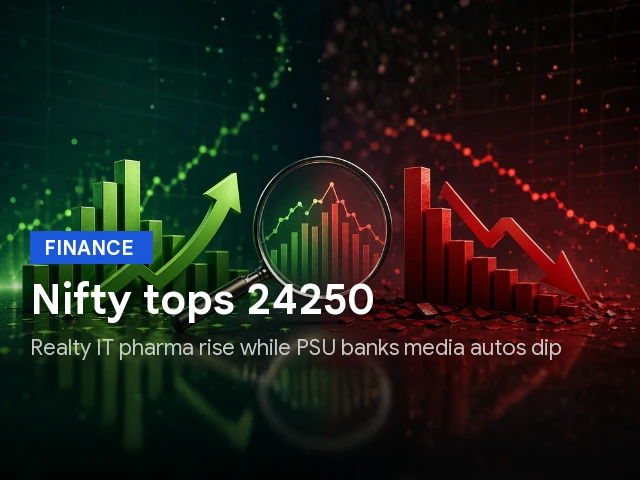

Key Takeaways
- Nifty share price closed at 24,270.85, up 95.15 points (0.39%).
- Sensex rose to 77,763.91, up 261.79 points (0.34%), with breadth positive across large caps.
- Nifty Realty index jumped 2.19% to 890.80, led by Lodha Developers up 5.08% among realty movers.
- Knack Packaging IPO subscribed 57.46x with price band 161-170 and a minimum lot of 88 shares.
nifty share price momentum continued as barometers extended their winning streak to a third session. The nifty share price at the close was 24,270.85 for the Nifty 50, up 95.15 points or 0.39%, while the Sensex rose 261.79 points to 77,763.91, a gain of 0.34%. Over three sessions, the Sensex has gained 1.68% and the Nifty 1.69%, signaling improving risk appetite despite intraday volatility. The India VIX slid 3.98% to 11.80, signaling a softer near-term volatility environment. In the broader market, the BSE 150 MidCap Index fell 0.25% while the BSE 250 SmallCap Index rose 0.09%, painting a nuanced view of market breadth.
Nifty Share Price Movements: Above 24,250 As Three-Session Rally Continues
Realty, IT, and pharma stocks led the advance as the Nifty Realty index climbed 2.19% to 890.80, continuing a four-session run with an 8.78% gain across the period. Real estate movers included lodging a broad rally: Lodha Developers up 5.08%, Oberoi Realty up 3.45%, Anant Raj up 3.37%, Brigade Enterprises up 3.32%, DLF up 2.73%, Phoenix Mills up 1.95%, Godrej Properties up 1.24%, and Sobha up 0.72%. On the downside, Aditya Birla Real Estate fell 1.06% and Prestige Estates Projects fell 0.27%. These moves underscore a bias toward real estate plays on improving sentiment and funding activity.
Knack Packaging IPO Watch: Subscription Rate And Price Band
The Knack Packaging IPO opened on 01 July 2026 and closed on 03 July 2026. The issue was priced in a band of Rs 161-170 per share and allowed bids for a minimum of 88 equity shares and multiples thereof. Bids received stood at 1,08,97,61,376 against 1,89,64,018 on offer, resulting in a subscription of 57.46 times. This level of oversubscription indicates strong investor interest in the packaging niche and reflects anticipation of solid growth in end-use industries.
Lodha Developers Stock And Real Estate Movers: A Day Of Gains
The real estate space consolidated gains with Lodha Developers stock up 5.08%, contributing to the sector's broader strength. Oberoi Realty rose 3.45%, Anant Raj 3.37%, Brigade Enterprises 3.32%, DLF 2.73%, Phoenix Mills 1.95%, Godrej Properties 1.24%, and Sobha 0.72%–all adding to a positive tone for realty leadership. Meanwhile, Aditya Birla Real Estate declined by 1.06% and Prestige Estates Projects by 0.27%, underscoring that sector rotation included both winners and laggards in a high-beta space.
HCL Technologies Stock Price Action And AI Transformation Deal
The hcl technologies stock surged 5.80% after the company announced an agreement with a Europe-headquartered Fortune Global 50 Firm to transform their global digital workplace and enterprise networks using Artificial Intelligence. This move signals a widening adoption of AI-led modernization in enterprise IT infrastructure, potentially creating spillover benefits across tech services and related software ecosystems. The broader tech space remained responsive to AI-related news as large-cap software names displayed strength in today’s session.
Global Cues And Market Signals: US Jobs Data, PMI Readings, And Brent Crude
Global markets reflected a mixed but cautiously optimistic mood: most European indices traded lower, while Asian markets closed higher as weaker-than-expected US jobs data stoked expectations of a future Federal Reserve rate cut. Japan's services PMI rose to 52.2 in June from 50.0 in May, indicating renewed expansion, while China's services activity remained above the 50-mark with a PMI of 54.1. In the US, the Dow Jones Industrial Average climbed to a record close of 52,900.07 as 57,000 jobs were added in June, below May’s revised 129,000 and below expectations of 110,000; the S&P 500 rose slightly to 7,483.24 and the Nasdaq fell 0.8% to 25,832.67. The Independence Day holiday kept major exchanges closed in the US on this Friday, resuming normal trade on Monday.
Rupee And Commodities Snapshot: USDINR, Brent Crude
The partially convertible rupee hovered around 95.2100 per dollar, versus 95.3550 in the previous session, while Brent crude for Sep 2026 settlement gained 0.24% to $71.97 a barrel, contributing to the energy complex’s mixed but bounded volatility as global demand signals evolved.
Corporate And Market Depth: Key Corporate Moves And Broad Indicators
On the corporate front, Maharashtra Seamless rose 0.77%, and Zydus Lifesciences gained 3.63% after signing a MoU with Apollo Hospitals to introduce Shield, a Multi-Cancer Detection test available in India. Central Bank of India rose 0.68% after reporting YoY growth in global gross advances to Rs 3,54,895 crore as of 30 June 2026, up from Rs 2,75,595 crore as of 30 June 2025. PC Jeweller rallied 3.74% following a ~21% YoY revenue uptick for the quarter ended 30 June 2026. Mahindra & Mahindra Financial Services slipped 1.21% as disbursements were guided to about Rs 15,560 crore with YoY growth around 21% (excluding finance lease). Bajaj Finance gained 1.30% after new loans booked rose 20% YoY to 1.61 crore in Q1 FY27, compared with 1.35 crore in the corresponding quarter last year.
In the broader market, the Dow’s performance was notable with a 594.83-point rise to 52,900.07, a record, while the S&P 500 traded near 7,483 and the Nasdaq hovered around 25,833. The day’s market breadth showed a positive tilt as 2,264 shares rose and 1,975 fell on the BSE, with 206 unchanged, underscoring selective leadership amid broader consolidation. First Published: Jul 03 2026 | 4:16 PM IST.
Frequently Asked Questions
What was the Nifty share price close today and the Sensex level?
The Nifty 50 closed at 24,270.85, up 95.15 points (0.39%), while the Sensex settled at 77,763.91, up 261.79 points (0.34%).
Which sectors led the market today and what was the Nifty Realty index movement?
Realty, IT and pharma shares advanced, with the Nifty Realty index climbing 2.19% to 890.80, contributing to a four-session gain of 8.78%.
How did Knack Packaging perform as an IPO, including subscription rate and price band?
Knack Packaging IPO opened on 01 July 2026 and closed on 03 July 2026, with a price band of Rs 161-170. It was subscribed 57.46 times, with bids of 1,08,97,61,376 against 1,89,64,018 on offer; minimum lot is 88 shares.
What moved HCL Technologies stock today and what deal influenced it?
HCL Technologies stock rose 5.80% after announcing an AI-driven transformation deal with a Europe-headquartered Fortune Global 50 Firm to upgrade their digital workplace and enterprise networks.
What were the key US and global cues affecting markets today?
US job data showed 57,000 jobs added in June, with May revised to 129,000 and expectations around 110,000. The Dow rose to a record close of 52,900.07, while the S&P 500 and Nasdaq were around 7,483 and 25,833 respectively; markets also noted softer near-term volatility as India VIX fell 3.98% to 11.80.
Conclusion
For the retail investor, today’s session reinforces that resilient breadth and sector leadership can coexist with modest volatility, especially as realty, IT, and select pharma names outperformed. The next step is to build a framework that combines price action with fundamental signals from corporate news and macro data: use trend-following rules for broad exposures and selective, risk-managed bets on realty names or tech leaders showing AI-driven order books. To dive deeper into stock-level analysis and tailor ideas to your portfolio, consider Swastika’s Sarthi AI stock assistant, which can help translate today’s price moves into actionable ideas and risk controls: Swastika's Sarthi AI stock assistant.
As you digest these moves, keep a ready watchlist on the nifty share price level around 24,250 to 24,500 and monitor the Nifty Realty, IT, and pharma segments for continued leadership. Use the current data as a baseline to assess how fresh IPO activity, like Knack Packaging’s robust subscription, and AI-driven corporate strategies might shape risk and return in the weeks ahead. The interplay between domestic strength and global cues will likely keep the market range-bound with selective bursts of upside, making disciplined position sizing and scenario planning essential for retail investors.
Latest Articles
Bajaj Finance Dividend ₹6 per share - Should You Invest Now?


Key Takeaways
- Bajaj Finance shares receive a ₹6 per share dividend with record date 30-Jun-2026, signaling a yield event.
- Dividend news may lift Bajaj Finance shares briefly but does not replace fundamentals or earnings.
- Keep an eye on NBFCs and financials for similar dividend moves to gauge sector sentiment.
- If you already own Bajaj Finance, consider your exit or entry plan around the ex-date rather than chasing the dividend.
Bajaj Finance Dividend Details
Bajaj Finance Limited has announced a dividend of ₹6 per share on its equity shares with a face value of ₹500. The record date for the dividend is 30-Jun-2026, and the ex-date is also 30-Jun-2026. This marks a straightforward yield event for holders of Bajaj Finance shares ahead of the summer pupdate in 2026. The announcement aligns with the company’s ongoing dividend policy, but investors should recognize that the dividend alone does not alter the underlying business fundamentals or growth trajectory.
Why Bajaj Finance Declares ₹6 Dividend?
The board approved a dividend of ₹6 per share on the outstanding equity, reflecting a commitment to returning capital to shareholders. With a face value of ₹500, this payout represents a clear distribution to investors who hold the stock as of the record date. While a dividend helps cash returns, it does not indicate a direct earnings upgrade and should be weighed against the stock’s price and growth profile.
Market Context and Price Action Around Ex-Date
Dividend announcements often lead to modest near-term price movements as the stock goes ex-dividend. For Bajaj Finance, investors should expect some price adjustment around the ex-date, with the potential for a temporary pullback if the market has priced in the dividend ahead of time. Long-term investors should focus on the company’s earnings trajectory, credit quality, and disbursement growth to gauge sustained value beyond the dividend yield.
Impact on Investors
HOW this affects Bajaj Finance Shares
The ₹6 per share dividend adds to the total return for existing holders and can slightly lift the income profile for the stock in the near term. However, investors should avoid viewing the payout as a sole trigger for new purchases. The stock’s performance will still hinge on fundamentals such as loan growth, risk management, and macroeconomic conditions affecting NBFCs.
WHICH sectors/stocks by name
- 1st Priority: Financial services sector - monitor NBFCs for yield-driven moves and funding environment.
- 2nd Priority: Peer NBFCs and consumer finance companies - compare dividend yields and valuation multiples to Bajaj Finance.
- Avoid Now: High-valuation growth tech and momentum plays until market volatility subsides.
What SIP, Lumpsum and Traders Should Do Now
- SIP investors: If you already own Bajaj Finance, maintain exposure but avoid adding on dividend news alone; reassess on fundamentals. Consider diversifying across financials to balance yield with growth.
- Lumpsum investors: Avoid initiating large buys solely for the dividend; wait for confirmation of earnings trajectory and business visibility before adding exposure.
- Traders: Expect near-term volatility around the ex-date; use tight risk controls and consider hedging if you hold positions with exposure to NBFC cyclicality.
Swastika Investmart Note: Bajaj Finance’s ₹6 per share dividend provides a modest yield and should not be the sole basis for a purchase. Our equity research helps time entries around the ex-date and assess whether the dividend aligns with the stock’s risk-reward in the current market environment.
Key Risks of Holding or Buying
Why Bajaj Finance Shares Could Fall After Dividend News
- Ex-dividend price adjustments can create short-term volatility even as the dividend yield offers cash returns.
- NBFCs face regulatory and macroeconomic risks that can impact credit quality and loan growth.
- Dividend announcements may not reflect improvements in profitability, so price momentum often reverts if growth remains muted.
FAQ
What is the dividend amount per share?
₹6 per share on Bajaj Finance’s equity shares with a record date of 30-Jun-2026.
Who qualifies for the dividend?
Shareholders of Bajaj Finance on the record date (30-Jun-2026) qualify for the dividend; the ex-date is the same day.
How might this affect the stock price in the short term?
There could be a small price adjustment around the ex-date; long-term performance will depend on fundamentals and market conditions for NBFCs.
Should I buy Bajaj Finance just for the dividend?
No — dividend alone should not drive a large investment; evaluate the company’s earnings growth, asset quality and risk tolerance before adding or increasing exposure.
Conclusion
Bajaj Finance’s ₹6 per share dividend provides a modest yield but should not be the sole reason to buy. Investors should weigh fundamentals, ex-date dynamics, and risk tolerance before making any new or additional Bajaj Finance exposure.

40% premium on CMR Green Technologies IPO - Should You Buy?
Key Takeaways
- CMR Green Technologies IPO listed on 10 June 2026 at 40% premium on NSE.
- Retail investors who participated may have seen gains as listing excitement persisted in the renewable energy space.
- Watch for regulatory and governance factors in wind energy stocks as the post-listing phase unfolds.
- Consider a disciplined approach today: assess risk, limit exposure and use a wait-and-watch stance before adding more.
CMR Green Technologies IPO – Key Details
WHY 40% PREMIUM HAPPENED FOR THIS IPO
The 40% listing premium seen on the CMR Green Technologies IPO reflects robust demand from both retail and institutions as the wind energy sector benefits from policy tailwinds and commodity linked optimism. The company's focus on aluminium recycling within renewables signals a capital-light, growth oriented business that investors expect to benefit from improved capex cycles. Higher premium on listing often occurs when floats are tight and demand outpaces supply; in this case the float appears constrained compared with the size of the issue. While GMP and grey market cues point to enthusiastic near term sentiment, the actual listing path remains sensitive to broader market liquidity, regulatory signals, and the company's ability to meet initial business milestones.
Deeper context and listing dynamics
In today's IPO environment, new listings in the renewable energy space have drawn attention due to policy push and capex cycles. For CMR Green Technologies, the debut is being watched as a test of demand for mid cap names in sustainability and metals recycling. Retail investors should be mindful that a premium on opening can fade over the first few sessions if the broader market remains choppy or if the company's post listing disclosures disappoint. Market participants also watch how the stock behaves relative to peer wind and metal recycling stocks, as cross sector flows can influence post listing performance. If the initial excitement sustains, the stock could attract further participation from funds looking to diversify into green themes.
Impact on investors
HOW this affects specific holdings
The listing adds exposure to the wind energy and circular economy space. If you already hold renewable energy or metal recycling stocks, use this post listing period to re evaluate risk and consider hedges if you rely on pure speculation. New entrants should be cautious about chasing a 40 premium and instead watch price action and fundamental updates before committing fresh capital. For investors with limited risk capital, the excitement around this IPO should not eclipse the need for diversification and discipline in position sizing.
WHICH SECTORS/STOCKS TO WATCH
- 1st Priority: Renewable energy mid cap stocks - valuation patience and governance risk remain key.
- 2nd Priority: Metals recycling players - benefits from policy tailwinds but watch execution risk.
- Avoid Now: Highly volatile tech IPOs - listing hype can inflate initial premiums beyond sustainable levels.
What SIP, Lumpsum and Traders Should Do Now
- SIP investors: Maintain systematic allocations to diversify risk rather than chasing a single new listing.
- Lumpsum investors: Consider waiting for price stabilization and clarification on price band and post listing disclosures.
- Traders: Use tight stop losses and be prepared for volatility in the first 3-5 sessions.
Swastika Investmart notes that the 40 premium on CMR Green Technologies IPO points to strong demand but listing day volatility risk for retail investors; consider using our IPO research tools to evaluate GMP signals.
Key risks after listing
Why the listing premium may unwind
- The initial premium can fade as the market digests fundamentals and post listing disclosures
- Regulatory clarity and governance signals in the wind energy sub sector influence sentiment
- Liquidity constraints in mid cap IPOs can amplify price swings during the first 1-2 weeks
FAQ
What is the listing premium on CMR Green Technologies IPO?
The stock listed at around a 40% premium on NSE on its listing day.
Should retail investors apply for this IPO?
Yes, if you have a risk tolerance aligned with IPOs and the GMP trend confirms demand; otherwise consider waiting for post listing clarity.
What is GMP and how does it impact listing?
GMP is a market based indicator that signals early demand; it should not be the sole trigger for investment but can guide risk management.
What should I watch after the listing?
Monitor post listing price action, sector policy updates, and quarterly disclosures to adjust exposure accordingly.
Conclusion
CMR Green Technologies IPO delivered a strong opening with a 40% premium, signaling initial enthusiasm but also risk. Investors should wait for price stabilization and clearer post-listing disclosures before committing fresh capital.

Is Glenmark Pharma's 5x Profit a Buy for You Today?
Key Takeaways
- Glenmark Pharma stock faces a bullish reframing as Motilal Oswal reiterates a positive stance, signaling a potential 5x profit trajectory over two years.
- This broker note could attract renewed attention to the pharma stock and related healthcare names as the sector reactions unfold.
- Monitor any explicit target price or management guidance to validate upside and refine your stance on Glenmark shares.
- If you are willing to take on risk, consider a measured entry rather than a full allocation and set clear risk controls.
Glenmark Pharma Share Price - Key Data
Why Glenmark Shares Could Rally After Motilal Oswal Note
Glenmark Pharma stock has captured attention after Motilal Oswal reiterated a bullish stance, signaling upside from a supportive broker note. The note highlights improving earnings visibility and potential multiple expansion over the next two years, which could lift valuations for the pharmaceutical mid-cap. Retail investors should monitor for any explicit price targets or management commentary that could confirm the growth narrative for Glenmark shares.
Motilal Oswal's thesis and what to watch
The broker's positive stance acts as a catalyst for near-term upside, while the absence of specific numbers means investors should await clarity on the target price before committing large sums. In the Indian pharma space, a broad recovery in margins and recurring product approvals could further support gains for Glenmark stock, particularly if cost controls improve.
Impact on Investors - What Should You Do?
HOW this affects specific holdings
For existing holders of Glenmark Pharma shares, the brokerage note can justify holding with tighter risk controls; for new buyers, consider staggered entry rather than a full allocation to manage volatility in mid-cap pharma stocks.
WHICH sectors/stocks by name
- 1st Priority: Pharma - Glenmark peers like Sun Pharma and Cipla offer related upside if the sector rallies.
- 2nd Priority: Healthcare services - demand signals could support valuations beyond pure pharma.
- Avoid Now: IT and tech heavyweights - relative valuation and risk-off moves may keep these muted.
What SIP, Lumpsum and Traders Should Do Now
- SIP investors: Maintain existing SIPs in healthcare exposure and avoid concentrated bets; consider gradual additions if volatility allows.
- Lumpsum investors: Consider a small starter allocation and wait for clearer guidance on the target price before loading up.
- Traders: Use logical stop-losses and hedging strategies to manage volatility while awaiting confirmation of a sustained up-move.
Swastika Investmart notes that Motilal Oswal's bullish stance could provide a near-term uplift for Glenmark Pharma, particularly in the pharma mid-cap space. Given the regulatory and earnings uncertainties that typical mid-cap pharma stocks face, using our stock research tools to track price action and broker commentary can help you time selective entries with defined risk controls.
Key Risks to Watch
Why regulatory risk could hit mid-cap pharma stock valuations
- Regulatory approvals and pricing dynamics in India can impact earnings visibility.
- Competitive pressure from generics may compress margins over time.
- Market volatility and global risk-off moves can cap upside in the near term.
FAQ
What is driving Glenmark Pharma's stock move today?
The renewed attention stems from Motilal Oswal's reiterated positive stance and the prospect of a multi-year upside hinted by the broker.
Should retail investors buy Glenmark Pharma now?
Depends on risk tolerance; a small, measured exposure with defined stop-losses is prudent for most retail investors.
What is the time horizon for the upside?
The broker's framework suggests a potential multi-year path toward higher earnings and multiples over the next two years.
Which other stocks could move with this theme?
Other pharma names like Sun Pharma and Cipla may see sympathy gains if pharma sector sentiment improves.
Conclusion
Glenmark Pharma faces a potential upside if Motilal Oswal's bullish stance translates into sustained momentum. Retail investors should consider a cautious entry aligned to risk appetite and monitor broker updates and price action for confirmation before scaling up.

Wipro ₹15,000 crore buyback Should You tender shares?
Key Takeaways
- Wipro's ₹15,000 crore buyback opens on June 10, 2026 with a tender price of ₹250 per share.
- Retail investors can tender at ₹250, a 38% premium to the prior close of ₹181.67, potentially monetising holdings.
- This buyback creates near term price action risk and opportunity, so review your position and consult equity research.
- If you already own Wipro, consider tendering a portion or waiting for post window price action based on management commentary.
Wipro Share Price - Key Data
Wipro's Rs 15,000 crore buyback opens on June 10, 2026 and runs through June 17, 2026. The tender price is ₹250 per share, which represents a 38% premium to the stock's previous close of ₹181.67.
WHY WIPRO'S ₹15,000 CRORE BUYBACK MATTERS FOR RETAIL INVESTORS
The buyback creates a near‑term price anchor and liquidity option for shareholders. Retail investors can decide to tender a portion of their holdings to secure cash at a premium while keeping some exposure to potential upside if the stock remains resilient.
Deep context: Buyback size and terms
The ₹15,000 crore buyback size and a 17 June tender window are large for Wipro; the premium suggests management aims to support stock price but actual tender acceptance may be limited by proportionate offer and tax treatment.
What This Means for Investors
HOW this affects Wipro shareholders
Shareholders holding Wipro shares can choose to tender, which lets them cash out at ₹250; those who do not tender retain exposure and potential price movement beyond the window.
WHICH sectors/stocks by name
- 1st Priority: Information technology stocks - look for buyback‑related price actions in large‑cap IT names.
- 2nd Priority: Financials and capital markets - tender windows can influence liquidity and trading volumes.
- Avoid Now: High‑valuation, growth‑sensitive names with limited buyback catalysts.
What SIP, Lumpsum and Traders Should Do Now
- SIP investors: Do not chase the buyback; maintain long‑term discipline and avoid turbo‑charged entries.
- Lumpsum investors: Consider allocating a small portion to tender if you want cash at a premium, after reviewing tax implications.
- Traders: Watch price action during the open window and use protective stops if you maintain a position beyond the tender period.
Swastika Investmart notes that the ₹15,000 crore Wipro buyback introduces near‑term price action risk; investors should review price action and consult our equity research before tendering.
Key Risks After This Buyback
Regulatory and price action risks in the IT large‑cap space
- The tender process may not capture all potential gains if the stock trades down after the window closes
- Market volatility during June 10–17 can distort price discovery and post‑close performance
- Tax treatment on buyback gains depends on holding period and regime
FAQ
When does the Wipro buyback open and close?
It opens on June 10, 2026 and closes on June 17, 2026.
What is the tender price for the buyback?
₹250 per share, with a 38% premium to the last close.
Who can tender their shares?
All shareholders on record during the open window; retail investors can tender within the window.
What should retail investors do now?
Review your Wipro holding, consult equity research, and decide whether to tender a portion or hold.
Conclusion
Wipro's buyback offers a near term cash premium for tendering, but post window price action is uncertain. Review your holdings, consult equity research, and decide on tendering a portion based on your risk tolerance and tax considerations.

Is ₹52,290 crore IPO Wave Worth Your Money Today, Retail Investors?
Key Takeaways
- The ₹52,290 crore IPO wave across two months signals one of the busiest listing pipelines in 2026.
- Retail investors may see liquidity shifts as new listings hit the market, with banks and consumer names likely to lead.
- Keep an eye on listing data and GMP to gauge quality and pricing before subscribing to any issue.
- Take a disciplined approach today by using IPO research and small allocations to manage risk.
IPO Wave in India – What’s Happening and Why It Matters
WHY ₹52,290 crore IPO wave matters for your money
The current wave of listings totals about ₹52,290 crore across roughly a dozen issuances in the next two months, encompassing IPOs, institutional placements, and government stake sales. For retail investors, this means heightened deal flow and greater choice, but also a tighter liquidity environment that can test stock selection discipline.
Deeper context and timing
NDTV Profit reports a busy two‑month window with government stake sales and placements supplementing traditional IPOs, signaling a sustained capital-raising cycle. Market participants should watch subscription momentum, GMP trends, and the quality of management teams as these issues come to market.
Impact on Investors
How this affects your holdings
Fresh listings can reallocate investor money and shift price action away from established mid‑caps, potentially weighing on some existing holdings while offering new entry points in other sectors. Retail portfolios should avoid crowding into many IPOs at once and instead prefer well‑funded names with clear visibility.
Which sectors/stocks by name
- 1st Priority: Financials - new listings could influence valuations and capital allocation in banks and NBFCs
- 2nd Priority: Consumer staples and discretionary - stable demand supports listing visibility but valuations remain key
- Avoid Now: Small-cap IPOs lacking robust business models and credible earnings visibility
What SIP, Lumpsum and Traders Should Do Now
- SIP investors: Maintain diversification and avoid overweighting IPOs; continue systematic investments in broad funds
- Lumpsum investors: Use small starter allocations to credible, well‑funded issues; wait for GMP movement before big commitments
- Traders: Consider listing-day hedges and avoid chasing every issue; use price limits and stop‑loss orders to manage risk
Swastika Investmart notes that a ₹52,290 crore IPO wave signals a busy two‑month calendar across multiple sectors. The immediate risk is listing‑day volatility, so investors should monitor subscription data and GMP signals. Consider using our IPO research desk to guide allocations.
Key Risks After This IPO Wave
Why listing day volatility can challenge your holdings
- Listing‑day jumps and sudden price drops can trap unseasoned investors
- Valuations across the new issues may be stretched in the initial weeks
- Liquidity can shift away from existing mid‑cap names as new listings soak up capital
FAQ
What is the size of the current IPO wave?
Around ₹52,290 crore across roughly a dozen issuances over two months.
Which sectors are most involved in this wave?
A mix of financials (banks and NBFCs), government stake sales, and consumer‑facing names.
What should a retail investor do before subscribing?
Review subscription data, GMP signals, and avoid allocating too much to a single issue; prefer high‑quality issuers with clear business models.
Should SIP/Lumpsum investors participate in IPOs now?
Exercise caution; diversify across funds and limit IPO allocations to well‑understood opportunities.
Conclusion
The current ₹52,290 crore IPO wave offers selective opportunities but demands disciplined risk management. Retail investors should rely on IPO research, monitor GMP data, and allocate cautiously. Start by building a focused watchlist and subscribe only to credible issues with defined growth paths.

Rupee ₹95.54 level You Should Rebalance Your Portfolio Today?
Key Takeaways
- Rupee trades at ₹95.54 per dollar this morning as oil prices rise, signaling currency pressure.
- The weaker rupee can lift import costs and pressure margins for oil and consumer staples exposed players.
- Watch the USD/INR level and crude price trajectory to gauge exposure in your holdings.
- Today, hedge currency risk using a USD/INR futures or other FX hedging strategy on Swastika Investmart's platform.
Rupee Opens Lower at 95.54 Against Dollar Amid Oil Pressure
The Indian rupee opened weaker at 95.54 per US dollar as global crude benchmarks climbed and demand for the greenback rose, underscoring elevated currency risk for importers and businesses with USD liabilities. Rising oil prices push up the current account deficit and keep the rupee under pressure, particularly in sessions following geopolitical or supply-side developments. In parallel, domestic equities priced in higher energy costs and potential inflationary effects, which can influence consumer sentiment and corporate profitability in the near term.
WHY Rupee Moves to ₹95.54 Against the Dollar
The currency move reflects a combination of rising crude prices and persistent USD strength, which tends to elevate import costs for India’s energy import bill and widen the trade deficit. Given India’s energy mix, crude sensitivity remains a key driver of near-term rupee volatility, with macro headlines and oil-market signals feeding into daily price action. Traders and investors should monitor the path of oil futures and the greenback’s trajectory for guidance on next steps in their portfolios.
Oil Prices, Oil Price Movements and Market Read
Oil-market dynamics remain pivotal for the rupee, as a sustained oil rally compounds external pressures on the currency and domestic inflation expectations. Any escalation in crude prices can keep rupee levels sticky around the mid-95s, potentially affecting the cost structure of import-heavy industries and capital-intensive sectors. For equity investors, sector performance may hinge on how quickly inflation expectations adjust and whether market sentiment stabilizes after initial volatility.
Impact on Investors
HOW this affects specific holdings
Currency moves directly influence companies with USD-denominated costs or revenues. Importers, commodity-linked players, and IT firms that incur USD expenses can see margin pressure if the rupee remains weak. Exporters and software services with USD revenue streams may benefit from a weaker rupee on a relative basis, but rapid movements can create earnings visibility challenges if hedging is incomplete or misaligned with reporting cycles. Overall, portfolios with concentrated USD exposure or heavy commodity bills should reassess hedging policies and risk budgets for the near term.
WHICH sectors/stocks by name
- 1st Priority: Oil importers and energy-heavy consumer goods - higher input costs can dent margins if USD strength persists.
- 2nd Priority: IT services with USD expenses - earnings can be affected by INR depreciation and hedging needs.
- Avoid Now: Unhedged high USD-exposed importers - added currency risk could amplify downside in a volatile environment.
What SIP, Lumpsum and Traders Should Do Now
- SIP investors: Maintain discipline and avoid large changes based on daily rupee moves; focus on long-term asset allocation and diversified exposure.
- Lumpsum investors: Consider partial hedges or staggered entries to manage currency risk while tracking oil and USD signals.
- Traders: Use defined currency hedges (e.g., USD/INR futures) to cap downside on USD liabilities and monitor hedge effectiveness as oil moves evolve.
Swastika Investmart view on this news will be shared below in the dedicated paragraph.
Key Risks for Investors
Key Risks
- Persistent oil-price-driven currency weakness could erode margins for import-intensive sectors.
- Dollar strength may complicate hedging effectiveness and escalate inflation concerns.
- Short-term volatility can lead to mispricing in commodity-linked stocks and IT services with USD costs.
FAQ
What caused the rupee move today?
Rising crude oil prices and dollar strength contributed to the rupee weakening to about ₹95.54 per dollar.
Which sectors are most affected by the rupee move?
Oil importers and commodity-linked sectors are most sensitive to USD-INR volatility.
Should you hedge currency exposure now?
Yes—if you have USD costs or receivables, consider currency derivatives to manage downside risk.
What indicators should I watch this week?
Oil price trajectory and USD/INR movements around the 95–96 band; also monitor any policy signals that affect hedging costs.
Conclusion
The rupee’s move to ₹95.54 against the dollar signals oil-driven currency risk that can affect importers and USD-exposed stocks. Consider a disciplined hedging plan and monitor USD/INR and oil trends through the week to guard portfolio value.
Big Budget


Popular Articles



.avif)
.avif)

.avif)



START YOUR INVESTMENT JOURNEY
Get personalized advice from our experts
- Dedicated RM Support
- Smooth and Fast Trading App
