

Good Friday 2026: Stock Market, Banks, Currency & Commodity Markets Closed on April 2


%20(3).webp)

 Add Swastika as preferred source
Good Friday 2026 brings an important update for investors and traders across India. On April 2, 2026, financial markets including equity, currency, and commodity segments will remain closed in observance of this significant Christian holiday.
If you actively trade or invest, it is essential to plan your positions and transactions in advance to avoid last-minute surprises.
Quick Highlights
- NSE and BSE will remain closed on April 2, 2026
- Equity, derivatives, currency, and commodity segments will not operate
- Banks will be closed in most regions across India
- Markets will reopen on Monday, April 6, 2026
Why Markets Are Closed on Good Friday
Good Friday is a widely observed public holiday in India, marking the crucifixion of Jesus Christ. As per official exchange holiday calendars, major financial institutions pause operations on this day.
Stock exchanges like NSE and BSE, regulated by SEBI, follow a predefined list of trading holidays each year. Good Friday is one of the key non-trading days, ensuring uniform closure across all segments.
What Exactly Is Closed on April 2, 2026
Equity Market
No trading activity will take place in equities. Investors cannot buy or sell shares on this day.
Derivatives Segment
Futures and options trading will remain suspended across all indices and stocks.
Currency Market
Currency trading, including USD-INR and other pairs, will be closed.
Commodity Market
Commodity exchanges like MCX will remain shut for the entire day, impacting traders dealing in gold, silver, crude oil, and other commodities.
Bank Holiday on Good Friday
Banks across most states in India observe Good Friday as a holiday. However, the exact status may vary slightly depending on regional guidelines issued by the Reserve Bank of India.
While physical branches remain closed, digital banking services like UPI, net banking, and mobile apps will continue to function normally.
What Should Investors Do
Plan Trades in Advance
Since markets will be closed, ensure that all urgent trades or portfolio adjustments are completed before April 2.
Avoid Last-Minute Decisions
Liquidity remains unaffected before and after holidays, but sudden global developments during market closure can impact opening trends.
Stay Updated with Global Cues
Even though Indian markets are closed, global markets may remain open. Keep an eye on international developments that could influence market movement when trading resumes.
How Swastika Investmart Helps You Stay Prepared
During market holidays like Good Friday, having access to reliable insights becomes crucial. Swastika Investmart, a SEBI-registered broker, empowers investors with:
- Advanced research and advisory tools
- A robust, tech-driven trading platform
- Dedicated customer support
- Continuous investor education
These features help you stay informed and ready for the next trading session.
When Will Markets Reopen
After the Good Friday holiday on April 2, 2026, markets will remain closed over the weekend. Trading will resume on Monday, April 6, 2026, following regular market hours.
Conclusion
Good Friday 2026 serves as an important non-trading day for Indian financial markets. Whether you are an active trader or a long-term investor, understanding market holidays helps you manage your investments better.
Stay prepared, stay informed, and use this time to review your portfolio strategy.
To plan your next move with confidence, explore Swastika Investmart’s platform here:
Big Budget









.webp)
.webp)
.webp)
.webp)
.webp)













.webp)
.webp)
.webp)
.webp)
Latest Articles
Why Kevin Warsh as Fed Chair Is Spooking Global Markets


Summary
- Speculation around Kevin Warsh as Fed Chair has triggered profit booking across metals, crypto and equities
- A potentially hawkish Federal Reserve strengthens the US dollar and tightens global liquidity
- Gold and commodities corrected sharply as interest rate expectations shifted
- Indian markets felt the ripple effect, with Sensex and Nifty snapping a three-day rally
Kevin Warsh Fed Chair Buzz and Why Markets Care
Global financial markets rarely react to political speculation unless it directly impacts liquidity, interest rates or currency stability. The growing buzz around Kevin Warsh being the frontrunner for the next Chair of the US Federal Reserve ticks all three boxes.
Formerly a Federal Reserve Governor, Warsh is viewed as supportive of lower interest rates over the long term. However, compared to more aggressive stimulus advocates, he is also considered relatively cautious. That balance has made markets nervous.
As rumours gained traction, investors across asset classes began reassessing risk, leading to visible corrections in precious metals, cryptocurrencies and equities worldwide.
Why Precious Metals Reacted First
Gold prices fell over four percent as markets priced in the possibility of a less accommodative Federal Reserve. The relationship is straightforward.
A hawkish Fed typically leads to higher interest rates and a stronger US dollar. Since gold does not generate yield, rising rates reduce its appeal relative to interest-bearing assets. At the same time, a stronger dollar makes gold more expensive for non-US buyers.
Analysts pointed out that gold was already in overbought territory, making it vulnerable to sharp profit booking once macro uncertainty surfaced. The Warsh speculation acted as the trigger.
This move also weighed on broader commodity markets, as tighter global liquidity generally dampens demand expectations.
Impact on Bitcoin and the Crypto Market
Cryptocurrencies thrive in environments with abundant liquidity and low borrowing costs. As expectations of monetary easing were scaled back, digital assets came under pressure.
Bitcoin, often treated as a high-risk, high-reward asset, tends to struggle when interest rates rise and risk appetite declines. Investors shift capital towards safer instruments, reducing speculative exposure.
Concerns around heavy capital spending by Big Tech on artificial intelligence without immediate earnings visibility added to the cautious tone. With credit spreads already tight, markets that were firmly risk-on began to pause.
This combination of tighter liquidity expectations and valuation concerns proved unfriendly for crypto assets.
Equities Feel the Heat Globally
Equity markets are sensitive to funding costs. A hawkish Federal Reserve raises the cost of capital, potentially slowing economic growth and corporate earnings.
US markets ended mostly lower, with futures indicating further pressure. Technology-heavy indices were particularly affected due to their dependence on future growth and lower discount rates.
European markets showed relative resilience, but Asian equities displayed mixed performance. While South Korea’s Kospi closed higher, key indices in Japan, China and Hong Kong ended in the red.
This divergence highlights how global markets are reassessing regional exposure amid shifting US monetary expectations.
What It Meant for Indian Markets
Indian equities were not immune to global cues. Both Sensex and Nifty snapped a three-day rally, dragged lower by metal and IT stocks.
Metal stocks mirrored the decline in global commodity prices, while IT stocks faced pressure due to their sensitivity to US interest rates and currency movements. A stronger dollar often impacts IT margins and client spending outlook.
Despite the decline, the broader structure of Indian markets remains supported by domestic flows, a stable regulatory environment and improving corporate balance sheets.
SEBI’s robust market oversight and India’s improving macro fundamentals continue to provide long-term stability, even during phases of global uncertainty.
How Investors Can Navigate Such Macro Shocks
Episodes like these underline the importance of diversification and disciplined investing. Short-term volatility driven by global policy speculation often creates noise rather than long-term trend shifts.
Investors should focus on asset allocation, quality businesses and risk management rather than reacting emotionally to headlines. Monitoring global central bank signals is important, but decisions should align with individual financial goals.
This is where research-backed platforms and professional guidance make a difference.
Why Swastika Investmart Stands Out in Volatile Markets
Swastika Investmart, a SEBI-registered brokerage, equips investors with strong research tools, timely market insights and tech-enabled investing platforms.
From daily market updates to in-depth macro analysis, the focus remains on investor education and informed decision-making. Reliable customer support and transparent processes further help investors stay confident during uncertain times.
In fast-changing global environments, having access to credible research and structured advice can significantly improve outcomes.
Frequently Asked Questions
Why did gold prices fall on Kevin Warsh Fed Chair speculation
Markets fear a more hawkish Fed, which supports higher interest rates and a stronger dollar, both negative for gold prices.
How does a hawkish Federal Reserve affect Indian markets
It can lead to foreign fund outflows, pressure on equities and currency volatility, especially in rate-sensitive sectors.
Is Bitcoin directly impacted by US interest rate expectations
Yes, tighter liquidity and higher rates reduce risk appetite, which often weighs on cryptocurrencies.
Should long-term investors worry about such global news
Short-term volatility is common, but long-term investors should stay focused on fundamentals and asset allocation.
How can Indian investors track global macro risks better
Using research-driven platforms, market insights and professional advisory services helps investors stay prepared.
Final Thoughts
Speculation around leadership changes at the US Federal Reserve highlights how interconnected global markets have become. While such developments can trigger short-term volatility, they also offer learning opportunities for disciplined investors.
With the right research, tools and guidance, navigating global uncertainty becomes far more manageable.
If you want to invest with confidence backed by SEBI-registered expertise, advanced research tools and strong investor support, explore smart investing with Swastika Investmart.
FII DII Data Today 29 January 2026: Domestic Investors Offset Foreign Selling
Summary
- Today’s FII DII data for 29 January 2026 shows continued foreign selling
- Domestic institutional investors stepped in with strong buying support
- Net institutional flows remained positive despite market volatility
- Data reflects cautious global sentiment but resilient domestic confidence
Understanding Today’s FII and DII Activity in Indian Markets
Institutional activity plays a critical role in shaping short-term market direction. The FII DII data for today, 29 January 2026, provides valuable insight into how global and domestic investors are positioning themselves ahead of key economic and policy events.
As per provisional data released by the exchanges, foreign institutional investors were net sellers, while domestic institutional investors absorbed the selling pressure with strong inflows. This divergence highlights a familiar trend in Indian markets where domestic capital continues to act as a stabilising force during periods of global uncertainty.
FII DII Data Snapshot for Today 29 Jan 2026
On 29 January 2026, the institutional flow picture looked like this:
- Foreign Institutional Investors (FII): Net sellers worth approximately ₹394 crore
- Domestic Institutional Investors (DII): Net buyers worth around ₹2,639 crore
- Overall Net Institutional Flow: Positive at nearly ₹2,245 crore
This data reflects a scenario where foreign investors remained cautious, while domestic institutions displayed confidence in Indian equities.
Why Were FIIs Selling Today?
Foreign investors have been selectively reducing exposure to emerging markets, including India, due to a combination of global factors.
Key reasons behind FII selling on 29 January 2026 include:
- Uncertainty around global interest rate trajectories
- Volatility in US bond yields and currency markets
- Risk-off sentiment ahead of major global economic data
- Pre-positioning before India’s Union Budget
Such FII outflows are not uncommon during periods of global macro uncertainty and do not necessarily indicate weakness in India’s long-term fundamentals.
Strong DII Buying Signals Domestic Confidence
What clearly stood out in today’s FII DII data is the aggressive buying by domestic institutional investors. Mutual funds, insurance companies, and pension funds stepped in to support the market.
Domestic investors are increasingly guided by:
- Strong retail participation through SIPs
- Long-term economic growth visibility
- Stable corporate earnings outlook
- Policy continuity and regulatory transparency
The buying interest from DIIs helped cushion the impact of foreign selling and prevented sharper market declines.
Impact on Indian Equity Markets Today
Despite mixed institutional flows, Indian markets showed resilience during the session. While benchmark indices experienced volatility, heavy DII participation ensured that broader sentiment remained stable.
Banking and select large-cap stocks benefited from domestic buying, while IT and export-oriented sectors reflected global caution. This internal rotation within the market is typical when domestic investors selectively deploy capital rather than chase broad-based rallies.
What Today’s FII DII Trend Means for Retail Investors
For retail investors, the FII DII data for 29 January 2026 offers an important lesson. Markets do not move solely on foreign flows anymore. India’s growing domestic investor base now plays a decisive role in market stability.
When DIIs absorb FII selling, it often indicates confidence in medium to long-term fundamentals. However, it does not eliminate short-term volatility, especially around events like the Union Budget or global policy announcements.
Regulatory Perspective and Market Structure
India’s strong institutional participation is supported by a robust regulatory framework overseen by SEBI. Measures around transparency, disclosure norms, and investor protection have strengthened market confidence over time.
This framework has enabled domestic institutions to scale participation, ensuring that Indian markets are less dependent on volatile foreign capital flows compared to the past.
How Swastika Investmart Helps Investors Track Institutional Trends
Tracking daily FII and DII activity requires reliable data interpretation, not just raw numbers. Swastika Investmart, a SEBI-registered brokerage, supports investors with research-driven insights, institutional flow analysis, and market intelligence tools.
With technology-enabled platforms, timely research reports, and dedicated customer support, Swastika Investmart helps investors understand how institutional behaviour aligns with broader market trends.
Frequently Asked Questions
What is FII DII data?
FII DII data shows daily buying and selling activity of foreign and domestic institutional investors in Indian equity markets.
Why is today’s FII DII data important?
The data for 29 January 2026 highlights strong domestic buying that offset foreign selling, offering insights into market resilience.
Does FII selling mean markets will fall?
Not always. Strong DII participation can stabilise markets even when FIIs sell.
Who are domestic institutional investors?
DIIs include mutual funds, insurance companies, pension funds, and other large domestic financial institutions.
How can investors use FII DII data effectively?
It should be used as a sentiment indicator alongside fundamentals, earnings trends, and macroeconomic factors.
Final Thoughts
The FII DII data for today, 29 January 2026, clearly shows that domestic investors continue to play a crucial role in supporting Indian markets. While global uncertainty keeps foreign investors cautious, India’s long-term growth narrative remains intact.
For investors seeking clarity in such mixed environments, informed decision-making backed by quality research becomes essential.
👉 Open your trading and investment account with Swastika Investmart
Stay informed. Stay disciplined. Stay invested.
Market Closing Summary 30 January 2026: Indices End Lower Ahead of Union Budget
Summary
- Indian equity benchmarks ended mildly lower amid cautious pre-Budget trade
- Nifty IT underperformed due to global tech weakness and US rate concerns
- Banking stocks saw profit booking after recent gains
- Broader markets remained range-bound with selective buying
- Investors stayed defensive ahead of Union Budget announcements
How the Indian Stock Market Closed Today
Indian equity markets ended the final trading session of the week on a cautious note as investors preferred to reduce risk ahead of the Union Budget. Benchmark indices slipped modestly, reflecting profit booking in heavyweight sectors like banking and IT, while defensive pockets provided limited support.
At the closing bell, the Nifty 50 settled near 25,320, while the Sensex closed around 82,270. The broader tone remained subdued, with traders unwilling to take aggressive positions before key fiscal policy cues expected over the weekend.
The overall market sentiment was influenced by a mix of global uncertainty, Budget-related anticipation, and valuation concerns after the recent rally.
Index Performance at a Glance
- Nifty 50 declined around 0.4 percent, dragged by IT and banking stocks
- Sensex slipped nearly 300 points, mirroring weakness in frontline names
- Bank Nifty underperformed, falling close to 0.6 percent
- Nifty IT saw sharper cuts of over 1 percent amid global tech pressure
The intraday charts showed volatility during the second half of the session, indicating nervousness among short-term traders.
Why Markets Closed Lower Today
Pre-Budget Caution Dominated Sentiment
With the Union Budget just days away, market participants chose caution over conviction. Historically, Indian markets tend to trade in a narrow range before the Budget as investors wait for clarity on taxation, fiscal deficit targets, and sector-specific incentives.
Many institutional investors preferred trimming positions, especially in stocks that have delivered strong gains in recent weeks.
IT Stocks Faced Global Headwinds
The IT sector emerged as the biggest drag on the benchmarks. Concerns over slower discretionary spending in the US and uncertainty around interest rate cuts weighed on IT majors.
A stronger dollar and mixed cues from Nasdaq overnight further pressured sentiment. This led to broad-based selling across large-cap IT stocks, pulling the Nifty IT index lower.
Banking Stocks Saw Profit Booking
Banking stocks witnessed mild profit booking after a strong run-up earlier this month. While asset quality trends remain stable and credit growth healthy, traders booked gains ahead of the Budget, especially in PSU banks and private lenders.
The Bank Nifty’s decline reflected short-term caution rather than any structural weakness.
Sectoral Performance Overview
IT and Banking Lagged
Information technology and banking emerged as the worst-performing sectors of the day. Heavyweights in these spaces faced selling pressure, impacting overall index movement.
FMCG and Pharma Offered Stability
Defensive sectors like FMCG and pharmaceuticals provided some support to the market. These sectors often attract buying interest during uncertain periods due to predictable earnings and lower volatility.
Mid and Small Caps Remained Range-Bound
The broader market showed resilience despite frontline weakness. Mid-cap and small-cap indices traded sideways, with selective stock-specific action driven by earnings announcements and sector news.
Market Breadth and Investor Activity
Market breadth was slightly negative, with declines marginally outnumbering advances. Volumes were moderate, indicating that most participants stayed on the sidelines.
Domestic institutional investors remained selective buyers, while foreign portfolio investors appeared cautious amid global macro uncertainty and upcoming domestic policy triggers.
Regulatory and Policy Context
From a regulatory standpoint, market participants are closely tracking cues related to capital gains taxation, fiscal discipline, and sector allocations in the upcoming Budget. Any indication from the government on infrastructure spending, banking reforms, or incentives for manufacturing could significantly influence market direction next week.
SEBI’s continued focus on market transparency and investor protection has helped maintain stability, even during phases of uncertainty.
What Today’s Market Close Means for Investors
The market closing summary for 30 January 2026 highlights a classic pre-Budget setup. Volatility remains contained, but direction is missing. For long-term investors, such phases often present opportunities to accumulate quality stocks gradually rather than chase short-term momentum.
Traders, on the other hand, may continue to face choppy conditions until clear Budget cues emerge.
How Swastika Investmart Helps You Navigate Such Markets
In uncertain market environments like this, having access to reliable research and timely insights becomes crucial. Swastika Investmart, a SEBI-registered investment firm, supports investors with in-depth market analysis, real-time research calls, and technology-driven trading platforms.
Whether it is understanding sector rotation, tracking Budget-sensitive stocks, or managing risk through informed strategies, Swastika Investmart empowers investors with data-backed decision-making and strong customer support.
Frequently Asked Questions
Why did the Indian market fall on 30 January 2026?
Markets declined mainly due to pre-Budget caution, profit booking in banking stocks, and weakness in IT shares driven by global cues.
Which sector performed the worst today?
The IT sector underperformed the most, followed by banking stocks.
Is this market correction a concern for long-term investors?
No. The current decline appears to be a short-term consolidation rather than a structural downturn.
How does the Union Budget impact stock markets?
The Budget influences markets through tax policies, government spending, fiscal deficit targets, and sector-specific incentives.
What strategy should investors follow before the Budget?
A cautious, staggered investment approach focusing on fundamentally strong stocks is generally preferred.
Final Takeaway
The Indian stock market ended lower on 30 January 2026, reflecting caution rather than panic. With the Union Budget around the corner, volatility is likely to persist in the short term, but long-term fundamentals remain intact.
For investors looking to stay ahead of market moves and policy-driven opportunities, expert guidance and disciplined research are essential.
👉 Open your trading and investment account with Swastika Investmart today
Stay informed. Stay invested. Stay prepared.

Q3 Earnings Day: Volatility Expected as Major F&O Stocks Report Numbers
Q3 Earnings Day: Volatility Expected as Major F&O Stocks Report Numbers
Earnings season is one of the most volatile phases for Indian equity markets, and this Q3 earnings day is shaping up to be a crucial one. Several heavyweight stocks from sectors like FMCG, metals, auto, fintech, power finance, and IT services are reporting their December quarter numbers, setting the stage for sharp price moves in the derivatives segment.
When large F&O stocks announce results, markets do not just react to profit numbers. Guidance, one-time costs, regulatory impacts, and management commentary often play a bigger role in deciding short-term trends. With mixed earnings and rising cost pressures emerging across sectors, traders and investors should brace for heightened volatility.
Key Takeaways at a Glance
- Major F&O stocks are reporting mixed Q3 earnings
- One-time labour code provisions are impacting profits across sectors
- Fintech and metals stand out with strong turnarounds
- FMCG and auto show margin and demand pressure
- Volatility in index and stock-specific derivatives is likely to remain high
Why Q3 Earnings Matter More Than Usual This Time
The December quarter reflects both festive demand and cost trends before the year-end. In Q3 FY26, companies are also dealing with regulatory adjustments related to the new labour codes, commodity price swings, and uneven consumption recovery.
For the market, this means earnings surprises can quickly translate into sharp movements in stock prices, especially in F&O counters where positions are heavily leveraged.
This earnings day is a classic example of how numbers alone do not tell the full story.
Stock-Wise Q3 Highlights and Market Implications
Swiggy: Losses Widen Despite Scale-Up
The food delivery platform reported a consolidated net loss of ₹1,065 crore in Q3 FY26, widening 33 percent from last year. While revenue growth remains steady, higher operational and expansion costs continue to weigh on profitability.
Market focus remains on how quickly the company can move towards breakeven. For traders, such results often lead to volatility as expectations shift rapidly.
Tata Motors Commercial Vehicles: Profit Impacted by One-Time Costs
Tata Motors’ commercial vehicle business reported a 48 percent year-on-year decline in net profit at ₹705 crore. Interestingly, profit before tax rose sharply by 65 percent to ₹2,568 crore.
The gap was largely due to one-time labour code-related costs. This highlights why headline profit numbers should be read carefully. Markets typically adjust valuations once such exceptional items are stripped out.
ITC: Stable Core, Temporary Earnings Pressure
ITC posted a consolidated net profit of ₹4,931 crore, slightly below market expectations. The shortfall was primarily due to a one-time labour code provision and a base effect from an exceptional item last year.
The company’s core FMCG and cigarette businesses remain stable, which long-term investors often focus on more than quarterly noise.
Paytm: A Turning Point Quarter
One97 Communications delivered a standout performance, reporting a net profit of ₹225 crore compared to a loss in the same quarter last year. Revenue grew 20 percent to ₹2,194 crore.
This marks a psychological shift for the stock, as profitability brings renewed confidence. Fintech stocks often react strongly to such turning points, making them closely watched in the F&O space.
Vedanta: Riding the Commodity Wave
Vedanta reported a robust 61 percent jump in consolidated profit to ₹5,710 crore, supported by a near 37 percent rise in revenue.
Strong metal prices and operational efficiency boosted performance. Commodity-linked stocks often see momentum-driven moves after such earnings, especially when global trends remain supportive.
Colgate Palmolive India: Margins Under Regulatory Pressure
Colgate’s net profit remained flat at ₹323.9 crore, even as revenue grew marginally. Regulatory changes impacted costs, limiting profit growth.
FMCG stocks tend to see muted reactions in such cases, but commentary on pricing power and demand remains critical for future direction.
REC: Stable Earnings with Expense Pressure
REC reported a marginal 0.58 percent dip in net profit at ₹4,052 crore due to higher expenses. The power financier continues to benefit from strong loan demand, but cost control remains an area to watch.
PSU financial stocks usually see measured reactions unless there is a surprise on asset quality or guidance.
KPIT: Labour Code Costs Hit IT Margins
KPIT’s net profit dropped 29 percent to ₹133 crore, primarily due to a ₹60 crore provision related to the new labour code.
IT stocks are currently sensitive to margin commentary, as global demand visibility remains uneven.
Gillette India: Strong Consumption Signals
Gillette posted a healthy 36.9 percent rise in profit to ₹172 crore, supported by double-digit revenue growth.
Such results reinforce selective strength in urban consumption, even as broader FMCG demand remains mixed.
Voltas: Demand Softness Weighs on Profits
Voltas reported a 35.4 percent decline in net profit, with revenue also slipping slightly. The air-conditioning segment faced margin pressure and uneven demand.
Consumer durable stocks often see sharp reactions when profitability diverges from expectations.
What This Means for Indian Markets
This earnings day reinforces a broader theme playing out in Indian markets. Corporate India is navigating a transition phase where regulatory changes and cost pressures are reshaping profit profiles.
For traders, this environment favours disciplined risk management rather than aggressive directional bets. For investors, it highlights the importance of looking beyond one quarter and focusing on balance sheet strength and business sustainability.
SEBI’s emphasis on transparency and timely disclosures ensures that such earnings data is quickly priced in, increasing short-term volatility but improving long-term market efficiency.
How Investors Can Navigate Earnings Volatility
Periods like this reward preparation. Tracking expectations, understanding one-time costs, and avoiding emotional reactions can make a meaningful difference.
Platforms like Swastika Investmart support investors with strong research tools, detailed earnings insights, and reliable customer support. Being SEBI registered, the focus remains on informed decision-making rather than speculation.
Frequently Asked Questions
Why do F&O stocks show higher volatility during earnings?
Because derivatives involve leverage, even small surprises in earnings can lead to large price movements.
Should investors trade on earnings day?
Only if they understand the risks. Many long-term investors prefer to wait for volatility to settle.
Are one-time costs a red flag?
Not always. One-time items like labour code provisions do not reflect core business performance.
Which sectors are showing strength this quarter?
Metals and select fintech stocks have delivered stronger earnings momentum.
How can retail investors manage earnings risk?
By focusing on fundamentals, diversifying portfolios, and avoiding leveraged positions without proper understanding.
Final Thoughts
Q3 earnings day is a reminder that markets move on expectations as much as numbers. With mixed results across major F&O stocks, volatility is a natural outcome.
Staying informed, patient, and disciplined is the best strategy in such phases. If you want access to structured research, real-time insights, and investor-friendly platforms, Swastika Investmart can help you navigate earnings season with confidence.
.webp)
Hero Moto, MOIL, Angel One, Blue Star – Stocks in News 02 Feb 2026
Summary
- Hero MotoCorp reported 26% YoY jump in January sales, reflecting demand recovery.
- MOIL approved a JV with Madhya Pradesh State Mining Corporation for manganese mining.
- Angel One declined after Budget proposal to increase STT on derivatives.
- Blue Star detected unauthorized access to installation data and tightened security.
What Is Driving Today’s Market Mood
Indian equities are reacting to a mix of corporate updates and Budget-linked changes. Stock-specific triggers are likely to dominate as investors weigh growth visibility, regulatory costs, and governance practices. Here is a clear breakdown of the four major names in focus.
Hero MotoCorp – Sales Momentum Points to Rural Revival
Hero MotoCorp delivered a standout performance in January with 5.57 lakh units sold, compared to 4.42 lakh units last year, marking a 26 percent year-on-year growth. The numbers underline improving rural cash flows, better financing penetration, and healthy replacement demand.
The company has been expanding its premium portfolio and EV presence while protecting leadership in the commuter segment. Consistent volume recovery strengthens confidence about FY26 earnings trajectory.
Impact on Indian Markets
Auto is a key barometer of consumption. Strong dispatches from the segment often lift sentiment for component makers, NBFCs, and tyre companies. If margin stability accompanies volumes, the stock could see positive re-rating.
MOIL – Joint Venture to Boost Long-Term Capacity
MOIL’s board approved creation of a joint venture with Madhya Pradesh State Mining Corporation for manganese ore mining in the state. The partnership is aimed at securing raw material availability and improving logistical efficiency.
Manganese remains critical for steel manufacturing and emerging battery technologies. Domestic capacity expansion aligns with India’s focus on mineral self-reliance and infrastructure growth.
Impact on Indian Markets
This development improves revenue visibility for MOIL and supports the broader metals theme. Investors tracking PSU mining plays may view this as a structural positive.
Angel One – STT Hike Weighs on Brokerage Stocks
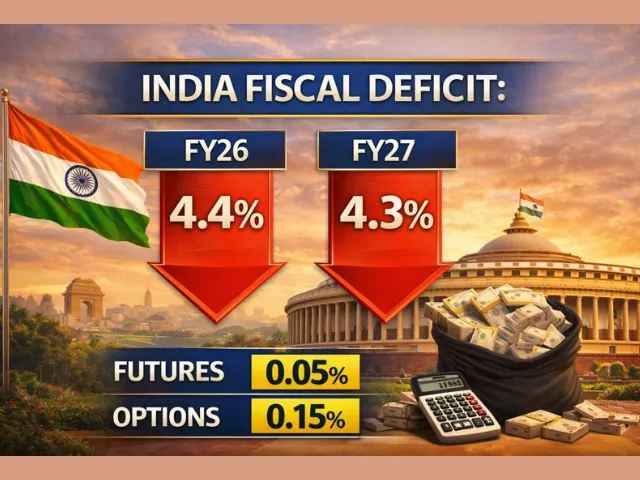
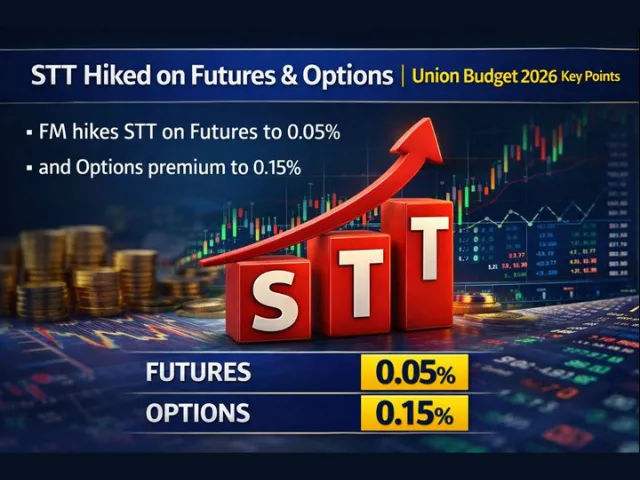
Angel One witnessed selling pressure after the Union Budget proposed an increase in Securities Transaction Tax on derivatives—options STT raised to 0.05% from 0.02% and futures STT to 0.15% from 0.10%.
Higher transaction costs can impact trading volumes and margins for discount brokers where derivatives form a large revenue share.
Impact on Indian Markets
The change may moderate retail participation in F&O in the near term. The market will watch whether brokers pass on costs or absorb part of the hit.
Blue Star – Data Security Incident Reported
Blue Star informed exchanges about unauthorized access to its product installation data. The company has taken immediate steps to restrict access and strengthen cybersecurity protocols.
While operations remain unaffected, such events highlight the rising importance of digital governance and data protection in listed entities.
Impact on Indian Markets
Stocks typically react to uncertainty around compliance and potential liabilities. Transparent communication from management will be key to restore confidence.
What Should Investors Do Now
- Focus on companies showing real earnings momentum rather than event-driven spikes.
- Monitor how the STT change reshapes volumes in the brokerage space.
- Auto and metals themes continue to reflect India’s domestic growth story.
- Give weight to governance and cybersecurity disclosures while selecting stocks.
A disciplined approach backed by credible research becomes essential in such news-driven markets.
Frequently Asked Questions
1. Why did Hero MotoCorp sales rise sharply?
Improved rural income, better financing options, and strong product acceptance helped volumes grow 26% YoY.
2. How will MOIL’s JV benefit the company?
It strengthens manganese ore supply, supports capacity expansion, and aligns with India’s mineral security goals.
3. Why is Angel One stock falling?
The Budget increased STT on derivatives, which could affect trading activity and brokerage revenues.
4. Is Blue Star’s data incident serious?
The company has acted quickly to contain the issue; operational impact appears limited at this stage.
Closing Note
News-based opportunities can create short-term volatility but also open doors for informed investing. Tracking fundamentals, policy changes, and corporate governance is vital before taking decisions.
At Swastika Investmart, investors get access to SEBI-registered research, tech-enabled platforms, and dedicated support to navigate such market events with confidence.
.webp)
Market Setup for 30 January 2026: Global Cues, FII Data and Nifty Outlook : What Indian Investors Should Track Today
Summary
- Global cues remain mixed with pressure from US futures and cautious Asian markets
- GIFT Nifty signals a weak to flat start for Indian equities
- FII activity in derivatives is mixed while DIIs remain strong buyers
- Technical levels suggest downside support near 25,150 on Nifty and 59,600 on Bank Nifty
- Volatility remains low but budget-related positioning is clearly visible
Market Setup for 30 January 2026
Indian equity markets head into Friday’s session with a cautious undertone as global signals turn mixed and traders stay selective ahead of key macro and policy triggers. With Union Budget expectations building and derivative data showing divergent positioning, today’s market setup requires a disciplined, data-backed approach rather than aggressive trades.
This market setup for 30 January 2026 highlights global market cues, FII and DII activity, derivatives positioning, volatility trends and technical levels for Nifty and Bank Nifty to help investors make informed decisions.
Global Market Cues Set a Cautious Tone
Overnight, US markets ended on a mixed note. While the Dow Jones managed marginal gains, futures are indicating weakness, with Dow futures trading lower by over 250 points. This suggests risk appetite remains fragile as investors globally reassess interest rate expectations and corporate earnings momentum.
Asian markets are trading mixed, reflecting the absence of a clear global direction. Weakness in US futures combined with selective buying in Asia often translates into a muted opening for Indian markets.
Adding to this cautious setup, GIFT Nifty is trading nearly 165 points lower, hinting at a gap-down opening for benchmark indices.
FII and DII Activity Shows Divergence
Cash Market Trends
Foreign Institutional Investors continued their selling streak in the cash segment, offloading shares worth approximately ₹394 crore. However, Domestic Institutional Investors stepped in strongly, buying equities worth nearly ₹2,639 crore.
This divergence highlights an important trend in Indian markets. While foreign investors remain cautious due to global uncertainties, domestic institutions continue to show confidence in India’s long-term growth story. This internal strength often cushions sharp market declines.
Derivatives Positioning Reveals Mixed Bias
FII activity in index derivatives reflects a lack of clear conviction.
- Futures shorts have increased sharply compared to longs
- Call writing remains aggressive, indicating resistance at higher levels
- Significant put writing suggests strong support zones below
Such positioning typically points towards range-bound movement with intraday volatility rather than a trending market.
For traders, this reinforces the importance of respecting support and resistance levels rather than chasing breakouts prematurely.
Volatility Remains Comfortable but Watchful
India VIX is hovering near 13.3, down marginally. While this indicates that panic is absent, low volatility ahead of major events like the Union Budget often precedes sudden spikes.
Historically, periods of low VIX during budget weeks tend to reward option sellers initially, but traders must stay alert as directional moves can emerge quickly once clarity develops.
Nifty Technical Outlook for Today
From a technical standpoint, the Nifty spot index is expected to open lower, aligning with global cues.
Key Support Levels
- 25,150 is the first immediate support
- Below this, 25,000 and 24,900 become crucial downside zones
These levels are important not just technically but also psychologically, as round numbers often attract defensive buying.
Key Resistance Levels
- 25,450 remains the first hurdle
- A stronger resistance is placed near 25,600
Unless Nifty sustains above these resistance levels with strong volumes, upside may remain capped.
Bank Nifty Outlook Signals Caution
Bank Nifty continues to mirror broader market uncertainty, with PSU and private banks showing selective weakness.
Support Levels
- 59,600 is the immediate support
- Below this, 59,000 and 58,500 come into focus
Resistance Levels
- 60,000 remains a psychological barrier
- 60,600 acts as a higher resistance zone
Banking stocks often dictate intraday momentum. A breakdown below key supports may increase pressure on benchmark indices.
How This Market Setup Impacts Indian Investors
For short-term traders, this market setup suggests focusing on intraday levels, option strategies and disciplined stop-loss management. Choppy conditions often reward patience rather than aggressive bets.
For long-term investors, continued DII buying and stable volatility reflect confidence in India’s structural growth. Temporary corrections can offer opportunities to accumulate quality stocks, especially in sectors aligned with budget priorities such as infrastructure, manufacturing and financial services.
SEBI-regulated brokers and research-backed platforms become particularly important in such environments, where data interpretation matters more than market noise.
Why Research-Driven Investors Prefer Swastika Investmart
In uncertain market setups like this, investors benefit from working with a SEBI-registered broker that combines research depth with technology-driven execution.
Swastika Investmart offers
- SEBI-registered credibility and transparent practices
- Strong derivative and cash market research tools
- Dedicated customer support for active traders and long-term investors
- Investor education initiatives to help clients understand market cycles
Such strengths allow investors to navigate volatile sessions with confidence and clarity.
Frequently Asked Questions
Is the market expected to open gap-down today?
Yes, GIFT Nifty and weak US futures suggest a gap-down or subdued opening.
Are FIIs bearish on Indian markets?
FIIs are cautious in the cash market, but derivative data shows mixed positioning rather than outright bearishness.
What is the best approach for traders today?
Range-based strategies with strict risk management are preferable in the current setup.
Does low India VIX mean low risk?
Not necessarily. Low VIX ahead of major events can quickly turn volatile, so caution is advised.
Should long-term investors worry about today’s setup?
No. Domestic institutional buying indicates continued confidence in India’s long-term growth.
Final Thoughts
The market setup for 30 January 2026 reflects a cautious but controlled environment. Mixed global cues, divergent institutional activity and clearly defined technical levels suggest that discipline and research will be key to navigating today’s session successfully.
If you are looking to trade or invest with confidence backed by strong research and SEBI-registered credibility, explore smarter investing with Swastika Investmart.
👉 Open your trading account today
Smart decisions begin with informed research.


.webp)
.webp)

.webp)





START YOUR INVESTMENT JOURNEY
Get personalized advice from our experts
- Dedicated RM Support
- Smooth and Fast Trading App
