

War Without a Timeline: Why Donald Trump Refuses to Rush the US-Iran Conflict.




Key Takeaways
• The US Iran conflict remains uncertain as Donald Trump avoids committing to a fixed timeline.
• Strategic ambiguity is being used to maintain geopolitical leverage and negotiation power.
• Oil markets remain volatile due to uncertainty around Middle East stability.
• Indian markets react through inflation expectations, currency movement, and sector shifts.
• Investors should track macro signals rather than react to short term headlines.
War Without a Timeline: Why Donald Trump Refuses to Rush the US Iran Conflict
Geopolitical conflicts rarely follow a predictable script. The ongoing tensions between the United States and Iran are a clear example of how uncertainty itself can become a strategic tool.
One of the most talked about aspects of this situation is the approach of Donald Trump. Instead of committing to a fixed timeline or clear course of action, Trump has chosen to keep markets and global observers guessing.
At first glance, this may appear indecisive. In reality, it reflects a calculated strategy often used in global diplomacy.
For investors, this uncertainty has real consequences. From oil prices to stock markets, the ripple effects are visible across asset classes.
Why Strategic Ambiguity Matters in Geopolitics
In international relations, clarity is not always an advantage. Keeping opponents uncertain can provide leverage.
By avoiding a defined timeline in the US Iran conflict, policymakers create room for:
• Diplomatic negotiations
• Economic sanctions to take effect
• Military flexibility if needed
This approach allows the United States to respond based on evolving ground realities rather than being locked into a pre declared plan.
Such strategies have been used in past conflicts where timing played a crucial role in outcomes.
Impact on Global Oil Markets
The Middle East remains central to global energy supply. Any uncertainty involving Iran immediately affects oil markets.
Why Oil Prices React to Uncertainty
Oil prices are influenced not only by actual supply disruptions but also by perceived risks.
When markets do not know whether a conflict will escalate or ease, traders add a risk premium to crude prices.
This leads to:
• Sudden price spikes
• Increased volatility
• Speculative trading activity
No Timeline Means Continued Volatility
The absence of a clear timeline in the conflict keeps oil markets on edge.
Even without direct disruption, uncertainty around:
• Shipping routes like the Strait of Hormuz
• Sanctions on Iranian oil
• Potential military escalation
can keep prices elevated.
For global economies, this creates a challenging environment.
How Global Stock Markets Are Reacting
Equity markets tend to dislike uncertainty.
When there is no clear direction, investors become cautious.
Short Term Market Behavior
During uncertain geopolitical phases:
• Volatility increases
• Defensive sectors perform better
• Risk appetite declines
Investors may shift toward safer assets such as gold or government bonds.
Long Term Market Perspective
Over time, markets tend to stabilize as more information becomes available.
However, prolonged uncertainty can delay investment decisions and impact corporate earnings expectations.
What It Means for the Indian Economy
India is particularly sensitive to global geopolitical developments due to its dependence on energy imports.
Inflation and Fuel Prices
Higher oil prices can lead to:
• Increased petrol and diesel costs
• Higher transportation expenses
• Rising food and commodity prices
This directly affects inflation levels.
Currency Impact
A rise in oil prices increases India’s import bill.
This creates demand for US dollars, which can put pressure on the Indian rupee.
Policy Response
The Reserve Bank of India closely monitors such developments.
Persistent inflation risks may influence interest rate decisions and liquidity measures.
Sectoral Impact on Indian Markets
Different sectors react differently to geopolitical uncertainty.
Sectors That May Face Pressure
• Aviation due to higher fuel costs
• Logistics and transportation
• Paint and chemical companies
Sectors That May Benefit
• Oil exploration companies
• Defense related businesses
• Safe haven assets
Understanding these sectoral shifts can help investors make better decisions.
Real World Context
Markets have witnessed similar patterns during past geopolitical tensions.
For example, during earlier Middle East conflicts, oil prices surged sharply before stabilizing once clarity emerged.
Equity markets also showed initial volatility followed by recovery.
This highlights a key point: uncertainty drives short term movement, but fundamentals determine long term direction.
What Should Investors Do
Periods like these test investor discipline.
Focus on Fundamentals
Instead of reacting to headlines, investors should evaluate:
• Company earnings
• Balance sheet strength
• Long term growth prospects
Diversify Investments
A diversified portfolio helps reduce the impact of volatility caused by geopolitical events.
Track Key Indicators
Keep an eye on:
• Crude oil prices
• Inflation data
• Currency trends
• Global interest rates
These indicators provide a clearer picture than daily news flow.
Role of Research and Smart Platforms
Understanding complex global events requires access to reliable insights.
Platforms like Swastika Investmart, a SEBI registered brokerage, provide research driven analysis, advanced trading tools, and strong customer support.
With a focus on technology enabled investing and investor education, Swastika Investmart helps investors interpret market movements and make informed decisions.
Such support becomes even more valuable during uncertain times when clarity is limited.
Frequently Asked Questions
Why is Donald Trump not setting a timeline for the US Iran conflict?
Avoiding a fixed timeline allows flexibility in decision making and creates strategic uncertainty, which can be used as leverage in negotiations.
How does uncertainty impact oil prices?
Uncertainty increases risk perception, leading to higher oil prices as traders factor in potential supply disruptions.
What is the impact on Indian stock markets?
Indian markets may experience volatility due to changes in oil prices, inflation expectations, and foreign investor sentiment.
Which sectors are most affected by geopolitical tensions?
Sectors such as aviation, logistics, and chemicals may face pressure, while oil and defense related sectors may benefit.
Should investors change their strategy during such events?
Investors should avoid short term reactions and focus on long term fundamentals and diversification.
Conclusion
The ongoing US Iran tensions highlight how uncertainty itself can shape global markets. By refusing to commit to a timeline, Donald Trump is using a strategy that keeps options open while maintaining pressure.
For markets, this means continued volatility, especially in oil prices and equities.
For India, the impact is felt through inflation, currency movements, and sectoral shifts.
For investors, the lesson is clear. Stay informed, avoid emotional decisions, and focus on long term fundamentals.
If you are looking for expert research, powerful tools, and a reliable SEBI registered platform, consider starting your investment journey with Swastika Investmart.
Big Budget





.avif)
.avif)
.avif)
.avif)
.avif)















.avif)
.avif)
.avif)
.avif)
Latest Articles
BHEL in Spotlight: Strong Business Execution but OFS Dilution — Key Levels to Watch


Meta Title: BHEL in Spotlight: OFS vs Order Boost
Meta Description: BHEL shares fall on OFS despite ₹2,800 crore order win. Key levels, outlook, and what investors should watch now.
Quick Take
- BHEL shares fell 5.41 percent to ₹260.80 after the government announced a 3 percent OFS with a 2 percent green shoe option.
- The OFS floor price of ₹254 created short term price pressure.
- Fundamentally, BHEL secured a ₹2,800 crore syngas plant order from BCGCL.
- Liquidity may improve post dilution, but key technical levels will guide near term direction.
BHEL in Spotlight: Strong Business Execution but OFS Dilution, Key Levels to Watch
BHEL in Spotlight is not just a headline. It reflects a classic market situation where strong business momentum meets short term supply pressure.
On February 11, 2026, Bharat Heavy Electricals Limited shares declined 5.41 percent to close at ₹260.80. The fall was triggered by the government’s Offer for Sale announcement to divest up to a 5 percent stake. At the same time, BHEL secured a fresh ₹2,800 crore order from Bharat Coal Gasification and Chemicals Limited, reinforcing its execution strength.
So what matters more for investors right now, dilution or business growth? Let us decode.
Government OFS: Why Did BHEL Shares Fall?
The Centre, through the Department of Investment and Public Asset Management, launched an Offer for Sale to dilute a 3 percent equity stake in BHEL, with an additional 2 percent available under a green shoe option.
The floor price was fixed at ₹254 per share, nearly 8 percent lower than the previous closing price. This discount naturally created immediate selling pressure in the secondary market.
Key Details of the OFS
- 3 percent base stake sale
- 2 percent additional green shoe option
- Floor price at ₹254
- Open on February 11 for non retail investors
- Retail investors allowed to bid on T plus 1 basis
The government’s objective is clear. Increase public shareholding, improve market liquidity, and align with its broader disinvestment roadmap.
Under SEBI regulations, the OFS mechanism ensures transparent price discovery and fair participation for institutional and retail investors.
In the short term, however, such stake sales increase supply in the market. When supply rises at a discounted price, stock prices often adjust lower.
Strong Business Execution: ₹2,800 Crore Order Win
While the OFS grabbed headlines, the operational update is equally important.
BHEL received a Letter of Acceptance from Bharat Coal Gasification and Chemicals Limited for the LSTK 2 syngas purification plant package. The order value is approximately ₹2,800 crore, excluding GST and customs duty.
BCGCL is a joint venture between Coal India Limited, which holds 51 percent, and BHEL, which owns 49 percent.
Project Highlights
- Coal to 2,000 tonnes per day ammonium nitrate project
- Location: Lakhanpur, Jharsuguda district, Odisha
- Scope includes design, engineering, supply, civil works, erection, commissioning, and operations and maintenance
- Commissioning timeline of 42 months
- O and M services for 60 months post acceptance
This project strengthens BHEL’s presence in coal gasification and downstream value added infrastructure. It also aligns with India’s push for energy security and import substitution.
For long term investors, a healthy order book is a core fundamental driver in capital goods companies.
Business Momentum vs Dilution: Which Matters More?
Markets often react first to supply events like OFS. But over time, earnings visibility and execution determine valuation.
BHEL plays a strategic role in India’s power and infrastructure sectors under the Ministry of Heavy Industries. With increasing capital expenditure in thermal, renewable, and industrial projects, order inflows remain crucial.
If BHEL continues to secure large EPC contracts and improve execution, earnings growth could offset short term dilution concerns.
Liquidity improvement post OFS can also attract institutional participation, which may reduce volatility in the long run.
Key Levels to Watch in BHEL Shares
From a technical perspective, price action around the OFS floor price becomes critical.
- Immediate support zone: ₹254 to ₹260
- Strong support: ₹240 to ₹245 range
- Immediate resistance: ₹276 to ₹280
- Breakout zone: Above ₹285 with volume
If the stock sustains above the OFS floor price after allotment, it may signal absorption of supply. On the other hand, a breakdown below ₹254 could trigger further correction.
Traders should track volume patterns and delivery data closely during and after the OFS window.
Impact on Indian Markets
Government disinvestment in public sector undertakings is part of India’s broader fiscal strategy. Such moves can:
- Boost market liquidity
- Improve public float
- Enhance institutional participation
- Support fiscal deficit management
For the broader capital goods and infrastructure sector, strong order inflows reflect steady project activity across power, chemicals, and industrial segments.
BHEL’s performance also acts as a sentiment indicator for other public sector enterprises.
How Should Investors Approach BHEL Now?
There are two clear lenses to evaluate BHEL in Spotlight:
For Short Term Traders
- Monitor price action near ₹254
- Watch subscription data of OFS
- Track volume spikes
For Long Term Investors
- Assess order book growth
- Monitor execution timelines
- Evaluate margin stability
- Track government capex trends
Capital goods stocks often reward patience when backed by a strong order pipeline and improving balance sheet strength.
Investors should also consider portfolio allocation and risk profile before taking fresh exposure.
Why Research Support Matters
Events like OFS announcements can create confusion. Is it a negative signal or just a liquidity event?
Swastika Investmart, a SEBI registered stock broker, offers structured research insights, technical analysis tools, and real time updates to help investors navigate such situations.
With tech enabled trading platforms, dedicated customer support, and investor education initiatives, Swastika Investmart ensures informed decision making rather than emotional reactions.
Frequently Asked Questions
Why did BHEL shares fall despite a large order win?
The decline was primarily due to the government’s OFS at a discounted floor price, which created short term selling pressure.
What is the purpose of the BHEL OFS?
The OFS aims to dilute government stake, improve liquidity, widen public shareholding, and support the broader disinvestment strategy.
Is the ₹2,800 crore order significant for BHEL?
Yes, it strengthens the company’s order book and reinforces its position in coal gasification and industrial infrastructure projects.
What are the key technical levels to watch?
₹254 is a crucial support level, while ₹276 to ₹280 acts as immediate resistance. Sustained movement beyond these levels may define the next trend.
Should long term investors worry about dilution?
Dilution increases supply in the short term, but long term performance depends on earnings growth, execution capability, and sector demand.
Conclusion
BHEL in Spotlight represents a balancing act between short term dilution pressure and long term business execution.
While the OFS created immediate volatility, the ₹2,800 crore order underscores operational strength. Investors should avoid reacting solely to headline driven moves and instead focus on fundamentals, technical levels, and risk management.
If you want access to detailed research, timely alerts, and advanced trading tools, consider opening an account with Swastika Investmart:

Q3 Earnings to Watch Today: Key Companies That Could Move the Market
TL;DR
- Q3 Earnings to Watch Today span autos, jewellery, FMCG, banking, energy, and healthcare.
- Margin expansion is the key theme across several companies.
- Select stocks reported strong profit growth despite mixed revenue trends.
- Earnings surprises may drive sector specific rallies in Indian markets.
Q3 Earnings to Watch Today: Key Companies That Could Move the Market
Q3 Earnings to Watch Today are crucial for traders and long term investors alike. With benchmark indices near record levels and global volatility in play, quarterly numbers can trigger sharp stock moves.
This earnings season reflects India’s evolving consumption story, margin recovery in select sectors, and cost pressures in others. Let us break down the key results and what they mean for the broader market.
Consumption and Retail: Strong Demand Signals
Titan Company
Titan reported revenue growth of 43 percent YoY to Rs 25,416 crore. EBITDA rose 62 percent to Rs 2,713 crore, while net profit climbed 61 percent to Rs 1,684 crore.
Margin expansion of 123 basis points reflects strong pricing power and festive demand. For the broader market, this reinforces the resilience of urban consumption and organised jewellery retail.
Jubilant FoodWorks
Revenue grew 13 percent to Rs 2,437 crore. EBITDA increased nearly 20 percent with margin expansion of 109 basis points. Net profit jumped 65 percent.
Improving profitability in quick service restaurants signals stable discretionary spending, a positive read for the consumer sector.
Britannia Industries
Revenue rose 8 percent while EBITDA increased 16 percent. Margins expanded to 19.7 percent. This suggests effective cost control despite commodity price fluctuations.
Automobiles and Auto Ancillaries: Margin Improvement Theme
Eicher Motors
Revenue surged 23 percent to Rs 6,114 crore. EBITDA grew nearly 30 percent, with margin improvement of 130 basis points. Net profit rose 21 percent.
Strong operating leverage indicates steady demand in the premium motorcycle segment.
ZF Commercial Vehicle Control Systems India
Revenue increased 11.6 percent, while EBITDA rose 12.4 percent. Margins remained stable above 18 percent. Consistent growth in the CV space may reflect stable freight activity.
Kirloskar Ferrous Industries
Revenue growth was modest, but margins improved slightly. Profit growth remained muted, suggesting selective strength in the auto components space.
Power and Energy: Mixed Signals
Torrent Power
Revenue grew 4 percent, but EBITDA jumped 26 percent. Margin expansion of 359 basis points indicates improved efficiency and tariff realization.
Oil India
Revenue remained flat sequentially. EBITDA improved, but net profit declined 16 percent QoQ. Volatility in crude prices and realizations continue to impact profitability.
Energy results remain closely linked to global commodity prices and government policy on fuel pricing.
Healthcare and Hospitals: Stable Growth
Apollo Hospitals Enterprise
Revenue rose 17 percent, EBITDA increased 26 percent, and net profit climbed 35 percent.
Strong performance here indicates steady healthcare demand, which remains less cyclical compared to other sectors.
Banking and Financials: Asset Quality Focus
Karnataka Bank
Net interest income remained flat, but net profit improved 2.5 percent. Gross NPA and net NPA ratios showed marginal improvement.
Stable asset quality supports sentiment in the mid cap banking space, though growth remains moderate.
Infrastructure and Capital Goods
Grasim Industries
Revenue increased 25 percent and EBITDA grew 38 percent. Net profit rose 26 percent, reflecting strength in diversified operations.
Techno Electric and Engineering
Revenue grew 37 percent with strong EBITDA expansion. Margin improvement suggests healthy execution in the power infrastructure segment.
Afcons Infrastructure
Revenue declined, but EBITDA margins improved. However, net profit fell sharply, indicating cost pressures.
Infrastructure players often react sharply to order book commentary during earnings calls.
Real Estate and Housing
Ashiana Housing
Revenue surged 172 percent, EBITDA rose nearly 300 percent, and net profit jumped over 400 percent.
This sharp growth may reflect project completions and strong housing demand.
Arvind SmartSpaces
Revenue and profit declined, indicating uneven performance within the real estate space.
Specialty Chemicals and Manufacturing
HEG
Revenue grew 37 percent while EBITDA surged 78 percent. Net profit jumped 148 percent, supported by strong margin expansion.
Huhtamaki India
Revenue remained stable, but EBITDA doubled and net profit rose 159 percent. Operational efficiency seems to be improving.
Alcohol and Beverages
United Breweries
Revenue rose 3.6 percent, but EBITDA increased nearly 60 percent. Net profit more than doubled.
Som Distilleries
Revenue and profit declined sharply, showing mixed demand conditions across the alcoholic beverage segment.
What This Means for Indian Markets
Q3 Earnings to Watch Today highlight three key trends:
- Margin expansion is emerging in several sectors due to cost control and operating leverage.
- Urban consumption remains strong, as seen in jewellery, QSR, and branded FMCG.
- Sector divergence is increasing. Not all companies are benefiting equally from economic growth.
For investors, earnings season often triggers stock specific rallies rather than broad based index moves. Strong beats can push stocks to new highs, while misses may result in sharp corrections.
As per SEBI disclosure norms, listed companies must provide transparent financial reporting, helping investors make informed decisions. Analyzing EBITDA margins, revenue growth, and profit trends is critical during this period.
How Should Investors Approach Earnings Season
Instead of reacting emotionally, investors should:
- Compare growth with sector peers
- Study margin trends over multiple quarters
- Assess debt levels and cash flows
- Track management guidance
Platforms like Swastika Investmart, a SEBI registered stock broker, provide research tools, detailed earnings analysis, technical insights, and responsive customer support to help investors navigate volatility confidently.
Their tech enabled investing platform and investor education initiatives ensure informed participation in the markets.
Frequently Asked Questions
Why are Q3 earnings important for markets?
Q3 results capture festive demand and often set the tone for full year performance. Strong or weak numbers can significantly impact stock prices.
Which sectors are showing strong momentum this quarter?
Consumption, select auto companies, healthcare, and parts of capital goods have shown strong margin expansion.
How do margin changes affect stock prices?
Improving EBITDA margins indicate better cost control and profitability, which can lead to higher valuations.
Should investors trade during earnings season?
Short term traders may benefit from volatility, but long term investors should focus on consistent growth and fundamentals.
Conclusion
Q3 Earnings to Watch Today reveal a market driven by selective strength. While consumption and margin recovery stand out, sector specific divergence remains high.
In such an environment, disciplined research and data driven decisions matter more than ever. Swastika Investmart combines regulatory credibility, strong research capabilities, advanced trading tools, and investor education support to help you act with clarity.
If you want to participate confidently in earnings driven opportunities, you can open your account here:

Titan Q3 Results: Strong Margin Beat — Is This the Start of a Fresh Rally?
Key Takeaways:
- Titan Q3 Results show 61 percent YoY jump in net profit to Rs 1,684 crore.
- Revenue rose 43 percent to Rs 25,416 crore, led by jewellery demand.
- Strong festive sales and exchange programs boosted margins despite high gold prices.
- Titan shares hit a 52 week high, raising hopes of a fresh rally.
Titan Q3 Results: Strong Margin Beat. Is This the Start of a Fresh Rally?
Titan Q3 Results have caught the market’s attention for all the right reasons. The Tata Group company delivered a sharp earnings beat in the October to December quarter, reporting a 61 percent year on year rise in consolidated net profit to Rs 1,684 crore. Revenue from operations surged 43 percent to Rs 25,416 crore.
What makes this quarter stand out is not just growth, but margin resilience in a period when gold prices were elevated. With Titan shares touching a fresh 52 week high, investors are asking a key question. Is this the beginning of another strong rally?
Let us decode the numbers and the bigger picture.
A Snapshot of Titan Q3 Results
Titan’s performance this quarter reflects strong consumer demand, effective pricing strategies, and operational strength.
Profit and Revenue Growth
- Net profit rose 61 percent YoY to Rs 1,684 crore from Rs 1,047 crore.
- Revenue increased 43 percent YoY to Rs 25,416 crore from Rs 17,740 crore.
Such growth at this scale signals not just festive momentum but sustained brand strength.
The company noted that the India domestic business recorded one of its highest ever quarterly growth performances outside Covid impacted periods. This shows structural demand rather than a one off spike.
Jewellery Business Drives the Show
The jewellery segment continues to be Titan’s backbone.
Strong Growth Despite High Gold Prices
The jewellery portfolio grew 42 percent YoY to Rs 22,517 crore excluding bullion and digi gold sales. Tanishq, Mia, and Zoya together reported 40 percent growth to Rs 19,921 crore. Titan’s India jewellery business alone grew 41 percent YoY to Rs 21,458 crore.
This performance is significant because spot gold prices rose nearly 12 percent during the quarter. Historically, high gold prices tend to dampen demand. However, Titan’s exchange programs, festive collections, wedding sales, and coin offers helped offset this challenge.
Store Expansion and International Push
Titan added 49 net new stores in Q3 FY26. Of these, 47 were added in India across Caratlane, Mia, Tanishq, Zoya, and beYon. Tanishq also expanded in the US with new stores in Boston and Orlando.
Expansion during a strong demand cycle improves operating leverage and long term earnings visibility.
Watches Segment Shows Stability
Titan’s watches portfolio grew 14 percent to Rs 1,295 crore.
The analog category remained the main growth driver, with 20 percent growth in consumer sales. Premium brands like Titan, Fastrack, and Sonata delivered healthy double digit growth.
Smart watches saw volume moderation with a 27 percent YoY decline. This suggests a shift in consumer preference towards classic and premium timepieces rather than aggressive discount driven smart watch sales.
Other Consumer Businesses Add Depth
Titan’s EyeCare segment reported steady volume growth and mid single digit improvement in average selling prices. Lenses and sunglasses achieved double digit growth.
The fragrances business grew 24 percent, led by Skinn and Fastrack perfumes. Women’s bags recorded strong double digit growth in both volume and pricing, while Taneira posted 7 percent growth supported by higher ASP and same store sales growth.
This diversification reduces reliance on a single segment and supports margin sustainability.
What Management Said
Managing Director Ajoy Chawla described Q3 as a stellar quarter marked by broad based growth across portfolios. He emphasized strong buyer engagement driven by exchange programs and festive collections.
Management reiterated its focus on brand equity, customer engagement, and innovation driven growth.
Such commentary reinforces confidence in long term strategy.
Titan Share Price Reaction
Titan shares closed near Rs 4,293.80 and touched a fresh 52 week high of Rs 4,329.60 ahead of the results announcement.
When a stock hits new highs on strong earnings, it often signals institutional accumulation. However, short term volatility is possible as traders book profits.
From a broader market perspective, Titan’s performance boosts sentiment in consumer discretionary and retail segments. Strong festive demand also reflects healthy urban consumption trends in India.
Is This the Start of a Fresh Rally?
To answer this, investors must assess three factors.
Earnings Momentum
A 61 percent profit jump and 43 percent revenue growth provide strong earnings visibility. If margin strength sustains in coming quarters, valuations may remain justified.
Gold Price Trend
Gold prices rose sharply during the quarter. If gold remains elevated, Titan’s pricing strategy and exchange initiatives will be tested again. So far, the company has demonstrated resilience.
Valuation and Market Sentiment
Titan typically trades at a premium valuation due to brand strength and consistent growth. A fresh rally will depend on earnings upgrades and broader market conditions.
For long term investors, Titan remains a structural consumption story linked to rising incomes, formalization of jewellery retail, and brand trust.
What Should Investors Do?
Investors should avoid making decisions based solely on one quarter. Instead, consider:
- Long term growth trajectory
- Store expansion plans
- Market share gains
- Competitive positioning
- Overall portfolio allocation
Tracking quarterly commentary and margin trends will be key.
Using research driven platforms such as Swastika Investmart can help investors interpret earnings data, valuation metrics, and technical trends effectively. As a SEBI registered stock broker, Swastika Investmart offers strong research tools, tech enabled investing, responsive customer support, and investor education initiatives that empower informed decision making.
Frequently Asked Questions
What were Titan Q3 Results for FY26?
Titan reported a 61 percent YoY rise in net profit to Rs 1,684 crore and a 43 percent increase in revenue to Rs 25,416 crore.
How did the jewellery segment perform?
The jewellery portfolio grew 42 percent YoY despite high gold prices, driven by festive demand and exchange programs.
Did Titan shares react positively?
Yes. Titan shares touched a fresh 52 week high around Rs 4,329.60 ahead of the results.
Is Titan a long term investment?
Titan is often viewed as a long term consumption play, but investors should evaluate valuations, growth prospects, and portfolio fit.
Conclusion
Titan Q3 Results highlight strong execution, brand power, and consumer resilience even in a high gold price environment. The sharp profit growth and margin strength have revived optimism around the stock.
Whether this leads to a sustained rally will depend on earnings consistency and market conditions. For investors seeking disciplined research, timely insights, and technology backed investing solutions, Swastika Investmart provides a reliable platform to navigate such opportunities.
If you are looking to participate in India’s growth story through informed investing, you can open your account here:
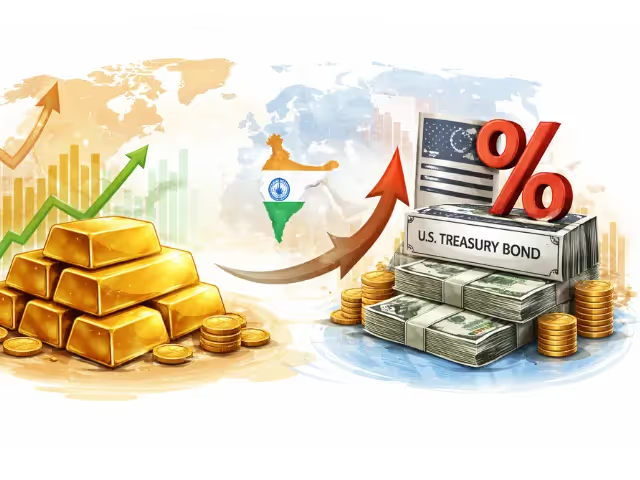
Decoding the Macro Link: Why Gold Rises When US Yields Fall: Understanding the Global Link Impacting Indian Investors
TL;DR
- Gold often rises when US bond yields fall because lower yields reduce the opportunity cost of holding gold.
- Falling yields usually signal slowing growth or rate cuts, boosting safe haven demand.
- Indian investors respond through gold ETFs, SIPs, and portfolio diversification.
- The trend impacts inflation expectations, rupee movement, and Indian equity markets.
Decoding the Macro Link: Why Gold Rises When US Yields Fall and Its Impact on Indian Investors
Gold has always held a special place in Indian portfolios. From wedding jewelry to digital gold and ETFs, the metal is more than an asset. It is a hedge, a tradition, and a safety net. But in global markets, gold follows macro signals. One of the strongest relationships investors track is this: why gold rises when US yields fall.
Understanding this connection can help Indian investors make better decisions, especially during volatile market phases.
The Core Concept: Why Gold Rises When US Yields Fall
Gold does not pay interest or dividends. It simply sits in your portfolio. That means its attractiveness depends on what other assets are offering.
When US Treasury yields are high, investors can earn attractive fixed returns from government bonds. In such periods, gold becomes less appealing because it offers no yield.
However, when US yields fall, the opportunity cost of holding gold declines. Investors are no longer giving up strong interest income by owning gold. As a result, demand for gold increases and prices often rise.
This is the fundamental reason why gold rises when US yields fall.
Understanding US Bond Yields in Simple Terms
US Treasury bonds are considered among the safest investments globally. Their yields reflect:
- Expectations about US interest rates
- Inflation outlook
- Economic growth prospects
- Risk sentiment in global markets
When yields decline, it often signals:
- Expectations of Federal Reserve rate cuts
- Slower economic growth
- Rising recession concerns
- Increased demand for safe assets
In such environments, gold tends to benefit.
The Opportunity Cost Effect Explained with an Example
Imagine two scenarios.
Scenario 1: US 10 year bond yields are at 5 percent. Investors earn steady returns with low risk. Gold becomes less attractive.
Scenario 2: US 10 year bond yields fall to 3 percent due to growth concerns. Suddenly, bonds offer lower returns. Investors shift to gold for capital protection and diversification.
This shift in capital is one of the key drivers behind gold rallies when yields drop.
The Role of Inflation and Real Yields
Another crucial factor is real yield. Real yield is the bond yield adjusted for inflation.
If inflation is high and yields are falling, real yields can turn negative. When real yields are negative, gold becomes even more attractive because:
- Bonds lose purchasing power
- Gold acts as a store of value
This dynamic has played out multiple times in recent years, especially during global crises.
How This Global Link Impacts Indian Investors
Even though US yields are a global variable, their movement directly impacts Indian markets.
Impact on Gold Prices in India
Gold prices in India are influenced by:
- International gold prices
- Rupee dollar exchange rate
- Import duties and regulatory policies
When US yields fall and global gold prices rise, Indian gold prices usually move higher as well. If the rupee weakens at the same time, the price rise can be sharper.
This is why we often see record high gold rates in India during periods of global uncertainty.
Surge in Gold ETFs and SIP Investments
In recent years, Indian investors have increasingly shifted to gold ETFs and gold mutual funds. According to AMFI data trends, gold ETF assets under management have seen strong inflows during risk off phases.
Falling US yields often coincide with:
- Equity market volatility
- Rising geopolitical tensions
- Defensive asset allocation
Investors respond by increasing allocation to gold ETFs through systematic investment plans.
Impact on Indian Equity Markets
The link does not stop at gold.
When US yields fall sharply, it can mean:
- Global risk aversion
- Foreign institutional investor outflows or cautious positioning
- Pressure on emerging markets
However, if yields fall due to rate cut expectations and liquidity support, equity markets may also benefit.
For Indian investors, this means tracking US yields can provide early signals about:
- FII flows
- Currency trends
- Sector rotation
- Defensive versus cyclical positioning
Regulatory Context in India
Gold ETFs and mutual funds in India operate under SEBI regulations. These instruments provide a transparent and efficient way to gain exposure to gold without the risks of physical storage.
Investors must evaluate:
- Expense ratios
- Tracking error
- Liquidity
- Tax treatment
Understanding macro trends such as why gold rises when US yields fall helps investors align their strategy within the regulatory framework.
Real World Case Study
During periods when the US Federal Reserve signaled rate cuts, US Treasury yields declined significantly. In such phases:
- Gold rallied globally
- Indian gold ETF inflows surged
- Defensive sectors gained attention
- The rupee saw volatility
This pattern highlights how interconnected global and Indian markets are.
Portfolio Strategy for Indian Investors
Gold should not replace equities or fixed income. Instead, it works best as a diversification tool.
Financial planners often suggest allocating 5 to 15 percent of a portfolio to gold depending on risk profile.
In times of falling US yields and macro uncertainty, investors may:
- Increase gold exposure gradually
- Use SIPs in gold ETFs
- Balance equity risk with defensive assets
A disciplined approach works better than emotional decisions.
Frequently Asked Questions
Why does gold rise when US yields fall?
Because lower yields reduce the opportunity cost of holding non interest bearing assets like gold, increasing its demand.
Do US yields directly affect Indian gold prices?
Yes. Global gold prices are dollar denominated. Movements in US yields influence global prices, which then impact Indian rates.
Should investors buy gold every time yields fall?
Not necessarily. Investors should consider broader macro trends, portfolio allocation, and long term goals.
How can Indian investors invest in gold?
Through gold ETFs, gold mutual funds, sovereign gold bonds, or physical gold. SEBI regulated ETFs offer transparency and liquidity.
Conclusion
The relationship between US bond yields and gold prices is one of the most powerful macro linkages in global markets. When yields fall, gold often rises due to lower opportunity costs, inflation expectations, and safe haven demand.
For Indian investors, understanding this connection is essential. It helps in managing risk, timing allocation shifts, and building a resilient portfolio.
At Swastika Investmart, a SEBI registered stock broker, we combine macro insights, research driven strategies, and technology enabled investing tools to help investors navigate global signals with confidence. Our customer support and investor education initiatives ensure you make informed decisions rather than reactive ones.
If you are looking to diversify your portfolio and invest smartly across asset classes, you can start your journey here:

February Market Outlook 2026 India: Budget, RBI, GDP, and Global Trade Crossroads

Click to View Report
Quick Summary
- Union Budget 2026 reshaped taxation and capex priorities, causing short-term volatility.
- RBI policy and liquidity stance will decide the next leg for Nifty and Bank Nifty.
- India–US trade deal improved export visibility for several sectors.
- Global axis of Russia–China and energy prices remain key risks.
- Stock selection and disciplined SIPs remain safer than momentum chasing.
The Mother of All Market Themes in February
February 2026 is not just another month for Dalal Street. It is the intersection of domestic policy, global trade realignment, and monetary strategy. Investors are processing four large events at once: the Union Budget, upcoming RBI policy direction, fresh GDP estimates, and the landmark India–US trade agreement.
Unlike routine market phases, this period is shaping the economic narrative for the next few years. Every portfolio decision must now be seen through a wider lens rather than short-term index movement.
Budget 2026: From Shock to Strategy
The initial reaction to the Budget was emotional. Higher taxation on derivatives and changes in buyback rules hit sentiment. Yet the same document delivered the largest ever capital expenditure plan focused on infrastructure, defence, railways, and semiconductors.
For long-term investors, this signals a shift from consumption-led growth to investment-led growth. Companies connected to roads, power, logistics, and domestic manufacturing are likely to see multi-year order visibility. The Budget also maintained fiscal discipline, keeping India attractive in the eyes of global rating agencies.
RBI Policy and Liquidity: The Next Trigger
Markets now look toward the Reserve Bank of India. Inflation has moderated but food prices and imported energy remain sticky. The RBI faces a delicate balance between supporting growth and protecting the rupee.
Any signal on rate cuts or liquidity easing could directly influence housing finance, banks, and rate-sensitive sectors. A stable monetary stance will also encourage foreign funds to return to Indian bonds and equities.
GDP Outlook: Growth With Guardrails
Early estimates suggest India continues to be the fastest-growing large economy. Manufacturing revival, digital adoption, and formalisation are supporting tax collections. Rural demand is recovering after a better monsoon cycle.
However, urban consumption shows selective fatigue, and job creation must accelerate to sustain high GDP momentum. Investors should prefer businesses aligned with domestic capex and export competitiveness rather than pure discretionary stories.
India–US Trade Deal: A Structural Positive
The reduction in tariffs has changed the conversation around Indian exports. Textile hubs, auto component clusters, speciality chemical makers, and engineering goods now have better access to the US market.
This deal also carries geopolitical meaning. It positions India as a reliable supply chain partner at a time when global companies want alternatives to overdependence on China.
Russia–China Axis and Global Risks
Energy prices remain the biggest external variable. The Russia–China partnership influences crude flows, logistics costs, and currency movements. Any escalation can quickly impact Indian inflation and the RBI stance.
Investors should therefore keep exposure to quality energy consumers, avoid excessive leverage, and maintain diversification across sectors.
Market Flows: FII vs DII Reality
Foreign investors reduced positions earlier due to a strong dollar and valuation concerns. Domestic institutions filled the gap through steady SIP inflows. This new structure has made Indian markets more resilient than in previous cycles.
The message is clear. Long-term money is overpowering short-term speculation, and corrections are becoming opportunities rather than disasters.
Sector Roadmap After Budget
Infrastructure and Capital Goods
Beneficiaries of government spending with visible order books and healthier margins.
Export-Oriented Manufacturing
Textiles, chemicals, pharma, and auto ancillaries gain from the trade deal and China-plus-one strategy.
Financials
Banks and NBFCs benefit from credit growth, while policy direction from RBI will be decisive.
Energy and Commodities
Sensitive to Russia–China developments and global demand trends.
Practical Playbook for Investors
- Prefer staggered investing through SIPs and STPs.
- Focus on earnings visibility over story stocks.
- Keep a mix of largecaps for stability and selective midcaps for growth.
- Avoid excessive derivative speculation after new tax changes.
Choosing a credible intermediary with strong research and compliance matters more than ever. Swastika Investmart, a SEBI-registered platform, combines technology-driven investing with human advisory, regular education, and transparent risk management to help investors navigate complex markets.
Frequently Asked Questions
How will the Budget shape markets in 2026?
The Budget supports investment-led growth. Short-term volatility may continue, but infrastructure and manufacturing should gain over the medium term.
Can RBI policy trigger a fresh rally?
Yes, any hint of rate easing or improved liquidity could boost banks, real estate, and consumption-oriented sectors.
What does the India–US trade deal mean for investors?
It improves revenue visibility for exporters and reduces geopolitical uncertainty, supporting valuations.
Are Russia–China developments relevant to Indian stocks?
They affect crude prices, inflation, and currency, which directly influence RBI decisions and corporate margins.
Is this a good time to start investing?
For long-term goals, disciplined investing during volatile phases has historically delivered better outcomes than waiting for perfect clarity.
Closing Perspective
February 2026 stands as a defining chapter for Indian markets where Budget reforms, RBI strategy, GDP momentum, and global trade are converging. Volatility is the price investors pay for opportunity. With informed decisions and a trusted partner, this phase can lay the foundation for long-term wealth creation.
.avif)
Stocks in News 11 February 2026 : What Investors Should Track Today Tata Motors, BHEL, Eicher Motors, Sonata Software
Quick Takeaways
• Tata Motors secures large vehicle supply order from Indonesia
• BHEL wins major order worth about Rs.2,800 crore
• Eicher Motors to expand annual production capacity
• Sonata Software achieves AWS Premier Tier status
Stocks in News 11 February 2026: Key Corporate Triggers for Today
The Stocks in News 11 February 2026 list highlights important corporate developments that may shape market sentiment in the coming sessions. Company specific news often drives sectoral momentum even when broader indices remain range bound. For retail investors, tracking such updates helps in understanding where smart money could move.
Indian markets have recently been reacting more to earnings and order announcements than to global headlines. The latest set of announcements from Tata Motors, BHEL, Eicher Motors, and Sonata Software brings opportunities across automobile, capital goods, and IT sectors.
Tata Motors Expands Global Footprint
Tata Motors has entered into an agreement for the supply of 70,000 vehicles for deployment in Indonesia. This is a meaningful development for the company’s international business. Indonesia is one of the fastest growing automobile markets in Southeast Asia, and such a large order strengthens Tata Motors’ export pipeline.
For investors, this news signals two positive aspects. First, the company is diversifying revenue beyond the domestic market. Second, large fleet orders generally improve capacity utilisation at manufacturing plants, which can support operating margins.
The automobile sector in India has been witnessing steady demand recovery. If Tata Motors continues to win similar contracts, it could encourage other Indian auto manufacturers to explore global opportunities as well.
BHEL Bags Rs.2,800 Crore Order
Another major highlight in the Stocks in News 11 February 2026 update is Bharat Heavy Electricals Limited receiving a Letter of Award from BCGCL for the LSTK 2 syngas purification plant package worth approximately Rs.2,800 crore.
This order is important because BHEL has been focusing on strengthening its presence in the energy and infrastructure space. Large EPC contracts improve revenue visibility for several years. Capital goods companies in India often witness rerating when order inflow remains strong.
From a broader market perspective, such orders indicate that government and private sector capex plans are progressing. This supports allied industries like steel, engineering services, and logistics.
Eicher Motors Plans Capacity Expansion
Eicher Motors announced expansion of its production capacity from 14.6 lakh units to 20 lakh units per year with an investment of about Rs.958 crore. This reflects management confidence in future demand for two wheelers and commercial vehicles.
Capacity expansion usually precedes a growth cycle. When companies commit fresh capital, it shows that they expect sustained sales momentum. For long term investors, such announcements provide insight into the strategic direction of the business.
The auto segment contributes significantly to India’s manufacturing GDP. Higher production can create employment and boost the auto ancillary ecosystem. Therefore, this update has relevance beyond a single company.
Sonata Software Achieves AWS Premier Tier Status
In the IT space, Sonata Software announced that it has achieved AWS Premier Tier Services Partner status in the AWS Partner Network. This recognition is granted only to companies with strong cloud expertise and proven customer success.
Cloud migration and digital transformation remain high priority for global enterprises. Sonata’s new status can help it win larger deals and improve margins. Indian IT firms are increasingly focusing on specialised cloud capabilities rather than only traditional services.
For investors, such certifications act as qualitative indicators of a company’s technological strength and future readiness.
How These Updates Can Influence Indian Markets
The Stocks in News 11 February 2026 mix represents three important themes: export driven growth, domestic capex revival, and digital transformation. When companies from different sectors announce positive triggers on the same day, market breadth usually improves.
For example, a trader tracking Tata Motors may also look at other auto stocks like M&M or Ashok Leyland for sympathy moves. Similarly, BHEL’s order could bring attention to peers in power equipment and infrastructure.
However, investors should avoid reacting only to headlines. It is essential to study valuations, balance sheet strength, and overall market trend before taking positions.
Practical Approach for Retail Investors
A balanced strategy works best on news driven days. Short term traders can focus on price levels and volume confirmation. Long term investors may use dips to accumulate fundamentally strong names.
Imagine an investor who already holds Eicher Motors for the long term. The capacity expansion news reassures him about growth visibility, so he may decide to continue holding instead of booking early profits. Such rational decisions create wealth over time.
Access to credible research makes this process easier. Swastika Investmart, a SEBI registered broker, provides market insights, technical tools, and investor education that help individuals understand the real impact behind daily news.
Frequently Asked Questions
What is the most important update in Stocks in News 11 February 2026?
The major highlights are Tata Motors’ 70,000 vehicle supply agreement and BHEL’s order worth about Rs.2,800 crore, both of which can influence sector sentiment.
Does capacity expansion by Eicher Motors benefit investors?
Yes, higher capacity indicates management confidence in demand and can support long term revenue growth.
Why is Sonata Software’s AWS status significant?
AWS Premier Tier recognition improves credibility in cloud services and may help the company win larger digital transformation projects.
Should investors buy stocks only based on news?
No, news should be combined with valuation, financial health, and market trend before making investment decisions.
Closing Note
The Stocks in News 11 February 2026 updates show how individual corporate actions can shape daily market direction. Staying informed and analysing news with a long term perspective helps investors avoid emotional decisions.
If you want a reliable platform with strong research support, investor education, and seamless trading technology, Swastika Investmart can be a trusted partner for your market journey.


.avif)
.avif)

.avif)




START YOUR INVESTMENT JOURNEY
Get personalized advice from our experts
- Dedicated RM Support
- Smooth and Fast Trading App
