

FII FPI & DII Trading Activity on 1 April 2026 : Key Insights from April 1, 2026


%20(3).webp)

Understanding FII DII trading activity today is crucial for decoding market direction in India. On April 1, 2026, the data shows a sharp contrast between foreign and domestic institutional investors, offering valuable signals for traders and long-term investors alike.
Quick Takeaways
- DIIs remained strong net buyers, supporting market stability
- FIIs continued aggressive selling, creating downward pressure
- Domestic liquidity is currently offsetting foreign outflows
- Market sentiment remains cautious but not weak
What Happened on April 1, 2026
The latest data highlights a clear divergence between institutional players:
- DII Activity (NSE Capital Market): Net buying of ₹7,019 crore
- FII Activity (NSE Capital Market): Net selling of ₹8,072 crore
When combining NSE, BSE, and MSEI data:
- DIIs: Net buyers of ₹7,171 crore
- FIIs: Net sellers of ₹8,331 crore
This pattern reflects a familiar trend where domestic institutions absorb selling pressure from foreign investors.
Why Are FIIs Selling?
Foreign Institutional Investors often react to global cues. Some key reasons include:
Global Interest Rate Outlook
With central banks like the US Federal Reserve maintaining a cautious stance, capital tends to flow back to safer assets. This impacts emerging markets like India.
Currency Fluctuations
The Indian rupee’s volatility can reduce returns for FIIs when converted back to their home currency.
Risk-Off Sentiment
Geopolitical tensions and global uncertainty often trigger FII outflows.
Why DIIs Are Buying Aggressively
Domestic Institutional Investors, including mutual funds and insurance companies, are playing a stabilizing role.
Strong SIP Inflows
Retail participation through Systematic Investment Plans continues to provide steady liquidity.
Confidence in Indian Growth
India’s long-term growth story remains intact, supported by government policies and economic reforms guided by institutions like SEBI and RBI.
Valuation Opportunities
Market corrections due to FII selling often create attractive entry points for DIIs.
What This Means for Retail Investors
Understanding FII DII trading activity today helps you make smarter decisions:
Market Direction Is Not One-Sided
Even though FIIs are selling, strong DII buying prevents sharp crashes.
Focus on Fundamentals
Short-term volatility should not distract from long-term investment goals.
Sectoral Opportunities
DII buying often focuses on fundamentally strong sectors like banking, infrastructure, and manufacturing.
Role of Regulations and Market Stability
The Indian stock market operates under strict regulatory oversight by SEBI, ensuring transparency in institutional trades. RBI policies also influence liquidity and currency stability, indirectly affecting FII flows.
This strong regulatory framework makes India one of the most resilient emerging markets.
How Swastika Investmart Helps You Navigate Markets
In times of mixed signals like these, having the right platform matters. Swastika Investmart stands out with:
- SEBI-registered credibility ensuring trust and compliance
- Advanced research tools that decode FII and DII trends
- Reliable customer support for timely assistance
- A tech-driven platform designed for modern investors
- Strong focus on investor education
These features help investors interpret market data and act with confidence.
Common Questions on FII DII Activity
1. Why is FII selling considered negative for markets?
FII selling often leads to short-term volatility because of large capital outflows, but it does not always signal a long-term downturn.
2. Can DII buying fully offset FII selling?
In many cases, yes. Strong domestic inflows, especially through mutual funds, can stabilize markets.
3. Should retail investors follow FII trends?
FII trends are important but should not be the only factor. Always consider fundamentals and long-term goals.
4. Is this a good time to invest?
Market dips caused by FII selling can offer good opportunities if the underlying fundamentals remain strong.
Final Thoughts
The FII DII trading activity today clearly shows a tug of war between global caution and domestic confidence. While FIIs continue to pull out funds, DIIs are stepping in with strong buying support, keeping the market balanced.
For investors, this is not a time for panic but for informed decision-making. Staying updated with institutional trends and focusing on long-term growth remains key.
If you want deeper insights and smarter investing tools, explore Swastika Investmart here:
Big Budget









.webp)
.webp)
.webp)
.webp)
.webp)










.webp)
.webp)
.webp)
.webp)
Latest Articles

Wipro Q3FY26 Earnings Explained: What Worked, What Didn’t, and What Lies Ahead


Quick Snapshot
- Wipro’s Q3FY26 results missed estimates due to margin pressure and one-time costs
- Constant currency growth improved sequentially, signaling demand stabilisation
- Margins declined sharply due to labour code impact and restructuring costs
- Deal bookings fell sequentially, raising near-term growth concerns
- Management guidance indicates cautious optimism for Q4FY26
Wipro Q3FY26 Earnings Explained: What Worked, What Didn’t, and What Lies Ahead
Wipro’s Q3FY26 earnings reflect a familiar theme playing out across India’s IT sector: gradual demand recovery, but continued pressure on margins and deal momentum. While revenue growth showed improvement, profitability took a hit due to one-time costs linked to labour code implementation and restructuring initiatives.
For investors tracking large-cap IT stocks, Wipro’s quarterly performance offers important clues about how the sector is navigating global uncertainty, cautious client spending, and regulatory changes back home.
Q3FY26 Snapshot: Mixed Signals for Investors
At a headline level, Wipro reported sequential revenue growth, but earnings missed street expectations due to margin compression and lower-than-expected deal wins.
Revenue for the quarter rose 3.78 percent quarter-on-quarter to Rs 23,555.8 crore, marginally above estimates. However, operating performance weakened as EBIT declined 5.14 percent to Rs 3,491.4 crore, while net profit slipped 3.91 percent to Rs 3,119 crore.
This divergence between revenue growth and profit performance highlights the cost pressures facing IT companies in the current environment.
What Worked for Wipro in Q3FY26
Despite the headline miss, there were some encouraging trends beneath the surface.
Sequential Growth Improved
Wipro reported constant currency growth of 1.4 percent quarter-on-quarter, a notable improvement from 0.3 percent in the previous quarter. This suggests that client spending is stabilising after multiple quarters of muted demand.
For Indian IT companies, constant currency growth is a key indicator as it strips out currency fluctuations and reflects true business momentum.
Revenue Beat Estimates
Revenue came in slightly ahead of market expectations, reflecting steady execution across key verticals. While growth remains modest compared to historical cycles, it indicates resilience in Wipro’s diversified business model.
Guidance Indicates Stability
Management guided for Q4FY26 revenue growth in the range of 0 percent to 2 percent, an improvement over Q3’s guidance band of minus 0.5 percent to plus 1.5 percent. This suggests confidence in near-term order flows, even as macro uncertainty persists.
What Didn’t Work: Margin Pressure Takes Centre Stage
The biggest disappointment in Wipro’s Q3FY26 results was the sharp decline in margins.
EBIT Margin Falls Sharply
EBIT margin dropped 139 basis points to 14.82 percent, well below market expectations. The key reason was a one-time impact of Rs 565 crore related to labour code implementation and restructuring expenses.
India’s new labour codes are expected to improve long-term workforce efficiency and compliance, but the transition has created short-term cost pressure for IT firms with large employee bases.
Profitability Misses Estimates
Lower operating leverage and one-time costs led to a miss at the net profit level as well. For investors, this reinforces the view that margin recovery across the IT sector may be gradual rather than immediate.
Deal Wins and Bookings: A Cause for Caution
One area that raised concerns was total contract value bookings, which fell to $3.3 billion in Q3FY26 from $4.6 billion in Q2FY26.
Lower deal bookings can impact revenue visibility over the next few quarters, especially in an environment where clients are cautious about discretionary spending.
While deal pipelines remain healthy, conversion timelines appear stretched, a trend seen across the broader Indian IT services space.
Broader Market Context: What This Means for Indian IT Stocks
Wipro’s results mirror broader sector trends.
- Global clients continue to prioritise cost optimisation over large transformation deals
- Discretionary tech spending remains subdued
- Currency volatility adds another layer of complexity
- Regulatory changes like labour codes are creating short-term earnings pressure
For Indian equity markets, this suggests that IT stocks may remain range-bound until clearer signs of demand acceleration emerge.
What Lies Ahead for Wipro
Looking forward, Wipro’s performance will hinge on three key factors.
Margin Normalisation
As one-time labour code and restructuring costs fade, margins could stabilise, provided pricing pressure does not intensify further.
Deal Conversion
Improved deal execution and ramp-ups will be critical to sustaining revenue growth in FY27.
Global Macro Environment
Any easing in global interest rates or improvement in US and European tech spending could act as a positive trigger for the stock.
Frequently Asked Questions
Did Wipro meet earnings expectations in Q3FY26?
No, Wipro missed estimates at the profit level due to margin compression and one-time costs.
Why did Wipro’s margins fall sharply?
Margins declined mainly due to the one-time impact of labour code implementation and restructuring expenses.
Is Wipro’s revenue growth improving?
Yes, constant currency growth improved sequentially to 1.4 percent, indicating stabilising demand.
What does Wipro’s Q4FY26 guidance indicate?
The guidance of 0 percent to 2 percent growth suggests cautious optimism despite global uncertainty.
Should long-term investors worry about these results?
Long-term investors may view near-term weakness as part of a broader sector transition rather than a structural issue.
Final Takeaway: Cautious Optimism, Not Euphoria
Wipro’s Q3FY26 earnings underline a slow but steady recovery path for India’s IT sector. While revenue momentum is improving, margin pressure and softer deal bookings remain near-term challenges.
For investors seeking deeper insights into earnings trends, valuations, and sector outlooks, Swastika Investmart, a SEBI-registered brokerage, offers robust research tools, expert analysis, and responsive customer support to help make informed investment decisions.
If you are tracking IT stocks or planning your next investment move, you can get started here:

Geopolitical Tensions Push Silver Above ₹3 Lakh/kg: Is the Bull Run Just Beginning?
Quick Snapshot
- Silver prices have crossed ₹3 lakh per kg amid rising global geopolitical tensions
- Safe-haven demand and industrial usage are driving the current rally
- Indian investors are increasing exposure via ETFs, futures, and physical silver
- Volatility remains high due to global macro and currency movements
- Long-term outlook stays positive, but short-term corrections are possible
Geopolitical Tensions Push Silver Above ₹3 Lakh/kg: Is the Bull Run Just Beginning?
Silver prices in India have surged past the psychological mark of ₹3 lakh per kilogram, grabbing the attention of traders, investors, and even traditional jewellery buyers. The rally comes at a time when global uncertainty is intensifying, driven by geopolitical conflicts, supply chain disruptions, and fears of prolonged economic instability.
While gold usually steals the spotlight during uncertain times, silver has quietly emerged as a strong performer. The big question now is whether this rally has further legs or if prices are running ahead of fundamentals.
What Is Driving the Surge in Silver Prices?
Silver’s recent price movement is not a coincidence. Multiple global and domestic factors are working together to push prices higher.
Rising Geopolitical Uncertainty
Escalating tensions in key global regions have increased demand for safe-haven assets. Investors typically turn to precious metals when uncertainty clouds global growth and financial stability. While gold remains the primary hedge, silver often benefits alongside it due to its dual role as a precious and industrial metal.
Weakness in the US Dollar
A softer dollar makes commodities cheaper for non-US buyers, boosting demand. Since silver prices are globally benchmarked in dollars, any depreciation in the greenback tends to support prices in international and Indian markets.
Inflation and Interest Rate Concerns
Persistent inflation concerns and uncertainty around future interest rate trajectories have added to silver’s appeal. Even when interest rates remain elevated, investors often allocate to precious metals as a hedge against purchasing power erosion.
Industrial Demand Is Strengthening the Bull Case
Unlike gold, silver has extensive industrial applications, which adds a second layer of demand.
Key Sectors Driving Demand
- Solar panels and renewable energy infrastructure
- Electric vehicles and battery components
- Electronics and semiconductors
- Medical equipment and advanced technologies
India’s push toward renewable energy and electrification is structurally positive for silver demand. As the country expands solar capacity and EV adoption, silver consumption is expected to rise steadily.
Impact of Rising Silver Prices on Indian Markets
The rally in silver has had visible spillover effects across Indian financial markets.
Increased Retail Participation
Indian retail investors, traditionally inclined toward gold, are now showing renewed interest in silver. Many are using silver ETFs and commodity futures to gain exposure without holding physical metal.
Jewellery and Industrial Cost Pressures
Higher silver prices increase input costs for jewellery manufacturers and industrial users. While some costs are passed on, margins may come under pressure in the short term.
Commodity Market Volatility
Silver is known for sharper price swings compared to gold. This volatility attracts traders but also demands disciplined risk management.
Is Silver Overheated or Still Undervalued?
The move above ₹3 lakh per kg has sparked debates around valuation.
Why the Rally May Continue
- Strong geopolitical tailwinds
- Growing industrial and green energy demand
- Limited new supply additions globally
- Increasing investor allocation to alternative assets
Why Caution Is Needed
- Sharp rallies often invite profit booking
- Any easing in geopolitical tensions can cool prices
- Sudden currency appreciation can impact domestic prices
Historically, silver tends to outperform gold during late-stage commodity cycles but also corrects faster when sentiment turns.
How Can Indian Investors Participate in Silver?
Indian investors have multiple regulated avenues to invest in silver.
Physical Silver
Suitable for long-term holders, though storage and purity remain considerations.
Silver ETFs
SEBI-regulated silver ETFs offer transparency, liquidity, and ease of trading without physical handling.
Commodity Futures
Active traders can use MCX silver futures, but these require higher risk tolerance and margin discipline.
Each option suits different investment goals and risk profiles.
Risk Factors to Keep in Mind
- High price volatility compared to other asset classes
- Sensitivity to global macroeconomic signals
- Currency fluctuations affecting domestic prices
- Short-term corrections even within a long-term uptrend
Silver works best as part of a diversified portfolio rather than a standalone bet.
Frequently Asked Questions
Why have silver prices crossed ₹3 lakh per kg in India?
Rising geopolitical tensions, strong industrial demand, and a weaker dollar have driven prices higher.
Is silver a safer investment than gold?
Silver offers higher return potential but also comes with greater volatility compared to gold.
Can silver prices fall after such a sharp rally?
Yes, short-term corrections are common in silver, even during long-term bull phases.
How can retail investors invest in silver easily?
Silver ETFs provide a convenient and regulated way to invest without physical storage concerns.
Is silver suitable for conservative investors?
Silver may be better suited for investors with moderate to high risk tolerance.
Final Thoughts: Opportunity With Volatility
The move in silver beyond ₹3 lakh per kg reflects deeper global shifts rather than short-term speculation alone. While geopolitical risks and industrial demand provide strong support, silver’s journey is rarely smooth.
For investors seeking informed exposure to commodities, Swastika Investmart, a SEBI-registered brokerage, offers research-backed insights, advanced trading platforms, and strong customer support to help navigate volatile markets with confidence.
If you are considering investing in silver or diversifying your portfolio, you can get started here:

Shadowfax Technologies IPO Review: Should You Subscribe or Wait for Listing?
Quick Snapshot for Investors
- Shadowfax benefits from strong structural growth in India’s last-mile logistics ecosystem
- Revenue growth is accelerating, but profitability and margins remain weak
- IPO valuation at ~2.8x price-to-sales looks expensive versus Delhivery
- Heavy revenue dependence on Flipkart and Meesho increases business risk
- Best suited for high-risk, long-term investors; conservative investors may wait
Shadowfax Technologies IPO Review: High Growth Story, But Is the Valuation Comfortably Priced?
India’s e-commerce boom has reshaped how goods move across the country. From next-day deliveries to 10-minute grocery promises, last-mile logistics has become the backbone of digital consumption. Riding this powerful trend, Shadowfax Technologies’ IPO is drawing investor attention as another tech-enabled logistics player tapping public markets.
However, strong sectoral tailwinds do not always translate into comfortable investment returns. This IPO demands a closer look at growth quality, valuation comfort, and risk concentration before taking a call.
India’s Last-Mile Logistics Boom: The Big Tailwind
Shadowfax operates in one of the fastest-growing segments of India’s logistics ecosystem: last-mile and e-commerce delivery.
Key growth drivers include:
- Rapid expansion of e-commerce into Tier 2 and Tier 3 cities
- Rising adoption of quick commerce and D2C brands
- Consumer preference for faster and flexible deliveries
- Government reforms like GST that favour organised logistics players
As a technology-driven, asset-light platform, Shadowfax is well positioned to capitalise on these trends. Its delivery partner network and route optimisation tools allow it to scale quickly without heavy infrastructure investments.
This structural growth opportunity forms the core bull case for the IPO.
Revenue Momentum Is Strong, But Profitability Lags
Shadowfax has shown improving revenue momentum, driven by higher shipment volumes and deeper integration with large e-commerce platforms.
What the Numbers Suggest
- Consistent growth in topline revenue over recent years
- Increasing order density from key clients
- Expansion across multiple delivery categories
However, profitability remains a challenge.
Operating margins are thin due to:
- High rider acquisition and retention costs
- Incentives required to meet delivery timelines
- Technology and platform investment expenses
While losses have narrowed in phases, margin visibility is still evolving, making earnings predictability uncertain for investors focused on cash flows.
Valuation Check: Priced at a Premium?
At an estimated price-to-sales multiple of around 2.8x, the Shadowfax IPO appears expensively priced compared to listed peer Delhivery, which operates at a lower valuation multiple despite being larger and more diversified.
Why Valuation Matters Here
- Price-to-sales is a key metric for loss-making logistics companies
- A premium valuation assumes faster path to profitability
- Any slowdown in growth or margin improvement can trigger de-rating
Given that Shadowfax and Delhivery operate in similar segments, investors may question whether Shadowfax deserves a higher multiple without proven profitability.
This valuation gap makes downside risk more meaningful if execution falters.
Client Concentration: A Major Risk Factor
One of the most critical concerns in the Shadowfax IPO is revenue concentration.
A significant portion of the company’s revenue comes from just two clients:
- Flipkart, which is also an investor
- Meesho, a fast-growing but price-sensitive platform
Why This Is Risky
- Pricing power remains with large clients
- Contract renegotiations can impact margins sharply
- Any slowdown in these platforms directly affects revenue
Although Flipkart’s investor status adds strategic comfort, it also creates dependency risk. For public market investors, such concentration reduces business stability.
Who Should Consider This IPO?
Suitable For:
- High-risk investors with long-term investment horizons
- Investors bullish on India’s e-commerce and logistics growth
- Those comfortable with volatility and delayed profitability
Not Suitable For:
- Conservative investors seeking earnings visibility
- Income-focused investors
- Those sensitive to valuation risk
For many retail participants, waiting post-listing for better price discovery may be a more prudent approach, especially in volatile market conditions.
Broader Impact on Indian Equity Markets
Shadowfax’s IPO highlights an ongoing trend where new-age, platform-driven companies are testing public market appetite.
While such listings deepen India’s capital markets, they also require higher levels of investor scrutiny around governance, sustainability, and profitability timelines.
SEBI’s tightening disclosure norms have improved transparency, but valuation discipline remains crucial for retail investors.
Frequently Asked Questions
Is Shadowfax benefiting from India’s e-commerce growth?
Yes, the company is a direct beneficiary of rising online consumption and last-mile delivery demand.
Why is profitability still low?
High delivery partner costs, incentives, and expansion investments continue to weigh on margins.
Is Shadowfax IPO expensive compared to peers?
At around 2.8x price-to-sales, it is valued higher than listed peer Delhivery.
Does client concentration pose a serious risk?
Yes, heavy reliance on Flipkart and Meesho increases revenue and margin vulnerability.
Should conservative investors apply?
Conservative investors may consider waiting until post-listing performance stabilises.
Final Verdict: Growth Is Visible, But Risk Is Real
The Shadowfax Technologies IPO offers exposure to a powerful structural growth theme but comes with elevated valuation risk, profitability uncertainty, and client concentration concerns.
For investors who rely on deep research and disciplined analysis, Swastika Investmart, a SEBI-registered brokerage, provides detailed IPO insights, robust research tools, and strong customer support to help navigate such high-stakes opportunities.
If you’re planning to invest with clarity and confidence, consider opening your account today:
.webp)
Market Will Remain Open on Budget Day 1st February 2026 Explained
Summary
- Indian stock markets traditionally remain open on Union Budget day if it falls on a trading day
- Budget announcements often trigger sharp intraday volatility in equities, F&O, and sectors
- Exchanges issue official circulars for special trading sessions if required
- Traders should prepare with risk management, not speculation
- SEBI-registered brokers like Swastika Investmart help traders navigate Budget-day volatility
Will the Stock Market Remain Open on Budget Day 1st February 2026?
Every year, the Union Budget becomes one of the most closely watched events for Indian markets. A common question traders ask is whether the stock market will remain open on Budget Day 1st February 2026.
As per long-standing practice, Indian stock markets remain open on the day the Union Budget is presented, provided it falls on a normal trading day. Both NSE and BSE allow trading to continue during Budget presentations so that markets can immediately react to policy announcements, taxation changes, and sector-specific measures.
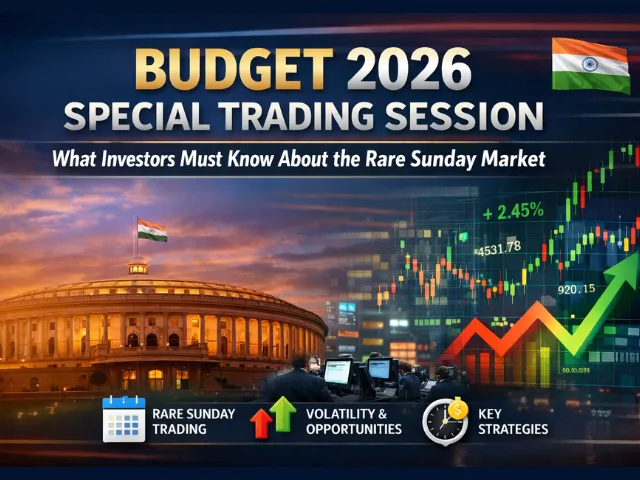
If the Budget presentation happens to coincide with a non-trading day, exchanges may announce a special live trading session, subject to official notification. Traders should always rely on exchange circulars for final confirmation.
Why Markets Stay Open on Union Budget Day
The Union Budget directly influences the economy, businesses, and investor sentiment. Keeping markets open ensures transparent price discovery and avoids panic-driven reactions later.
Real Market Context
During previous Budgets, sectors such as banking, infrastructure, FMCG, capital goods, and PSU stocks witnessed sharp movements within minutes of announcements. For example:
- Changes in capital gains taxation often impact equity indices instantly
- Infrastructure spending boosts cement, steel, and EPC stocks
- Banking and NBFC stocks react to fiscal deficit and borrowing plans
Allowing live trading ensures these reactions happen in a regulated and orderly manner.
Trading Hours on Budget Day 1st February 2026
On a normal Budget Day trading session, the market follows standard timings:
- Pre-open session in the morning
- Normal equity, derivatives, and currency trading hours
- Post-market sessions as applicable
Any deviation such as extended trading or special sessions is communicated in advance by NSE and BSE through official circulars.
How the Union Budget Impacts Indian Stock Markets
Short-Term Volatility
Budget Day is known for sudden spikes in volatility. Nifty and Sensex can swing sharply as headlines emerge. Options premiums rise, and intraday traders see rapid price movements.
Sector-Wise Impact
Different sectors respond differently depending on policy direction:
- Banking and financial stocks react to credit growth and fiscal discipline
- Infrastructure stocks respond to capex announcements
- Consumption stocks move on tax reliefs and rural spending
- Defence and manufacturing stocks react to Make in India and allocation plans
Long-Term Market Direction
While intraday moves can be volatile, long-term investors focus on structural reforms, growth outlook, and fiscal stability outlined in the Budget speech.
What Traders and Investors Should Do on Budget Day
For Active Traders
- Avoid over-leveraging positions
- Keep stop-losses strict
- Be cautious during the Finance Minister’s speech
For Long-Term Investors
- Focus on policy direction, not minute-by-minute index movement
- Avoid emotional buying or selling
- Use volatility to accumulate fundamentally strong stocks
Regulatory Perspective
SEBI continuously monitors trading activity during high-volatility events like the Union Budget to ensure market integrity, risk management, and investor protection.
Role of a Reliable Broker on Budget Day
Budget Day is not about predicting the Budget but responding to it intelligently. This is where a reliable, SEBI-registered broker becomes critical.
Why Traders Trust Swastika Investmart
- SEBI-registered and compliant brokerage
- Strong in-house research and Budget-focused market insights
- Tech-enabled trading platforms built for speed and stability
- Dedicated customer support during high-volatility sessions
- Ongoing investor education to help clients trade responsibly
Instead of reacting blindly to headlines, Swastika Investmart empowers traders with context, analysis, and disciplined execution.
Frequently Asked Questions
Will NSE and BSE be open on Budget Day 1st February 2026?
Yes, if 1st February 2026 is a regular trading day, NSE and BSE will remain open. Any special session will be announced officially by the exchanges.
Is Budget Day good for intraday trading?
Budget Day offers opportunities due to volatility, but it also carries higher risk. It suits experienced traders with strict risk management.
Does the Budget affect all stocks equally?
No. Sector-specific announcements impact stocks differently. Some sectors benefit while others may see profit booking.
Can beginners trade on Budget Day?
Beginners should be cautious. Observing the market or trading with minimal exposure is usually advisable.
Final Thoughts
The Union Budget is a defining event for Indian financial markets, and the market remaining open on Budget Day 1st February 2026 ensures transparency and real-time price discovery. While volatility is inevitable, disciplined trading and informed decision-making make all the difference.
If you want expert insights, robust technology, and reliable support during high-impact events like the Union Budget, consider trading with Swastika Investmart, a trusted name in Indian capital markets.
.webp)
Union Budget 2026 Explained in Simple Words: What It Means for You
Summary
• Union Budget 2026 focuses on growth, stability, and long-term economic strength
• Key attention areas include taxation, infrastructure, jobs, and digital India
• Markets react to direction and intent rather than just numbers
• Investors should focus on sectors aligned with government priorities
• Choosing a SEBI-registered broker like Swastika Investmart helps navigate budget-led volatility
Understanding Union Budget 2026 in Simple Words
Every year, the Union Budget sets the financial roadmap for India. Union Budget 2026 is no different. It reflects how the government plans to manage income, spending, and economic priorities for the coming year.
In simple terms, the budget answers three big questions
Where will the government earn money from
Where will it spend that money
How will these decisions affect citizens, businesses, and investors
For a salaried individual, it matters because of taxes and savings. For businesses, it impacts costs and growth. For investors and traders, it influences stock markets, sectors, and sentiment.
Why Union Budget 2026 Is Important for the Indian Economy
India is currently balancing growth with fiscal discipline. Union Budget 2026 plays a key role in maintaining this balance while supporting long-term goals like employment generation, infrastructure development, and digital expansion.
The budget also sends strong signals to global investors about India’s policy stability, reform direction, and ease of doing business. This directly impacts foreign investment flows into Indian markets.
Key Focus Areas of Union Budget 2026
Economic Growth and Infrastructure
Infrastructure spending continues to be a backbone of India’s growth story. Roads, railways, logistics, housing, and urban development usually remain in focus.
For example, higher capital expenditure helps sectors like cement, steel, capital goods, and infrastructure finance companies. Markets often track this closely on budget day.
Taxation and Middle-Class Relief
One of the most awaited parts of any budget is taxation. Union Budget 2026 is closely watched for potential changes in income tax structures, deductions, and compliance simplification.
Even small tweaks in tax rules can improve disposable income, which boosts consumption across sectors such as FMCG, retail, automobiles, and consumer durables.
Support for MSMEs and Startups
Micro, Small, and Medium Enterprises form the backbone of employment in India. Budget measures typically focus on easier credit access, digital compliance, and lower operational burden.
Startups also benefit from policy clarity, especially around funding, taxation, and innovation incentives. These measures help strengthen India’s entrepreneurial ecosystem.
Digital India and Financial Inclusion
Technology-enabled governance remains a key theme. Digital payments, fintech growth, and financial inclusion initiatives improve efficiency and transparency.
This benefits banks, NBFCs, fintech platforms, and retail investors who now have easier access to markets through mobile trading and investment apps.
Impact of Union Budget 2026 on Indian Stock Markets
Stock markets react less to headlines and more to long-term direction. A growth-oriented budget usually supports positive sentiment, while fiscal discipline reassures bond markets and rating agencies.
Short-Term Market Volatility
Budget day often sees sharp intraday movements. Traders actively track announcements related to taxes, capital expenditure, and sector-specific incentives.
Sectoral Winners and Laggards
Infrastructure, banking, manufacturing, and consumption-linked sectors often gain traction if policy support is clear. Defensive sectors may underperform during growth-focused budgets.
This is where strong research and timely insights become critical.
How Retail Investors Can Use Budget Insights Smartly
Instead of chasing instant reactions, long-term investors should align portfolios with budget priorities.
For example
If infrastructure spending is emphasized, look at quality companies with strong order books
If consumption is supported, focus on demand-driven businesses
If financial inclusion expands, banks and fintech-linked stocks may benefit
A disciplined approach matters more than quick speculation.
Role of SEBI-Registered Brokers During Budget Season
Budget announcements bring volatility. Having the right trading and investing partner makes a real difference.
Swastika Investmart, a SEBI-registered stock broker, offers
Strong research tools that break down market impact in simple language
Tech-enabled trading platforms for smooth execution during volatile sessions
Dedicated customer support for traders and investors
Continuous investor education to help clients make informed decisions
These strengths help investors stay confident even during fast-moving markets.
Frequently Asked Questions
What is Union Budget 2026 in simple terms
Union Budget 2026 is the government’s annual financial plan explaining how it will earn and spend money to manage the economy.
Does Union Budget directly affect stock markets
Yes. Budget policies influence sectors, investor sentiment, and short-term volatility in Indian markets.
Should beginners invest during budget time
Beginners should avoid impulsive decisions and focus on long-term fundamentals rather than budget-day noise.
Which sectors usually benefit from the Union Budget
Infrastructure, banking, manufacturing, and consumption-linked sectors often benefit depending on policy focus.
How can investors prepare for budget volatility
By using reliable research, risk management tools, and trading through a trusted SEBI-registered broker.
Final Thoughts
Union Budget 2026 is not just about numbers. It reflects India’s economic vision and policy intent. Understanding it in simple words helps individuals, businesses, and investors make better financial decisions.
For those looking to trade or invest confidently during budget-driven market movements, having a reliable partner matters.
Swastika Investmart combines regulatory trust, advanced technology, deep research, and investor-first support to help you navigate markets with clarity.
.webp)
Historic Budget Performance Comparison 2026: How India’s Budgets Have Shaped Markets Over Time
Summary
- Union Budget 2026 continues India’s long-term shift toward growth with fiscal discipline
- Compared to past budgets, focus has moved from crisis management to structural expansion
- Capital expenditure and tax simplification remain key market-moving themes
- Stock markets historically reward budgets that balance growth and stability
- Research-driven platforms help investors decode budget-led market trends
Historic Budget Performance Comparison 2026: How India’s Budgets Have Shaped Markets Over Time
The Union Budget is more than an annual financial announcement. Over the decades, it has acted as a mirror of India’s economic priorities, responding to global shocks, domestic reforms, and growth ambitions. As we look at Union Budget 2026, comparing its direction with historic budgets helps investors and traders understand where India stands and where it may be headed next.
This historic budget performance comparison places Budget 2026 in context with earlier milestones and explains what it means for Indian markets today.
How India’s Union Budgets Have Evolved Over Time
From Survival to Structural Growth
In the early decades after independence, Union Budgets focused on nation-building, public sector expansion, and resource allocation. A turning point came in the early 1990s, when liberalisation-driven budgets opened India to global trade and private enterprise. These reforms reshaped capital markets and laid the foundation for long-term growth.
Later budgets introduced tax rationalisation, financial sector reforms, and regulatory strengthening. The introduction of GST in the late 2010s simplified indirect taxation and improved compliance, influencing corporate profitability and market transparency.
Comparing Recent Budgets With Budget 2026
Budget 2025 Versus Budget 2026
Union Budget 2025 focused on increasing disposable income through tax relief and boosting demand while maintaining fiscal control. This helped improve consumption-led sectors and supported market sentiment.
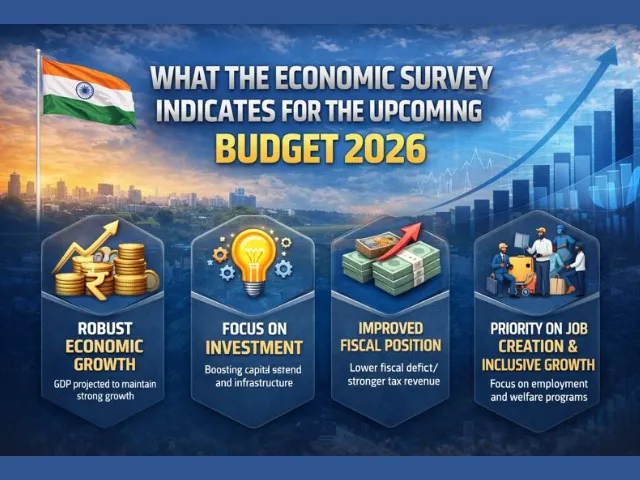
Budget 2026 builds on this base. Projections indicate a continued emphasis on fiscal discipline with a marginally lower fiscal deficit target, signaling confidence in economic resilience. This consistency reassures investors, especially foreign institutional participants who track India’s macro stability closely.
Capital Expenditure as a Long-Term Growth Engine
One clear trend across recent budgets is the rising share of capital expenditure. Roads, railways, ports, and digital infrastructure have received sustained funding. Historically, budgets that increased capital spending created positive ripple effects across sectors such as cement, steel, engineering, and banking.
Budget 2026 continues this trajectory. Compared to older budgets that relied heavily on revenue spending, the current approach reflects a structural shift toward productivity-led growth. Markets tend to reward such discipline over time, even if short-term volatility exists on Budget Day.
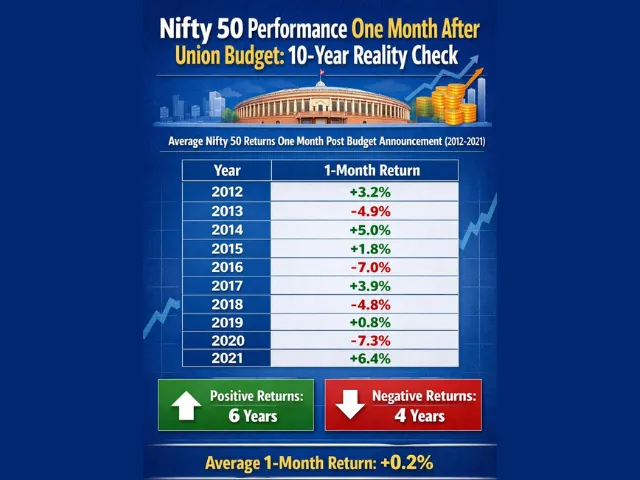
Market Reaction to Budgets: What History Shows
Short-Term Volatility, Long-Term Direction
Indian stock markets often react sharply during the budget speech. Traders watch for changes in taxation, sector incentives, and government borrowing plans. However, history shows that markets stabilize once clarity emerges.
For example, budgets that combined tax rationalisation with infrastructure investment generally led to sustained rallies in the following quarters. On the other hand, populist budgets without fiscal backing often triggered temporary optimism but lacked long-term momentum.
Budget 2026, when compared historically, fits the former category. Its focus on growth with control aligns with what markets have rewarded in the past.
Sector-Wise Impact Across Budgets
Historically, different budgets favored different sectors. Manufacturing and infrastructure benefited from production-linked incentives. Financial services gained from regulatory clarity and recapitalisation. Technology and digital platforms grew with increased emphasis on Digital India initiatives.
Budget 2026 is expected to maintain this balanced sectoral approach. For traders and investors, understanding these patterns is critical. Research-backed insights help identify which themes may outperform post-budget.
Regulatory Stability and Investor Confidence
Role of Indian Financial Regulators
A key strength of recent budgets is alignment with regulatory frameworks set by institutions like SEBI and RBI. Regulatory predictability has improved investor confidence and reduced systemic risk.
Budget announcements that support transparent markets, compliance ease, and digital oversight strengthen India’s investment environment. This consistency contrasts with earlier decades when frequent policy shifts created uncertainty.
What This Historic Comparison Means for Investors Today
For Long-Term Investors
Historically, investors who stayed invested during structurally strong budgets benefited from compounding growth. Budget 2026 signals continuity rather than disruption, which favors disciplined long-term strategies.
For Active Traders
Budget days bring volatility. However, experienced traders rely on pre-budget research, sector analysis, and post-budget clarity instead of reacting emotionally. SEBI-registered brokers with strong research desks play a key role in helping traders navigate such sessions.
Swastika Investmart, with its research-driven approach, tech-enabled platforms, and responsive customer support, supports traders during high-impact events like the Union Budget.
Real-World Example: Budget Trends and Market Performance
After previous growth-focused budgets, infrastructure and banking stocks often outperformed broader indices over the medium term. Traders who tracked budget themes using professional research tools were better positioned to manage risk and capture opportunity.
This pattern reinforces why historic budget performance comparison is not just academic. It directly influences practical trading and investment decisions.
Frequently Asked Questions
What is historic budget performance comparison?
It is the analysis of how past Union Budgets impacted economic growth, fiscal stability, and market performance compared to the current budget.
Why is Budget 2026 important for investors?
It reflects continuity in fiscal discipline and capital spending, which historically supports long-term market growth.
Do markets always rise after the budget?
Not immediately. Markets may show short-term volatility, but structurally strong budgets tend to support long-term trends.
How can traders prepare for budget volatility?
By using research-backed insights, understanding sectoral impact, and trading through SEBI-registered platforms.
Conclusion: Learning From History to Trade Smarter
Historic budget performance comparison shows that India’s strongest market phases followed budgets focused on reform, discipline, and infrastructure-led growth. Union Budget 2026 fits into this broader narrative, signaling stability and long-term opportunity rather than short-term disruption.
For investors and traders, understanding these patterns is essential. With reliable research, modern trading tools, and strong investor education, Swastika Investmart helps market participants make informed decisions during critical events like the Union Budget.
If you are looking to trade or invest with clarity and confidence, this is the right time to begin.


.webp)
.webp)

.webp)






START YOUR INVESTMENT JOURNEY
Get personalized advice from our experts
- Dedicated RM Support
- Smooth and Fast Trading App
