

Good Friday 2026: Stock Market, Banks, Currency & Commodity Markets Closed on April 2


%20(3).webp)

 Add Swastika as preferred source
Good Friday 2026 brings an important update for investors and traders across India. On April 2, 2026, financial markets including equity, currency, and commodity segments will remain closed in observance of this significant Christian holiday.
If you actively trade or invest, it is essential to plan your positions and transactions in advance to avoid last-minute surprises.
Quick Highlights
- NSE and BSE will remain closed on April 2, 2026
- Equity, derivatives, currency, and commodity segments will not operate
- Banks will be closed in most regions across India
- Markets will reopen on Monday, April 6, 2026
Why Markets Are Closed on Good Friday
Good Friday is a widely observed public holiday in India, marking the crucifixion of Jesus Christ. As per official exchange holiday calendars, major financial institutions pause operations on this day.
Stock exchanges like NSE and BSE, regulated by SEBI, follow a predefined list of trading holidays each year. Good Friday is one of the key non-trading days, ensuring uniform closure across all segments.
What Exactly Is Closed on April 2, 2026
Equity Market
No trading activity will take place in equities. Investors cannot buy or sell shares on this day.
Derivatives Segment
Futures and options trading will remain suspended across all indices and stocks.
Currency Market
Currency trading, including USD-INR and other pairs, will be closed.
Commodity Market
Commodity exchanges like MCX will remain shut for the entire day, impacting traders dealing in gold, silver, crude oil, and other commodities.
Bank Holiday on Good Friday
Banks across most states in India observe Good Friday as a holiday. However, the exact status may vary slightly depending on regional guidelines issued by the Reserve Bank of India.
While physical branches remain closed, digital banking services like UPI, net banking, and mobile apps will continue to function normally.
What Should Investors Do
Plan Trades in Advance
Since markets will be closed, ensure that all urgent trades or portfolio adjustments are completed before April 2.
Avoid Last-Minute Decisions
Liquidity remains unaffected before and after holidays, but sudden global developments during market closure can impact opening trends.
Stay Updated with Global Cues
Even though Indian markets are closed, global markets may remain open. Keep an eye on international developments that could influence market movement when trading resumes.
How Swastika Investmart Helps You Stay Prepared
During market holidays like Good Friday, having access to reliable insights becomes crucial. Swastika Investmart, a SEBI-registered broker, empowers investors with:
- Advanced research and advisory tools
- A robust, tech-driven trading platform
- Dedicated customer support
- Continuous investor education
These features help you stay informed and ready for the next trading session.
When Will Markets Reopen
After the Good Friday holiday on April 2, 2026, markets will remain closed over the weekend. Trading will resume on Monday, April 6, 2026, following regular market hours.
Conclusion
Good Friday 2026 serves as an important non-trading day for Indian financial markets. Whether you are an active trader or a long-term investor, understanding market holidays helps you manage your investments better.
Stay prepared, stay informed, and use this time to review your portfolio strategy.
To plan your next move with confidence, explore Swastika Investmart’s platform here:
Big Budget









.webp)
.webp)
.webp)
.webp)
.webp)













.webp)
.webp)
.webp)
.webp)
Latest Articles
FII & DII Trading Activity Today: Strong Buying Supports Indian Markets on 18 December 2025


Foreign Institutional Investors and Domestic Institutional Investors once again played a crucial role in shaping Indian equity market sentiment. On 18 December 2025, combined institutional activity across NSE, BSE and MSEI reflected healthy net buying, offering stability to benchmark indices amid mixed global cues.
Institutional flows are closely tracked by traders and long-term investors alike, as they often signal confidence, liquidity direction, and medium-term market trends.
Institutional Trading Data for 18 December 2025
Based on official exchange data from the capital market segment:
Domestic Institutional Investors Activity
Domestic Institutional Investors recorded strong buying interest, reflecting continued confidence from mutual funds, insurance companies and pension funds.
- Buy Value: ₹12,375.71 crore
- Sell Value: ₹9,675.35 crore
- Net Value: ₹2,700.36 crore
DII participation remains a key stabilising force for Indian markets, especially during periods of foreign fund volatility.
FII and FPI Trading Activity
Foreign Institutional Investors showed measured optimism, continuing their selective accumulation strategy.
- Buy Value: ₹11,442.37 crore
- Sell Value: ₹10,846.59 crore
- Net Value: ₹595.78 crore
While FII buying was moderate, the fact that foreign investors stayed net positive reflects improving confidence in India’s macro fundamentals.
Total Institutional Impact on Indian Markets
Combining both DIIs and FIIs, the total net institutional inflow stood at ₹6,296.14 crore, providing a solid liquidity boost to equities.
This level of participation generally:
- Supports index levels during volatile sessions
- Improves market breadth
- Encourages retail participation
- Strengthens sectoral rotation
Such inflows often translate into steady movements in heavyweight stocks from banking, IT, FMCG and capital goods sectors.
What Drove Institutional Buying on 18 December
Several domestic and global factors influenced institutional behaviour:
Stable Domestic Macroeconomic Indicators
India continues to remain one of the fastest-growing major economies. Controlled inflation, stable interest rate expectations, and strong GST collections keep domestic funds confident.
Selective FII Re-entry
Foreign investors appear to be rotating funds towards emerging markets with stronger earnings visibility. India benefits due to:
- Consistent GDP growth
- Corporate balance sheet improvement
- Regulatory transparency under SEBI
Year-end Portfolio Rebalancing
December often sees institutional rebalancing, where funds adjust allocations before the new calendar year. This supports steady buying in fundamentally strong stocks.
Impact on Nifty, Sensex and Broader Markets
Institutional buying helped limit downside pressure in benchmark indices:
- Nifty showed resilience near key support zones
- Sensex remained range-bound but stable
- Midcap and select PSU stocks attracted interest
While global markets remain sensitive to interest rate expectations and geopolitical cues, domestic liquidity continues to act as a strong buffer.
Why Tracking FII and DII Data Matters for Investors
For Indian investors, daily institutional data offers valuable insights:
- DIIs reflect long-term domestic confidence
- FIIs indicate global risk appetite
- Sustained net buying often precedes trend formation
- Sharp outflows can signal near-term volatility
However, trading decisions should never rely on flows alone. They must be combined with technical levels, earnings outlook, and sector-specific trends.
How Swastika Investmart Helps You Decode Market Flows
Understanding institutional activity becomes easier with the right tools and research support. Swastika Investmart, a SEBI-registered stockbroker, empowers investors with:
- In-depth market research and daily insights
- Advanced trading platforms for equities and derivatives
- Reliable customer support for active and long-term investors
- Strong focus on investor education and risk awareness
- Tech-enabled tools to track market trends efficiently
Whether you are a beginner or an experienced trader, access to accurate data and expert interpretation makes a measurable difference.
👉 Open your trading account here
Frequently Asked Questions
What is FII and DII trading activity?
It refers to buying and selling done by foreign and domestic institutional investors in Indian stock markets.
Why is DII buying important for Indian markets?
DIIs provide stability during volatile phases and support long-term market growth.
Is net buying always bullish?
Net buying is generally positive, but markets also depend on global cues, earnings, and macroeconomic factors.
Where can investors track daily FII and DII data?
Official data is published by NSE, BSE and market analytics platforms.
Should retail investors follow institutional flows blindly?
No. Institutional data should be used as a supporting indicator, not a standalone strategy.
Final Takeaway
The FII & DII trading activity on 18 December 2025 highlights continued institutional confidence in Indian equities. With total net inflows of ₹6,296.14 crore, markets received crucial support amid global uncertainties.
As India heads toward the new year, sustained domestic participation and cautious foreign buying could keep volatility in check and offer selective opportunities for informed investors.
With the right research, disciplined strategy, and trusted partners like Swastika Investmart, navigating market movements becomes more structured and rewarding.
Ready to take the next step in your investing journey?
👉 Open your trading account here and stay ahead of the markets.
%20(2).webp)
Market Closing Today 18 December 2025: Nifty, Sensex, Bank Nifty End Flat to Negative
The Indian stock market closing today on 18 December 2025 reflected a phase of consolidation after recent volatility. Benchmark indices struggled to find clear direction and ended marginally lower, as investors remained cautious ahead of upcoming global cues, interest rate expectations, and year-end positioning.
Despite intraday swings, the broader sentiment stayed neutral, indicating that markets are taking a breather rather than signaling a strong trend reversal.
Indian Stock Market Closing Snapshot: 18 December 2025
At the close of trade, benchmark indices settled slightly in the red:
- Nifty 50 closed at 25,815.55, down 0.01 percent (-3.00 points)
- BSE Sensex ended at 84,481.81, down 0.09 percent (-77.84 points)
- Bank Nifty settled at 58,912.85, down 0.02 percent (-13.90 points)
The narrow range movement suggests that traders preferred to stay light on positions, especially in large-cap stocks.
What Drove the Market Today
Cautious Global Cues
Asian markets traded mixed, while US futures remained subdued. Investors are closely tracking signals around interest rate trajectories and inflation trends in major economies. This global uncertainty capped aggressive buying in Indian equities.
Profit Booking at Higher Levels
After Nifty and Sensex hovered near record zones in recent sessions, selective profit booking was visible in heavyweight stocks. This was particularly evident in banking and FMCG names, which had seen strong runs earlier.
Range-Bound Banking Stocks
Bank Nifty underperformed marginally as private banks traded mixed and PSU banks lacked fresh triggers. Investors appeared hesitant to take fresh bets ahead of cues on credit growth and asset quality updates.
Sector-Wise Performance Overview
Banking and Financials
Banking stocks showed muted action. While select private lenders found support, overall momentum remained weak. Traders are awaiting clarity on interest margins and loan demand before making directional calls.
IT Stocks
IT shares traded cautiously as the rupee remained stable and global tech sentiment stayed mixed. With deal activity updates expected in the coming weeks, IT stocks are currently in a consolidation phase.
FMCG and Consumption
Defensive stocks provided limited support. While FMCG remains a long-term favorite due to stable earnings, near-term upside was capped due to rich valuations.
Midcap and Smallcap Stocks
Broader markets traded mixed. Stock-specific action dominated, with investors focusing more on fundamentals rather than chasing momentum.
How Today’s Closing Impacts Indian Markets
The market closing today on 18 December 2025 highlights a classic consolidation phase. Such sessions are important because they often lay the foundation for the next directional move.
From an Indian market perspective:
- The Nifty holding above the 25,800 zone indicates strength despite lack of momentum
- Sensex remaining above 84,000 reflects continued institutional confidence
- Bank Nifty’s sideways movement suggests banking stocks may need fresh triggers to lead the next rally
Historically, similar flat-to-negative sessions near highs have preceded either a gradual breakout or a healthy pullback, depending on global cues and domestic data.
Technical View and Near-Term Outlook
From a technical standpoint:
- Nifty has immediate support near 25,700, while resistance lies around 26,000
- Bank Nifty support is seen near 58,500, with resistance close to 59,500
As long as these supports hold, the broader trend remains intact. Short-term traders may continue to adopt a buy-on-dips strategy, while long-term investors can use such phases to accumulate quality stocks.
Investor Takeaway from Today’s Market Closing
For retail investors and traders, today’s market action reinforces the importance of discipline. Flat markets test patience, but they also offer opportunities to reassess portfolios, rebalance allocations, and focus on fundamentally strong companies.
SEBI-regulated market participants continue to emphasize long-term investing backed by research and risk management rather than short-term speculation.
How Swastika Investmart Helps Investors Navigate Such Markets
In sideways or uncertain markets like today, having the right research and tools makes a significant difference. Swastika Investmart, a SEBI-registered brokerage, supports investors with:
- In-depth market research and daily insights
- Advanced trading and investment platforms
- Strong customer support and investor education initiatives
- Technology-driven tools designed for both beginners and experienced traders
Whether markets trend sharply or move sideways, informed decision-making remains the key to long-term success.
FAQs
What was the Indian stock market closing today on 18 December 2025?
The market closed marginally lower, with Nifty at 25,815.55, Sensex at 84,481.81, and Bank Nifty at 58,912.85.
Why did the market trade flat today?
Markets remained range-bound due to cautious global cues, profit booking at higher levels, and lack of fresh domestic triggers.
Is a flat market a negative sign for investors?
Not necessarily. Flat markets often indicate consolidation and can provide good entry opportunities for long-term investors.
Which index underperformed today?
Bank Nifty underperformed slightly due to muted action in banking stocks.
How should investors approach such market conditions?
Investors should focus on fundamentally strong stocks, maintain diversification, and avoid impulsive trading decisions.
Conclusion
The market closing today on 18 December 2025 reflects a pause rather than panic in Indian equities. With benchmarks holding key support levels, the broader outlook remains stable, though short-term volatility cannot be ruled out.
If you want to navigate such markets with confidence, backed by research, technology, and trusted guidance, consider investing with Swastika Investmart.
Take the next step and open your trading account today:
👉 Open your Trading Account with Swastika
Smart investing begins with informed decisions and the right partner by your side.

Dollar Strength, Rupee Stability, and What It Means for Indian Equities
Key Takeaways
- A strong dollar does not automatically mean weak Indian equities
- Rupee stability reflects India’s improving macro fundamentals
- Sector-wise impact matters more than headline currency moves
- Indian markets today are better positioned to absorb global shocks
Dollar Strength and Rupee Stability: A Changing Narrative
The global financial narrative often frames dollar strength as bad news for emerging markets. Historically, a rising US dollar led to capital outflows, currency depreciation, and pressure on equity markets. However, the current cycle tells a more nuanced story.
Despite phases of sustained dollar strength, the Indian rupee has remained relatively stable compared to many peer currencies. More importantly, Indian equities have continued to attract long-term interest. This shift reflects structural improvements in India’s economy and the maturity of its capital markets.
Understanding how dollar strength and rupee stability interact is key to assessing what lies ahead for Indian equities.
Why the Dollar Is Strong Right Now
Global Interest Rate Differentials
The US Federal Reserve’s higher interest rate regime has supported the dollar. Higher yields attract global capital, strengthening the currency against most others.
This dynamic is global in nature and not India-specific. Many developed and emerging market currencies have felt the impact.
Safe-Haven Demand
Periods of global uncertainty, whether driven by geopolitical risks or growth concerns, typically push investors toward safe-haven assets. The US dollar remains the preferred choice during such phases.
Why the Indian Rupee Has Remained Relatively Stable
Strong Forex Reserves
India’s robust foreign exchange reserves provide a crucial buffer. The Reserve Bank of India actively manages volatility, ensuring orderly currency movements rather than sharp swings.
This stability reassures global investors and reduces panic-driven capital flight.
Improved Macro Fundamentals
India’s current account dynamics, steady capital inflows, and resilient domestic demand contribute to rupee stability. Unlike earlier decades, India is not heavily dependent on volatile short-term capital to fund growth.
RBI’s Balanced Approach
The RBI focuses on controlling excessive volatility rather than defending a specific level. This pragmatic approach allows the rupee to adjust gradually while maintaining confidence in the financial system.
What Dollar Strength Means for Indian Equities
Not All Sectors React the Same Way
Currency movements do not impact all companies uniformly. The effect of dollar strength on Indian equities depends on revenue exposure, cost structure, and balance sheet positioning.
Export-oriented sectors often benefit, while import-dependent sectors may face pressure.
IT and Pharma: Relative Beneficiaries
Indian IT services and pharmaceutical companies earn a large portion of revenues in foreign currencies. A stable or mildly weaker rupee improves earnings visibility and margin support.
This is why such sectors often outperform during phases of global currency volatility.
Oil, Aviation, and Capital Goods
Sectors dependent on imports, particularly crude oil, may face margin pressure if dollar strength leads to higher input costs. However, rupee stability helps mitigate extreme shocks.
For Indian equities, stability matters more than absolute currency direction.
Impact on Foreign Investor Flows
FII Behaviour Has Evolved
Earlier, dollar strength often triggered aggressive FII selling in Indian equities. Today, foreign investors are more selective.
India’s growth prospects, corporate earnings visibility, and political stability often outweigh short-term currency concerns.
Domestic Investors as a Counterbalance
Strong domestic participation through mutual funds and direct equity investing has reduced market dependence on foreign flows. This has helped Indian indices remain resilient even during periods of global risk aversion.
Market Valuations and Currency Context
Valuations Are No Longer Currency-Driven Alone
Indian equity valuations are increasingly driven by earnings growth rather than currency movements. Structural themes such as manufacturing, infrastructure, and financial inclusion play a larger role.
This shift reduces sensitivity to external shocks like dollar strength.
Long-Term Perspective Matters
Short-term currency fluctuations rarely derail long-term equity returns. Investors who focus on fundamentals rather than headlines tend to navigate such phases better.
Indian Regulatory Framework and Stability
India’s capital markets operate under a strong regulatory framework guided by SEBI and RBI. Transparent disclosure norms, improved corporate governance, and robust market infrastructure support investor confidence.
This regulatory stability is one reason Indian equities continue to attract long-term capital despite global currency volatility.
How Investors Can Navigate Currency-Driven Volatility
Focus on Quality and Diversification
Instead of reacting to currency headlines, investors should focus on quality businesses with strong balance sheets and diversified revenue streams.
Diversification across sectors helps manage currency-related risks.
Avoid Overreacting to Short-Term Moves
Dollar strength cycles come and go. Overreacting often leads to missed opportunities rather than risk reduction.
A disciplined approach aligned with long-term goals remains the most effective strategy.
Swastika Investmart’s Role in Helping Investors Stay Disciplined
Understanding macro trends like dollar strength and rupee stability requires clarity, not noise. Swastika Investmart, a SEBI-registered brokerage, supports investors with:
- In-depth macro and equity research focused on Indian markets
- Technology-enabled platforms for seamless investing
- Strong customer support for timely guidance
- Investor education initiatives that simplify global market developments
This approach empowers investors to make informed decisions even during uncertain global phases.
Frequently Asked Questions
Does a strong dollar always hurt Indian equities
No. The impact depends on sector exposure, earnings growth, and domestic fundamentals rather than currency movement alone.
Why is the rupee more stable compared to other emerging markets
Strong forex reserves, prudent RBI management, and improved macro fundamentals support stability.
Which Indian sectors benefit from dollar strength
IT services, pharmaceuticals, and export-oriented companies often benefit from foreign currency earnings.
Should investors change portfolios based on currency movements
Long-term investors should avoid frequent changes and focus on fundamentals and asset allocation.
How does RBI manage currency volatility
RBI intervenes to smooth excessive volatility while allowing market-driven adjustments.
Final Thoughts
The relationship between dollar strength, rupee stability, and Indian equities is no longer one-dimensional. India’s evolving economic structure, strong regulatory framework, and rising domestic participation have changed the equation.
For investors seeking clarity, discipline, and research-backed insights in this environment, Swastika Investmart offers a reliable platform to navigate both global and domestic market trends.
Invest with perspective, not panic.

Corrections Without Panic: How Indian Investors Have Matured
Key Takeaways
- Indian markets now handle corrections with far less panic than in the past
- SIP inflows, investor education, and regulatory strength have improved behaviour
- Domestic investors are increasingly countering FII volatility
- Long-term investing discipline is shaping a more resilient market
A New Face of Market Corrections in India
Market corrections are not new. What has changed is how Indian investors respond to them. The theme of corrections without panic has become increasingly visible in recent years. Instead of rushing to exit positions at the first sign of volatility, investors are choosing patience, discipline, and long-term thinking.
Even during sharp global events such as aggressive interest rate hikes, geopolitical tensions, or sudden FII selling, Indian markets have shown relative stability. Corrections still happen, but the fear-driven selling that once defined downturns is noticeably lower.
This shift reflects a deeper maturity in India’s investing ecosystem.
How Investor Behaviour Has Evolved
From Fear-Driven to Goal-Oriented Investing
Earlier market cycles were marked by retail panic. Small corrections often triggered heavy selling, locking in losses and missing recoveries. Today, many investors invest with defined goals such as retirement, children’s education, or wealth creation.
Goal-based investing has reduced emotional decision-making. When markets correct, investors now see it as a phase rather than a failure.
The Role of SIP Culture
Systematic Investment Plans have fundamentally changed how Indian investors participate in equities. Monthly SIP inflows continue even during market corrections, providing stability and consistent demand.
This steady flow of domestic money often cushions declines caused by foreign investor selling. It also reinforces the mindset that corrections are opportunities rather than threats.
Domestic Investors as a Market Anchor
Rising Influence of Retail and Domestic Institutions
One of the most important shifts in recent years is the growing influence of domestic investors. Mutual funds, insurance companies, and retail participants now play a larger role in market direction.
When FIIs reduce exposure due to global concerns, domestic flows frequently absorb the impact. This has reduced volatility and limited sharp drawdowns.
Real-World Market Examples
During recent global sell-offs, Indian benchmark indices corrected but recovered faster compared to earlier decades. Strong domestic demand, stable banking systems, and ongoing infrastructure spending helped restore confidence quickly.
This resilience reflects a market supported not just by global capital, but by domestic belief.
Regulatory Strength and Investor Confidence
SEBI’s Role in Building Trust
India’s capital markets are regulated by SEBI, which has consistently strengthened disclosure norms, corporate governance standards, and investor protection mechanisms.
Measures such as tighter mutual fund regulations, improved transparency, and risk disclosure norms have made investors more informed and confident.
Education and Digital Access
Digital platforms, simplified KYC processes, and easy access to research have democratized investing. Investors today can track portfolios, understand risks, and access quality insights in real time.
This accessibility reduces uncertainty, which is often the root cause of panic selling.
Corrections Are Now Seen as Part of the Journey
Valuations Adjust, Not Stories End
Corrections help markets cool excesses and reset valuations. Mature investors understand that temporary price declines do not necessarily mean long-term business deterioration.
Instead of exiting completely, many investors now rebalance portfolios, add quality stocks, or increase SIP contributions during downturns.
Long-Term Thinking Dominates
The shift toward long-term investing has reduced speculative behaviour. Investors are more aware of compounding benefits and the cost of missing market recoveries.
This mindset change is one of the strongest indicators of maturity in Indian markets.
What This Means for Indian Markets Going Forward
Reduced Fragility, Not No Volatility
Market maturity does not eliminate volatility. It reduces fragility. Corrections will continue, but extreme panic reactions are less likely when investors are informed and disciplined.
This stability makes Indian markets more attractive to long-term global investors as well.
Better Quality Participation
With more investors focusing on fundamentals, quality companies tend to attract long-term capital. This improves market depth and supports sustainable growth.
How Swastika Investmart Supports Disciplined Investing
In a maturing market, the right guidance matters. Swastika Investmart, a SEBI-registered brokerage, supports investors through:
- Research-driven insights focused on Indian fundamentals
- Technology-enabled platforms for seamless portfolio tracking
- Dedicated customer support for timely assistance
- Investor education initiatives that promote long-term discipline
Such an ecosystem helps investors stay calm during corrections and focused on goals rather than noise.
Frequently Asked Questions
Why are Indian investors less panicked during corrections today
Improved financial literacy, SIP discipline, and long-term goal-based investing have reduced emotional reactions.
Do market corrections still present risks
Yes. Corrections involve volatility, but informed investors manage risk through diversification and asset allocation.
How do domestic investors impact market stability
Consistent domestic inflows often offset foreign selling, reducing sharp market swings.
Are SIPs effective during market corrections
SIPs help average costs and maintain discipline, making them effective during volatile phases.
What role does regulation play in investor maturity
Strong SEBI regulations improve transparency and trust, encouraging long-term participation.
Final Thoughts
The era of corrections without panic reflects how far Indian investors have come. Experience, education, and regulatory strength have transformed market behaviour from fear-driven to fundamentally sound.
For investors seeking a structured, research-backed approach in this evolving landscape, Swastika Investmart offers the right balance of technology, insight, and support.
Invest with discipline and clarity.
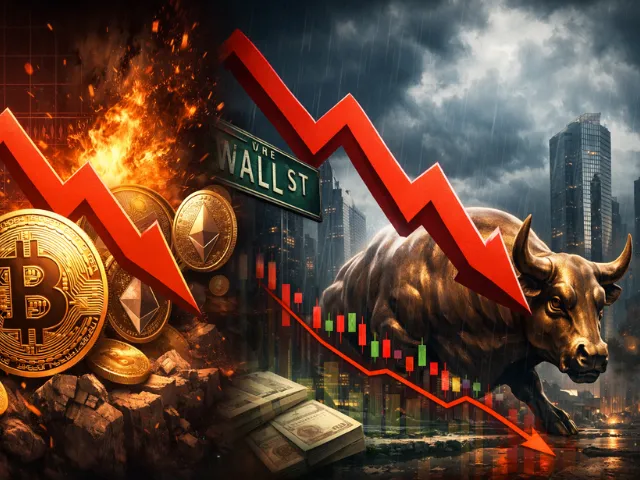
Crypto vs Equity Markets: Why Crypto Falls Faster in Risk-Off Phases
Key Takeaways
- Crypto markets react faster and more sharply during risk-off phases than equities
- Lack of intrinsic cash flows makes crypto more sentiment-driven
- Equity markets benefit from regulation, institutional participation, and valuation anchors
- Indian investors should understand volatility differences before allocating capital
Understanding Risk-Off Phases in Financial Markets
Risk-off phases occur when investors reduce exposure to risky assets and move capital toward safer options such as cash, bonds, gold, or defensive equities. These phases are typically triggered by global uncertainty such as rising interest rates, geopolitical tensions, recession fears, or liquidity tightening by central banks.
During such periods, all risky assets correct. However, the speed and depth of correction differ significantly across asset classes. This is where the contrast between crypto vs equity markets becomes most visible.
Why Crypto Falls Faster Than Equities
Absence of Fundamental Valuation Anchors
Equity markets are supported by tangible fundamentals such as earnings, dividends, cash flows, and balance sheets. Even during sharp corrections, long-term investors can assess valuations using metrics like price-to-earnings ratios or book value.
Cryptocurrencies, on the other hand, largely lack intrinsic valuation benchmarks. Prices are driven by demand, sentiment, network activity, and speculative positioning. When fear dominates, there is no fundamental floor to slow down selling.
This is a key reason why crypto prices tend to collapse faster during risk-off phases.
Higher Retail Participation and Leverage
Crypto markets have a higher proportion of retail traders compared to equity markets. Retail participation often comes with higher emotional decision-making and aggressive use of leverage.
When prices start falling:
- Margin calls accelerate selling
- Stop-losses trigger rapid liquidation
- Panic spreads faster through social media
In contrast, equity markets include long-term institutional investors such as mutual funds, pension funds, and insurance companies who tend to rebalance rather than exit completely.
24x7 Trading Amplifies Volatility
Unlike equity markets, which operate during fixed trading hours, crypto markets trade round the clock. This means price reactions to global events are instant.
For example, during global risk-off events like aggressive US Federal Reserve tightening, cryptocurrencies often drop sharply overnight, while equity markets react more gradually during trading hours.
This continuous trading structure magnifies volatility and downside momentum.
Liquidity Dynamics in Crypto vs Equity Markets
Thin Liquidity During Stress
Liquidity dries up quickly in crypto markets during stress periods. When buyers step back, even modest sell orders can lead to steep price declines.
Equity markets, especially large-cap stocks in India, benefit from deeper liquidity pools, market makers, and regulatory safeguards such as circuit breakers.
This structural difference explains why equity corrections are often more orderly compared to crypto crashes.
Institutional Exit Happens Faster in Crypto
While institutional participation in crypto has increased, it is still opportunistic rather than structural. When risk appetite declines, institutions are quicker to reduce crypto exposure as it is classified as a high-risk asset.
In equities, institutions often rotate from cyclicals to defensives instead of exiting the market entirely.
Indian Market Context: Crypto vs Equities
Regulatory Clarity Favors Equities
In India, equity markets are regulated by SEBI, offering transparency, investor protection, and strict disclosure norms. This regulatory framework builds long-term confidence and stability.
Cryptocurrencies, while legal to trade, operate in a regulatory grey zone. Taxation rules are clear, but investor protection mechanisms remain limited. This uncertainty increases downside risk during volatile phases.
Impact on Indian Investors
Indian investors often enter crypto markets during bull phases driven by global rallies. However, during risk-off cycles, sharp drawdowns test risk tolerance.
Equity investors, particularly those invested through mutual funds or diversified portfolios, experience relatively smoother corrections. Domestic institutional flows also help cushion equity market declines in India.
Real-World Example of Risk-Off Behavior
During global tightening cycles, cryptocurrencies have witnessed drawdowns exceeding 50 percent in short periods. Equity markets also corrected but recovered faster as earnings growth and domestic factors provided support.
Indian benchmark indices historically show resilience due to strong domestic consumption, government capex, and financial sector strength. Crypto assets do not benefit from such structural tailwinds.
Should Indian Investors Avoid Crypto Completely
Not necessarily. Crypto can be viewed as a high-risk satellite allocation rather than a core investment. Position sizing and risk management are crucial.
Equities, especially Indian equities, remain better suited for long-term wealth creation due to:
- Earnings visibility
- Regulatory oversight
- Corporate governance standards
- Compounding through dividends and growth
How Disciplined Platforms Help During Volatility
Market volatility highlights the importance of research-driven investing. Platforms that emphasize investor education, structured research, and risk management help investors avoid impulsive decisions.
SEBI-registered brokerage firms with strong analytics and advisory frameworks enable investors to focus on long-term strategies rather than short-term noise.
Frequently Asked Questions
Why does crypto crash harder than equities during risk-off phases
Crypto lacks fundamental valuation anchors and has higher speculative participation, leading to sharper sell-offs during market stress.
Are equities safer than crypto
Equities are relatively less volatile and benefit from regulation, earnings support, and institutional participation, making them more suitable for long-term investors.
Can crypto recover faster after crashes
Crypto often sees sharp rebounds, but recoveries are unpredictable and heavily sentiment-driven.
How should Indian investors allocate between crypto and equities
Equities should form the core portfolio, while crypto exposure should be limited and aligned with risk tolerance.
Does regulation impact volatility
Yes. Strong regulation in equity markets reduces systemic risk and improves investor confidence during volatile periods.
Final Thoughts
The debate around crypto vs equity markets becomes most relevant during risk-off phases. Crypto assets fall faster due to structural volatility, speculative participation, and limited valuation support. Equities, particularly in India, offer relatively better downside protection and long-term compounding potential.
For investors seeking stability, transparency, and research-backed insights, Indian equity markets remain a stronger foundation.
Swastika Investmart, a SEBI-registered brokerage, supports investors with robust research tools, technology-driven platforms, dedicated customer support, and ongoing investor education. This approach helps investors navigate volatile phases with discipline and confidence.
Take a structured approach to investing.

Bank of Japan Rate Decision: Why It Matters for Indian Markets
Key Takeaways
- The Bank of Japan rate decision influences global liquidity and currency movements.
- Changes in Japan’s policy can impact FII flows into Indian equities and debt.
- A stronger yen or tighter Japanese policy may pressure emerging markets like India.
- Indian investors should track global central banks, not just the RBI, for portfolio strategy.
Understanding the Bank of Japan Rate Decision
The Bank of Japan rate decision may appear distant for Indian investors, but its ripple effects are very real. Japan is the world’s third-largest economy and one of the biggest sources of global liquidity. For years, the Bank of Japan followed ultra-loose monetary policies, keeping interest rates near zero or negative to stimulate growth.
Whenever the Bank of Japan tweaks its interest rates or signals a shift in stance, global markets pay close attention. This is because Japanese investors, institutions, and funds are deeply intertwined with global capital markets, including India.
In today’s interconnected financial system, central bank decisions do not remain confined within borders. What happens in Tokyo often finds its way to Dalal Street.
Why the Bank of Japan Matters Globally
Japan’s Role in Global Liquidity
Japan has historically been a low-interest-rate economy. This encouraged global investors to borrow cheaply in yen and invest in higher-yielding assets elsewhere, a strategy known as the carry trade.
When the Bank of Japan keeps rates low, money flows into emerging markets such as India, Indonesia, and Brazil. When it signals tightening or rate hikes, that flow can reverse.
Yen Movement and Risk Appetite
The yen is often considered a safe-haven currency. A shift in the Bank of Japan rate decision can strengthen the yen, reducing risk appetite globally. This impacts equity markets, commodities, and currencies across Asia.
Direct Impact on Indian Markets
Effect on FII and FPI Flows
Foreign Institutional Investors play a crucial role in Indian equities and debt markets. A tighter policy stance from the Bank of Japan can lead to:
- Reduced FII inflows into Indian equities
- Higher volatility in large-cap stocks with global exposure
- Temporary pressure on benchmark indices like Nifty 50 and Sensex
For example, during periods when global central banks hinted at policy normalization, Indian markets often witnessed short-term corrections driven by FII selling.
Impact on the Indian Rupee
Currency markets react swiftly to global rate changes. If the Bank of Japan rate decision leads to a stronger yen and stronger US dollar, the Indian rupee may face depreciation pressure.
A weaker rupee affects:
- Import-heavy sectors like oil and aviation
- Inflation expectations
- RBI’s monetary policy stance
The Reserve Bank of India closely monitors such global developments while framing its own policy decisions.
Sector-Wise Impact on Indian Stocks
Banking and Financial Services
Indian banks may not be directly exposed to Japan, but global risk sentiment affects valuations. Increased volatility often leads investors to prefer safer assets, impacting financial stocks in the short term.
IT and Export-Oriented Companies
A weaker rupee triggered by global currency shifts can benefit IT services and export-driven companies. Revenues earned in dollars or yen translate into higher rupee earnings, improving margins.
Metals and Commodities
Japan is a major consumer of commodities. Changes in its economic outlook can impact global commodity prices, which in turn affect Indian metal stocks and infrastructure companies.
How Indian Regulators and Policymakers Respond
Indian markets operate under a robust regulatory framework guided by SEBI and RBI. While SEBI ensures market stability and transparency, the RBI balances inflation, growth, and currency stability.
Global cues such as the Bank of Japan rate decision influence:
- RBI’s liquidity management
- Bond yields in Indian debt markets
- Policy communication to maintain investor confidence
India’s strong forex reserves act as a buffer during periods of global uncertainty, helping absorb external shocks.
What Should Indian Investors Do
Focus on Asset Allocation
Instead of reacting emotionally to global news, investors should revisit asset allocation. Equity, debt, and gold allocation should align with risk tolerance and long-term goals.
Avoid Short-Term Panic
Global central bank decisions often lead to short-term volatility but do not necessarily change India’s long-term growth story. Domestic consumption, infrastructure spending, and manufacturing continue to remain strong drivers.
Use Research-Backed Platforms
Having access to reliable research, timely insights, and expert guidance becomes critical during volatile phases. SEBI-registered brokers with strong research ecosystems help investors make informed decisions rather than speculative bets.
How Swastika Investmart Adds Value in Such Phases
Navigating global events like the Bank of Japan rate decision requires clarity, not noise. Swastika Investmart stands out through:
- SEBI-registered credibility and compliance-driven processes
- Strong equity and macro research focused on Indian markets
- Tech-enabled trading platforms for seamless investing
- Dedicated customer support for timely assistance
- Investor education initiatives that simplify complex global events
Such strengths help investors stay disciplined even when global headlines create uncertainty.
Frequently Asked Questions
Why does the Bank of Japan rate decision affect Indian markets?
Because it influences global liquidity, currency movements, and foreign investor flows, which directly impact Indian equities and bonds.
Does a Bank of Japan rate hike harm Indian stocks?
Not always. It may cause short-term volatility, but long-term market direction depends on India’s domestic fundamentals.
Which Indian sectors are most impacted?
IT, banking, metals, and export-oriented sectors tend to react more to global monetary shifts.
Should retail investors track global central banks?
Yes. While RBI decisions matter most, global central banks shape overall market sentiment and capital flows.
How can investors manage volatility from global events?
By maintaining diversified portfolios, focusing on quality stocks, and relying on research-driven insights.
Final Thoughts
The Bank of Japan rate decision may be announced thousands of kilometers away, but its influence can be felt across Indian markets. Understanding these global linkages empowers investors to stay prepared rather than reactive.
For investors seeking disciplined strategies, reliable research, and a trusted SEBI-registered partner, Swastika Investmart provides the tools and support needed to navigate both global and domestic market cycles.
Ready to invest with confidence?


.webp)
.webp)

.webp)





START YOUR INVESTMENT JOURNEY
Get personalized advice from our experts
- Dedicated RM Support
- Smooth and Fast Trading App
