

FII FPI & DII Trading Activity on 1 April 2026 : Key Insights from April 1, 2026


%20(3).webp)

Understanding FII DII trading activity today is crucial for decoding market direction in India. On April 1, 2026, the data shows a sharp contrast between foreign and domestic institutional investors, offering valuable signals for traders and long-term investors alike.
Quick Takeaways
- DIIs remained strong net buyers, supporting market stability
- FIIs continued aggressive selling, creating downward pressure
- Domestic liquidity is currently offsetting foreign outflows
- Market sentiment remains cautious but not weak
What Happened on April 1, 2026
The latest data highlights a clear divergence between institutional players:
- DII Activity (NSE Capital Market): Net buying of ₹7,019 crore
- FII Activity (NSE Capital Market): Net selling of ₹8,072 crore
When combining NSE, BSE, and MSEI data:
- DIIs: Net buyers of ₹7,171 crore
- FIIs: Net sellers of ₹8,331 crore
This pattern reflects a familiar trend where domestic institutions absorb selling pressure from foreign investors.
Why Are FIIs Selling?
Foreign Institutional Investors often react to global cues. Some key reasons include:
Global Interest Rate Outlook
With central banks like the US Federal Reserve maintaining a cautious stance, capital tends to flow back to safer assets. This impacts emerging markets like India.
Currency Fluctuations
The Indian rupee’s volatility can reduce returns for FIIs when converted back to their home currency.
Risk-Off Sentiment
Geopolitical tensions and global uncertainty often trigger FII outflows.
Why DIIs Are Buying Aggressively
Domestic Institutional Investors, including mutual funds and insurance companies, are playing a stabilizing role.
Strong SIP Inflows
Retail participation through Systematic Investment Plans continues to provide steady liquidity.
Confidence in Indian Growth
India’s long-term growth story remains intact, supported by government policies and economic reforms guided by institutions like SEBI and RBI.
Valuation Opportunities
Market corrections due to FII selling often create attractive entry points for DIIs.
What This Means for Retail Investors
Understanding FII DII trading activity today helps you make smarter decisions:
Market Direction Is Not One-Sided
Even though FIIs are selling, strong DII buying prevents sharp crashes.
Focus on Fundamentals
Short-term volatility should not distract from long-term investment goals.
Sectoral Opportunities
DII buying often focuses on fundamentally strong sectors like banking, infrastructure, and manufacturing.
Role of Regulations and Market Stability
The Indian stock market operates under strict regulatory oversight by SEBI, ensuring transparency in institutional trades. RBI policies also influence liquidity and currency stability, indirectly affecting FII flows.
This strong regulatory framework makes India one of the most resilient emerging markets.
How Swastika Investmart Helps You Navigate Markets
In times of mixed signals like these, having the right platform matters. Swastika Investmart stands out with:
- SEBI-registered credibility ensuring trust and compliance
- Advanced research tools that decode FII and DII trends
- Reliable customer support for timely assistance
- A tech-driven platform designed for modern investors
- Strong focus on investor education
These features help investors interpret market data and act with confidence.
Common Questions on FII DII Activity
1. Why is FII selling considered negative for markets?
FII selling often leads to short-term volatility because of large capital outflows, but it does not always signal a long-term downturn.
2. Can DII buying fully offset FII selling?
In many cases, yes. Strong domestic inflows, especially through mutual funds, can stabilize markets.
3. Should retail investors follow FII trends?
FII trends are important but should not be the only factor. Always consider fundamentals and long-term goals.
4. Is this a good time to invest?
Market dips caused by FII selling can offer good opportunities if the underlying fundamentals remain strong.
Final Thoughts
The FII DII trading activity today clearly shows a tug of war between global caution and domestic confidence. While FIIs continue to pull out funds, DIIs are stepping in with strong buying support, keeping the market balanced.
For investors, this is not a time for panic but for informed decision-making. Staying updated with institutional trends and focusing on long-term growth remains key.
If you want deeper insights and smarter investing tools, explore Swastika Investmart here:
Big Budget









.webp)
.webp)
.webp)
.webp)
.webp)













.webp)
.webp)
.webp)
.webp)
Latest Articles
.webp)
Stocks in News Today 25 March 2026: United Spirits, Waaree Energies, BPCL, and Tata Steel Key Market Movers


Staying updated with stocks in news is essential for traders and long-term investors in the Indian stock market. Corporate developments, capex plans, and strategic deals often drive short-term price action and shape long-term fundamentals. On 25 March 2026, several major companies made headlines, signaling important trends across sectors like energy, metals, and consumer goods.
Let’s break down the key developments and what they mean for investors.
Key Takeaways
- United Spirits Limited plans a major stake sale worth Rs. 16,660 crore
- Waaree Energies Limited announces Rs. 3,900 crore capex for expansion
- Bharat Petroleum Corporation Limited secures green hydrogen supply deal
- Tata Steel Limited strengthens its portfolio with a strategic acquisition
United Spirits: Strategic Exit Unlocks Value
United Spirits Limited is set to sell its entire 100 percent stake in Royal Challengers Sports Pvt Ltd for Rs. 16,660 crore. The deal involves a consortium including major institutional players.
This move highlights a broader trend where companies are focusing on core operations and unlocking value from non-core assets. For United Spirits, the transaction could improve balance sheet strength and provide capital for reinvestment in its core liquor business.
From a market perspective, such large transactions often attract institutional interest and can lead to re-rating of the stock, depending on how efficiently the proceeds are deployed.
Waaree Energies: Big Bet on Renewable Manufacturing
Waaree Energies Limited has approved a capex plan of Rs. 3,900 crore to set up a glass manufacturing plant. This is a significant step toward backward integration in the solar value chain.
India’s renewable energy sector is witnessing strong policy support from the government, including Production Linked Incentive schemes and import substitution strategies. By investing in glass manufacturing, Waaree aims to reduce dependency on imports and improve margins.
For investors, this signals long-term growth potential. However, capex-heavy expansions may impact short-term profitability, making it important to track execution and demand visibility.
BPCL: Advancing in Green Hydrogen and Biofuel
Bharat Petroleum Corporation Limited continues to diversify into clean energy. Its joint venture with Sembcorp has secured a contract to supply 10 KTPA of green hydrogen to Numaligarh Refinery.
Additionally, the company has commissioned its second-generation bioethanol refinery at Bargarh. These initiatives align with India’s push toward energy transition and reduced carbon emissions.
Regulatory bodies like the Ministry of Petroleum and Natural Gas, along with policy frameworks influenced by institutions such as the Securities and Exchange Board of India, are encouraging transparency and sustainability disclosures. BPCL’s moves place it well within this evolving framework.
For investors, this strengthens BPCL’s long-term positioning, although traditional refining margins will still play a key role in near-term earnings.
Tata Steel: Strengthening Global Footprint
Tata Steel Limited has acquired a stake in T Steel Holdings for Rs. 1,680 crore. This move is part of its broader strategy to consolidate operations and enhance efficiency.
The steel sector remains cyclical, heavily influenced by global demand, commodity prices, and infrastructure spending. With India focusing on large-scale infrastructure development, companies like Tata Steel stand to benefit.
However, investors should remain cautious about global headwinds such as slowing demand in key markets and fluctuations in raw material costs.
What This Means for the Indian Stock Market
These developments reflect three major themes shaping the Indian market in 2026:
1. Capital Reallocation
Companies are divesting non-core assets to improve efficiency and shareholder returns.
2. Renewable Energy Push
Energy companies are aggressively investing in green technologies, aligning with India’s climate goals.
3. Strategic Expansion
Capex and acquisitions indicate confidence in long-term economic growth, especially in infrastructure and manufacturing.
For retail investors, tracking such stocks in news helps identify emerging opportunities and sectoral trends. It is also important to cross-check company announcements with official filings on exchanges regulated by SEBI to ensure accuracy.
The Role of Research-Driven Investing
Market-moving news can create both opportunities and risks. This is where a research-backed approach becomes crucial. Platforms like Swastika Investmart provide investors with:
- SEBI-registered brokerage services
- In-depth research and advisory tools
- Reliable customer support
- A tech-enabled investing platform
- Strong focus on investor education
Such features help investors interpret news events and make informed decisions rather than reacting emotionally to headlines.
Frequently Asked Questions
1. What are stocks in news?
Stocks in news refer to companies that have made significant announcements or developments that could impact their share price.
2. How should investors react to stock news?
Investors should analyze the long-term impact of the news rather than making impulsive decisions based on short-term market reactions.
3. Are capex announcements good for stocks?
Capex announcements signal growth but may affect short-term profits. The long-term impact depends on execution and demand.
4. Why is green hydrogen important for companies like BPCL?
Green hydrogen supports India’s clean energy goals and helps companies diversify beyond traditional fossil fuels.
5. Where can I verify company announcements?
You can check official disclosures on stock exchanges regulated by SEBI or company filings.
Conclusion
The stocks in news for 25 March 2026 highlight a market driven by transformation, innovation, and strategic decision-making. From United Spirits’ value unlocking move to Waaree’s expansion and BPCL’s green push, each development reflects broader economic trends.
For investors, the key lies in understanding the story behind the headlines. A disciplined, research-driven approach can turn market noise into meaningful opportunities.
If you want to stay ahead with expert insights and smart tools, explore Swastika Investmart’s platform here:
.webp)
Share Market Setup Today 25 March 2026: Nifty50, Sensex, BankNifty Eyes Recovery Amid Positive Global Cues
The Indian stock market setup for 25 March 2026 reflects a cautiously optimistic tone, supported by improving global signals and short-covering possibilities. While US markets ended slightly lower, positive movement in Dow futures and firm Asian markets are offering a supportive backdrop. Traders should closely monitor key resistance levels as both Nifty and Bank Nifty show early signs of recovery.
Key Takeaways
- Global cues are mildly positive with Dow futures and Asian markets supporting sentiment
- FIIs remain net sellers, while DIIs continue to provide stability
- Nifty faces immediate resistance at 23232, with upside potential toward 23633
- Bank Nifty shows reversal signs above 53500, targeting 54400–54900 zone
Global Market Overview
Global markets are setting a constructive tone for Indian equities. The US markets closed marginally lower, with the Dow Jones slipping by 84 points. However, the sentiment improved overnight as Dow futures gained over 300 points. Asian markets are trading in the green, indicating risk-on sentiment across global equities.
Adding to the positive setup, GIFT Nifty is up by 114 points, suggesting a gap-up opening for Indian indices. This aligns with a broader trend of recovery seen in global equities after recent volatility.
FII and DII Activity: Mixed Signals
Institutional activity continues to play a crucial role in market direction. Foreign Institutional Investors remained net sellers with outflows of ₹8010 crore. On the other hand, Domestic Institutional Investors provided strong support with inflows of ₹5867 crore.
Despite DII support, the net institutional flow stands negative at ₹2143 crore. This indicates that while domestic investors are cushioning the downside, sustained upside will require a shift in FII sentiment.
From a derivatives perspective, FIIs have created short positions in index futures. This could act as a trigger for short covering if key resistance levels are breached, potentially leading to sharp upside moves.
Derivatives Data and Market Positioning
Options data currently offers limited clarity due to weekly expiry dynamics. However, key observations include:
- Highest Open Interest at 24000 Call and 20000 Put
- Max Pain level at 23000
The positioning suggests a broad trading range, with 23000 acting as a pivotal level for the current expiry cycle. Traders should remain cautious as volatility, indicated by India VIX near 24.7, remains elevated.
Nifty Technical Outlook
Nifty is showing early signs of relief after recent declines. The immediate hurdle stands at 23232. A decisive move above this level could trigger short covering, pushing the index toward 23633.
On the downside, support levels are placed at 23000, followed by 22900 and 22640. These levels are crucial for maintaining the bullish bias in the near term.
Strategy for Traders
- Bullish above 23232 with targets near 23600+
- Watch for short covering momentum above resistance
- Use dips toward 23000 as potential buying opportunities with strict risk management
Bank Nifty Technical Outlook
Bank Nifty is also indicating signs of reversal. The index faces immediate resistance at 53500. A breakout above this level could lead to an extended rally toward the 54400–54900 zone.
Support levels are placed at 52500 and 52000. These levels are critical in case of profit booking after a gap-up opening.
Strategy for Traders
- Bullish bias above 53500
- Momentum likely to accelerate toward 54500 zone
- Support-based buying strategy remains favorable
Regulatory Context and Market Confidence
The Indian stock market continues to operate under strong regulatory oversight from the Securities and Exchange Board of India (SEBI). Measures such as improved transparency in derivatives data and tighter risk management norms help maintain investor confidence.
Additionally, macroeconomic stability supported by the Reserve Bank of India (RBI) policies ensures liquidity and market resilience, even during periods of global uncertainty.
Why Research Matters in Volatile Markets
In a market environment driven by global cues and institutional flows, having access to reliable research and timely insights becomes essential. This is where platforms like Swastika Investmart play a crucial role.
As a SEBI-registered broker, Swastika Investmart provides:
- In-depth market research and actionable insights
- Advanced trading platforms for seamless execution
- Dedicated customer support for investors
- A strong focus on financial education and informed investing
Such tools help traders navigate volatility with confidence and clarity.
Frequently Asked Questions
1. What is the outlook for Nifty on 25 March 2026?
Nifty shows signs of recovery. A move above 23232 can trigger short covering and push the index toward 23633.
2. Why are FIIs selling in the market?
FIIs often react to global cues, interest rate expectations, and currency movements. Current selling may be linked to global uncertainty.
3. What is the significance of Max Pain at 23000?
Max Pain indicates the level where option sellers incur the least loss. It often acts as a magnet for price movement near expiry.
4. Is Bank Nifty bullish right now?
Bank Nifty is showing reversal signs. A breakout above 53500 can lead to strong upward momentum.
5. How should traders approach today’s market?
Traders should focus on key resistance levels and look for short-covering opportunities while maintaining strict risk management.
Conclusion
The market setup for 25 March 2026 leans toward a positive opening, supported by global cues and potential short covering. However, resistance levels remain crucial, and sustained upside will depend on institutional participation, especially from FIIs.
For traders and investors, staying informed and disciplined is key. If you are looking to navigate the markets with expert insights and a reliable platform, consider exploring Swastika Investmart.
Stock Market Holiday Tomorrow 26 March 2026 due to Ram Navami: What Traders Must Know
The Indian stock market holiday on Ram Navami 2026 is an important event for traders and investors to track. On 26 March 2026, both the National Stock Exchange and Bombay Stock Exchange will remain closed, impacting trading strategies, expiry cycles, and short-term market movements.
If you actively trade or invest, understanding how this holiday affects the market can help you plan better and avoid unnecessary risks.
Key Highlights
- Indian stock markets will remain closed on 26 March 2026
- Weekly F&O expiry shifts to Wednesday, 25 March 2026
- Shortened trading week may increase volatility
- Commodity markets may reopen in the evening session
- Traders should adjust positions before expiry
Why the Stock Market is Closed on 26 March 2026
The market closure is due to Ram Navami, a widely celebrated festival in India. As per the official holiday calendar issued by Securities and Exchange Board of India and exchanges, trading is suspended across segments.
Segments Closed:
- Equity cash market
- Equity derivatives (F&O)
- Currency derivatives
This means no trading activity will take place on either National Stock Exchange or Bombay Stock Exchange during the day.
Impact on Weekly Expiry and Trading Strategy
One of the biggest implications of this holiday is the shift in weekly expiry.
Expiry Adjustment
Since Thursday is a market holiday, the weekly F&O expiry is moved to Wednesday, 25 March 2026.
This change has several implications:
1. Increased Volatility Before Expiry
Markets often see higher volatility a day before expiry. With one less trading session, traders rush to adjust positions, leading to sharp moves.
2. Position Squaring by Institutions
Foreign Institutional Investors and Domestic Institutional Investors may rebalance portfolios earlier than usual. This can cause sudden spikes in volume.
3. Option Premium Decay Happens Faster
With less time available, option premiums may decay rapidly. This can benefit option sellers but increase risk for buyers.
Shortened Trading Week: What It Means
A shorter trading week typically leads to compressed price action. Here is how it affects different market participants:
Retail Traders
Retail traders may face unpredictable price swings. It becomes important to avoid over-leveraging and maintain strict stop losses.
Swing Traders
Swing traders need to account for the missing trading session. Holding positions over a long weekend increases overnight risk.
Long-Term Investors
For long-term investors, such holidays do not significantly impact strategy. However, they can create short-term buying opportunities during volatility.
Commodity Market Timings
Unlike equity markets, the commodity market operates differently.
- Morning session remains closed
- Evening session may reopen depending on the exchange schedule
This is particularly relevant for traders dealing in metals and energy commodities.
Regulatory Perspective and Market Discipline
Market holidays are structured and pre-declared under guidelines from Securities and Exchange Board of India and monetary oversight by Reserve Bank of India.
These scheduled closures ensure:
- Smooth settlement cycles
- Operational efficiency
- Risk management across clearing corporations
Understanding these frameworks helps investors appreciate the discipline behind Indian financial markets.
Practical Tips for Traders Before the Holiday
To navigate the Ram Navami market holiday effectively, consider these actionable insights:
Plan Ahead
Avoid last-minute trades on expiry day. Prepare your strategy in advance.
Reduce Excess Exposure
High leverage can amplify losses during volatile sessions. Keep risk under control.
Monitor Global Cues
Even though Indian markets are closed, global markets remain active. This can lead to gap-up or gap-down openings later.
Focus on Quality Stocks
During uncertain periods, fundamentally strong stocks tend to perform better.
How Swastika Investmart Helps You Stay Ahead
In dynamic market conditions like holiday-adjusted weeks, having the right broker makes a difference. Swastika Investmart stands out with:
- SEBI-registered credibility and trust
- Strong in-house research and advisory support
- Advanced, tech-enabled trading platform
- Dedicated customer service for quick issue resolution
- Focus on investor education and awareness
These features help traders make informed decisions even during volatile periods.
Frequently Asked Questions
Is the stock market closed on 26 March 2026?
Yes, NSE and BSE are closed due to Ram Navami.
When is the weekly expiry for that week?
The expiry shifts to Wednesday, 25 March 2026.
Will commodity markets be open?
The morning session is closed, but the evening session may open.
Does a market holiday affect long-term investors?
Not significantly. It mainly impacts short-term traders and derivatives participants.
Why is expiry shifted before holidays?
To ensure smooth settlement and avoid disruptions in trading cycles.
Final Thoughts
The Ram Navami stock market holiday on 26 March 2026 is more than just a day off. It directly impacts expiry schedules, trading strategies, and short-term market behavior.
Being aware of such calendar events helps you stay prepared, reduce risks, and capitalize on opportunities. Whether you are a trader or investor, planning ahead is the key to success.
If you want a smarter way to navigate such market events, explore trading with Swastika Investmart and leverage expert-backed insights.
FII FPI & DII Trading Activity on 24 March 2026 : What ₹-2142 Cr Net Flow Signals for the Market
Understanding FII DII activity today is crucial for decoding short-term market direction, especially during volatile phases like expiry sessions. On 24 March 2026, the market saw mixed institutional participation, resulting in a net outflow of ₹2,142.41 crore, indicating continued caution among global investors.
Let’s break down what this data really means for traders and investors.
Quick Summary
- FIIs remained aggressive sellers with heavy outflows
- DIIs provided strong buying support, cushioning the fall
- Net institutional flow stood at ₹-2142.41 crore
- Market remains range-bound ahead of expiry
- Global cues continue to dominate sentiment
FII vs DII Activity Breakdown
NSE Capital Market Segment
- DII Net Buying: ₹5,485.91 crore
- FII Net Selling: ₹6,436.77 crore
Combined (NSE + BSE + MSEI)
- DII Net Buying: ₹5,867.15 crore
- FII Net Selling: ₹8,009.56 crore
Final Net Result
- Total Net Flow: ₹-2142.41 crore
This indicates that despite strong domestic buying, foreign selling pressure outweighed the support.
Why Are FIIs Selling?
Foreign Institutional Investors are highly sensitive to global macroeconomic factors. Current selling pressure can be attributed to:
1. Global Uncertainty
Rising geopolitical tensions and unclear global growth outlook often push FIIs toward safer assets like US bonds.
2. Dollar Strength
A stronger US dollar typically leads to capital outflows from emerging markets like India.
3. Profit Booking Before Expiry
With monthly expiry approaching, FIIs often unwind positions to manage risk.
Why DIIs Are Buying Aggressively
Domestic Institutional Investors have been consistently supporting the market. Here’s why:
Long-Term Confidence in India
DIIs, including mutual funds and insurance companies, are driven by long-term fundamentals rather than short-term volatility.
SIP Inflows
Steady inflows from retail investors via SIPs give DIIs liquidity to buy during dips.
Valuation Comfort
Certain sectors are now available at reasonable valuations after recent corrections.
What Does This Mean for the Market?
1. Market Still in a Range
The tug-of-war between FIIs and DIIs is keeping the market directionless.
2. Downside Is Limited
Strong DII buying is acting as a cushion, preventing sharp falls.
3. Volatility Likely to Continue
With expiry and global cues in play, expect high intraday swings.
Sectoral Impact to Watch
- Banking and IT: Most impacted by FII selling
- FMCG and Pharma: Defensive sectors seeing DII interest
- Midcaps: Showing resilience due to domestic flows
Regulatory Perspective
Market participation by FIIs and DIIs is regulated by the Securities and Exchange Board of India, ensuring transparency and fair practices. Additionally, liquidity and currency movements influenced by the Reserve Bank of India also play a critical role in institutional behavior.
How Should Traders React?
Short-Term Traders
- Stay cautious during expiry
- Focus on intraday opportunities rather than positional bets
Long-Term Investors
- Use dips as accumulation opportunities
- Follow DII-backed sectors for stability
Role of a Trusted Broker
In such uncertain conditions, having the right platform matters. Swastika Investmart stands out with:
- SEBI-registered credibility
- Strong research-backed insights
- Advanced trading tools
- Investor-first approach
This helps investors navigate volatile markets with confidence.
Frequently Asked Questions
What is FII DII activity?
It refers to buying and selling activity of Foreign Institutional Investors and Domestic Institutional Investors in the stock market.
Why is FII selling important?
FII selling can lead to market corrections as they control large volumes of capital.
Can DII buying stop market crashes?
Yes, to an extent. DIIs provide stability, especially during heavy FII selling.
Is negative net flow always bearish?
Not always. If DIIs are strong buyers, markets may consolidate instead of falling sharply.
How to track FII DII data daily?
You can track it via stock exchange data releases and broker platforms.
Final Thoughts
The ₹-2142.41 crore net outflow reflects a cautious undertone in the market rather than outright bearishness. While FIIs continue to exit, strong domestic participation is keeping the market stable.
For investors, this is a phase of patience, not panic. Focus on fundamentals, avoid overtrading, and let institutional trends guide your strategy.
Sensex Expiry Tomorrow 25 March 2026: Range-Bound or Breakout Ahead?
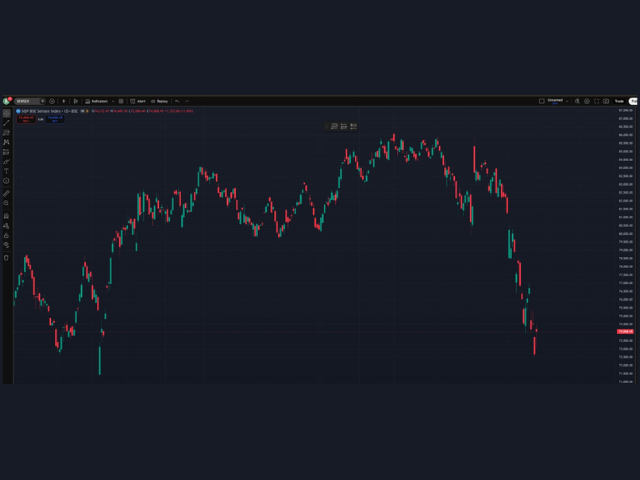
As the monthly expiry approaches tomorrow, the Sensex continues to trade in a directionless zone, leaving traders uncertain about the next big move. While today’s recovery offers short-term relief, the broader structure still appears neutral. The big question remains: is this a market bottom or just a temporary pullback?
The answer largely depends on global cues, geopolitical developments, and institutional activity, all of which can shift sentiment quickly in the short term.
Key Takeaways
- Sensex remains range-bound ahead of tomorrow’s expiry
- 75,000 is a strong resistance while 72,500 is a crucial support
- Market structure remains neutral with high volatility expected
- Strategy favors sell on rise and buy on dips with strict risk control
Why the Market Feels Directionless
Markets often enter a consolidation phase before major events like monthly expiry. This is driven by position adjustments from institutional players, including Foreign Institutional Investors and Domestic Institutional Investors.
In India, derivatives trading is regulated by the Securities and Exchange Board of India, and expiry days often see heightened volatility due to options unwinding and rollover activity.
Global cues are also playing a major role. Factors like US bond yields, crude oil prices, and geopolitical tensions can quickly influence Indian equities. Since India is closely integrated with global markets, even minor international developments can trigger sharp moves.
Technical Levels to Watch Closely
At present, Sensex is trading near the 74,000 mark, which places it right in the middle of a crucial range.
Resistance Zone: 75,000
The 75,000 level is acting as a strong resistance. Unless the index manages to sustain above this level, upside momentum may remain limited. Traders can expect selling pressure to emerge on rallies toward this zone.
Support Levels: 73,000 and 72,500
On the downside, 73,000 serves as immediate support. A break below this level could push the index toward 72,500, which is a critical support zone. If this level fails, it may lead to accelerated selling and increased volatility.
Expiry Strategy for Traders
With expiry just around the corner, clarity in strategy becomes crucial.
Range-Bound Approach
As long as Sensex stays between 72,500 and 75,000, expect choppy and volatile movement. In such conditions, range trading strategies tend to work better than directional bets.
- Sell on rise near resistance
- Buy on dips near support
- Avoid aggressive leveraged positions
Breakout or Breakdown Scenario
A decisive move beyond these levels could define the next trend:
- Above 75,000: Potential bullish breakout with short covering
- Below 72,500: Bearish breakdown leading to fresh downside
In both cases, traders should wait for confirmation rather than anticipating the move prematurely.
Role of Regulations and Market Structure
Indian markets operate under strict regulatory oversight by SEBI, ensuring transparency and risk management in derivatives trading. Margin requirements, position limits, and surveillance mechanisms are designed to protect retail investors, especially during high-volatility events like expiry.
Understanding these frameworks helps traders navigate risk more effectively and avoid unnecessary exposure.
Practical Insights for Retail Traders
For retail participants, expiry trading can be tempting due to quick price movements, but it also carries higher risk.
- Stick to predefined stop losses
- Avoid overtrading during volatile swings
- Focus on capital preservation rather than chasing profits
Platforms like Swastika Investmart provide traders with research-backed insights, technical analysis tools, and a reliable trading infrastructure. Being a SEBI-registered broker, it emphasizes investor education and disciplined trading practices, which are essential during uncertain market phases.
FAQs
1. Why is Sensex moving in a range before expiry?
This usually happens due to position adjustments by institutional investors and lack of strong directional cues from global markets.
2. What is the most important level for tomorrow’s expiry?
75,000 on the upside and 72,500 on the downside are the key levels to watch.
3. Is it safe to trade on expiry day?
Expiry trading can be volatile. It is safer to trade with strict risk management and avoid high leverage.
4. What strategy works best in a range-bound market?
Sell on rise and buy on dips is generally effective when the market lacks clear direction.
5. How do global cues impact Sensex?
Global factors like US markets, crude oil prices, and geopolitical tensions directly influence investor sentiment in India.
Conclusion
As Sensex heads into tomorrow’s expiry, the market continues to trade within a well-defined range, reflecting indecision among participants. While short-term recovery offers some optimism, the overall structure remains neutral until a clear breakout or breakdown occurs.
For now, disciplined execution, risk management, and patience remain the keys to navigating this phase. Instead of chasing momentum, focusing on well-defined levels and strategies can help traders stay on the right side of the market.
If you are looking to trade smarter with expert insights and a reliable platform, explore Swastika Investmart.
Market Closing Summary Today 24 March 2026: Nifty, Sensex, and Bank Nifty Surge Strongly & Reasons & What Investors Should Do
The Indian stock market today witnessed a broad-based rally, with benchmark indices like the Nifty 50, Sensex, and Bank Nifty closing firmly in the green. Positive global cues, easing macro concerns, and strong sectoral participation pushed markets higher, boosting investor sentiment across segments.
What Happened in the Market Today
Indian equities ended the session on a strong note:
- Nifty 50 gained nearly 1.8 percent to close above 22,900
- Sensex surged close to 1.9 percent, crossing 74,000
- Bank Nifty outperformed with a sharp rise of over 2.2 percent
- Nifty IT also posted solid gains of around 1.7 percent
This upward momentum signals renewed confidence among institutional and retail investors.
Key Takeaways
- Broad-based buying seen across banking, IT, and large-cap stocks
- Bank Nifty leads rally, indicating strength in financial sector
- Positive global cues and easing volatility support sentiment
- Midcaps and large caps both participated in the uptrend
Why Did the Indian Stock Market Rise Today
1. Strong Global Cues
Global markets showed signs of stability after recent volatility. Easing geopolitical concerns and steady US economic indicators helped improve risk appetite, which reflected positively in Indian equities.
2. Banking Sector Momentum
Banking stocks played a crucial role in today’s rally. Strong credit growth outlook and stable asset quality expectations continue to attract institutional money into financial stocks.
3. IT Sector Recovery
The IT index saw buying interest after recent corrections. Investors are selectively accumulating quality IT stocks at lower levels, expecting demand recovery in global tech spending.
4. FII and DII Activity
Foreign Institutional Investors and Domestic Institutional Investors both showed buying interest, which provided stability and upward momentum to the markets.
5. Technical Breakout
From a technical perspective, Nifty moving above key resistance levels triggered fresh buying. Momentum traders and algorithmic systems added to the rally once breakout levels were sustained.
Sector-Wise Performance
Banking and Financials
The banking sector emerged as the top performer. PSU banks and private lenders both saw strong buying. This indicates confidence in India’s economic growth and credit cycle.
Information Technology
IT stocks showed a rebound after a phase of consolidation. Companies with strong deal pipelines and stable margins attracted investor interest.
FMCG and Defensive Stocks
Defensive sectors like FMCG remained stable but underperformed compared to high-beta sectors. Investors preferred growth-oriented segments today.
Midcap and Smallcap Stocks
Broader markets also participated, though gains were relatively moderate. Select midcap stocks continued to outperform based on strong earnings visibility.
What This Means for Investors
Short-Term Outlook
The market trend remains bullish in the short term. However, after a sharp rally, some consolidation or profit booking cannot be ruled out.
Long-Term Perspective
India’s long-term growth story remains intact. Factors such as strong GDP growth, policy stability under RBI and SEBI regulations, and increasing retail participation continue to support markets.
Risk Factors to Watch
- Global geopolitical tensions
- Crude oil price fluctuations
- Inflation and RBI policy stance
- Earnings season surprises
Investors should stay cautious and avoid chasing momentum blindly.
Smart Investment Strategy in Current Market
1. Focus on Quality Stocks
Invest in fundamentally strong companies with consistent earnings growth and strong balance sheets.
2. Diversify Your Portfolio
Spread investments across sectors like banking, IT, FMCG, and capital goods to reduce risk.
3. Use SIP Approach
Systematic Investment Plans help reduce volatility risk and ensure disciplined investing, especially in uncertain markets.
4. Follow Research-Based Investing
Rely on credible research and advisory platforms rather than market rumors.
Platforms like Swastika Investmart provide investors with SEBI-registered research, advanced tools, and reliable support to make informed decisions.
Role of Regulations in Market Stability
Regulatory bodies like SEBI and RBI play a crucial role in maintaining transparency and stability in financial markets. Recent reforms have improved investor protection, reduced systemic risks, and enhanced trust in the Indian equity ecosystem.
Frequently Asked Questions
Is the current market rally sustainable
The rally looks strong, but short-term corrections are possible. Long-term sustainability depends on earnings growth and macroeconomic stability.
Which sector is leading the market right now
Banking and financial stocks are currently leading the rally, followed by IT.
Should I invest now or wait
Instead of timing the market, consider staggered investments through SIPs or phased buying.
What are the biggest risks in the market currently
Global uncertainties, inflation trends, and interest rate decisions are key risks to monitor.
How can beginners start investing in stocks
Beginners should start with research-backed platforms, diversify investments, and focus on long-term goals.
Conclusion
Today’s strong rally in the Indian stock market highlights renewed optimism among investors. While the trend remains positive, disciplined investing and risk management are essential in volatile conditions.
If you are looking to take advantage of market opportunities with expert guidance and reliable tools, you can explore investing with Swastika Investmart.


.webp)
.webp)

.webp)





START YOUR INVESTMENT JOURNEY
Get personalized advice from our experts
- Dedicated RM Support
- Smooth and Fast Trading App
