

SpaceX IPO Could Break History with $75 Billion Raise : Is This the Biggest Listing Ever?


.png)

 Add Swastika as preferred source
The buzz around the SpaceX IPO is growing rapidly, and for good reason. Reports suggest that SpaceX could raise up to $75 billion, making it one of the largest public listings in global financial history. For Indian investors tracking global opportunities, this potential IPO is more than just hype. It signals a shift in how private tech giants are approaching capital markets.
Let’s break down what this means, how it compares to past IPOs, and whether Indian investors should pay attention.
Quick Takeaways
- SpaceX IPO could raise up to $75 billion, potentially the largest ever
- Strong interest from sovereign funds like Public Investment Fund
- May surpass historic IPOs like Saudi Aramco
- Indian investors may gain indirect exposure through global funds and platforms
Why the SpaceX IPO Is a Big Deal
Unprecedented Valuation and Demand
SpaceX, led by Elon Musk, has remained private for years despite massive growth. Its valuation has surged due to innovations in reusable rockets, satellite internet via Starlink, and strong government contracts.
If the IPO raises $75 billion, it could surpass the record set by Saudi Aramco’s $29.4 billion listing in 2019. That would make it the biggest IPO ever globally.
Anchor Investors and Global Interest
Reports indicate that Saudi Arabia’s Public Investment Fund is considering a $5 billion anchor investment. This level of institutional backing shows confidence in SpaceX’s long-term growth story.
Large IPOs often rely on anchor investors to stabilize demand and pricing. This is similar to how IPOs in India are supported under Securities and Exchange Board of India guidelines.
How Does It Compare to Previous Mega IPOs?
Historically, the biggest IPOs have come from energy and tech sectors. Saudi Aramco still holds the top position, followed by companies like Alibaba.
However, SpaceX stands out because it operates in the emerging space economy. This includes satellite internet, space exploration, and defense contracts, making it a unique investment opportunity.
For Indian investors, this is comparable to how tech IPOs like Zomato or Paytm reshaped local markets, though on a much larger global scale.
Can Indian Investors Invest in SpaceX IPO?
Direct Investment Challenges
Indian investors cannot directly invest in US IPOs unless they use international brokerage platforms and comply with Reserve Bank of India regulations under the Liberalised Remittance Scheme.
Indirect Investment Routes
There are still ways to gain exposure:
- Investing in global mutual funds or ETFs that may include SpaceX
- Tracking listed companies with partnerships or exposure to SpaceX
- Using international investing platforms offered by brokers
Platforms like Swastika Investmart help investors explore global opportunities with research-backed insights, making it easier to understand such complex investments.
Risks to Consider Before Investing
Even though the hype is strong, investors should remain cautious.
High Valuation Risk
A $75 billion raise implies a massive valuation. If growth slows, returns may not justify the price.
Regulatory and Geopolitical Risks
SpaceX operates in sensitive sectors like defense and satellite communications, which can face regulatory scrutiny.
Market Volatility
Large IPOs often see price swings post-listing. Investors should avoid rushing in during peak hype.
This is where research-driven platforms like Swastika Investmart add value through expert analysis and advisory tools.
Why This IPO Matters for Indian Markets
The SpaceX IPO reflects a broader trend of innovation-driven companies dominating capital markets. It also highlights increasing global participation from sovereign funds and retail investors.
Indian regulators like SEBI are also pushing for more transparency and investor protection, ensuring that local IPO markets evolve alongside global trends.
For Indian investors, staying informed about such mega listings helps in building a diversified and future-ready portfolio.
Frequently Asked Questions
What is the expected size of the SpaceX IPO?
The SpaceX IPO could raise up to $75 billion, potentially making it the largest IPO in history.
Can Indian investors buy SpaceX shares?
Yes, but only through international investment routes under RBI’s Liberalised Remittance Scheme.
Is SpaceX IPO bigger than Saudi Aramco?
If it reaches $75 billion, it will surpass Saudi Aramco’s $29.4 billion IPO.
Is it safe to invest in SpaceX IPO?
Like any IPO, it carries risks including valuation concerns and market volatility. Proper research is essential.
Final Thoughts
The SpaceX IPO could redefine global capital markets if it achieves its projected scale. While it presents exciting opportunities, it also comes with significant risks that investors must evaluate carefully.
For Indian investors, the key is not just access but understanding. Platforms like Swastika Investmart provide the research, tools, and support needed to navigate such global opportunities with confidence.
If you are looking to explore smarter investing strategies and stay ahead of market trends, you can get started here:
Big Budget





.webp)
.webp)
.webp)
.webp)
.webp)









.webp)
.webp)
.webp)
.webp)
Latest Articles
%20(8).webp)
From Kitchen to Capital Market: Orkla India’s IPO Explained


Key Takeaways
- Orkla India owns heritage brands MTR, Eastern and Rasoi Magic and sells 2.3 million units daily.
- IPO opens Oct 29 and closes Oct 31, 2025; price band ₹695–₹730; total issue ₹1,667.54 crore.
- FY25 revenue ₹2,455.24 crore; EBITDA margin 16.15% in FY25 (up from 14.39% in FY24).
- Despite strong brands, three-year revenue and profit growth is muted; Assigns a Neutral view.
Orkla India’s IPO at a glance
Orkla India, incorporated in 1996, is a multi-category Indian food company with a portfolio spanning breakfast, snacks, ready-to-cook mixes, beverages and desserts. Its flagship heritage brands — MTR, Eastern and Rasoi Magic — give the company strong consumer recall and distribution reach.
The IPO opens on 29 October 2025 and closes on 31 October 2025, with a price band of ₹695–₹730 and a total issue size of ₹1,667.54 crore. Listing is planned on BSE and NSE.
Key numbers investors should note
- Reported consolidated total income for FY25: ₹2,455.24 crore.
- EBITDA margin improved to 16.15% in FY25 from 14.39% in FY24 and 14.19% in FY23.
- Net profit in FY25 stood at ₹255.69 crore.
- The company distributes 2.3 million units daily and exports to 40+ countries; manufacturing footprint includes India, UAE, Thailand and Malaysia.
Why the IPO matters (market context)
Orkla India’s listing is significant for two reasons. First, it brings well-known Indian heritage FMCG brands to the public markets, giving retail investors direct access to home-grown food staples. Second, the offering arrives at a time when FMCG valuations are under scrutiny — investors are weighing brand strength against growth momentum and raw-material cost pressure.
In the broader market, FMCG companies with clear growth levers and steady margin profiles tend to attract long-term investors. Orkla India has brand and distribution strength, but the IPO note flags limited revenue and profit growth over the last three years, which tempers the upside expectation.
Strengths and risks — straight from the IPO note
Strengths
- Category leader in packaged spices and a multi-category product portfolio with >400 SKUs.
- Scalable pan-India distribution, growing digital and export channels, and automated manufacturing with quality controls.
Key risks
- Raw and packaging materials accounted for 56.8% of total expenses in FY25; any adverse commodity movement can hit margins.
- Dependence on key suppliers and risks around storage/contamination can lead to regulatory or reputational damage.
- The IPO note also highlights the need to drive household penetration and operational efficiencies to improve margins.
What the Neutral rating signals to investors
The report’s Neutral rating reflects a balanced view: strong brands and wide distribution versus muted growth and valuation that looks tight relative to recent performance. The IPO may suit investors who value brand equity and steady cash flows, but those seeking aggressive growth or quick listing pops may find the risk-reward limited.
Real-world example to put it in perspective
Think of Orkla India as a beloved regional restaurant chain that has mastered its recipes and built loyal customers but has only slowly expanded footprint and average spend per customer. The brand gives trust, but without faster store openings or higher per-store sales, revenue growth remains modest. The IPO offers a chance to own that brand, but returns will depend on execution — expanding penetration, new products, cost management — all points flagged in the IPO note.
Regulatory and disclosure checklist for investors
- Read the Red Herring Prospectus for detailed risk factors and allocation rules; the IPO note points readers to the RHP for full disclosures.
- IPO allotment, refund and listing timeline are provided in the IPO note — check the dates before applying.
Frequently asked questions
Q: When is the Orkla India IPO open?
A: The IPO opens on October 29, 2025 and closes on October 31, 2025.
Q: What is the price band and issue size?
A: Price band is ₹695–₹730 per share; total issue size is ₹1,667.54 crore.
Q: Is Orkla India profitable?
A: Yes. FY25 net profit was ₹255.69 crore and EBITDA margin improved to 16.15% in FY25.
Q: What are the main risks?
A: Major risks include commodity cost volatility (raw & packaging materials), supplier dependence, and execution risks around scaling distribution.
Conclusion
Orkla India brings established brands and wide distribution to the IPO market. The company’s FY25 improvements in margin and steady revenue base are positives, but muted three-year growth and commodity-linked cost structure justify a cautious stance. Hence, we assign a Neutral rating.
If you want research, easy online account opening, and tech-enabled trading to act quickly on IPOs, Swastika Investmart offers SEBI-registered services, strong research tools, responsive customer support, and investor education to help you decide.
.webp)
Dhani Services and Yaari Digital Merge into Indiabulls Enterprises — A New Era for the Group?
Key Takeaways
- Dhani Services and Yaari Digital merged into Indiabulls Enterprises on October 14, 2025.
- The move marks a strategic consolidation aimed at improving efficiency and investor confidence.
- Indiabulls aims to streamline operations and focus on core financial and digital services.
- Market experts view it as a turnaround move for the group after years of restructuring.
- Investors are keenly watching how this merger reshapes the Indiabulls Group’s long-term strategy.
A Strategic Consolidation for a New Beginning
The Indian financial landscape witnessed another major corporate development as Dhani Services and Yaari Digital Integrated Services officially merged into Indiabulls Enterprises Limited (IEL), effective October 14, 2025.
This merger is being seen as part of Indiabulls Group’s broader strategy to consolidate its diversified businesses under one umbrella — bringing digital finance, technology services, and investments together. The aim is to simplify the group’s structure, improve capital allocation, and drive long-term growth.
For a group that has seen multiple transitions — from housing finance to diversified digital ventures — this move could mark the beginning of a new growth chapter.
Why the Merger Matters
India’s financial ecosystem has evolved rapidly, with increasing regulatory scrutiny and technological disruption. The merger of Dhani and Yaari into Indiabulls Enterprises is not just an internal reshuffle — it signals the Group’s intent to reinvent itself.
- Operational Efficiency:
By combining digital and investment platforms, IEL can reduce redundancy, cut costs, and create synergies between its fintech and enterprise divisions. - Focus on Core Competence:
Indiabulls aims to streamline focus on core businesses — including financial services, tech-driven lending, and enterprise solutions — while reducing fragmentation. - Investor Confidence:
Post-merger, a more transparent and simplified structure may boost investor trust, especially after regulatory and financial challenges faced by the group in past years.
A Look at the Businesses Involved
Dhani Services Limited made a name for itself in the digital lending and healthcare space, offering consumer credit and telemedicine through its app. On the other hand, Yaari Digital Integrated Services functioned as a digital community platform, connecting users and small businesses through a tech-driven ecosystem.
Indiabulls Enterprises, the new combined entity, is expected to leverage Dhani’s financial services technology and Yaari’s digital platform to create a robust, integrated ecosystem — blending fintech, e-commerce, and enterprise solutions under one brand identity.
Market Reaction and Investor View
Following the merger announcement, investors have shown cautious optimism. While the stock movement of Indiabulls-linked entities has been modest, the consolidation signals a strategic intent to rebuild value.
Market analysts believe that Indiabulls’ move is timely, especially given the RBI’s focus on governance, capital adequacy, and simplified corporate structures in NBFCs and fintech firms. This merger positions IEL to align with these evolving regulatory standards while enhancing efficiency.
Moreover, with global and domestic investors showing renewed interest in India’s financial sector, such consolidations could help the group attract fresh capital and partnerships.
Broader Impact on the Indian Market
This merger also reflects a larger trend in India’s corporate world — streamlining for scale. Over the last few years, several conglomerates like Aditya Birla Capital, Tata Digital, and Reliance Retail Ventures have adopted similar consolidation models to improve efficiency and brand synergy.
For the Indian capital markets, such reorganizations are generally viewed positively, as they:
- Improve corporate governance transparency
- Enhance investor visibility and valuations
- Reduce regulatory complexities
In this sense, the Dhani–Yaari–Indiabulls merger aligns perfectly with India’s shift towards simplified, tech-driven business models.
Challenges Ahead
While the move brings promise, challenges remain:
- Integration Complexity: Combining multiple business models under one entity may take time.
- Revenue Realignment: Ensuring profitability across fintech and digital service verticals could be difficult in the near term.
- Brand Perception: Rebuilding investor and consumer trust after past regulatory hurdles remains a key task.
Yet, if executed effectively, Indiabulls Enterprises could emerge as a leaner, more focused, and digitally strong financial enterprise.
Example of Strategic Reinvention
Much like HDFC’s merger with HDFC Bank or L&T’s consolidation of its tech and finance arms, Indiabulls’ move echoes the ongoing transformation in Indian corporate strategy — where simplification drives scalability.
Such restructuring may also help the group align better with SEBI’s disclosure norms, RBI’s compliance frameworks, and investor expectations for transparency and governance.
FAQs
1. What happened to Dhani Services and Yaari Digital?
Both companies were merged into Indiabulls Enterprises Limited effective October 14, 2025, as part of the group’s internal restructuring.
2. Why did Indiabulls go for this merger?
The merger aims to streamline operations, enhance efficiency, and create a unified digital and financial ecosystem under one entity.
3. Will this merger affect existing shareholders?
Shareholders of Dhani and Yaari will receive shares in Indiabulls Enterprises as per the approved swap ratio, consolidating their ownership in the merged entity.
4. What is the future outlook for Indiabulls Enterprises?
If the integration succeeds, the company could benefit from cost synergies, better governance, and renewed investor confidence.
5. How does this impact India’s financial market?
The merger signals continued consolidation in India’s financial services and fintech space — a positive sign for efficiency and compliance-driven growth.
Conclusion
The merger of Dhani Services and Yaari Digital into Indiabulls Enterprises marks a strategic move toward simplification, efficiency, and renewed focus. It highlights how Indian corporates are adapting to regulatory evolution and competitive fintech disruption.
As this integration unfolds, investors should watch for execution consistency, profitability metrics, and governance transparency — key factors that will define the group’s next growth phase.
For investors looking to stay ahead in India’s evolving financial market, Swastika Investmart offers SEBI-registered research insights, strong customer support, advanced tech tools, and educational resources to help you make informed investment decisions.
👉 Open your trading account today and be part of India’s financial transformation story.
MCXBULLDEX Option Launch: A Landmark Moment in India’s Commodity Derivatives Journey
Key Takeaways
- MCXBULLDEX Option is India’s first-ever Commodity Index Option, launched on 27th October 2025.
- Based on Gold and Silver futures, it offers a unique dual-commodity exposure.
- Cash-settled and synchronized expiry simplify trading and hedging.
- Designed for both retail and institutional investors, with lower premiums and portfolio margin benefits.
- A landmark innovation deepening India’s commodity derivatives ecosystem.
MCXBULLDEX Option Launch: A Landmark Moment in India’s Commodity Derivatives Journey
India’s commodity markets just achieved a historic milestone. On 27th October 2025, the Multi Commodity Exchange of India (MCX) unveiled the country’s first-ever Commodity Index Option — the MCXBULLDEX Option.
This innovative financial instrument represents a breakthrough for traders, hedgers, and investors seeking efficient exposure to the precious metals segment. Built on a composite of Gold and Silver futures, the MCXBULLDEX Option ushers in a new era of portfolio diversification, risk management, and market depth in India’s commodity derivatives landscape.
Let’s understand why this launch is being hailed as a game-changer for India’s commodity ecosystem.
What is the MCXBULLDEX Option?
The MCXBULLDEX Option contract is a derivative product linked to the MCX BULLDEX Index—an index that tracks a blend of gold and silver futures prices.
This means traders can now take a position on the combined performance of gold and silver, rather than trading each metal separately. The contract is cash-settled, eliminating the need for physical delivery.
MCX has designed this product to simplify commodity trading, expand retail participation, and strengthen the derivatives ecosystem.
Why the Launch Matters
The MCXBULLDEX Option isn’t just another contract—it’s a strategic innovation with far-reaching implications for India’s financial markets. Here’s why it matters:
1. India’s First Commodity Index Option
This is a first-of-its-kind development in India’s derivatives space. Until now, commodity options existed only on individual products like gold, silver, or crude oil.
With the MCXBULLDEX Option, traders get exposure to two major commodities through one index, making it a milestone in market sophistication.
2. Cash Settlement and Simplicity
Unlike traditional futures, which can involve physical delivery, this contract is cash-settled. This means that on expiry, differences are settled in cash—simplifying operations for traders and investors.
3. Synchronized Expiry
The option expires on the same day and time as its underlying BULLDEX Futures contract. This synchronized expiry removes devolvement complexities and ensures a seamless trading experience.
4. Accessibility for Retail Investors
The lower premium structure and smaller contract size make the MCXBULLDEX Option an affordable entry point for retail investors.
This democratizes commodity investing, allowing even small traders to hedge against metal price fluctuations.
5. Portfolio Diversification & Margin Efficiency
With portfolio-based margining, clients enjoy reduced margin requirements, improving capital efficiency.
By combining gold and silver exposure, the contract also offers built-in diversification, balancing risk between two correlated assets.
Real-World Impact: A Boost for Traders and Hedgers
For years, Indian investors looking to hedge or speculate on metals had to manage separate gold and silver positions—doubling effort, cost, and margin requirements.
The MCXBULLDEX Option simplifies this process dramatically:
- Jewellery manufacturers can hedge against price fluctuations in both metals simultaneously.
- Retail traders can use it to take leveraged positions with smaller capital.
- Institutional investors can integrate it into multi-asset strategies for portfolio optimization.
By enhancing convenience, MCX has effectively made precious metals trading more inclusive and efficient.
How It Strengthens India’s Commodity Derivatives Market
India’s commodity derivatives ecosystem has evolved rapidly, especially after SEBI’s regulatory reforms that unified securities and commodity markets.
The MCXBULLDEX Option aligns perfectly with SEBI’s broader vision:
- Encourage innovation in derivatives products
- Broaden retail participation
- Improve market transparency
- Strengthen risk management tools
This launch will likely deepen liquidity, attract foreign participants, and increase hedging volumes, making India’s commodity markets globally competitive.
Comparison with Global Commodity Index Options
Globally, index-based commodity options like the S&P GSCI or Bloomberg Commodity Index Options have long offered investors efficient diversification.
By introducing the MCXBULLDEX Option, India joins this elite group, providing domestic traders an instrument that mirrors global best practices—but customized for India’s precious metals market.
This move is also expected to pave the way for future launches of energy and agri-based index options in India.
Regulatory and Market Context
The launch aligns with SEBI’s progressive stance toward product innovation and risk management. Over the past few years, SEBI has supported the introduction of options on futures, commodity ETFs, and now index-based options.
MCX, as the country’s leading commodity exchange, continues to play a pioneering role in:
- Technology-driven trading infrastructure
- Transparent pricing
- Investor education initiatives
This synergy of regulation, innovation, and technology makes India’s commodity markets more resilient and accessible than ever before.
FAQs
Q1. What is the MCXBULLDEX Option contract?
A1. It’s India’s first commodity index option based on the MCX BULLDEX Index—a composite of Gold and Silver futures—launched on 27th October 2025.
Q2. How is it different from regular gold or silver options?
A2. Unlike single-commodity options, it provides exposure to both gold and silver, offering diversification and efficient hedging.
Q3. Do traders need to take physical delivery?
A3. No. The contract is cash-settled, so positions are settled monetarily upon expiry.
Q4. Who can trade the MCXBULLDEX Option?
A4. Both retail and institutional participants can trade, with lower premiums making it highly accessible.
Q5. Why is this launch significant for India’s markets?
A5. It enhances product diversity, improves hedging tools, and represents India’s entry into advanced global commodity derivatives practices.
Conclusion
The MCXBULLDEX Option is more than just a new product—it’s a symbol of India’s financial market maturity.
By combining innovation, accessibility, and efficiency, MCX has taken a bold step toward transforming India’s commodity derivatives landscape.
For traders and investors, this opens the door to smarter hedging, diversified exposure, and efficient capital use.
In a fast-evolving market, staying ahead with trusted insights is essential.
👉 Open your Swastika Investmart account to explore opportunities in commodities, equities, and derivatives with expert research and guidance from a SEBI-registered, tech-enabled, and investor-focused platform.

Rising Global Confidence: How Massive Foreign Investments Are Powering India’s Banking Sector Boom
Key Takeaways
- India’s banking sector has seen a record surge in foreign investments post-2024.
- Strong GDP growth, fintech innovation, and improved asset quality attract global capital.
- FDI inflows boost credit availability and market valuations.
- Swastika Investmart helps investors identify the right banking and NBFC opportunities.
Rising Global Confidence: How Massive Foreign Investments Are Powering India’s Banking Sector Boom
India’s banking sector is buzzing with optimism. Over the past year, it has emerged as one of the biggest beneficiaries of renewed foreign investor confidence, driven by robust macroeconomic growth, improving asset quality, and policy stability.
Foreign portfolio inflows into Indian banks and NBFCs crossed $12 billion in FY 2025, the highest in a decade.
🌍 1. Why Global Investors Are Bullish on Indian Banks
a. Strong Economic Fundamentals
India’s GDP is growing at over 7%, making it the fastest-growing major economy. Global funds see Indian banks as the gateway to consumption-led growth—credit expansion fuels everything from housing to MSME development.
b. Asset Quality Revival
Gross NPAs (non-performing assets) have fallen to 3.1%, the lowest in 12 years. PSU and private banks have cleaned up balance sheets and built robust capital buffers.
c. Regulatory Support
The Reserve Bank of India (RBI) has maintained policy stability and encouraged digital inclusion through initiatives like UPI 2.0, Aadhaar-linked lending, and Account Aggregator frameworks.
💰 2. Key Drivers of the Banking Sector Boom
a. FPI and FDI Surge
Foreign investors, including sovereign funds from Singapore, UAE, and Japan, have made significant bets on Indian banks and NBFCs. Strategic stakes in leading private lenders are a vote of confidence in India’s long-term growth story.
b. Digital Banking Revolution
India’s rapid fintech adoption—credit scoring, AI-driven lending, and digital KYC—has increased operational efficiency. This tech-backed transformation appeals strongly to global funds.
c. Strong Corporate Credit Cycle
Credit growth hit 14.8% YoY in 2025, led by infrastructure, manufacturing, and renewable energy. Banks with corporate lending expertise—HDFC Bank, ICICI Bank, and SBI—are major beneficiaries.
📈 3. Impact on Indian Markets
Valuation Upside
Banking stocks now contribute nearly 35% of the Nifty 50’s total market capitalization. The sector’s re-rating is supported by double-digit ROE and stable NIMs.
NBFC Resurgence
NBFCs like Bajaj Finance and Tata Capital are drawing investor attention as consumption credit revives. Many have secured foreign partnerships to access low-cost global funding.
IPO Pipeline
Several small finance and fintech banks are preparing for IPOs in 2026, offering investors fresh opportunities.
4. India’s Regulatory Edge
The RBI’s proactive supervision has created one of the most stable financial systems in emerging markets. Capital adequacy norms, digital compliance, and risk-based lending practices have enhanced credibility among foreign investors.
Moreover, initiatives like GIFT IFSC and India Stack are positioning India as a global financial hub.
FAQs
Q1. Why are foreign investors increasing exposure to Indian banks?
A1. Strong growth, improved asset quality, and digital leadership make Indian banks highly attractive compared to global peers.
Q2. Which banking stocks are benefiting most?
A2. HDFC Bank, ICICI Bank, Axis Bank, SBI, and Kotak Mahindra Bank have seen robust FPI inflows.
Q3. Are PSU banks part of this rally?
A3. Yes. PSU banks like Bank of Baroda and Canara Bank have shown improved profitability and rising foreign interest.
Q4. What risks remain?
A4. Global rate volatility and liquidity tightening can affect flows, but India’s fundamentals remain resilient.
🌟 Conclusion
India’s banking sector boom is more than a cyclical rally—it’s a structural transformation driven by foreign trust, technology, and transparency.
For investors, this is a golden era to participate in India’s financial growth story—through equity, mutual funds, or sectoral ETFs.
👉 Open your account with Swastika Investmart and leverage expert research to tap into India’s banking revolution.
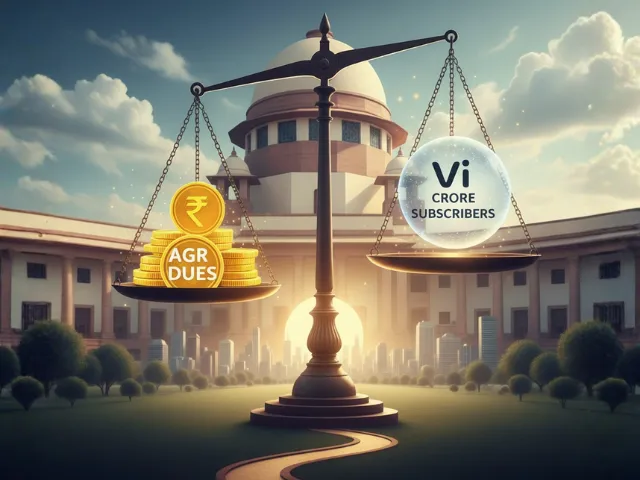
Supreme Court Allows Centre to Review Vodafone Idea’s AGR Dues: A Relief Move for 20 Crore Subscribers
Key Takeaways
- The Supreme Court allowed the government to reassess Vodafone Idea’s adjusted gross revenue (AGR) dues.
- The decision could ease VIL’s financial pressure and ensure service continuity for millions of subscribers.
- Relief may support telco sector recovery and attract fresh capital.
- Investors eye improved prospects for telecom stocks.
Supreme Court Allows Centre to Review Vodafone Idea’s AGR Dues: A Relief Move for 20 Crore Subscribers
In a landmark ruling, the Supreme Court of India has permitted the Central Government to reassess Vodafone Idea’s long-standing Adjusted Gross Revenue (AGR) dues—an issue that has clouded India’s telecom sector for years.
The verdict offers not just relief to Vodafone Idea (VIL) but also assurance to nearly 20 crore mobile subscribers worried about service continuity.
⚖️ 1. The AGR Battle: A Recap
The AGR dispute originated from how telecom operators calculate their gross revenue for license fees and spectrum charges. The Department of Telecommunications (DoT) included non-core revenue items (like rent and interest), inflating the dues.
This led to massive liabilities:
- Vodafone Idea: ₹58,000+ crore
- Bharti Airtel: ₹43,000 crore
- Tata Tele: ₹12,000 crore
The 2025 Supreme Court ruling allows the Centre to review these dues, recognizing the financial stress of the telecom industry and the importance of digital connectivity.
📉 2. What This Means for Vodafone Idea
Debt Relief and Stability
If the reassessment leads to reduced dues, Vodafone Idea can free up capital for 5G expansion, network upgrades, and debt repayment. Analysts estimate a potential relief of ₹15,000–₹20,000 crore if non-core items are excluded.
Investor Sentiment
Following the judgment, Vodafone Idea’s stock surged nearly 10% intraday, reflecting renewed investor confidence.
Strategic Funding Prospects
This relief could also make it easier for the telco to secure new funding from investors and strategic partners, including foreign telecom giants or sovereign funds.
📡 3. Impact on the Indian Telecom Sector
a. Healthy Competition Restored
The relief ensures Vodafone Idea’s survival, preserving competition against Bharti Airtel and Reliance Jio. A three-player market structure is essential to maintain consumer choice and reasonable tariffs.
b. 5G Rollout Acceleration
With less financial stress, VIL can accelerate its 5G rollout, complementing government initiatives like Digital India and BharatNet.
c. Regulatory Signal
The decision signals a pragmatic regulatory shift—recognizing that punitive dues could damage long-term digital infrastructure goals.
4. What Investors Should Watch
- Debt Restructuring: How Vodafone Idea manages its upcoming debt repayments and capital infusion.
- Tariff Hikes: Expected in 2026 to improve sector profitability.
- Government Stake: The Centre remains the largest shareholder (~33%), so any policy revision could directly impact valuations.
- Peer Reaction: Airtel and Jio may adjust strategies to retain market share as competition stabilizes.
FAQs
Q1. What are AGR dues?
A1. AGR dues are the government’s share of telecom operators’ adjusted gross revenue, including spectrum fees and license charges.
Q2. Will Vodafone Idea’s dues be completely waived?
A2. No, but they could be reduced after reassessment, offering significant breathing space.
Q3. How does this affect subscribers?
A3. It ensures uninterrupted services, better network investment, and potentially improved service quality.
Q4. Should investors consider buying VIL stock?
A4. Cautiously, yes—if the company demonstrates a clear funding and growth plan post-relief.
📈 Conclusion
The Supreme Court’s ruling is a turning point for India’s telecom ecosystem. By enabling a realistic review of dues, it revives faith in regulatory balance and long-term digital growth.
For investors, the move opens up opportunities in telecom and allied infrastructure segments.
👉 Open your Swastika Investmart account to explore telecom-sector insights and invest strategically in India’s digital future.
.webp)
Trade Talks and Tariffs: How the US–China Deal Could Reshape the Global Metal Market
Key Takeaways
- The latest US–China trade deal pauses steep tariffs and delays China’s rare-earth export restrictions.
- Global metal prices could stabilize as supply chains rebalance.
- India’s manufacturing and infrastructure sectors may benefit from cheaper raw materials.
- Indian metal producers could face pressure from Chinese import diversion.
- Investors should track global trade moves and use research-backed tools like Swastika Investmart.
Trade Talks and Tariffs: How the US–China Deal Could Reshape the Global Metal Market
The global metals market—steel, aluminium, copper, and rare earths—has entered a new chapter as the United States and China move closer to a trade truce. Both economic powerhouses have agreed to ease tariff escalation and relax export curbs, a shift that could realign supply chains worldwide.
For India and global investors alike, this development is more than a diplomatic headline—it’s a potential market mover.
🌐 1. What’s Inside the US–China Trade Deal
After months of tense negotiations, Washington and Beijing have agreed to a framework that pauses tariff hikes on Chinese goods and delays China’s restrictive export licensing regime for rare-earth minerals and magnets.
The deal hints at increased Chinese purchases of US goods and greater transparency in trade flows, especially in critical minerals like lithium and cobalt—vital for electric vehicles and renewable energy systems.
This pause comes as a relief for global manufacturers and metal buyers, who were grappling with supply uncertainty and rising prices due to protectionist trade policies.
⚙️ 2. How the Deal Impacts the Global Metal Landscape
a. Supply Chain Reset
- The deal temporarily halts restrictions on China’s export of rare-earths, giving breathing space to tech and EV manufacturers globally.
- The US, in turn, may reconsider its 100% tariff threat, calming price volatility.
- Mining-heavy economies such as Australia, India, and parts of Africa could see rising demand as global buyers diversify supply away from China.
b. Pricing Stability
Metal prices often swing wildly with geopolitical developments. In 2025, copper and aluminium prices fell sharply after optimism over the deal spread, reflecting reduced tariff risk.
For India, which imports a significant portion of its base metals, stable prices mean predictable input costs for sectors like auto, power, and infrastructure.
c. Global Winners and Losers
Countries like India, Vietnam, and Indonesia could emerge as indirect winners, offering alternative manufacturing and supply capabilities. However, traditional exporters that rely heavily on China–US trade routes might face reduced demand.
3. What It Means for India
Manufacturing Boost
India’s “Make in India” drive and infrastructure expansion depend on affordable access to metals. If global supply improves, manufacturers in auto, real estate, and energy could see margin gains.
Competitive Pressure on Producers
However, if China diverts its surplus steel and aluminium to India, local producers may feel the heat. The Indian Steel Association has already cautioned about rising Chinese imports. The government may consider safeguard duties if the imbalance grows.
Investor Outlook
For Indian investors, this is a cue to monitor metal producers, engineering firms, and companies tied to global supply chains. A short-term dip in global metal prices could be an entry opportunity into quality stocks.
📊 Real-World Example: Copper Market Reaction
In early October 2025, when news of a US–China tariff pause broke, copper futures fell 2.5% on global exchanges, easing input costs for Indian electrical and manufacturing firms. However, analysts warned that if talks fail, volatility could return.
FAQs
Q1. How will this deal affect metal prices in India?
A1. It’s likely to bring short-term stability, but longer-term effects depend on actual implementation and global demand.
Q2. Which sectors in India benefit most?
A2. Infrastructure, automobiles, renewable energy, and manufacturing will benefit from lower input costs.
Q3. Could Indian metal producers lose competitiveness?
A3. Possibly, if cheaper imports flood the market. Monitoring anti-dumping policies will be key.
Q4. Is this a good time to invest in metal stocks?
A4. Investors should stay selective and focus on companies with strong fundamentals and low debt ratios.
🧩 Conclusion
The US–China trade thaw could rewrite the rules of the global metal market. For India, it’s both an opportunity and a challenge—cheaper inputs for manufacturers but greater competition for domestic producers.
Investors must stay agile, track global developments, and rely on expert-backed research to make informed decisions.
👉 Open an account with Swastika Investmart and navigate this changing metals landscape with confidence.


.webp)
.webp)

.webp)





START YOUR INVESTMENT JOURNEY
Get personalized advice from our experts
- Dedicated RM Support
- Smooth and Fast Trading App
