

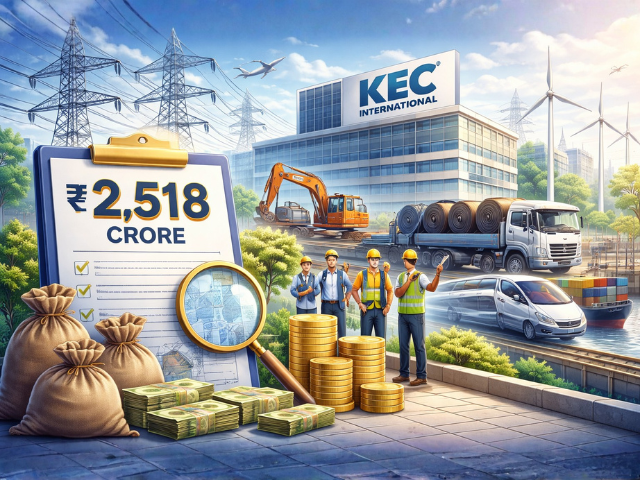
KEC International Wins ₹2,518 Crore Orders: Strong Order Book, Stronger Outlook?



Key Takeaways
- KEC International Ltd secures ₹2,518 crore worth of new orders
- Includes its largest commercial real estate project in the civil segment
- Participation in the Kavach railway safety programme adds diversification
- Strong order inflow supports revenue visibility
- Execution and margin sustainability remain key monitorables
Introduction
India’s infrastructure story continues to gain momentum, and companies in the EPC space are at the center of this growth. Recently, KEC International Ltd announced fresh orders worth ₹2,518 crore, attracting investor attention.
The development raises an important question. Does this order win strengthen KEC’s growth outlook, or are there underlying risks investors should consider?
Breaking Down the Order Win
The new orders include a mix of projects that highlight KEC’s diversified capabilities.
Key highlights
- Largest commercial real estate project in the civil segment
- Joint venture order under the Kavach train safety programme
- Continued presence across infrastructure verticals
This diversification is crucial as it reduces dependency on a single segment and provides stability during market cycles.
Why Order Book Matters in EPC Companies
For EPC companies, the order book acts as a forward indicator of future revenue.
What a strong order book means
- Better revenue visibility over the next few quarters
- Improved business confidence
- Potential for consistent cash flows
In KEC’s case, steady order inflows suggest that demand remains strong in infrastructure and construction sectors.
Sectoral Tailwinds Supporting Growth
India is currently witnessing a strong push in infrastructure development.
Key drivers
- Government spending on railways and urban infrastructure
- Focus on safety systems like Kavach
- Growth in commercial real estate
Projects like the Kavach system indicate increasing emphasis on railway safety, which could open new opportunities for EPC players.
Real-World Context: Infrastructure Push in India
The Indian government has been actively investing in large-scale infrastructure projects.
Examples include:
- Expansion of railway networks
- Smart city developments
- Industrial corridor projects
Companies like KEC International are well-positioned to benefit from this trend, given their diversified execution capabilities.
Market Impact and Investor Sentiment
Positive Factors
- Strong order inflow improves growth visibility
- Diversified project mix reduces risk
- Participation in government-backed initiatives
These factors often lead to improved investor sentiment, especially in a capital-intensive sector like infrastructure.
Risks to Watch
Despite the positive outlook, investors should remain cautious about certain factors.
- Execution delays can impact revenue recognition
- Rising input costs may pressure margins
- Working capital requirements can remain high
EPC companies typically operate on thin margins, making efficient execution critical.
Financial Perspective
Order wins are encouraging, but they need to translate into actual financial performance.
Key metrics to track
- Revenue growth
- EBITDA margins
- Order execution timeline
- Debt levels
Sustained improvement in these areas will determine long-term value creation.
Competitive Landscape
KEC operates in a competitive EPC market alongside several established players.
What sets KEC apart is:
- Strong execution track record
- Diversified presence across sectors
- Ability to secure large-scale projects
However, competition remains intense, and pricing pressures can affect profitability.
Regulatory and Policy Support
Infrastructure development in India is supported by policy initiatives and regulatory frameworks.
Organizations like the Securities and Exchange Board of India ensure transparency in disclosures, helping investors make informed decisions.
Government initiatives in railways, power, and urban infrastructure continue to create opportunities for EPC companies.
Investor Strategy: What Should You Do?
For investors, the key lies in balancing optimism with caution.
Short-Term View
- Stock may react positively to order inflow news
- Momentum-driven movement possible
Long-Term View
- Growth depends on execution and margin stability
- Consistent order inflows are a positive sign
Investors should focus on fundamentals rather than short-term news-driven moves.
FAQs
What orders has KEC International won?
KEC International has secured orders worth ₹2,518 crore across civil and railway segments.
Why is the Kavach project important?
The Kavach system is a railway safety initiative that improves train operations and reduces accidents, creating long-term opportunities.
How do order wins impact EPC companies?
Order wins improve revenue visibility and indicate strong business demand.
Are there risks associated with EPC companies?
Yes, risks include execution delays, margin pressure, and high working capital requirements.
Is KEC International a good long-term investment?
It depends on execution efficiency, financial performance, and overall infrastructure demand.
Conclusion
The ₹2,518 crore order win by KEC International reinforces its position in India’s growing infrastructure space. While the strong order book supports a positive outlook, investors must closely monitor execution and financial performance.
Infrastructure remains a long-term growth theme in India, but disciplined investing is essential to navigate sector-specific risks.
If you are looking to explore such opportunities with the right guidance, having a reliable investment platform is crucial. With SEBI registration, advanced research tools, strong customer support, and a focus on investor education, Swastika Investmart helps you make informed decisions.
Big Budget


.webp)
.webp)
.webp)
.webp)
.webp)




.webp)
.webp)
.webp)
.webp)
Latest Articles
.webp)
Commodity Trading: From Basics to Pro-Level Strategies


Key Takeaways
- 📌 Commodity trading involves buying and selling raw materials like gold, crude oil, and agricultural products.
- 📌 MCX and NCDEX are India’s primary commodity exchanges, regulated by SEBI.
- 📌 Both beginners and advanced traders can benefit from futures and options strategies.
- 📌 Global market trends directly influence commodity prices in India.
- 📌 Swastika Investmart offers research-backed commodity calls, fast execution, and a reliable mobile app.
Commodity trading in India has evolved from open-outcry pits to fully digital platforms, making it accessible to both small investors and professional traders. Whether you’re hedging risk or speculating on price movements, understanding the commodity markets is essential to trade profitably.
What is Commodity Trading?
Commodity trading is the buying and selling of raw materials — metals, energy products, and agricultural goods — on regulated exchanges. In India, the two primary exchanges are:
- MCX (Multi Commodity Exchange) – Focuses on metals (gold, silver, copper) and energy (crude oil, natural gas).
- NCDEX (National Commodity & Derivatives Exchange) – Specialises in agricultural commodities (soybean, chana, guar seed).
SEBI oversees both exchanges, ensuring transparency and protecting investors.
Why Trade Commodities?
- Diversification – Reduce portfolio risk by adding non-equity assets.
- Hedging – Protect against adverse price movements (e.g., farmers hedging crop prices).
- Speculation – Profit from short-term price changes.
- Leverage – Trade larger positions with smaller capital.
Example: If you believe gold prices will rise due to geopolitical tensions, you can take a long position in MCX gold futures and benefit from the upward movement.
Advanced Strategies for Pro Traders
- Spread Trading – Trade two related commodities to profit from price differences (e.g., gold vs silver spreads).
- Calendar Spreads – Exploit pricing differences between contracts with different expiry dates.
- Hedging with Options – Use call/put options to lock in prices while limiting risk.
- Pair Trading in Energy – Trade crude oil and natural gas contracts based on seasonal demand patterns.
Global Factors Affecting Indian Commodity Markets
Commodity prices in India are influenced by:
- International benchmarks like COMEX (gold/silver) and NYMEX (crude oil).
- Currency fluctuations – A weaker INR can increase commodity import costs.
- Geopolitical events – Wars, sanctions, and trade policies can cause volatility.
- Weather patterns – Impact agricultural commodities on NCDEX.
Example: A spike in Brent crude oil prices due to Middle East tensions often leads to a direct rise in MCX crude oil futures.
Why Choose Swastika Investmart for Commodity Trading?
- ✅ SEBI-registered broker partnered with MCX & NCDEX.
- ✅ Dedicated research desk for commodity-specific recommendations.
- ✅ Advanced trading platforms with real-time market data and charting tools.
- ✅ Regional presence and multilingual client support.
- ✅ Fast account opening and seamless mobile app experience.
📌 Open Your Commodity Trading Account Today: Click here to start with Swastika Investmart
App Download Links
📲 Download for iOS
📲 Download for Android
Safety & Compliance
- Two-factor authentication for secure logins.
- Real-time trade alerts via SMS & email.
- Margin monitoring to prevent over-leverage.
- KYC compliance before account activation.
FAQs (Text Version)
Q1. What are the main commodity exchanges in India?
MCX and NCDEX are the two primary exchanges regulated by SEBI.
Q2. Can I trade commodities with a small capital?
Yes, commodity derivatives allow leveraged positions, but manage risk carefully.
Q3. How is commodity trading different from stock trading?
Commodities involve raw materials, while stocks represent company ownership.
Q4. Is Swastika Investmart safe for commodity trading?
Yes, it’s SEBI-registered, MCX & NCDEX partnered, and follows strict compliance.
Q5. What are the most traded commodities in India?
Gold, silver, crude oil, natural gas, soybean, and chana are among the top traded.

Intraday Trading App: How to Trade Stocks Like a Pro 📈
Key Takeaways
- 📌 Intraday trading means buying and selling stocks within the same day.
- 📌 A good intraday trading app should have real-time data, quick execution, and advanced charting tools.
- 📌 SEBI regulations ensure brokers follow strict compliance and safety protocols.
- 📌 Popular apps in India include Zerodha, Upstox, Groww, Angel One, and Swastika Investmart.
- 📌 Swastika Investmart offers a blend of research, technology, and personalised support for traders.
Intraday trading is about speed, timing, and precision. Unlike long-term investing, it involves buying and selling stocks within the same trading day to profit from short-term price movements.
In today’s fast-paced market, having the right intraday trading app can make all the difference. The ideal app should provide real-time market data, fast order execution, and advanced technical analysis tools. With mobile trading on the rise in India, both beginners and seasoned traders can access the markets anytime, anywhere.
What Is Intraday Trading?
In intraday trading, all trades are squared off before the market closes. This approach offers several advantages:For example, you could buy 500 shares of a stock at ₹250 in the morning and sell them at ₹255 before market close, earning a profit from the price difference.
- No overnight exposure to market risk
- Quick liquidity
- Multiple trading opportunities in a single day
For example, you could buy 500 shares of a stock at ₹250 in the morning and sell them at ₹255 before market close, earning a profit from the price difference.
Intraday Trading vs Delivery Trading
Why You Need a High-Performance Intraday Trading App
A well-designed trading app offers:
- 📊 Real-time market data and live charts
- ⚡ Quick execution for seizing short-term opportunities
- 📈 Technical indicators like RSI, MACD, and Moving Averages
- 📱 Simple navigation with watchlists and alerts
- 🔐 SEBI-regulated security measures
Popular Intraday Trading Apps in India
- Zerodha Kite – Known for its clean interface and charts
- Upstox Pro – Packed with trading features
- Groww – Simple for beginners
- Swastika Investmart – A complete package with research, advisory, and fast technology
Aarav’s Journey: From Beginner to Pro
Aarav, a 28-year-old engineer, wanted to explore intraday trading. Using Swastika Investmart, he:
- Opened his account in minutes via Aadhaar e-KYC
- Followed intraday calls from Swastika’s research team
- Used advanced charts for trade planning
- Executed trades quickly and securely
SEBI Compliance and Investor Safety
- Two-factor authentication for accounts
- SMS and email alerts for all trades
- Daily reports for positions and margins
- Mandatory KYC for all traders
Pro Tips for Intraday Trading
- Always use stop-loss orders
- Avoid overtrading during volatile events
- Trade only a few selected stocks daily
- Stick to your trading strategy
Conclusion
An intraday trading app is your gateway to participating in the fast-paced stock market. With the right app, you can trade efficiently, manage risks, and make informed decisions.
For traders who want not only speed but also expert insights and personal support, Swastika Investmart offers an excellent balance of technology and human guidance.
Download the Swastika App 📲
📌 Download for iOS
📌 Download for Android
FAQs
Q1. What is the minimum amount needed for intraday trading?
It varies by broker, but you should always start with risk capital you can afford to lose.
Q2. Can I use one account for both intraday and delivery trading?
Yes, the same account can be used for both.
Q3. Is intraday trading risky?
Yes, it involves high volatility and requires discipline.
Q4. Which app is best for intraday trading in India?
Swastika Investmart is a great choice for traders who want both research and fast execution.
Q5. Can beginners do intraday trading?
Yes, but they should start small, learn strategies, and use stop-loss orders.
%20(1).webp)
What Is a Demat Account & How to Open One Easily?
Key Takeaways
- A Demat Account is mandatory for trading in India.
- It securely stores shares and securities digitally.
- Regulated by SEBI and operated via NSDL/CDSL.
- Brokers like Zerodha, Groww, Upstox, and Swastika Investmart offer easy onboarding.
- Swastika Investmart stands out for its research, advisory, and investor trust.
A Demat (Dematerialised) Account is an electronic account that holds your securities in digital form. This includes:
- Equity shares
- Bonds
- Mutual funds
- Exchange-Traded Funds (ETFs)
Think of it as a bank account, but instead of holding cash, it stores investments. The shift to digital holdings has reduced settlement time to T+1 days, making transactions faster and more efficient.
Why Do You Need a Demat Account?
- Mandatory for Stock Market Participation: SEBI has made it compulsory to hold shares in dematerialised form for trading on NSE and BSE.
- Enhanced Safety and Transparency: With a Demat account, your investments are protected from theft, forgery, and physical wear. Plus, all transactions are monitored by SEBI.
- All-in-One Portfolio Management: You can view, buy, and sell your stocks, mutual funds, and ETFs from one account — accessible via web or mobile trading platforms.
- Mobile Investing Convenience: Brokers like Zerodha, Groww, Angel One, Upstox, and Swastika Investmart provide seamless mobile trading apps with real-time market access.
How a Demat Account Works
- Placing an Order: You place a buy or sell order via your broker’s trading platform.
- Credit/Debit of Securities: Upon completion, the securities are credited to or debited from your Demat account.
- Settlement: As per SEBI’s T+1 settlement rule, the process is completed within a day.
Both NSDL and CDSL serve as central depositories that store your holdings securely.
Steps to Open a Demat Account
Step 1: Choose a SEBI-Registered Broker Options include large-scale platforms like Zerodha and Upstox, mobile-first players like Groww, and trusted advisory-backed brokers like Swastika Investmart.
Step 2: Complete e-KYC Upload your PAN, Aadhaar, bank proof, signature, and complete In-Person Verification (IPV) via video call.
Step 3: Account Activation Once verified, you receive your Demat Account Number and login credentials for trading.
Step 4: Link to Your Bank Account Ensures seamless fund transfers for trades and settlements.
📌 Open your account here with just a few OTPs: Document-less Account opening with Swastika
(No documentation upload required)
Why Consider Swastika Investmart?
Swastika Investmart blends technology with personalized investor care — a rare combination in today’s fast-paced market.
- SEBI Compliance: Fully registered and partnered with CDSL for secure holdings.
- Regional Presence: Strong network across India with multilingual support.
- Research and Advisory: Offers actionable investment insights for both beginners and seasoned traders.
- Technology Stack: Fast, stable mobile and web platforms for trading anytime.
- Customer Trust: Built on decades of service, particularly valued by long-term investors in Tier 2 and Tier 3 cities.
Beginner Investor Scenario: Rohan’s First Steps
Rohan, a 25-year-old IT professional from Pune, wanted to invest in IPOs and blue-chip stocks. Overwhelmed by choices, he chose Swastika Investmart for its human touch and advisory guidance. Within 15 minutes, he completed e-KYC, got his account activated, and received recommendations tailored to his risk profile. Today, he actively invests in ETFs and dividend-paying stocks through the Swastika app.
Safety and Compliance Measures
All SEBI-registered brokers, including Swastika Investmart, are bound by strict investor protection measures:Mandatory KYC before account activation to prevent misuse.
- Two-Factor Authentication (2FA) for secure logins.
- Real-Time Transaction Alerts via SMS and email.
- Periodic Statements from NSDL/CDSL for account reconciliation.
- Mandatory KYC before account activation to prevent misuse.
Impact of Demat Accounts on Indian Markets
The growth of Demat accounts has boosted retail investor participation in India. According to NSDL and CDSL data, over 14 crore Demat accounts are now active, reflecting increased financial literacy and trust in the equity markets. This has contributed to more stable liquidity, deeper market participation, and higher transparency.
FAQs
Q1. Is a Demat account necessary for IPO investments?
Yes. Without a Demat account, you cannot receive IPO share allotments.
Q2. Can I have multiple Demat accounts?
Yes, but each must be linked to the same PAN card.
Q3. Which depositories operate Demat accounts in India?
Two — NSDL and CDSL.
Q4. Is Swastika Investmart safe?
Yes. It’s SEBI-registered, CDSL-linked, and follows strict compliance protocols.
Q5. Can I open a Demat account entirely online?
Yes. Aadhaar-based e-KYC allows for 100% digital onboarding.
Conclusion
A Demat Account is the backbone of investing in India — offering speed, safety, and convenience under SEBI’s regulatory framework. Whether you’re an experienced trader or just starting your wealth-building journey, choosing the right broker is crucial.
Swastika Investmart offers not just technology but also advisory support, investor education, and regional accessibility, making it an excellent choice for anyone serious about long-term investing.
📌 Open your SEBI-compliant Demat Account today: Click here to start with Swastika Investmart
📱 Best Trading App in India 2025: Why Swastika Investmart Stands Out
⚡ Key Takeaways:
- Swastika Investmart’s app leads the list with price alerts, expert recommendations, and human assistance
- We compare India’s top apps like Zerodha, Groww & Angel One on key parameters
- Learn why UI alone isn't enough — research, reliability & regional support matter
- This blog helps you pick a secure and beginner-friendly trading app
- See which app suits your trading goals in 2025
India’s investing landscape has changed drastically. As of 2025, over 12 crore retail investors trade and invest digitally through mobile apps — but not all trading apps are created equal.
While flashy interfaces and low brokerage attract attention, serious traders look for real value — insights, alerts, human support, and trust. That’s where Swastika Investmart takes the lead.
Let’s explore why Swastika is the best trading app in India, and how it compares with other popular platforms.
🏆 Why Swastika Investmart Leads the Pack
Here’s what makes the Swastika App truly stand out:
🔔 1. Real-Time Price Alerts That Matter
- Set unlimited alerts for stocks, indices, or commodities
- Helps you never miss a buy/sell opportunity even on the go
💡 2. Daily Expert Recommendations
- Get in-house stock picks based on real research
- Delivered directly via app, WhatsApp & notifications
- Backed by years of advisory experience, not just random screeners
🙋♂️ 3. Human Assistance When You Need It
- Unlike most apps that leave you with bots or FAQs, Swastika has real advisors available via chat or call
- Especially useful for first-time investors and regional users
🌐 4. Built for Bharat
- English isn't the only language traders speak
- App available in languages with simplified flows
🔐 5. SEBI-Registered with Decades of Legacy
- Swastika is a SEBI-authorized broker, active in the market since 1992
- Clean compliance record and NSE/BSE/CDSL integrations
📱 Open an Account with Swastika
🔍 Why Other Popular Apps May Not Suit Everyone
⚠️ Zerodha Kite – Great for Pros, Not for Beginners
- No in-app research or personalized advisory
- UI can feel overwhelming for new users
- No phone support — only ticket-based resolution
⚠️ Groww – Simple But Too Basic
- Great for mutual funds, but lacks depth for active traders
- No live support or trading desk
- Price alerts and recommendations are missing
⚠️ Angel One – Good Content, But Often Cluttered
- Lots of features, but can feel overwhelming
- App has faced frequent updates that break flow
- Charges and brokerage slabs aren't as transparent as advertised
📊 Top Trading App Comparison Table
🧭 How to Choose the Best App for You
🔎 Real-Life Example
Meet Neha, a 28-year-old working professional from Indore. She started investing during the COVID boom via Groww but felt overwhelmed when trying to trade actively.
After switching to Swastika, she now:
- Gets alerts before major price moves
- Receives recommendations on Call, App push,WhatsApp
- Has spoken to a real advisor for her IPO doubts
🛡️ Trust Signals
- ✅ SEBI Registered: Swastika Investmart Ltd. (Reg. No. INZ000171134)
- ✅ NSE/BSE/CDSL Integration
- ✅ Decades of experience in the capital markets
- ✅ ISO-certified for data security and privacy
📌 Conclusion: Choose Smarter, Trade Better
When selecting a trading app in 2025, don’t be swayed only by design or low fees. Choose an app that supports you with alerts, recommendations, personal touch, and market wisdom.
That’s why Swastika Investmart isn’t just another app — it’s your trading assistant.
👉 Open Free Account Now
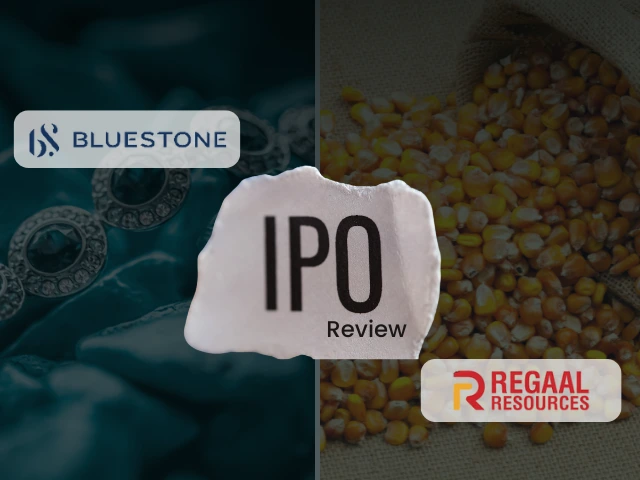
BlueStone vs Regal Resources: Which IPO Deserves Your Money?
Quick Summary
- BlueStone Jewellery & Lifestyle Ltd. is a digital-first, omnichannel jewellery brand with a strong presence but is currently operating at a net loss, mainly due to high expansion and marketing costs.
- Regal Resources Ltd. is a profitable maize-based products manufacturer showing strong top-line and bottom-line growth. The company has a stable busin
- Business model and a strategic manufacturing location.
- Both IPOs have different financial profiles. BlueStone is a high-growth, high-risk proposition, while Regal Resources presents a more stable, albeit potentially fully priced, investment opportunity.
- SEBI's recent guidelines on IPOs, particularly for anchor investors and promoters, are aimed at increasing transparency and stability for retail investors.
Navigating the IPO Rush: A Review of BlueStone
India's IPO market is buzzing with activity, offering investors a chance to become part-owners in a diverse range of companies. In this dynamic landscape, two recent IPOs — BlueStone Jewellery and Lifestyle Ltd. and Regal Resources Ltd. — have captured the market's attention. A thorough Bluestone Jewellery and Regal resources IPO review is essential for any investor looking to make an informed decision.This article will break down the key aspects of both offerings, including their business models, financial performance, and market position, to help you understand the potential risks and rewards.
BlueStone Jewellery & Lifestyle IPO: The Glitter and the Gaps
BlueStone has positioned itself as a modern, tech-enabled jewellery brand, catering to a younger, digital-savvy audience. With an omnichannel presence, including a robust online platform and over 275 physical stores, the company has made a significant mark in a highly competitive market.
The Business Model and Market Position
BlueStone’s strategy focuses on a "direct-to-consumer" (DTC) model, which helps them build a strong brand identity and better control the customer experience. The company’s in-house manufacturing and design capabilities further enhance this control, making them a vertically integrated player. The Indian jewellery market is vast and fragmented, dominated by traditional players and large chains. BlueStone’s digital-first approach and modern designs give it a unique edge. However, this sector is highly sensitive to consumer sentiment and economic cycles.
Financial Performance: Growth vs. Profitability
On the financial front, BlueStone presents a compelling but cautious story. The company has shown impressive revenue growth, with its operational revenue soaring by over 50% on a Compound Annual Growth Rate (CAGR) basis over the last three fiscal years. This top-line growth is a clear indicator of its expanding market share and brand acceptance.However, the company has consistently reported net losses, which have widened in recent years. Management attributes these losses to aggressive expansion and substantial marketing expenditures aimed at building a pan-India brand. While this is a common strategy for high-growth, new-age companies, it poses a risk. Investors must weigh the potential for future profitability against the current financial burn.
IPO Details & Regulatory Context
The BlueStone IPO is a book-built issue, combining a fresh issue of shares and an Offer for Sale (OFS) by existing shareholders. SEBI's recent guidelines on IPOs, which mandate a longer lock-in period for anchor investors and restrict the number of shares promoters can sell, are crucial here. These rules are designed to protect retail investors from potential post-listing volatility and ensure that the funds raised are genuinely for company growth.
Regal Resources Ltd. IPO
Stability in the Agro-Processing SectorIn stark contrast to BlueStone's high-growth, high-risk profile, Regal Resources Ltd. operates in the more traditional, yet vital, agro-processing sector. The company is a prominent manufacturer of maize-based specialty products, a business with a stable and growing demand.
The Business Model and Strengths
Regaal Resources' business is centered on manufacturing a diverse range of maize-based products, including starches, and co-products for various industries like food, paper, and animal feed. Their key strength lies in their strategic manufacturing facility in Kishanganj, Bihar, which is located near major maize-producing regions. This geographical advantage provides them with a consistent and cost-effective raw material supply, improving their operational efficiency and margins.
Financial Performance
Consistent ProfitabilityRegaal Resources' financials paint a picture of consistent and healthy growth. The company has demonstrated strong growth in both revenue and Profit After Tax (PAT) over the last three fiscal years. Unlike BlueStone, Regal Resources is a profitable entity, which can be a reassuring factor for risk-averse investors. Their improving PAT margins signal effective cost management and a stable business model.
IPO Details & Market Context
The Regal Resources IPO is also a book-built issue with a combination of fresh issue and an OFS. The funds from the fresh issue will primarily be used for business expansion and working capital requirements. The company’s robust financial track record and position in a non-cyclical, essential industry make it an attractive proposition, though a thorough valuation analysis is still necessary as the issue might be considered fully priced based on its recent performance.
A Comparative Perspective for Investors
When reviewing these two IPOs, investors should consider their own risk appetite and investment horizon. BlueStone could offer significant upside potential if it successfully navigates its path to profitability, but it comes with a higher degree of risk. Regal Resources, on the other hand, provides a more stable investment opportunity, banking on consistent performance in a fundamental industry.
BRICS vs The West: Is a New Global Economic Order Emerging?
Quick Summary
- The BRICS alliance, originally comprising Brazil, Russia, India, China, and South Africa, has expanded to include more nations, challenging the traditional economic dominance of the G7.
- BRICS nations are a major force in the global economy, collectively representing a significant portion of the world's GDP (by purchasing power parity), population, and natural resources.
- The bloc is working to reduce reliance on the US dollar, with initiatives like the New Development Bank (NDB) and a focus on local currency trade, which could reshape global finance.
- For Indian investors, understanding this geopolitical shift is crucial as it influences trade policies, currency valuations, and investment opportunities in key sectors like commodities and manufacturing.
- India's strategic position within BRICS and its relationships with Western nations present unique opportunities and challenges that investors should be aware of.
The Shifting Sands of Global Power: BRICS vs The West 🌍
For decades, the global economic stage was largely dominated by a handful of developed nations, often referred to as "the West" or the G7. However, a seismic shift has been underway, driven by the emergence of powerful economies from the Global South. At the heart of this transformation is the BRICS bloc, a group of nations that has grown in influence and is now actively challenging the long-standing status quo. Understanding the dynamic between BRICS vs West is no longer just a matter of geopolitics—it's a critical factor for investors navigating the complexities of the modern financial world.
What is BRICS and Why Does it Matter? 🤔
The term BRIC was coined by Goldman Sachs economist Jim O'Neill in 2001, highlighting the potential of Brazil, Russia, India, and China to become major economic forces. South Africa joined in 2010, and more recently, the bloc has expanded to include Egypt, Ethiopia, Iran, Saudi Arabia, and the United Arab Emirates. This expansion is a clear signal of the group's growing ambition and appeal.The BRICS alliance isn't a formal organization like the European Union. Instead, it's a loose coalition of countries that coordinate on economic, financial, and political issues. Their primary goal is to create a more multipolar world, where the interests and perspectives of emerging economies are better represented in global institutions like the World Bank and the International Monetary Fund (IMF), which they believe are overly dominated by Western powers.
By 2024, the expanded BRICS group's collective GDP (based on Purchasing Power Parity) had already surpassed that of the G7, a powerful statement of its rising economic might. With a combined population of nearly half the world's inhabitants and vast natural resources, BRICS nations have a significant and growing influence on global trade and supply chains.
Key Areas of Competition: BRICS vs West ⚔️
The competition between BRICS and the West is playing out across several key fronts: The Battle for Economic Influence and Multilateralism.
Historically, international finance has been shaped by institutions like the World Bank and the IMF, where Western nations hold considerable sway. In response, BRICS has established the New Development Bank (NDB), a multilateral lending institution aimed at funding infrastructure and sustainable development projects in member and other developing countries. This provides an alternative source of financing, bypassing the conditionalities sometimes attached to loans from Western-led institutions.
For India, this is a significant development. As a founding member, India plays a key role in the NDB, which can help secure funding for critical infrastructure projects, potentially boosting domestic growth and employment. This also reduces India's financial dependence on Western institutions, allowing for greater autonomy in policymaking.
The Push for De-Dollarization
The US dollar has been the world's reserve currency for decades, giving the United States immense economic power, including the ability to impose sanctions. BRICS nations, particularly Russia and China, have been vocal about reducing their reliance on the dollar. They are actively promoting trade in local currencies, a move that could insulate them from geopolitical pressure and currency fluctuations.
For Indian businesses and investors, this trend towards de-dollarization has several implications. While the US dollar remains crucial for international trade, an increase in local currency trade with BRICS partners could reduce currency conversion costs and risks for Indian exporters and importers. This could also lead to a more stable Indian Rupee in the long run. The Reserve Bank of India (RBI) is a key player in navigating this shift, ensuring a stable and secure financial environment.
Shifting Trade and Supply Chains 🔗
The relationship between BRICS and the West is not simply adversarial; it is complex and often symbiotic. Many Western companies have deep ties with BRICS nations, especially China and India, for both manufacturing and consumer markets. However, geopolitical tensions have led to discussions around "friend-shoring" and diversifying supply chains.
India, with its vast manufacturing capabilities and skilled workforce, is in a prime position to benefit from these shifts. The Indian government's "Make in India" initiative aligns perfectly with this trend, attracting foreign investment and positioning India as a key global manufacturing hub. Indian investors should look for opportunities in sectors that benefit from this increased domestic and international manufacturing focus, such as capital goods, logistics, and technology.
India's Balancing Act: A Strategic Position 🇮🇳India's role in the BRICS vs West dynamic is particularly unique. As a founding member of BRICS, India has been a strong advocate for a multipolar world and the interests of the Global South. However, India also maintains robust diplomatic, economic, and strategic ties with Western powers, including the United States, Europe, and Japan.
This strategic autonomy allows India to engage with all sides, leveraging its relationships to secure the best outcomes for its national interests. The Indian government is committed to strengthening its economic partnerships with BRICS members while also fostering trade and investment with Western nations. This balancing act is a testament to India's growing stature as a global power.Investment Implications for the Indian Market 📈The geopolitical landscape directly impacts financial markets. Here's how Indian investors can navigate this new reality:
- Commodities: BRICS nations are major producers and consumers of commodities. As they increase their intra-bloc trade, this could impact global commodity prices. Investors can consider opportunities in commodity-linked stocks or funds.
- Infrastructure and Manufacturing: The NDB's focus on infrastructure development and the global push for supply chain diversification could create significant growth opportunities in India's infrastructure, manufacturing, and logistics sectors.
- Currency and Forex: While the de-dollarization trend is a long-term play, it's something to monitor. Investors with international exposure should be mindful of currency risks and potential shifts in global currency dynamics.


.webp)
.webp)
.webp)





START YOUR INVESTMENT JOURNEY
Get personalized advice from our experts
- Dedicated RM Support
- Smooth and Fast Trading App
