The Power of Compounding – Why Starting Early Matters




Introduction
Albert Einstein reportedly called compound interest the "eighth wonder of the world." Whether or not he actually said it, the math is undeniable. Compounding is the process where your investment returns begin earning their own returns — and over time, this snowball effect becomes truly extraordinary.
The catch? Compounding needs one essential ingredient: time.
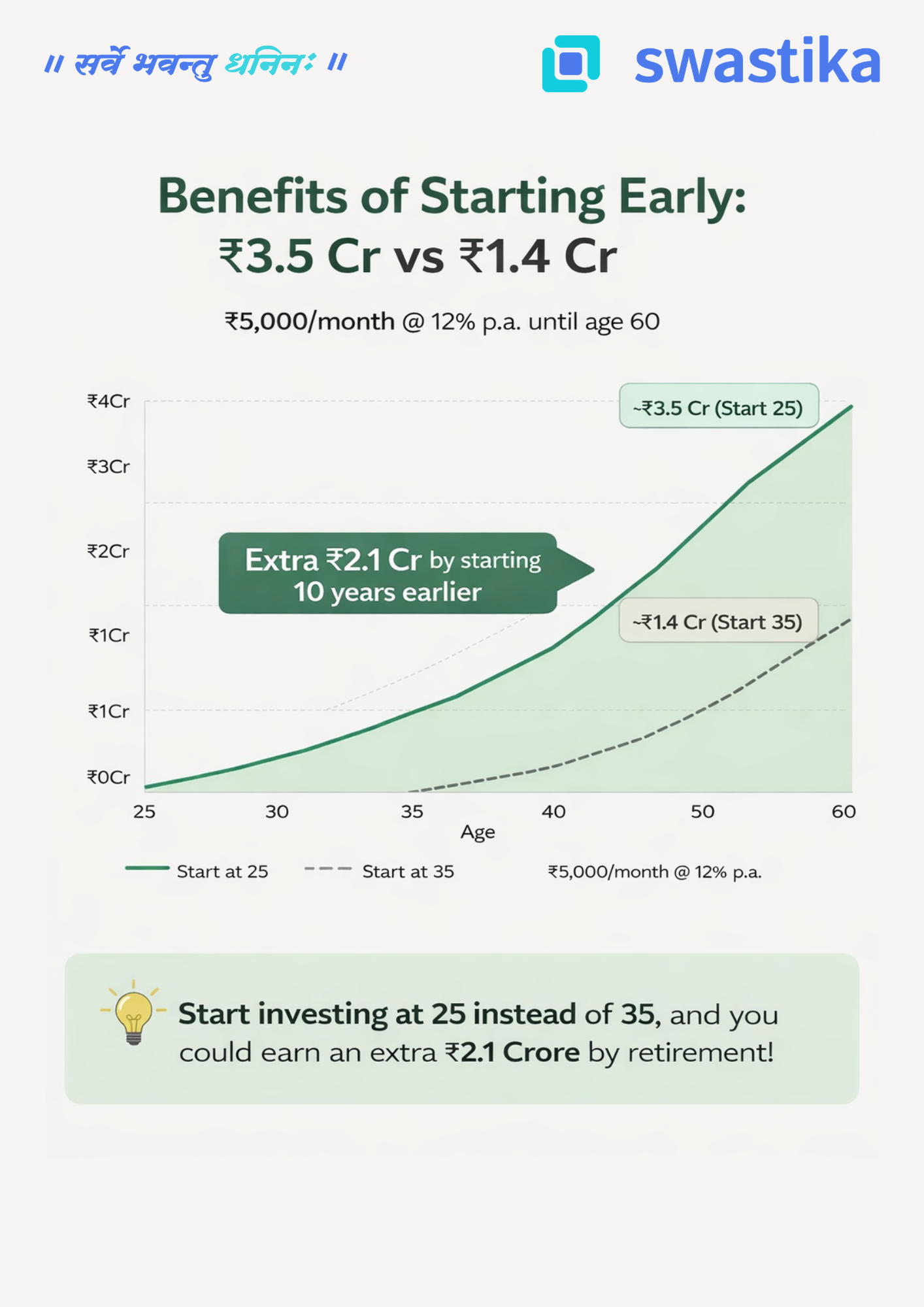
The more years you give your money to grow, the more dramatic — and life-changing — the results become. This is exactly why starting your investment journey early, even with a modest amount, can make a difference of crores by the time you retire.
A Tale of Two Investors: Arjun vs Priya
Let's bring this concept to life with a simple, real-world example.
Meet Arjun and Priya. Both are sensible, disciplined investors. Both invest ₹5,000 every month through a SIP (Systematic Investment Plan) in equity mutual funds, earning an average annual return of 12%. Both stop investing at age 60.
The only difference? Arjun starts at 25. Priya starts at 35.
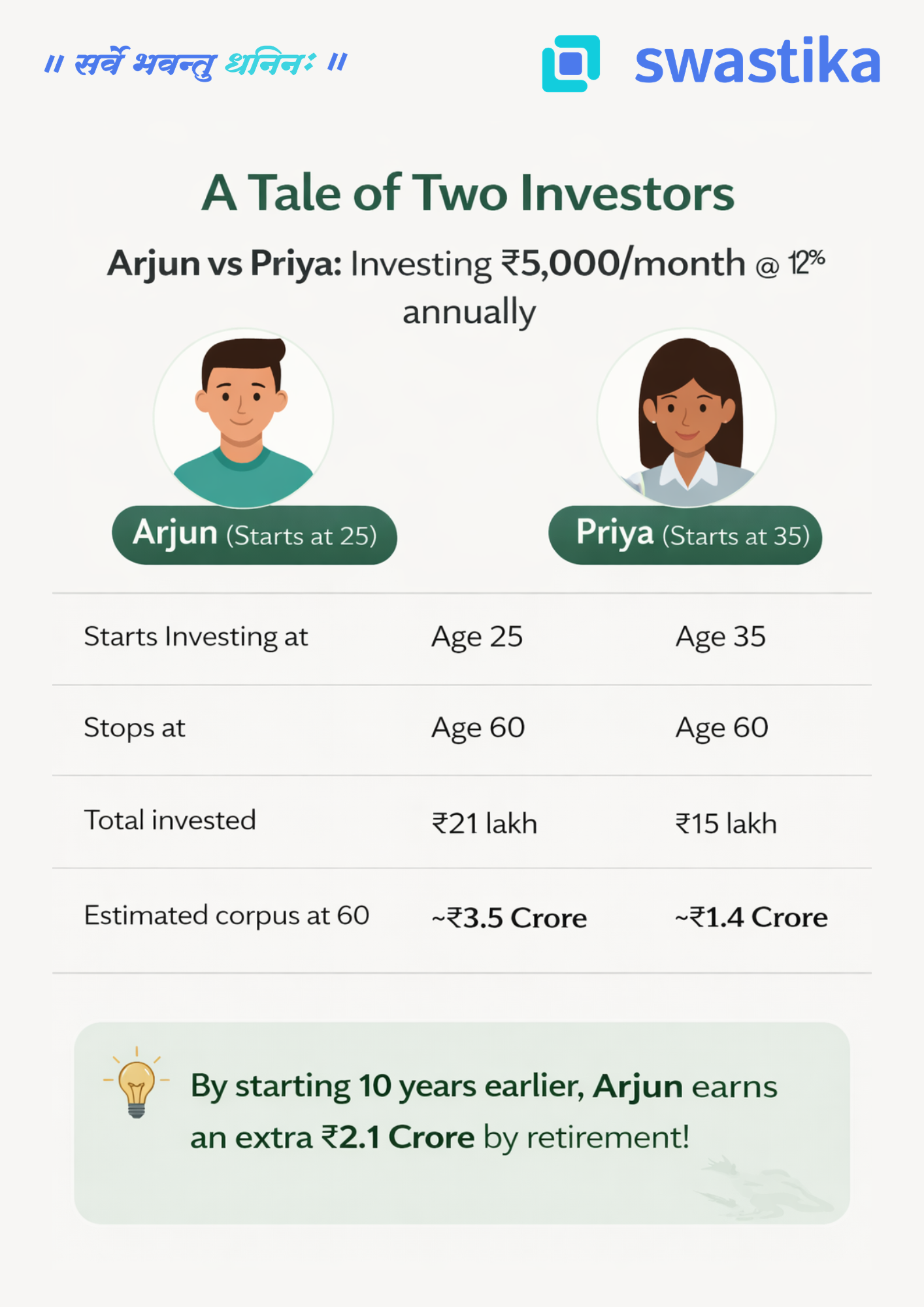
The numbers are striking. Arjun invests just ₹6 lakh more than Priya in absolute terms — yet walks away with ₹2.1 Crore more at retirement.
That extra ₹2.1 Crore didn't come from investing more aggressively or taking bigger risks. It came purely from starting 10 years earlier.
Why Does Time Make Such a Huge Difference?
This is where the magic of compounding reveals itself.
In the early years of investing, growth looks modest and almost unimpressive. But as the years pass, your corpus grows not just on your original investment, but on all the accumulated returns from previous years. The curve goes from almost flat to steeply exponential — and that steep climb happens in the later years.
When Arjun starts at 25, his money has 35 years to ride that exponential curve. Priya's money, starting at 35, only catches the last 25 years — and critically, it misses the steepest part of the climb in the final decade.
Think of it this way: the last 10 years of compounding are worth more than the first 20. That is the counterintuitive truth at the heart of long-term investing.
The Real Cost of Waiting
Many young earners tell themselves, "I'll start investing once I'm more settled — once the salary improves, once the EMI is paid off, once life is a bit easier."
But the numbers show that every year of delay is extraordinarily expensive — far more expensive than any EMI or lifestyle expense. Priya didn't invest carelessly. She invested faithfully for 25 years. Yet she ends up with less than half of what Arjun accumulated — not because she did anything wrong, but simply because she started a decade late.
The cost of waiting 10 years wasn't ₹6 lakh in additional contributions. The cost was ₹2.1 Crore in lost wealth.
Three Principles to Remember
1. Start now, not later.The best time to start investing was yesterday. The second best time is today. Even a SIP of ₹1,000–₹2,000 per month in your 20s is infinitely better than waiting for the "right time."
2. Consistency beats intensity.You don't need to invest large sums all at once. A small, steady, monthly commitment — maintained without interruption — is what unlocks the full power of compounding over decades.
3. Stay invested through market cycles.Compounding works only if you let it work. Exiting during market corrections or stopping your SIP in tough months breaks the chain. Time in the market, not timing the market, is what builds wealth.
The Bottom Line
If you are in your 20s or early 30s, you hold an asset that no amount of money can buy later: time. Use it. Start a SIP today — even a small one. Let compounding do its slow, steady, powerful work.
Because the difference between starting at 25 and starting at 35 is not just 10 years. As Arjun and Priya's story shows, that difference is ₹2.1 Crore.
Big Budget











.webp)
.webp)
.webp)
.webp)
.webp)














.webp)
.webp)
.webp)
.webp)
Latest Articles

What is Brokerage? | Meaning, Types, & More


The Indian stock market is a big marketplace where people buy and sell shares of ownership in companies, similar to a stock market anywhere else in the world. Here's a quick breakdown:
- Companies Sell Shares: Companies can raise money by selling small pieces of ownership, called shares or stocks, to the public. This is a way for them to get funding for growth.
- Investors Buy Shares: People who buy these shares become part-owners of the company. They hope that the company will do well, and the value of their shares will increase. They can then sell their shares at a profit later.
- The Stock Exchange: This is where the buying and selling of shares takes place electronically. The Bombay Stock Exchange (BSE) and the National Stock Exchange of India (NSE) are the two main stock exchanges in India.
- Brokers Help You Trade: You can't directly buy and sell shares on the stock exchange. You need a brokerage firm, like a middleman, to handle the transactions for you.
What is a Brokerage in the Stock Market?
A brokerage in the stock market is like a middleman that helps you buy and sell stocks. They are companies or individuals authorized to buy and sell stocks on behalf of investors. The stock brokerage company that facilitates your share purchases and sales levies a fee for its services. The term "brokerage" refers to this charge.
Example of a Brokerage:
Let's say you want to buy shares of a company like TCS. You don't go directly to the stock exchange to buy them yourself. Instead, you open an demat account with a brokerage firm like Swastika Investmart. Through their online platform or app, you place an order to buy TCS shares. The brokerage then carries out the transaction for you, and the shares are added to your account.
There are currently four methods available to stock brokers in India for charging brokerage fees. Let's examine each of them individually.
- Flat fee for every trade: As the name implies, there is a flat price associated with each deal you make in this mode. As a result, the brokerage you must pay is the same regardless of the transacted value. But there's a catch: the investor will only be charged the lower sum if the percentage brokerage is lower.
- Brokerage as a percentage of the traded value: A portion of the entire trade value is charged as brokerage by stock brokers. Put simply, a trade's worth will determine how much the brokerage is going to be, and vice versa.
- Monthly trading plans: A few stock brokers now provide monthly trading plans that let you make an infinite amount of trades in a given month, regardless of how much each trade is worth. They also demand a monthly or annual subscription fee in exchange.
- Zero brokerage: Numerous discount broking businesses do not charge a brokerage fee for the transactions.
How to Choose the Perfect Broker in India
The Indian stock market offers exciting opportunities, but choosing the right brokerage firm can feel difficult.
- Reputation and Reviews: Trust is key! Look for firms with a strong track record and satisfied customers.
- Reviews: User reviews on financial websites and forums offer valuable insights from real people. Read both positive and negative comments to get a well-rounded picture.
- Registrations: Ensure the firm is registered with SEBI (Securities and Exchange Board of India), the regulatory body. Their website should display membership codes for stock exchanges like NSE (National Stock Exchange) or BSE (Bombay Stock Exchange).
- Reputation: Established firms with a long history and satisfied clients are often a safe bet.
- Services: Consider your investment style and experience level when choosing between service models:
- Full-service brokers: Ideal for beginners. They offer personalized advice, research reports, and educational resources, but charge higher fees. (commissions).
- Discount brokers: Perfect for experienced investors who prioritize low costs. They focus on trade execution with minimal fees.
- Fees (Brokerage Charges): Understand fee structures, including commissions, account minimums, and any hidden charges. Full-service brokers might offer bundled services at a higher cost, while discount brokers have lower fees but fewer services.
- Trading Platform: Check the user-friendliness and features of the platform. Look for ease of navigation, real-time market data, and charting tools to support your investment decisions.
- Customer Support:
- Multiple Channels: Check whether they offer phone, email, and live chat options for assistance.
- Prompt Response: Look for firms known for resolving issues.
- Transparency is Key: No Hidden Costs.
Before opening an account, have a detailed discussion with the brokerage representatives. Ensure a clear understanding of all charges involved in the transaction
By understanding these costs upfront, you can avoid surprises and make better decisions about your investment.
Conclusion
Brokerage plays a crucial role in the stock market by facilitating the buying and selling of shares for investors. It serves as a middleman and charges fees for its services, which can be structured as flat fees, percentage-based commissions, monthly trading plans, or zero brokerage models. Choosing the right broker requires evaluating reputation, SEBI registration, fees, trading platforms, and customer support. By understanding these factors, investors can select a brokerage that aligns with their needs, ensuring a seamless and cost-effective trading experience.
Start Investing Today!
.webp)
What is the Securities Transaction Tax (STT)?
Introduction:
The world of finance can be confusing, especially when it comes to terms like Securities Transaction Tax (STT). But don't worry! This blog will make STT simple. Let's explore what it is, how it works, why it's there, and what it means for you as an investor.
What is STT?
STT is a tax imposed by the government on the buying and selling of securities like stocks, derivatives, and certain mutual funds. Whenever you make a transaction in the stock market, a small percentage of the transaction value is collected as STT. The tax is levied at a predetermined rate, expressed as a percentage of the transaction value, and is applicable to both the buyer and the seller.
How Does STT Work?
STT operates as a transaction-based tax, meaning it is triggered with every buy or sell order executed in the market. The tax rate varies based on the type of security being traded and the nature of the transaction—whether it involves delivery (holding securities beyond a specified period) or intraday trading (buying and selling within the same trading day). For instance, equity delivery trades typically attract a different STT rate compared to intraday trades. In other words STT is calculated based on the type of security you're trading and whether it's a buy or sell transaction. The rates may vary, but the idea remains the same: a little slice of your transaction goes to the government.
Why Does STT Exist?
The primary goal of STT is twofold. Firstly, it's a way for the government to collect revenue. Secondly, it acts as a measure to regulate the stock market. By imposing a tax on transactions, especially on short-term trades, it aims to discourage excessive speculation and promote more stable, long-term investments.
The introduction of STT serves several purposes, primarily driven by governmental and regulatory objectives:
- Revenue Generation: STT serves as a crucial source of revenue for the government. By taxing transactions within the securities market, the government can accumulate funds to support various developmental initiatives, infrastructure projects, and welfare programs.
- Regulatory Measure: Beyond revenue generation, STT acts as a regulatory tool aimed at shaping market behavior and fostering stability. By imposing a tax on transactions, particularly on short-term trades, STT discourages speculative activities and promotes a more disciplined, long-term approach to investing.
Impact on Investors:
For investors, STT adds a small cost to each transaction. While it may seem like pennies at a time, it can add up, especially for frequent traders. However, it's also a transparent tax, clearly stated on your transaction records, making it easy to keep track of.
For investors participating in the securities market, STT carries both direct and indirect implications:
- Cost Consideration: STT adds to the overall cost of trading for investors. While the tax rates are relatively modest, even small percentages can accumulate, especially for frequent traders engaged in high-volume transactions.
- Transparency: Unlike some other charges and fees associated with stock market transactions, STT offers transparency. It is explicitly disclosed in transaction statements provided by brokerage firms, allowing investors to accurately track and account for their tax liabilities.
- Behavioral Influence: STT plays a pivotal role in shaping investor behavior. By making short-term trades comparatively more expensive, STT incentivizes investors to adopt a more strategic, long-term perspective. This shift towards long-term investing not only aligns with wealth accumulation goals but also contributes to market stability and resilience.
Conclusion:
STT may sound intimidating at first, but it's simply a tax on stock market transactions. It serves the dual purpose of revenue generation for the government and regulating market behavior. So, the next time you see STT mentioned, just remember: it's a small fee for playing in the stock market sandbox.
Learn More about financial terminologies with Swastika !

What is Rollover in Stock Market
Introduction:
In the world of finance, there are many terms that can sound intimidating to beginners. "Rollover" is one such term that might seem confusing at first glance. However, once you understand what it means, it's actually quite simple. In this blog post, we'll break down the concept of rollover in the stock market.
What is Rollover?
Rollover in the stock market refers to the process of extending the expiration date of an investment position. This typically applies to futures contracts, options, and certain other derivative instruments. Let's delve into each of these to understand rollover better:
Futures Contracts:
In futures trading, investors agree to buy or sell a particular asset at a predetermined price on a specified future date. However, not all investors intend to take physical delivery of the underlying asset. Instead, they may choose to close out their position before the contract expires by offsetting their initial position with an opposite position (buying back what they sold or selling what they bought).
Rollover occurs when an investor extends the expiration date of their futures contract by closing out their current position and simultaneously opening a new position with a later expiration date. This allows investors to maintain exposure to the underlying asset without actually taking delivery.
Options:
Options contracts give the holder the right, but not the obligation, to buy or sell an underlying asset at a predetermined price (strike price) within a specified period. Like futures contracts, options contracts have expiration dates.
When an options holder decides to extend the expiration date of their contract, they can engage in a rollover. This involves closing out their existing position and opening a new position with a later expiration date.
Why Rollover?
Investors might choose to rollover their positions for several reasons:
- Time Horizon: If an investor's outlook on the underlying asset hasn't changed but they want to extend their investment horizon, rollover allows them to do so without exiting the position entirely.
- Avoiding Delivery: In futures trading, rollover helps investors avoid taking physical delivery of the underlying asset, which may not be practical or desirable for various reasons, such as storage costs or logistical constraints.
- Adapting to Market Conditions: Rollover can also be a strategic move in response to changing market conditions. For example, if an investor expects volatility to increase in the near future, they may roll over their position to a later expiration date to give their investment more time to play out.
Conclusion:
Rollover is a common practice in the stock market, particularly in futures and options trading. It allows investors to extend the expiration date of their positions, providing flexibility and strategic options. By understanding the concept of rollover, investors can better manage their investments and adapt to evolving market conditions.
Learn more about Stock Market!

One Time Mandate (OTM) for Mutual Funds
Are you interested in growing your wealth but find traditional investment methods difficult? If so, then a mutual fund might be the perfect solution for you.
What are Mutual Funds?
A mutual fund is a type of investment that pools money from many investors and invests it in a variety of assets, like stocks and bonds. A professional manager, then uses that money to buy different investments on behalf of all the contributors (investors) like you. This approach allows you to gain exposure to a diversified portfolio of investments without having to pick individual stocks or bonds yourself.
What is OTM in Mutual Fund?
OTM stands for One Time Mandate in mutual funds. It's a one-time registration process where you allow your bank to deduct a certain amount from your savings account for investing in a specific mutual fund scheme.
One Time Mandate (OTM) in mutual funds covers the following transactions:
- Fresh Lump-Sum Investments:
You can use your bank account to make payments for lump-sum investments. The amount will be debited based on the fixed limit set in your OTM form.
- New Systematic Investment Plans (SIPs):
You can start new SIPs through the OTM service. There's no need to provide bank details or a canceled cheque again.
Duration of OTM: You can set up an OTM for a specific period, like five years, or keep it active until you decide to cancel it.
Overall, OTM is a convenient way to invest in mutual funds regularly and grow your money over time.
How Does OTM Work?
Once you set up an OTM, your bank will deduct the specified amount from your account based on requests from the mutual fund company. These requests come from investors like you who want to invest in the mutual fund scheme. This eliminates the need for manual payments every time you want to invest.
To register for a One Time Mandate (OTM), the process is straightforward. Follow these steps:
- Complete OTM Form: Fill out the OTM form with your personal and financial information.
- Bank Account Details: Provide details such as your bank's name, branch, account number, type, and IFSC code. Remember, only one bank account can be used for OTM registration.
- Personal Information: Include your name, date of birth, PAN number, address, phone number, and email ID. If the bank account is joint, provide details for other account holders too.
- Set Mandate Limit: Specify the maximum amount that can be debited. Transactions exceeding this limit will be rejected.
- Investment Preferences: Share your folio number and choose between fixed or maximum debit options. Decide the frequency of debits – monthly, quarterly, half-yearly, or as needed.
- Signature: All account holders must sign the OTM form. Ensure the signatures match those on file with the bank.
After submitting the form, the bank will process your request. Once approved, you can start using the OTM facility for mutual fund investments.
Benefits of OTM:
- Convenience: OTM makes investing in mutual funds easy and hassle-free. You don't need to attach a cheque or go through a payment gateway each time you invest.
- Paperless and Electronic: It's a digital process, so you don't have to deal with paper forms or documents.
- Automatic Investing: OTM automates your investments, helping you build wealth over time without having to remember to invest manually.
FAQs
How do I register for OTM?
Contact your bank. They will provide you with an OTM form to fill out. The form will ask for your personal information, bank details, and investment preferences.
Is OTM safe?
OTM is a secure process because it involves your bank and a registered mutual fund company.
Can I cancel OTM once I register?
Yes, you can cancel OTM at any time by contacting your bank.
What if I forget my folio number?
Your folio number is your unique identification number for your mutual fund investment. You can find it in your account statements or by contacting the mutual fund company.
Conclusion
OTM simplifies mutual fund investing by automating transactions, making it a hassle-free and paperless process. It ensures disciplined investing without the need for repeated manual payments, ultimately helping investors build wealth efficiently over time.
Learn more about financial terminologies with Swastika!

What is short selling?
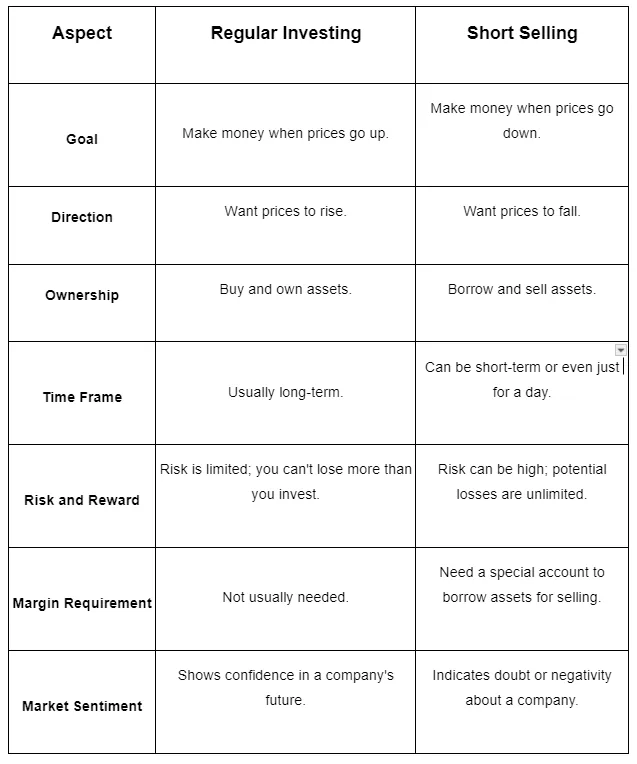
Short selling is like betting that the price of something will drop. They borrow shares from a broker and sell them right away at the current price. They hope the stock price drops so they can buy back the shares at a lower price. Then, they return the borrowed shares to the broker and keep the difference between the selling and buying prices.
Here's how it works:
Imagine borrowing a toy from a friend to sell it to someone else. You hope that by the time you have to give the toy back to your friend, its price will be lower, so you can buy it for less and return it. Short-sellers do this with stocks or other investments. They borrow them, sell them to someone else, and hope the price goes down so they can buy them back cheaper and return them. This is different from regular investors who want the price to go up.
Example of short selling
- Let's say you believe that XYZ Corporation's stock, currently priced at Rs. 7,000 per share, is overvalued and will decrease in the near future. You decide to short sell the stock.
- You borrow 10 shares of XYZ Corporation from your broker and sell them immediately at Rs. 7,000 per share, receiving Rs. 70,000 in total. Now, you're "short" 10 shares of XYZ Corporation.
- A few weeks later, XYZ Corporation announces disappointing earnings, causing its stock price to come down to Rs. 5,600 per share. You decide it's time to close your short position.
- You buy back the 10 shares of XYZ Corporation at the current market price of Rs. 5,600 per share, spending Rs. 56,000 in total.You return the 10 borrowed shares to your broker.
- So finally you made a profit of Rs. 14,000: (Sale proceeds of Rs. 70,000 - Purchase cost of Rs. 56,000 = Rs. 14,000), excluding any transaction fees or interest charges
Differences Between Regular Investing And Short Selling
Pros of Short Selling:
- Chance for Big Profits: If you predict that a stock's price will drop and you're right, you can make a lot of money from short selling.
- Protection against a bear Market: Short selling can help protect you when the market isn't doing well. When stock prices are falling, short selling lets you still make money.
- More Ways to Make Money: Short selling gives you another way to make money in the market. It adds flexibility to your trading and can help you earn extra cash.
Cons of Short Selling:
- Unlimited Losses: When you short sell, your potential losses aren't limited. If the stock price goes up instead of down, you could end up losing more money than you put in.
- You can not carry your position to next day and you will have to square of it same day only.
- Missed Opportunities: While you're busy short selling, your money is tied up in that trade. This means you might miss out on other chances to make money elsewhere.
FAQs
1) How do I start short selling?
To short sell, you'll need to open a margin account with a brokerage firm. Once you have an account, you can place a short sell order for the desired stock through your broker's trading platform.
2) Are there any restrictions on short selling?
Some regulations may limit short selling, especially during times of market volatility. Additionally, not all stocks are available for short selling, as it depends on the availability of shares to borrow.

What is Liquidity
In finance, The efficiency or convenience with which a security or asset can be turned into quick cash without negatively impacting its market price is referred to as liquidity.
High liquidity means it's easy to turn an asset into cash at its expected value or market price. Low liquidity means there aren't many chances to buy and sell, making assets hard to trade.
Cash is the most liquid asset, followed by stocks, bonds, and real estate, which vary in their liquidity levels. Cash can be readily spent or invested, while stocks and bonds can be sold quickly. Real estate, however, takes longer to sell due to its illiquidity.
What does "liquidity" mean when we talk about the stock market?
Well, it's all about how easy it is to buy and sell stocks without affecting their prices too much. Higher liquidity stocks will have a sufficient number of outstanding shares as well as a suitable supply and demand. It's the quantity of consumers and sellers that are present in a market, to put it simply.
But smaller companies, especially those traded on smaller exchanges, can be trickier. They're not traded as much, so there's a bigger gap between what buyers are offering and what sellers want. When more people suddenly want to buy or sell these stocks, their prices can swing wildly. That's the basic idea of liquidity in the stock market.
Importance in financial markets:
Liquidity is likewise important for investors, as it influences the price they will pay when purchasing stocks or ETFs and Stock liquidity is crucial since it dictates how soon you can enter or exit a trade. High liquidity also means lesser risk because there is a greater chance that someone will take the opposite position in the transaction.
For businesses, understanding their liquid assets is important as these funds are required to settle any pending bills or debts. To figure out if a company or person has enough cash to pay their bills, you can compare their assets to their debts. If their assets are higher, they're solvent, which means they can pay their debts and still have some cash left over.
Types of Liquidity:
- Accounting Liquidity: Accounting liquidity quantifies how easily a person or business may pay off debts when they become due by using their liquid assets to meet their financial commitments.
- Market Liquidity: The degree to which assets can be purchased and sold at steady, transparent prices on a market—like the stock market of a nation or the real estate market of a city—is referred to as market liquidity.
Conversely, greater market liquidity is a feature of the stock market. A buyer's bid price (the price per share) and a seller's ask price (the price they are willing to accept) will be quite close to each other if an exchange has a significant volume of transaction that is not dominated by selling.
For example, big stock exchanges usually have lots of trading and small price differences between buying and selling, making them easy to buy and sell in. On the other hand, some markets outside exchanges might have less trading and bigger price differences, making them harder to trade in quickly.
How to Identify Liquid Stocks:
1) Trade volume is high:
- High trading volume means lots of people are buying and selling the stock, making it easier to trade.
- Low trading volume means fewer trades, which can make it harder to buy or sell the stock quickly.
2) The difference between the bid price and ask price is less:
- A narrow bid-ask spread means the difference between what buyers are willing to pay and what sellers are asking for is small. It's easier to trade when this gap is tight.
- A wide bid-ask spread suggests there's a bigger difference between what buyers want to pay and what sellers are asking for. This can make trading slower and more expensive.
3) Consider Market Depth:
- Market depth shows how many orders are waiting to be filled at different prices. More orders mean there's more interest in the stock, making it easier to trade.
- Less market depth suggests fewer orders, which can mean less interest and slower trading.
Conclusion
Liquidity refers to how easily an asset can be converted into cash without impacting its price. In the stock market, higher liquidity means smoother trading with minimal price fluctuations, while lower liquidity can lead to volatility and wider bid-ask spreads. Investors can identify liquid stocks by looking at trading volume, bid-ask spread, and market depth. Liquidity is crucial for both investors and businesses, affecting trade execution, financial stability, and risk management.
Learn more about financial terminologies with Swastika!


.webp)
.webp)

.webp)






START YOUR INVESTMENT JOURNEY
Get personalized advice from our experts
- Dedicated RM Support
- Smooth and Fast Trading App