

Sensex Rises 790 Points - Should You Buy Now?


Sensex Rises 790 Points - Should You Buy Now?
TLDR
- Sensex recovers 790 points from the day’s low; Nifty closes above 23,650 as oil slips below $110 and bond yields ease.
- Rupee hits a fresh record low while foreign investors resume selling Indian equities, signaling continued currency risk.
- Top sector watch: Financials and IT; avoid real estate for now due to rate and currency sensitivity.
- Action: review your portfolio, maintain diversification, and consider measured deployment if you have a long horizon.
News Context and Market Impact
What Happened
The Sensex rebounded about 790 points from the day’s low, with the Nifty closing above 23,650. Oil prices slipped below $110 per barrel, aiding risk sentiment. Bond yields eased from recent highs, while the Rupee hit a fresh all-time low against the US dollar. Foreign institutions resumed selling Indian equities, keeping macro headwinds in view. Your portfolio may see a pullback in volatility, but currency and FII flows could cap gains.
Why This Matters
In the short term, this bounce reflects improved risk appetite even as macro overhangs persist. A weaker rupee can affect import costs and margins for listed firms, while softer yields can support equity valuations in rate-sensitive segments. For you, the key takeaway is that the market may move in fits and starts; stay nimble and avoid chasing momentum in individual names.
Portfolio and Strategy Focus
What This Means For Your Portfolio
For retail investors, the rebound offers a chance to recheck asset allocation. Favor quality large-cap names in banks and financials, and select IT exporters that can benefit from a softer rupee. Maintain diversification to cushion volatility and consider a modest hedge if your USD exposure is significant. Your risk controls should tighten when markets rally to prevent overexposure to any single name.
Swastika Investmart notes that retail investors should anchor to quality names and maintain diversified exposure during rebound periods. With currency moves and foreign flows in play, disciplined risk management and a long-term perspective remain essential for your portfolio.
Sectors To Watch - Priority Order
- 1st Priority: Financials - higher chance of leading gains as yields stabilize and loan growth supports profits
- 2nd Priority: IT - exporters benefit from rupee dynamics and potential earnings resilience
- Avoid Now: Real Estate - sensitivity to rates and foreign flow pressures
Action Points For Investors
- SIP investors: Continue disciplined monthly investments across broad-market funds to ride the rebound with risk control
- Lumpsum investors: If you have a long horizon, selectively add to high-quality financials or IT names while keeping stops
- Traders: Focus on liquidity and price action; use tight stops and avoid chasing momentum in mid-caps
In the current backdrop, a measured approach serves you best; avoid panic moves and stick to your plan rather than market rumors.
Risks and Cautions
Key Risks To Watch
- Continued rupee volatility could keep markets choppy, hurting sentiment and returns
- Persistent FII selling may cap upside momentum despite a rebound
- Oil price reversals or mixed macro data could reprice valuations quickly
Frequently Asked Questions
How will the Sensex rebound affect my portfolio?
The rebound can lift near-term holdings, especially large caps, but it doesn’t replace a solid plan—keep diversification and avoid over-concentration in momentum bets.
Is a weak rupee a risk for investments?
Rupee weakness usually benefits IT exporters and some importers; hedge if you have significant USD revenue exposure and monitor margins.
Which sectors look promising in this rebound?
Financials and IT may lead the rally if earnings hold up and currency moves stay favorable; stay selective and focus on quality names.
What should I do today about currency risk and foreign flows?
Review currency hedges and your USD exposure; rebalance toward diversified, high-quality stocks and maintain a cash reserve for liquidity needs.
Conclusion
The rebound presents opportunities in large-cap financials and IT, but currency volatility and ongoing foreign selling means you should stay diversified, use hedges where appropriate, and deploy capital in a measured, long-term manner.
Big Budget





.avif)
.avif)
.avif)
.avif)
.avif)















.avif)
.avif)
.avif)
.avif)
Latest Articles
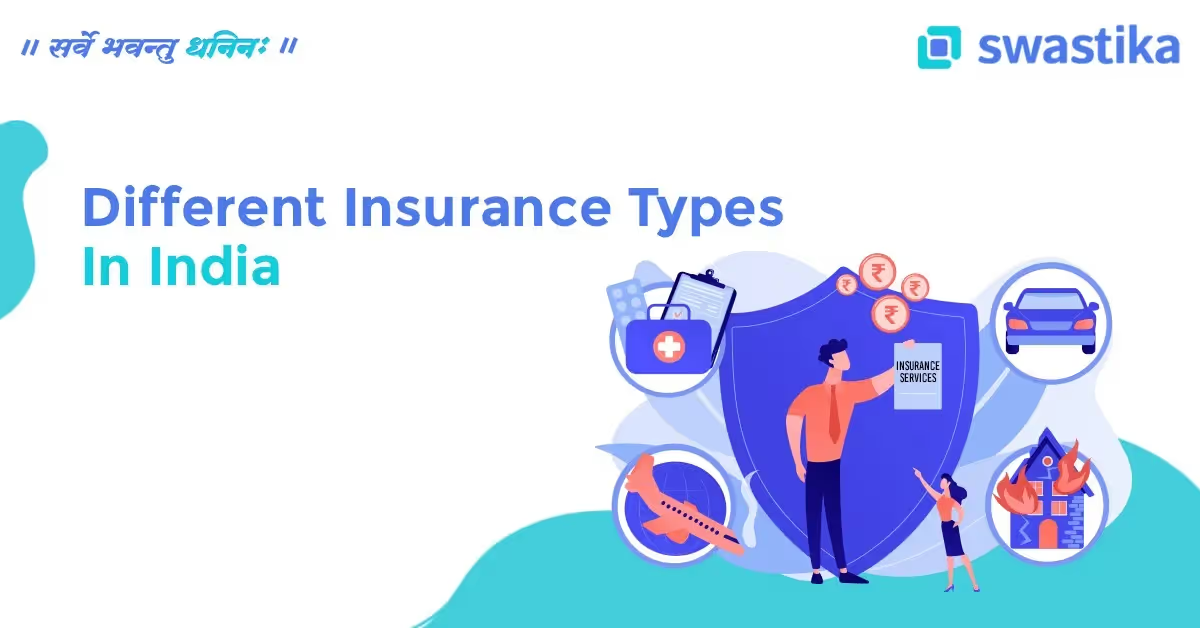
Different Types of Insurance in India


In India, insurance plays a crucial role in securing financial stability for individuals and families. It provides a safety net against unforeseen events, such as accidents, illnesses, and even death. With a variety of insurance options available in the market, it’s essential to understand the different types and how they can benefit you.
In this guide, we will explore the various types of insurance available in India, focusing on their importance, features, and benefits.
Meaning of Insurance
Insurance acts as a contract, on which is represented by a policy, under which an individual receives financial protection against uncertain life events which causes him/her uncertain financial losses, The reimbursement of these losses are borne by an insurance company. The company collects a sum from an individual which is term as insurance premium which in return assures the person of transferring his risk of uncertainty to the insurance company.
Different Types of Insurance in India:
The insurance sector in India broadly classified as:
- Life Insurance
- General Insurance
- Miscellaneous Insurance
1. Life Insurance
Life insurance is a contract between the insured (policyholder) and the insurance company, where the insurer agrees to pay a specific amount (sum assured) to the policyholder's beneficiaries upon the insured's death or after a certain period, depending on the type of policy. It acts as a financial cushion for the policyholder's family in case of unfortunate events.
Types of Life Insurance:
- Term Life Insurance: Term insurance provides life cover for a specified period. It offers a high sum assured at low premiums but does not have a maturity benefit.
- Whole Life Insurance: As the name suggests, whole life insurance provides coverage for the insured’s entire life, as long as premiums are paid regularly. It includes both death and maturity benefits.
- Endowment Plans: Endowment policies offer both insurance coverage and savings. A lump sum is paid to the policyholder upon maturity, or to their nominee in case of death during the policy term.
- Unit-Linked Insurance Plans (ULIPs): ULIPs are a mix of investment and insurance. A portion of the premium is used for life cover, while the remaining is invested in equity or debt instruments.
- Money-Back Policy: This type of life insurance provides periodic returns to the policyholder during the policy term and a lump sum on maturity or death.
- Child Plans: These plans are designed to secure a child's financial future, providing funds for education and other needs. The maturity benefits are generally received when the child reaches a certain age.
- Retirement Plans: Retirement or pension plans help policyholders build a corpus for their post-retirement years. Upon maturity, a portion is given as a lump sum, and the rest is converted into an annuity.
2. Health Insurance
Health insurance covers medical expenses incurred due to illnesses, accidents, or hospitalization. In India, rising healthcare costs make health insurance a critical part of financial planning. It offers coverage for hospitalization, pre- and post-hospitalization expenses, surgeries, and sometimes even daycare treatments.
Types of Health Insurance:
- Individual Health Insurance: This policy covers a single individual’s medical expenses, providing financial assistance for treatments, surgeries, and hospitalization.
- Family Floater Health Insurance: Family floater plans cover the entire family under a single policy, offering flexibility in using the sum insured for any family member’s medical needs.
- Critical Illness Insurance: This plan provides a lump sum amount upon the diagnosis of a critical illness like cancer, heart attack, kidney failure, etc. It helps cover the high cost of treatment for such severe conditions.
- Senior Citizen Health Insurance: Specifically designed for people above 60 years, these policies offer coverage for age-related medical conditions and treatments.
- Maternity Health Insurance: This insurance covers medical expenses related to pregnancy, childbirth, and postnatal care.
- Top-Up Health Insurance: Top-up plans offer additional coverage over and above the basic health insurance plan, ideal for those who want to increase their sum insured at a lower premium.
3. Motor Insurance
Motor insurance is mandatory in India for all vehicles, including two-wheelers, cars, and commercial vehicles. It provides financial protection against damages to the vehicle, third-party liabilities, and accidents.
Types of Motor Insurance:
- Third-Party Liability Insurance: This is the most basic type of motor insurance required by law in India. It covers damages caused to third-party property or injury to third-party individuals in case of an accident.
- Comprehensive Insurance: A comprehensive policy covers both third-party liabilities and damages to the insured’s vehicle due to accidents, theft, fire, or natural disasters.
- Two-Wheeler Insurance: Specifically designed for two-wheelers, this insurance provides coverage against accidents, theft, and third-party liabilities.
4. Home Insurance
Home insurance provides financial protection to homeowners against damages or losses to their home and belongings due to fire, theft, natural calamities, or other unforeseen events. Given the increasing cost of real estate and home repairs, home insurance offers peace of mind by covering unexpected expenses.
Types of Home Insurance:
- Building Insurance: This policy covers the structure of the house, including walls, roof, and floors, from damages due to natural calamities like earthquakes, floods, or man-made events like fires.
- Contents Insurance: Contents insurance covers personal belongings inside the house, such as furniture, electronics, and appliances, against risks like theft, fire, or damage.
- Comprehensive Home Insurance: This plan offers coverage for both the structure and contents of the home, providing complete protection against a range of risks.
5. Travel Insurance
Travel insurance covers risks associated with domestic and international travel, such as medical emergencies, trip cancellations, lost baggage, and passport loss. This insurance provides financial assistance for various travel-related contingencies, making your trips stress-free.
Types of Travel Insurance:
- Domestic Travel Insurance: This covers medical emergencies, trip cancellations, and other mishaps during travel within India.
- International Travel Insurance: Designed for international travelers, this policy covers medical emergencies, trip cancellations, lost baggage, and passport loss in foreign countries.
- Student Travel Insurance: Specifically designed for students studying abroad, this policy covers medical emergencies, loss of personal belongings, and travel-related risks.
- Senior Citizen Travel Insurance: A travel plan for senior citizens covering medical emergencies, trip cancellations, and more during domestic or international trips.
6. Personal Accident Insurance
Personal accident insurance provides coverage in case of accidents leading to injuries, disabilities, or death. The policy offers financial compensation to the insured or their family for medical expenses, loss of income, or other financial burdens arising from the accident.
Types of Personal Accident Insurance:
- Individual Accident Insurance: Covers an individual against accidental injuries, disability, or death.
- Group Accident Insurance: This type of policy is generally offered by employers to their employees, providing coverage for accidental injuries and death.
8. Commercial Insurance
Commercial insurance offers protection for businesses against various risks such as property damage, liability, and employee-related risks. It helps companies manage financial losses due to unforeseen events.
Types of Commercial Insurance:
- Property Insurance: Covers damages to business property due to fire, theft, or natural disasters.
- Liability Insurance: Protects businesses from legal claims arising from bodily injury, property damage, or personal injury caused to third parties.
- Workers' Compensation Insurance: Provides financial compensation to employees for injuries or accidents sustained at the workplace.
Conclusion
Insurance is a vital tool for managing risks and ensuring financial security in the face of unexpected events. Whether it’s life, health, motor, or home insurance, each type of policy serves a unique purpose, offering peace of mind and financial protection. Understanding the different types of insurance available in India will help you choose the best coverage to meet your personal and professional needs.

When You Should Exit Your Mutual Fund Investments
Investing in mutual funds can be a great way to grow your wealth over time, but knowing when to exit your investments is just as important as knowing when to enter. Exiting at the right time can help you maximize returns and minimize losses. In this blog, we’ll discuss various scenarios and factors that may indicate it's time to consider exiting your mutual fund investments.
1. Your Financial Goals Have Changed
One of the primary reasons to exit a mutual fund is a change in your financial goals. Life circumstances such as marriage, having children, buying a home, or planning for retirement can significantly alter your financial objectives. If your investment strategy no longer aligns with your current goals, it may be time to reevaluate your mutual fund holdings.
Example: If you initially invested in a growth fund to accumulate wealth for a future purchase but now need to access that money sooner, it might be wise to switch to a more stable fund or liquidate your investment.
2. Underperformance of the Fund
Mutual funds are expected to perform well over time, especially compared to their benchmark indices. If your mutual fund consistently underperforms its benchmark or peers over a significant period (usually 1-3 years), it may be a sign to exit.
What to do: Regularly review the fund's performance and compare it with other funds in the same category. If it lags behind, consider selling and reallocating your investments to a better-performing fund.
3. Change in Fund Management
The management team of a mutual fund plays a crucial role in its success. If there’s a significant change in the fund manager or the management team, it could impact the fund’s performance and strategy.
When to act: If a respected manager leaves and you’re not confident in the new team’s capabilities, it may be prudent to exit the investment, especially if the fund's performance starts to decline.
4. Excessive Fees or Costs
Mutual funds come with various fees, such as management fees, exit loads, and other expenses. If the costs of holding a mutual fund become excessive relative to the returns, it might be time to consider other investment options.
What to check: Review the total expense ratio (TER) of your fund. If it’s significantly higher than similar funds, or if you notice a decline in returns due to high fees, it may be time to sell.
5. Market Conditions and Economic Factors
Sometimes, broader market conditions or economic factors can signal a good time to exit mutual fund investments. For example, if there’s a market downturn, economic instability, or significant changes in government policies affecting your fund’s sector, you may want to consider selling.
When to monitor: Stay informed about economic news and market trends. If indicators suggest a prolonged downturn, you might want to shift to more defensive investments.
6. Rebalancing Your Portfolio
As your investments grow or shrink, your portfolio’s asset allocation can become unbalanced. Regularly rebalancing your portfolio is essential for maintaining your desired risk level and investment strategy.
How to proceed: If your mutual fund investments have grown to represent a larger portion of your portfolio than intended, consider selling a portion to realign with your target allocation.
7. Need for Liquidity
If you find yourself in a situation where you need cash—whether for emergencies, medical expenses, or other urgent needs—selling your mutual fund investment might be necessary.
What to consider: Before selling, evaluate whether you can access funds from other sources without incurring losses. If mutual funds are your best option for quick liquidity, make the exit.
8. Investment Horizon Completion
Every mutual fund investment should have a defined investment horizon, which is the time frame during which you plan to keep your money invested. Once you reach the end of that period, it may be wise to exit.
Example: If you invested in a mutual fund with a 5-year goal, and that period is approaching, reassess your options. If you’ve achieved your financial target or if your goals have changed, consider exiting.
Conclusion
Knowing when to exit your mutual fund investments is crucial for effective portfolio management. Whether due to changes in your financial goals, fund performance, market conditions, or personal circumstances, regularly reviewing your investments can help you make informed decisions.
Before making any decisions, always conduct thorough research and consider consulting a financial advisor. By being proactive and mindful about your investments, you can maximize your returns and achieve your financial objectives more effectively.

Oxygen Stocks Witnessing A Strong Rally Amid Second Wave of COVID 19
As India is suffering from a bad phase of coronavirus pandemic, a sudden demand for oxygen has been rising. As a result, the companies that produce oxygen or have the word “oxygen” in their names, are witnessing a strong rally in the stock market.
Due to the increase of COVID 19 patients in Mid April, the demand for medical oxygen rises, which in turn forces the central government to supply oxygen across the country.
Several reports indicate that there is an acute shortage of medical oxygen in the country and many hospitals are struggling to find enough oxygen for the patients.
As a result, the centre took immediate action by banning the supply of medical oxygen for industrial purposes and turned the supply into an essential public health commodity.
Several green corridors have been established to aid the rapid supply of oxygen through oxygen Express trains.
Impact on Stock Market After Witnessing a Strong Oxygen Rally
The rising demand for oxygen among Indian patients increases the shares of the companies that produce oxygen or have the word oxygen in their names.
For instance, National Oxygen Limited, Bombay Oxygen Limited and Bhagwati Oxygen - all the firms which are unlisted on the stock exchange - have experienced a sharp rise of 47% in April despite rising uncertainty and weakness in economic health.
From all the above points, one thing is clear that investors are keen to invest in the companies who supply medical oxygen to book good profits till the deficiency of oxygen lasts.
Meanwhile, some investors have mistakenly invested in the companies who have to do nothing with the oxygen, just have oxygen in their names. For example, Bhagwati Oxygen and National Oxygen Ltd are the producers of medical oxygen but Bombay Oxygen has ended its gas operations in 2019. Now it is a Non-Banking Finance Corporation.
Bombay Oxygen Investments Ltd was earlier known as Bombay Oxygen Corp Ltd. During the second wave of Covid 19, the shares of the company have gone up by 110 per cent at the beginning of April.
Here are some oxygen stocks witnessing a Strong Rally amidst the second phase of Covid 19:
1. Bombay Oxygen Investments Ltd:
Bombay Oxygen Ltd is a Non-Banking Finance Corporation (NBFC), that has ended its gas production in 2019. Now the company’s name is Bombay Oxygen Investments Ltd.
The company has a low return on equity of -2.52% for the last 3 years.
The company’s compounded sales for the last 5 years is -32.
The company is nearly debt-free.
The market capitalization of Bombay Investments Ltd is Rs 350.19 Crore.
2. National Oxygen Limited
National Oxygen Limited is an Indian company, primarily produces industrial gas such as Oxygen and Nitrogen.
The company has a market capitalization of Rs 30 Crore.
The 5 years compounded profit growth of the company was 13%.
The company has delivered a poor sales growth of 9.32% in the last 5 years.
Ratios as of March 20 are as follows:
ROCE: 9.85%
Debtors Days: 40
3. Gagan Gas Ltd:
Gagan Gas Ltd is a distributor of fuel gas companies mainly known as LPG have also gone up by 53 % in the last month, despite not having any news of producing oxygen gas.
The CAGR of the company before the second wave of COVID 19 is -10%.
The market capitalization of Gagan Gas is Rs 4 Crore.
For the last 3 years, the company has a low return on equity of 8.57%.
Compounded sales and profit growth for the past 5 years was -4% and -15%.
4. Bhagwati Oxygen Ltd:
Bhagwati Oxygen is a manufacturing company with the main focus on manufacturing industrial gases such as Oxygen and Nitrogen.
The company has a market capitalisation of Rs 4 crore.
The company has a low return on equity of 5.65% for the last 3 years.
As of March 2020, the company has high debtors of 369.87 days.
5. Everest Kanto Cylinder Limited
Everest Kanto Cylinder is India’s largest player in high-pressure gas cylinders with a market share of around 50%. The company has around 150 strong client base from numerous vertices including automobile OEM, city gas distribution, cylinder cascades, medical sector, defense including Bajaj Auto, Hyundai, Toyota, Adani Gas and more.
As per the acute shortage of oxygen cylinders amid the second wave of Covid 19, the company has expected to see a huge demand in its medical equipment segment.
The company has a market cap of Rs 1500 Crore.
The return on equity of the company for the last 3 years is 5.76% which is considered low.
The company has delivered a poor sales growth of 10% over the past 5 years.
6. Linde India Ltd:
Linde India Ltd formerly known as BOC India Ltd is a gas manufacturing company. The stock price has gone high in the past month whereas the stock’s CAGR before the second wave of Covid 19 is registered as 55.3%.
The market cap of Linde India ltd is Rs 15,943 Crore.
The company has had a low return on equity of 5.65% for the last 3 years.
The company is also debt-free.
The CAGR ratio of the company for the past 5 years is 52.75%.
Country’s Oxygen Crisis
The country’s sudden demand for oxygen gave a sharp rise to the oxygen-related stocks that has been driven by the scarcity of the commodity over the past few weeks.
According to several reports, oxygen production has been increased across the country to deal with the COVID 19 infected people.
Due to an excessive shortage of oxygen, the prices of oxygen cylinders in many parts of a country have more than doubled.
Conclusion
The rising demand for oxygen cylinders during the second wave of pandemic uplifted the company’s stock’s prices to a greater extent. However, many research analysts said that the rally of oxygen stocks to be short-lived as the demand for oxygen stocks is influenced by short term liquidity. Hence, it is suggested to check the fundamentals of the company before making any decision in the stock market.

ईरानी तेल के बाजार में आने की उम्मीद से कच्चे तेल की कीमतों में गिरावट आई है
पिछले सप्ताह ब्रेंट कच्चे तेल के भाव अमेरिका-ईरान के बीच हो रही परमाणु डील की वार्ता के दौरान 70 डॉलर प्रति बैरल के स्तरों से टूट कर 65 डॉलर तक फिसल गए। घरेलु वायदा कच्चे तेल के भाव सप्ताह में 5 प्रतिशत तक टूट कर 4550 रुपये प्रति बैरल पर रहे। तेल की कीमतें मार्च के बाद से अपने सबसे बड़े साप्ताहिक गिरावट को दर्ज करने की कगार पर है। अमेरिका और ईरान 2015 के परमाणु समझौते को पुनर्जीवित करने के करीब हैं, जो ईरान के तेल, बैंकिंग और शिपिंग क्षेत्रों पर प्रतिबंध हटा सकता है, और इस प्रकार ईरानी कच्चे तेल की आपूर्ति को बढ़ावा दे सकता है।
उधर, ओपेक समूह ने इस महीने उत्पादन में 350,000 बैरल प्रति दिन की कटौती को कम करना शुरू कर दिया है। ओपेक सामूहिक तेल उत्पादन मई और जून दोनों में 350,000 बैरल प्रति दिन और जुलाई में 400,000 बैरल प्रति दिन से अधिक बढ़ाने के लिए तैयार है। इसके अतिरिक्त, सऊदी अरब भी अगले कुछ महीनों के दौरान धीरे-धीरे १० लाख बैरल प्रतिदिन की अतिरिक्त एकतरफा कटौती को कम करेगा, जिसकी शुरुआत मई और जून दोनों में मासिक उत्पादन में 250,000 बैरल प्रतिदिन की वृद्धि के साथ होगी। कुल मिलाकर, ओपेक के जुलाई तक बाजार में 21 लाख बैरल प्रतिदिन तक लौटने की उम्मीद है।
तकनीकी विश्लेषण
इस सप्ताह कच्चे तेल के भाव में मंदी रहने की संभावना है। ब्रेंट क्रूड ऑयल में 60 डॉलर पर सपोर्ट है और 71 डॉलर पर प्रतिरोध है। घरेलू वायदा क्रूड ऑइल में 4450 रुपये पर सपोर्ट है और 4900 रुपये पर प्रतिरोध है।

Top 10 5G Tech Stocks To Invest Which May Become Multi Baggers in Coming Years
The DOT (Department of Technology) has approved the trial of 5 G technology on the 4th of May.
Post successful trial of 5G technology in India, the company's stocks that offer the 5 G technology have seen high growth. As the news comes out regarding the auction of the 5G network in Q1 of FY22-23, stocks of these companies are growing at a large pace.
Due to COVID 19 outbreak, many people have to work remotely which has highlighted the importance of 5G technology.
Before talking about the companies that are launching the 5G Network in India, let's understand about 5G technology and the companies in India into its segment.
What is 5G Technology?
5G is the fifth generation mobile network that comes after the generations such as 1G, 2G, 3G and 4G It is a new global wireless standard network that is designed to connect virtually everyone and everything together that includes machines, devices, objects with people.
If we compare it to 4G, then the 5G network is much faster and more responsive than other generation networks. Also, 5G comes with a greater capacity that will be a real breakthrough for IoT or Internet of Things, AI, machine learning and automate network management.
Which countries have enabled 5G technology for consumers?
As per the latest reports from Global Supply Mobile Associations, the 5G network is active in 61 countries. Some of the countries which have enabled 5G technology for its users are Canada, China, Australia, South Korea, the USA and other European nations.
What is the Expected Market Size of 5G Technology Worldwide?
Currently, investments are going on in the 5G Tech in India. The total market size of 5G Tech and related services all over the world amounts to USD 54 billion. It is stated that the market size of 5G will surpass the current amount and will reach around 249.2 billion by the end of 2026, which is more than any countries’ GDP in a year.
Here are the top 11 Tech Stocks to Invest Which May Become Multi Baggers in the coming years:
1. Tejas Networks
Tejas Networks Limited is a manufacturing company that manufactures telecommunication equipment and has multiple licenses to export its products to several countries. The company designs develop and sell high performance and cost-competitive networking products to telecommunications service providers.
52 Week Performance
If you look at its past performance, the shares of Tejas Networks is standing at its 52 weeks high of Rs 221.5 from a 52 week low of Rs 28.50, thus giving 10 times return. On 11 May, trade experts recommended Tejas as a Buy with a target price of Rs 235 in its research reports.
2. Tech Mahindra
Tech Mahindra is an Indian multinational company known for offering IT and business process outsourcing services. The company’s shares are expected to rise post launching of 5G services in India.
52 Week Performance
If you look at the 52-week performance of the IT company; its 52 week high is Rs 1081.25 and 52 week low was Rs 501.5. Numerous stock brokers and research analysts recommended buying this stock.
The target price range of Tech Mahindra is from Rs 1100 to Rs 1140.
3. Himachal Futuristic Communications Ltd (HFCL)
HFCL is a leading manufacturer of optical fibre cables, optical transport, broadband equipment for the telecommunication industry. The company has a listed track record of more than 30 years. Also, the share price of Himachal Futuristic sets a hit record from a previous 20 years low. This indicates a growth in the company's share.
The scrip's 52 week low is marked as Rs8.70 while 52 weeks high is Rs 38.90.
Moreover, the company has outperformed Sensex Index by 202% and hence it gives 4 times returns from its 52 week low.
4. Bharti Airtel
Bharti Airtel is a blue-chip company and a renowned name in the communication industry that holds around 36% of the market share in the industry as a telecom service provider. Also, the company has already started its trial for the launch of the 5G technology which is the reason behind the stock’s growth.
The stock’s 52-week performance is given as Rs 394.52 week low and Rs 632.52 week high.
5. Reliance Industries
Reliance Jio which is a leading company in the telecom sector is all set to deploy its 5G and its related services such as the Internet of Things (IoT).
Jio is continuously raising its market share because of the company's outstanding performance. If you look at 52-week performance, then the company manages to reach Rs 1393.65 as a 52 week low and Rs 2368.8 as a 52 week high.
The stock is recommended by numerous trade analysts and stock brokers.
One of the most important things about the company is that it has the strongest balance sheet and soon it will be a leader in deciding 5G prices commercially.
6. Vodafone-Idea (VIL)
A company whose stock prices went down post-merger from Rs 30 to Rs, has given almost 6 times returns to its shareholders. Vodafone Idea Limited is the third largest telecommunication service provider for conducting trials of 5 G technology services.
The company’s 52 week low has been recorded at Rs 4.19 while its 52 weeks high is Rs13.8. The scrip of VIL has outperformed the Sensex index by almost 22%.
7. Indus Towers
The company is a merger of two renowned entities Vodafone PLC and Bharti Airtel, formerly known as Bharti Infratel.
Indus Towers has a majority holding of Bharti group, Vodafone group and global investors such as Canadian Pension funds, which makes the company the next Hindustan Unilever in its sector.
Indus tower’s stock performance has been improving day by day as its 52 week low Rs 161.3 and its 52 week high of Rs 282.
8. ITI
ITI is a telecom company that provides telecom equipment to BSNL, MTNL and other Defence departments. The company is known for manufacturing 5G enabled devices to smoothen the test trial of 5G deployment.
As there have been global tension and pandemic issues between India and China, the Indian government has started to promote ITI for its several telecom equipment’ procurements.
The 52 week low for the company is Rs 78.8 whereas its 52 week high Rs 151.6.
9. Smartlink Holdings
The company deals with the trading of telecom equipment goods through its subsidiaries Telesmart SCS Ltd, Digisol Systems Ltd and Synergra EMS Ltd. The company came to the notice because of its manufacturing services of cables and networking devices that will help deploy in 5G services. The company’s 52 week low is Rs 61.4 while it's 52 weeks high of Rs 107.45.
10. MTNL
MTNL is a government company, primarily known for providing telecom services in limited circles. A few months back, MTNL received permission to conduct 5G trials for deploying these services commercially. Its 52 weeks high is Rs 24.4 while its 52 week low was Rs6.68, which makes it a multi-bagger stock.
The Bottom Line
While previous telecom networks enabled the mobility boom, 5G technology is making devices more friendly and upgrading digitization every day.

Stock Recommendations - Advices & Stocks to Buy
Central Depository Services Ltd: CMP 830 SL 790 TGT 900
Sector: Miscellaneous
Business Area of the Company:
It is one of India's leading securities depositories in India. It offers various services such as account opening, de-materialization, processing delivery receipt instructions, account statement, Re-materialization, pledging, nomination, the transmission of securities, bank account details & SMS services for depository participants.
The company was initially promoted by BSE Ltd. All leading stock exchanges like the BSE Ltd. National Stock Exchange and Metropolitan Stock Exchange of India are also associated with it.
Technical Setup:
- Stock is trading above all important moving averages
- Stock Close above its resistance of Rs 827
- Price Strength indicated by RSI
- MACD near to cross above the signal line
Fundamental Setup:
- The Company is almost debt-free.
- Good quarterly growth in recent results, with the increase in operating margins on (YoY) basis
- Good profit growth of 24.10% CAGR over last 5 years
- The company’s dividend payout is 42.69%
Astral Ltd: CMP 1680 SL 1600 TGT 1820
Sector: Plastic products
Business Area of the company:
This company is the leading manufacturers of plastic pipes. It manufactures plumbing, Drainage, agriculture, Industrial, electrical conduit, and fire sprinkler pipes along with Hauraton surface drainage systems.
It has been a pioneer in introducing CPVC pipes and fittings. The Company offers a wide range of products across piping and adhesives to meet the needs of the real estate sector in India. It has 12 manufacturing units in India and overseas. Astral is delivering the best in its business.
Technical Setup:
- MACD crossover above the signal line
- Stock Closed above its 20 & 50 days SMA
Fundamental Setup:
- Increase in FII / FPI shareholding
- The strong cash-generating ability from core business
- Company with Zero Promoter Pledge
- Sales growth is 20.95% of last 10 years
Kabra Extrusion: CMP 181.75 SL 171 TGT 200
Sector: Capital Goods-Non Electrical Equipment
Business Area of the company:
The Company manufactures extrusion lines with matched components, sophisticated automation concepts & tailor-made solutions enabling processors to consistently produce high-quality end products to all its customers.
Technical Setup:
- MACD crossover above the signal line
- Stock Closed above its 20 & 50 days SMA
- The stock moves out of one-month sideways consolidation
Fundamental Setup:
Company with Zero Promoter Pledge
Promoters increasing shareholding QoQ
Investment Pick: Radico Khaitan CMP 546 TGT 675+
Market Cap: 7296Cr
ROE 17.3%
Dividend Yield 0.37%
Stock P/E 30.2
Sector: Alcoholic Beverages Industry: Breweries & Distilleries
About the company:
Radico Khaitan is one of the oldest and the largest manufacturers of Liquor in India especially Indian Made Foreign Liquor. Also known as Rampur Distillery earlier, started its business in 1943, and it emerged as a major bulk spirits supplier, it is one of the most renowned liquor brands in India.
With more than 75 years of experience in spirits making, it has evolved from being just a distiller of spirits and turned into a leading IMFL company in India. With the unique vision of the promoters, started its brands in 1998 & launched 8 PM Whisky and built a strong manufacturing platform and developing a pan India distribution network to expand its premium brands. It is one of the few companies in India to have developed its entire brand portfolio organically, with in-house capabilities with R&D and customer preferences.
Major Brands – 8-PM Whisky, Magic Moments Vodka, Contessa XXX Rum, and Old Admiral Brandy are some of its well-known brands.
Business Area of the Company:
The company is engaged in the manufacturing and trading of alcoholic products such as Indian-made Foreign Liquor, Alcohol, Country Liquor, etc. The company has its presence in India as well as across global market presence is there too.
Fundamental Setup:
- The Company has delivered good profit growth of 26.89% CAGR over the last 5 years.
- Improved ROE & ROA since last two years
- Increase in FII/FPI & Institutional Shareholdings
- Company with low debt


.avif)
.avif)

.avif)




START YOUR INVESTMENT JOURNEY
Get personalized advice from our experts
- Dedicated RM Support
- Smooth and Fast Trading App
