

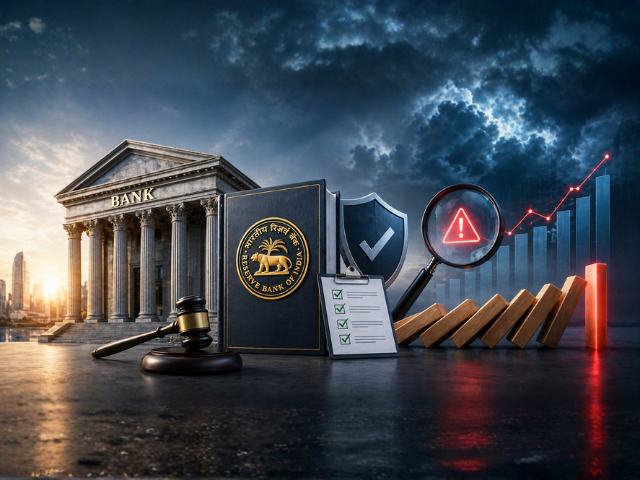
RBI’s New Rulebook: Banks Must Predict Losses Before They Happen



Key Takeaways
- Reserve Bank of India introduces forward-looking provisioning norms
- Banks must estimate potential losses before defaults occur
- Likely short-term pressure on profits but long-term stability boost
- Positive for risk management, transparency, and investor confidence
RBI’s New Rulebook: Banks Must Predict Losses Before They Happen
India’s banking system is entering a more disciplined and globally aligned phase. In a significant move, the Reserve Bank of India has introduced a new rulebook that requires banks to anticipate and provide for potential losses well in advance.
This shift marks a move from reactive accounting to proactive risk management.
But what does this really mean for banks, investors, and the broader market?
Let’s decode.
What Is RBI’s New Rulebook All About?
Traditionally, banks recognized bad loans only after clear signs of stress appeared. This often led to delayed provisioning and sudden spikes in NPAs.
The new framework changes that approach.
Forward-Looking Provisioning
Banks will now:
- Estimate expected credit losses early
- Set aside provisions in advance
- Continuously reassess borrower risk
This model is similar to global standards like IFRS 9, which emphasizes expected credit loss rather than incurred loss.
Why RBI Introduced This Change
The move is not random. It is rooted in lessons from past crises.
1. Learning from the NPA Cycle
India witnessed a major NPA surge between 2015 and 2018, where:
- Corporate loans turned bad
- Banks reported sudden losses
- Capital adequacy came under pressure
Early recognition could have reduced the shock.
2. Strengthening Financial Stability
By forcing banks to prepare in advance, the Reserve Bank of India aims to:
- Avoid sharp earnings volatility
- Improve balance sheet transparency
- Build resilience in the banking system
3. Aligning with Global Practices
Global banking systems already follow forward-looking models. India adopting similar norms enhances:
- Credibility among foreign investors
- Ease of capital inflows
- Confidence in the financial ecosystem
How Will This Impact Banks?
The new rulebook will have both short-term and long-term effects.
Short-Term Impact
Banks may face:
- Higher provisioning requirements
- Lower reported profits
- Pressure on return ratios
Example:
If a bank anticipates that a borrower might default in the future, it must start provisioning today even if the loan is currently standard.
Long-Term Benefits
Over time, the benefits can be substantial:
- Smoother earnings cycle
- Better risk pricing
- Stronger capital buffers
This ultimately leads to a healthier banking system.
Impact on Indian Stock Market
The market reaction to such regulatory changes is usually mixed.
1. Banking Stocks May See Volatility
In the near term:
- Profitability concerns may weigh on stock prices
- Investors may react cautiously to higher provisions
2. Long-Term Positive Re-rating
Over time:
- Improved transparency attracts institutional investors
- Stronger balance sheets command premium valuations
3. Sector-Wide Standardization
Both public and private sector banks will follow the same framework, creating a level playing field.
Real-World Scenario: How This Works
Imagine a bank that has given a large loan to a mid-sized company.
Earlier:
- The bank would wait for missed payments before classifying it as a bad loan
Now:
- If early warning signs appear such as declining revenues or rising debt
- The bank must estimate potential loss and start provisioning immediately
This proactive approach reduces future shocks.
What Should Investors Watch?
For investors, this regulatory shift is crucial.
Key factors to track:
- Provision coverage ratios
- Asset quality trends
- Management commentary on risk outlook
- Capital adequacy levels
Using a research-driven platform like Swastika Investmart can help investors analyze such changes with:
- Expert insights
- Advanced screening tools
- Real-time updates
- Investor education resources
Challenges in Implementation
While the framework is beneficial, execution is not easy.
1. Data and Technology Requirements
Banks need:
- Advanced analytics
- Strong credit risk models
- Continuous monitoring systems
2. Subjectivity in Estimates
Predicting future losses involves assumptions, which may vary across banks.
This could lead to:
- Differences in provisioning levels
- Variations in reported profits
3. Transition Phase Pressure
During the initial phase:
- Earnings may appear weaker
- Investors may misinterpret the impact
Patience is key here.
What This Means for India’s Financial Future
This move by the Reserve Bank of India signals a clear intent:
Build a stronger, more transparent, and globally competitive banking system.
It also reflects a broader shift toward:
- Risk-aware lending
- Sustainable growth
- Better governance
FAQs
1. What is RBI’s new provisioning rule?
It requires banks to estimate and provide for expected credit losses in advance instead of waiting for actual defaults.
2. Will this reduce bank profits?
In the short term, yes, as higher provisions may impact earnings. However, it improves long-term stability.
3. How does this benefit investors?
It enhances transparency, reduces surprises, and builds confidence in bank financials.
4. Which banks will be most affected?
Banks with riskier loan books or lower provision coverage may see a bigger impact initially.
5. How can investors track these changes effectively?
Investors can use platforms like Swastika Investmart for research insights and data-driven analysis.
Conclusion
The RBI’s new rulebook is a bold and necessary step toward strengthening India’s banking system. While the transition may bring short-term discomfort in terms of lower profits and market volatility, the long-term benefits far outweigh the challenges.
For investors, this is a reminder that regulatory changes often shape the future of industries. Staying informed and focusing on fundamentals is the smartest strategy.
If you want to navigate such important market developments with expert guidance, you can open your trading account here:
Big Budget





.avif)
.avif)
.avif)
.avif)
.avif)














.avif)
.avif)
.avif)
.avif)
Latest Articles
.avif)
Stocks in News India Today 16 March 2026: Wipro, Cipla, TCS, and Nestle India


Summary
- Wipro expands AI footprint with a new GIFT City hub
- Cipla strengthens global presence with a $100 million investment
- TCS partners with ABB for AI and engineering solutions
- Nestle India boosts capacity with ₹225 crore capex
- These developments reflect strong momentum in IT, pharma, and FMCG sectors
Stocks in News Today: Key Market Movers on 20 March 2026
Indian markets continue to see stock-specific action driven by strategic announcements and expansion plans. On 20 March 2026, companies across IT, pharma, and FMCG sectors made headlines with moves that could shape their future growth trajectory.
For investors, tracking such developments is crucial. These updates not only influence short-term price movements but also offer insight into long-term business direction.
Let’s break down the key stocks in news today and understand what they mean for the Indian stock market.
Wipro Strengthens AI Play with GIFT City Hub
Wipro has announced the launch of a dedicated hub in GIFT City focused on AI-led transformation for BFSI clients.
What This Means
India’s GIFT City is emerging as a global financial hub. By setting up operations here, Wipro is positioning itself at the intersection of finance and technology.
The BFSI sector is rapidly adopting artificial intelligence for risk management, fraud detection, and customer experience. Wipro’s move signals a deeper commitment to high-margin digital services.
Market Impact
- Positive sentiment for IT stocks focusing on AI capabilities
- Strengthens Wipro’s positioning against peers in digital transformation
- Reinforces India’s role as a global tech outsourcing destination
Investor Takeaway
Investors may see this as a long-term growth driver, especially as AI spending continues to rise globally.
Cipla Expands Globally with Strategic Investments
Cipla is making multiple strategic moves, including:
- Investment of up to $100 million in its European arm
- Approval of the merger of Inzpera Health
- Appointment of P R Ramesh as Vice-Chairman
Why This Matters
Cipla’s investment in Europe indicates a strong push toward regulated markets, which typically offer better margins and stability.
The merger move suggests consolidation aimed at improving operational efficiency and product reach.
Market Impact
- Positive for pharma stocks with global expansion strategies
- Signals confidence in international demand
- Leadership change may bring strategic clarity and governance strength
Investor Perspective
Pharma companies with diversified geographic exposure tend to perform better during domestic slowdowns. Cipla’s strategy aligns well with this trend.
TCS and ABB Partnership: A Strategic Tech Alliance
TCS has entered into a partnership with ABB for strategic collaboration across IT, AI, and engineering services.
What’s the Opportunity Here
This partnership blends TCS’s IT expertise with ABB’s industrial automation leadership. The focus areas likely include:
- Smart manufacturing
- Industrial AI solutions
- Digital twins and automation
Market Implications
- Strengthens TCS’s position in the engineering and industrial tech space
- Opens up new revenue streams in Industry 4.0
- Reinforces long-term growth visibility for large-cap IT
Real-World Context
With global industries shifting toward automation and efficiency, such collaborations are becoming key revenue drivers for IT companies.
Nestle India Expands Production Capacity
Nestle India will invest ₹225 crore to add a new “Munch” production line at its Sanand facility.
What This Signals
This move reflects strong demand for packaged foods and confectionery in India. Increasing production capacity suggests:
- Confidence in consumption growth
- Expansion in tier 2 and tier 3 markets
- Focus on scaling popular brands
Market Impact
- Positive for FMCG sector outlook
- Indicates steady consumption trends despite inflation concerns
- Strengthens Nestle’s market share in confectionery
Investor Insight
FMCG companies often act as defensive plays during volatility. Capacity expansion reinforces long-term stability and growth.
Sectoral Trends Emerging from Today’s News
A closer look at today’s developments highlights broader trends shaping the Indian stock market:
1. AI is Becoming Central Across Industries
From Wipro to TCS, companies are doubling down on artificial intelligence. This is no longer optional but a core business strategy.
2. Global Expansion Remains a Key Theme
Cipla’s investments underline the importance of international diversification for Indian companies.
3. Consumption Story Remains Intact
Nestle India’s expansion reinforces that India’s consumption growth remains strong despite global uncertainties.
How Should Investors Approach Such News?
Stock-specific news can trigger short-term price movements, but smart investors look beyond the headlines.
Focus on:
- Long-term business impact rather than immediate reactions
- Sectoral trends and industry positioning
- Management intent and capital allocation
Avoid:
- Chasing momentum blindly
- Overreacting to one-time announcements
- Ignoring valuations
A disciplined approach backed by research can help investors make better decisions.
Why Research Matters in Stock Investing
In a market driven by constant updates, having access to reliable research tools is critical. This is where platforms like Swastika Investmart stand out.
With SEBI-registered advisory services, robust research insights, and a tech-enabled trading platform, investors can:
- Track stock-specific developments easily
- Access expert-backed recommendations
- Make informed investment decisions
FAQs
1. What are stocks in news and why do they matter?
Stocks in news are companies making headlines due to announcements or events. These can impact stock prices and investor sentiment.
2. Should I buy stocks just because they are in news?
Not necessarily. Always evaluate fundamentals, valuations, and long-term potential before investing.
3. How do partnerships like TCS and ABB impact stock prices?
Such partnerships can improve future revenue visibility, which may positively influence investor sentiment.
4. Why is AI investment important for IT companies?
AI is driving digital transformation globally, making it a key growth area for IT firms.
5. Is FMCG still a safe investment sector?
FMCG is generally considered stable due to consistent demand, especially during market volatility.
Conclusion
Today’s stock-specific updates highlight how Indian companies are evolving with global trends. Whether it’s AI adoption, global expansion, or capacity growth, each move reflects confidence in long-term opportunities.
For investors, the key lies in filtering noise from meaningful signals. Staying informed and relying on credible research can make a significant difference in outcomes.
If you’re looking to take advantage of such market opportunities with expert guidance and a seamless trading experience, consider starting your journey with Swastika Investmart.
A well-informed investor is always one step ahead.
.avif)
Nifty Market Outlook Today 20 March 2026: Strategy, Levels, Market Setup and Rising volatility
Summary
- Mixed global cues but GIFT Nifty signals a positive opening
- FIIs continue selling while DIIs provide support
- Nifty may form a base near 22,950 levels
- Resistance at 23,300 to 23,600, support at 22,735
Nifty Market Outlook Today 20 March 2026: Strategy, Levels and Market Setup
Indian equity markets are entering today’s session on 20 March 2026 with mixed global signals and rising volatility. The Nifty market outlook today 20 March 2026 suggests a cautious start with a slightly positive bias, supported by derivatives positioning and domestic institutional buying.
For traders and investors, this is a market where patience and clarity matter more than aggressive positioning.
Global Cues: Weak Close, Positive Indication
Here’s how global markets are shaping today’s sentiment:
- US markets ended lower, with the Dow Jones falling by 203 points
- Dow futures are currently trading higher by around 130 points
- Asian markets are trading on a negative note
- GIFT Nifty is up by 180 points
What this means for Today 20 March 2026
Despite weak global sentiment, the positive movement in GIFT Nifty indicates that Indian markets may open higher. This often reflects strong domestic cues offsetting global weakness.
Institutional Activity: FIIs vs DIIs
Institutional flows remain a key driver for today’s market direction:
- FIIs sold equities worth ₹7,558 crore
- DIIs bought equities worth ₹3,864 crore
- Net selling stood at ₹3,694 crore
Interpretation for today
FIIs continue to remain cautious, possibly due to global macro uncertainties. Meanwhile, DIIs are absorbing selling pressure, helping the market avoid sharp declines.
This creates a range-bound setup for today 20 March 2026.
Derivatives Data: Key Signals for Today
- Nifty PCR stands at 0.91 compared to 1.14 earlier
- India VIX has surged to 22.80, indicating higher volatility
Important Levels
- Highest Open Interest at 25,000 Call and 21,000 Put
- Max Pain level at 23,300
What traders should note today
Lower PCR reflects cautious sentiment, while higher VIX suggests bigger intraday swings. The 23,300 level becomes crucial for today’s expiry dynamics.
Nifty Technical Outlook Today 20 March 2026
Support Levels
- 23,100
- 22,950
- 22,735
Resistance Levels
- 23,300
- 23,600
Pattern Insight
Nifty is attempting to form a double bottom near 22,950, which is a potential reversal signal if confirmed.
Strategy for today
- Above 23,300: Momentum and short covering possible
- Below 22,950: Weakness may continue
Bank Nifty Outlook Today
Support Levels
- 53,500
- 52,700
Resistance Levels
- 54,000
- 55,000
Bank Nifty is also trying to stabilize near 53,250. A breakout above 54,000 could support broader market strength today.
Real Market Scenarios for Today 20 March 2026
Scenario One: Sustained Positive Move
If Nifty holds above 23,300:
- Expect short covering rally
- Momentum stocks may outperform
- Intraday traders can look for buying opportunities
Scenario Two: Reversal After Opening
If Nifty fails near resistance:
- Selling pressure may resume
- Range trading strategy could work
- Defensive sectors may see buying
Impact on Indian Markets
Sectoral View for Today
- Banking and financial stocks may lead the move
- IT sector could remain volatile
- Midcaps may see stock-specific action
Broader Context
Despite FII selling, India’s strong domestic participation continues to provide stability. This reflects confidence in long-term economic growth.
Regulatory Perspective
Indian markets are regulated by SEBI, ensuring transparency and investor protection:
- Strict margin norms reduce excessive risk
- Surveillance systems monitor unusual activity
- Investor education initiatives promote informed decision making
Why Research Matters in Today’s Market
In a volatile session like today 20 March 2026, informed decisions can make a significant difference.
Swastika Investmart offers:
- SEBI registered brokerage services
- Strong research backed insights
- Advanced trading platforms
- Reliable customer support and investor education
Frequently Asked Questions
What is the Nifty outlook today 20 March 2026
Nifty is expected to remain range-bound with support near 22,950 and resistance around 23,300.
Why is volatility high today
Rising India VIX and global uncertainty are increasing market volatility.
What is the key level to watch today
The 23,300 level is crucial as it acts as resistance and aligns with Max Pain.
Is today a good day for trading
Yes, but traders should be cautious due to higher volatility and follow strict risk management.
What should long-term investors do
Long-term investors should stay invested and use corrections as buying opportunities.
Conclusion: Navigate Today’s Market with Confidence
The Nifty market outlook today 20 March 2026 reflects a market balancing caution with opportunity. While volatility remains high, disciplined strategies and strong research can help investors make better decisions.
If you want expert insights, reliable tools, and a seamless investing experience, Swastika Investmart can support your journey.
Open your trading account here
Smart investing begins with the right guidance.

New Tax Year System in India (2026): Goodbye AY & PY — What It Means for Taxpayers
Quick Summary
- India is replacing Assessment Year and Previous Year with a single Tax Year
- The new system will apply from April 2026
- It simplifies income tax filing and reduces confusion
- Taxpayers will find it easier to plan and report income
- Compliance and understanding of tax timelines will improve
What Is the New Tax Year System in India?
Starting April 2026, India will move to a simplified tax system by introducing the concept of a “Tax Year.” This change replaces the traditional use of Assessment Year and Previous Year, which often confused taxpayers.
Until now, taxpayers had to deal with two different terms:
- Previous Year referred to the year in which income was earned
- Assessment Year referred to the year in which that income was taxed
With the new Tax Year system, both concepts will be merged into one single period. This means income earned and taxed will be linked to the same year, making compliance more straightforward.
Why Was This Change Needed?
The government introduced this reform to simplify tax compliance and improve clarity.
Common Issues with AY and PY
Many taxpayers, especially first-time filers, struggled with:
- Understanding the difference between AY and PY
- Filing returns in the correct assessment year
- Confusion during notices or documentation
For example, income earned in FY 2024 to 25 had to be reported in AY 2025 to 26. This mismatch often led to errors.
The new system eliminates this confusion.
How the New Tax Year Will Work
Under the new system:
- The Tax Year will start from April 1 and end on March 31
- Income earned during this period will be taxed in the same year
- There will be no separate assessment year concept
Example for Better Understanding
Let’s say you earn income between April 2026 and March 2027.
Under the old system:
- Previous Year would be 2026 to 27
- Assessment Year would be 2027 to 28
Under the new system:
- It will simply be called Tax Year 2026 to 27
This makes it easier to track and report income.
Key Benefits for Taxpayers
Simpler Filing Process
The biggest advantage is ease of understanding. Taxpayers no longer need to remember two different terms.
Reduced Errors
With a single timeline, the chances of filing mistakes reduce significantly.
Better Tax Planning
Individuals and businesses can plan taxes more effectively when the earning and taxation period is aligned.
Improved Compliance
Simplification encourages more people to file returns correctly and on time.
Impact on Salaried Individuals
For salaried taxpayers, this change is largely positive.
- Salary income will be reported in the same Tax Year
- Form 16 alignment becomes simpler
- Filing returns becomes more intuitive
This is especially helpful for young professionals and first-time taxpayers.
Impact on Businesses and Professionals
Businesses and self-employed individuals will also benefit.
- Accounting and tax reporting become more aligned
- Reduced confusion during audits
- Easier reconciliation of financial records
For professionals dealing with multiple income streams, this brings much-needed clarity.
Will This Impact Indian Stock Market Investors?
Yes, indirectly.
Investors in equities, mutual funds, and derivatives will find it easier to track taxable income.
For example:
- Capital gains from stocks will be reported in the same Tax Year
- Dividend income tracking becomes simpler
- Tax-loss harvesting strategies become easier to plan
This change improves transparency for retail investors.
Regulatory Perspective in India
This reform is part of India’s broader effort to modernize its tax system.
The Income Tax Department has been focusing on:
- Simplifying compliance
- Increasing transparency
- Reducing litigation
The introduction of the Tax Year aligns India with global practices followed in many countries.
Challenges During Transition
While the new system is beneficial, there may be short-term challenges.
Initial Confusion
Taxpayers and professionals may take time to adapt to the new terminology.
System Updates
Accounting software, tax platforms, and compliance systems will need updates.
Awareness Gap
Proper awareness campaigns will be required to educate taxpayers.
However, these challenges are temporary and manageable.
Real-Life Scenario
Imagine a first-time taxpayer who just started earning.
Earlier, they had to understand:
- Financial Year
- Assessment Year
- Filing timelines
Now, with the Tax Year system, they only need to remember one term.
This makes tax compliance less intimidating and more accessible.
What Should Taxpayers Do Now?
Stay Updated
Keep track of official announcements and guidelines.
Organize Financial Records
Maintain proper documentation for income and expenses.
Plan Ahead
Use the simplified structure to improve tax planning strategies.
Seek Professional Advice
If you have complex income sources, consulting experts can help.
FAQs
1. What is the Tax Year in India?
The Tax Year is a single period in which income is earned and taxed, replacing the separate concepts of Assessment Year and Previous Year.
2. When will the new Tax Year system start?
The new system will be implemented from April 2026.
3. Will AY and PY be completely removed?
Yes, both terms will be replaced by the unified Tax Year concept.
4. How does this benefit taxpayers?
It simplifies tax filing, reduces confusion, and improves compliance.
5. Does this change affect how much tax I pay?
No, the change is structural and does not impact tax rates.
Conclusion
The introduction of the Tax Year system marks a significant step toward simplifying India’s tax framework. By removing the confusion between Assessment Year and Previous Year, the government is making tax compliance more user-friendly and efficient.
For taxpayers and investors alike, this is a welcome move that reduces complexity and improves clarity.
If you want to manage your investments alongside smarter tax planning, Swastika Investmart offers SEBI-registered services, advanced research tools, and a tech-enabled platform designed for modern investors.

Cryptocurrency Tax in India: Updated Rules, Rates & Filing Guide for 2026
Quick Summary
- Crypto gains in India are taxed at a flat 30% rate
- 1% TDS applies on every crypto transaction above the threshold
- Losses cannot be set off against other income
- Reporting crypto income in ITR is mandatory
- Compliance is critical to avoid penalties and notices
Understanding Cryptocurrency Tax in India in 2026
Cryptocurrency taxation in India has evolved significantly over the past few years. With increased participation from retail investors and growing regulatory oversight, tax compliance has become more important than ever.
In 2026, the taxation framework remains strict and clearly defined. The government treats crypto assets as Virtual Digital Assets, and profits from trading or investing in them are taxed separately from other income sources.
This means whether you are trading Bitcoin, Ethereum, or any other crypto asset, the tax rules remain largely the same.
How Crypto is Taxed in India
Flat 30% Tax on Gains
Any profit earned from the transfer of cryptocurrencies is taxed at a flat rate of 30%.
This applies to:
- Trading profits
- Selling crypto for INR
- Converting one crypto into another
- Using crypto for purchases
For example, if you buy a crypto asset for ₹1 lakh and sell it for ₹1.5 lakh, the ₹50,000 profit will be taxed at 30%, irrespective of your income slab.
1% TDS on Transactions
The government also introduced a 1% Tax Deducted at Source on crypto transactions.
This applies when:
- The transaction value crosses ₹50,000 in a financial year for specified individuals
- ₹10,000 for others
TDS is deducted at the time of transaction and can be adjusted while filing your income tax return.
No Set-Off of Losses
One of the most important rules is that losses from crypto cannot be set off against other income.
This means:
- You cannot adjust crypto losses against salary or business income
- Losses from one crypto cannot be set off against gains from another
For traders, this significantly impacts net profitability.
What Counts as a Taxable Event?
Many investors assume tax applies only when they convert crypto to cash. That is not correct.
Taxable events include:
- Selling crypto for INR
- Converting one cryptocurrency into another
- Using crypto to buy goods or services
- Gifting crypto under certain conditions
Even swapping Bitcoin for Ethereum is considered a taxable transaction.
How to Report Crypto Income in ITR
Filing crypto taxes correctly is crucial to avoid scrutiny.
Step 1: Calculate Total Gains
You need to calculate:
- Total sales value
- Purchase cost
- Net profit
Make sure to maintain transaction records from exchanges.
Step 2: Report Under Correct Head
Crypto income is reported under:
- Income from Other Sources or
- Business Income for frequent traders
The classification depends on trading frequency and intent.
Step 3: Adjust TDS
The 1% TDS deducted during transactions can be claimed as credit while filing your return.
Step 4: File ITR Before Deadline
Timely filing ensures compliance and avoids penalties.
Real-Life Example
Let’s understand this with a simple case.
Rohit invests ₹2 lakh in crypto. Over the year:
- He earns ₹80,000 profit from trades
- He incurs ₹30,000 loss on another trade
Under current rules:
- Tax will be calculated only on ₹80,000
- The ₹30,000 loss cannot be adjusted
So Rohit pays 30% tax on ₹80,000, not on net ₹50,000.
This often surprises new investors.
Impact on Indian Investors
Crypto taxation has changed investor behavior in India.
Reduced High-Frequency Trading
Due to high taxes and TDS, frequent trading has become less attractive.
Shift to Long-Term Holding
Many investors now prefer holding assets rather than trading actively.
Increased Compliance Awareness
With exchanges sharing data and stricter monitoring, investors are more cautious about reporting income.
Regulatory Perspective in India
India does not recognize cryptocurrencies as legal tender, but it does regulate them through taxation.
Authorities like the Income Tax Department closely track transactions. Non-compliance can lead to:
- Notices
- Penalties
- Scrutiny assessments
This makes it important for investors to stay compliant.
Common Mistakes to Avoid
- Ignoring small transactions
- Not reporting crypto-to-crypto trades
- Forgetting to claim TDS credit
- Misclassifying income
Avoiding these mistakes can save both money and stress.
What Should Investors Do?
Maintain Proper Records
Keep track of every transaction including date, price, and fees.
Use Reliable Platforms
Choose platforms that provide detailed transaction history.
Plan Your Taxes
Understand the tax impact before making frequent trades.
Seek Expert Guidance
Tax rules can be complex, especially for active traders.
FAQs
1. What is the tax rate on cryptocurrency in India in 2026?
Crypto gains are taxed at a flat 30% rate, plus applicable surcharge and cess.
2. Is TDS applicable on all crypto transactions?
Yes, 1% TDS is applicable above specified thresholds on crypto transactions.
3. Can I set off crypto losses against other income?
No, crypto losses cannot be set off against any other income.
4. Do I need to report crypto in ITR even if I made no profit?
Yes, reporting is recommended to maintain compliance and transparency.
5. Is crypto legal in India?
Crypto is not legal tender but is allowed and taxed under current regulations.
Conclusion
Cryptocurrency taxation in India is clear but strict. With a flat tax rate, TDS provisions, and limited flexibility on losses, investors need to be more disciplined than ever.
Understanding these rules is not just about saving tax, it is about staying compliant and avoiding unnecessary complications.
If you are looking to build a well-diversified investment portfolio beyond crypto, Swastika Investmart offers SEBI-registered services, advanced research tools, and strong customer support to help you make informed decisions.

US Stock Market Falls After Fed Decision: Inflation Fears vs Rate Cut Hopes
Quick Summary
- Federal Reserve kept interest rates unchanged at 3.50% to 3.75%
- US markets declined as inflation concerns resurfaced
- Rate cuts are expected, but likely delayed due to uncertainty
- Rising oil prices and global tensions are adding pressure
- Indian markets may see short-term volatility due to global cues
Why Did the US Stock Market Fall After the Fed Decision?
The recent fall in US markets surprised many investors. On the surface, the decision by the Federal Reserve to keep interest rates unchanged looked predictable. However, markets are not just driven by decisions, but by expectations.
The real concern came from the Fed’s tone. Investors were hoping for clearer signals on rate cuts. Instead, what they got was uncertainty.
As a result, key indices reacted negatively:
- Dow Jones Industrial Average dropped sharply
- S&P 500 declined amid broad selling
- Nasdaq Composite also slipped due to tech stock weakness
This reaction shows that markets were more focused on future guidance than the current policy.
Inflation Fears Are Back in Focus
One of the biggest reasons behind the market fall is persistent inflation.
The Fed now expects inflation to remain around 2.7% by year-end. While this is lower than previous peaks, it is still above the central bank’s comfort zone.
What is Driving Inflation Again?
- Rising oil prices due to geopolitical tensions
- Higher logistics and production costs
- Sticky core inflation excluding food and energy
When inflation stays elevated, central banks have limited room to cut rates. This is exactly what is making investors nervous.
Rate Cut Hopes vs Reality
Markets were earlier expecting multiple rate cuts in 2026. However, the latest projections suggest only one rate cut, and even that is not guaranteed.
This gap between expectation and reality is creating volatility.
What the Fed Is Signaling
- The economy is still strong
- The labor market is stable with unemployment around 4.4%
- Inflation is not cooling fast enough
In simple terms, the Fed is not in a hurry to cut rates.
The Role of Oil Prices in Market Sentiment
Oil prices have jumped significantly, moving closer to $100 per barrel in recent weeks.
This is important because:
- Higher oil prices increase inflation
- It raises input costs for businesses
- It reduces consumer spending power
Eventually, this affects corporate earnings, which directly impacts stock prices.
Global investors closely track oil movements, and any spike tends to create nervousness in equity markets.
Bond Yields and Dollar Strength: What It Means
After the Fed decision, US bond yields moved higher and the US dollar strengthened.
Why Does This Matter?
- Higher bond yields make equities less attractive
- A strong dollar leads to capital outflows from emerging markets
- It impacts currencies like the Indian Rupee
For Indian investors, this is a key signal to watch.
Impact on Indian Stock Markets
Even though the event is global, its impact is clearly visible in India.
Short-Term Impact
- Increased volatility in Nifty and Sensex
- Pressure on IT and export-oriented sectors
- Possible FII outflows
Medium-Term Impact
- Stable domestic demand may support markets
- Banking and infrastructure sectors may remain resilient
- RBI policy decisions could be influenced by global trends
India’s markets are more resilient today, but they are still connected to global liquidity flows.
A Practical Example for Investors
Let’s say a retail investor in India is holding IT stocks. When US markets fall and the dollar strengthens, IT stocks may initially benefit due to currency gains. However, if recession fears increase, demand for tech services may slow down.
This is why understanding macro events is crucial for portfolio decisions.
What Should Investors Do Now?
Stay Calm and Avoid Panic
Market corrections are part of investing. Reacting emotionally can lead to poor decisions.
Focus on Fundamentals
Companies with strong balance sheets and consistent earnings tend to perform better in uncertain environments.
Diversify Your Portfolio
Avoid concentration in one sector or asset class.
Track Global Indicators
Keep an eye on inflation data, oil prices, and central bank commentary.
The Bigger Picture
The current situation reflects a classic market dilemma.
- The Fed wants to support growth
- But inflation is still a concern
- The economy is not weak enough to justify aggressive rate cuts
This creates a balancing act with no clear direction in the short term.
Investors should understand that uncertainty is not always negative. It often creates opportunities for disciplined investors.
FAQs
1. Why did US markets fall after the Fed decision?
Markets reacted negatively due to uncertainty around future rate cuts and persistent inflation concerns.
2. What does higher inflation mean for investors?
Higher inflation can delay rate cuts and reduce purchasing power, impacting both equity and bond markets.
3. How does US market movement affect India?
US market trends influence global liquidity, FII flows, currency movement, and overall investor sentiment in India.
4. Are rate cuts still expected in 2026?
Yes, but expectations have reduced to one possible rate cut, and even that depends on inflation trends.
5. Should investors change their strategy now?
Investors should focus on long-term fundamentals, maintain diversification, and avoid panic-driven decisions.
Conclusion
The recent fall in US markets highlights how sensitive global equities are to central bank signals. While the Federal Reserve has kept rates unchanged, rising inflation risks and delayed rate cut expectations are creating uncertainty.
For Indian investors, the key is to stay informed, stay patient, and avoid reacting to short-term noise.
If you are looking for expert guidance, research-backed insights, and a reliable investing platform, Swastika Investmart offers SEBI-registered services, advanced tools, and strong customer support to help you navigate such market conditions.
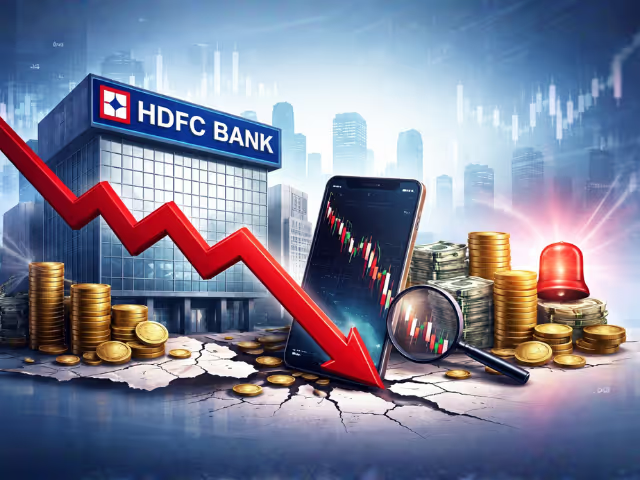
HDFC Bank Crisis Explained: ADR Crash, 52-Week Low & Recovery Signals
Quick Summary
- HDFC Bank stock saw sharp volatility after leadership concerns surfaced
- ADRs dropped nearly 7%, reflecting global investor nervousness
- Stock touched a 52-week low but showed signs of recovery
- Long-term fundamentals remain stable despite short-term uncertainty
- Investors should stay cautious and avoid panic-driven decisions
What Triggered the Recent Fall in HDFC Bank?
India’s largest private sector bank, HDFC Bank, recently came under pressure after the sudden resignation of its part-time chairman. The reason cited was differences related to internal practices and ethics, which immediately raised concerns among institutional investors.
In the corporate world, leadership exits linked to governance issues often act as red flags. Even if the core business remains intact, perception risk can trigger sharp market reactions.
This is exactly what happened here.
ADR Crash: Why Global Markets Reacted First
Before the Indian markets opened, HDFC Bank’s American Depository Receipts, also known as ADRs, fell nearly 7% in the US markets.
This early reaction is important because global investors tend to respond faster to governance-related developments. ADR movements often act as a leading indicator for how domestic stocks might open the next day.
The sharp fall indicated one clear message
Foreign investors were uncomfortable with the uncertainty.
52-Week Low: Panic or Opportunity?
When the Indian markets opened, HDFC Bank stock saw a gap-down opening and slipped to its 52-week low.
For retail investors, this kind of fall often creates confusion
Is this a buying opportunity or the start of a bigger correction?
Interestingly, after the initial panic selling, the stock started showing recovery from lower levels. This suggests that not all investors are bearish.
Who Is Buying the Dip?
Despite the negative news flow, domestic investors stepped in.
- Domestic Institutional Investors showed selective buying interest
- Retail investors saw value at lower levels
- Long-term investors focused on fundamentals rather than headlines
This behavior reflects a classic market pattern
Short-term fear versus long-term conviction.
Are Fundamentals Still Strong?
Even after the recent volatility, the core business of HDFC Bank remains strong.
Here’s why:
Strong Loan Growth
The bank continues to maintain steady credit growth across retail and corporate segments.
Stable Asset Quality
Non-performing assets remain under control compared to industry averages.
Post-Merger Synergies
The merger with HDFC Ltd is expected to deliver long-term benefits, including better cross-selling and scale advantages.
However, governance concerns can temporarily overshadow even strong fundamentals.
Why “Ethics” Is a Big Concern for Markets
When a senior leader resigns citing ethical differences, investors take it seriously.
This is because:
- It raises questions about internal controls
- It creates uncertainty about management decisions
- It impacts institutional investor confidence
Foreign Institutional Investors, in particular, are highly sensitive to governance issues. This is why such developments often lead to short-term outflows.
Market Impact: Beyond Just One Stock
The impact of this event is not limited to one bank.
Banking Sector Sentiment
Large-cap banking stocks often influence the broader index. Weakness in a heavyweight like HDFC Bank can drag indices like Nifty Bank.
FII Sentiment
Global investors may turn cautious on Indian financials in the short term.
Volatility Spike
Such events increase market volatility, especially in large-cap stocks.
However, it is important to note that this is not a systemic issue. It is company-specific.
What Should Investors Do Now?
This is the most important question.
For Existing Investors
If you already hold the stock, avoid panic selling. The fundamentals have not deteriorated overnight.
For New Investors
It may be wise to wait for clarity. Let the new leadership communicate its strategy and address governance concerns.
For Traders
Expect volatility in the short term. News-driven movements may continue until more clarity emerges.
A disciplined approach works better than emotional decisions in such situations.
Key Signals to Watch Ahead
Investors should track a few critical developments:
- Appointment of a permanent chairman
- Management commentary on governance practices
- FII and DII activity in coming weeks
- Price stability above key support levels
These factors will determine whether the stock stabilizes or remains volatile.
A Practical Example
We have seen similar situations in the past where strong companies faced temporary corrections due to management changes.
In many cases, once clarity emerged, stocks recovered and continued their long-term growth trajectory.
This is why separating short-term noise from long-term fundamentals is crucial.
FAQs
1. Why did HDFC Bank stock fall recently?
The fall was triggered by the chairman’s resignation citing ethical concerns, which raised governance-related fears.
2. What is ADR and why is it important?
ADR represents shares traded in US markets. It often reflects global investor sentiment before Indian markets open.
3. Should I sell HDFC Bank stock now?
Panic selling is not advisable. Long-term investors should focus on fundamentals and wait for clarity.
4. Is this a good time to buy the dip?
It may be better to wait for stability and management clarity before taking fresh positions.
5. Will this impact the banking sector?
Short-term sentiment may be affected, but the issue is company-specific, not sector-wide.
Conclusion
The recent correction in HDFC Bank highlights how sensitive markets are to governance concerns. While the ADR crash and 52-week low created panic, the recovery signals suggest that long-term confidence is still intact.
For investors, the key lies in staying patient, tracking developments, and avoiding impulsive decisions.
If you are looking to navigate such market events with expert insights, research-backed strategies, and a reliable platform, Swastika Investmart can support your investment journey with strong analytical tools, SEBI-registered services, and dedicated customer support.


.avif)
.avif)

.avif)




START YOUR INVESTMENT JOURNEY
Get personalized advice from our experts
- Dedicated RM Support
- Smooth and Fast Trading App
