Tax Planning vs Tax Evasion: Understanding the Difference


Key Takeaways
- Tax planning is legal and helps reduce tax liability using government-approved provisions
- Tax evasion is illegal and can lead to penalties, prosecution, and scrutiny
- Understanding the difference is essential for financial safety and compliance
- Smart tax planning improves wealth creation and long-term investing
- Indian tax laws clearly distinguish between legal planning and illegal evasion
Why This Topic Matters for Every Taxpayer
When it comes to managing taxes, most individuals and investors aim to reduce their tax burden. However, there is a fine line between what is legally allowed and what can get you into serious trouble.
Understanding the difference between tax planning and tax evasion is not just important for compliance, but also for building long-term financial security.
In India, tax laws are governed by the Income Tax Department, and non-compliance can lead to strict penalties. Knowing where to draw the line can save both money and stress.
What is Tax Planning?
Tax planning refers to the legal use of tax provisions to minimize your tax liability.
It involves structuring your finances in a way that takes advantage of deductions, exemptions, and benefits provided under the Income Tax Act.
Common examples of tax planning:
- Investing under Section 80C (ELSS, PPF, LIC)
- Claiming deductions for health insurance under Section 80D
- Using HRA and standard deduction benefits
- Setting off capital losses against gains
These are all legitimate strategies encouraged by the government to promote savings and investments.
Real-world example:
A salaried individual invests ₹1.5 lakh in ELSS funds and reduces taxable income under Section 80C. This is completely legal and considered smart financial planning.
What is Tax Evasion?
Tax evasion, on the other hand, involves illegal methods to avoid paying taxes.
This includes hiding income, falsifying documents, or misreporting financial information.
Common examples of tax evasion:
- Not reporting cash income
- Claiming fake deductions
- Using benami transactions
- Not declaring capital gains from stock market trades
Tax evasion is a punishable offense and can lead to penalties, interest, and even prosecution under Indian laws.
Real-world example:
An individual earns income from trading but does not report it while filing returns. This is tax evasion and can attract scrutiny notices.
Key Differences Between Tax Planning and Tax Evasion
Legality
Tax planning is legal and compliant with the law.
Tax evasion is illegal and punishable.
Intent
Tax planning aims to optimize tax liability within the law.
Tax evasion aims to hide income and avoid taxes unlawfully.
Risk
Tax planning carries no legal risk.
Tax evasion can result in penalties, audits, and prosecution.
Transparency
Tax planning is fully disclosed in tax returns.
Tax evasion involves concealment or misrepresentation.
Indian Regulatory Framework and Penalties
The Income Tax Act clearly defines consequences for tax evasion.
Possible penalties include:
- Monetary penalties up to 200 percent of tax evaded
- Interest on unpaid taxes
- Legal prosecution in severe cases
With increasing digitization, the government now tracks financial transactions more closely. Systems like AIS and TIS help the tax department identify mismatches in reported income.
This means that tax evasion has become riskier than ever before.
Impact on Investors and Financial Markets
Tax compliance plays a crucial role in maintaining transparency in financial markets.
For example:
- Investors must report capital gains from stocks and mutual funds
- Traders need to disclose income from derivatives and intraday trading
- Dividend income is fully taxable under current laws
Non-compliance not only leads to penalties but also affects credibility, especially for active market participants.
In a growing economy like India, tax compliance strengthens the overall financial ecosystem and boosts investor confidence.
Smart Tax Planning Strategies for Investors
If you are investing in the stock market, there are several ways to optimize taxes legally.
1. Use Long-Term Capital Gains Benefits
Holding equities for more than one year qualifies for LTCG taxation, which is lower compared to short-term gains.
2. Tax-Loss Harvesting
Offsetting losses against gains can help reduce overall tax liability.
3. Diversified Investment Approach
Using a mix of equity, debt, and tax-saving instruments helps balance returns and tax efficiency.
4. Proper Documentation
Maintaining accurate records ensures smooth filing and avoids unnecessary notices.
Why Investors Should Avoid Shortcuts
In the short term, tax evasion may seem like a way to save money. But the long-term consequences can be severe.
With data integration across banks, exchanges, and financial institutions, authorities have access to detailed financial information.
Choosing legal tax planning over shortcuts ensures:
- Peace of mind
- Long-term wealth creation
- Better financial discipline
Role of Technology in Tax Compliance
Modern platforms and brokerage services are making it easier for investors to stay compliant.
Features like:
- Automated capital gains reports
- Transaction summaries
- Integrated tax statements
help investors file accurate returns without hassle.
This is especially important for traders and active investors who deal with multiple transactions.
FAQs
What is the main difference between tax planning and tax evasion?
Tax planning is legal and uses approved methods to reduce taxes, while tax evasion is illegal and involves hiding or misreporting income.
Is tax planning allowed in India?
Yes, tax planning is completely legal and encouraged under the Income Tax Act.
What are the penalties for tax evasion?
Penalties can include fines, interest, and even prosecution depending on the severity of the offense.
Can stock market income be taxed?
Yes, capital gains, dividends, and trading income are all taxable under Indian tax laws.
How can investors reduce taxes legally?
Investors can use strategies like long-term investing, tax-loss harvesting, and deductions under various sections of the Income Tax Act.
Conclusion
Understanding the difference between tax planning and tax evasion is essential for every taxpayer and investor. While both aim to reduce tax liability, only one is legal and sustainable.
In today’s transparent financial system, compliance is not just a requirement but a smart financial habit. By following the right strategies, investors can optimize taxes while staying on the right side of the law.
If you are actively investing or planning to enter the markets, having the right support system can make a big difference.
With SEBI-registered credibility, strong research tools, advanced technology, and a focus on investor education, Swastika Investmart helps you invest with confidence while staying compliant.
Big Budget










.webp)
.webp)
.webp)
.webp)
.webp)
















.webp)
.webp)
.webp)
.webp)
Latest Articles
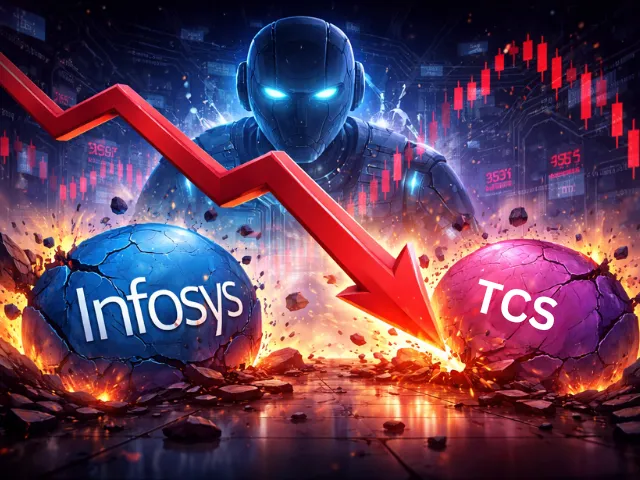
IT Stocks Crash Up to 7%: Is AI Disruption the New Threat to Infosys & TCS?


TL;DR
• IT stocks fell up to 7% amid AI disruption fears and global weakness
• Infosys and TCS face margin pressure as clients cut discretionary spending
• AI may reduce traditional IT services demand but opens new growth avenues
• Indian markets remain resilient, but IT volatility may continue
• Long term investors should focus on fundamentals, not headlines
IT Stocks Crash Up to 7%: Is AI Disruption the New Threat to Infosys & TCS?
Indian IT stocks saw sharp selling pressure this week, with some counters falling up to 7% in a single session. Investors are now asking a serious question: Is AI disruption becoming a structural threat to giants like Infosys and TCS?
The fall was not just a routine correction. It reflected a deeper concern about global demand slowdown, rising automation, and the rapid adoption of artificial intelligence tools that may reduce traditional IT outsourcing needs.
Let’s break down what is happening, what it means for the Indian markets, and how investors should interpret this phase.
Why Did IT Stocks Crash?
The recent decline in IT stocks was triggered by a combination of global and sector specific factors:
1. AI Disruption Concerns
Companies worldwide are rapidly adopting AI models and automation tools. Large language models and AI platforms are now capable of handling coding, testing, data analysis, and customer support functions that were traditionally outsourced to IT service firms.
Investors fear that this could reduce billing hours and pressure revenue growth for companies like Infosys and TCS.
However, the reality is more nuanced. AI can reduce certain low value services, but it also creates demand for AI integration, cloud migration, cybersecurity, and data governance services.
2. Weak Global Demand
Indian IT companies derive a major portion of revenue from the US and Europe. With economic uncertainty and tight corporate budgets, clients are delaying discretionary technology spending.
This has led to cautious management commentary in recent quarters and lower revenue guidance.
3. Margin Pressure
Higher employee costs, visa expenses, and pricing pressure are impacting operating margins. Investors typically react sharply when margins compress, especially in a sector known for high profitability.
Impact on Infosys and TCS
Infosys and TCS remain industry leaders with strong balance sheets and diversified client bases. But short term challenges are visible.
Revenue Mix Risk
A large portion of revenue comes from BFSI and retail sectors. If global banks and retailers slow their tech budgets, revenue growth could moderate.
Automation vs Human Billing
Traditionally, Indian IT firms operated on a time and material model. If AI reduces the need for manpower intensive coding, billing structures may need to evolve.
That said, both companies are heavily investing in AI platforms and proprietary solutions to stay ahead of the curve.
TCS has already embedded AI in several enterprise solutions. Infosys has launched AI driven service offerings to help clients optimize operations.
The transition may be painful in the short term, but it is not necessarily destructive.
Is AI Really a Threat or an Opportunity?
Every technological shift initially looks like a disruption. When cloud computing emerged, similar fears existed. Yet Indian IT adapted quickly and expanded their service portfolios.
AI could follow a similar pattern.
Instead of writing code manually, engineers may supervise AI systems. Instead of pure manpower supply, firms may shift toward outcome based contracts.
The key question is adaptability. Indian IT companies have historically demonstrated strong execution capabilities.
Impact on the Indian Markets
The Nifty IT index plays a significant role in the broader Indian equity markets. Sharp declines in IT stocks can drag benchmark indices lower.
However, the Indian economy remains structurally strong. Domestic sectors such as banking, capital goods, defence, and manufacturing continue to show momentum.
For long term investors, sector rotation is a normal part of market cycles.
It is also important to note that Indian IT companies are regulated under SEBI norms, ensuring high standards of financial disclosure and governance. Transparency reduces systemic risk compared to many global peers.
What Should Investors Do Now?
Market corrections often create anxiety. But panic selling rarely creates wealth.
Here are a few practical steps investors can consider:
Focus on Fundamentals
Check order book growth, deal wins, free cash flow, and management commentary rather than reacting to headlines.
Watch Valuations
After the correction, some IT stocks may trade at more reasonable valuations. Historically, buying quality IT stocks during fear phases has rewarded patient investors.
Diversify
Avoid over concentration in one sector. A balanced portfolio reduces volatility impact.
Track Global Cues
Since Indian IT is export oriented, US interest rates, tech spending trends, and global GDP forecasts matter.
Real World Perspective
Consider the 2008 financial crisis. IT stocks crashed sharply due to global slowdown fears. Yet over the next decade, companies like TCS and Infosys delivered strong returns.
Similarly, during the COVID period, IT demand surged due to digital transformation.
Markets move in cycles. Technology evolves. Companies adapt.
The key for investors is disciplined strategy rather than emotional reaction.
FAQs
Why did IT stocks fall up to 7%?
IT stocks declined due to AI disruption fears, weak global demand, and margin pressure concerns.
Is AI going to replace Indian IT companies?
AI may change service models, but leading firms are investing heavily in AI integration and innovation.
Should I sell Infosys or TCS now?
Investment decisions should depend on your financial goals and risk profile. Long term investors often benefit from staying invested in fundamentally strong companies.
How does IT sector weakness affect Indian markets?
Since IT has significant weight in benchmark indices, sharp falls can temporarily drag the broader market lower.
Is this a good time to invest in IT stocks?
Corrections can offer opportunities, but investors should analyze valuations, earnings outlook, and global trends before investing.
Conclusion
The recent IT stocks crash reflects uncertainty, not collapse. AI disruption is real, but so is innovation. Infosys and TCS are not small startups struggling to survive. They are global technology leaders with deep client relationships and strong financial positions.
Short term volatility is part of equity markets. Long term wealth creation depends on informed decisions backed by research.
At Swastika Investmart, we combine SEBI registered research expertise, advanced trading platforms, and dedicated customer support to help investors navigate such volatile phases confidently. Our research tools and investor education initiatives are designed to empower informed decision making.
If you are looking to build a disciplined, research driven portfolio, you can start your journey here:

Lenskart Results Analysis: Growth Story Intact or Valuations Overstretched?
Quick Insights
- Lenskart shares surged after strong Q3 earnings performance
- Profit jumped multi fold while revenue rose 38 percent
- International business turned profitable with improving margins
- High growth outlook supports optimism but valuations remain a debate
- Investors should balance momentum with fundamentals
Market Reaction to Lenskart Results
Lenskart results analysis has become one of the most discussed topics among investors after the eyewear retailer’s stock jumped nearly 12 percent following its latest quarterly numbers. The rally pushed the stock to a record high since its listing in November, reflecting strong investor confidence.
At mid session on February 12, shares were trading about 8.5 percent higher near Rs 506.55 with trading volume touching over 21 million shares compared to a 30 day average of just 1.5 million. Such a sharp rise in volume often signals institutional participation and renewed market interest.
The trigger behind this surge was a strong earnings report that exceeded expectations across key financial metrics.
Financial Performance Breakdown
Revenue Growth Signals Strong Demand
Lenskart reported revenue of Rs 2,308 crore for the quarter, up 38 percent from Rs 1,669 crore a year earlier. The growth was driven by new customer additions, expanding store presence, and rising demand for prescription eyewear.
India operations grew over 40 percent year on year, while international business recorded growth of about 33 percent. This balanced expansion across geographies suggests that the company’s growth is not dependent on a single market.
A major operational indicator was the company conducting more than 60 lakh eye tests during the quarter, nearly half of which were first time exams. Each new eye test increases the addressable market, making this metric particularly significant for long term growth.
Profitability Improvement Stands Out
The most striking highlight of this Lenskart results analysis is profitability. Net profit surged to about Rs 132.7 crore compared with just Rs 1.8 crore in the same quarter last year. That represents a massive jump driven by margin expansion and operating leverage.
Domestic profit before tax climbed more than threefold to Rs 161 crore. International operations also turned profitable with profit before tax of Rs 32.5 crore versus a loss of Rs 42.4 crore last year.
This shift from loss to profit in overseas markets is a key milestone. It shows that expansion investments are beginning to pay off.
International Business Becomes a Growth Engine
Lenskart’s international segment has emerged as a major growth driver. The division reported operational profitability of about 6.1 percent across nine months with around 705 stores globally.
Interestingly, management highlighted that international markets are achieving profitability faster than India did at a similar stage. This suggests that the company’s business model is scalable and adaptable across geographies.
The strategy relies on replicating its India playbook which includes data driven pricing, centralized manufacturing, and digital customer acquisition. Technology trained on millions of Indian consumers is now helping optimize global operations.
Strong Same Store Sales Momentum
Another key indicator of business health is same store sales growth. Lenskart reported 28 percent same store growth in India along with 36 percent same pincode growth, reflecting higher demand even in existing locations.
Such growth shows that performance is not coming only from expansion but also from improved productivity in existing stores. Investors usually view this positively because it signals sustainable growth rather than temporary spikes.
Market Opportunity Remains Massive
The company estimates India’s eyewear market at around Rs 79,000 crore, while the need based market exceeds Rs 4 lakh crore. More than 500 million people in India require vision correction, highlighting enormous long term potential.
This structural demand story supports the bullish thesis. Unlike discretionary products, vision correction is a necessity. That makes the category relatively resilient even during economic slowdowns.
Risks Investors Should Not Ignore
Despite strong numbers, investors should consider potential risks before assuming that growth alone guarantees stock performance.
Valuation Concerns
Stocks that rally sharply after results often start trading at premium valuations. When expectations become too high, even good results may fail to satisfy markets. Investors must compare valuation multiples with sector peers and growth sustainability.
Overseas Expansion Challenges
Although international markets have turned profitable, the company recently converted loans given to overseas subsidiaries into equity because those entities could not service debt obligations. While not uncommon in expansion phases, it highlights execution risks in global markets.
Competitive Landscape
The eyewear segment is attracting new entrants including global brands and online platforms. Maintaining growth will require continuous innovation, pricing discipline, and customer retention.
What the Market Is Pricing In
The current rally suggests investors are betting on a long runway of growth rather than focusing solely on current earnings. This is typical for consumer technology driven companies that operate in underpenetrated markets.
For instance, technology platforms with strong customer acquisition metrics often command higher valuations because markets price future earnings potential rather than present profits.
Impact on Indian Equity Markets
High growth companies like Lenskart influence broader market sentiment. When recently listed firms deliver strong results, it boosts confidence in IPO markets and encourages new listings. This improves liquidity and widens investment opportunities for retail investors.
Regulatory oversight by SEBI ensures disclosures on financial performance, shareholding patterns, and ESOP issuance. Lenskart announced ESOP plans worth over Rs 1,500 crore combined, which can align employee incentives with shareholder interests when structured effectively.
Practical Example for Investors
Consider two investors evaluating Lenskart after results. One focuses only on the price surge and fears missing out. Another studies revenue growth, margin trends, and expansion strategy before investing gradually.
Historically, the second approach tends to produce better long term outcomes because it balances optimism with analysis. Earnings season often rewards disciplined investors more than impulsive ones.
Frequently Asked Questions
Why did Lenskart shares rise after results?
Shares jumped because the company reported strong revenue growth, a sharp increase in profit, and improving margins across domestic and international markets.
Is Lenskart’s growth sustainable?
Growth appears supported by strong demand, expanding customer base, and a large untapped market, though sustainability depends on execution and competition.
What is driving Lenskart’s international success?
Its global expansion benefits from technology driven operations, centralized manufacturing, and replication of its India business model.
Are valuations a concern for investors?
Yes. Rapid price gains can lead to premium valuations, so investors should compare growth prospects with valuation multiples before investing.
How large is India’s eyewear market opportunity?
The current market is about Rs 79,000 crore, while the need based opportunity exceeds Rs 4 lakh crore due to a large population requiring vision correction.
Final Perspective
This Lenskart results analysis shows a company delivering impressive growth across revenue, profit, and global expansion. The numbers clearly indicate strong operational momentum. However, the market has already rewarded the stock significantly, which means future performance must justify current expectations.
For investors, the key lies in evaluating both growth potential and valuation comfort. Having access to reliable research tools, market insights, and expert guidance can make this process easier. Swastika Investmart, a SEBI registered brokerage, provides advanced analytics, responsive support, technology driven platforms, and investor education resources designed to help investors analyze companies beyond headline numbers.
If you want to evaluate growth stocks with deeper insights, you can begin here:

Why Gold and Silver Slipped After Strong US Jobs Data: Impact of Rising Yields & Dollar Strength
Quick Takeaways
- Early Q3 results show mixed earnings momentum across sectors
- Margin pressure visible despite revenue growth in many firms
- Global interest rate outlook is influencing investor sentiment
- Select sectors like auto and infra remain resilient
- Stock specific strategy is outperforming index investing
A Mixed Start to the Earnings Season
Q3 earnings expectations are drawing intense attention from investors as results start to reveal the real health of corporate India. While benchmark indices recently ended slightly lower after a three day gaining streak, the broader trend suggests markets are becoming more selective.
The Sensex slipped roughly 100 points while the Nifty closed near 25,943. Losses in heavyweights such as HDFC Bank and Infosys offset gains in State Bank of India and Reliance Industries. Interestingly, thirteen of fifteen sector indices still ended higher, led by a 1.3 percent rise in the auto index. The IT index, however, dropped 1.8 percent and emerged as the weakest link.
Market breadth also leaned negative with about 2,247 stocks declining versus 1,975 advancing. This divergence signals that investors are increasingly rewarding earnings visibility rather than broad market momentum.
What Early Q3 Results Are Indicating
Revenue Growth Is Holding Up
Several companies reported solid top line expansion. For instance:
- Kirloskar Oil Engines posted revenue growth of 29.2 percent and profit growth of 56.2 percent year on year
- Fiem Industries reported revenue up 16.4 percent and net profit up 34.8 percent
- TBO Tek recorded a sharp 85.8 percent revenue jump
These numbers indicate that demand conditions remain stable in many sectors despite global uncertainty.
Margins Tell a Different Story
While revenues are rising, margins are not always keeping pace. Rising input costs, currency fluctuations, and wage pressures are affecting profitability.
Examples include:
- Patanjali Foods saw revenue grow 16.5 percent but EBITDA declined 22.1 percent
- Godrej Industries posted revenue growth but margins dropped 160 basis points
- Concord Biotech reported revenue up 13.7 percent yet margins fell 450 basis points
This divergence between sales growth and margin compression is one of the clearest signals shaping Q3 earnings expectations.
Sector Wise Trends Investors Should Track
Capital Goods and Industrial Firms
Infrastructure linked companies are showing resilience. IRCON International posted revenue decline but improved margins and higher profits, reflecting cost control efficiency. Capacite Infraprojects also delivered margin expansion despite modest revenue growth.
This trend suggests that government spending and order books are still supporting industrial earnings.
Consumption and Retail
Consumer facing businesses are showing varied performance. Lenskart’s revenue rose 38.3 percent with EBITDA margin expanding sharply to 20.1 percent. In contrast, Dollar Industries reported modest revenue growth and declining profits, indicating uneven demand recovery across price segments.
Pharma and Specialty Chemicals
Healthcare companies are experiencing mixed outcomes. AstraZeneca Pharma India reported strong revenue growth of nearly 39 percent but margin contraction. Neogen Chemicals saw revenue rise but profit drop sharply.
Such patterns show that pricing pressure and cost structures continue to shape sector profitability.
Technology and Financials
Technology stocks have been under pressure due to global cues and interest rate concerns. Financial stocks are more stable but face margin sensitivity to rate cycles.
Global Factors Influencing Corporate Profits
Q3 earnings expectations cannot be viewed in isolation. Global macro indicators are playing a major role.
A stronger than expected US jobs report triggered a selloff in Treasuries, pushing two year yields near 3.5 percent. Traders now expect the Federal Reserve’s next rate cut closer to July instead of June. Higher rates typically reduce equity valuations, especially for growth oriented sectors.
Meanwhile, Asian markets have been outperforming US equities this year. The MSCI Asia Pacific Index has gained about 13 percent year to date and recently hit a record high. Strong regional growth momentum is supporting earnings outlook for export driven Indian companies.
Commodity prices are also shaping profitability. Gold prices slipped after strong US employment data reduced hopes of rapid rate cuts. Oil prices rose for a second straight session amid geopolitical tensions involving the US and Iran. Brent crude remains above 69 dollars, which could increase input costs for Indian companies dependent on imports.
Key Events That Could Shape Earnings Outlook
Investors are closely watching upcoming macro triggers such as inflation data. January CPI numbers will influence interest rate expectations and liquidity flows.
If inflation remains controlled, corporate margins could stabilize. If inflation rises, companies may struggle to maintain profitability despite revenue growth.
In India, regulatory oversight from institutions like SEBI continues to strengthen disclosure standards. Transparent reporting helps investors assess earnings quality rather than just headline growth.
Are Corporate Profits Actually Slowing?
The answer is nuanced. Corporate profits are not broadly collapsing, but they are becoming uneven.
Three clear trends are emerging:
- Earnings growth is shifting from broad based to sector specific
- Margin pressure is increasing due to costs and global rates
- Markets are rewarding companies that beat expectations rather than those simply growing
For example, Bayer CropScience reported EBITDA growth of nearly 479 percent and profit growth of about 180 percent, showing that strong operational efficiency can still drive exceptional results even in a challenging environment.
Strategy for Investors During Earnings Season
Periods like this often confuse investors because headlines send mixed signals. A practical approach is to focus on fundamentals rather than market noise.
Consider these principles:
- Track margin trends, not just revenue growth
- Compare results with analyst expectations
- Evaluate management guidance for future quarters
- Watch sector rotation trends
Investors who rely on structured research tools and credible analysis often make better decisions than those reacting to daily volatility.
Frequently Asked Questions
What do Q3 earnings expectations indicate about the market?
They show that growth continues but is uneven across sectors, with margins becoming the key differentiator.
Why are margins falling despite revenue growth?
Higher input costs, wage inflation, currency movements, and interest rates are pressuring profitability.
Which sectors look strongest this quarter?
Auto, infrastructure, and select industrial companies are showing stronger earnings resilience.
How do global interest rates affect Indian corporate profits?
Higher global rates increase borrowing costs, reduce liquidity, and lower valuations, especially for growth sectors.
Should investors change strategy during earnings season?
Yes. A stock specific approach focused on earnings quality is generally more effective than broad market exposure.
Final Word
The latest results suggest that corporate India is not slowing uniformly. Instead, earnings momentum is becoming selective, rewarding efficient companies and punishing weak performers. This phase often marks a transition from liquidity driven rallies to fundamentals driven markets.
For investors, this is where the right platform and research support matter. Swastika Investmart, a SEBI registered brokerage, combines advanced technology, reliable customer support, strong analytical tools, and investor education resources to help clients interpret earnings data and make informed decisions.
If you want to navigate earnings season with confidence and clarity, you can begin here:

Q3 Earnings Expectations: Are Corporate Profits Showing Signs of Slowdown?
Quick Takeaways
- Early Q3 results show mixed earnings momentum across sectors
- Margin pressure visible despite revenue growth in many firms
- Global interest rate outlook is influencing investor sentiment
- Select sectors like auto and infra remain resilient
- Stock specific strategy is outperforming index investing
A Mixed Start to the Earnings Season
Q3 earnings expectations are drawing intense attention from investors as results start to reveal the real health of corporate India. While benchmark indices recently ended slightly lower after a three day gaining streak, the broader trend suggests markets are becoming more selective.
The Sensex slipped roughly 100 points while the Nifty closed near 25,943. Losses in heavyweights such as HDFC Bank and Infosys offset gains in State Bank of India and Reliance Industries. Interestingly, thirteen of fifteen sector indices still ended higher, led by a 1.3 percent rise in the auto index. The IT index, however, dropped 1.8 percent and emerged as the weakest link.
Market breadth also leaned negative with about 2,247 stocks declining versus 1,975 advancing. This divergence signals that investors are increasingly rewarding earnings visibility rather than broad market momentum.
What Early Q3 Results Are Indicating
Revenue Growth Is Holding Up
Several companies reported solid top line expansion. For instance:
- Kirloskar Oil Engines posted revenue growth of 29.2 percent and profit growth of 56.2 percent year on year
- Fiem Industries reported revenue up 16.4 percent and net profit up 34.8 percent
- TBO Tek recorded a sharp 85.8 percent revenue jump
These numbers indicate that demand conditions remain stable in many sectors despite global uncertainty.
Margins Tell a Different Story
While revenues are rising, margins are not always keeping pace. Rising input costs, currency fluctuations, and wage pressures are affecting profitability.
Examples include:
- Patanjali Foods saw revenue grow 16.5 percent but EBITDA declined 22.1 percent
- Godrej Industries posted revenue growth but margins dropped 160 basis points
- Concord Biotech reported revenue up 13.7 percent yet margins fell 450 basis points
This divergence between sales growth and margin compression is one of the clearest signals shaping Q3 earnings expectations.
Sector Wise Trends Investors Should Track
Capital Goods and Industrial Firms
Infrastructure linked companies are showing resilience. IRCON International posted revenue decline but improved margins and higher profits, reflecting cost control efficiency. Capacite Infraprojects also delivered margin expansion despite modest revenue growth.
This trend suggests that government spending and order books are still supporting industrial earnings.
Consumption and Retail
Consumer facing businesses are showing varied performance. Lenskart’s revenue rose 38.3 percent with EBITDA margin expanding sharply to 20.1 percent. In contrast, Dollar Industries reported modest revenue growth and declining profits, indicating uneven demand recovery across price segments.
Pharma and Specialty Chemicals
Healthcare companies are experiencing mixed outcomes. AstraZeneca Pharma India reported strong revenue growth of nearly 39 percent but margin contraction. Neogen Chemicals saw revenue rise but profit drop sharply.
Such patterns show that pricing pressure and cost structures continue to shape sector profitability.
Technology and Financials
Technology stocks have been under pressure due to global cues and interest rate concerns. Financial stocks are more stable but face margin sensitivity to rate cycles.
Global Factors Influencing Corporate Profits
Q3 earnings expectations cannot be viewed in isolation. Global macro indicators are playing a major role.
A stronger than expected US jobs report triggered a selloff in Treasuries, pushing two year yields near 3.5 percent. Traders now expect the Federal Reserve’s next rate cut closer to July instead of June. Higher rates typically reduce equity valuations, especially for growth oriented sectors.
Meanwhile, Asian markets have been outperforming US equities this year. The MSCI Asia Pacific Index has gained about 13 percent year to date and recently hit a record high. Strong regional growth momentum is supporting earnings outlook for export driven Indian companies.
Commodity prices are also shaping profitability. Gold prices slipped after strong US employment data reduced hopes of rapid rate cuts. Oil prices rose for a second straight session amid geopolitical tensions involving the US and Iran. Brent crude remains above 69 dollars, which could increase input costs for Indian companies dependent on imports.
Key Events That Could Shape Earnings Outlook
Investors are closely watching upcoming macro triggers such as inflation data. January CPI numbers will influence interest rate expectations and liquidity flows.
If inflation remains controlled, corporate margins could stabilize. If inflation rises, companies may struggle to maintain profitability despite revenue growth.
In India, regulatory oversight from institutions like SEBI continues to strengthen disclosure standards. Transparent reporting helps investors assess earnings quality rather than just headline growth.
Are Corporate Profits Actually Slowing?
The answer is nuanced. Corporate profits are not broadly collapsing, but they are becoming uneven.
Three clear trends are emerging:
- Earnings growth is shifting from broad based to sector specific
- Margin pressure is increasing due to costs and global rates
- Markets are rewarding companies that beat expectations rather than those simply growing
For example, Bayer CropScience reported EBITDA growth of nearly 479 percent and profit growth of about 180 percent, showing that strong operational efficiency can still drive exceptional results even in a challenging environment.
Strategy for Investors During Earnings Season
Periods like this often confuse investors because headlines send mixed signals. A practical approach is to focus on fundamentals rather than market noise.
Consider these principles:
- Track margin trends, not just revenue growth
- Compare results with analyst expectations
- Evaluate management guidance for future quarters
- Watch sector rotation trends
Investors who rely on structured research tools and credible analysis often make better decisions than those reacting to daily volatility.
Frequently Asked Questions
What do Q3 earnings expectations indicate about the market?
They show that growth continues but is uneven across sectors, with margins becoming the key differentiator.
Why are margins falling despite revenue growth?
Higher input costs, wage inflation, currency movements, and interest rates are pressuring profitability.
Which sectors look strongest this quarter?
Auto, infrastructure, and select industrial companies are showing stronger earnings resilience.
How do global interest rates affect Indian corporate profits?
Higher global rates increase borrowing costs, reduce liquidity, and lower valuations, especially for growth sectors.
Should investors change strategy during earnings season?
Yes. A stock specific approach focused on earnings quality is generally more effective than broad market exposure.
Final Word
The latest results suggest that corporate India is not slowing uniformly. Instead, earnings momentum is becoming selective, rewarding efficient companies and punishing weak performers. This phase often marks a transition from liquidity driven rallies to fundamentals driven markets.
For investors, this is where the right platform and research support matter. Swastika Investmart, a SEBI registered brokerage, combines advanced technology, reliable customer support, strong analytical tools, and investor education resources to help clients interpret earnings data and make informed decisions.
If you want to navigate earnings season with confidence and clarity, you can begin here:

IT Stocks Under Pressure: 3 Major Factors Dragging Down Infosys, Wipro and Coforge
Quick Summary
- Benchmark indices slipped as technology stocks led losses
- Nifty IT index dropped nearly 5 percent in a single session
- Weak global cues and ADR declines hurt sentiment
- Rising crude prices added macro pressure
- Analysts expect short term consolidation but selective opportunities
Market Snapshot: What Happened Today
Indian markets traded under strong selling pressure in afternoon trade, with benchmark indices extending losses. The Sensex hovered near 83,712, down about 520 points, while the Nifty slipped around 142 points to 25,811.
The broader mood remained cautious as selling intensified across sectors, especially information technology. The Nifty IT index fell nearly 5 percent, and every constituent traded in the red. Losses ranged between 4 percent and 6 percent across major names.
Among the biggest laggards were Coforge, which declined around 6 percent, and LTIMindtree, down roughly 5 percent. Infosys and TCS also dropped close to 5 percent, while Wipro, Persistent Systems, Tech Mahindra, Mphasis and HCLTech saw declines between 4 percent and 5 percent.
So what exactly triggered this sudden fall?
Factor 1: Sharp Selling in Technology Stocks
The primary drag came from heavy selling in IT companies. Investor sentiment weakened due to rising concerns about how artificial intelligence could reshape traditional outsourcing and consulting models.
Many investors fear that rapid AI adoption may reduce demand for conventional services such as manual coding, testing, and support operations. Firms that depend heavily on legacy contracts could face pricing pressure.
For example, global software companies like Salesforce and Intuit dropped more than 4 percent overnight. When global tech leaders correct sharply, it often spills over into Indian IT stocks because of strong revenue linkages with overseas clients.
This trend reflects a structural shift rather than a short term correction. Markets are adjusting valuations to reflect new business risks.
Factor 2: Weak Global Cues and ADR Declines
Another key trigger was weakness in American Depositary Receipts of Indian IT firms in US markets. ADR declines often act as an early signal for domestic sentiment because they reflect global investor appetite.
Recent US jobs data showed the addition of about 130,000 jobs, while unemployment fell to 4.3 percent. Strong employment data reduces the likelihood of near term rate cuts by the US Federal Reserve. Higher rates typically hurt technology stocks because future earnings get discounted more heavily.
Market strategists also point out that India’s rate cutting cycle may have peaked as growth remains steady and inflation is expected to move toward the Reserve Bank of India’s long term target by FY27. In such an environment, sectors with strong earnings visibility like automobiles, hotels, telecom and financials may attract more capital than IT.
This rotation explains why some non tech stocks rallied even as technology shares fell.
Factor 3: Rising Crude Oil Prices Add Pressure
Oil prices climbed about 0.5 percent to near USD 69.72 per barrel amid geopolitical tensions between the United States and Iran. Higher crude prices are negative for India because the country imports most of its oil.
When oil rises:
- The trade deficit can widen
- Inflation risk increases
- The rupee may weaken
All three factors reduce foreign investor appetite for equities, especially export driven sectors that rely on stable global demand.
Sectoral Impact Beyond IT
Selling was not limited to technology. FMCG, media, and real estate stocks also traded lower, while the Nifty Oil and Gas index declined about 1 percent.
Still, IT remained the biggest drag on indices. Since technology stocks carry significant weight in benchmark indices, even moderate declines can pull markets down sharply.
For example, if heavyweights like Infosys or TCS fall 5 percent in a day, they can wipe out gains from several midcap stocks combined.
What Analysts Are Saying
Market experts believe that support for equities will now depend more on earnings growth than liquidity.
Recent trends show foreign institutional investors have turned buyers in six of the last seven sessions. This suggests that sustained selling pressure may be fading, even if volatility continues.
Analysts also note that markets are rewarding companies that deliver better than expected results. Stocks like Eicher Motors, Titan, and Apollo Hospitals have rallied after strong earnings announcements. This indicates a shift toward selective stock picking rather than broad based rallies.
What This Means for Investors
Short term traders should prepare for volatility. Technology stocks may remain under pressure until clarity emerges on three fronts:
- Global interest rate outlook
- Demand trends in the US and Europe
- AI driven business transformation
Long term investors, however, should not panic. Corrections in high quality IT companies often create opportunities to accumulate fundamentally strong stocks at better valuations.
A practical approach is diversification. Instead of concentrating only on IT, investors can spread exposure across sectors such as banking, capital goods, healthcare and consumption.
Strategic Takeaway for the Indian Market
The recent decline shows that markets are entering a more mature phase. Liquidity driven rallies are giving way to earnings driven performance. This is healthy for long term stability.
Indian regulators such as SEBI continue to strengthen disclosure norms and governance standards, which improves transparency for investors. Such measures enhance confidence during volatile phases.
Frequently Asked Questions
Why are IT stocks falling today?
They declined due to global tech weakness, ADR losses, interest rate concerns, and fears about AI disrupting traditional revenue models.
Is this a short term correction or long term trend?
It appears to be a mix of both. Near term sentiment is weak, but long term demand for digital services remains strong.
Which sectors look stronger now?
Analysts see better momentum in automobiles, telecom, hotels, financials, and select capital goods companies.
Should investors buy IT stocks now?
Gradual buying during dips may suit long term investors, but short term traders should wait for stability.
Do global markets affect Indian IT stocks?
Yes. Since most revenue comes from overseas clients, global cues strongly influence valuations.
Final Thoughts
The current phase shows that markets are becoming more selective. Instead of chasing momentum, investors should focus on fundamentals, earnings visibility, and sector rotation trends.
Having the right research platform and advisory support can make a big difference during volatile phases. Swastika Investmart, a SEBI registered brokerage, offers robust research tools, dedicated customer support, technology driven investing platforms, and strong investor education resources that help investors make informed decisions.
If you are planning to navigate market volatility with confidence, you can start here:
%20(3).webp)
FII FPI & DII Trading Activity on 11 February 2026 | What It Signals for Indian Markets
FII FPI & DII Trading Activity on 11 February 2026 – What It Signals for Indian Markets
Institutional money movement remains the strongest real-time indicator of market direction. On 11 February 2026, trading data from the NSE capital market segment showed a mixed picture — Foreign Institutional Investors (FIIs/FPIs) turned net buyers, while Domestic Institutional Investors (DIIs) booked moderate profits. Such divergence often sets the tone for near-term volatility and sector rotation.
Market Snapshot – 11 February 2026
- FIIs/FPIs recorded net buying of ₹819.63 crore on NSE
- DIIs posted net selling of ₹442.98 crore on NSE
- Combined data across NSE, BSE & MSEI showed stronger FPI buying at ₹943.81 crore
- Domestic institutions remained marginal sellers at ₹125.36 crore on the combined segment
- Banking, auto and select large-caps saw better institutional interest
What FII & DII Activity Means for Markets
Foreign Investors Back in Risk Mode
After weeks of cautious positioning, FIIs returning as buyers on 11 February 2026 signals improving risk appetite. Global cues around US inflation stability and softer crude prices helped emerging markets, including India. Historically, even two to three sessions of consistent FPI buying have led to short-covering rallies in Nifty and Bank Nifty.
Why DIIs Chose to Book Profits
Domestic funds have been the backbone of Indian markets for the last two years. The mild selling seen today is not necessarily bearish. DIIs often rebalance portfolios after sharp moves and deploy cash gradually through SIP flows. Profit booking near resistance levels is a healthy market behaviour.
Sectoral Impact
- Financials: Benefited the most from FPI buying
- IT: Selective accumulation ahead of US deal commentary
- Midcaps: Saw mixed action due to valuation concerns
- PSUs: Light selling by domestic funds
How Should Retail Investors Read This Data?
Institutional flows are not meant to trigger daily trading decisions but to understand the larger trend.
- FPI buying + DII selling – usually indicates near-term optimism
- Both buying – strong bullish confirmation
- Both selling – defensive phase for markets
- High FPI volumes – global factors dominate
- High DII buying – domestic resilience
On 11 February 2026, the structure leans mildly positive as foreign money returned after multiple subdued sessions.
Real Market Context
Over the last quarter, Indian markets have been reacting to three major themes:
- Expectations around India–US trade alignment
- RBI liquidity stance and rate trajectory
- Union Budget follow-through in infrastructure & consumption
Today’s institutional activity fits well into this narrative. FIIs are slowly increasing exposure to rate-sensitive sectors, while DIIs remain valuation conscious.
How Smart Investors Can Position
- Focus on quality large-caps where FPI participation is rising
- Avoid chasing midcaps after one-day flow data
- Track weekly average rather than single session
- Use corrections to accumulate rather than exit in panic
Platforms like Swastika Investmart provide daily institutional flow tracking, research views, and sector heatmaps to help investors interpret such data with discipline.
Frequently Asked Questions
1. Why are FII and DII flows important?
They represent big money decisions. Consistent FII buying often drives momentum, while DII flows provide stability during corrections.
2. Is FII buying on 11 February 2026 a bullish sign?
Yes, it indicates improving sentiment, but confirmation over multiple sessions is necessary before calling a trend reversal.
3. Can retail investors trade only based on FII data?
No. It should be combined with technical levels, earnings outlook, and risk management.
4. Why do DIIs sell when FIIs buy?
DIIs rebalance portfolios and book profits, while FIIs react more to global macro factors.
5. Where can I track daily institutional activity?
SEBI and exchange websites publish data, and brokers like Swastika Investmart offer simplified dashboards.
Final Word
The 11 February 2026 trading session shows foreign investors cautiously returning to Indian equities while domestic institutions consolidate gains. This tug of war is typical in a maturing bull market and often creates selective opportunities rather than broad trends.
For investors, the key is not to react to one day of data but to align with quality businesses and disciplined asset allocation. With research-backed insights, tech-enabled platforms, and SEBI-registered advisory support, Swastika Investmart helps you navigate such market phases with confidence.


.webp)
.webp)

.webp)






START YOUR INVESTMENT JOURNEY
Get personalized advice from our experts
- Dedicated RM Support
- Smooth and Fast Trading App