

FII FPI & DII Trading Activity on 6 April 2026 : Key Insights from April 6, 2026


%20(3).webp)

 Add Swastika as preferred source
Understanding FII vs DII trading activity today is essential for anyone tracking the Indian stock market. On 06 April 2026, the divergence between Foreign Institutional Investors (FIIs) and Domestic Institutional Investors (DIIs) once again highlighted how global and local sentiments shape market direction.
FIIs were strong sellers, while DIIs stepped in aggressively to support the market. Let’s break down what this means and how investors should interpret these signals.
Key Highlights at a Glance
- FIIs remained net sellers, indicating cautious global sentiment
- DIIs continued strong buying, supporting market stability
- Domestic liquidity is currently cushioning foreign outflows
- Market direction may remain range-bound in the short term
FII vs DII Activity Today: Data Breakdown
On 06 April 2026, in the capital market segment:
- FIIs sold equities worth ₹7,839 crore (NSE) and ₹8,167 crore (combined exchanges)
- DIIs bought equities worth ₹7,950 crore (NSE) and ₹8,088 crore (combined exchanges)**
This clearly shows a tug-of-war between foreign selling and domestic buying.
Why Are FIIs Selling?
Foreign Institutional Investors often react to global macroeconomic factors. Key reasons behind the current selling trend include:
1. Global Uncertainty
Rising interest rates in developed economies and geopolitical tensions can trigger capital outflows from emerging markets like India.
2. Dollar Strength
A stronger US dollar reduces the attractiveness of Indian equities for FIIs.
3. Profit Booking
After recent rallies, FIIs may be locking in profits, especially in large-cap stocks.
Why Are DIIs Buying Aggressively?
Domestic Institutional Investors, including mutual funds and insurance companies, are playing a stabilizing role.
1. Strong Retail Inflows
Consistent SIP inflows into mutual funds are giving DIIs steady liquidity.
2. Long-Term Outlook
DIIs focus more on India’s long-term growth story rather than short-term volatility.
3. Market Correction Opportunities
DII buying often increases when markets dip, helping maintain balance.
Impact on Indian Stock Market
The contrasting behavior of FIIs and DIIs creates a balanced market environment.
Short-Term Impact
- Markets may remain volatile
- Sector rotation is likely
- Midcaps and smallcaps could see selective action
Long-Term Impact
- Domestic liquidity is becoming a key pillar
- Reduced dependence on foreign capital
- Stronger resilience during global shocks
Regulatory bodies like the Securities and Exchange Board of India and Reserve Bank of India continue to ensure market stability and transparency, which further strengthens investor confidence.
What Should Investors Do?
Understanding FII vs DII trends can help you make smarter investment decisions:
- Avoid panic selling during FII outflows
- Focus on fundamentally strong companies
- Use market dips as buying opportunities
- Track sector-wise FII and DII movement
Role of Swastika Investmart
In such dynamic market conditions, having the right platform and research support matters. Swastika Investmart stands out as a SEBI-registered broker offering:
- Advanced research and advisory tools
- Reliable and responsive customer support
- A tech-driven platform for seamless trading
- Strong focus on investor education
These features help investors navigate volatile markets with confidence.
Frequently Asked Questions
What is FII vs DII activity?
FII vs DII activity refers to the buying and selling of stocks by foreign and domestic institutional investors in the market.
Why do FIIs impact the market more?
FIIs bring large volumes of capital, so their buying or selling can significantly influence market trends.
Is DII buying a positive sign?
Yes, strong DII buying indicates confidence in the domestic economy and can stabilize markets during FII selling.
How can I track FII and DII data daily?
You can track it through stock exchange websites like NSE and BSE or brokerage platforms offering market insights.
Final Thoughts
The ongoing trend in FII vs DII trading activity today shows that while global investors remain cautious, domestic institutions are strongly backing the Indian market. This balance is crucial for maintaining stability.
For investors, the key is to stay informed, avoid emotional decisions, and focus on long-term growth opportunities.
If you want to make smarter investment decisions backed by research and technology, explore Swastika Investmart here:
Big Budget








.webp)
.webp)
.webp)
.webp)
.webp)















.webp)
.webp)
.webp)
.webp)
Latest Articles

Fractal Analytics IPO Review: Can an AI Story Fit Your Portfolio? Muted Response, Invest or Avoid?


Summary
- Fractal Analytics IPO is priced between ₹857 and ₹900 per share.
- The company is a global AI and analytics services provider with marquee clients.
- Early subscription trends show gradual retail interest with cautious institutional participation.
- Business is linked to enterprise technology spending and global demand cycles.
- Best suited for investors with understanding of technology sector volatility.
Why Fractal Analytics Is in the Spotlight
Artificial intelligence has moved from being a buzzword to a core part of business strategy. Banks use it to detect fraud, retailers rely on it to predict demand, and hospitals deploy it to improve patient outcomes. Fractal Analytics operates at this intersection of data, AI and decision making. The company helps large global enterprises convert raw data into practical actions.
The IPO offers Indian investors a chance to participate in a technology services firm that earns most of its revenue from overseas markets. Unlike traditional IT outsourcing, Fractal positions itself as a high-end analytics partner. This difference makes the issue interesting, but also demands a deeper look at business fundamentals.
Issue Snapshot
- Price Band: ₹857 to ₹900
- Business Segment: Enterprise AI and advanced analytics
- Client Base: Global Fortune 500 companies across BFSI, retail and healthcare
- Use of Proceeds: Growth initiatives and general corporate purposes
- Listing: Mainboard on BSE and NSE
Subscription during the first days has been steady rather than spectacular. Retail investors have shown better participation compared to other categories, while institutional demand is building gradually. Such patterns are common in technology offerings where investors take time to evaluate growth visibility.
What the Company Actually Does
Fractal Analytics does not build consumer apps. Its work happens behind the scenes of large organizations. For example, a bank may use Fractal’s models to identify which customers are likely to need a home loan. A retailer may rely on its algorithms to decide how many units of a product should be stocked in each store.
Revenue largely comes from long-term contracts. This provides a degree of stability, yet the business remains dependent on corporate technology budgets. When global companies tighten spending, analytics projects can slow down.
Strengths That Stand Out
Global Delivery Model
The company serves clients in North America, Europe and Asia. Diversified geography reduces dependence on any single market.
Specialized Expertise
Instead of competing with broad IT service providers, Fractal focuses on high-value analytics and AI consulting. This niche positioning helps in commanding better pricing.
Long Client Relationships
Many customers have worked with the firm for years. Repeat business forms a major share of revenue, which is a positive sign for continuity.
Growing AI Adoption
Enterprises across the world are investing in automation and data-led decisions. This structural trend supports long-term demand.
Risks Investors Should Not Ignore
Dependence on Global Tech Spending
If the US or European economies slow down, clients may postpone analytics projects. Revenue visibility can fluctuate with macro conditions.
Talent Costs
AI specialists are expensive and in short supply. Rising employee costs can impact margins.
Competitive Space
Large IT companies and global consulting firms are also expanding in analytics. Differentiation must remain sharp.
Currency Movements
A significant portion of income is in foreign currency, exposing the business to exchange rate swings.
What This Means for Indian Markets
The listing of a pure analytics player broadens the technology segment on Indian exchanges. Until now, the market has been dominated by traditional IT services firms. Fractal brings exposure to the next phase of digital transformation where data science drives decision making.
For Indian investors, this IPO offers a way to participate in global AI growth without investing in overseas stocks. At the same time, it introduces technology sector risks such as client concentration and rapid change in tools.
How to Judge the Valuation
Technology companies are valued differently from manufacturing or banking businesses. Investors generally look at revenue growth, quality of clients, and scalability of platforms. Profitability is important, but high growth firms often prioritize expansion.
Comparing Fractal with listed IT majors may not give a perfect picture because its service mix is more specialized. A practical approach is to assess whether the company can sustain double-digit growth while protecting margins.
Who May Consider Applying
- Investors comfortable with global technology exposure.
- Those who understand that earnings can be uneven across quarters.
- Portfolios seeking diversification beyond traditional sectors.
Conservative investors who prefer predictable cash flows may want to allocate cautiously. The IPO suits participants who can hold for several years and ride business cycles.
Learning From Real-World Examples
During the pandemic, many retailers accelerated online sales and needed analytics to manage inventory. Companies like Fractal benefited from such digital shifts. On the other hand, in periods of economic uncertainty, some clients delayed new projects, showing how revenue can move with sentiment.
This pattern is typical for knowledge-driven businesses. Returns are created over time through innovation and deeper client relationships rather than one-time events.
Choosing the Right Platform Matters
Applying to an IPO is not only about filling a form. Investors need access to research, clear risk explanations and reliable execution. Swastika Investmart, a SEBI-registered broker, offers detailed IPO notes, easy application through digital platforms, and responsive customer support. Education initiatives and tech-enabled tools help investors take decisions based on facts instead of market noise.
Open Your Account
Begin your investing journey with a trusted partner
Frequently Asked Questions
1. What is the price band of the Fractal Analytics IPO?
The shares are offered in the range of ₹857 to ₹900 each.
2. What type of business does Fractal Analytics run?
The company provides artificial intelligence and advanced analytics solutions to large global enterprises in sectors like banking, retail and healthcare.
3. How does the company earn revenue?
Income mainly comes from long-term service contracts where Fractal builds data models, platforms and consulting solutions for clients.
4. What are the main risks in this IPO?
Key risks include dependence on global technology spending, competition from large IT firms, rising talent costs and currency fluctuations.
5. Who can apply for this IPO?
Retail investors, high net-worth individuals and institutional investors can apply through their stock broker or online trading platform.
Conclusion
Fractal Analytics IPO represents India’s growing connection with the global AI economy. The business operates in a promising field, yet outcomes will depend on execution, client budgets and innovation pace. Investors should view the issue as a long-term technology play rather than a quick opportunity.
With the right research support and a disciplined approach, IPO investing can become a meaningful part of wealth creation. Swastika Investmart stands beside investors with credible guidance, robust platforms and a commitment to informed participation in India’s capital markets.
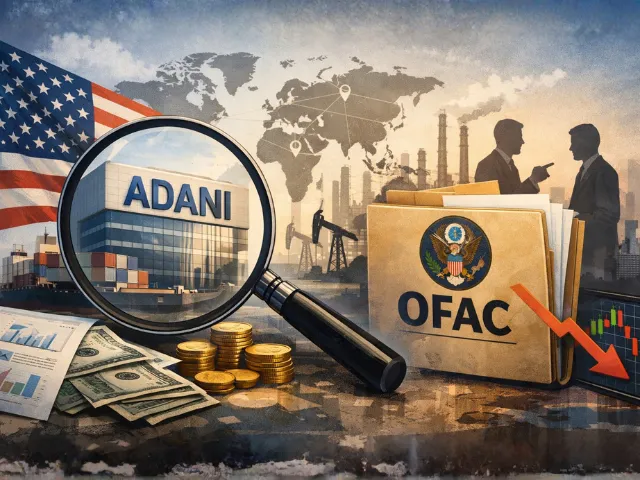
US OFAC Allegations on Adani Group: What the Request for Information Means for Investors
US OFAC Allegations on Adani Group: What the Request for Information Means for Investors
TL;DR
- US OFAC has sought information related to certain Adani Group entities, triggering market attention
- An information request is not the same as sanctions or a guilty finding
- Indian regulators continue to oversee disclosures and compliance
- Market volatility may persist, but long-term fundamentals remain key
- Investors should focus on verified facts rather than speculation
Understanding the US OFAC Action and Why It Matters
News around the Adani Group once again grabbed investor attention after reports that the US Office of Foreign Assets Control, commonly known as OFAC, sought information related to certain group entities. Headlines moved fast, social media reacted faster, and markets did what they usually do in such moments, price in uncertainty.
For investors, especially in India, it is important to pause and understand what an OFAC information request actually means and what it does not. Regulatory processes often involve preliminary fact finding, and not every request results in punitive action.
OFAC operates under the US Department of the Treasury and is primarily responsible for administering economic and trade sanctions. Its jurisdiction usually applies to US persons, entities operating in the US, or transactions involving the US financial system.
What Is an OFAC Request for Information
An OFAC request for information is essentially a formal query seeking clarification or documentation related to transactions, counterparties, or compliance processes. It does not automatically imply wrongdoing.
Such requests are often part of routine screening, enhanced due diligence, or third party reporting. Global conglomerates with international exposure frequently face these checks due to their scale, geographic reach, and involvement in cross border trade or financing.
For Indian investors, this distinction is critical. A request for information is not a sanction, not an indictment, and not a final regulatory conclusion.
Adani Group’s Global Exposure and Why Scrutiny Exists
The Adani Group has expanded aggressively across ports, power, renewables, airports, and infrastructure. Many of these businesses involve international lenders, suppliers, and contracts, bringing them within the visibility of overseas regulators.
Large infrastructure projects often require foreign currency borrowing, offshore subsidiaries, and global counterparties. This naturally increases regulatory touchpoints across jurisdictions, including the US financial system.
In past cases across global markets, similar regulatory inquiries have been seen with multinational corporations without necessarily leading to adverse outcomes.
Immediate Market Reaction and Indian Investor Sentiment
Indian equity markets tend to react swiftly to global regulatory headlines, particularly when they involve prominent business groups. Following reports of the OFAC query, select Adani stocks witnessed intraday volatility as traders reassessed risk.
However, broader market indices remained relatively stable, indicating that investors viewed the development as company specific rather than systemic.
Domestic institutional investors and long term retail participants generally focus on cash flows, project execution, and regulatory clarity from Indian authorities such as SEBI and stock exchanges.
Role of Indian Regulators and Disclosure Framework
In India, listed companies operate under strict disclosure norms governed by SEBI and stock exchange regulations. Any material development that could impact investor decision making must be disclosed in a timely manner.
Indian regulators also maintain oversight on foreign exposure, related party transactions, and debt structures through periodic filings. This layered regulatory environment provides an added level of transparency for domestic investors.
From an investor protection standpoint, this ensures that information asymmetry is limited and market participants can make informed decisions.
How Should Investors Interpret This Development
For investors, the key lies in separating facts from speculation. Regulatory inquiries, especially from overseas agencies, often evolve over time. Markets dislike uncertainty, but they also correct exaggerated fears once clarity emerges.
Short term traders may witness heightened volatility, while long term investors may focus on fundamentals such as asset quality, revenue visibility, and balance sheet strength.
This episode also reinforces the importance of diversification and risk management, particularly when investing in large conglomerates with complex structures.
Using Research and Tools to Navigate Volatile News
In times of regulatory headlines, access to credible research becomes invaluable. SEBI registered platforms like Swastika Investmart provide structured analysis, verified updates, and risk focused insights that help investors move beyond noise.
Strong research tools, responsive customer support, and tech enabled investing platforms allow investors to track developments objectively rather than reacting emotionally to headlines.
Investor education initiatives also play a role in helping market participants understand how global regulatory frameworks interact with Indian markets.
Key Takeaways for Indian Investors
Regulatory scrutiny is not uncommon for global businesses operating across borders. While headlines can cause short term discomfort, long term investment decisions should rest on fundamentals, governance disclosures, and regulatory outcomes rather than speculation.
Staying informed through reliable sources and maintaining a disciplined approach remains the best defence against uncertainty driven volatility.
Frequently Asked Questions
What is the US OFAC and what does it do
OFAC is a US Treasury body that enforces economic and trade sanctions and monitors compliance related to international transactions involving the US financial system.
Does an OFAC information request mean sanctions are coming
No, an information request is a preliminary step and does not automatically lead to sanctions or penalties.
Will this impact Indian stock markets broadly
Such developments are usually company specific and do not typically affect the broader Indian market unless systemic risks emerge.
Should retail investors exit Adani stocks immediately
Investment decisions should be based on individual risk tolerance, investment horizon, and fundamentals rather than short term news flow.
How can investors track verified updates on such developments
Following stock exchange disclosures, SEBI filings, and trusted research platforms helps investors stay informed with accurate information.
Conclusion and Investor Perspective
Regulatory inquiries can test market sentiment, but they also underline the importance of transparency and compliance in global business. For Indian investors, the focus should remain on verified disclosures, regulatory clarity, and long term business fundamentals.
If you are looking to navigate market volatility with confidence, having access to reliable research and a SEBI registered platform makes a meaningful difference.
Explore smarter investing and stay informed by opening an account with Swastika Investmart today.

Q3 Earnings Preview: Which Companies Are Reporting Results
Q3 Earnings Preview: Which Companies Are Reporting Results Today and Why It Matters
India’s Q3 earnings season continues to shape market sentiment, with several heavyweight names and mid-cap companies announcing their December quarter results today. From pharmaceuticals and chemicals to stock exchanges and textiles, today’s earnings slate offers valuable insights into sector trends, margin pressures, and management confidence amid a changing macro environment.
For investors, earnings are not just about headline profit numbers. They help decode demand conditions, cost pressures, regulatory impact, and future growth visibility. Let’s take a closer look at the companies reporting Q3FY26 results today, what their numbers indicate, and how the Indian markets could respond.
Why Today’s Q3 Earnings Are Important for Markets
Quarterly results play a crucial role in short-term stock movements and long-term investment decisions. As India navigates stable interest rates, moderating inflation, and global uncertainty, Q3 results are offering clarity on how businesses are adapting.
Sectors such as pharmaceuticals and specialty chemicals are seeing renewed investor interest due to export demand, regulatory approvals, and margin recovery. Meanwhile, infrastructure-linked plays and financial market intermediaries continue to benefit from higher market participation and volumes.
Today’s earnings announcements will help investors assess whether earnings momentum is broad-based or selective.
Companies Reporting Q3 Results Today: Key Highlights
Pfizer India: Steady Growth in Profit and Revenue
Pfizer reported a healthy improvement in its December quarter performance. Net profit rose to ₹141.8 crore in Q3FY26 from ₹127.6 crore a year ago. Revenue from operations increased to ₹645 crore compared with ₹538 crore in the corresponding quarter last year.
The numbers reflect steady demand for chronic therapies and strong execution in the domestic pharmaceutical market. Investors will closely track commentary on pricing pressures, new product launches, and regulatory compliance going forward.
Aurobindo Pharma: Profit Growth and Strategic Expansion
Aurobindo Pharma posted a solid performance with net profit rising to ₹910 crore in Q3FY26 from ₹846 crore in the year-ago period. Revenue grew to ₹8,646 crore from ₹7,979 crore, supported by stable formulations business and export traction.
Beyond earnings, the company announced plans to acquire a 26 per cent stake in Garuda Renewables Private Limited, indicating a strategic push towards sustainability-linked initiatives. It also received approval from the NCLT Hyderabad to merge Curateq Biologics and Auro Vaccines, a move expected to streamline operations and unlock efficiencies.
BSE: Strong Earnings Driven by Market Activity
BSE delivered an impressive set of numbers in Q3FY26. Net profit surged to ₹601.8 crore from ₹219.7 crore in the same quarter last year, while revenue rose to ₹1,244.1 crore compared with ₹768.1 crore.
The sharp rise was driven by higher transaction charges, increased derivatives activity, and improved operating leverage. With retail participation in capital markets remaining strong, earnings visibility for market infrastructure institutions continues to improve.
Navin Fluorine International: Sharp Rise in Profitability
Navin Fluorine reported a significant jump in earnings, with net profit climbing to ₹185.4 crore in Q3FY26 from ₹83.6 crore a year ago. Revenue increased to ₹892.4 crore from ₹606.2 crore.
The performance highlights strong demand for specialty chemicals and fluorochemicals, supported by long-term contracts and global supply chain realignment. Management guidance on capex and margin sustainability will be key for investor sentiment.
Trident: Profit Declines Amid Sector Challenges
Trident reported net profit of ₹44.2 crore in Q3FY26, down from ₹79.7 crore in the same quarter last year. The decline reflects margin pressure and subdued demand conditions in the textile sector.
While near-term challenges persist, investors will watch for recovery signals, cost-control measures, and export demand trends as global consumption stabilises.
Market Impact: What Investors Should Watch
Earnings announced today may influence stock-specific movements, but they also offer broader cues for the Indian equity market.
Pharmaceutical stocks remain in focus due to stable domestic demand and improving export prospects. Specialty chemicals continue to attract long-term investors given China-plus-one opportunities. Meanwhile, BSE’s results reinforce the theme of rising financialisation of savings in India.
Investors should track management commentary on input costs, regulatory risks, currency impact, and demand outlook rather than focusing only on quarterly profit numbers.
How Swastika Investmart Helps Investors Navigate Earnings Season
Tracking earnings season can be overwhelming, especially with multiple companies reporting every day. Swastika Investmart, a SEBI-registered stockbroker, supports investors with in-depth research, earnings analysis, and sector insights.
With robust research tools, tech-enabled trading platforms, and dedicated customer support, Swastika Investmart empowers investors to make informed decisions during volatile market phases. Its focus on investor education ensures clients understand not just what the numbers say, but what they mean.
Frequently Asked Questions
What is Q3 earnings season in India
Q3 earnings season refers to the period when listed companies announce their financial results for the October to December quarter of the financial year.
Why do stock prices react sharply to quarterly results
Stock prices react based on how results compare with market expectations, future guidance, and changes in business outlook.
Which sectors are closely watched during Q3 results
Pharmaceuticals, banking, chemicals, infrastructure, and capital market-related stocks usually attract high investor attention.
Are strong Q3 results enough to invest in a stock
While strong results are positive, investors should also evaluate valuation, growth sustainability, and long-term fundamentals.
How can retail investors track earnings efficiently
Using research platforms and expert analysis from registered brokers like Swastika Investmart helps simplify earnings tracking.
Final Thoughts
Today’s Q3 earnings announcements underline the mixed but resilient nature of India Inc. While sectors like pharmaceuticals, chemicals, and capital markets continue to show strength, others are navigating short-term pressures.
For investors, this is a reminder that disciplined analysis and sectoral understanding matter more than headline numbers.
If you are looking to track earnings trends, analyse stocks, and invest with confidence, consider opening an account with Swastika Investmart and access professional research and seamless trading tools.

Gold Prices Retreat After Historic Market Rout: Is the Safe-Haven Losing Shine?
Gold Prices Retreat After Historic Market Rout: Is the Safe-Haven Losing Shine?
TL;DR
- Gold prices retreated despite sharp volatility across global markets
- Profit booking and liquidity needs drove short-term selling pressure
- Long-term fundamentals for gold remain intact amid macro uncertainty
- Indian investors continue to view gold as a portfolio stabiliser
Why Gold Fell When Markets Turned Risky
Gold has long been considered the ultimate safe-haven asset. Historically, whenever equity markets witness sharp corrections, investors flock to gold to protect capital. However, the recent market rout delivered an unexpected twist. Instead of rallying, gold prices retreated, leaving investors puzzled.
This decline did not signal a loss of confidence in gold itself. Rather, it reflected short-term market mechanics. During intense sell-offs, investors often liquidate profitable assets, including gold, to cover margin calls or raise cash. This temporary selling pressure can push gold prices lower even when risk aversion is high.
In past crises as well, gold has shown similar behaviour before regaining momentum once panic subsides.
Liquidity Crunch and Profit Booking Explained
One of the biggest drivers behind gold’s retreat was the need for liquidity. With equities, commodities, and even some bond markets under stress, investors sought immediate cash. Gold, being highly liquid, became an easy source of funds.
Additionally, gold had rallied strongly in the months leading up to the correction. This created room for profit booking, especially among institutional investors who lock in gains during volatile phases.
For Indian investors, this is not unusual. Domestic gold prices often mirror global trends but are also influenced by the rupee movement. A softer rupee can partially cushion global price declines, reducing the overall impact on local gold rates.
Is Gold Losing Its Safe-Haven Status?
Despite the recent dip, gold’s role as a safe-haven remains intact. Its value lies not in short-term price moves but in its ability to preserve wealth over market cycles.
Gold continues to offer protection against inflation, currency depreciation, and geopolitical uncertainty. Central banks globally, including emerging market economies, have steadily increased their gold reserves over recent years. This structural demand reinforces gold’s long-term relevance.
For Indian households, gold remains deeply embedded in financial planning, serving both cultural and investment purposes. Regulatory frameworks around gold ETFs, sovereign gold bonds, and digital gold have further strengthened access and transparency for investors.
What This Means for Indian Markets
From an Indian market perspective, the gold correction comes at a time when equity volatility is elevated and global cues remain mixed. For portfolio construction, this reinforces the importance of diversification rather than timing individual asset classes.
Gold’s temporary retreat could even be seen as an opportunity for long-term investors to rebalance portfolios. Financial advisors often recommend allocating a portion of investments to gold to reduce overall portfolio risk.
Regulators such as SEBI continue to promote transparent gold investment avenues, enabling investors to participate without the risks associated with physical storage.
How Smart Investors Are Positioning Now
Seasoned investors understand that gold performs best when uncertainty persists over time, not during sudden spikes in panic. Many are maintaining steady exposure rather than exiting positions based on short-term price movements.
This is where disciplined research and advisory support play a role. Platforms like Swastika Investmart provide access to market insights, research tools, and educational resources that help investors navigate volatile phases with clarity rather than emotion.
By focusing on asset allocation and long-term goals, investors can avoid reactive decisions that often hurt returns.
FAQs
Why did gold prices fall despite market volatility?
Gold fell mainly due to profit booking and liquidity needs as investors sold liquid assets to raise cash during the market rout.
Is gold still a safe-haven investment?
Yes, gold remains a reliable safe-haven over the long term, offering protection against inflation, currency risks, and global uncertainty.
Should Indian investors reduce gold exposure now?
Not necessarily. Short-term price movements should not dictate long-term allocation decisions, especially for diversification.
How does the rupee impact gold prices in India?
A weaker rupee can offset global gold price declines, limiting the fall in domestic gold prices.
What are the best ways to invest in gold today?
Gold ETFs, sovereign gold bonds, and digital gold offer regulated and transparent investment options for Indian investors.
Final Thoughts
Gold’s recent retreat may look unsettling at first glance, but it does not undermine its long-standing role in portfolio stability. Market corrections often test investor patience, and gold’s performance should be judged across cycles, not days.
For investors seeking balanced exposure and informed guidance, Swastika Investmart offers SEBI-registered credibility, strong research capabilities, and investor-friendly platforms that support smarter decision-making.
Ready to invest with confidence?

BSE Shares in Focus After Q3 Earnings: What Strong Market Internals Signal for Investors
BSE Shares in Focus After Q3 Earnings: What Strong Market Internals Signal for Investors
TL;DR
- BSE delivered sharp YoY growth in profit and revenue in Q3, driven by higher transaction charges
- Strong derivatives volumes highlight improving market depth
- EBITDA margins expanded significantly, reflecting operating leverage
- BSE shares have rallied sharply over the past year, keeping investors focused on sustainability
Why BSE’s Q3 Earnings Matter for Market Participants
Shares of BSE Ltd, Asia’s oldest stock exchange, moved into focus after the company reported a standout performance for the December quarter. In an environment where market participants closely track trading volumes, derivatives activity and pricing power, BSE’s Q3 earnings offered valuable signals about the health of India’s capital markets.
The exchange reported strong growth across key financial metrics, reinforcing the view that structural improvements in market participation and product diversification are beginning to reflect meaningfully on the balance sheet.
For investors, BSE’s results are not just about headline profit growth. They offer insights into how exchanges monetise rising participation, manage costs and build long-term revenue streams in a competitive regulatory environment overseen by SEBI.
A Snapshot of BSE’s Q3 Financial Performance
BSE posted a sharp improvement in profitability during the quarter.
Standalone net profit rose 104 percent year-on-year to ₹220 crore, while revenue from operations surged 108 percent to ₹773 crore. Operating EBITDA more than doubled to ₹236 crore, with margins expanding to 31 percent, highlighting operating leverage from higher volumes.
On a consolidated basis, the performance was even stronger. Net profit jumped 174 percent year-on-year to ₹603 crore, while revenue climbed 62 percent to ₹1,244 crore. Sequentially, profits improved by 12 percent compared with the September quarter, pointing to consistency rather than a one-off spike.
This performance has contributed to strong stock momentum, with BSE shares rising over 125 percent in the past year.
Transaction Charges Take Centre Stage
A key driver behind BSE’s Q3 numbers was the sharp rise in transaction charges.
Transaction charge revenue surged to ₹952 crore during the quarter, up from ₹511 crore in the same period last year and ₹794 crore in the previous quarter. This jump reflects higher trading activity, improved product acceptance and better monetisation of volumes.
For exchanges, transaction charges are closely linked to market sentiment and participation. When retail and institutional activity picks up, revenues scale rapidly, while fixed costs remain relatively stable. This dynamic played out clearly in BSE’s Q3 earnings.
Equity Derivatives Show Structural Strength
One of the most closely watched segments this quarter was equity derivatives.
BSE reported strong traction in its derivatives business, with options average daily notional turnover rising to ₹210 lakh crore in Q3FY26. This compares with ₹105 lakh crore in the same quarter last year and ₹164 lakh crore in the September quarter.
Options premium average daily turnover also grew nearly 30 percent quarter-on-quarter to ₹194 lakh crore. Total options revenue surged 122 percent year-on-year to ₹784 crore.
These numbers indicate that BSE is gaining ground in a segment that has historically been dominated by a single player. Rising derivatives activity improves revenue visibility and enhances the exchange’s relevance in an evolving trading ecosystem.
EBITDA Expansion Reflects Operating Leverage
Operating efficiency stood out as another positive in the quarter.
Operating EBITDA, including Core SGF, rose sharply to ₹732 crore from ₹235 crore in the year-ago period. EBITDA margins expanded to 59 percent, compared with 31 percent last year.
Such margin expansion reflects the scalable nature of exchange businesses. As volumes increase, incremental revenue largely flows through to profits. For investors, this highlights why exchanges are often viewed as long-term structural plays on capital market growth.
What This Means for Indian Markets
BSE’s Q3 performance aligns with broader trends in Indian markets.
Higher retail participation, deeper derivatives activity and improved price discovery are strengthening the overall market ecosystem. Exchanges benefit directly from this expansion while also playing a crucial role in maintaining transparency and orderly trading under SEBI’s regulatory framework.
The results also reinforce confidence in India’s market infrastructure at a time when global investors are selectively allocating capital to emerging markets with strong domestic participation.
Where Swastika Investmart Fits In
For investors tracking exchange stocks or broader market trends, having access to reliable research and execution platforms is critical.
Swastika Investmart, a SEBI-registered brokerage, supports investors with in-depth equity research, real-time market insights and tech-enabled trading tools. Its focus on investor education and responsive customer support helps clients navigate earnings-driven volatility with greater clarity.
As markets evolve and new opportunities emerge across sectors like financial services and capital market infrastructure, informed decision-making becomes a key differentiator.
Frequently Asked Questions
What drove BSE’s strong Q3 profit growth?
The sharp rise in transaction charges, higher derivatives volumes and operating leverage were the main contributors to profit growth.
Why are transaction charges important for stock exchanges?
Transaction charges form a core revenue stream and scale directly with trading activity, making them a key indicator of market participation.
How did BSE’s derivatives segment perform in Q3?
Equity derivatives saw strong growth, with options turnover and premium volumes rising significantly year-on-year and quarter-on-quarter.
Are BSE shares a proxy for Indian market activity?
To a large extent, yes. Exchange earnings often reflect broader trends in trading volumes, participation and investor sentiment.
What role does SEBI play in exchange operations?
SEBI regulates exchanges to ensure transparency, fair practices and market stability, shaping how exchanges price products and manage risk.
Final Takeaway
BSE’s Q3 earnings underline the strength of India’s capital market infrastructure. Rising transaction volumes, expanding derivatives activity and improving margins signal a business model benefiting from structural tailwinds rather than short-term spikes.
For investors, these results reinforce the importance of tracking market internals alongside headline numbers. As participation deepens and products diversify, exchanges remain central to India’s financial growth story.
If you are looking to participate in such opportunities with the backing of strong research and a trusted platform, consider opening an account with Swastika Investmart today.

Aye Finance IPO Review: Muted Response, Invest or Avoid?
Summary
- Aye Finance IPO price band is ₹122 to ₹129 with a lot size of 116 shares.
- The company provides loans to micro and small businesses across India.
- Funds will be used mainly to expand lending operations.
- Anchor investors have participated while retail demand is gradual.
- Suitable for investors with a medium to long-term outlook on MSME credit growth.
Understanding the Aye Finance IPO Story
India’s micro and small enterprises form the backbone of the economy but often struggle to obtain formal credit. Aye Finance Limited was created to serve this exact segment by offering customized business loans to small shop owners, manufacturers, and service providers who are typically underserved by banks.
The public issue consists of a fresh issue and an offer for sale by existing shareholders. Money raised through the fresh portion will strengthen the capital base and support future lending. This is essential for any non-banking financial company that plans to grow its loan book responsibly.
For investors, the decision revolves around the quality of the business, the opportunity size in MSME lending, and the valuation offered through the IPO.
Aye Finance IPO Details at a Glance
- Price Band: ₹122 to ₹129
- Lot Size: 116 shares
- Issue Size: Around ₹1,010 crore
- Business Focus: Credit solutions for micro and small enterprises
- Listing Venue: BSE and NSE mainboard
The pricing is positioned in line with comparable lending businesses. However, NBFC investments should always be evaluated on parameters like asset quality, collection efficiency, and growth sustainability rather than only on issue price.
Business Strengths You Should Know
Focused MSME Approach
Aye Finance works closely with small entrepreneurs such as kirana store owners, local manufacturers, and traders. By assessing cash flows instead of relying only on collateral, the company reaches customers ignored by traditional banks.
Blend of Technology and Field Expertise
The lender uses digital tools for underwriting while maintaining on-ground verification and collections. This hybrid model has helped build discipline and customer connect in smaller towns.
Strong Institutional Backing
Reputed global and domestic investors are part of the shareholding structure, reflecting governance comfort and long-term commitment.
Expanding Presence
The loan book and branch network have grown steadily, indicating acceptance of its products in multiple states.
Key Risks to Consider
Economic Sensitivity
Borrowers in the micro segment can be affected by local disruptions, inflation, and demand slowdowns, which may influence repayment behaviour.
Interest Rate Environment
NBFC margins depend on the cost of borrowing. Prolonged high interest rates can impact profitability.
Competitive Landscape
Banks, fintech lenders, and other NBFCs are increasingly targeting the same customer base with faster approvals and attractive pricing.
Execution Challenges
Maintaining asset quality while growing aggressively is a constant balancing act for any MSME-focused lender.
Impact on Indian Markets
This IPO highlights the ongoing formalization of credit to small businesses. With rising digital payments, GST adoption, and account aggregator frameworks, lenders now have better tools to assess informal enterprises. The issue aligns with RBI’s broader objective of expanding regulated credit and financial inclusion.
For the primary market, the listing will indicate investor appetite for traditional lending models after a phase dominated by new-age tech issues. A stable performance would reinforce confidence in fundamentally driven IPOs.
Who Should Consider Applying?
- Investors seeking exposure to India’s MSME growth theme.
- Those comfortable with the risk profile of NBFC businesses.
- Applicants looking at five to seven year wealth creation rather than quick trades.
Short-term oriented traders may want to be cautious, while long-term investors can evaluate the company based on fundamentals and sector potential.
How to Approach the Decision
Before applying, read the offer document carefully, review asset quality trends, and compare with listed peers on return ratios and growth metrics. An IPO should fit into your overall financial plan and risk appetite.
Choosing a broker with strong research and transparent processes makes the journey easier. Swastika Investmart, a SEBI-registered broker, supports investors with in-depth IPO research, tech-enabled platforms, and responsive customer assistance so that decisions are driven by data rather than emotion.
Open Your Account
Apply to IPOs seamlessly with Swastika Investmart
Frequently Asked Questions
1. What is the price band of Aye Finance IPO?
The issue is priced between ₹122 and ₹129 per share with a minimum lot size of 116 shares.
2. What will the IPO proceeds be used for?
Funds from the fresh issue will primarily support future lending and strengthen the company’s capital base.
3. Is Aye Finance a bank?
No, it is a non-banking financial company focused on lending to micro and small enterprises.
4. Who can apply in this IPO?
Retail investors, HNIs, and institutional investors can apply through their trading accounts.
5. Is this IPO suitable for long-term investors?
Investors with belief in MSME credit growth and tolerance for NBFC risks may consider it from a long-term perspective.
👉 Open your trading account today
Stay informed, stay disciplined, and let market data guide your investment decisions.


.webp)
.webp)

.webp)





START YOUR INVESTMENT JOURNEY
Get personalized advice from our experts
- Dedicated RM Support
- Smooth and Fast Trading App
