

Income Tax Rules 2026 Explained: Save More Tax with These Hidden Updates


.png)

 Add Swastika as preferred source
Understanding the latest Income Tax Rules 2026 can make a big difference to your financial planning. With subtle changes and lesser-known provisions, taxpayers in India now have more opportunities to legally reduce their tax burden. Whether you are a salaried individual, freelancer, or investor, staying updated can help you save more and invest smarter.
Key Highlights at a Glance
- New tax regime continues to gain preference with simplified slabs
- Deductions under old regime still beneficial for specific taxpayers
- Standard deduction adjustments improve salaried income relief
- Increased focus on digital reporting and compliance
- Investment-linked savings remain a powerful tax-saving tool
What’s New in Income Tax Rules 2026
Shift Towards the New Tax Regime
The government continues to promote the new tax regime by making it more attractive. Lower tax rates and fewer exemptions simplify filing, especially for individuals who do not claim multiple deductions.
However, the old regime still works well for those investing in instruments like ELSS, PPF, or claiming housing loan interest.
Standard Deduction Benefits
Salaried individuals and pensioners benefit from a standard deduction, which reduces taxable income without requiring proof of expenses. This continues to be a key relief feature under both regimes.
Updated Compliance and Reporting
With increasing digitization, the Income Tax Department now tracks financial transactions more closely. High-value transactions, stock market trades, and mutual fund investments are automatically reported.
This makes accurate filing essential and reduces chances of tax evasion.
Smart Ways to Save Tax in 2026
Maximize Section 80C Investments
Investments under Section 80C still offer deductions up to ₹1.5 lakh. Popular options include:
- Equity Linked Savings Scheme
- Public Provident Fund
- Tax-saving fixed deposits
For example, a salaried individual investing ₹1.5 lakh in ELSS can significantly reduce taxable income while also gaining exposure to equity markets.
Use Health Insurance Deductions
Under Section 80D, premiums paid for health insurance policies provide additional deductions. This is especially useful for families and senior citizens.
Capital Gains Planning
Investors in stocks and mutual funds should plan their capital gains strategically. Long-term investments often enjoy lower tax rates compared to short-term gains.
Using tools and research platforms from brokers like Swastika Investmart can help investors optimize their portfolio and reduce tax liability through better planning.
Real-World Example
Consider Rahul, a salaried employee earning ₹12 lakh annually.
- Under the new regime, he benefits from lower tax rates but fewer deductions
- Under the old regime, he claims deductions for PPF, insurance, and home loan interest
After comparison, Rahul finds the old regime saves him more due to his disciplined investments. This highlights why choosing the right regime is crucial.
Role of Regulations and Financial Platforms
Indian regulatory bodies like the Income Tax Department, along with frameworks influenced by institutions such as SEBI and RBI, ensure transparency and compliance in financial transactions.
Platforms like Swastika Investmart support investors with research-backed insights, tax-efficient strategies, and easy-to-use tools. Their SEBI-registered status and strong advisory services make them a reliable partner for both beginners and experienced investors.
Common Mistakes to Avoid
Ignoring Regime Comparison
Many taxpayers choose the default regime without evaluating which one benefits them more.
Missing Investment Deadlines
Failing to invest before the financial year ends can lead to missed deductions.
Incorrect Reporting
With automated tracking, mismatched income reporting can trigger notices.
Frequently Asked Questions
1. Which tax regime is better in 2026?
It depends on your financial profile. The new regime suits those with fewer deductions, while the old regime benefits investors and homeowners.
2. Are tax-saving investments still useful?
Yes, especially under the old regime. They reduce taxable income and help build long-term wealth.
3. How are stock market gains taxed?
Short-term gains are taxed higher, while long-term gains enjoy concessional rates after a threshold.
4. Is filing income tax more complex now?
Not necessarily. While reporting has become stricter, digital tools have made filing easier and faster.
Final Thoughts
The Income Tax Rules 2026 bring both simplicity and opportunity. By understanding the differences between tax regimes, leveraging deductions, and planning investments wisely, you can significantly reduce your tax outgo.
If you want to take smarter financial decisions backed by research and technology, consider exploring Swastika Investmart’s platform for better tax planning and investment strategies.
Big Budget









.webp)
.webp)
.webp)
.webp)
.webp)
















.webp)
.webp)
.webp)
.webp)
Latest Articles
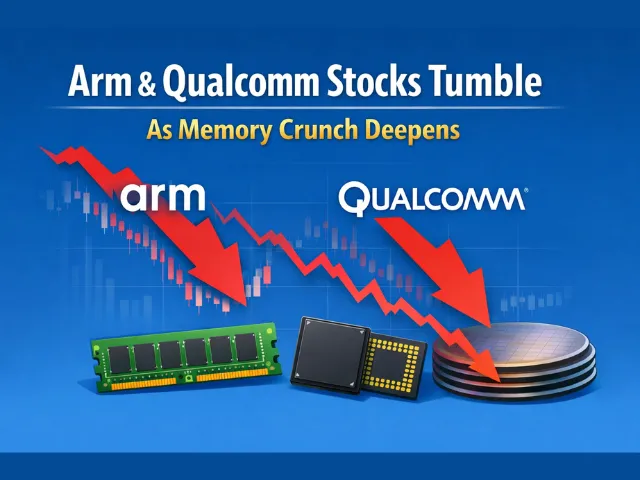
Arm and Qualcomm Stocks Fall 9% as Memory Crunch Deepens


Global semiconductor majors Arm Holdings and Qualcomm have come under pressure after their latest quarterly updates highlighted an unexpected challenge: a severe shortage of memory chips. The issue is not about weak demand for smartphones but about where memory makers are choosing to deploy their capacity.
Artificial intelligence infrastructure is consuming an unprecedented amount of advanced memory. Data centres require high-bandwidth memory to train and run AI models, and suppliers have diverted production to this high-margin segment. As a result, the smartphone ecosystem is facing tight availability and rising prices.
Why the Market Reacted Sharply
Arm Holdings, whose technology powers most smartphones in the world, saw its shares drop more than eight percent in extended trading. Management indicated that limited memory availability would restrict the number of phones that brands can manufacture in the coming quarters. Since Arm earns royalties on every device shipped, lower volumes directly affect its revenue outlook.
Qualcomm, the leading provider of mobile processors, echoed similar concerns. Chief Executive Cristiano Amon told analysts that several Chinese manufacturers have already signalled plans to build fewer phones because they cannot secure enough memory chips. The guidance for the current quarter disappointed investors who were expecting a stronger recovery in handset demand.
How AI Is Reshaping the Chip Supply Chain
Memory companies such as Samsung, SK Hynix and Micron are racing to expand production of high-bandwidth memory used in AI servers. Building new fabrication lines is capital intensive and takes more than a year. Until new capacity comes on stream, suppliers are prioritising data centre customers over consumer electronics.
This shift has created an unusual situation where smartphone demand exists but components are missing. The electronics industry is therefore bracing for higher bill of material costs. Consumers may see price hikes, particularly in mid-range devices where margins are already thin.
Intel’s leadership has warned that the imbalance could persist until 2028, suggesting that the problem is structural rather than temporary. Taiwanese chipmaker MediaTek also described the situation as evolving, indicating limited visibility on when supplies will normalise.
Silver Linings for Arm and Qualcomm
Despite the near-term pain, both companies are positioning themselves to benefit from the AI wave. Arm designs are increasingly being adopted in data centre processors, while Qualcomm is developing chips for AI-enabled laptops and edge devices. These new revenue streams can gradually reduce dependence on the cyclical smartphone market.
Another positive trend is the focus on premium phones. Brands are allocating scarce memory to flagship models where profitability is higher. This supports Qualcomm’s sales of advanced processors and helps Arm earn better royalty rates even if overall volumes soften.
What It Means for the Indian Market
India is one of the fastest-growing smartphone markets, yet it remains sensitive to price changes. A global memory shortage can translate into delayed launches and higher retail prices, especially in the value segment that dominates Indian sales.
Domestic electronics manufacturers and assemblers may face margin pressure if component costs rise faster than consumer prices. However, companies linked to data centres and AI infrastructure could see incremental opportunities as global investment flows increase.
For Indian investors, the episode is a reminder that technology supply chains are deeply interconnected. Movements in US and Taiwanese semiconductor firms often ripple through local IT services, contract manufacturing and telecom sectors. Maintaining a diversified portfolio and relying on strong research becomes essential in such volatile phases.
Navigating Technology Cycles with Discipline
Short-term market reactions can be sharp, but structural trends like AI adoption tend to create long-term winners. Evaluating businesses on balance sheet strength, innovation pipeline and customer diversification is more important than chasing headlines.
Platforms such as Swastika Investmart help investors stay informed with SEBI-registered research, technology-enabled trading tools and responsive customer support. Access to timely insights allows individuals to separate temporary disruptions from lasting opportunities.
Frequently Asked Questions
Why are memory chips in short supply?
Manufacturers have shifted capacity toward high-bandwidth memory for AI data centres, leaving less production for smartphone components.
How does this affect Arm and Qualcomm?
Both companies depend on smartphone volumes for a large part of revenue. Fewer phones mean lower royalty and processor sales in the near term.
Will phone prices rise in India?
Higher component costs may push brands to increase prices or prioritise premium models, which can affect budget buyers.
Is the shortage temporary?
Industry leaders expect constraints to continue for several years until new factories become operational.
Final Thoughts
The slide in Arm and Qualcomm shares highlights how rapidly AI is reshaping the semiconductor landscape. While the memory crunch poses challenges for smartphone growth, it also opens doors to new AI-driven revenue streams. Indian investors should track these shifts carefully and align portfolios with businesses that can adapt to the changing technology cycle.
Begin your investment journey with informed decisions and strong research support.
.webp)
Stocks in News 05 February 2026: IRB Infra, Coal India, Marico and Trent in Focus
Summary
- IRB Infra signs a long-term agreement with NHAI for an Odisha highway project
- Coal India to invest over Rs 3,000 crore in a joint venture with DVC
- Marico acquires 60 percent stake in Cosmic Wellness to expand portfolio
- Trent delivers strong December quarter with healthy EBITDA growth
How Corporate Updates Shape Market Direction
Daily corporate developments often set the tone for sectoral moves even when index levels remain range bound. The Stocks in News 05 February 2026 list features infrastructure, energy, consumer and retail names, offering a good mix of themes for Indian investors. Such announcements influence order books, cash flows and long-term growth visibility, which ultimately reflect in share prices.
Indian markets have been rewarding companies that show clear capital allocation plans and steady earnings momentum. The latest updates from IRB Infra, Coal India, Marico and Trent highlight this trend and deserve a closer look.
IRB Infra Strengthens Highway Portfolio
IRB Infrastructure Trust has executed an agreement with the National Highways Authority of India for a project in Odisha. Under the arrangement, the trust will pay around Rs 3,087 crore to NHAI over a period of 20 years. This structure provides long-term revenue visibility and strengthens IRB Infra’s presence in the build operate transfer space.
For the infrastructure sector, such contracts are significant because they lock in cash flows and improve asset utilisation. Road projects supported by government agencies generally carry lower counterparty risk, which is viewed positively by lenders and investors. The announcement reinforces confidence in India’s highway expansion programme and may keep sentiment firm around quality EPC and toll operators.
Coal India Expands Power Partnership
Coal India has committed to infuse about Rs 3,132 crore in a joint venture with Damodar Valley Corporation as part of a larger project costing more than Rs 20,800 crore. The move indicates the company’s intent to participate deeper in the power value chain rather than remaining only a fuel supplier.
For a country where energy demand continues to rise, such integration can help Coal India secure stable offtake and better margins. The development also aligns with India’s broader plan to strengthen domestic energy security. Investors often view these strategic investments as long-term growth drivers, though execution timelines remain important.
Marico Bets on New Age Wellness
Consumer major Marico has acquired a 60 percent stake in Cosmic Wellness for Rs 225.67 crore. The target company operates in the digital first nutrition and lifestyle segment, an area witnessing rapid adoption among young consumers.
This acquisition allows Marico to widen its presence beyond traditional categories and capture emerging trends in personal health and beauty. Indian FMCG companies are increasingly using such routes to stay relevant with changing consumer behaviour. If integrated well, the deal can open new revenue streams and improve valuation perception for Marico.
Trent Shines with Strong Earnings
Tata Group retail company Trent reported revenue growth of 14.8 percent in the December quarter while EBITDA jumped 27.6 percent to Rs 1,081.7 crore, slightly ahead of market expectations. The performance reflects robust demand across its fashion and lifestyle formats.
Organised retail continues to gain market share in India as consumers shift toward branded experiences. Trent’s ability to expand margins despite competitive intensity shows strength in its business model. The numbers may support positive momentum in the stock and also lift sentiment for the broader retail space.
What These Updates Mean for Indian Markets
The mix of news in Stocks in News 05 February 2026 underlines three important themes. First, infrastructure spending remains a core pillar of India’s growth with companies like IRB Infra benefiting from policy continuity. Second, energy transition and capacity creation are encouraging players such as Coal India to invest for the future. Third, consumer facing businesses like Marico and Trent are adapting to evolving preferences and formalisation.
For retail investors, such announcements provide ideas beyond index movements. However, decisions should be backed by research, risk assessment and alignment with personal goals. SEBI regulations emphasise informed participation, and choosing a reliable intermediary becomes crucial in this process.
Platforms that combine technology with credible research help investors understand the impact of corporate actions in a timely manner. Swastika Investmart offers research tools, educational support and responsive service to guide investors through these opportunities.
Frequently Asked Questions
How do corporate announcements affect stock prices?
News related to orders, acquisitions or earnings changes future cash flow expectations, which directly influences valuations and short-term trading sentiment.
Is the IRB Infra NHAI deal positive?
Long-term highway agreements usually provide stable revenue visibility and are considered constructive for infrastructure companies.
Why is Coal India investing in power projects?
The investment helps secure demand for its coal output and allows participation in the broader energy value chain.
What does Marico’s acquisition indicate?
It shows the company’s focus on new age wellness categories and digital first brands to capture emerging consumer trends.
Does Trent’s result signal retail strength?
Healthy revenue and EBITDA growth suggest organised retail demand remains resilient in India.
Closing Note
The developments highlighted in Stocks in News 05 February 2026 reflect how Indian companies are positioning for long-term growth across infrastructure, energy, consumer and retail segments. Investors who track such updates with discipline can identify quality opportunities while managing risk effectively.
Swastika Investmart, a SEBI registered broker known for strong research capabilities, tech-enabled platforms and investor education, supports market participants in taking well informed decisions.
.webp)
Market Setup 04 February 2026 – What the Day Signals for Indian Markets : What Indian Investors Should Track Today
Summary
- US markets closed lower while futures hint at a mild recovery
- Strong FII and DII buying seen in cash segment
- Nifty PCR improved to 1.02 and volatility cooled
- Key Nifty range placed between 25640 and 26000
Global Signals Shaping the Day
The Market Setup 04 February 2026 begins with mixed international cues. The Dow Jones ended lower by 167 points, showing profit booking after recent strength. However, Dow futures are trading higher by about 40 points, suggesting that selling pressure may ease. Asian markets are trading on a mixed note, reflecting cautious sentiment ahead of global macro data. GIFT Nifty indicates a softer opening with a decline of around 32 points.
For Indian markets, such a backdrop usually leads to a selective approach where sector rotation becomes more important than broad index moves. Traders will watch whether domestic liquidity can offset the muted global tone.
What the Data Tells Us
Cash market participation turned notably strong. Foreign institutions bought more than 5200 crore while domestic institutions added over 1000 crore, taking the combined net buying beyond 6200 crore. Such large inflows often provide stability to the market even during uncertain global phases.
Derivative indicators offer additional insight:
- Nifty Put Call Ratio improved to 1.02 from 0.98, reflecting balanced to positive bias
- India VIX cooled to 12.90, down 7 percent, signalling reduced fear
- Highest open interest for the weekly series is at 27000 Call and 24000 Put
- Max Pain stands near 25700, close to current trading zone
FII index futures showed creation of long positions while option data appeared less meaningful due to the weekly expiry cycle. This behaviour generally points to a wait and watch approach rather than aggressive bearishness.
Technical Picture for Nifty
After a gap up opening in the previous session, Nifty encountered selling near higher levels. The structure remains range bound with clear reference points.
- Immediate support: 25640
- Next support band: 25500 to 25450
- Major resistance: 25800 and 26000
A sustained move above 25800 can invite fresh momentum buying, while failure to hold 25640 may bring consolidation toward the 25500 area. Traders should prefer quality breakouts instead of chasing every intraday swing.
Bank Nifty Perspective
Bank Nifty has returned to the broader 58600 to 60400 trading range. The index is showing better resilience compared to Nifty, supported by selective strength in private banks.
- Support zones: 59800 and 59400
- Resistance zones: 60400 and 61000
If Bank Nifty manages to hold above 59800, the bias may remain constructive for a retest of 60400. PSU banks could remain range bound while private sector majors may lead the next leg.
Impact on Indian Investors
The Market Setup 04 February 2026 highlights how domestic liquidity can cushion global volatility. Strong institutional buying reflects confidence in India’s growth story, supported by steady earnings, improving credit demand and regulatory discipline under SEBI frameworks.
Retail investors should view such phases as opportunities to build positions gradually rather than reacting to every headline. Markets often reward patience when volatility is low and flows are positive. Choosing fundamentally sound companies and avoiding excessive leverage becomes essential.
Technology enabled platforms with transparent research and risk tools help investors navigate these conditions effectively. Access to real time data, clear advisory notes and responsive support can make a meaningful difference to outcomes.
Practical Approach for the Day
- Prefer stocks showing relative strength instead of weak index components
- Keep strict stop losses near defined support levels
- Avoid heavy positions ahead of global events
- Consider staggered buying in quality names on dips
New participants may opt for systematic investing or small baskets rather than speculative trades. Discipline matters more than prediction in such markets.
Frequently Asked Questions
What is the crucial level for Nifty today?
The 25800 area is the primary resistance while 25640 acts as the first support zone for the index.
Why did volatility fall sharply?
India VIX dropped as institutional flows improved and option writers added positions on both sides, reducing fear.
Are institutions positive on India?
Large cash buying from FIIs and DIIs suggests confidence in domestic growth despite mixed global cues.
Which index looks stronger?
Bank Nifty is relatively firmer as it trades within the upper half of its broader range.
Closing Thoughts
The Market Setup 04 February 2026 presents a balanced environment where data favours stability but price action demands caution near resistance. Investors who rely on research driven decisions and structured risk management are better placed to benefit from the next move.
Swastika Investmart, a SEBI registered brokerage with robust research capabilities, tech enabled investing platforms and dedicated customer support, assists investors in making informed choices aligned with their goals.
Market Setup 05 February 2026 – What the Day Signals for Indian Markets : What Indian Investors Should Track Today
Summary
- US markets closed mixed while Asian indices remain cautious.
- FII activity in derivatives shows a positive tilt with strong put writing.
- Nifty faces resistance near 25800; support seen around 25640.
- Bank Nifty holding above 60200 keeps short-term bias firm.
Global Cues Setting the Tone
The Market Setup 05 February 2026 begins with mixed signals from overseas markets. The Dow Jones closed higher by around 260 points, but futures are trading almost flat, indicating a pause after the recent rally. Asian markets opened on a weaker note, reflecting concerns over global growth and currency volatility. GIFT Nifty is indicating a slightly negative start with a dip of around 18 points.
For Indian traders, such a backdrop suggests selective participation rather than aggressive buying. When global markets lack clear direction, domestic data and derivative positioning usually drive the next move.
Reading the Data – Where the Money Is Moving
Cash market flows turned supportive with DIIs buying close to 250 crore while FIIs added around 30 crore. The combined net inflow of 280 crore is modest but encouraging after recent outflows.
In the derivatives segment, the picture looks healthier:
- Nifty PCR improved to 1.07 from 1.02, hinting at bullish positioning.
- India VIX cooled to 12.25, down nearly 5 percent, showing reduced fear.
- Highest open interest for the weekly series is at 27000 Call and 25000 Put, marking the broader range.
- Max Pain stands near 25750, close to current levels.
FII activity in index derivatives showed long additions in calls and puts along with short covering in futures. This combination generally reflects expectation of limited downside and a gradual upside attempt.
Technical View on Nifty
From a chart perspective, Nifty is struggling near the 50-day moving average around 25800. This zone has acted as a supply area multiple times and will remain crucial in the coming sessions.
- Immediate support: 25640
- Stronger demand zone: 25500–25450
- Key resistance: 25800 followed by 26000
A decisive close above 25800 could invite momentum buying toward 26000 and higher. On the flip side, failure to hold 25640 may trigger profit booking toward the 25500 belt.
Bank Nifty Outlook
Bank Nifty continues to show relative strength. The index has managed to close above 60200, keeping the short-term structure positive.
- Support levels: 59800 and 59400
- Resistance levels: 60400 and 61000
Private banks have been leading while PSU banks remain range-bound. Any dip toward 59800 could attract fresh buying from positional traders.
What Should Investors Do?
The current Market Setup 05 February 2026 favors a stock-specific approach rather than broad index bets. Lower volatility and improving PCR suggest that the downside may be limited, but resistance overhead calls for disciplined risk management.
Investors may consider:
- Gradual accumulation in quality large-caps on dips.
- Avoiding aggressive leverage near resistance zones.
- Focusing on sectors showing earnings resilience such as banking, capital goods, and select consumption themes.
For new investors, systematic participation through SIPs or staggered buying remains the safest route in such range-bound phases.
How This Impacts Indian Markets
Indian markets are currently balancing between supportive domestic liquidity and uncertain global cues. Regulatory stability under SEBI frameworks, improving corporate governance, and strong participation from domestic institutions continue to provide a cushion. However, global rate expectations and currency movements can create short-term volatility.
Platforms that offer strong research, real-time risk tools, and transparent advisory play a crucial role in navigating such environments. Choosing a SEBI-registered intermediary with proven execution capabilities becomes important for retail participants.
Frequently Asked Questions
1. What is the key level to watch on Nifty today?
The 25800 zone is the major resistance, while 25640 acts as immediate support.
2. Are FIIs turning bullish?
Derivative data shows a positive tilt with call longs and put writing, indicating cautious optimism.
3. Is Bank Nifty stronger than Nifty?
Yes, Bank Nifty holding above 60200 shows better momentum compared to the broader index.
4. What does a PCR above 1 indicate?
A PCR above 1 generally reflects higher put writing and expectations of limited downside.
5. Should beginners trade in such markets?
Beginners should prefer low-risk strategies and focus on investment rather than intraday speculation.
Final Word
The Market Setup 05 February 2026 reflects a balanced environment where data is mildly positive but price action is approaching resistance. Patience and selectivity will be key. Investors should rely on research-backed decisions, disciplined allocation, and credible platforms to navigate the day.
Swastika Investmart, a SEBI-registered broker with strong research tools, tech-enabled investing, and dedicated customer support, helps investors take informed decisions with confidence.

Oil Steadies Near $62 After Worst Fall in Six Months — What Changed Overnight?
Oil Steadies Near $62 After Worst Fall in Six Months: What Changed Overnight?
After one of the sharpest declines seen in recent months, crude oil prices found some stability near the $62 per barrel mark. The sudden pause came after markets digested easing geopolitical risks, heavy selling across commodities, and shifting expectations around global growth.
For investors and traders in India, this move matters far beyond global charts. Oil prices influence inflation, the rupee, government finances, and stock market sectors from oil marketing companies to airlines. Understanding why oil steadied overnight helps in positioning portfolios more wisely.
Quick Take
- Oil prices stabilised near $62 after the biggest single-day fall in six months
- Broad commodity selling and weaker metals dragged crude lower earlier
- Easing geopolitical risks reduced the risk premium built into oil prices
- Stability in crude offers short-term relief for Indian inflation and markets
What Happened to Oil Prices This Week?
Crude oil entered the week under heavy pressure. On Monday, prices recorded their steepest fall in six months.
West Texas Intermediate dropped nearly 4.7 percent and slipped close to $62 a barrel. Brent crude also weakened, settling just above $66 after a sharp decline.
This fall did not happen in isolation. It came alongside a broad-based sell-off across commodities. Gold plunged as much as 10 percent during intraday trade, while copper fell more than 5 percent at one point. When metals and energy sell off together, it often signals risk reduction rather than a single supply shock.
By Tuesday, however, oil prices steadied. There was no strong rebound, but the selling pressure eased. That stability raised an important question for market participants: what changed overnight?
Why Oil Steadied After the Sharp Fall
Cooling Geopolitical Tensions
One of the biggest drivers behind the overnight stabilisation was easing geopolitical risk.
US President Donald Trump indicated that discussions with Iran over a new nuclear deal could begin within days, after Tehran signalled readiness to engage. Any progress on this front reduces the immediate risk of supply disruptions in the Middle East.
Over the past year, oil prices carried a significant risk premium due to fears of conflict-driven supply shocks. When those fears recede, that premium unwinds quickly. The recent fall reflects this recalibration.
Broader Commodity Sell-Off Had Already Played Out
Oil was not alone in falling. Metals led the retreat, with gold and copper seeing aggressive selling as traders reduced exposure to commodities as an asset class.
Once much of this selling was absorbed on Monday, the market found temporary balance. With fewer fresh triggers overnight, oil prices stabilised rather than extending losses.
Demand Concerns Already Priced In
Concerns around global demand, particularly from China and Europe, have been weighing on crude for months. Slower manufacturing activity and cautious consumption outlooks were already reflected in prices.
By the time oil touched the $62 level, many traders felt short-term demand risks were largely priced in, reducing the urgency to sell further.
How This Move Impacts Indian Markets
Relief on Inflation and Fuel Costs
For India, lower and stable crude prices are broadly positive.
India imports more than 80 percent of its crude oil needs. A fall in oil prices reduces pressure on retail fuel prices, logistics costs, and overall inflation. This gives the Reserve Bank of India more room to maintain a supportive policy stance.
If crude remains near current levels, it could help keep headline inflation in check over the coming months.
Impact on Oil and Gas Stocks
Oil marketing companies often benefit when crude prices soften, provided retail fuel prices are stable. Lower input costs can improve marketing margins.
Upstream producers, on the other hand, may face pressure if crude remains weak for a prolonged period. Investors usually rebalance within the sector based on price trends and government policy signals.
Support for the Rupee
Lower crude import bills reduce demand for dollars, offering indirect support to the Indian rupee. A stable rupee helps limit imported inflation and improves investor sentiment towards Indian assets.
Is This Stability Sustainable or Just a Pause?
The key question now is whether oil has found a base or is simply pausing before another move lower.
In the near term, stability is likely as markets wait for fresh cues. These include developments in US Iran talks, global economic data, and signals from major central banks.
Over the medium term, oil prices will depend on whether demand improves and how supply dynamics evolve. Any resurgence in geopolitical tensions or unexpected supply cuts could quickly change the picture.
For investors, this phase highlights the importance of disciplined positioning rather than chasing short-term moves.
How Investors Can Navigate This Phase
Volatile commodity markets require a structured approach. Instead of reacting to daily price swings, investors should focus on fundamentals, risk management, and reliable research.
This is where a platform like Swastika Investmart stands out. As a SEBI-registered brokerage, Swastika Investmart combines strong research capabilities, technology-driven trading platforms, and dedicated customer support. Its focus on investor education helps clients understand market cycles rather than trade on noise.
Whether you track commodities directly or through equities and mutual funds, having access to credible insights makes a real difference.
Frequently Asked Questions
Why did oil fall the most in six months?
Oil fell due to easing geopolitical risks, heavy selling across commodities, and concerns over global demand.
Why did oil stabilise near $62?
Selling pressure eased after major risk factors were priced in, and markets awaited fresh triggers.
Is lower oil good for Indian investors?
Yes, lower oil prices help control inflation, support the rupee, and benefit several consumer-facing sectors.
Will oil prices rebound sharply from here?
A sharp rebound depends on demand recovery or renewed geopolitical tensions. For now, stability is more likely than a strong rally.
How can investors track oil’s impact on Indian stocks?
By following inflation trends, RBI policy signals, and sector-specific developments using reliable research platforms.
Final Thoughts
Oil steadying near $62 after its worst fall in six months reflects a market that has quickly repriced risk and is now searching for direction. For India, this pause offers short-term comfort on inflation and macro stability, even as global uncertainties persist.
Investors should stay informed, avoid emotional reactions, and rely on structured research to navigate such phases. If you are looking for a trusted partner to guide your investment journey across asset classes, explore the tools and insights offered by Swastika Investmart.

Should Investors Buy the Dip in Gold and Silver After the Steep Correction?
Should Investors Buy the Dip in Gold and Silver After the Steep Correction?
TL;DR
- Gold and silver prices have corrected sharply after a strong rally
- The correction is driven by global cues, profit booking and a stronger dollar
- Long-term fundamentals for precious metals remain intact
- SIP-based investing may suit volatile bullion markets
- Indian investors should balance timing with asset allocation discipline
Gold and Silver After the Sudden Fall: What Just Happened?
Over the past few weeks, gold and silver prices witnessed a steep correction, surprising many investors who had grown accustomed to a strong upward trend. After touching record or near-record levels, prices cooled off sharply as global markets reacted to changing macroeconomic signals.
For Indian investors, this raised a familiar question. Should one buy the dip in gold and silver, or wait for more clarity?
Before answering that, it is important to understand why bullion prices corrected in the first place.
Why Did Gold and Silver Correct So Sharply?
The recent fall in precious metals was not driven by a single factor. Instead, it was a combination of global developments.
Stronger US Dollar and Bond Yields
Gold and silver generally move inversely to the US dollar and bond yields. As expectations of tighter monetary conditions resurfaced in global markets, bond yields firmed up and the dollar strengthened. This reduced the short-term appeal of non-yielding assets like gold.
Profit Booking After a Strong Rally
Gold and silver had delivered strong returns over the past year. When prices move up sharply in a short period, profit booking is natural. Large institutional investors often trim positions to lock in gains, leading to short-term corrections.
Reduced Immediate Safe Haven Demand
Bullion typically benefits from uncertainty. As global risk sentiment stabilised temporarily and equity markets found support, some money rotated out of defensive assets.
Does a Correction Mean the Bullish Case Is Over?
Not necessarily.
Historically, corrections in gold and silver have often created long-term accumulation opportunities rather than marking the end of a trend.
Gold continues to play a critical role as a hedge against inflation, currency depreciation and geopolitical risk. Central banks across the world, including the Reserve Bank of India, have steadily increased gold reserves over time, reinforcing its strategic importance.
Silver, on the other hand, carries a dual character. It acts both as a precious metal and an industrial commodity. Demand from sectors such as electronics, renewable energy and electric vehicles adds a structural growth angle to silver prices.
How Indian Markets View Gold and Silver
In India, gold holds a unique position beyond investment returns. It is deeply linked to savings behaviour, cultural practices and wealth preservation.
From a market perspective, gold prices in India are influenced by global prices, rupee movement and import duties. Even when international prices correct, a weaker rupee can cushion the fall for domestic investors.
Silver has gained popularity among Indian investors in recent years, especially through exchange traded funds and mutual fund structures, which have made access easier and more transparent.
Buy the Dip or Stay on the Sidelines?
The answer depends on your investment horizon and strategy.
For Long Term Investors
For investors with a long-term view, corrections in gold and silver are generally considered healthy. Rather than timing the exact bottom, a staggered approach often works better.
Systematic investing helps reduce the risk of entering at an unfavourable price point while ensuring participation if prices recover.
For Short Term Traders
Short-term traders should remain cautious. Bullion prices can stay volatile for extended periods, especially when global interest rate expectations are shifting. Risk management and position sizing become critical in such phases.
The Role of SIPs in Bullion Investing
One of the most practical ways to approach volatile assets like gold and silver is through systematic investment plans.
By investing small amounts at regular intervals, investors average out purchase costs and avoid emotional decision-making. This approach is especially relevant after sharp corrections, when uncertainty is high.
In India, investors can access gold and silver through mutual fund schemes, exchange traded funds or fund of fund structures, all regulated by SEBI.
Regulatory Comfort for Indian Investors
Gold and silver mutual funds and ETFs in India operate under SEBI guidelines, ensuring transparency, liquidity and investor protection. This makes them a safer alternative compared to physical bullion, where concerns around storage, purity and liquidity often arise.
For investors seeking convenience and regulatory oversight, financial instruments linked to bullion provide a cleaner route to exposure.
What Should Investors Keep in Mind Now?
Buying the dip should not mean overexposure. Gold and silver work best as part of a diversified portfolio, not as standalone bets.
Financial planners often recommend allocating a reasonable portion of the portfolio to precious metals, depending on risk appetite and financial goals. The objective is stability and hedging, not aggressive returns.
How Swastika Investmart Helps Investors Navigate Bullion Volatility
Understanding global commodities requires timely research and disciplined execution. Swastika Investmart, a SEBI-registered financial services firm, supports investors with research-backed insights, easy-to-use digital platforms and strong customer support.
Through tech-enabled investing tools and continuous investor education initiatives, Swastika helps clients take informed decisions across asset classes, including equities, mutual funds and commodities-linked products.
Rather than reacting to market noise, investors benefit from a structured approach backed by data and experience.
Frequently Asked Questions
Is it a good time to invest in gold after the correction?
For long-term investors, corrections often offer better entry points. A staggered or SIP-based approach can help manage volatility.
Should Indian investors prefer gold or silver now?
Both serve different purposes. Gold offers stability and hedging, while silver has higher volatility with industrial demand exposure.
How can I invest in gold and silver without buying physical metal?
Investors can use SEBI-regulated gold and silver mutual funds or exchange traded funds.
Will gold prices rise again in the long run?
Gold has historically protected purchasing power over long periods, especially during inflationary or uncertain phases.
How much allocation to bullion is considered reasonable?
Allocation depends on individual risk profiles, but bullion is generally used as a diversification tool rather than a core growth asset.
Final Thoughts
Sharp corrections in gold and silver often test investor patience, but they also separate impulsive decisions from disciplined investing. While short-term movements remain uncertain, the long-term role of precious metals in a diversified portfolio remains relevant.
Instead of chasing prices, investors may benefit from focusing on asset allocation, systematic investing and informed decision-making.
If you are looking to invest in bullion-backed instruments with research support and a reliable platform, explore the investing solutions offered by Swastika Investmart.


.webp)
.webp)

.webp)






START YOUR INVESTMENT JOURNEY
Get personalized advice from our experts
- Dedicated RM Support
- Smooth and Fast Trading App
