


India Stock Market Outlook: Nifty50 Range 23,800–24,200 and Sensex at 76,803



Key Takeaways
- Sensex closed at 76,802.90 and Nifty50 at 24,013.10 after a volatile week.
- Nifty50 trades in 23,800–24,200 range with immediate support 23,850–23,800 and resistance 24,150–24,200; a break below 23,800 could push toward 23,500.
- FII inflows around Rs 3,400 crore and DII inflows around Rs 7,100 crore provided market support amid volatility.
- Rupee at 94.32 per USD; Brent at 80.57 and WTI around 77.54; RSI 58 and ADX DI- crossing DI+ signal caution.
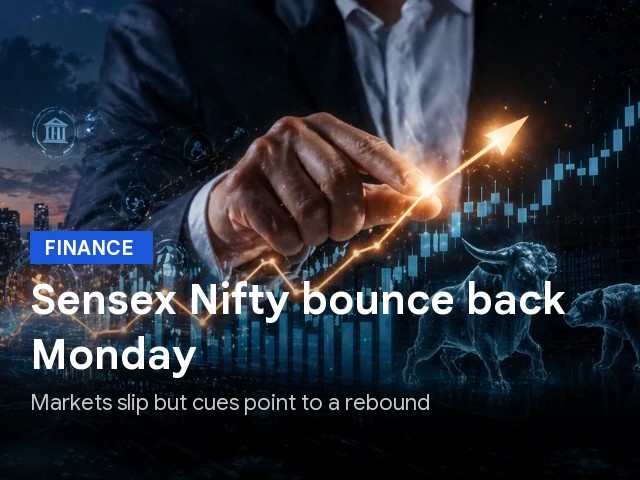
The week delivered a sharp reminder: Indian equities can swing on global headlines even after a strong run. The Sensex settled at 76,802.90 and the Nifty50 closed at 24,013.10, after both indices had surged as much as 5% across the previous five trading sessions. For retail investors, the question is not just what happened today, but what comes next in a market defined by geopolitical headlines, macro data, and shifting flows. Here is a practical, price-focused read on what these levels imply for your portfolio and how to navigate the coming sessions with discipline.
What the Sensex close at 76,802.90 and Nifty50 close at 24,013.10 tell you about near-term market direction
The close numbers anchor the near-term narrative: Sensex at 76,802.90 and Nifty50 at 24,013.10 mark a consolidation phase after a run higher. The index remains below key short- and long-term moving averages, and the RSI has slipped below 40, signaling bearish momentum in the immediate term. The ADX indicator shows DI- has crossed above DI+, reflecting growing seller dominance. Yet the broader momentum isn’t uniformly negative; the index has to reclaim momentum on the upside to sustain a fresh leg higher. In practical terms, retail investors should watch whether price action can reclaim the 20-day EMA and the 50-day EMA as proof of renewed buying interest, and avoid chasing moves that break below major support levels without confirmation.
How to read Nifty50's immediate support and resistance: 23,800–23,850 and 24,150–24,200
From a technical standpoint, the near-term range is well defined. Immediate support sits in the 23,850–23,800 band, which coincides with both the 50-day EMA and the 50% Fibonacci retracement of the latest rally. A decisive break below 23,800 could push the index toward the next support around 23,500, opening more downside. For resistance, 24,150–24,200 aligns with the 100-day EMA and is likely to cap gains in the short run. A sustainable move above 24,200 would improve bullish sentiment and could open the path toward 24,500 in the near term. This setup argues for a cautious, range-trading mindset rather than aggressive breakout plays until there is a clear price-action signal.
The 27,050–27,000 zone and 28,250–28,300 zone: what they imply for the medium term
Despite the current price residing around 24,000, the longer-term chart highlights meaningful structural levels. The 27,050–27,000 zone is described as a crucial support region in the broader context, while 28,250–28,300 represents a meaningful resistance barrier above the current range. For retail investors, this implies markets may stay in a wide range for the intermediate term, with meaningful breakout requiring sustained participation from global funds and a favorable macro backdrop. The upshot is a reminder to spread risk and prepare for two-way moves rather than chase a single directional bet from here.
Rupee movement and RBI measures: how currency moves influence Indian equity returns
The rupee closed at 94.32 per dollar after a volatile session, with an intraday high of 94.21 as traders trimmed long-dollar positions before global and domestic cues took hold. Gains from the unwinding of long-dollar positions were offset by weakness in regional currencies and index-related outflows. RBI measures introduced two weeks ago aimed at attracting dollar inflows appear to support the rupee in a risk-on backdrop, but the overarching dynamic–global dollar strength versus local flows–keeps currency moves a key variable for Indian equities. For retail investors, this means that currency movements will often interact with earnings visibility and export-led sectors in ways that aren’t always predictable, so hedging and diversification remain important tools.
FII net buying and DII support: what flows say about sentiment
Foreign institutional investors turned net buyers during the week, bringing cumulative inflows of around Rs 3,400 crore. Domestic institutional investors continued to purchase around Rs 7,100 crore, providing steady market support during periods of volatility. This dual flow pattern suggests a broader risk-appetite stabilization and a willingness among both foreign and domestic participants to maintain exposure to Indian equities amid geopolitical tensions and oil-price volatility. Retail investors can take this as evidence that the market environment remains data-driven and liquidity-driven rather than fragile, though individual stock risk remains.
What momentum indicators are signaling for the near term
Technical setup indicates a mixed but cautiously constructive backdrop. The broader Nifty trend remains positive as the index trades above its 20-day and 50-day EMAs. The daily RSI sits at 58 and remains above its nine-day moving average, signaling underlying momentum is still favorable despite consolidation. However, the ADX indicator shows DI- crossing above DI+, which points to rising seller strength in the absence of a decisive price action to the upside. In practical terms, this combination advises traders to favor stocks with strong earnings visibility and to use price action around the EMA clusters as a guide for entry and exit, rather than relying solely on momentum alone.
Oil, geopolitics, and global risk appetite: why crude prices matter for Indian stocks
Global headlines continue to influence risk appetite in Indian markets. Brent crude prices advanced 0.9% to close at 80.57 per barrel, while West Texas Intermediate futures were around 77.54 earlier in the day. Although a 60-day ceasefire framework between the United States and Iran aimed to facilitate negotiations, tensions persisted after Iran’s IRGC announced the closure of the Strait of Hormuz. The U.S. military stated that commercial shipping traffic remained uninterrupted. Brent and WTI movements add a layer of energy-price risk to equities, particularly for industrials and energy-linked stocks, and a sustained rise in oil prices can compress margins for import-dependent sectors while benefiting energy exporters. Retail investors should consider these macro energy dynamics when evaluating sector allocations and stock-level exposure.
Putting it all together: practical steps for Indian retail investors
Against this composite backdrop, a disciplined, risk-conscious approach is prudent. Favor high-quality names with robust balance sheets and recurring earnings, and be mindful of concentration in IT or energy sectors that can experience outsized moves in volatile weeks. IT heavyweights such as Infosys, TCS, Tech Mahindra, and HCL Tech tumbled as much as 7% in the session, underscoring the need for diversification and risk controls. A practical way forward is to use clearly defined stop losses, limit leverage, and allocate capital in a way that aligns with your risk tolerance and investment horizon. If you want precise, stock-level research aligned to your risk profile, consider Swastika Investmart’s Sarthi – an AI stock assistant that delivers institutional-grade research for retail investors. Learn how Sarthi can tailor ideas and risk controls to your portfolio here: https://www.swastika.co.in/sarthi.
FAQ
What do the Sensex close of 76,802.90 and Nifty50 close of 24,013.10 indicate for near-term market direction?
The close indicates consolidation after a prior rally and suggests caution unless prices reclaim key moving averages; momentum indicators point to potential downside pressure unless price action strengthens.
Where are the immediate support and resistance levels for Nifty50, and how can they guide trading?
Immediate support sits around 23,850–23,800, coinciding with the 50-day EMA and 50% retracement. Immediate resistance sits around 24,150–24,200, aligning with the 100-day EMA. A break below 23,800 could target 23,500, while a move above 24,200 could aim for 24,500.
How do FII net buying and DII support affect sentiment in this environment?
FII inflows totaling around Rs 3,400 crore and DII purchases around Rs 7,100 crore indicate broad institutional support despite volatility, signaling that liquidity and risk appetite remain constructive for Indian equities in the near term.
What is the significance of the rupee level and oil prices for Indian stocks now?
The rupee closed at 94.32 per dollar with intraday highs around 94.21, influenced by RBI measures to attract dollars. Brent crude at 80.57 and WTI around 77.54 add macro headwinds, especially for energy-intensive sectors, making currency and commodity dynamics important considerations for stock selection and hedging.
What do RSI and ADX readings imply about near-term momentum?
RSI at 58 indicates continued momentum to the upside, but ADX shows DI- crossing DI+ signaling growing seller strength and a potential risk to price action without a reaffirmation above key moving averages.
Conclusion
For the retail investor, the story is less about chasing the next breakout and more about trading the range with discipline. The Nifty50’s near-term axis of 23,800–24,200, paired with the larger 27,000–27,050 support and 28,250–28,300 resistance anchors, points to a market that may continue to oscillate in the absence of a decisive macro signal. The immediate next step is to watch how prices behave around 23,800 and 24,200, and to adjust risk exposure accordingly using a probability-based framework that accounts for both global cues and domestic flows. In parallel, use a tool like Sarthi to refine stock ideas, risk controls, and time horizons so your decisions stay aligned with your financial goals and risk tolerance in this evolving environment.
Open your trading and demat account here
Big Budget





.avif)
.avif)
.avif)
.avif)
.avif)














.avif)
.avif)
.avif)
.avif)
Latest Articles
.avif)
Share Market Setup Today 23 March 2026: Nifty50, Sensex, BankNifty Key Support, Resistance, FII Data, Global Cues & Trading Strategy


The Nifty market setup today signals a cautious start for Indian equities as global weakness and mixed institutional flows weigh on sentiment. With negative cues from the US and Asia, traders should prepare for volatility, especially around key support zones in Nifty 50 and Bank Nifty.
Key Takeaways
• Global markets are weak, hinting at a gap-down opening
• FIIs remain net sellers while DIIs provide partial support
• Nifty faces strong support near 22700 to 22500
• Bank Nifty likely to test the 52000 to 51000 zone
• Options data suggests resistance at higher levels
Global Market Cues Driving Sentiment
Overnight, the Dow Jones Industrial Average closed sharply lower by 443 points, reflecting risk-off sentiment globally. Futures remain under pressure, and Asian markets are also trading in the red.
This global weakness is directly impacting Indian markets, with GIFT Nifty indicating a decline of over 350 points. Such signals often lead to a weak opening and cautious intraday trading.
FII and DII Activity: A Mixed Signal
Institutional flows continue to shape short-term market direction.
• Foreign Institutional Investors sold equities worth ₹5518 crore
• Domestic Institutional Investors bought ₹5706 crore
• Net institutional flow remains slightly positive
While DIIs are supporting the market, persistent FII selling suggests caution. Historically, sustained FII outflows tend to create pressure on indices, especially in high-beta sectors like banking and IT.
Derivatives Data and Options Insight
Options data provides valuable clues for traders:
• Highest Open Interest is seen at 25000 CE and 21000 PE
• Maximum pain level stands near 23250
• Call writing is dominant, indicating resistance overhead
The Put Call Ratio is around 0.93, which reflects a neutral to slightly bearish undertone. India VIX remains stable near 22.8, suggesting controlled volatility but potential for spikes if global pressure intensifies.
Nifty Technical Outlook
The technical setup for Nifty 50 suggests weakness in the near term.
Support Levels
• 22950 acts as immediate support
• 22700 is a crucial level
• 22500 becomes the next downside target if breakdown occurs
Resistance Levels
• 23000 remains a psychological barrier
• 23115 and 23350 act as strong resistance zones
If Nifty breaks below 22700, we could see accelerated selling. On the upside, recovery attempts may face resistance near 23100 levels.
Bank Nifty Outlook
The banking index often leads market direction, and current signals indicate pressure.
Support Levels
• 52000 is immediate support
• 51000 is a critical downside level
Resistance Levels
• 53500 and 54000 are strong resistance zones
A break below 52000 could trigger further downside, especially if private banking stocks weaken. Traders should watch PSU banks for relative strength.
Real Market Insight for Traders
In the Indian market context, such setups often lead to range-bound yet volatile sessions. Traders can consider:
• Selling on rise strategy near resistance levels
• Avoiding aggressive long positions until stability returns
• Watching global cues and currency movements closely
It is also important to align strategies with regulatory frameworks set by Securities and Exchange Board of India and macro signals influenced by Reserve Bank of India policies.
How Smart Investors Are Positioning
Experienced investors are currently focusing on:
• Defensive sectors like FMCG and Pharma
• Gradual accumulation on dips rather than lump sum buying
• Maintaining liquidity to capture better opportunities
This approach helps manage risk during uncertain market phases.
Where Swastika Investmart Adds Value
A reliable partner can make a significant difference in volatile markets. Swastika Investmart stands out with:
• SEBI-registered credibility ensuring trust and compliance
• Strong research-backed insights for informed decisions
• Advanced trading platforms for seamless execution
• Dedicated support and investor education initiatives
Such features help both beginners and seasoned traders navigate complex market conditions confidently.
Frequently Asked Questions
1. Why is the Nifty market falling today?
Weak global cues, FII selling, and negative sentiment from US markets are driving the decline.
2. What is the key support level for Nifty today?
22700 is a crucial support level, with 22500 as the next downside target.
3. Is it a good time to buy stocks now?
It is better to wait for stability or buy gradually on dips rather than making aggressive entries.
4. What does FII selling indicate?
Sustained FII selling often signals caution and can lead to short-term market weakness.
5. How should beginners trade in such markets?
Focus on risk management, avoid overtrading, and rely on research-backed strategies.
Final Thoughts
The Nifty market setup today clearly reflects a cautious environment shaped by global weakness and mixed institutional activity. While downside risks remain, disciplined trading and strategic positioning can help navigate the volatility effectively.
For those looking to stay ahead with expert insights and a reliable trading platform, you can explore opportunities with Swastika Investmart.

Stock Market Closed on 26 March 2026: Reason, Expiry Shift, and Smart Trading Strategy Explained
If you’re planning trades this week, here’s an important update: the stock market closed on 26 March 2026. For active traders and investors in India, understanding why the market is shut, how it impacts expiry, and what strategies to follow can help you stay ahead rather than getting caught off guard.
Let’s break it down in a simple and practical way.
Summary
- Indian stock markets remain closed on 26 March 2026 due to a public holiday
- Weekly F&O expiry shifts to the previous trading session
- Short-term volatility may increase before and after the holiday
- Smart planning can help traders avoid unnecessary risks and losses
Why is the Stock Market Closed on 26 March 2026?
The Indian stock market, including NSE and BSE, remains closed on 26 March 2026 due to a scheduled public holiday. Stock exchanges follow a predefined holiday calendar approved by regulatory authorities like the Securities and Exchange Board of India.
On such days, there is no trading in:
- Equity segment
- Derivatives segment
- Currency and commodity segments
However, global markets may remain open, which can lead to gap-up or gap-down openings in India once trading resumes.
Expiry Shift: What Traders Must Know
One of the most critical impacts of the stock market being closed on 26 March 2026 is the shift in weekly expiry.
How expiry changes
- Weekly expiry usually falls on Thursday
- Since 26 March is a holiday, expiry shifts to Wednesday, 25 March 2026
Why this matters
This shift impacts:
- Options pricing and premiums
- Theta decay, which accelerates closer to expiry
- Intraday volatility, especially in index options like Nifty and Bank Nifty
Traders who are unaware of this shift may face unexpected losses due to faster time decay or sudden price movements.
Market Impact Before and After the Holiday
Market holidays often create short-term disruptions that smart traders can use to their advantage.
Before the holiday
- Increased volatility due to position adjustments
- Profit booking in short-term trades
- Higher trading volumes in derivatives
After the holiday
- Gap openings influenced by global cues
- Reaction to international news, especially crude oil and US markets
- Fresh trends forming based on sentiment
For example, if global markets rally during the holiday, Indian markets may open sharply higher, impacting option sellers.
Smart Trading Strategies for This Week
Planning your trades around the stock market closure on 26 March 2026 can significantly improve your outcomes.
1. Avoid holding risky overnight positions
If you are a short-term trader, consider reducing leveraged positions before expiry. Unexpected global events can cause sharp gaps.
2. Focus on expiry day setups
With expiry shifted to Wednesday, traders can look for:
- Option writing opportunities
- Intraday momentum trades
- Scalping setups in high-volume stocks
3. Watch global cues closely
Since Indian markets will be closed, global developments in:
- US Federal Reserve policies
- Crude oil prices
- Geopolitical events
can influence the next trading session significantly.
4. Use hedging strategies
Options strategies like spreads can help manage risk during volatile periods. This is especially useful for traders dealing in index derivatives.
Real-World Example
Consider a trader holding a Bank Nifty option position expecting expiry on Thursday. Due to the holiday, expiry shifts to Wednesday, leading to faster time decay.
If the trader is not aware, they may:
- Miss the optimal exit point
- Face unexpected premium erosion
This highlights why staying updated with exchange calendars is crucial.
How Swastika Investmart Helps You Stay Ahead
Navigating such market changes becomes easier with the right platform and guidance.
Swastika Investmart stands out with:
- A SEBI-registered brokerage framework ensuring trust and compliance
- Advanced research tools that help track expiry shifts and market events
- A tech-enabled platform for seamless trading execution
- Strong customer support for resolving queries quickly
- A focus on investor education to help traders make informed decisions
Whether you are a beginner or an experienced trader, having access to timely insights can make a big difference.
Frequently Asked Questions
Why is the stock market closed on 26 March 2026?
The market is closed due to a scheduled public holiday as per the official exchange calendar.
Will F&O expiry change due to the holiday?
Yes, weekly expiry shifts to Wednesday, 25 March 2026.
Can I trade on 26 March 2026?
No, all segments including equity and derivatives remain closed.
How does a market holiday affect prices?
Prices may react sharply after the holiday due to global market movements during the closure.
Should I hold positions over the holiday?
It depends on your risk appetite, but reducing leveraged positions is generally safer.
Conclusion
The stock market closure on 26 March 2026 is more than just a holiday. It directly impacts expiry, volatility, and trading strategies. By staying informed and planning ahead, you can turn potential risks into opportunities.
If you want to trade smarter during such market events, explore tools and insights offered by Swastika Investmart.
Start your trading journey here

If Oil Prices Hit $200 a Barrel: How It Will Impact Your EMI, SIPs and Monthly Budget in India
The Iran war impact on India is one of the biggest concerns for investors, households, and policymakers right now. As tensions rise in the Middle East, global crude oil prices tend to spike, and since India imports over 80 percent of its crude oil needs, the ripple effects can be significant.
From petrol prices to inflation and stock market volatility, the impact can be both immediate and long term. Let’s break it down in a simple, practical way so you understand what it means for your money.
Summary
- Rising crude oil prices can push petrol and diesel costs higher in India
- Inflation may increase, affecting household budgets and savings
- Stock markets could become volatile, with sector-specific impact
- RBI may delay rate cuts or even tighten policy if inflation spikes
- Smart investors can find opportunities despite short-term uncertainty
How Iran War Affects Oil Prices Globally
Any conflict involving Iran disrupts supply chains in the Middle East, especially around the Strait of Hormuz, a key oil transit route. Even the fear of disruption can send crude prices soaring.
If oil crosses $100 or even $150 per barrel, India feels the pressure almost immediately due to its import dependency.
Impact on Petrol and Diesel Prices in India
Higher crude oil prices directly affect fuel costs in India. While the government sometimes absorbs shocks by reducing excise duties, sustained high prices usually pass on to consumers.
What this means for you
- Petrol and diesel prices may rise across cities
- Transportation costs increase
- Daily essentials become more expensive
This creates a chain reaction across the economy, impacting everything from groceries to logistics.
Inflation and RBI’s Possible Response
When fuel prices rise, inflation follows. In India, this is closely monitored by the Reserve Bank of India.
Possible outcomes
- Inflation could move above RBI’s comfort range of 2 to 6 percent
- RBI may delay repo rate cuts
- Loan EMIs may remain high for longer
If inflation rises sharply, borrowing costs stay elevated, affecting home loans, car loans, and business financing.
Stock Market Impact: Crash or Sector Rotation?
The Indian stock market does not always crash during geopolitical tensions. Instead, it often undergoes sectoral shifts.
Sectors that may suffer
- Aviation due to higher fuel costs
- Paint and chemical companies dependent on crude derivatives
- FMCG due to rising input costs
Sectors that may benefit
- Oil and gas companies
- Defence stocks due to increased spending
- Renewable energy players gaining long-term interest
Markets may see short-term panic selling, but long-term investors often use such corrections as buying opportunities.
What If Oil Hits $200 Per Barrel?
This is a worst-case scenario but worth understanding.
Impact on your monthly budget
- Fuel expenses could rise significantly
- Food and grocery bills increase due to logistics costs
- Electricity and transport costs may go up
Impact on EMIs
If inflation spikes, RBI may maintain or increase interest rates.
- Home loan EMIs stay high
- Personal loan interest remains expensive
- Less disposable income for investments
Impact on SIPs and Investments
Many investors panic during such times and stop SIPs. That can be a mistake.
- Market corrections allow buying at lower valuations
- Long-term SIP investors benefit from rupee cost averaging
- Equity markets tend to recover over time
Indian Government and Policy Response
India has historically taken several steps to manage oil shocks:
- Diversifying crude import sources
- Strategic petroleum reserves
- Adjusting fuel taxes
- Promoting ethanol blending and renewable energy
Regulators like SEBI ensure market stability, while RBI focuses on controlling inflation and liquidity.
Real Investor Strategy in Such Situations
Instead of reacting emotionally, investors should focus on strategy.
Practical steps
- Continue SIPs to benefit from market corrections
- Avoid panic selling during volatility
- Diversify across sectors
- Keep some allocation in defensive stocks
Platforms like Swastika Investmart help investors navigate such uncertain times with strong research, advisory tools, and a tech-driven investing experience. Being a SEBI-registered broker, it emphasizes investor education and informed decision-making.
FAQs
1. Will petrol prices rise immediately due to Iran war?
Not always immediately, but sustained crude price increases usually lead to higher fuel prices in India.
2. Can the stock market crash بسبب Iran war?
A short-term correction is possible, but a full crash depends on multiple global and domestic factors.
3. Should I stop my SIPs during market volatility?
No, continuing SIPs during volatility can help you accumulate units at lower prices.
4. How does inflation affect my investments?
Higher inflation reduces real returns and may lead to higher interest rates, impacting both equity and debt investments.
5. Which sectors benefit from rising oil prices?
Oil and gas companies and sometimes defence and energy sectors may benefit.
Conclusion
The Iran war impact on India is complex but manageable. While rising oil prices can push inflation higher and create short-term stock market volatility, they also open up strategic investment opportunities.
Instead of reacting to headlines, focus on long-term financial discipline. Stay invested, diversify wisely, and rely on trusted platforms that provide research-backed insights.
To explore smarter investing strategies during uncertain times, you can start here

Iran War Impact on India: Will Petrol Prices, Inflation and Stock Market Crash or Surge?
Geopolitical tensions in the Middle East often ripple across global economies, and India is no exception. The Iran war impact on India is a topic of growing concern for investors, policymakers, and everyday consumers alike. From fuel prices to stock market volatility, the consequences can be wide-ranging and immediate.
Let’s break down what this situation could mean for India in a practical, data-driven way.
Summary
- Crude oil prices may spike, leading to higher petrol and diesel costs
- Inflation could rise due to increased transportation and import expenses
- Stock markets may see short-term volatility but selective sector gains
- The rupee could weaken if oil import bills surge
How Iran Conflict Impacts India’s Economy
India imports nearly 85 percent of its crude oil needs, making it highly sensitive to disruptions in the Middle East. Iran plays a strategic role in global oil supply routes, especially the Strait of Hormuz.
If tensions escalate into a full-scale war, supply disruptions or sanctions could push global crude prices sharply higher.
Higher crude oil prices directly affect India’s trade balance and fiscal health. The Reserve Bank of India often has to adjust monetary policies to manage such external shocks.
Petrol and Diesel Prices: What to Expect
Fuel prices are the most immediate and visible impact.
Why prices may rise
- Crude oil price surge in global markets
- Increased freight and insurance costs
- Rupee depreciation against the US dollar
Even a $10 increase per barrel can significantly impact Indian fuel prices. Oil marketing companies typically pass on the cost to consumers, though sometimes the government absorbs part of the burden through tax adjustments.
For households, this means higher transportation costs and increased daily expenses.
Inflation Outlook: A Real Concern
Rising fuel prices don’t just stop at petrol pumps. They create a cascading effect across the economy.
Key inflation triggers
- Higher logistics costs
- Increased prices of essential goods
- Rising manufacturing expenses
India already operates within an inflation-targeting framework managed by the Reserve Bank of India. If inflation crosses comfort levels, interest rates may remain elevated or even increase further.
This can impact loan EMIs, business borrowing, and overall consumption.
Stock Market Reaction: Crash or Opportunity?
The stock market typically reacts quickly to geopolitical tensions. However, the impact is rarely uniform.
Short-term impact
- Sharp volatility in indices like Nifty and Sensex
- Foreign Institutional Investors may pull out funds
- Risk-off sentiment among retail investors
Sector-wise impact
Likely losers:
- Aviation companies due to higher fuel costs
- Paint and chemical industries relying on crude derivatives
Potential winners:
- Oil exploration companies
- Defense and infrastructure sectors
Market regulator Securities and Exchange Board of India ensures transparency and stability, but external shocks can still create temporary turbulence.
Impact on Indian Rupee
A surge in crude oil prices increases India’s import bill, putting pressure on the rupee.
Possible outcomes
- Rupee depreciation against the dollar
- Increased cost of imports
- Pressure on forex reserves
A weaker rupee can further fuel inflation, creating a cycle that policymakers must carefully manage.
What Should Investors Do?
Geopolitical crises often create panic, but they also open doors for strategic investing.
Smart strategies
- Avoid panic selling during volatility
- Focus on fundamentally strong companies
- Diversify across sectors
- Keep an eye on global cues and crude prices
Platforms like Swastika Investmart help investors navigate such uncertain times with research-backed insights, reliable tools, and strong customer support. Being a SEBI-registered broker, it ensures compliance, transparency, and investor confidence.
FAQs
1. Will petrol prices increase in India due to Iran war?
Yes, if crude oil prices rise globally, petrol and diesel prices in India are likely to increase.
2. Can the stock market crash due to geopolitical tensions?
Markets may fall in the short term due to uncertainty, but long-term fundamentals usually remain intact.
3. Which sectors benefit from rising crude oil prices?
Oil exploration and energy companies may benefit, while aviation and logistics sectors may struggle.
4. How does inflation get affected by war?
Higher fuel and transportation costs lead to increased prices of goods, pushing inflation upward.
5. Should investors exit the market during such events?
Not necessarily. Staying invested with a long-term perspective is often more beneficial than reacting emotionally.
Conclusion
The Iran war impact on India is significant but not entirely negative. While rising oil prices and inflation pose challenges, they also create sector-specific opportunities in the stock market.
For investors, the key lies in staying informed, avoiding panic decisions, and focusing on long-term growth.
If you are looking to navigate such market conditions with confidence, explore expert-backed insights and tools at Swastika Investmart
Open your trading account now :
%20(3).avif)
PVR INOX Stock Surge Explained: How Dhurandhar 2 Is Driving Market Momentum
The recent surge in PVR INOX stock has caught the attention of investors and market watchers alike. A key catalyst behind this momentum is the buzz surrounding the upcoming film Dhurandhar 2. But is this rally purely sentiment-driven, or is there a deeper structural shift at play in India’s cinema business?
Let’s break it down in simple terms.
Summary
- Strong box office expectations for Dhurandhar 2 are boosting investor sentiment
- Multiplex stocks like PVR INOX often react sharply to big film releases
- Rising footfalls and premium pricing models support revenue growth
- Long-term outlook depends on consistent content pipeline, not just one film
Why PVR INOX Stock Is Rising
The stock market often reacts ahead of actual events, especially in sectors driven by consumer demand. In this case, anticipation around Dhurandhar 2 has created optimism about:
- Higher theatre occupancy rates
- Increased food and beverage sales
- Improved quarterly earnings
Multiplex chains like PVR INOX rely heavily on blockbuster releases. When a film generates strong pre-release buzz, it signals potential revenue spikes, which investors quickly price in.
The Role of Big-Budget Films in Multiplex Growth
India’s cinema industry has evolved significantly over the past decade. Today, large-scale films drive a major portion of theatre revenues.
How Blockbusters Impact Stocks
- Advance bookings increase cash flow visibility
- Premium ticket pricing boosts margins
- Weekend occupancy rates often cross 80 to 90 percent
For PVR INOX, a successful film like Dhurandhar 2 could mean:
- Higher average ticket prices
- Stronger weekend collections
- Increased repeat footfalls
This creates a short-term earnings boost, which often reflects in stock price movement.
Is This Rally Sustainable?
While the current surge looks promising, investors should take a balanced view.
Short-Term Drivers
- Film release hype
- Positive social media sentiment
- Strong trailer and music reception
Long-Term Factors
- Consistency in content pipeline
- Competition from OTT platforms
- Consumer spending trends
The Indian multiplex sector has faced challenges from streaming platforms, but big-screen spectacles still attract audiences in large numbers. The key is continuity.
Indian Market Context: What SEBI and Trends Indicate
The Securities and Exchange Board of India emphasizes transparency and informed investing. Stocks reacting to news or hype should always be evaluated with proper research.
From a broader perspective:
- Consumption-driven sectors are recovering post-pandemic
- Urban spending on entertainment is rising
- Tier 2 and Tier 3 cities are contributing more to box office growth
These trends support multiplex businesses, but volatility remains high.
Comparing PVR INOX With Industry Peers
PVR INOX dominates the multiplex space in India after its merger, giving it:
- Strong screen presence across cities
- Better bargaining power with distributors
- Higher operational efficiency
However, competitors and regional players still capture niche markets, especially in South India.
Investors should avoid making decisions based solely on one film’s success. Instead, look at:
- Quarterly earnings trends
- Debt levels
- Expansion plans
Real-World Example: Past Film-Driven Rallies
Historically, multiplex stocks have shown similar patterns:
- Stocks rise before a major release
- Peak around opening weekend
- Correct if the film underperforms
This cyclical behavior highlights the importance of timing and risk management.
Where Swastika Investmart Fits In
For investors trying to navigate such opportunities, platforms like Swastika Investmart provide valuable support.
Key strengths include:
- SEBI-registered brokerage services ensuring compliance and trust
- Strong research-backed insights on stocks like PVR INOX
- Advanced trading tools for real-time decision-making
- Dedicated customer support for retail investors
- Focus on investor education to help avoid hype-driven mistakes
This combination helps investors move beyond speculation and make informed decisions.
Risks You Should Not Ignore
Even with strong momentum, there are risks:
- Film underperformance can trigger sharp corrections
- High valuations may limit upside
- External factors like inflation can impact discretionary spending
A disciplined approach is essential.
Frequently Asked Questions
1. Why do movie releases impact PVR INOX stock?
Because multiplex revenue depends heavily on box office performance and audience footfall.
2. Is Dhurandhar 2 enough to sustain long-term growth?
No. Long-term growth depends on a steady pipeline of successful films.
3. Should I invest in PVR INOX before a big release?
It depends on your risk appetite. Short-term gains are possible, but volatility is high.
4. How do OTT platforms affect multiplex stocks?
OTT creates competition, but big theatrical releases still draw large audiences.
5. Is the current rally fundamentally strong?
Partly. It is driven by sentiment and expectations, not just fundamentals.
Final Thoughts
The surge in PVR INOX stock highlights how sentiment, entertainment trends, and market dynamics intersect. While Dhurandhar 2 has created excitement, smart investors look beyond the hype.
Understanding the bigger picture, including industry trends and financial performance, is key to making better decisions.
If you want to explore such opportunities with expert-backed insights and a reliable platform, consider starting your journey here:
Open your trading account now :
A well-informed approach always beats speculation in the long run.
FII FPI & DII Trading Activity on 20 March 2026 | What It Signals for Indian Markets
Summary
- FIIs were net sellers, while DIIs showed strong buying interest
- Domestic institutions absorbed foreign selling pressure
- Market stability often depends on DII participation
- Such divergence signals cautious global sentiment but domestic confidence
Understanding FII and DII Activity in Indian Markets
On 20 March 2026, trading data from National Stock Exchange and Bombay Stock Exchange shows a clear divergence between Foreign Institutional Investors and Domestic Institutional Investors.
FIIs recorded net selling of approximately ₹5,300–₹5,500 crores, while DIIs emerged as strong net buyers with over ₹5,300–₹5,700 crores in buying.
This kind of tug-of-war is not new to Indian markets, but it provides critical insight into sentiment shifts and near-term trends.
What Drives FII and DII Behavior
Global vs Domestic Outlook
FIIs are heavily influenced by global cues such as:
- US Federal Reserve interest rate outlook
- Currency fluctuations
- Geopolitical risks
On the other hand, DIIs, including mutual funds and insurance companies regulated by Securities and Exchange Board of India, tend to focus on:
- India’s growth story
- Retail inflows via SIPs
- Long-term investment strategies
Example from Recent Market Context
Suppose global markets show volatility due to inflation concerns in the US. FIIs may reduce exposure to emerging markets like India. However, consistent SIP inflows into mutual funds enable DIIs to keep buying, cushioning the downside.
Market Impact of Today’s FII-DII Data
Short-Term Impact
FII selling usually creates immediate pressure on indices like Nifty 50 and Sensex. However, strong DII buying can:
- Limit downside
- Support key levels
- Maintain liquidity
On 20 March 2026, the near-equal but opposite flows suggest a balanced market, where sharp falls may be avoided.
Medium to Long-Term View
Sustained DII buying indicates:
- Strong domestic confidence
- Retail participation through mutual funds
- Stability in Indian equities
This trend has been visible over the past few years, where DIIs have increasingly offset FII volatility.
Why This Data Matters to Retail Investors
Reading Market Sentiment
If FIIs are consistently selling:
- It may indicate global risk-off sentiment
If DIIs are buying aggressively:
- It reflects confidence in Indian fundamentals
Practical Scenario
Imagine you are a retail investor tracking markets. Seeing FIIs sell heavily might create panic. But if DIIs are buying in equal measure, it signals that long-term players see value.
This is often when disciplined investors accumulate quality stocks.
Sectoral Impact to Watch
FII selling typically impacts:
- IT and banking stocks
- Large-cap heavyweights
DII buying usually supports:
- FMCG
- Infrastructure
- Domestic consumption themes
This divergence can create stock-specific opportunities rather than broad market moves.
Regulatory and Structural Strength
India’s markets are well-regulated by Securities and Exchange Board of India, ensuring transparency in institutional flows.
Additionally, the rise of SIP culture has structurally strengthened DII participation, making markets less dependent on foreign capital than before.
How Swastika Investmart Helps You Navigate These Trends
At Swastika Investmart, investors get access to:
- Research-backed insights on FII/DII trends
- Advanced trading tools for better decision-making
- Dedicated customer support
- Investor education resources
This ensures you are not just reacting to market noise but making informed investment decisions.
FAQs
What does FII selling indicate?
FII selling often reflects global risk aversion or shifting capital to safer markets like the US.
Why are DIIs buying when FIIs are selling?
DIIs rely on domestic inflows and long-term strategies, making them less sensitive to global volatility.
Is FII selling bad for the market?
Not always. If DIIs absorb the selling, markets can remain stable.
How should retail investors react to such data?
Avoid panic selling. Focus on fundamentals and long-term investment goals.
Conclusion
The FII vs DII data for 20 March 2026 highlights a classic market balance. While foreign investors remain cautious, domestic institutions continue to show confidence in India’s growth story.
For investors, this is a reminder to look beyond daily noise and focus on long-term trends.
If you want expert-backed insights and a seamless investing experience, consider opening an account with Swastika Investmart and stay ahead in your investment journey.
Popular Articles



.avif)
.avif)

.avif)




START YOUR INVESTMENT JOURNEY
Get personalized advice from our experts
- Dedicated RM Support
- Smooth and Fast Trading App
