

SpaceX IPO Could Break History with $75 Billion Raise : Is This the Biggest Listing Ever?


.png)

 Add Swastika as preferred source
The buzz around the SpaceX IPO is growing rapidly, and for good reason. Reports suggest that SpaceX could raise up to $75 billion, making it one of the largest public listings in global financial history. For Indian investors tracking global opportunities, this potential IPO is more than just hype. It signals a shift in how private tech giants are approaching capital markets.
Let’s break down what this means, how it compares to past IPOs, and whether Indian investors should pay attention.
Quick Takeaways
- SpaceX IPO could raise up to $75 billion, potentially the largest ever
- Strong interest from sovereign funds like Public Investment Fund
- May surpass historic IPOs like Saudi Aramco
- Indian investors may gain indirect exposure through global funds and platforms
Why the SpaceX IPO Is a Big Deal
Unprecedented Valuation and Demand
SpaceX, led by Elon Musk, has remained private for years despite massive growth. Its valuation has surged due to innovations in reusable rockets, satellite internet via Starlink, and strong government contracts.
If the IPO raises $75 billion, it could surpass the record set by Saudi Aramco’s $29.4 billion listing in 2019. That would make it the biggest IPO ever globally.
Anchor Investors and Global Interest
Reports indicate that Saudi Arabia’s Public Investment Fund is considering a $5 billion anchor investment. This level of institutional backing shows confidence in SpaceX’s long-term growth story.
Large IPOs often rely on anchor investors to stabilize demand and pricing. This is similar to how IPOs in India are supported under Securities and Exchange Board of India guidelines.
How Does It Compare to Previous Mega IPOs?
Historically, the biggest IPOs have come from energy and tech sectors. Saudi Aramco still holds the top position, followed by companies like Alibaba.
However, SpaceX stands out because it operates in the emerging space economy. This includes satellite internet, space exploration, and defense contracts, making it a unique investment opportunity.
For Indian investors, this is comparable to how tech IPOs like Zomato or Paytm reshaped local markets, though on a much larger global scale.
Can Indian Investors Invest in SpaceX IPO?
Direct Investment Challenges
Indian investors cannot directly invest in US IPOs unless they use international brokerage platforms and comply with Reserve Bank of India regulations under the Liberalised Remittance Scheme.
Indirect Investment Routes
There are still ways to gain exposure:
- Investing in global mutual funds or ETFs that may include SpaceX
- Tracking listed companies with partnerships or exposure to SpaceX
- Using international investing platforms offered by brokers
Platforms like Swastika Investmart help investors explore global opportunities with research-backed insights, making it easier to understand such complex investments.
Risks to Consider Before Investing
Even though the hype is strong, investors should remain cautious.
High Valuation Risk
A $75 billion raise implies a massive valuation. If growth slows, returns may not justify the price.
Regulatory and Geopolitical Risks
SpaceX operates in sensitive sectors like defense and satellite communications, which can face regulatory scrutiny.
Market Volatility
Large IPOs often see price swings post-listing. Investors should avoid rushing in during peak hype.
This is where research-driven platforms like Swastika Investmart add value through expert analysis and advisory tools.
Why This IPO Matters for Indian Markets
The SpaceX IPO reflects a broader trend of innovation-driven companies dominating capital markets. It also highlights increasing global participation from sovereign funds and retail investors.
Indian regulators like SEBI are also pushing for more transparency and investor protection, ensuring that local IPO markets evolve alongside global trends.
For Indian investors, staying informed about such mega listings helps in building a diversified and future-ready portfolio.
Frequently Asked Questions
What is the expected size of the SpaceX IPO?
The SpaceX IPO could raise up to $75 billion, potentially making it the largest IPO in history.
Can Indian investors buy SpaceX shares?
Yes, but only through international investment routes under RBI’s Liberalised Remittance Scheme.
Is SpaceX IPO bigger than Saudi Aramco?
If it reaches $75 billion, it will surpass Saudi Aramco’s $29.4 billion IPO.
Is it safe to invest in SpaceX IPO?
Like any IPO, it carries risks including valuation concerns and market volatility. Proper research is essential.
Final Thoughts
The SpaceX IPO could redefine global capital markets if it achieves its projected scale. While it presents exciting opportunities, it also comes with significant risks that investors must evaluate carefully.
For Indian investors, the key is not just access but understanding. Platforms like Swastika Investmart provide the research, tools, and support needed to navigate such global opportunities with confidence.
If you are looking to explore smarter investing strategies and stay ahead of market trends, you can get started here:
Big Budget

.webp)
.webp)
.webp)
.webp)
.webp)






.webp)
.webp)
.webp)
.webp)
Latest Articles
%20(2).webp)
Indian Stock Market Closing Today: Nifty, Sensex and Bank Nifty End Lower on 17 December 2025


The Indian stock market closed marginally lower today, Wednesday, 17 December 2025, as investors opted for caution amid mixed global signals and selective profit booking across key sectors. While the broader structure of the market remains constructive, today’s session reflected a pause after recent highs.
Benchmark indices traded in a narrow range for most of the session, indicating indecision among market participants.
At the close:
Nifty 50 settled at 25,818.55, down 0.16 percent
BSE Sensex ended at 84,559.65, lower by 0.14 percent
Bank Nifty closed at 58,926.75, declining 0.18 percent
How the Market Traded Through the Day
Indian equities opened on a muted note today, tracking cautious cues from global markets. Early gains were capped quickly as selling pressure emerged in heavyweight banking and IT stocks. Midday trading remained range bound, with institutional investors staying selective.
In the second half, the market attempted a mild recovery but failed to sustain momentum, leading to a soft close.
This kind of consolidation is often seen after strong rallies, especially when markets wait for clarity on global interest rate outlooks and upcoming macroeconomic data.
Sector Performance Overview
Banking and Financials
Banking stocks remained under pressure today, dragging Bank Nifty lower. Private sector banks witnessed mild profit booking after recent outperformance. PSU banks showed mixed movement as investors booked short term gains.
Information Technology
IT stocks traded flat to weak, influenced by subdued global tech cues and cautious outlook on overseas demand. Currency stability also reduced defensive buying in IT.
FMCG and Consumption
Defensive sectors such as FMCG provided limited support to the indices. Select consumption stocks saw buying interest as investors rotated towards stability.
Auto and Metals
Auto stocks remained mixed due to valuation concerns, while metal stocks lacked direction amid uncertain global demand outlook.
Market Breadth and Investor Sentiment
Market breadth was mixed today, indicating stock specific action rather than broad based selling. While frontline indices closed in the red, select midcap and smallcap stocks continued to attract interest.
This suggests that investors are not exiting the market but are reallocating capital selectively, focusing on quality stocks with strong earnings visibility.
Global and Domestic Triggers Influencing Today’s Close
From a global perspective, investors remained cautious ahead of key economic data releases from the United States and Europe. Expectations around future interest rate decisions by global central banks kept risk appetite in check.
Domestically, markets are digesting recent macro data and positioning ahead of upcoming quarterly earnings updates. The absence of strong triggers led to a consolidation driven session.
Regulatory stability from SEBI and continued focus on transparency in Indian capital markets continues to provide long term confidence, even during short term volatility.
What Today’s Market Close Means for Investors
Today’s mild correction does not alter the broader bullish trend of Indian equities. Instead, it highlights the importance of disciplined investing and avoiding emotional reactions to short term movements.
For long term investors, such sessions often provide opportunities to review portfolios, rebalance allocations, and focus on fundamentally strong companies.
Traders should remain cautious, respecting support and resistance levels while keeping an eye on global developments.
How Swastika Investmart Helps Investors Navigate Market Volatility
In volatile and range bound markets like today, having the right research and advisory support becomes crucial. Swastika Investmart, a SEBI registered stockbroker, empowers investors with:
• Robust equity and derivatives research
• Advanced trading platforms with real time insights
• Strong customer support for both traders and investors
• Investor education initiatives focused on risk management
• Tech enabled tools designed for informed decision making
Such an ecosystem helps investors stay prepared, even when markets move sideways or turn volatile.
👉 Open your trading account today and invest with confidence
Frequently Asked Questions
Why did the Indian stock market fall today on 17 December 2025?
The market closed lower due to cautious global cues, profit booking in banking stocks, and lack of strong domestic triggers.
Is today’s market fall a cause for concern?
No. The decline was marginal and reflects consolidation rather than a trend reversal.
Which index underperformed today?
Bank Nifty underperformed slightly, closing down 0.18 percent due to pressure in banking stocks.
What should investors do after today’s market close?
Investors should stay disciplined, avoid panic selling, and focus on quality stocks aligned with their goals.
How can Swastika Investmart support investors in such markets?
Swastika Investmart provides research backed insights, reliable platforms, and expert support to help investors navigate uncertain markets.
Final Thoughts and Investor Takeaway
The Indian stock market closing today, 17 December 2025, reflects a healthy pause after recent gains. With Nifty, Sensex, and Bank Nifty ending slightly lower, the session reinforces the need for patience and informed decision making.
Markets do not move in straight lines, and periods of consolidation often lay the foundation for the next directional move. Staying connected to credible research, strong platforms, and expert guidance can make a significant difference.
If you are looking to invest or trade with confidence in evolving market conditions, consider opening your account with Swastika Investmart and experience research driven, tech enabled investing.
👉 Open your trading account today and invest with confidence
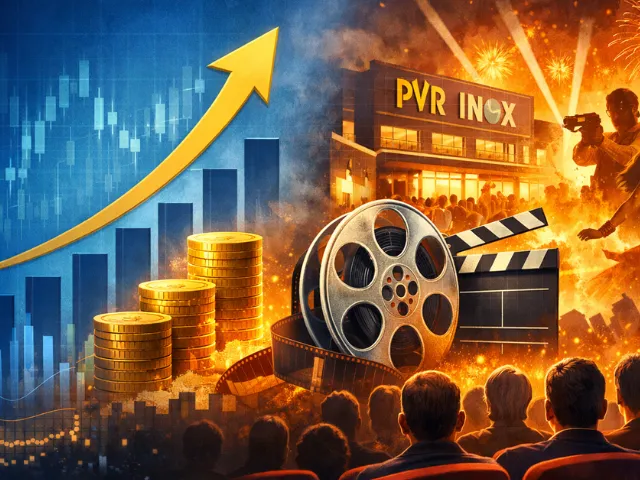
Dhurandhar Effect on PVR Inox: A Blockbuster Boost or Just a Temporary Revival?
Key Takeaways
- Dhurandhar’s strong box office performance has lifted near-term footfalls for PVR Inox
- Single-film successes improve short-term numbers but do not guarantee structural recovery
- Long-term outlook depends on content consistency, costs, and balance sheet health
- Investor sentiment may improve, but sustainability remains the key question
Introduction: When Cinema Success Meets Stock Market Optimism
In India, cinema is not just entertainment, it is also a business that directly influences stock prices. Whenever a big-budget movie delivers strong opening numbers, multiplex stocks often move in tandem. The recent success of Dhurandhar has once again put PVR Inox in the spotlight, with investors debating whether this marks a genuine revival or just a brief relief rally.
For shareholders and market participants, the real task is to separate box office excitement from long-term fundamentals. History suggests that while blockbusters can revive sentiment, sustainable gains depend on much deeper factors.
What Is Driving the Dhurandhar Effect on PVR Inox
Dhurandhar has attracted strong footfalls across major urban centres, particularly during opening weeks. For PVR Inox, higher occupancy directly translates into better revenue visibility.
The immediate impact includes:
- Higher ticket sales and premium format utilisation
- Improved food and beverage revenues, which carry better margins
- Operating leverage benefits as fixed costs get absorbed over higher volumes
Multiplex businesses are highly sensitive to content performance. When audiences turn up in large numbers, even a few weeks of strong occupancy can materially improve quarterly performance.
Short-Term Gains vs Long-Term Sustainability
While the near-term impact is visible, investors must remember that the multiplex business is cyclical. Over the past few years, PVR Inox has faced:
- Uneven content pipeline
- Pressure from rising operating costs
- Competition from streaming platforms
A single successful movie, even a blockbuster, cannot offset structural challenges unless it is followed by a steady stream of strong releases. True recovery comes when footfalls remain consistent across quarters, not just during marquee releases.
Financial Impact: What Improves and What Remains Unchanged
From a financial perspective, Dhurandhar helps PVR Inox improve:
- Revenue per screen
- EBITDA margins in the short term
- Cash inflows during peak weeks
However, the multiplex model has high fixed costs such as rentals, salaries, and maintenance. These costs do not decline during weak content phases. As a result, earnings volatility remains high unless content performance stabilises.
For investors, this means that one strong quarter does not automatically change the long-term earnings trajectory.
Market Context: Why Investors Are Watching Closely
PVR Inox, after industry consolidation, enjoys a dominant position in India’s multiplex space. This scale provides advantages in negotiations with distributors and access to premium formats.
At the same time, the stock is sensitive to sentiment due to:
- Content-driven earnings visibility
- Valuation movements during blockbuster-led rallies
- Changing consumer behaviour post-pandemic
The Dhurandhar effect needs to be viewed in the context of broader industry recovery rather than as a standalone trigger.
Is This a Sentiment Rally or the Start of a Trend
For long-term investors, the focus should be on indicators beyond a single film’s success:
- Upcoming movie slate across languages and genres
- Trends in occupancy and average ticket prices
- Progress on debt reduction and free cash flows
- Expansion of non-ticket revenue streams
If Dhurandhar is followed by multiple successful releases, sentiment could sustain. Otherwise, the stock may revert to tracking broader discretionary spending trends.
Regulatory and Industry Considerations
The exhibition industry operates under state-level regulations related to ticket pricing and local taxes. While there are no immediate regulatory changes impacting PVR Inox, policy clarity remains important for margin stability.
Additionally, content release strategies are evolving as producers balance theatrical releases with digital platforms. This dynamic continues to influence footfall trends.
How Investors Should Approach PVR Inox Now
Rather than reacting to weekend box office numbers, investors should adopt a disciplined approach:
- Avoid chasing short-term price movements
- Focus on quarterly earnings trends
- Align investment decisions with risk appetite and time horizon
Multiplex stocks tend to reward patience during periods of consistent content performance rather than short-lived spikes.
Where Swastika Investmart Supports Smarter Investing
Analysing consumer-facing businesses like multiplex operators requires context and continuous tracking. Swastika Investmart, a SEBI-registered stockbroker, empowers investors with:
- Research-backed insights on media and consumption trends
- Tech-enabled platforms for seamless investing
- Strong customer support for timely decision-making
- Ongoing investor education to decode market signals
This helps investors look beyond headlines and stay focused on fundamentals.
Conclusion: Blockbuster Buzz or Sustainable Revival?
Dhurandhar has clearly delivered a near-term boost to PVR Inox by driving footfalls and improving sentiment. However, whether this translates into a sustainable revival will depend on content consistency, cost control, and evolving audience behaviour.
For investors, Dhurandhar should be treated as a positive data point, not a definitive turning point. Long-term outcomes will be shaped by execution, not excitement.
If you want to track such market-moving events with clarity and confidence, choose a platform that combines research, technology, and investor-first practices.
Frequently Asked Questions
How does a blockbuster movie impact PVR Inox’s performance?
A successful movie increases occupancy and food and beverage sales, improving short-term revenues and margins.
Is Dhurandhar enough to ensure long-term recovery for PVR Inox?
No. Sustained recovery requires a consistent pipeline of successful films and disciplined cost management.
Why do multiplex stocks react quickly to movie releases?
Because revenues are directly linked to footfalls, opening weekend trends often influence investor sentiment.
What are the key risks for PVR Inox investors?
Content inconsistency, high fixed costs, and competition from digital platforms remain key risks.
Should long-term investors focus on single-film performance?
No. Long-term investors should prioritise quarterly trends and structural fundamentals over one-off successes.
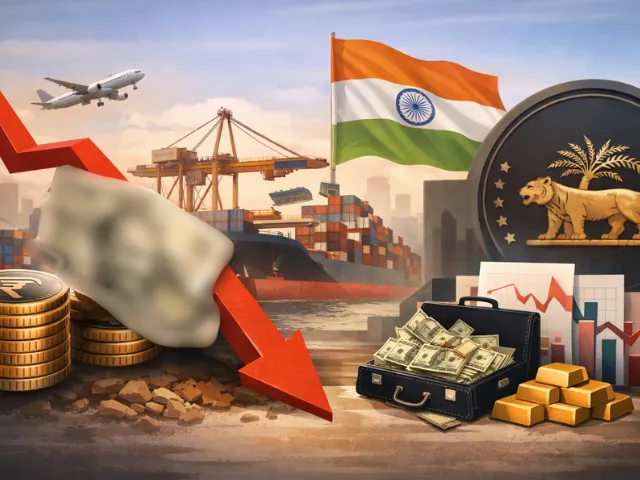
Why Is the Indian Rupee Weak in FY2025–26? Trade Deficit, Capital Flows & RBI Explained
Key Takeaways
- The Indian Rupee’s weakness in FY2025–26 is driven more by global and macro factors than domestic instability
- A widening trade deficit and uneven capital flows have increased pressure on the currency
- The US dollar’s strength and global interest rate trends are key external factors
- RBI follows a market-determined exchange rate and intervenes only to curb excess volatility
- Currency movements have mixed implications for Indian investors and markets
Introduction: Why the Rupee’s Movement Matters to Investors
The Indian Rupee is one of the most closely tracked macro indicators in the financial markets. Even small movements in the USD-INR exchange rate influence inflation, foreign investment flows, corporate earnings, and stock market sentiment.
In FY2025–26, the Rupee has remained under depreciation pressure, raising concerns among investors and import-dependent businesses. However, this weakness is not a standalone event. It reflects a combination of global developments, trade dynamics, and capital flow trends that are shaping most emerging market currencies.
Understanding these drivers is essential before drawing conclusions or reacting emotionally to currency headlines.
Trade Deficit: A Key Pressure Point
One of the primary reasons behind the Rupee’s weakness in FY2025–26 is the widening trade deficit. When a country imports more goods and services than it exports, the demand for foreign currency increases, putting pressure on the domestic currency.
India’s trade deficit has been influenced by:
- Higher crude oil imports amid volatile global energy prices
- Strong domestic demand for electronics, machinery, and capital goods
- Slower export growth in certain sectors due to global economic uncertainty
Since crude oil is priced in dollars, even moderate price increases directly increase India’s dollar demand. This structural factor continues to weigh on the Rupee despite healthy domestic consumption.
Capital Flows: Support That Has Been Uneven
Capital flows play a crucial role in offsetting trade deficits. In FY2025–26, support from the capital account has been relatively weak and uneven.
Foreign Portfolio Investors have shown selective risk appetite, influenced by:
- Higher interest rates in developed markets
- Shifts in global asset allocation toward safer assets
- Short-term volatility in emerging market currencies
While foreign direct investment inflows remain stable in the long term, portfolio flows tend to be more sensitive to global interest rate cycles. This has reduced near-term dollar inflows, adding pressure on the Rupee.
Global Factors Driving Dollar Strength
The Rupee’s movement cannot be analysed in isolation. Global factors have played a decisive role.
Key global drivers include:
- A strong US Dollar Index supported by global risk aversion
- Monetary policy actions by major central banks
- Geopolitical developments affecting commodity prices
- Currency movements across G-10 and emerging market economies
When the dollar strengthens globally, most emerging market currencies face depreciation pressure. In this context, the Rupee’s movement has been relatively orderly compared to peers.
RBI’s Approach: Stability, Not Targeting a Level
A common misconception among retail investors is that the RBI targets a specific exchange rate. In reality, the Rupee is market-determined, with no fixed band or level.
The Reserve Bank of India:
- Monitors currency markets closely
- Intervenes only during periods of excessive volatility
- Focuses on maintaining orderly market conditions
- Tracks global macroeconomic and geopolitical developments
In FY2025–26, RBI has taken several steps to support foreign exchange inflows and improve liquidity, including easing export credit norms, extending timelines for forex outflows in trade transactions, and allowing better utilisation of Special Rupee Vostro accounts.
These measures aim to improve dollar availability without distorting market pricing.
What a Weak Rupee Means for Indian Markets
A depreciating Rupee has both positives and negatives for Indian markets.
Potential benefits include:
- Improved competitiveness for exporters
- Higher rupee earnings for IT and pharma companies with dollar revenues
- Support for sectors with overseas operations
However, challenges remain:
- Higher import costs can fuel inflation
- Pressure on companies with high foreign currency debt
- Short-term volatility in equity and bond markets
For investors, sectoral impact matters more than the headline currency number.
How Investors Should Respond to Rupee Volatility
Instead of reacting to daily currency movements, investors should focus on fundamentals and asset allocation.
Practical steps include:
- Maintaining diversification across asset classes
- Avoiding panic decisions based on short-term currency swings
- Tracking RBI communication and macro data releases
- Understanding sector-wise impact rather than index-level noise
Currency cycles tend to be mean-reverting over the long term, especially for economies with strong growth prospects like India.
Where Swastika Investmart Helps Investors Navigate Macro Volatility
Macro events such as currency movements require context-driven analysis rather than speculation. Swastika Investmart, a SEBI-registered stockbroker, empowers investors with:
- Research-backed insights on macro and market trends
- Tech-enabled platforms for seamless investing
- Strong customer support across market cycles
- Ongoing investor education to decode complex developments
This structured approach helps investors stay disciplined even during volatile phases.
Conclusion: Is the Weak Rupee a Structural Concern?
The Indian Rupee’s weakness in FY2025–26 is largely driven by global forces, trade dynamics, and capital flow trends rather than domestic instability. RBI’s calibrated approach has ensured orderly market conditions without artificial intervention.
For long-term investors, currency movements should be viewed as part of a broader macro cycle, not as standalone signals. Staying informed, diversified, and research-focused remains the most effective strategy.
Frequently Asked Questions
Why is the Indian Rupee weakening in FY2025–26?
The weakness is due to a combination of trade deficit expansion, uneven capital flows, global dollar strength, and higher commodity import costs.
Does RBI control the Rupee’s exchange rate?
No. The Rupee is market-determined. RBI intervenes only to manage excessive volatility.
Is a weak Rupee bad for Indian investors?
Not always. Export-oriented sectors may benefit, while import-heavy businesses may face cost pressure.
Will the Rupee continue to depreciate?
Currency movements depend on global and domestic factors. Long-term trends are influenced by growth, inflation, and capital flows.
How can investors protect against currency volatility?
Diversification, long-term investing, and sector-aware strategies help manage currency-related risks.

Vedanta Demerger Gets NCLT Nod: What the Five-Entity Split Means for Investor
Key Takeaways
- NCLT has approved Vedanta’s plan to demerge into five separately listed companies
- Existing shareholders will receive shares in all new entities
- Demerger aims to unlock value and improve operational focus
- Debt allocation and execution remain key monitorables
- Long-term impact depends on cash flows and governance discipline
Introduction: Why Vedanta’s Demerger Is a Big Market Event
Corporate demergers are often viewed as catalysts for value unlocking in Indian equity markets, especially when large and complex conglomerates are involved. Vedanta’s long-awaited restructuring plan has now crossed a crucial milestone, with the National Company Law Tribunal granting approval for its demerger into five independent listed entities.
The announcement marks a turning point for the oil-to-metals major, which has faced investor concerns around debt, complexity, and transparency in recent years. With regulatory clearance now in place, investors are shifting focus from approval risk to execution and long-term value creation.
What Exactly Has Been Approved by NCLT
Vedanta will demerge its diversified operations into five separate companies, each focused on a distinct business vertical. These include aluminium, oil and gas, zinc, iron ore and steel, and power.
Once the demerger is completed:
- Each business will operate as a standalone listed entity
- Existing Vedanta shareholders will receive shares in all demerged companies
- Shareholding ratios will remain proportionate across entities
The NCLT approval follows earlier concerns raised by government authorities regarding the recovery of outstanding dues. These concerns were addressed during the approval process, paving the way for restructuring.
Why Vedanta Chose the Demerger Route
Large conglomerates often trade at a discount due to complexity and capital allocation inefficiencies. Vedanta’s businesses span commodities with very different risk profiles, cash flows, and investment cycles.
By splitting into focused entities, Vedanta aims to:
- Improve transparency and segment-level accountability
- Allow investors to value each business independently
- Enable better capital allocation and strategic decision-making
- Potentially attract sector-specific institutional investors
Similar value-unlocking attempts have been seen earlier in Indian markets, such as Tata Group’s restructuring initiatives and conglomerate simplification strategies adopted globally.
What This Means for Existing Shareholders
For current shareholders, the demerger does not require any action. Shares will be credited automatically once the process is completed.
Key implications include:
- No immediate dilution of shareholding
- Portfolio exposure to multiple commodity businesses
- Potential re-rating if individual entities command better valuations
However, it is important to note that a demerger itself does not create value overnight. Market perception, earnings visibility, and balance sheet strength of each new entity will drive long-term returns.
Debt, Cash Flows, and the Key Risk Factor
One of the biggest investor concerns around Vedanta has been leverage. Post-demerger, how debt is allocated across the five companies will be critical.
Investors should closely track:
- Which entities carry higher debt burdens
- Ability of each business to generate sustainable cash flows
- Dividend policies post restructuring
Commodity cycles can be volatile, and companies with weaker balance sheets may face pressure during downturns. This makes post-demerger financial discipline a crucial factor.
Market Reaction and Broader Impact on Indian Markets
Demerger announcements often trigger short-term volatility as markets reassess valuations and future earnings. Over the medium term, stocks tend to stabilise once clarity emerges on financials, management strategy, and capital structure.
For Indian markets, Vedanta’s move reinforces a broader trend of corporate simplification and governance-led restructuring. Regulators such as SEBI and NCLT continue to play a vital role in ensuring shareholder interests are protected during such transitions.
How Should Investors Approach Vedanta Post Demerger
Instead of reacting to price movements alone, investors should adopt a structured approach:
- Evaluate each demerged entity independently
- Track management commentary and guidance
- Monitor debt reduction and dividend consistency
- Assess long-term demand outlook for each commodity
This is where research-backed investing becomes essential, as interpreting complex corporate actions requires experience and sector understanding.
Where Swastika Investmart Adds Value
Navigating corporate restructurings like Vedanta’s demerger can be challenging for retail investors. Swastika Investmart, a SEBI-registered stockbroker, supports investors with:
- In-depth equity research and corporate action analysis
- Tech-enabled trading and investment platforms
- Strong customer support for informed decision-making
- Continuous investor education to decode market events
Rather than relying on headlines, investors benefit from structured insights and professional research frameworks.
Conclusion: Is Vedanta’s Demerger Positive for Investors
The NCLT approval removes a major regulatory overhang for Vedanta. While the demerger has the potential to unlock value and improve transparency, its success will depend on execution, balance sheet strength, and governance across the new entities.
For long-term investors, this restructuring marks the beginning of a new phase rather than an end result. Careful monitoring and disciplined investing will be key.
If you want to track such high-impact corporate actions with clarity and confidence, consider investing through a platform that combines research, technology, and investor-first practices.
Frequently Asked Questions
What is Vedanta’s demerger plan?
Vedanta plans to split into five separately listed companies, each focused on a specific business segment.
Do shareholders need to apply for new shares?
No, existing shareholders will automatically receive shares in all demerged entities.
Will the demerger reduce Vedanta’s debt?
The demerger itself does not reduce debt. How debt is allocated and managed post split is crucial.
Is the demerger positive for stock price?
It can unlock value over time, but short-term price movement depends on market sentiment and execution clarity.
When will the demerger be completed?
Timelines will depend on regulatory filings and operational readiness, which the company will communicate.

Should Investors Worry About Promoter Stake Sale? Ola Electric Case Explained
Key Takeaways
- Promoter stake sales are not always negative if control and conviction remain intact.
- Ola Electric’s transaction was promoter-level, not company-driven.
- Removal of pledged shares reduces risk and stock volatility.
- Investors should focus on intent, structure, and post-transaction shareholding.
Introduction: Why Promoter Stake Sales Trigger Investor Anxiety
In Indian equity markets, few disclosures trigger instant panic like the words “promoter stake sale”. Retail investors often associate promoter selling with weakening confidence, business stress, or future dilution. While this fear is understandable, it is not always accurate.
The recent announcement involving Ola Electric founder Bhavesh Agarwal offers a textbook case of why investors must look beyond headlines. A one-time monetisation of a small portion of his personal stake was undertaken to fully repay a Rs 260-crore promoter-level loan. This move resulted in the release of all previously pledged 3.93 percent shares, while the promoter continues to hold nearly 34 percent stake.
So the key question remains: should investors really worry?
Understanding the Ola Electric Promoter Stake Sale
Before drawing conclusions, it is important to understand what actually happened.
Bhavesh Agarwal monetised a limited part of his personal shareholding to repay a loan that was taken at the promoter level. This was not a fundraise by Ola Electric, nor was it linked to operational cash flow needs or business stress.
More importantly, the transaction led to the complete removal of pledged shares. Promoter pledging is often viewed negatively in Indian markets because it can amplify downside risk during periods of stock volatility.
Post the transaction:
- Promoter stake remains around 34 percent
- There is no dilution of control
- No impact on Ola Electric’s operations, strategy, or governance
- Promoter pledges stand eliminated
This distinction between promoter-level financial housekeeping and company-level distress is critical for investors.
Promoter Stake Sale vs Promoter Pledge: Why the Difference Matters
In India, SEBI disclosures require promoters to report both shareholding changes and pledging activity. However, markets often react more sharply to pledges than to outright stake sales.
Promoter pledging can become risky when:
- Share prices fall sharply
- Lenders invoke pledged shares
- Forced selling increases volatility
By eliminating all pledges, Ola Electric’s promoter has reduced a key structural risk. This is generally viewed as a governance-positive step, even if it involves limited stake monetisation.
In contrast, a gradual reduction in promoter holding without clarity on usage of funds or intent may raise concerns. In this case, the purpose was clearly stated and time-bound.
Does Promoter Selling Always Signal Weak Confidence?
Not necessarily.
There are multiple real-world examples in Indian markets where promoter stake sales did not hurt long-term shareholder value. Promoters sell stakes for reasons such as:
- Debt reduction
- Personal liquidity needs
- Estate planning
- Diversification
The key factors investors should evaluate include:
- Size of the stake sale relative to total holding
- Whether control is retained
- Whether the sale is recurring or one-off
- Whether company fundamentals remain unchanged
In Ola Electric’s case, the promoter continues to remain deeply invested with a significant ownership stake and has reiterated long-term conviction in the business.
Market Impact and Investor Sentiment
From a market perspective, such announcements often create short-term volatility. Algorithmic trades and headline-driven reactions can pressure the stock briefly, even when fundamentals remain intact.
However, over the medium to long term, markets tend to reward:
- Cleaner balance sheets
- Lower governance risk
- Transparent disclosures
By eliminating promoter pledges, Ola Electric potentially improves investor perception, especially among institutional investors who closely track pledge levels as part of risk assessment.
Regulatory Context: Why Disclosure Quality Matters
SEBI’s disclosure norms around promoter transactions aim to ensure transparency and protect retail investors. Clear communication regarding the nature, purpose, and impact of such transactions plays a vital role in shaping market confidence.
Ola Electric’s disclosure clearly stated:
- The transaction was at the promoter’s personal level
- There is no operational or governance impact
- Control remains unchanged
Such clarity reduces speculation and aligns with good corporate governance practices encouraged by Indian regulators.
How Should Investors Analyse Promoter Stake Sales Going Forward?
Instead of reacting emotionally, investors should ask structured questions:
- Is the promoter reducing stake materially or marginally
- Is the business funding this sale or is it personal
- Are pledges increasing or reducing
- Does management communication inspire confidence
A single data point should never outweigh long-term fundamentals, execution capability, and industry outlook.
For electric vehicle companies like Ola Electric, investors should continue to track factors such as market share, cost control, product pipeline, and regulatory developments in India’s EV ecosystem.
Where Swastika Investmart Adds Value for Investors
Interpreting corporate actions correctly requires experience, data, and context. This is where a research-driven approach becomes essential.
Swastika Investmart, a SEBI-registered stockbroker, supports investors with:
- In-depth equity research and corporate action analysis
- Advanced tech-enabled trading and investing platforms
- Strong customer support for both new and seasoned investors
- Continuous investor education focused on long-term wealth creation
Rather than reacting to headlines, informed investors rely on structured insights and professional research tools.
Conclusion: Should Investors Worry About Ola Electric’s Promoter Stake Sale?
The Ola Electric case highlights why promoter stake sales should not be viewed in isolation. A one-time monetisation to eliminate pledges, without loss of control or dilution of conviction, is not inherently negative.
For long-term investors, this development appears more like risk reduction than a red flag. As always, sustained business execution will matter far more than short-term shareholding adjustments.
If you want to track such corporate actions with clarity and confidence, consider investing with a platform that prioritises research, transparency, and investor education.
Frequently Asked Questions
Is promoter stake sale always bad for a stock?
No. It depends on intent, size, frequency, and whether control is retained.
Did Ola Electric raise funds through this transaction?
No. The transaction was executed entirely at the promoter’s personal level.
What happens when promoter pledges are removed?
It reduces the risk of forced selling and lowers stock volatility during market stress.
Should retail investors exit when promoters sell shares?
Not automatically. Investors should analyse the context and company fundamentals.
Does this impact Ola Electric’s long-term prospects?
There is no direct operational or strategic impact from this transaction.
%20(3)%20(1).webp)
Indian Economy in 2025: What Happened and What 2026 May Bring
How the Indian Economy Shaped Up in 2025
As 2025 draws to a close, the Indian economy stands on a foundation of resilience rather than exuberance. This year was not about flashy rallies or one sided optimism. It was about balance, recalibration and maturity.
India navigated global headwinds ranging from volatile US bond yields to uneven growth in Europe, while maintaining domestic momentum. The Nifty 50 and Sensex reflected this reality with phases of consolidation interspersed with selective sectoral leadership rather than broad based froth.
Banking and financial services emerged as stabilisers. Capital goods, defence and infrastructure mirrored the government’s capex push. Technology stocks saw valuation resets early in the year but gradually regained investor confidence as global tech indices like the Nasdaq stabilised.
What truly defined 2025 was the strength of domestic participation. Systematic investment flows, growing retail discipline and improving corporate balance sheets helped Indian markets absorb global shocks better than many emerging peers.
Global Indices and Their Influence on India
Indian markets in 2025 did not move in isolation. Global indices played a crucial psychological and liquidity driven role.
The S&P 500’s performance influenced risk appetite during the first half of the year, especially when expectations around US rate cuts kept shifting. The Dow Jones reflected industrial cycle signals, impacting metals and export oriented stocks in India.
Meanwhile, movements in Asian indices like the Nikkei and Hang Seng affected sentiment around manufacturing, electronics and supply chain diversification. India benefited as global investors increasingly viewed it as a structural growth story rather than a tactical trade.
This global linkage reinforced one key trend. India is no longer just reacting to global cues. It is increasingly shaping its own narrative.
What Could 2026 Look Like for the Indian Economy
Growth with Selective Acceleration
Heading into 2026, expectations remain constructive but realistic. GDP growth is likely to stay supported by domestic demand, infrastructure execution and private investment recovery. However, growth will be more quality driven than quantity driven.
Sectors aligned with productivity, digitisation, renewable energy and advanced manufacturing are expected to lead. Consumption may grow steadily but without excess leverage.
Market Outlook for 2026
Indian equity markets in 2026 are expected to reward discipline. Stock selection will matter more than sector chasing. Earnings visibility, balance sheet strength and governance will separate long term winners from speculative noise.
Global indices will continue to influence short term volatility, especially around US elections, geopolitical developments and commodity cycles. However, India’s relative insulation through domestic liquidity and policy stability could keep downside risks contained.
Bond markets may see increased participation as interest rate clarity improves, offering investors a more balanced portfolio approach.
Policy and Regulatory Environment
From a policy standpoint, continuity is likely to be the biggest advantage going into 2026. Regulatory clarity from SEBI, stable RBI communication and ongoing reforms in capital markets, investor protection and financial inclusion strengthen trust.
Digital compliance, faster disclosures and improved transparency further enhance India’s credibility among global investors.
Why This Phase Matters for Investors
The transition from 2025 to 2026 represents a shift from recovery mode to consolidation and compounding mode. This is where informed decision making matters more than timing the market.
Investors who focus on asset allocation, risk management and long term themes are better positioned than those chasing short term momentum. This environment favours research backed investing rather than noise driven trading.
Conclusion: Connecting the Dots for 2026 and Beyond
The Indian economy in 2025 proved one thing clearly. Stability is the new strength. As we move into 2026, the opportunity lies not in predicting every market move but in aligning with India’s structural growth journey.
With strong regulatory oversight, improving corporate quality and expanding investor participation, India continues to stand out in a complex global landscape.
For investors looking to navigate this transition with confidence, having the right research, tools and guidance makes all the difference. Swastika Investmart, a SEBI registered entity, combines in depth market research, tech enabled investing platforms and strong customer support to help investors stay informed and prepared.
If you are planning to align your investments with India’s next phase of growth, this is the right time to take the first step.
Open your account today and stay ahead of the curve


.webp)
.webp)

.webp)





START YOUR INVESTMENT JOURNEY
Get personalized advice from our experts
- Dedicated RM Support
- Smooth and Fast Trading App
