

MCX Profit Jumps 291%: What’s Driving the Explosive Growth in India’s Commodity Market?


Quick Summary
- MCX (Multi Commodity Exchange) reported a jaw-dropping 291% year-on-year surge in net profit, making it one of the most talked-about financial stories in India right now.
- The growth is being driven by a combination of rising commodity trading volumes, increased retail participation, the successful technology platform migration, and strong global commodity price movements.
- Gold, silver, crude oil, and natural gas futures have seen significantly higher turnover, reflecting both hedging demand and speculative interest.
- SEBI's evolving regulatory framework continues to add credibility and depth to India's commodity derivatives market.
- For everyday traders and investors, this is a signal worth understanding — not just as news, but as a window into where the Indian financial market is heading.
The Headline That Stopped Everyone Scrolling
When a company posts a 291% jump in net profit, people pay attention. When that company happens to run the largest commodity exchange in India, the entire financial ecosystem sits up straight.
MCX — the Multi Commodity Exchange of India — recently posted quarterly numbers that left analysts genuinely surprised. Net profit skyrocketed by 291% on a year-on-year basis, while revenue from operations also climbed meaningfully. For an exchange business, these are not small wins. This kind of growth signals something structural, not just seasonal.
So what exactly is going on? Is this a one-quarter wonder, or are we watching the beginning of a longer commodity market renaissance in India?
Let's break it down properly.
What MCX Actually Does (And Why It Matters)
Before diving into the numbers, here is a quick refresher for those who may not follow exchange businesses closely.
MCX is India's premier commodity derivatives exchange, regulated by SEBI (Securities and Exchange Board of India). It allows traders, farmers, importers, exporters, and institutional players to trade futures and options contracts in commodities like gold, silver, copper, crude oil, natural gas, aluminium, zinc, and agricultural products.
Think of it as NSE or BSE, but for commodities instead of stocks.
The exchange plays a critical role in price discovery and risk management for businesses across India. A jeweller in Surat wanting to hedge against gold price volatility, a refinery in Mumbai managing crude exposure — MCX is where they go.
Breaking Down the 291% Profit Surge
Several factors have converged to produce this extraordinary result. None of them are accidental.
Trading Volumes Have Genuinely Exploded
The most direct driver of revenue for any exchange is trading volume — and MCX has seen a significant pickup in average daily turnover (ADTV) across its major contracts. Gold and silver futures, which together account for a large share of MCX revenues, have been particularly active.
Global uncertainty — geopolitical tensions, central bank gold buying, dollar fluctuations — pushed precious metal prices to multi-year highs internationally. That trickles down directly into Indian commodity markets. When gold crosses Rs 75,000 per 10 grams, you better believe trading activity picks up.
Crude oil and natural gas contracts also saw elevated activity, especially during periods of Middle East tension and energy supply concerns that kept prices volatile and traders busy.
The Technology Platform Migration — Finally Paying Off
Those who follow MCX closely will remember the painful transition from their old trading software to a new tech platform. For a period, the migration created operational headaches and temporarily affected volumes. That chapter appears to be firmly behind the company now.
With a stable, faster, and more reliable trading infrastructure in place, MCX has been able to attract more participants, support higher order volumes, and reduce operational drag. This is one of the clearest examples of a one-time investment beginning to pay structural dividends.
Options Trading Is Opening Up
SEBI's gradual expansion of commodity options trading has been a meaningful tailwind. Commodity options — where participants can buy the right but not the obligation to buy or sell a commodity at a price — are a more accessible product for many retail participants compared to high-margin futures contracts.
More product choices mean more participants. More participants mean deeper liquidity. Deeper liquidity means better pricing and even more participation. This virtuous cycle is one MCX has benefited from as options in gold and other commodities have grown.
Institutional and Retail Participation Both Rising
For years, commodity trading in India was seen as the domain of traders and hedgers, not the common investor. That is changing rapidly.
Post-COVID, a significant number of retail investors entered equity markets. As they grew more comfortable with derivatives and market instruments, a portion of that cohort has started exploring commodity markets too. Meanwhile, institutional players — including mutual funds now permitted to participate in commodity derivatives via specific structures — are also adding depth to the market.
MCX sits at the intersection of both these trends.
What This Means for India's Commodity Market Ecosystem
The MCX numbers are not just a corporate story. They reflect something bigger happening in India's financial infrastructure.
India is the world's second-largest gold consumer. It is a major importer of crude oil. Agricultural commodities affect the livelihoods of hundreds of millions of people. A deep, liquid, and technologically sound commodity exchange is not a luxury — it is a necessity for an economy of India's size.
A thriving MCX means:
- Better price discovery for producers and buyers of commodities
- More effective hedging tools for businesses managing input cost risks
- Greater financial inclusion as smaller traders and agricultural participants find accessible risk management options
- Stronger regulatory credibility as SEBI continues to deepen oversight
From a broader market perspective, growing exchange revenues also signal investor confidence in market infrastructure businesses — a category that has seen significant interest from both domestic institutions and foreign portfolio investors.
A Quick Look at the Numbers in Context
To appreciate the 291% figure properly, consider this: exchange businesses are fundamentally operating leverage plays. Their fixed costs — technology, compliance, staff — are largely static. Every incremental rupee of trading volume generates revenue at very high margins because the cost to process that volume is minimal once infrastructure is in place.
This means when volumes rise sharply, profits can rise even more sharply. That is exactly what happened. Revenue growth was strong, but profit growth was explosive because the cost base barely moved.
It is the same reason NSE and BSE have historically been extremely profitable businesses — and it explains why MCX's numbers look the way they do right now.
Is This Growth Sustainable?
Fair question. A 291% jump naturally raises eyebrows about whether this is repeatable.
The honest answer: the rate of growth will likely moderate. You simply cannot maintain triple-digit profit growth indefinitely. But the underlying drivers — rising volumes, a stable tech platform, expanding product suite, growing retail participation — are structural, not one-off.
What analysts will watch closely:
- Whether ADTV (average daily turnover) holds at elevated levels or pulls back
- SEBI's continued regulatory support for new commodity products
- Competition dynamics, particularly from BSE's commodity segment
- Global commodity price trends, which heavily influence activity on MCX
The company is also in a relatively strong position with a clean balance sheet and no debt to speak of — which means future investments in technology or new products can be made from a position of strength.
What Should Traders and Investors Take Away?
If you are an active trader, the MCX growth story is a practical reminder that commodity derivatives deserve a place in your awareness, if not your portfolio. Gold futures, crude oil contracts, and silver options are not exotic instruments anymore — they are accessible, regulated products on a well-governed exchange.
If you are a long-term investor, exchange and financial infrastructure businesses have a track record of performing well over time because they sit at the centre of financial activity without taking directional risk themselves. When markets are active — in any direction — exchanges make money.
And if you are simply trying to understand where Indian financial markets are heading, the MCX story is a useful data point. India's commodity market is growing up, deepening, and becoming more sophisticated. That is good news for the economy.
Frequently Asked Questions
What is MCX and what does the 291% profit jump mean?MCX (Multi Commodity Exchange) is India's largest commodity derivatives exchange, regulated by SEBI. A 291% profit jump means the company's net profit grew nearly four times compared to the same quarter last year, driven largely by higher trading volumes, a recovered technology platform, and favourable commodity price movements.
Which commodities drove the highest volumes on MCX?Gold and silver futures have historically dominated MCX volumes, and recent quarters have been no different. Crude oil and natural gas contracts have also seen strong activity due to global energy market volatility. Together, these four commodities account for the majority of MCX's turnover.
Is commodity trading on MCX safe and regulated?Yes. MCX operates under SEBI's regulatory framework. All brokers offering commodity trading must be registered with SEBI and the exchange, and margin requirements, settlement mechanisms, and grievance redressal systems are all governed by clear rules. As with any derivative product, understanding the instrument before trading is essential.
Can retail investors participate in MCX trading?Absolutely. Retail investors can trade commodity futures and options on MCX through any SEBI-registered commodity broker. Many full-service and discount brokers now offer unified platforms where you can trade equities and commodities from the same account.
How is MCX different from NSE or BSE?NSE and BSE primarily deal with equity and equity derivatives (stocks, stock futures, index options). MCX specialises in commodity derivatives — gold, silver, crude oil, metals, and agri commodities. There is some overlap now as BSE has expanded into commodities, but MCX remains the dominant player in this space.
Conclusion: India's Commodity Market Has Arrived
The MCX profit story is not just a quarterly earnings beat. It is a signal that India's commodity derivatives market is entering a new phase of growth — one characterised by greater participation, better technology, expanding products, and stronger regulatory foundations.
Whether you are a trader looking to explore new markets, a business owner seeking to hedge input costs, or an investor looking for exposure to financial infrastructure — the commodity market ecosystem in India is worth your attention right now.
If you are ready to explore commodity trading alongside equities and other instruments, Swastika Investmart offers a SEBI-registered, full-service platform designed for both beginners and experienced market participants. With robust research tools, dedicated customer support, a seamless tech-enabled trading experience, and a strong commitment to investor education, Swastika makes navigating markets like MCX genuinely accessible.
Big Budget





.avif)
.avif)
.avif)
.avif)
.avif)














.avif)
.avif)
.avif)
.avif)
Latest Articles

TCS Q4 FY26 Review: Record Deal Wins vs Weak BFSI – What Should Investors Focus On?


Key Takeaways
- Net profit rose 12% YoY to ₹13,718 crore with strong sequential recovery
- Revenue grew 10% YoY, supported by solid deal wins and AI momentum
- BFSI segment remains weak, impacting near-term growth outlook
- Final dividend at ₹31/share came below expectations
A Strong Finish with Mixed Signals
India’s IT bellwether, Tata Consultancy Services, delivered a solid yet nuanced performance in Q4 FY26.
The company reported a 12% year-on-year rise in net profit to ₹13,718 crore, while revenue grew 10% YoY to ₹70,698 crore. Sequentially, revenue increased 5.4%, reflecting steady demand despite global uncertainties.
However, the story is not entirely straightforward. Strong deal wins and AI momentum stood out as positives, while weakness in the BFSI segment and a lower-than-expected dividend created some caution.
Profit Recovery After Q3 Impact
One of the biggest highlights was the sharp rebound in profitability.
In Q3 FY26, profits were impacted by a one-time hit of around ₹2,128 crore due to labour code changes. With that behind, Q4 saw a strong recovery.
Key profitability metrics
- Net Profit: ₹13,718 crore
- Sequential growth: ~29%
- Net Margin: 19.4%
- EPS growth: 12.2% YoY
This recovery indicates that TCS has returned to a stable earnings trajectory, which is a positive signal for long-term investors.
Revenue Growth Remains Healthy
TCS posted ₹70,698 crore in revenue, reflecting steady growth across geographies.
What stands out
- QoQ growth: 5.4%
- Constant currency growth: 1.2%
- Stable demand despite global macro challenges
While growth is not explosive, it shows resilience. In a slowing global economy, maintaining steady revenue growth is itself a positive indicator.
AI Momentum and Record Deal Wins
A major highlight of Q4 FY26 was TCS’s aggressive push into artificial intelligence.
The company partnered with global tech leaders like OpenAI, Nvidia, Cisco, and ServiceNow, strengthening its position in next-generation technologies.
Key highlights
- Total Contract Value: $12 billion
- Multiple mega deals signed
- AI-led revenue crossed $2.3 billion annually
Why this matters
AI is becoming a core driver of IT spending globally. Enterprises are investing heavily in automation, data analytics, and machine learning.
For example, global banks are increasingly adopting AI for fraud detection and customer analytics. Even retail companies are using AI to optimize supply chains.
TCS positioning itself strongly in this space ensures long-term growth visibility.
BFSI Weakness Continues to Be a Drag
Despite strong deal wins, the BFSI segment remains under pressure.
This is critical because BFSI contributes a large share of TCS revenues.
Reasons for slowdown
- Global banking sector uncertainty
- Regulatory tightening
- Reduced discretionary IT spending
Banks are currently prioritizing cost control over expansion. As a result, IT budgets are being delayed or reduced.
For investors, this is the biggest near-term risk factor.
Margins Stable, Efficiency Intact
TCS maintained strong operational efficiency during the quarter.
Key metrics
- Operating Margin: 25.3%
- Improvement: 10 basis points QoQ
This shows that despite revenue pressures, the company continues to manage costs effectively.
Stable margins provide downside protection for the stock, even during periods of slower growth.
Attrition and Hiring Trends
The company reported a slight increase in attrition.
Workforce insights
- Attrition: 13.7% (vs 13.5% in Q3)
- Headcount: 5,84,519 employees
While the increase is marginal, it indicates a gradually stabilizing job market in IT.
Hiring remains cautious, reflecting uncertainty in demand.
Dividend: Strong but Below Expectations
TCS announced a final dividend of ₹31 per share, taking the total FY26 payout to ₹110 per share.
However, this came below market expectations of around ₹40 per share for the final dividend.
Investor takeaway
- Dividend remains strong in absolute terms
- But lower-than-expected payout may slightly impact sentiment
For income-focused investors, TCS still remains a reliable dividend-paying company.
Impact on Indian Markets
TCS results often act as a benchmark for the entire IT sector.
Sector impact
- Signals similar trends for Infosys, HCL Tech, and Wipro
- IT stocks may remain range-bound in the near term
- Long-term outlook supported by digital transformation
Broader market impact
Since IT stocks have a significant weight in benchmark indices, TCS performance can influence overall market sentiment.
A stable TCS helps support the downside, but lack of strong growth may cap upside momentum.
What Should Investors Focus On Now?
Instead of reacting to short-term noise, investors should track key structural trends.
1. BFSI Recovery
Watch for improvement in global banking tech spending.
2. AI Revenue Growth
AI is emerging as a key growth engine.
3. Deal Execution
Large deal wins must translate into revenue.
4. Global Macros
US and Europe remain crucial for IT demand.
A Practical Perspective for Investors
Consider this scenario.
A global bank delays its IT upgrade project due to regulatory pressure. This impacts TCS revenues in the short term.
But once stability returns, the same bank may restart the project at a larger scale, boosting future growth.
This is exactly the kind of cycle the IT sector is currently going through.
How Swastika Investmart Helps You Navigate Such Markets
In a market full of mixed signals, having the right guidance becomes essential.
Swastika Investmart offers:
- SEBI-registered credibility ensuring trust and compliance
- Strong research-backed insights on sectors like IT
- Advanced tools for data-driven investment decisions
- Dedicated customer support
- Focus on investor education
Rather than reacting emotionally to quarterly results, a research-driven approach can help you stay ahead.
FAQs
1. Is TCS Q4 FY26 result positive?
Yes, overall performance is solid with strong profit growth and deal wins, but BFSI weakness remains a concern.
2. Why is BFSI slowdown important?
Because it contributes a large portion of TCS revenue, impacting overall growth.
3. What is driving TCS future growth?
AI adoption, large deal wins, and digital transformation demand.
4. Is TCS a good long-term investment?
TCS remains a strong long-term player due to its consistent performance and global presence.
5. Why did dividend disappoint investors?
The final dividend was lower than market expectations, despite being strong overall.
Conclusion
TCS Q4 FY26 results reflect a company navigating through a transition phase.
Strong deal wins and AI momentum provide confidence for the future, while BFSI weakness and dividend disappointment highlight near-term challenges.
For investors, the key lies in focusing on long-term structural growth rather than short-term volatility.
If you want to make smarter investment decisions backed by expert research and powerful tools, you can start your journey here:

NHPC’s ₹26,070 Crore Hydroelectric Project: A Game-Changer for Growth?
Key Takeaways
- NHPC Ltd receives approval for a ₹26,070 crore hydroelectric project
- Project to be developed in partnership with the Arunachal Pradesh government
- Strengthens India’s renewable energy push and hydro capacity
- Long gestation period but strong long-term visibility
- Execution, funding, and timelines remain key factors
Introduction
India’s renewable energy ambitions are gaining momentum, and hydropower is once again coming into focus. In a significant move, NHPC Ltd has received approval for a ₹26,070 crore investment in the Kamala Hydroelectric Project.
This development not only strengthens NHPC’s project pipeline but also signals a broader policy push toward clean and sustainable energy. For investors, the key question is whether this project can truly act as a growth catalyst or if challenges around execution and timelines may limit its near-term impact.
Project Overview
The Kamala Hydroelectric Project will be implemented through a joint venture between NHPC and the Government of Arunachal Pradesh.
Key highlights
- Total investment: ₹26,070 crore
- Location: Arunachal Pradesh
- Structure: Joint venture model
- Objective: Expand hydroelectric capacity
Hydropower projects are capital-intensive and long-term in nature, often taking several years to become operational.
Strategic Importance of the Project
Strengthening Renewable Energy Portfolio
Hydropower plays a crucial role in balancing renewable energy sources like solar and wind. Unlike intermittent sources, hydro provides stable and flexible power.
For NHPC, this project enhances its position as a leading player in India’s renewable energy ecosystem.
Government Policy Support
India has been actively promoting renewable energy through policy initiatives and incentives. Large-scale hydro projects are now being recognized as an essential part of this transition.
Approvals from bodies like the Cabinet Committee on Economic Affairs reflect strong government backing for such investments.
Regional Development
Projects in the Northeast region contribute to:
- Infrastructure development
- Employment generation
- Improved connectivity
This aligns with the government’s broader focus on regional growth.
Impact on Indian Stock Market
Positive Signals for Investors
The project sends a strong message about NHPC’s growth ambitions.
- Expands long-term revenue visibility
- Reinforces leadership in hydro power
- Aligns with India’s clean energy goals
Such developments often improve investor sentiment, especially in PSU and energy stocks.
Sectoral Impact
The announcement may have a broader impact on:
- Renewable energy companies
- Power equipment manufacturers
- Infrastructure and EPC players
As hydro projects scale up, ancillary industries also benefit.
Financial Implications
High Capital Investment
A project of this scale requires significant funding.
- Potential increase in debt levels
- Long payback period
- Gradual revenue realization
Investors should be mindful that returns from such projects are not immediate.
Revenue Visibility
Once operational, hydro projects generate stable and predictable cash flows. This makes them attractive from a long-term perspective.
Risks to Consider
Execution Risk
Large infrastructure projects often face delays due to:
- Land acquisition challenges
- Environmental clearances
- Logistical constraints
Cost Overruns
Inflation in raw materials and delays can increase project costs, impacting profitability.
Regulatory and Environmental Factors
Hydropower projects require multiple approvals and are subject to environmental scrutiny, which can affect timelines.
Real-World Context
Globally, countries are increasingly investing in hydroelectric power as part of their renewable energy mix. In India, companies like NHPC are at the forefront of this transition.
With rising electricity demand and a push for clean energy, hydro projects are expected to play a key role in ensuring grid stability.
Investor Perspective
Short-Term View
- Limited immediate earnings impact
- Possible neutral to mild positive market reaction
Long-Term View
- Strong revenue visibility once operational
- Strategic alignment with energy transition
- Potential for steady cash flows
Investors with a long-term horizon may find such projects attractive.
Regulatory Framework
Projects of this scale operate under strict regulatory oversight. Institutions like the Securities and Exchange Board of India ensure transparency for listed companies, while government approvals add credibility to large investments.
What Should Investors Do?
Investors should take a balanced approach.
- Evaluate NHPC’s overall project pipeline
- Monitor funding strategy and execution progress
- Consider long-term potential rather than short-term gains
Hydropower investments are typically suited for patient investors.
FAQs
What is the size of NHPC’s new project?
The project involves an investment of ₹26,070 crore.
Where will the project be developed?
It will be developed in Arunachal Pradesh through a joint venture.
Is this project positive for NHPC stock?
It is positive from a long-term perspective but may not have an immediate impact on earnings.
What are the key risks?
Execution delays, cost overruns, and regulatory challenges are the main risks.
Should investors invest in NHPC now?
Investors should consider their risk appetite and investment horizon before making a decision.
Conclusion
NHPC’s ₹26,070 crore hydroelectric project reflects a strong commitment to India’s renewable energy future. While the scale of the investment is impressive, the benefits will unfold gradually over time.
For investors, this is not a short-term trigger but a long-term structural story. Tracking execution, funding, and policy developments will be key to understanding the real impact.
Navigating such opportunities requires the right guidance and tools. With SEBI registration, robust research capabilities, advanced technology, and a strong focus on investor education, Swastika Investmart empowers you to make informed investment decisions.

Om Power Transmission IPO: Opens 9 April, Closes 13 April – Is It Worth Investing for Listing Gains or Long Term?
Key Takeaways
- Om Power Transmission Ltd operates in the power EPC segment with 14+ years of experience
- IPO opens on 9 April 2026 and closes on 13 April 2026
- Order book stands at ₹744.60 crore, supporting revenue visibility
- Strong recent growth, but sustainability remains a concern
- Valuations appear to factor in near-term positives
Introduction
India’s power infrastructure is expanding rapidly, driven by rising electricity demand, renewable integration, and government initiatives. Amid this backdrop, Om Power Transmission Ltd is entering the primary market with its IPO.
The offering has caught the attention of investors, especially those tracking SME and infrastructure plays. With a decent order book and consistent growth, the company presents an interesting opportunity. However, the key question remains. Is this IPO suitable for listing gains, or does it offer long-term value?
IPO Details at a Glance
.avif)
The relatively small issue size makes it a focused opportunity, typically attracting niche investor interest.
Business Overview
Om Power Transmission Ltd is engaged in engineering, procurement, and construction services for the power distribution sector.
Core offerings include
- Transmission line EPC projects
- Substation EPC services
- Underground cabling
- Operation and maintenance services
The company focuses on high-voltage and extra-high voltage projects, which are essential for efficient power transmission and grid stability.
Geographic Expansion
Initially focused on Gujarat, the company has expanded its presence to:
- Rajasthan
- Punjab
- Union Territories like Dadra and Nagar Haveli, Daman and Diu
This expansion reflects its growing execution capabilities and ability to secure projects across regions.
Financial Performance and Growth
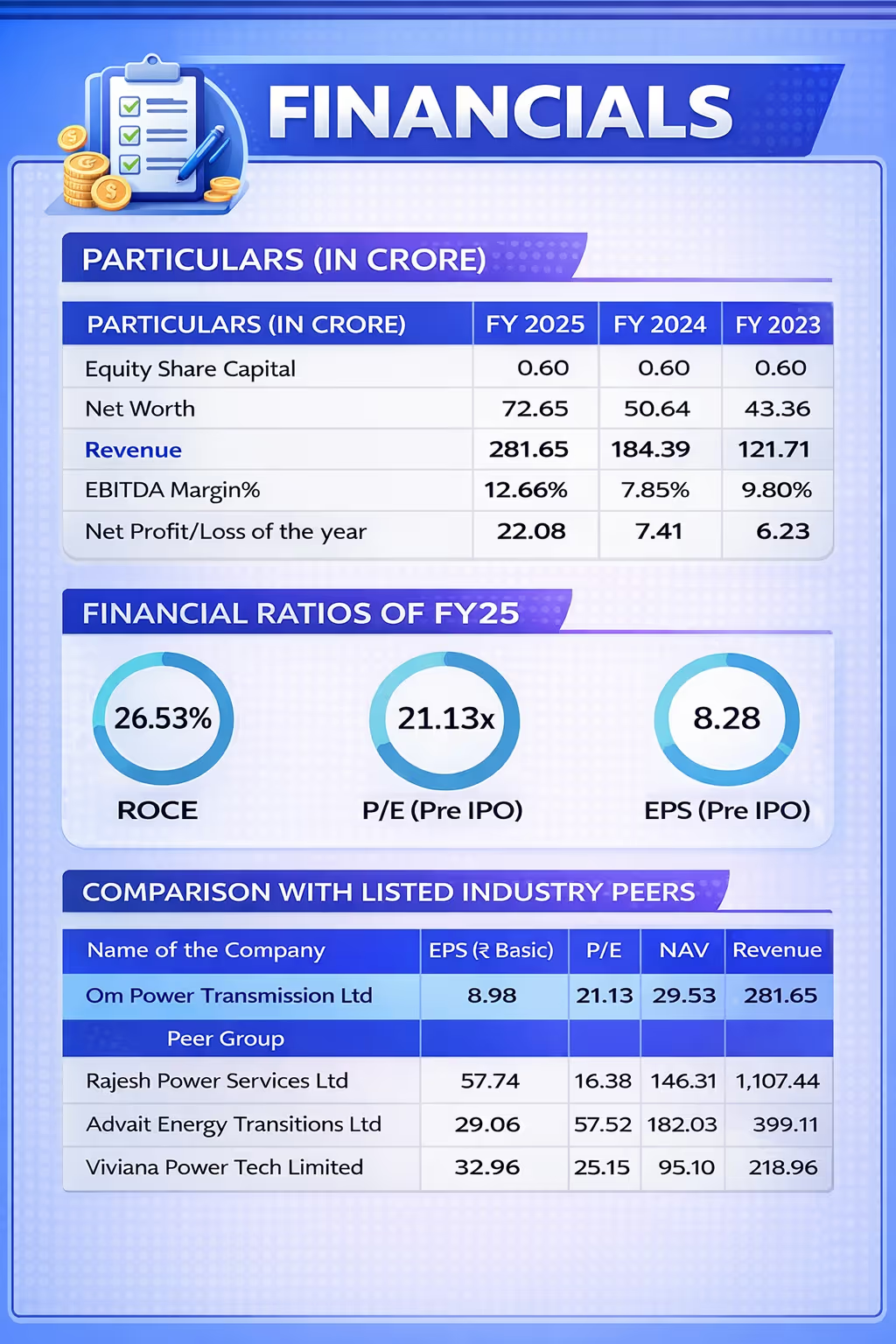
The company has reported consistent growth in both revenue and profitability over recent years.
Key positives
- Strong order book of ₹744.60 crore
- Increasing project execution capabilities
- Expansion into new geographies
However, a sharp jump in profitability from FY25 onwards raises questions about sustainability. Investors should assess whether this growth is structural or driven by temporary factors.
Industry Outlook
India’s power sector is undergoing a transformation, supported by:
- Renewable energy expansion
- Grid modernization initiatives
- Rising electricity demand
EPC companies play a critical role in this ecosystem, executing projects that support infrastructure development.
Valuation Analysis
At the upper price band, the IPO appears to factor in much of the near-term growth.
What this means
- Limited margin of safety for investors
- Upside depends on execution and order inflows
- Market expectations are already high
In SME IPOs, valuations often play a crucial role in determining listing performance.
Listing Gains vs Long-Term Investment
For Listing Gains
- Small issue size may create demand-supply imbalance
- Sectoral interest in power infrastructure could support sentiment
- Short-term gains are possible but not guaranteed
For Long-Term Investors
- Strong order book provides visibility
- Industry tailwinds remain supportive
- Execution and margin sustainability are key
Investors with a long-term horizon may consider moderate exposure, provided they are comfortable with the risks.
Risks to Consider
Profitability Sustainability
Recent sharp growth may not sustain over the long term.
Execution Risk
Delays or cost overruns can impact margins.
Valuation Risk
Fully priced valuations limit upside potential.
SME Segment Risks
Lower liquidity and higher volatility compared to mainboard IPOs.
Market Context
The IPO comes at a time when markets are influenced by global factors like crude oil prices, interest rates, and foreign investor flows.
Infrastructure and power sector stocks have been in focus due to long-term growth themes. However, volatility in broader markets can impact IPO performance.
Regulatory Framework
IPO processes in India are regulated by the Securities and Exchange Board of India, ensuring transparency and investor protection.
Investors should always review the prospectus and risk factors before applying.
What Should Investors Do?
A balanced approach is advisable.
- Avoid aggressive allocation
- Focus on fundamentals rather than hype
- Track post-listing performance and execution
This IPO may suit investors with a moderate risk appetite and a long-term perspective.
FAQs
What are the IPO dates for Om Power Transmission?
The IPO opens on 9 April 2026 and closes on 13 April 2026.
What is the price band of the IPO?
The price band is ₹166 to ₹175 per share.
Is this IPO good for listing gains?
There is potential for listing gains due to the small issue size, but it is not guaranteed.
What are the key risks?
Key risks include sustainability of profitability, execution challenges, and valuation concerns.
Should long-term investors consider this IPO?
Long-term investors can consider moderate allocation after evaluating fundamentals and risks.
Conclusion
The IPO of Om Power Transmission Ltd offers a mix of opportunity and caution. While the company benefits from strong sector tailwinds and a healthy order book, concerns around valuation and sustainability cannot be ignored.
For investors, the decision should depend on their risk appetite and investment horizon. Listing gains may be uncertain, but long-term potential will depend on execution and consistent growth.
Choosing the right investment opportunities becomes easier with the right guidance. With SEBI registration, advanced research tools, strong customer support, and a focus on investor education, Swastika Investmart helps you invest with confidence.
KEC International Wins ₹2,518 Crore Orders: Strong Order Book, Stronger Outlook?
Key Takeaways
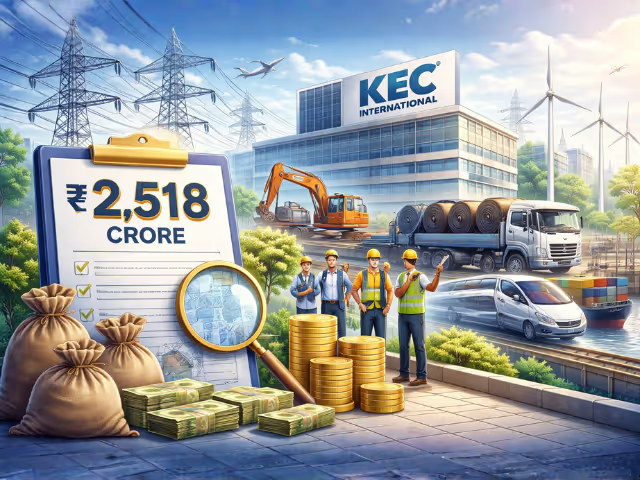
- KEC International Ltd secures ₹2,518 crore worth of new orders
- Includes its largest commercial real estate project in the civil segment
- Participation in the Kavach railway safety programme adds diversification
- Strong order inflow supports revenue visibility
- Execution and margin sustainability remain key monitorables
Introduction
India’s infrastructure story continues to gain momentum, and companies in the EPC space are at the center of this growth. Recently, KEC International Ltd announced fresh orders worth ₹2,518 crore, attracting investor attention.
The development raises an important question. Does this order win strengthen KEC’s growth outlook, or are there underlying risks investors should consider?
Breaking Down the Order Win
The new orders include a mix of projects that highlight KEC’s diversified capabilities.
Key highlights
- Largest commercial real estate project in the civil segment
- Joint venture order under the Kavach train safety programme
- Continued presence across infrastructure verticals
This diversification is crucial as it reduces dependency on a single segment and provides stability during market cycles.
Why Order Book Matters in EPC Companies
For EPC companies, the order book acts as a forward indicator of future revenue.
What a strong order book means
- Better revenue visibility over the next few quarters
- Improved business confidence
- Potential for consistent cash flows
In KEC’s case, steady order inflows suggest that demand remains strong in infrastructure and construction sectors.
Sectoral Tailwinds Supporting Growth
India is currently witnessing a strong push in infrastructure development.
Key drivers
- Government spending on railways and urban infrastructure
- Focus on safety systems like Kavach
- Growth in commercial real estate
Projects like the Kavach system indicate increasing emphasis on railway safety, which could open new opportunities for EPC players.
Real-World Context: Infrastructure Push in India
The Indian government has been actively investing in large-scale infrastructure projects.
Examples include:
- Expansion of railway networks
- Smart city developments
- Industrial corridor projects
Companies like KEC International are well-positioned to benefit from this trend, given their diversified execution capabilities.
Market Impact and Investor Sentiment
Positive Factors
- Strong order inflow improves growth visibility
- Diversified project mix reduces risk
- Participation in government-backed initiatives
These factors often lead to improved investor sentiment, especially in a capital-intensive sector like infrastructure.
Risks to Watch
Despite the positive outlook, investors should remain cautious about certain factors.
- Execution delays can impact revenue recognition
- Rising input costs may pressure margins
- Working capital requirements can remain high
EPC companies typically operate on thin margins, making efficient execution critical.
Financial Perspective
Order wins are encouraging, but they need to translate into actual financial performance.
Key metrics to track
- Revenue growth
- EBITDA margins
- Order execution timeline
- Debt levels
Sustained improvement in these areas will determine long-term value creation.
Competitive Landscape
KEC operates in a competitive EPC market alongside several established players.
What sets KEC apart is:
- Strong execution track record
- Diversified presence across sectors
- Ability to secure large-scale projects
However, competition remains intense, and pricing pressures can affect profitability.
Regulatory and Policy Support
Infrastructure development in India is supported by policy initiatives and regulatory frameworks.
Organizations like the Securities and Exchange Board of India ensure transparency in disclosures, helping investors make informed decisions.
Government initiatives in railways, power, and urban infrastructure continue to create opportunities for EPC companies.
Investor Strategy: What Should You Do?
For investors, the key lies in balancing optimism with caution.
Short-Term View
- Stock may react positively to order inflow news
- Momentum-driven movement possible
Long-Term View
- Growth depends on execution and margin stability
- Consistent order inflows are a positive sign
Investors should focus on fundamentals rather than short-term news-driven moves.
FAQs
What orders has KEC International won?
KEC International has secured orders worth ₹2,518 crore across civil and railway segments.
Why is the Kavach project important?
The Kavach system is a railway safety initiative that improves train operations and reduces accidents, creating long-term opportunities.
How do order wins impact EPC companies?
Order wins improve revenue visibility and indicate strong business demand.
Are there risks associated with EPC companies?
Yes, risks include execution delays, margin pressure, and high working capital requirements.
Is KEC International a good long-term investment?
It depends on execution efficiency, financial performance, and overall infrastructure demand.
Conclusion
The ₹2,518 crore order win by KEC International reinforces its position in India’s growing infrastructure space. While the strong order book supports a positive outlook, investors must closely monitor execution and financial performance.
Infrastructure remains a long-term growth theme in India, but disciplined investing is essential to navigate sector-specific risks.
If you are looking to explore such opportunities with the right guidance, having a reliable investment platform is crucial. With SEBI registration, advanced research tools, strong customer support, and a focus on investor education, Swastika Investmart helps you make informed decisions.

Bosch Ltd’s Big Acquisition: Bullish Signal or Strategic Realignment?
Key Takeaways
- Bosch Ltd plans to acquire 100% stake in Bosch Chassis Systems India
- Deal size stands at ₹9,068 crore, indicating a major internal restructuring
- Move may improve operational efficiency and margin visibility
- Short-term valuation concerns remain, but long-term outlook looks stable
- Auto component sector may see increased consolidation trends
Introduction
In a significant corporate development, Bosch Ltd has approved the acquisition of a 100% stake in Bosch Chassis Systems India from its group entities. Valued at over ₹9,000 crore, this move is not just a routine transaction but a strategic shift that could reshape Bosch’s India operations.
For investors, the key question is simple. Is this acquisition a bullish signal indicating future growth, or is it merely a restructuring exercise with limited upside?
Understanding the Deal Structure
The acquisition involves Bosch consolidating its ownership in Bosch Chassis Systems India, effectively bringing a key subsidiary fully under its control.
Why this matters
- Simplifies corporate structure
- Improves operational integration
- Enhances control over core business segments
Such internal consolidations are common among global companies looking to streamline operations in high-growth markets like India.
Strategic Rationale Behind the Acquisition
Strengthening Core Capabilities
Bosch Chassis Systems plays a crucial role in automotive safety and control systems. By acquiring full ownership, Bosch can align its India operations more closely with global strategies.
Preparing for EV Transition
India’s auto industry is rapidly evolving towards electric vehicles. Bosch’s move may be aimed at:
- Enhancing R&D capabilities
- Improving product integration
- Positioning itself in next-generation mobility solutions
Operational Efficiency
Full ownership reduces inter-company complexities and allows faster decision-making. This can lead to:
- Better cost management
- Improved margins over time
Impact on Indian Stock Market
Positive Signals
For investors, this deal sends a few encouraging signals:
- Confidence in India growth story
- Long-term commitment by global parent
- Potential margin expansion through integration
Auto component companies often benefit from such structural improvements, especially in a competitive market.
Concerns to Watch
However, not everything is outright positive.
- Large cash outflow may impact short-term financials
- Valuation concerns if synergies take time to reflect
- Execution risk in integration
Markets usually take time to fully price in the benefits of such restructuring.
Sectoral Perspective: Auto Components in Focus
India’s auto component sector is undergoing rapid transformation. Factors driving this include:
- Shift towards electric vehicles
- Increasing localization
- Government initiatives like PLI schemes
Bosch’s move could trigger similar consolidation trends across the sector, as companies look to scale up and remain competitive.
Real-World Context
Globally, Bosch operates with a strong focus on integrated systems. Similar restructuring moves have been seen in other markets where the company aims to centralize control and improve efficiency.
In India, where growth potential remains high, such steps are often taken to align operations with future demand.
Investor Perspective: Bullish or Neutral?
Short-Term View
- Limited immediate upside
- Possible pressure on financial metrics
- Market may remain cautious
Long-Term View
- Stronger business structure
- Better growth alignment
- Improved operational efficiency
For long-term investors, the move appears more strategic than opportunistic.
Regulatory and Governance Angle
Transactions between group entities are closely monitored under Indian regulations. Frameworks by Securities and Exchange Board of India ensure transparency and fairness in such deals.
This adds a layer of confidence for investors evaluating the transaction.
What Should Investors Do?
Investors should avoid reacting purely to headlines and instead focus on:
- Integration progress over the next few quarters
- Margin trends post-acquisition
- Management commentary in earnings calls
Such factors will determine whether the acquisition delivers real value.
FAQs
What is Bosch Ltd acquiring?
Bosch Ltd is acquiring a 100% stake in Bosch Chassis Systems India from its group entities.
Why is this acquisition important?
It helps simplify operations, improve efficiency, and align the company with future growth trends like EVs.
Is this a positive signal for investors?
It is positive from a long-term perspective, but short-term impact may remain neutral due to valuation concerns.
Will this impact Bosch’s financials?
There may be short-term pressure due to the large deal size, but long-term benefits could offset this.
Should investors buy Bosch Ltd stock now?
Investors should evaluate valuation, long-term strategy, and execution before making a decision.
Conclusion
Bosch Ltd’s ₹9,068 crore acquisition is a classic example of strategic realignment rather than a quick growth trigger. While the deal strengthens the company’s long-term positioning, especially in a transforming auto sector, it may not immediately translate into stock price gains.
For investors, patience and a long-term perspective will be key. Tracking execution and financial performance post-acquisition will provide clearer signals.
If you are looking to invest with confidence in such evolving market opportunities, having the right platform makes all the difference. With SEBI registration, strong research capabilities, advanced technology, and investor-focused services, Swastika Investmart supports informed decision-making.

Tax Planning vs Tax Evasion: Understanding the Difference
Key Takeaways
- Tax planning is legal and helps reduce tax liability using government-approved provisions
- Tax evasion is illegal and can lead to penalties, prosecution, and scrutiny
- Understanding the difference is essential for financial safety and compliance
- Smart tax planning improves wealth creation and long-term investing
- Indian tax laws clearly distinguish between legal planning and illegal evasion
Why This Topic Matters for Every Taxpayer
When it comes to managing taxes, most individuals and investors aim to reduce their tax burden. However, there is a fine line between what is legally allowed and what can get you into serious trouble.
Understanding the difference between tax planning and tax evasion is not just important for compliance, but also for building long-term financial security.
In India, tax laws are governed by the Income Tax Department, and non-compliance can lead to strict penalties. Knowing where to draw the line can save both money and stress.
What is Tax Planning?
Tax planning refers to the legal use of tax provisions to minimize your tax liability.
It involves structuring your finances in a way that takes advantage of deductions, exemptions, and benefits provided under the Income Tax Act.
Common examples of tax planning:
- Investing under Section 80C (ELSS, PPF, LIC)
- Claiming deductions for health insurance under Section 80D
- Using HRA and standard deduction benefits
- Setting off capital losses against gains
These are all legitimate strategies encouraged by the government to promote savings and investments.
Real-world example:
A salaried individual invests ₹1.5 lakh in ELSS funds and reduces taxable income under Section 80C. This is completely legal and considered smart financial planning.
What is Tax Evasion?
Tax evasion, on the other hand, involves illegal methods to avoid paying taxes.
This includes hiding income, falsifying documents, or misreporting financial information.
Common examples of tax evasion:
- Not reporting cash income
- Claiming fake deductions
- Using benami transactions
- Not declaring capital gains from stock market trades
Tax evasion is a punishable offense and can lead to penalties, interest, and even prosecution under Indian laws.
Real-world example:
An individual earns income from trading but does not report it while filing returns. This is tax evasion and can attract scrutiny notices.
Key Differences Between Tax Planning and Tax Evasion
Legality
Tax planning is legal and compliant with the law.
Tax evasion is illegal and punishable.
Intent
Tax planning aims to optimize tax liability within the law.
Tax evasion aims to hide income and avoid taxes unlawfully.
Risk
Tax planning carries no legal risk.
Tax evasion can result in penalties, audits, and prosecution.
Transparency
Tax planning is fully disclosed in tax returns.
Tax evasion involves concealment or misrepresentation.
Indian Regulatory Framework and Penalties
The Income Tax Act clearly defines consequences for tax evasion.
Possible penalties include:
- Monetary penalties up to 200 percent of tax evaded
- Interest on unpaid taxes
- Legal prosecution in severe cases
With increasing digitization, the government now tracks financial transactions more closely. Systems like AIS and TIS help the tax department identify mismatches in reported income.
This means that tax evasion has become riskier than ever before.
Impact on Investors and Financial Markets
Tax compliance plays a crucial role in maintaining transparency in financial markets.
For example:
- Investors must report capital gains from stocks and mutual funds
- Traders need to disclose income from derivatives and intraday trading
- Dividend income is fully taxable under current laws
Non-compliance not only leads to penalties but also affects credibility, especially for active market participants.
In a growing economy like India, tax compliance strengthens the overall financial ecosystem and boosts investor confidence.
Smart Tax Planning Strategies for Investors
If you are investing in the stock market, there are several ways to optimize taxes legally.
1. Use Long-Term Capital Gains Benefits
Holding equities for more than one year qualifies for LTCG taxation, which is lower compared to short-term gains.
2. Tax-Loss Harvesting
Offsetting losses against gains can help reduce overall tax liability.
3. Diversified Investment Approach
Using a mix of equity, debt, and tax-saving instruments helps balance returns and tax efficiency.
4. Proper Documentation
Maintaining accurate records ensures smooth filing and avoids unnecessary notices.
Why Investors Should Avoid Shortcuts
In the short term, tax evasion may seem like a way to save money. But the long-term consequences can be severe.
With data integration across banks, exchanges, and financial institutions, authorities have access to detailed financial information.
Choosing legal tax planning over shortcuts ensures:
- Peace of mind
- Long-term wealth creation
- Better financial discipline
Role of Technology in Tax Compliance
Modern platforms and brokerage services are making it easier for investors to stay compliant.
Features like:
- Automated capital gains reports
- Transaction summaries
- Integrated tax statements
help investors file accurate returns without hassle.
This is especially important for traders and active investors who deal with multiple transactions.
FAQs
What is the main difference between tax planning and tax evasion?
Tax planning is legal and uses approved methods to reduce taxes, while tax evasion is illegal and involves hiding or misreporting income.
Is tax planning allowed in India?
Yes, tax planning is completely legal and encouraged under the Income Tax Act.
What are the penalties for tax evasion?
Penalties can include fines, interest, and even prosecution depending on the severity of the offense.
Can stock market income be taxed?
Yes, capital gains, dividends, and trading income are all taxable under Indian tax laws.
How can investors reduce taxes legally?
Investors can use strategies like long-term investing, tax-loss harvesting, and deductions under various sections of the Income Tax Act.
Conclusion
Understanding the difference between tax planning and tax evasion is essential for every taxpayer and investor. While both aim to reduce tax liability, only one is legal and sustainable.
In today’s transparent financial system, compliance is not just a requirement but a smart financial habit. By following the right strategies, investors can optimize taxes while staying on the right side of the law.
If you are actively investing or planning to enter the markets, having the right support system can make a big difference.
With SEBI-registered credibility, strong research tools, advanced technology, and a focus on investor education, Swastika Investmart helps you invest with confidence while staying compliant.


.avif)
.avif)

.avif)




START YOUR INVESTMENT JOURNEY
Get personalized advice from our experts
- Dedicated RM Support
- Smooth and Fast Trading App
