

The Power of Compounding – Why Starting Early Matters




Introduction
Albert Einstein reportedly called compound interest the "eighth wonder of the world." Whether or not he actually said it, the math is undeniable. Compounding is the process where your investment returns begin earning their own returns — and over time, this snowball effect becomes truly extraordinary.
The catch? Compounding needs one essential ingredient: time.
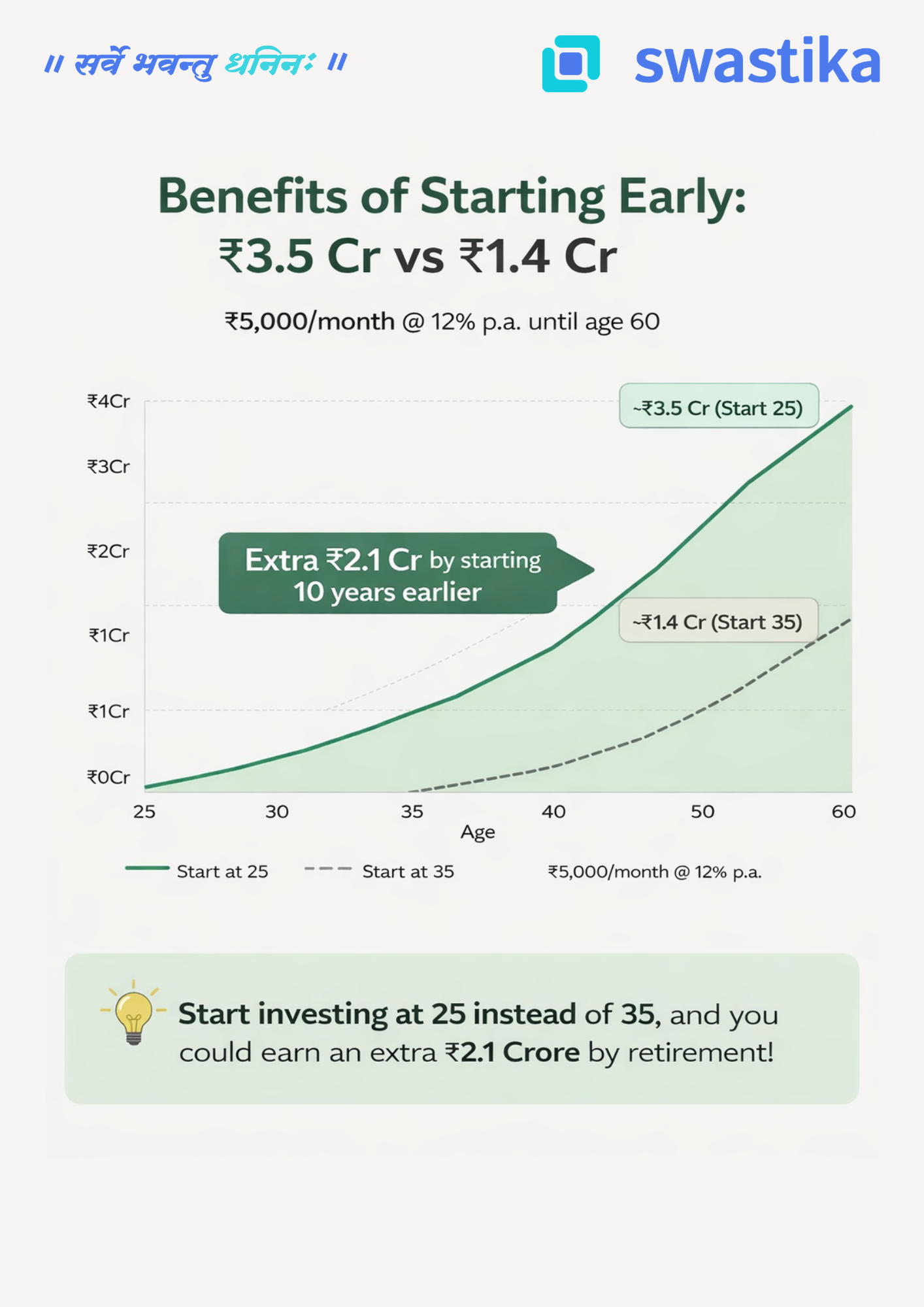
The more years you give your money to grow, the more dramatic — and life-changing — the results become. This is exactly why starting your investment journey early, even with a modest amount, can make a difference of crores by the time you retire.
A Tale of Two Investors: Arjun vs Priya
Let's bring this concept to life with a simple, real-world example.
Meet Arjun and Priya. Both are sensible, disciplined investors. Both invest ₹5,000 every month through a SIP (Systematic Investment Plan) in equity mutual funds, earning an average annual return of 12%. Both stop investing at age 60.
The only difference? Arjun starts at 25. Priya starts at 35.
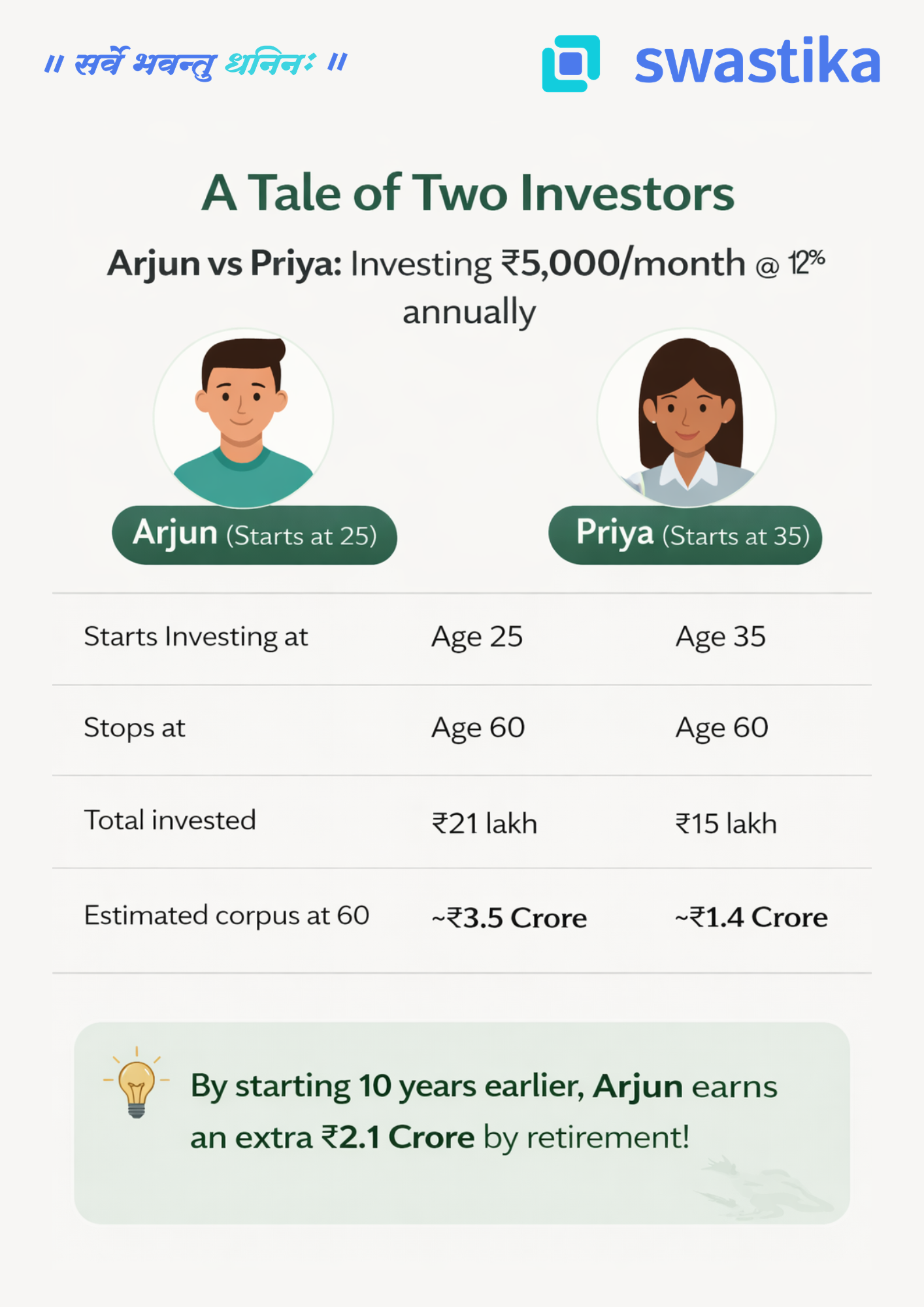
The numbers are striking. Arjun invests just ₹6 lakh more than Priya in absolute terms — yet walks away with ₹2.1 Crore more at retirement.
That extra ₹2.1 Crore didn't come from investing more aggressively or taking bigger risks. It came purely from starting 10 years earlier.
Why Does Time Make Such a Huge Difference?
This is where the magic of compounding reveals itself.
In the early years of investing, growth looks modest and almost unimpressive. But as the years pass, your corpus grows not just on your original investment, but on all the accumulated returns from previous years. The curve goes from almost flat to steeply exponential — and that steep climb happens in the later years.
When Arjun starts at 25, his money has 35 years to ride that exponential curve. Priya's money, starting at 35, only catches the last 25 years — and critically, it misses the steepest part of the climb in the final decade.
Think of it this way: the last 10 years of compounding are worth more than the first 20. That is the counterintuitive truth at the heart of long-term investing.
The Real Cost of Waiting
Many young earners tell themselves, "I'll start investing once I'm more settled — once the salary improves, once the EMI is paid off, once life is a bit easier."
But the numbers show that every year of delay is extraordinarily expensive — far more expensive than any EMI or lifestyle expense. Priya didn't invest carelessly. She invested faithfully for 25 years. Yet she ends up with less than half of what Arjun accumulated — not because she did anything wrong, but simply because she started a decade late.
The cost of waiting 10 years wasn't ₹6 lakh in additional contributions. The cost was ₹2.1 Crore in lost wealth.
Three Principles to Remember
1. Start now, not later.The best time to start investing was yesterday. The second best time is today. Even a SIP of ₹1,000–₹2,000 per month in your 20s is infinitely better than waiting for the "right time."
2. Consistency beats intensity.You don't need to invest large sums all at once. A small, steady, monthly commitment — maintained without interruption — is what unlocks the full power of compounding over decades.
3. Stay invested through market cycles.Compounding works only if you let it work. Exiting during market corrections or stopping your SIP in tough months breaks the chain. Time in the market, not timing the market, is what builds wealth.
The Bottom Line
If you are in your 20s or early 30s, you hold an asset that no amount of money can buy later: time. Use it. Start a SIP today — even a small one. Let compounding do its slow, steady, powerful work.
Because the difference between starting at 25 and starting at 35 is not just 10 years. As Arjun and Priya's story shows, that difference is ₹2.1 Crore.
Big Budget









.webp)
.webp)
.webp)
.webp)
.webp)













.webp)
.webp)
.webp)
.webp)
Latest Articles

कठोर मौद्रिक नीति की सम्भावना से टूटे सोना-चांदी


प्रमुख केंद्रीय बैंको द्वारा कठोर मौद्रिक नीति को लगातार बनाये रखने की सम्भावना के चलते कीमती धातुओं में पिछले सप्ताह बिकवाली का दबाव रहा। पिछले तीन सप्ताह में सोना अपने उच्चतम स्तर से 3000 रुपए प्रति दस ग्राम और चांदी हाल के उच्च स्तरों से 8000 रुपए प्रति किलो तक सस्ती हो चुकी है। अमेरिका से जारी मुद्रास्फीति के आंकड़ों में कीमती धातुओं के भाव के लिए मिश्रित रुझान रहा जिसने अर्थव्यवस्था और मौद्रिक नीति के मार्ग पर कुछ अनिश्चितता पैदा कर दी है, साथ ही अमेरिकी डॉलर इंडेक्स में भी बढ़त देखने को मिली है। जनवरी माह के लिए अमेरिका के वार्षिक मुद्रास्फीति के आंकड़े पिछले माह की तुलना में कम रहे जबकि मासिक मुद्रास्फीति में बढ़ोतरी दर्ज की गई है। भारत के थोक और खुदरा मुद्रास्फीति के आकड़ो में भी साल-दर-साल बढ़ोतरी दर्ज की गई है। मुद्रास्फीति के आकड़ो के बाद निवेशक प्रतीक्षा में है कि फेडरल रिजर्व डेटा पर कैसे प्रतिक्रिया करेगा, यह ध्यान रखते हुए कि फेड ने मुद्रास्फीति के खिलाफ बड़े पैमाने पर बयानबाजी की है। मुद्रास्फीति एक स्तर पर स्थिर बनी हुई है जिससे फेड के निकट भविष्य के लिए ब्याज दरों में वृद्धि जारी रहने की संभावना है। लेकिन, ब्याज दरों में आगे भी बढ़ोतरी इनवर्टेड यील्ड कर्व के अंतर को बढ़ा सकता है जो आर्थिक मंदी की और संकेत पहले से दे रहा है, जिससे कीमती धातुओं में गिरावट सीमित रह सकती है। पिछले सप्ताह अमेरिकी पीपीआई और बेरोजगारी दावों के आंकड़े उम्मीद से बेहतर आने से कीमती धातुओं पर बिकवाली का दबाव बढ़ता दिखा। हालांकि, फिली फेड मैन्युफैक्चरिंग इंडेक्स कमजोर बना रहा, जो अमेरिका में धीमी विनिर्माण गतिविधि का संकेत देता है, जिसने बुलियन की कीमतों को निचले स्तर पर समर्थन दिया। निकट भविष्य में कीमती धातुओं में गिरावट का रुझान रह सकता है क्योंकि निवेशक आगे कठोर मौद्रिक नीति की उम्मीद कर रहे हैं।इस सप्ताह फेड बैठक के मिनट्स और अमेरिका की जीडीपी के आंकड़े कीमती धातुओं के लिए महत्वपूर्ण रहेंगे।
तकनिकी विश्लेषण:
इस सप्ताह कीमती धातुओं में बिकवाली का दबाव बने रहने की सम्भावना है। सोने में सपोर्ट 55400 रुपये पर है और रेजिस्टेंस 56700 रुपये पर है। चांदी में सपोर्ट 63000 रुपये पर है और रेजिस्टेंस 66500 रुपये पर है।

Understanding the Various Types of Financial Markets
1. Introduction
Financial markets are where people buy and sell different types of assets, like stocks and bonds. These markets are essential because they help determine how much things are worth, make it easier to buy and sell assets, and provide opportunities for people to invest and grow their money.
2. Capital Markets
Definition: Capital markets are places where you can trade long-term investments, like stocks and bonds. They help companies and governments raise money for long-term projects or operations.
Types:
- Stock Markets: This is where you buy and sell shares of companies. Each share represents a small ownership stake in the company. In India, major stock markets include the Bombay Stock Exchange (BSE) and the National Stock Exchange (NSE).
Example: If you buy shares of Tata Consultancy Services (TCS) on the NSE, you are participating in the stock market. Your money helps TCS grow, and you may benefit if the company does well. - Bond Markets: Here, you can buy and sell bonds, which are like loans given to companies or governments. When you buy a bond, you are lending money to the issuer in exchange for regular interest payments and the return of the loan amount at maturity.
Example: Investing in Indian government bonds is an example of participating in the bond market. These bonds are considered safe because they are backed by the government.
3. Money Markets
Definition: Money markets are for short-term borrowing and lending. These transactions usually last less than a year. They help manage day-to-day cash needs and provide a place to invest surplus cash safely.
Types:
- Treasury Bills (T-Bills): These are short-term government securities with maturities of up to one year. They are low-risk investments.
Example: If you invest in a 90-day T-Bill issued by the Reserve Bank of India (RBI), you're lending money to the government for 90 days and getting a small return in interest. - Commercial Paper: This is short-term, unsecured debt issued by companies to raise money quickly. It’s usually used for short-term needs.
Example: A company might issue commercial paper to cover its immediate expenses, like paying suppliers. - Certificates of Deposit (CDs): These are savings accounts with a fixed term and interest rate, offered by banks.
Example: Depositing money in a 6-month CD at a bank means you’ll earn interest over six months before you can withdraw your money.
4. Derivatives Markets
Definition: Derivatives markets involve trading contracts whose value depends on the value of other assets, such as stocks or commodities. These contracts are used to manage risk or speculate on future price movements.
Types:
- Futures Contracts: These are agreements to buy or sell an asset at a set price on a specific future date. They help businesses and investors manage price risks.
Example: If you agree to buy Nifty futures, you’re committing to buy the Nifty 50 index at a set price on a future date. - Options Contracts: These give you the right, but not the obligation, to buy or sell an asset at a specified price before a certain date.
Example: If you buy an option to purchase shares of Infosys at ₹1,500, you can choose to buy Infosys shares at this price before the option expires.
5. Forex Markets
Definition: Forex (foreign exchange) markets involve buying and selling currencies. This market is the largest in the world and operates 24 hours a day.
Types:
- Spot Market: Currencies are bought and sold for immediate delivery.
Example: If you exchange Indian rupees for US dollars at the current rate, you’re participating in the spot market. - Forward Market: Currencies are traded for delivery at a future date based on a predetermined rate.
Example: If a company plans to buy US dollars in three months, it might enter into a forward contract to lock in the current exchange rate.
6. Commodities Markets
Definition: Commodities markets involve trading raw materials or primary products. These markets help in setting prices and managing risks related to physical goods.
Types:
- Agricultural Commodities: Includes products like grains, coffee, and cotton.
Example: Trading futures contracts for wheat helps farmers and traders lock in prices and manage risks related to crop production. - Energy Commodities: Includes oil and natural gas.
Example: Trading crude oil futures on the Multi Commodity Exchange (MCX) allows companies to hedge against future price changes in oil. - Metals: Includes precious metals like gold and silver, as well as industrial metals like copper.
Example: Buying gold futures can be a way to invest in gold or hedge against inflation.
Conclusion
Each financial market serves a unique purpose and caters to different investment needs. Understanding these markets helps you make better investment decisions and manage risks effectively. Whether you’re interested in stocks, bonds, currencies, or commodities, knowing how each market works can help you navigate the financial world more confidently.

ट्रेज़री यील्ड में बढ़ोतरी से दबाव में कीमती धातुए
एमसीएक्स सोने और चांदी के भाव में ऊपरी स्तरों पर दबाव रहा। चांदी की कीमतों में पिछले सप्ताह 1 प्रतिशत से अधिक की गिरावट दर्ज की गई है जबकि सोने में मामूली बढ़त दर्ज की गई है। मुद्रास्फीति अभी बड़ी हुई है और इसको कम करने के लिए फेड के सदस्यों द्वारा आगे भी ब्याज दर वृद्धि होते रहने का अनुमान जताया है। फेड चेयर पॉवेल ने, 2022 में लगातार हुई ब्याज दर वृद्धि तक अमेरिका में अवस्फीति की परिस्थिति को बताया, और आगे भी ब्याज दर वृद्धि करने का समर्थन किया है। अमेरिका से जारी होने वाले रोज़गार बाजार के आकड़ो का बेहतर प्रदर्शन, लगातार ब्याज दर बढ़ोतरी की सम्भावना के अनुकूल है। जिससे सोने और चांदी की कीमतों में दो हफ्तों से दबाव बना हुआ है। कीमती धातुओं में दिवाली के बाद से शुरू हुई तेज़ी, लगातार ब्याज दर वृद्धि के लिए जगह होने से, थमने लगी है। हालांकि, ब्याज दर बृद्धि के कारण आर्थिक मंदी का डर अभी बना हुआ है। छोटी अवधि की अमेरिकी ट्रेज़री यील्ड, लम्बी अवधि की यील्ड से अधिक हो चुकी है जो अर्थव्यवस्था के लिए खतरे के संकेत दे रही है। छोटी अवधि की ट्रेज़री यील्ड में बढ़ोतरी होने से कीमती धातुओं में ऊपरी स्तरों पर दबाव बना हुआ है। बांड यील्ड में बढ़ोतरी होने से अमेरिकी डॉलर इंडेक्स में सुधार हुआ है। वर्ल्ड गोल्ड कॉउंसिल के मुताबिक पिछले साल प्रमुख केंद्रीय बैंको द्वारा सोने की खरीद अब तक के उच्च स्तरों पर है। यूरोपीय बैंकों ने सोने की बिक्री बंद कर दी और रूस, तुर्की और भारत जैसी उभरती हुई अर्थव्यवस्थाओं ने खरीदारी की है। केंद्रीय बैंको का रुझान सोने की खरीद पर बढ़ा है क्योंकि अशांत समय में यह अपना मूल्य बनाए रखता है, और मुद्राओं और बांड के विपरीत, यह किसी भी जारीकर्ता या सरकार पर निर्भर नहीं है।
इस सप्ताह अमेरिका से, मंगलवार को मुद्रास्फीति (सीपीआई), बुधवार को रिटेल सेल्स और गुरुवार को पीपीआई के आंकड़े कीमती धातुओं के भाव के लिए महत्वपूर्ण रहेंगे।
तकनिकी विश्लेषण
इस सप्ताह कीमती धातुओं में दबाव बने रहने की सम्भावना है। सोने में सपोर्ट 56000 रुपये पर है और रेजिस्टेंस 57400 रुपये पर है। चांदी में सपोर्ट 65000 रुपये पर है और रेजिस्टेंस 69000 रुपये पर है।
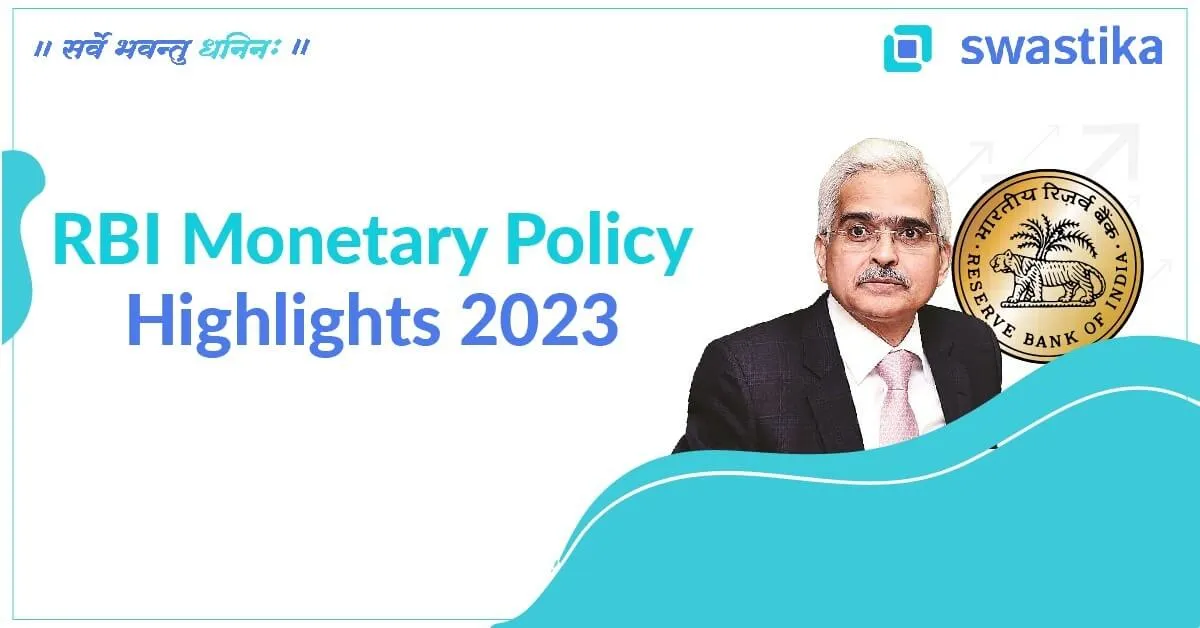
Key highlights of RBI Monetary Policy 2023
RBI MPC Highlights 23
Governor Shaktikanta Das announced the Monetary Policy Committee's (MPC) decision on the RBI. Here are the Key RBI MPC Highlights
“Never lose your faith in the destiny of India.”
- Governor Shaktikanta Das
1. RBI MPC raise the repo rate by 25 basis points to 6.50% on Wednesday.
2. The Governor says that while inflation is expected to moderate in FY24 it will rule above the 4% target-
The Governor of the Reserve Bank of India (RBI) has stated that although inflation is expected to decrease in financial year 24, it may still exceed the target of 4%. The International Monetary Fund (IMF) has also revised its global growth projections for the years 2022 and 2023, indicating an upward trend.
3. The Governor says the Indian economy remains resilient.-
The Reserve Bank of India (RBI) governor reported that capacity utilization increased to 74.5% in the second quarter, indicating positive growth in the private sector. Investment activity continues to show improvement, with non-food bank credit growing by 16.7% as of January 27, 2023, and robust growth in fixed investment seen in November and December. Despite a decline in merchandise exports, the indicators of fixed investment are showing signs of strength. The governor also stated that there are indications of additional capacity being created in the private sector.
4. RBI GOV says real GDP growth for FY24 is projected at 6.4%-
According to Das, the Consumer Price Index (CPI) inflation for the fiscal year 2023 is expected to be 6.5%, with the fourth quarter estimated to be at 5.7%. There is a considerable amount of uncertainty regarding the trajectory of global commodity prices. Commodity prices are likely to remain high with the easing of Covid-19 restrictions, and this could result in the pass-through of commodity prices keeping core inflation elevated. The low volatility of the Indian rupee compared to other currencies will limit the impact of imported price pressures. The average crude oil basket is projected to be $95 per barrel.
5. RBI projects retail inflation lower at 6.5% for FY23 from 6.7%; 5.3% for the next fiscal-
The Consumer Price Index (CPI) is projected to reach 5.3% in fiscal year 24. Inflation is expected to be at 5% in the first quarter, 5.4% in the second and third quarters, and 5.6% in the fourth quarter. There is concern about the persistent nature of core inflation and it is crucial to see a clear decrease in inflation. It is imperative to maintain a strong commitment to reducing CPI inflation. The monetary policy must be adjusted accordingly to ensure a sustainable reduction in inflation.
6. The RBI has reported that system liquidity remains in surplus, although it has diminished in comparison to previous levels. The central bank has stated that it will remain agile and ready to cater to the productive requirements of the economy. To ensure proper functioning, the RBI will carry out operations on both sides of the liquidity adjustment framework as necessary. In line with this, the RBI has proposed restoring the market hours of the G-Sec market to 9 am to 5 pm. additionally, the RBI has suggested expanding G-Sec lending and borrowing activities to further enhance market liquidity.
7. The current account deficit (CAD) for H1FY23 was 2.2% of GDP, and it will moderate in H2FY23.
Regulatory organizations would receive recommendations from RBI on how to safeguard against the effects of climate change, according to Das. General guidelines for accepting green deposits, Framework for disclosing financial risks associated to climate change, and advice on stress testing and climate scenario analysis would be provided.
8. RBI GOV says MPC will continue to maintain a strong vigil on inflation outlook-
The Monetary Policy Committee of the Reserve Bank of India will continue to closely monitor the inflation outlook. Inflation is expected to remain at 5.6% in the fourth quarter of the financial year 2023. Although the policy rate has increased, it still remains lower than its pre-pandemic levels. When taking inflation into consideration, the policy rate is still lower than its pre-pandemic level. In general, the overall monetary conditions continue to be supportive of the economy.
9. Other Measures to be taken by RBI-RBI proposes to allow some foreign travelers and inbound travelers in India to use UPI for merchant payments. RBI To Launch QR Code-Based Coin Vending Machines that will issue coins against debits to customer's UPI-linked accounts.
The Reaction of the Market
Following the Reserve Bank of India's announcement of a lesser-than-anticipated interest rate increase, Indian equities were trading higher on Wednesday. As of 10:06 a.m. IST, the S&P BSE Sensex was up 0.68% to 60,695.09, while the Nifty 50 index was up 0.72% at 17,849.85.
Indian government bond rates increased slightly on Wednesday as a result of the Reserve Bank of India (RBI) maintaining its monetary stance while raising the repo rate as anticipated. As of 11:30 IST, the benchmark 10-year yield was 7.3435 percent. Prior to the policy decision, it was trading at 7.3124% after Tuesday's closing price of 7.3102%.
Rupee prices were unchanged at 82.69 to the dollar. The RBI MPC's decision to raise the repo rate by 25 basis points had no significant effect on the currency since the markets had already priced it in.
.webp)
सेफ हेवेन मांग से मजबूत सोना-चांदी
भारतीय यूनियन बजट में चांदी और चांदी डोर पर इम्पोर्ट ड्यूटी बढ़ा दी गई है। चांदी पर इम्पोर्ट ड्यूटी, सोने की इम्पोर्ट ड्यूटी के बराबर करने के लिए की गई है, जिससे कीमती धातुओं में इम्पोर्ट ड्यूटी का स्ट्रक्चर सामान रहे। हालांकि, उपकर में बदलाव करके, सोने में इम्पोर्ट ड्यूटी यथावत रखी गई है। इम्पोर्ट ड्यूटी बढ़ाने के बाद, सोने और चांदी में बढ़ोतरी देखि गई। चांदी में कुल इम्पोर्ट ड्यूटी बढ़ा कर 15 प्रतिशत कर दी गई है, जो सोने की ड्यूटी के बराबर है। कीमती धातुओं से बनी ज्वेलरी पर ड्यूटी 22 प्रतिशत से बढ़ा कर 25 प्रतिशत कर दी गई है। हालांकि, अमेरिकी फेड की बैठक के बाद कीमती धातुओं में हेवेन मांग देखि गई। फेड द्वारा अपेक्षाकृत कम, 25 आधार अंको की बढ़ोतरी की गई जिससे सोने की कीमते एमसीएक्स में 58800 प्रति दस ग्राम और चांदी 72700 रुपए प्रति किलो के स्तरों को छू गई। हालांकि, ब्याज दरों के चरम स्तर को फेड ने अनिश्चित बताया है जिससे सप्ताह के अंत में डॉलर इंडेक्स में बढ़त रही और कीमती धातुओं में मुनाफा वसूली हावी हुई। हालांकि, अमेरिकी अर्थव्यवस्था की धीमी विकास दर, फेड को इस साल के मध्य तक ब्याज दरों में बढ़ोतरी रोकने और इसको घटाने के लिए बाधित कर सकता है। यूरोपियन सेंट्रल बैंक और बैंक ऑफ़ इंग्लैंड द्वारा ब्याज दरों में बढ़ोतरी से भी अमेरिकी डॉलर में दबाव बना हुआ है, जो कीमती धातुओं को सपोर्ट कर रहा है। केंद्रीय बैंको की लगातार ब्याज दर बढ़ोतरी से वैश्विक अर्थव्यवस्था दबाव में है, जिससे सोने में सेफ हेवेन मांग बढ़ी है।
इस सप्ताह फेड चेयर जेरोम पॉवेल और एफओएमसी मेंबर विलियम की स्पीच कीमती धातुओं के लिए महत्वपूर्ण रहेगी।
तकनिकी विश्लेषण
इस सप्ताह कीमती धातुओं में तेज़ी रहने की सम्भावना है। सोने में सपोर्ट 57500 रुपये पर है और रेजिस्टेंस 59000 रुपये पर है। चांदी में सपोर्ट 68000 रुपये पर है और रेजिस्टेंस 73000 रुपये पर है।

The Hindenburg vs. Adani Clash: Everything You Need to Know
The Adani Group, one of India’s biggest companies, recently launched the country's largest Follow-on Public Offering (FPO) to raise ₹20,000 crores from investors. However, the response has been surprisingly low, with only 1% of the shares being subscribed and just 2% of the retail portion taken up. This poor response is mainly due to a report released by Hindenburg Research just before the FPO, which has caused a lot of controversy.
What Did Hindenburg Say?
Hindenburg Research, known for investigating companies they believe are overvalued or involved in wrongdoing, published a 106-page report making serious allegations against the Adani Group. Here are the key points:
- Pledged Shares: Hindenburg raised concerns that a large portion of Adani Group shares has been used as collateral for loans. This is risky because if the share prices fall, the lenders might sell these shares, causing prices to drop even more.
- Tax Evasion and Financial Tricks: Despite being one of India’s richest people, Gautam Adani is reportedly only the 10th highest taxpayer. Hindenburg accused the Adani Group of avoiding taxes through activities like diamond trading, over-invoicing, and other financial schemes.
- Offshore Payments: The report highlighted a ₹780 crore payment made by Adani Enterprises to an offshore company in Australia. Hindenburg suggested this payment might not have been transparent because the offshore company was allegedly owned by the Adani Group itself.
- Market Manipulatioeased their holdings, which raised suspicions of manipulation.
- Complicated Corpon: Hindenburg claimed that in 2019, Adani Green, part of the Adani Group, used a broker involved in market rigging for its share sale. After the sale, some foreign investors incrrate Structure: Hindenburg criticized the Adani Group’s complex structure, with 578 subsidiaries and over 6,000 related-party transactions in one year. This complexity makes it hard to track financial activities, raising concerns about transparency.
- Questionable Shareholdings: Hindenburg questioned the large number of Adani Group shares held by offshore funds, suggesting these funds might be controlled by the Adani Group to manipulate stock prices.
- Silencing Journalists: Another serious accusation was that the Adani Group has used its influence to silence journalists who report critically on the company, with some even being jailed.
Hindenburg’s Key Points
Hindenburg’s report wasn’t just about new accusations; it also pointed out existing issues:
- Overvalued Stocks: Hindenburg claimed that the seven key listed companies of the Adani Group are overvalued by as much as 85%, even without considering the new allegations.
- High Debt Levels: The Adani Group has taken on a lot of debt, much of it backed by shares that Hindenburg claims are inflated. This puts the group in a risky financial position.
Financial Health of Adani Group
Despite these allegations, the Adani Group has shown some positive financial trends:
- Lower Debt: The group has managed to reduce its debt-to-EBITDA ratio, meaning its debt is now smaller compared to its earnings.
- Earnings Growth: The group’s earnings have been growing at a healthy rate of 22% per year.
- Continued Borrowing: However, the group’s debt has also been growing, showing it still relies heavily on borrowing.
Adani Group’s Response
In response to the Hindenburg report, the Adani Group issued a 413-page rebuttal, strongly denying all allegations and defending its practices:
- Transparency and Compliance: The group argued that most of the issues raised by Hindenburg were already disclosed in their financial reports.
- Legal Standards: Adani stated that it follows the highest standards of governance and accused Hindenburg of not understanding Indian laws.
- Market Manipulation Claims: The group suggested that Hindenburg’s report was a deliberate attempt to manipulate the market for financial gain, as Hindenburg stands to profit from a decline in Adani’s stock prices.
Impact on Adani Group Stocks
The Hindenburg report has significantly impacted the Adani Group’s stock prices:
- Massive Losses: The group has lost over $48 billion in market value since the report was published, causing a sharp decline in investor confidence.
- Stock Performance:some text
- Adani Enterprises: -1.50%
- Adani Green: -3.08%
- Adani Ports: -6.59%
- Adani Transmission: -8.85%
These sharp declines have also affected the broader Indian stock market, with Adani Group stocks dragging down the indices.
Conclusion
The clash between Hindenburg and the Adani Group has created significant turmoil in the Indian stock market and raised serious questions about the Adani Group’s business practices. While the Adani Group has strongly denied the allegations, the controversy has led to a massive drop in stock prices and a loss of investor confidence. The long-term impact on the Adani Group remains to be seen as the situation continues to unfold.


.webp)
.webp)

.webp)





START YOUR INVESTMENT JOURNEY
Get personalized advice from our experts
- Dedicated RM Support
- Smooth and Fast Trading App
