

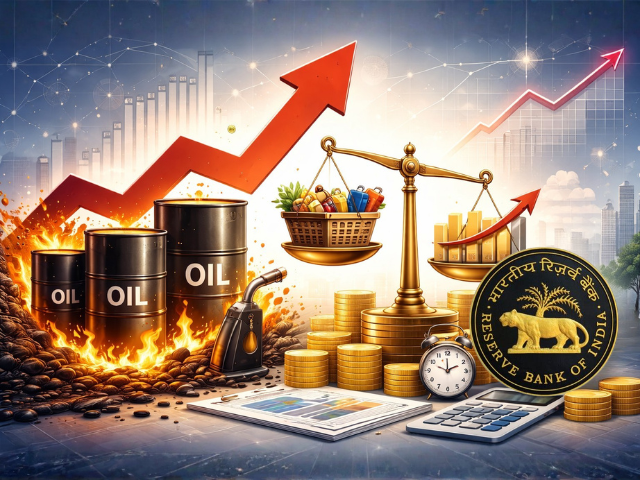
Why Rising Oil Prices and Inflation May Force RBI to Pause Rate Cuts



Key Takeaways
- Rising crude oil prices are pushing inflation risks higher
- Higher inflation limits the ability of RBI to cut interest rates
- Rate pause can impact equity markets and borrowing costs
- Oil-sensitive sectors may face pressure in the short term
- Investors should focus on diversification and quality stocks
Introduction
The global economic environment is once again turning uncertain, with crude oil prices inching higher and inflation concerns resurfacing. For India, this combination creates a challenging situation for policymakers, especially the Reserve Bank of India.
At a time when markets were expecting further rate cuts to support growth, rising inflationary pressures may force the central bank to take a pause. This shift has important implications for investors, borrowers, and the overall market direction.
The Link Between Oil Prices and Inflation
India is heavily dependent on crude oil imports, which makes it highly sensitive to global price movements.
How Rising Oil Prices Impact Inflation
- Higher fuel costs increase transportation expenses
- Logistics costs rise across industries
- Raw material prices move up
- End consumers face higher prices
👉 This leads to cost-push inflation, where rising input costs push overall prices higher
Real-World Context
Whenever crude oil prices spike globally, India often experiences a rise in retail fuel prices. This directly affects household budgets and reduces disposable income, slowing consumption demand.
Why RBI May Pause Rate Cuts
Central banks balance two key objectives:
- Supporting economic growth
- Controlling inflation
When inflation rises, controlling it becomes the priority.
The Policy Dilemma
- Rate cuts help boost growth by making loans cheaper
- But they can also increase inflation by boosting demand
👉 In a high inflation environment, cutting rates becomes risky
Current Scenario
- Rising oil prices are adding inflationary pressure
- Global uncertainties are increasing volatility
- Currency fluctuations can further amplify imported inflation
👉 This leaves the Reserve Bank of India with limited room to ease monetary policy
Impact on Indian Markets
A pause in rate cuts can influence multiple segments of the market.
📊 1. Equity Markets
- Rate-sensitive sectors may underperform
- Valuations may remain under pressure
- Market sentiment could turn cautious
🏦 2. Banking and NBFC Sector
- Loan growth may stabilize rather than accelerate
- Margins could remain steady but not expand significantly
🏠 3. Realty and Auto
- Higher borrowing costs may impact demand
- Consumer financing becomes less attractive
🛢️ 4. Energy Sector
- Upstream companies may benefit from higher oil prices
- Downstream companies may face margin pressure
Bond Market Perspective
Bond markets react quickly to inflation and interest rate expectations.
What Happens When Inflation Rises
- Bond yields tend to move higher
- Bond prices fall
- Long-duration bonds become less attractive
👉 Investors may prefer shorter-duration fixed income instruments during such phases
What Should Investors Do?
Market conditions like these require a balanced and disciplined approach.
🧠 1. Focus on Asset Allocation
Maintain a mix of equity, debt, and other asset classes
📉 2. Avoid Overexposure to Rate-Sensitive Stocks
Sectors like real estate and auto may face short-term pressure
📊 3. Look for Quality Businesses
Companies with:
- Strong pricing power
- Stable demand
- Healthy balance sheets
tend to perform better during inflationary periods
⏳ 4. Stay Invested for the Long Term
Short-term volatility should not derail long-term investment goals
A Broader Perspective
Historically, periods of rising oil prices and inflation have led to cautious monetary policy globally. India is no exception.
For example, during earlier commodity cycles, central banks often paused or delayed rate cuts until inflation showed signs of cooling. This pattern reinforces the importance of monitoring macroeconomic indicators.
Key Indicators to Watch
- Crude oil price trends
- CPI inflation data
- RBI policy statements
- Global economic developments
Tracking these indicators can provide early signals of policy direction.
FAQs
1. Why do rising oil prices impact inflation?
Because oil affects transportation and production costs, which increases the overall price of goods and services.
2. Why might RBI pause rate cuts?
To control inflation and maintain economic stability, especially when price pressures are rising.
3. How does this affect stock markets?
It can lead to cautious sentiment, especially in rate-sensitive sectors, while some sectors like energy may benefit.
4. What happens to bond yields in this scenario?
Bond yields usually rise when inflation increases, leading to a fall in bond prices.
5. What should investors do during such phases?
Maintain diversification, focus on quality investments, and avoid making decisions based on short-term volatility.
Conclusion
Rising oil prices and inflation are key factors shaping the current economic landscape. While markets were hoping for continued rate cuts, the reality is that the Reserve Bank of India may need to stay cautious.
For investors, this is not a time to panic but to adapt. A well-diversified portfolio, combined with a focus on quality and long-term discipline, can help navigate such phases effectively.
At Swastika Investmart, we empower investors with research-driven insights, advanced trading tools, and strong customer support to make informed decisions in changing market conditions.
Big Budget









.webp)
.webp)
.webp)
.webp)
.webp)












.webp)
.webp)
.webp)
.webp)
Latest Articles

US Inflation reaches 9.1%


Is the Fed reserve reacting behind the curve?
US inflation is currently at 41 year high which has made people worried about the Fed rate hikes and its aggressive move. What will be its impact on the Indian Stock Market and global markets?
So First let us discuss how does inflation works? When there is inflation usually the central bank it is the Federal Reserve of the US, raises its policy rates in order to regulate the money flow in the economy. This helps in reducing the demand and decreases the purchasing power of people which further controls the flow of money in the economy.
Now as the US economy is a want-based economy and if they decide to curb inflation rather than focus on the growth of the economy then there may be chances of economic slowdown or recession. The extra aggressiveness from the Federal Reserve may lead to an increase in the Interest rate and a decrease in demand, the impact of which may be seen within 6 to 15 months.
Now talking about the global market so there may be a quite possibility of the Market reacting negatively.
Because of rising gas, food, and rent costs, tightening household budgets, and pressure from the Federal Reserve to raise interest rates swiftly, the probability of a recession increased, driving U.S. inflation to 9.1 % in June.
The government's consumer price index climbed 9.1 percent over the previous year, the highest annual gain since 1981, with rising energy prices accounting for over half of the increase. There will be a cascading impact on China due to the US Commodity market as the consumption supply will reduce and economies may suffer. There is also a rise in gasoline prices for countries like Europe and the US.
Did you know that the last time inflation was high was November of 1981 and there was a Global recession in 2008?
Let us now discuss its impact on the Indian Markets. As far as India is concerned we know that it is a need-based economy. The key impact will be seen in commodity prices. In India currently, the Inflation rate stands at 7.01%.
The commodity prices are going down. Agro commodity prices may go down if there is more farm production which will be beneficial for the decrease in their prices.
Now, Looking at the positive picture in the past Few months FIIs selling has also reduced. However, there may be a short-term impact of 6-9 months’ time and price correction may be their US yield can go from 7.36 up to 7.89 %. This is majorly due to falling interest rates & quantitative easing.
Impact on Indian Stock Markets:
Given that the difference in interest rates between India and the US is narrowing, India would lose some of its appeal as a destination for currency carry trade. A churn in emerging market equities due to greater returns in the US debt markets might potentially affect foreign investors' enthusiasm for investing in India, due to the outflows from Indian equities and debt markets, this might have an effect on currency markets.
Latest Updates:
In response to ongoing inflation as well as ongoing good job and pay growth, Fed policymakers have already indicated a second 75 basis-point increase in interest rates later in July. Traders had fully priced in a three-quarter percentage-point increase for this month even before the figures were revealed.

इम्पोर्ट ड्यूटी बढ़ने से घरेलु बाज़ारो में 3 प्रतिशत तेज़ हुए सोने के भाव।
भारत में सोने पर बेसिक इम्पोर्ट ड्यूटी को 7.5 प्रतिशत से बढ़ाकर 12.5 प्रतिशत कर दिया गया है जिससे पिछले सप्ताह घरेलु वायदा बाजार में सोने के भाव, सप्ताह भर गिरावट रहने के बावजूद 3 प्रतिशत बढ़ गए। जबकि कॉमेक्स में सोने के भाव 1800 डॉलर के निचले स्तरों को तोड़ चुके है और सप्ताह में कीमते 2 प्रतिशत टूट कर 1794 डॉलर प्रति औंस पर पहुंच गई है।
अमेरिकी बेंचमार्क ट्रेज़री यील्ड 3 प्रतिशत पर है जबकि अमेरिकी डॉलर इंडेक्स में मजबूती बने रहने से अंतर्राष्ट्रीय बाजार में सोने के भाव में दबाव बना हुआ है। भारत में 5 प्रतिशत इम्पोर्ट ड्यूटी बढ़ने से कीमते सप्ताह में 2.5 प्रतिशत तेज़ हो कर 51800 रुपये प्रति दस ग्राम के स्तरों पर रही। औद्योगिक मांग घटने से चांदी के भाव कॉमेक्स में पिछले सप्ताह 6 प्रतिशत टूट कर 19.73 डॉलर पर रहे जबकि घरेलु बाजार में सितम्बर वायदा चांदी के भाव सप्ताह में 3 प्रतिशत टूटे कर 58000 प्रति किलो के निचले स्तरों पर है। सरकार द्वारा जारी आंकड़ों के अनुसार, भारत का व्यापार घाटा सालाना 6.53 अरब डॉलर से बढ़कर 24.29 अरब डॉलर हो गया है। चालू वित्त वर्ष के पहले दो महीनों के दौरान व्यापार घाटा बढ़कर 44.69 अरब डॉलर रहा, जो पिछले साल की समान अवधि में 21.82 अरब डॉलर था।
बढ़ते व्यापार घाटे और विदेशी फंडों के निरंतर देश से बहार जाने के कारण अमेरिकी डॉलर के मुकाबले रुपया 79 के निचले स्तरों पर लुढ़क गया है। भारत सोने का दूसरा सबसे बड़ा आयातक है जिसका व्यापार घाटे में बड़ा हिस्सा है। मई 2021 में 677 मिलियन अमरीकी डॉलर के मुकाबले, सोने का आयात बढ़कर 6 बिलियन अमरीकी डॉलर हो गया है। वर्ल्ड गोल्ड काउंसिल के अनुसार, भारत में सोने का आधिकारिक आयात मई में 98 टन पर रहा, जो इस साल अप्रैल में 27 टन और मई 2021 में 11.4 टन पर था।
इस सप्ताह अमेरिका से जारी होने वाले, फेड मीटिंग मिनट्स, एडीपी नॉन फार्म एम्प्लॉयमेंट चेंज और पैरोल के आंकड़े कीमती धातुओं के लिए महत्वपूर्ण रहेंगे।
तकनीकी विश्लेषण:
अगस्त वायदा सोने की कीमतों में 50000 रुपये पर सपोर्ट है और 52200 रुपये पर प्रतिरोध है। सितम्बर वायदा चांदी में 56000 रुपये पर सपोर्ट और 60000 रुपये पर प्रतिरोध है।
सोने-चांदी में कारोबार सीमित दायरे में।
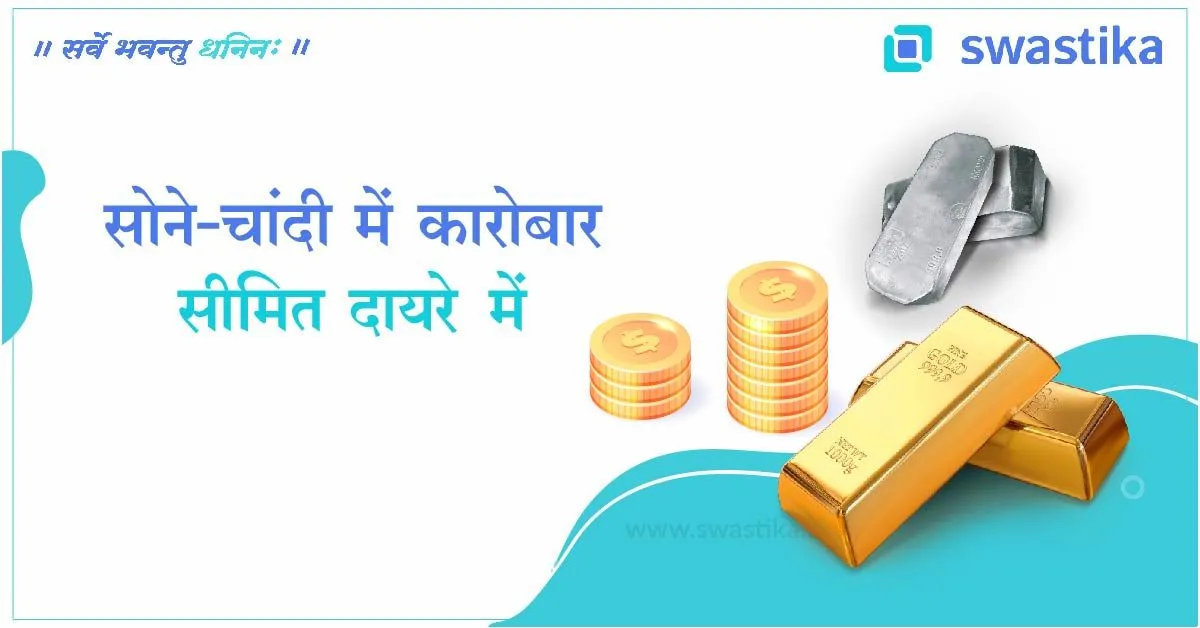
कीमती धातुओं के भाव में लगातार दूसरे सप्ताह भी गिरावट रही। सोने और चांदी के भाव में दबाव, अमेरिकी फेड द्वारा बड़ी ब्याज दर बढ़ोतरी की सम्भावना के चलते बना हुआ है।
पिछले सप्ताह फेड प्रमुख जेरोम पॉवेल ने कहा कि केंद्रीय बैंक की मुद्रास्फीति पर लड़ाई "बिना शर्त" है और इसको नियंत्रित करने के लिए हर संभव प्रयास करेंगे साथ ही कहा की 1 प्रतिशत ब्याज दर वृद्धि की संभावना पर भी विचार करेंगे।अमेरिकी डॉलर स्थिर बना हुआ है, और उम्मीदें अब जुलाई में 75-आधार-अंकों की बढ़ोतरी की ओर झुकी हुई हैं। बढ़ती मुद्रास्फीति पर अंकुश लगाने के उद्देश्य से दुनिया भर में सख्त केंद्रीय बैंक नीतियों के प्रभाव से निवेशक सतर्क है।
सोने के भाव 51300 रुपये से लेकर 50100 रुपये प्रति दस ग्राम के सीमित दायरे में बने हुए है। जबकि औद्योगिक धातुओं में बिकवाली का दबाव रहने के कारण चांदी में भी बिकवाली का दबाव बढ़ गया है। तेज़ी से बढ़ती हुई ब्याज दरों में वृद्धि आर्थिक मंदी की चिंताओं को बढ़ा रही है जिससे दुनिया भर के शेयर बाज़ारो में दबाव बना हुआ है। निवेशक सुरक्षित निवेश के अन्य विकल्प जैसे डॉलर की और रुख कर रहे है। पिछले सप्ताह अमेरिका, यूरोप और जापान से जारी फ़्लैश मैन्युफैक्चरिंग के आंकड़े अनुमान से कमजोर रहे जो आर्थिक मंदी का संकेत देते है।
तकनीकी विश्लेषण:
अगस्त वायदा सोने की कीमतों में 50000 रुपये पर सपोर्ट है और 51500 रुपये पर प्रतिरोध है। जुलाई वायदा चांदी में 58000 रुपये पर सपोर्ट और 62000 रुपये पर प्रतिरोध है।
Weekly Market Outlook June 22
Weekly Market Outlook
20 June-24 June 22
Bulls look for relief rally amid cool-off in energy prices
It was a brutal sell-off at Dalal street last week where headline indices Nifty and Sensex lost more than 5% with a break of key support levels. Weak global cues, a sharp rate hike in the USA, and aggressive selling by FIIs were key reasons for last week's turmoil.
The market has no major cues this week but bulls will look for a relief rally after a sharp fall in energy prices over the weekend. The brent crude oil prices have dipped to the $113 level after hitting a high of $125 per barrel. However, relentless selling by FIIs is a key concern for the Indian markets, where last week they sold more than 23000cr in the cash market. On the global front, the market has an eye on the Russia-Ukraine situation as there is some hope for any peace agreement. On the domestic front, the rupee movement and the development of the monsoon will be other important factors for the market.
Technically, Nifty has surrendered key support of the 15700 level and there is a risk of further downside, where 15000 is a key psychological support level then 14500 is the next major support therefore 15000-14500 is a key demand zone where we can expect a bottom formation. However, On Friday's trading session, Nifty formed a Doji candlestick formation followed by a sharp sell-off therefore low of the Doji candle, which is placed at the 15183 level, will act as an immediate support level. On the upside, 15500/15700 are immediate and critical resistance levels.
Banknifty has slipped below the psychological level of 33000 however 32250-32000 is an immediate and critical demand zone where we can expect a bounce back; below this, 30500 will be the next support level. On the upside, if 33000 is an immediate hurdle then 33750-34000 is the next supply zone.
If we look at the derivative data, then the long exposure of FIIs in the index future is a multi-year low of 13% whereas the put-call ratio is sitting at 0.75 level, therefore, the overall market looks oversold.
Weekly Market Outlook
13 June-18 June 22
Inflation is spooking market sentiments ahead of the FOMC meeting
Key Triggers:-
Bulls had a dreadful weekend after the US inflation figures hits a 40-year high, leaving US markets in a tizzy on Friday. The US FOMC's decision is due on 15th June and the market is fearing aggressive rate hikes amid the inflation monster. Bank of Japan will also announce its credit policy next week on 17th June. It will be salient to watch the behavior of FIIs' amid the panic in global equity markets as they have been selling relentlessly for the past 8 months.
On the domestic front, our CPI inflation will be announced on 13th June and WPI will be announced on 14th June.
Apart from this, movement of rupee and crude oil will be other important factors.
Technical Outlook:-
Nifty has slipped below its 20-DMA, raising concerns for a fresh round of selling where 16050 is the immediate support level while 15900-15700 is the critical support area. On the upside, 20-DMA of 16300 will act as an immediate hurdle while 16500 is the next major hurdle.
Bank nifty has also slipped below its 20-DMA which could lead to further selling pressure where 33800 is the immediate support level while 33000-32500 will be the critical support zone. On the upside, 20-DMA of 34800 will act as an immediate hurdle.
Derivative Data:-
If we talk about derivative data, FII's long exposure to index futures has come down to 21% which is extremely oversold zone while PCR is also trading at oversold level of 0.88. An oversold market is only a hope for the bulls, although the market may remain oversold for a long time.

ग्लोबल सेंट्रल बैंको की आक्रामक नीति से कीमती धातुओं में बढ़ी अस्थिरता।
पिछले सप्ताह के शुरुवात में सोने और चांदी के भाव में दबाव रहा लेकिन अमेरिकी फ़ेडरल रिज़र्व द्वारा ब्याज दरों में अनुमान से अधिक वृद्धि करने से कीमतों में निचले स्तरों से सुधार दर्ज किया गया। यूएस फेडरल रिजर्व (फेड) ने बुधवार को 1994 के बाद से अपनी उच्चतम ब्याज दरों में बढ़ोतरी की है।
ब्याज दरों को 1 प्रतिशत से बढ़ाकर 1.75 प्रतिशत कर दिया है जबकि अनुमान 1.5 प्रतिशत तक वृद्धि का था। अमेरिका में मुद्रास्फीति 41 साल की उचाई पर पहुंच गई है जिसके कारण फेड की चिंता बढ़ गई है। इस महगाई को नियंत्रित करने के लिए फेड द्वारा ब्याज दरों में आक्रामक वृद्धि और बैलेंस शीट कटौती का रुख अपनाया गया है।
आक्रामक मौद्रिक नीति का असर अमेरिका से जारी होने वाले आर्थिक आकड़ो में दिखाई देने लगा है और आर्थिक मंदी की सम्भावना बढ़ने लगी है जिससे सोने और चांदी की कीमतों को निचले स्तरों पर सपोर्ट है।
स्विस नेशनल बैंक ने भी गुरुवार को अप्रत्याशित रूप से दरों में 50 आधार अंकों की बढ़ोतरी की, जबकि बैंक ऑफ इंग्लैंड ने अपनी ब्याज दरों को बढ़ाकर 1.25 प्रतिशत कर दिया। बैंक ऑफ जापान ने शुक्रवार को बढ़ती मुद्रास्फीति के बावजूद नीति को सरल रखने का फैसला किया, जबकि वैश्विक केंद्रीय बैंक सख्त मौद्रिक नीतियां अपना रहे हैं।
घरेलु वायदा बाज़ार में सोना 1 प्रतिशत और चांदी में 0.40 प्रतिशत की गिरावट रही। यूएस डॉलर इंडेक्स और यूएस बेंचमार्क ट्रेज़री यील्ड में भी ऊपरी स्तरों पर दबाव रहा। हालांकि, सोने की कीमते निचले स्तरों से सुधर कर 51100 रुपये प्रति दस ग्राम और चांदी के भाव 61700 रुपये प्रति किलो पर कारोबार करते दिखे।
तकनीकी विश्लेषण:
सोने और चांदी के भाव में इस सप्ताह दबाव में रह सकते है। सोने में 50000 रुपये पर सपोर्ट है और 52000 पर प्रतिरोध है। चांदी में 58000 रुपये पर सपोर्ट और 63000 रुपये पर प्रतिरोध है।

Paper Gold vs Physical Gold
Paper Gold a Safe Investment
Gold is a commodity and it can be traded as a commodity. As with any commodity, it's possible to trade futures contracts on gold. These are called paper gold because they only represent the value of the physical gold that is delivered at maturity.
The seller of such a contract is obliged to deliver the physical metal when the contract matures, while the buyer has to pay for it in advance.
If you buy a futures contract on gold today and hold onto it until maturity, you'll get the physical metal when you need it. If you don't have any use for physical gold but still want to benefit from its price movements, paper gold can be an alternative for you.
To get more information about paper gold feel free to call us at 0120 4400700
Paper Gold vs Physical Gold
If you want to buy gold then it is very important that you understand the difference between physical gold and paper gold.
Physical gold is the actual metal that is bought from dealers. This will be stored in a vault by the dealer and can also be kept at home.
It is advisable to keep gold at home rather than leaving it with the dealer as there have been instances where dealers have been robbed by thieves or even customers who have turned out to be fraudsters.
Paper gold on the other hand is paper certificates that represent physical gold. They are like money in terms of their use but are not actually real money but instead represent an amount of physical gold held by an issuer.
There are many types of paper certificates such as exchange traded funds (ETFs), futures contracts and options contracts but each one works slightly differently from another type of certificate so it is important that you understand how they work before you invest your money in them.
Is it Safe to Invest in Paper Gold
The answer to the above question is a big YES.
Paper gold has been around for a long time and is widely accepted by investors as a safe way of investing in gold. There are several reasons why paper gold is considered one of the most secure ways to invest in gold. The following are some of these reasons:
1) Paper gold does not require any cash upfront. This makes it possible for anyone interested in investing in gold to do so easily, irrespective of their financial status or income level.
2) Paper gold can be traded as easily as stocks or bonds on stock exchanges like NSE, MCX etc, and this makes it easy for investors to buy and sell their investments whenever they want.
3) Investors can use paper gold as collateral against loans from banks or other financial institutions if they need money urgently or need some extra cash flow for their business operations. This gives them more control over their finances and helps them avoid losing all their investment if things go wrong.
Final Note
Most investors choose one or another type of gold investment based on their preferences. Some people prefer the ease and convenience of holding paper assets instead of actual bars and coins. Others want the security that comes with having physical assets under their control. If you want safety and convenience, then paper assets are probably better suited to your needs than physical ones.


.webp)
.webp)

.webp)






START YOUR INVESTMENT JOURNEY
Get personalized advice from our experts
- Dedicated RM Support
- Smooth and Fast Trading App
