

Adani Power ₹4,194 Cr Stake - Should You Buy or Hold in Your Portfolio?


TLDR
- Adani Power to acquire 24% stake in Jaiprakash Power Ventures Ltd for ₹4,194 crore.
- Direct impact on your portfolio may include volatility in energy stocks and potential re-rating of thermal assets.
- Top priority sectors: Power & Utilities and Energy Infrastructure.
- Action: Review exposure to energy names and prepare to adjust on regulatory clarity and integration progress.
News Context and Market Impact
What Happened
Adani Power announced its plan to acquire Jaiprakash Power Ventures Ltd's 24% stake, held by Jaiprakash Associates, in a transaction valued at ₹4,194 crore. The agreement accelerates Adani Power's asset base in the thermal segment and expands its generation footprint through a strategic stake in JPVL's assets.
Why This Matters
The deal signals ongoing consolidation in India's power sector, potential synergies in fuel procurement and capacity utilization, and could influence valuations across listed players in the thermal space. For retail investors, it offers greater visibility into a major expansion move by a prominent player, while also raising questions about debt levels, financing structure, and integration risk.
Portfolio and Strategy Focus
What This Means For Your Portfolio
If you hold Adani Power or related energy names, expect near-term volatility around this deal and its financing details. A prudent approach is to avoid overexposure to a single promoter-led energy bet and maintain a diversified mix. Align your holdings with a balance of growth prospects and risk controls, particularly given debt and asset quality concerns in thermal assets.
Sectors To Watch - Priority Order
- 1st Priority: Power & Utilities - rationale: consolidation can alter asset mix and pricing power.
- 2nd Priority: Energy Infrastructure & M&A - rationale: potential pipeline and funding changes may affect valuations.
- Avoid Now: Real Estate - rationale: not a primary beneficiary of this deal and remains exposed to liquidity risk.
Action Points For Investors
- SIP investors: Maintain diversified contributions and avoid top-heavy bets on a single power stock.
- Lumpsum investors: Consider waiting for regulatory clarity and a fuller financial picture before new commitments in the sector.
- Traders: Prepare for short-term volatility around Adani Power and peers; set stop-loss levels and watch for management commentary on integration plans.
Swastika Investmart notes that this deal highlights the ongoing consolidation in the Indian power sector. For you, it emphasizes the need for a diversified portfolio and careful risk management as asset bases evolve under large corporate buyers. Keep monitoring regulatory approvals and asset performance and adjust exposure accordingly.
Risks and Cautions
Key Risks To Watch
- Execution and integration risk if the deal proceeds with complex regulatory approvals.
- Debt impact and funding requirements that could affect Adani Power’s balance sheet.
- Valuation and asset performance risk if the acquired assets underperform or face operational challenges.
Frequently Asked Questions
What does Adani Power's Jaiprakash deal mean for your investments?
It signals expansion in the thermal space and possible upside for Adani Power, but you should monitor regulatory clearances, financing details, and how the assets perform before adjusting your holdings.
Should you buy Adani Power stock after this deal?
Only if it aligns with your risk tolerance and portfolio plan; do not rush based on a single deal—wait for more details on financing, timing, and integration.
How could this acquisition affect thermal asset valuations?
Valuations may re-rate on expected synergies and utilization improvements, but debt levels and integration risk could constrain upside in the near term.
What near-term catalysts should investors watch?
Regulatory approvals, financing announcements, management commentary on integration plans, and asset performance updates will be key near-term catalysts.
Conclusion
The Adani Power-JPVL deal marks a meaningful step in sector consolidation. Monitor regulatory clearances, financing details, and asset integration progress, and align your holdings with your risk tolerance and diversification goals.
Big Budget





.avif)
.avif)
.avif)
.avif)
.avif)















.avif)
.avif)
.avif)
.avif)
Latest Articles

Why Do 90% People Lost Their Money in Trading


The term "share market" is something almost everyone has encountered at some point. However, alongside the word, many of us have also heard phrases like "the stock market is just gambling" or "it's a speculative market." These statements often overshadow the success stories of those who have made significant profits from the market. The reality is that while you may hear more about losses, the stories of those who have profited are equally true, albeit less frequently discussed.
The share market is a complex world where fortunes can be made or lost. But have you ever stopped to think about who exactly is talking about these losses? Are they experienced investors or people who dipped their toes in without sufficient knowledge? This brings us to an essential discussion about the common mistakes that over 90% of people make in the stock market, leading to losses.
The Role of Psychology in the Stock Market
Psychology plays a crucial role in our lives, influencing everything from our daily decisions to our financial choices. This is especially true in the stock market. The same psychological traits that can help some people climb the ladder of success can cause others to struggle. Our psychology is shaped by our thoughts and attitudes, which, in turn, are formed by the way we train our minds.
When you invest in the stock market, the thoughts that dominate your mind become your psychology. For example, if you're constantly worried about losses and are quick to sell at the slightest profit, your decisions are driven by fear rather than strategy. If you let external factors like market chatter influence your decisions, you're likely to fall into the same traps as the majority of investors who face losses.
Do Most People Lose Money in the Stock Market?
It's true that many people lose money in the stock market, but it's equally true that a small percentage consistently make profits. This begs the question: What are these 10% of successful investors doing that the other 90% are not? The answer lies in understanding that trading setups, strategies, and tools contribute only about 20% to your success. The remaining 80% depends on your psychology, discipline, emotions, money management, and risk management.
Let's explore the critical reasons why so many people suffer losses in the stock market and how you can avoid making the same mistakes.
1. Investing Without Proper Knowledge
One of the biggest mistakes that new investors make is diving into the stock market without proper education. Think about it: you spend 12-15 years studying before starting a career, yet many people are unwilling to spend even a few weeks learning about investing. This lack of knowledge often leads to poor investment decisions and, ultimately, losses.
It's important to understand that just like any other profession, investing requires education and experience. You wouldn't start a job without training, so why would you invest your hard-earned money without understanding the basics? As Warren Buffett wisely said, "Never invest in anything that you don't understand."
2. Relying on Free Investment Tips
In today's digital age, it's easy to come across free investment tips on social media platforms like Telegram, Facebook, and WhatsApp. However, these tips often come from people who lack real market knowledge. Following these tips can lead to significant losses because you're essentially trusting someone else's opinion without understanding the reasoning behind it.
Instead of chasing free tips, consider seeking advice from a professional trader who has a proven track record. A true professional will have their own money invested in the market and will take the same risks with their trades as they advise you to take. Before following anyone's advice, always check their knowledge, trading strategy, and performance history.
3. Poor Risk Management
You've probably heard the saying, "Prevention is better than cure." This applies to risk management in the stock market as well. Proper risk management is essential to avoid financial problems. It involves setting clear rules for how much you're willing to risk on each trade and sticking to them.
Many investors make the mistake of holding onto losing trades, hoping that the market will turn in their favor. This approach can lead to significant losses and ruin your portfolio. Instead, you should be willing to cut your losses quickly and let your profits run. A disciplined approach to risk management is key to long-term success in the stock market.
4. Lack of Understanding of Fund Management
Money management, or fund management, is another critical aspect of successful investing. It involves determining how much money to invest in different assets, understanding the risks involved, and deciding on the investment horizon. Many investors make the mistake of not setting a clear investment amount and end up investing most of their money in the stock market, leaving little for emergencies.
Before making any investment, ask yourself a few important questions:
- Will I need the money I'm investing in an emergency?
- Can I afford to lose this money without disrupting my life?
- What are the risks associated with this investment?
- How much of my investment am I willing to lose?
Warren Buffett once said, "Never test the depth of the river with both feet." In other words, don't invest all your money in one go. Diversify your investments and keep some funds in safer, fixed-interest assets.
5. Overtrading
Overtrading is a common mistake that many investors make. It often stems from a lack of discipline and the desire to recover losses quickly. After a losing trade, some investors immediately take another trade without proper analysis, hoping to make up for the loss. This impulsive behavior can lead to even greater losses.
Successful traders set clear goals for each day, including how much profit they want to make and how much loss they're willing to tolerate. They know when to stop trading, whether they've reached their profit target or hit their loss limit. Overtrading, on the other hand, often results in paying high transaction costs and can quickly deplete your capital.
6. Investing at the Wrong Time
Timing is crucial in the stock market. Many investors make the mistake of buying stocks when the market is at its peak, driven by the fear of missing out on further gains. However, this often leads to buying overpriced stocks, which can result in losses when the market corrects.
A better strategy is to invest during market downturns when stocks are available at a discount. As Warren Buffett famously said, "Be fearful when others are greedy, and be greedy when others are fearful." By buying quality stocks during a market downturn, you can position yourself for significant gains when the market recovers.
The Reality of Intraday Trading
Intraday trading, also known as day trading, is a popular yet risky form of trading. It involves buying and selling financial instruments within the same trading day, with the goal of profiting from short-term price movements. While intraday trading offers the potential for quick profits, it also comes with significant risks.
According to various studies, as much as 95% of day traders lose money in the market. This high failure rate is due to several factors, including the fast-paced nature of intraday trading, the need for constant monitoring, and the emotional stress involved. Many traders enter the market without sufficient knowledge or preparation, leading to costly mistakes.
Pros of Intraday Trading:
- Quick Profits: Intraday trading allows traders to capitalize on short-term price movements, potentially making profits within a single day.
- No Overnight Risk: Since all positions are closed by the end of the day, traders avoid the risks associated with overnight market movements.
- Leverage: Some brokers offer leverage to intraday traders, allowing them to control larger positions with a small amount of capital, amplifying potential profits.
- Flexibility: Intraday trading offers flexibility, as traders can adapt to real-time market conditions and adjust their strategies accordingly.
- Elimination of Long-Term Trends: Intraday trading focuses on short-term price movements, which can be advantageous in volatile markets.
Cons of Intraday Trading:
- High Risk: The fast-paced nature of intraday trading makes it inherently risky, with the potential for significant losses.
- Stress and Emotional Pressure: Constantly monitoring the market and making quick decisions can be stressful and lead to impulsive trades.
- High Transaction Costs: Frequent trading leads to higher transaction costs, including commissions and fees.
- Lack of Overnight Exposure: While avoiding overnight risk can be beneficial, it also means missing out on potential profits from after-hours market movements.
- Market Volatility: While volatility can create opportunities, it can also lead to unexpected price swings that result in losses.
- Time-Intensive: Intraday trading requires constant attention and may not be suitable for those with other commitments.
- Skill and Knowledge Requirements: Successful intraday trading requires a deep understanding of technical analysis, chart patterns, and market indicators.
- Regulatory Restrictions: Some regulators impose rules on intraday trading, such as maintaining a minimum account balance.
Statistics and Research on Intraday Trading Success Rates
The success and failure rates of intraday traders vary widely based on factors such as market conditions, individual strategies, and trader skill levels. Here are some key findings:
- SEBI Report (India): According to a report by the Securities and Exchange Board of India (SEBI), approximately 95% of retail day traders lose money. The study also found that traders who consistently engaged in intraday trading had lower returns compared to those who held positions for longer periods.
- US Day Trading Studies: Research in the United States has shown that a small percentage of day traders consistently make profits. According to a study published by the Financial Industry Regulatory Authority (FINRA), only about 4% of day traders are consistently profitable over time.
- Korean Day Trading Study: A study conducted in South Korea found that only 1% of day traders outperformed the market, while the majority experienced significant losses.
Psychological Factors Contributing to Intraday Trading Losses
Several psychological factors contribute to the high failure rate among intraday traders:
- Overconfidence: Many traders believe they can consistently predict short-term price movements, leading to overtrading and excessive risk-taking.
- Fear and Greed: Emotions such as fear of missing out (FOMO) and greed can cloud judgment and lead to impulsive trades.
- Loss Aversion: The tendency to hold onto losing positions in the hope of a recovery can result in larger losses.
- Confirmation Bias: Traders may seek out information that supports their existing beliefs and ignore contradictory evidence.
- Recency Bias: Recent market movements can influence traders' decisions, leading to a focus on short-term trends rather than long-term analysis.
Key Takeaways
- Education and Knowledge: Intraday traders must invest time in learning and staying updated with market trends, technical analysis, and risk management strategies.
- Discipline and Patience: Successful intraday traders demonstrate discipline by sticking to their trading plans, managing emotions, and avoiding impulsive decisions.
- Risk Management: Setting stop-loss orders, diversifying trades, and limiting leverage are essential risk management practices.
- Continuous Learning: The market is dynamic, and traders must continuously adapt their strategies based on changing conditions and new information.
- Understanding the Odds: It's important to recognize that the odds are stacked against most intraday traders, and consistent profitability requires skill, discipline, and a deep understanding of market dynamics.
Final Thoughts: How to Succeed in the Stock Market
Success in the stock market doesn't come from luck or chance; it comes from knowledge, discipline, and a well-thought-out strategy. By avoiding the common mistakes mentioned above and focusing on continuous learning, proper risk management, and disciplined trading, you can increase your chances of becoming one of the few who consistently make profits in the stock market.
Remember, the stock market is a tool for wealth creation, but only if used wisely. Invest the time to learn, understand the risks, and always trade with a clear plan in mind. The journey may be challenging, but with the right approach, it can also be rewarding.

MultiBagger Stocks - How to Identify It
Sometimes it seems like a fortune that investment in stocks gives you a tremendous return more than your imagination. The sum invested in this kind of stock is quite very low. Apart from this, the investment which we made takes a long-term run to provide these returns.
As it is always considered that investment in equities will provide a return in long term. But there is always a question that arises how we can select is good value investing stock that can give better returns in the long term.
Every investor desires to have a good return from his investments. But for that, they often do a lot of study or research work to get desired results.
It is not that easy to identify multibagger stocks as there are more than 5000+ companies listed on the exchange in the Indian Stock Market, an investor must be selective with the sector of investment alongside all the other factors related to that sector's growth, future outlook, etc.
A great saying by Mr. Warren Buffett
“Our eyes are placed in front because it is more important to look ahead than look back”
This statement means whatever we decide to do today will have an impact in the future, so if we invest Rs 1000 today it may be Rs. 100000 Or Rs. 1 crore anything can happen.
Method to identify multibagger stocks.
1) Identify Companies Management:
Management plays a vital role in the growth of companies business. As it said no business succeeds without a capable management team. The sustained growth & success of every business is a strong & capable management team.
One can look at other multiple aspects like governance practices, board, diversion of funds, pledging of shares, discipline, and most important financial matters, etc. to determine the strength of the company’s management team.
2) Competitiveness:
The best way to identify multi-bagger stocks in India is to understand the ability of companies to be competitive. A company can remain in the competition by offering the best quality services and products as it grows ahead. To understand whether a company has a competitive advantage, just see how innovative they are.
3) Promoters Holding in the Company:
One of the most important factors is to know that the holding of promoters remains the same for a long tenure as they are the ones who started that business and their commitments show how honestly they are focusing on the growth of the company. The longer the promoter is associated with the company the more reliable they are.
4) Earnings Growth:
A shareholder receives when the company makes profits. When you analyze the earnings of a multi-bagger stock, you will find a high growth in the earnings of the company due to its various growth models like revenue growth, profitability, and also its allocation towards the capital.
5) Allocation of Funds:
Companies use their internal funds (Profit after tax) to expand the business or launch some new products for the expansion. This helps companies to have a lower debt against their equity and helps them to generate free cash flow This cash can be used to pay future expansion expenses or dividends.
6) Future Growth:
A company might not be able to make money and survive if it doesn’t have a versatile range of products or services as the markets are very dynamic in nature & the current scenario the world over is looking for change and advancement. The major characteristics of a multibagger stock are that the management is very clear about its vision and can take the necessary steps to achieve the same.

An Outlook on Pharma Sector
Our Country is the largest supplier of generic medicines across the world. The pharmaceutical industry supplies 50% of global demand,& 40% of generic medicines in the US, and 25% of other medicines in the UK. India ranks 3rd position in terms of pharmaceutical products in terms of volume and stands 14th in terms of value.
The domestic Pharma industry includes 3,000 drug manufacturing companies and 10,500 units for manufacturing. India has an important position in the global pharmaceutical supply. The country holds a large number of scientists and engineers with high potential to take the industry ahead.
As per the Indian Economic Survey in 2021, the Domestic market is expected to grow nearly 3 times in the next decade. Our domestic market is estimated at around US$ 41 billion by 2021 and may reach US$ 65 billion by 2024. The biotechnology industry in India was valued earlier in 2019 at US$ 64 billion which is expected to reach up to US$ 150 billion by 2025. Our exports of drugs & pharmaceuticals stood at US$ 22.15 billion in FY21.
With the slogan of PM Mr. Narendra Modi “Self Dependent India” and to achieve self-reliance and reduce dependency on imports for essential bulk drugs, the Department of Pharmaceuticals has initiated a PLI scheme in this union budget to promote domestic manufacturing.
Under this Union Budget 2021-22, the Ministry of Health and Family Welfare has allocated a sum of Rs. 73,932 cr. and the Department of Health Research has been allocated with Rs. 2,663 cr.Indian government allocates Rs. 37,130 cr for the 'National Health Mission’. Prime Minister Atma Nirbhar Swasth Bharat Yojana got an allocation of Rs. 64,180 cr.
The Ministry of AYUSH gets allocation Rs. 2,970 cr. With all such developments and growths, India is moving ahead to be the Pharmaceutical Giant in the upcoming decade. The best example is Covaxin & Covishield which India exports to other countries. That shows India is emerging as a Major Pharmaceutical supplier.
The spending on medicines in India is expected to grow approx. 9 to 12% in coming next five years, which leads India to become the part top 10 countries in terms of spending on medicines
Moving forward, with better growth in terms of domestic sales which also depends on the ability of companies to align their product portfolio towards other chronic therapies for diseases like cardiovascular, anti-diabetes, antidepressants, and anti-cancers, which gradually spikes up in recent days.
The Government of India has taken various steps to reduce the cost and bring down healthcare expenses. A quick introduction of generic drugs in the market has remained in focus and is expected to benefit pharmaceutical companies in India. Along with the focus on rural health development programs & lifesaving drugs and other preventive vaccines also surge well for the companies. To trade in pharmaceutical sector stocks open demat account with us.
Performance of Steel Sector
With an increase in global demand for metal investors interest shifted towards steel producers. As the global inventory level is coming down.
Even The World Steel Association on April 15 forested that the steel demand will grow up by 5.8% to reach 1.874 billion mt in 2021, even after declining by 0.2% in 2020, as the impact of the COVID-19 pandemic on the sector turns out to be less than it's earlier predicted.
In India, the finished steel consumption grew up to a CAGR of 5.2% during the financial year 2016 to 2020 and reached 100 MT.
The production of crude steel and finished steel in India is increased by 108.5 MT and 101.03 MT in the last financial year, respectively. From April 2020 till January 2021, The cumulative production of finished steel is 76.04 MT in India.
Growth Prospect:
The steel production capacity to be increased by 300MT by the year 2030-31 whereas the production of crude steel is expected to reach 255MT by 2030-31. Whereas the production of finished steel is to reach 230 MT.
Sector-Wise Demand:
The steel demand is going to rise post-Covid-19 as the all the pending projects will resume their working again. The sector like infrastructure and real estate contributes 62% of India’s steel consumption & demand. Growth of this sector 8.6% in 2018. Which slow down to 5.4% in 2019, & Pick up in 2020 & Expected to grow by 7% till 2024.
The contribution in demand for steel in the Railway sector is 3% which is growing at a fast pace. The automobile industry in India is the fourth largest & contributes 9% of steel demand.
Our country is the largest manufacturer of two-wheeler, tractors, and we are the fourth largest in passenger vehicles production, and stand seventh in commercial vehicles. The capital goods sector contributes 15% of steel demand.
It has various sub-segments like machinery and other equipment which are most prominent.
This segment is further divided into construction and earth-moving machinery, plant & heavy electrical machines. The consumer durables sector has a 5% contribution to India’s steel demand.
India is a consumption-driven economy and the sector has witnessed robust growth in the past few years. The Intermediate products sector contributes 6% of steel demand. This segment is closely associated with the auto sector, oil, and gas sector.
5 Top Performing Stock in Steel Sector
Jindal Steel & Power Limited
Business: The company is the largest integrated steel manufacturer, along with the power generation & infrastructure segment.
Returns during a pandemic: JSPL has given a 208% return from its 52 week low of Rs 62. Made a high of Rs 501
JSW Steel
Business: JSW steel is in the business of manufacturing & sale of Iron & steel products
Returns during a pandemic: JSW Steel has given a 267% return from its 52 week low of Rs 132.50. Made a high of Rs 773.
Steel Authority of India Limited
Business: SAIL is a Government-owned company primarily in the business of manufacturing & selling Iron & steel products
Returns during a Pandemic: SAIL has given a 291% return from its 52 week low of Rs 20.15. Made a high of Rs 151.30.
TATA Steel
Business: The company engaged in the business of steel manufacturing from mining & processing Iron Ore to production & distribution of Finished products.
Returns during a pandemic: TATA Steel has given a 251% return from its 52 week low of Rs 250.85. Made a high of Rs 1246.85.
Hindalco Industries Ltd.
Business: Primarily the company is engaged in the business of Aluminium production & products of Aluminium & copper and copper products. It is a company under the flagship of Aditya Birla Group
Returns during a Pandemic: Hindalco has given a 182% return from its 52 week low of Rs 84.90. Made a high of Rs 427.50.
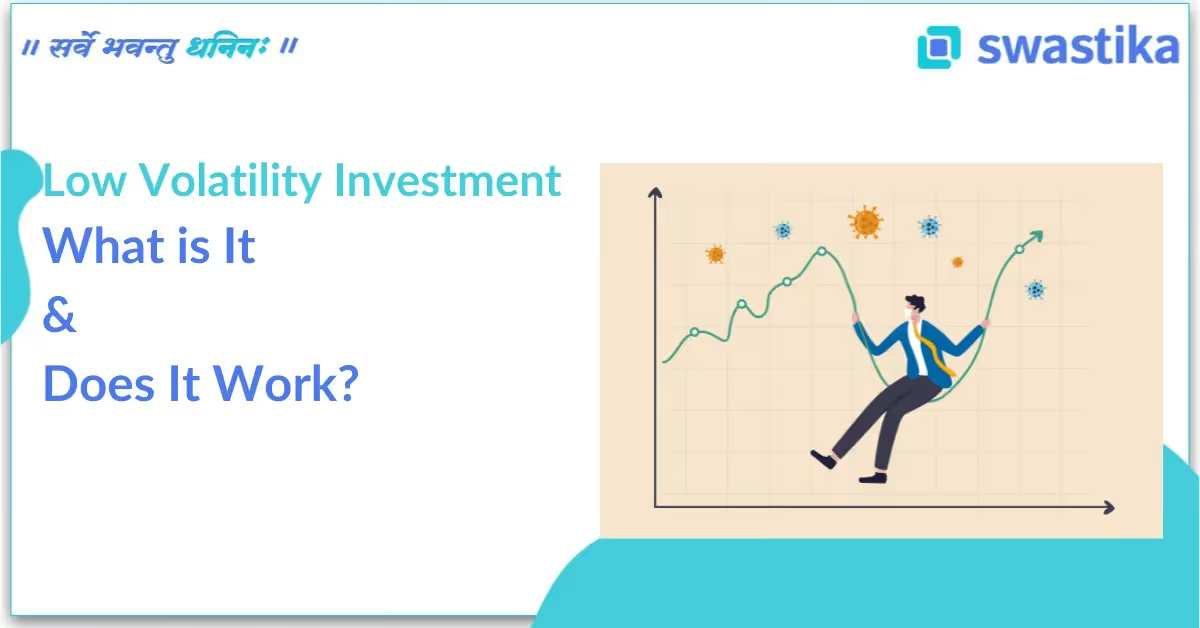
Understanding Low Volatility Investment
Introduction
Today, we’ll dive into the concept of low volatility investment—a strategy designed to minimize risk while aiming for steady returns. Low volatility investments are less affected by market fluctuations, making them attractive to conservative investors who prioritize stability. Let’s break down what low volatility investment is, why it’s beneficial, and how it works.
What is Low Volatility Investment?
Low volatility investment involves selecting assets or portfolios that exhibit less fluctuation in price compared to the broader market. These investments experience smaller price swings, providing a more stable and predictable return profile.
Why Choose Low Volatility Investments?
- Reduced Risk: Low volatility investments are less likely to experience dramatic price drops, which helps protect investors from sharp market downturns.
- Stable Returns: These investments tend to offer more consistent returns over time, which is ideal for investors who prefer stability and are risk-averse.
- Lower Stress: Investors in low volatility assets generally face less anxiety from market swings, as these investments are less sensitive to market volatility.
How Do Low Volatility Investments Work?
- Investment Selection: Low volatility investments usually include high-quality stocks, bonds, or funds that have historically shown less price volatility. These assets are chosen based on their stability and reliable performance.
- Portfolio Construction: A low volatility investment portfolio is built by selecting assets with lower beta coefficients (a measure of volatility relative to the market). This approach ensures that the overall portfolio experiences less fluctuation compared to the market.
- Diversification: Diversifying across various low volatility assets further reduces risk. Combining stable stocks with bonds or other low-risk assets can enhance the portfolio’s stability.
Benefits of Low Volatility Investments
- Capital Preservation: By reducing the risk of large losses, low volatility investments help preserve capital, which is crucial for long-term financial goals.
- Consistent Performance: These investments often provide steady, albeit sometimes modest, returns, making them a reliable choice for long-term planning.
- Risk Management: Low volatility investments can serve as a buffer during market downturns, decreasing the overall risk of the investment portfolio.
Examples of Low Volatility Investments
- High-Quality Stocks: Companies with stable earnings and strong financials are known for their lower volatility. Examples in the Indian market include:some text
- Hindustan Unilever: A major player in the consumer goods sector, known for its consistent performance and stable earnings.
- NTPC Limited: A leading power generation company with a steady income stream and lower price fluctuations.
- Government Bonds: Bonds issued by the Indian government, such as Indian Government Securities (G-Secs), are considered low volatility due to their low risk of default.
- Low Volatility Funds: Mutual funds and exchange-traded funds (ETFs) designed to focus on low volatility stocks can provide diversification and stability. For instance, the Nifty Low Volatility 50 Index invests in stocks with lower volatility, aiming to offer stable returns.
Risks and Considerations
- Lower Returns: Low volatility investments may offer lower returns compared to more aggressive investment strategies, which could be a downside for those seeking higher growth.
- Inflation Risk: Over time, the steady returns of low volatility investments might not keep pace with inflation, potentially reducing purchasing power.
- Market Conditions: In rapidly rising markets, low volatility investments might lag behind high-growth assets, as they are designed to be less responsive to market upswings.
Conclusion
Low volatility investments offer a strategy for those seeking stability and reduced risk in their portfolios. By focusing on assets with lower price fluctuations, investors can enjoy more predictable returns and better capital preservation. However, it’s important to consider the trade-offs, such as potentially lower returns and inflation risk. Understanding your financial goals and risk tolerance is essential for making updated investment decisions.

EV Space - Companies with Benefits
Our economy is still recovering from the impact of Covid-19. Our country is going through the 2nd wave of the pandemic and is still trying to overcome the losses that happened due to the serious issue of Covid-19.
Recently the GDP data arrived which shows some relief for us, But still, we are facing the serious issues of Inflation across the necessity items.
One of the major is Crude Oil/ Petroleum the prices in India are crossing the mark of Rs.100/ltr which directly affects the economy. The foremost impact is on the transportation & logistics, which somehow leads to rising in the prices of many essential items & products.
But with the advancement in technologies now we are shifting towards the easiest way of transportation which can work with the help of electricity in the most efficient manner.
The Indian market will soon see a new turnaround in this segment as the market will grow up to USD 47 billion by the end of 2026.
These vehicles are more cost-efficient, will have zero pollution and are more in demand in the USA and other countries. Everyone is looking at Electronic Vehicles as the future and which is soon going to happen.
Even the Government of India has announced a PLI scheme of Rs.57000 Cr for the manufacturing of auto parts which will boost it further.
Here is a list of some important auto-ancillary companies which are benefited:
Exide Industries:
The company manufactures lead-acid storage batteries from 2.5 ampere-hours to 20,600 ampere-hours. The company manufactures automotive batteries, industrial batteries, and submarine batteries.
Amara Raja Batteries:
The company is one of the largest manufacturers of lead-acid batteries for both industrial and automotive applications in the Indian battery industry.
Jamna Auto Industries:
This company is engaged in manufacturing and selling Tapered Leaf, Parabolic Springs, and Lift Axles. It was the first company to introduce parabolic springs in India.
Lumax Industries:
The company is a leading supplier of lighting systems in an automobile which includes Head & Tail Lamps, Sundry and Auxiliary Lamps & other accessories for two and four wheeler, Buses & trucks, Tractors, and earthmovers.
Minda Industries:
They are engaged in the manufacturing of auto components which includes auto electrical parts & their relative accessories.
Asahi India:
This company is a glass manufacturing company in India which is manufactured laminated windshield, antenna printed back lite, solar control glass, Glass antennas, etc. It also manufactures floating glass-like reflective glass.
Gabriel India:
The company offers a wide range of ride control products and also enjoys a monopoly position in the market.
Bharat Seats:
The company manufacture completes seating & interior components for the automobile. This includes Two & Four wheeler seating, Mould Carpets, Mainframe for a two-wheeler, & Railways Seats.
Motherson Sumi:
The company engaged in the manufacturing of automotive wiring, Harnesses, Mirror for passenger vehicles. Mother-son Sumi is also a leading supplier of plastic components & modules in the industry.
Furthermore, companies which are engaged in Tire manufacturing, Power Generation, and supplying will be beneficial. Moreover, the EV segment will bring a positive change in the automobile segment.
Note: Details shared here are only for educational purposes.


.avif)
.avif)

.avif)






START YOUR INVESTMENT JOURNEY
Get personalized advice from our experts
- Dedicated RM Support
- Smooth and Fast Trading App
