


NTPC Share Price Insights: Fifth Straight Session Eases And Market Context



Key Takeaways
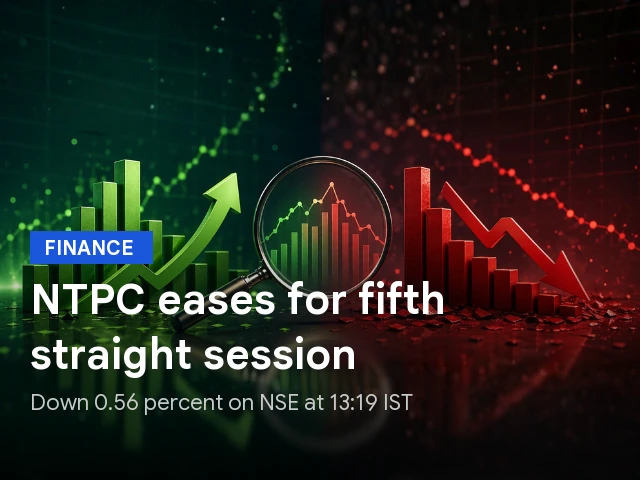
- NTPC share price eased for the fifth straight session, around Rs 346.75 on NSE.
- NTPC stock price rose 1.55% in the last year, while NIFTY declined 5.14% and Nifty Energy rose 6.91%.
- July futures stood at Rs 347.85, signaling near-term price alignment with the spot.
- NTPC PE is 14.6x based on TTM earnings to March 26.
NTPC share price eased for the fifth straight session, quoted at Rs 346.75 on the NSE as of 13:19 IST. This move frames a session where the benchmark NIFTY is around 24,052.3, up 0.71%, while the Sensex sits near 77,018.87, higher by about 0.67% for the day. The year-to-date view remains mixed: NTPC has gained 1.55% over the last 12 months as NIFTY slides 5.14% and the Nifty Energy index climbs 6.91%. Volume in NTPC today stood at 101.69 lakh shares, versus the 1-month average of 134.92 lakh. The July futures contract for NTPC sits at Rs 347.85, down 0.33%, signaling near-term alignment with the cash price. The stock carries a price-earnings ratio of 14.6x on TTM earnings to March 26.
NTPC Share Price Momentum After Five Straight Sessions
NTPC share price has shown a pause after five successive sessions of declines, with the current quote at Rs 346.75 on the NSE as of 13:19 IST. The intraday movement placed NTPC down 0.56% on the day, underscoring a risk-off tone that often accompanies short-term consolidation. In the broader market, NIFTY trades around 24,052.3, up roughly 0.71%, while the Sensex hovers near 77,018.87, up about 0.67%. The energy complex continues to be a source of relative strength in the market context, with the Nifty Energy index showing resilience. Over the past year, NTPC has risen 1.55%, compared with a 5.14% decline in the NIFTY and a 6.91% rise in the Nifty Energy index. On the volume front, today’s turnover was 101.69 lakh shares, below the 1-month average of 134.92 lakh. A close look at the chart suggests potential support near the Rs 340–345 zone, with resistance near Rs 350–355, depending on energy sector momentum. If momentum shifts above Rs 350, bulls could revisit a test of the Rs 355–360 area in coming sessions.
Market Context: Nifty And Energy Sector Movements
The present market context shows the NIFTY up around 0.71% on the day to about 24,052.3, while the Sensex is near 77,018.87, up about 0.67%. NTPC sits in a sector that has been relatively resilient; the Nifty Energy index is up about 0.69% on the day and has posted a 0.04% increase over the last month. NTPC’s daily volume stood at 101.69 lakh shares today, below the 1-month average of 134.92 lakh, underscoring a day of cautious participation. Such dynamics imply that energy names, including NTPC, may still attract steady interest even as the broader market exhibits mixed momentum.
Trading Signals: Futures And Short-Term Indicators
The July futures contract for NTPC is priced at Rs 347.85, down 0.33% on the day, indicating near-term alignment with the cash price. With a P/E ratio of about 14.6x based on trailing twelve months earnings to March 26, the stock sits at a moderate valuation relative to the sector. For traders, the Rs 347–350 zone will be critical in the near term; a break above could invite fresh buyers, while a break below Rs 340 could put pressure on the stock. The path for NTPC will likely mirror the energy sector’s broader rhythm and macroeconomic cues like interest rates and risk appetite.
NTPC Share Price History And Chart Perspective
Looking at the ntpc share price history, NTPC has gained 1.55% over the last year, while the NIFTY has fallen 5.14% and the Nifty Energy index has advanced 6.91%. The ntpc share price history shows a mild up-and-down trajectory that suggests consolidation rather than a robust breakout. The last month has seen NTPC ease by about 1.39%, indicating a temporary pause in the upward drift, even as energy stocks display selective strength. A chart view would emphasize watching the supports near Rs 340 and resistance around Rs 355–360, with the longer-term trend dependent on broader market and energy-specific catalysts.
NTPC Earnings And Valuation Considerations
NTPC’s earnings framework remains anchored by a moderate valuation, with a trailing P/E of approximately 14.6x based on earnings to March 26. This indicates a valuation that reflects stable earnings and a defensively positioned utility play within India’s power sector. Investors should monitor the evolution of fuel costs, base tariffs, and hydropower dynamics, as these variables can influence earnings stability in the coming quarters. While near-term price action may oscillate with energy-sector sentiment, the longer-term case for NTPC hinges on steady project execution and policy clarity, which keep the valuation in a reasonable band for a utility stock.
Frequently Asked Questions
What is NTPC share price today?
As of 13:19 IST on the NSE, NTPC share price is Rs 346.75, with the stock easing for the fifth straight session.
How did NTPC perform in the last year compared to the NIFTY?
NTPC stock price jumped 1.55% in the last year, while the NIFTY declined 5.14% and the Nifty Energy index rose 6.91%.
What is the July futures price for NTPC?
The July futures price for NTPC is Rs 347.85, down 0.33% on the day.
What is NTPC's price-to-earnings ratio based on TTM earnings?
NTPC's price-to-earnings ratio is 14.6x based on trailing twelve months earnings to March 26.
Where can I access AI stock research for NTPC?
You can access institution-level stock research via Swastika's Sarthi AI stock assistant.
Conclusion
For the retail investor, the NTPC share price action indicates a pause rather than a definitive reversal. With the stock around Rs 346–347 and a 14.6x trailing PE, the setup favors a wait-and-watch approach in the near term, particularly as the July futures hover near Rs 347. A test of support near Rs 340 or a break above Rs 350 could provide more clarity on the next directional move. The practical takeaway is to couple price action with broader energy-sector momentum and to manage risk through clear stop levels and position sizing.
For deeper, institution-level stock research that blends experience, analysis, and trusted data, consider Swastika Investmart’s Swastika's Sarthi AI stock assistant. This tool helps retail investors navigate NTPC and other sector names with AI-powered insights and research that complement traditional analysis.
Open your trading and demat account here
Reference :
Latest Articles

Honasa Consumer IPO Details


Honasa Consumer is the largest digital-first beauty and personal care ("BPC") company in India in terms of revenue. The Company has its flagship brand Mama earth. Along with that the Company has added five new brands to its portfolio, namely The Derma Co., Aqualogica, Ayuga, BBlunt, and Dr. Sheth's, and has built a 'House of Brands' architecture.
OBJECTS OF THE ISSUE
• Advertisement expenses towards enhancing brand awareness.
• Capital expenditure to be incurred by the Company for setting up new EBOs.
• Investment in the company's Subsidiary, Blunt for setting up new salons.
KEY MANAGERIAL PERSONNEL
Varun Alagh
Chairman, Whole-time Director and the Chief Executive Officer of the Company. He has been associated with the Company as a promoter and a director since September 16, 2016. Previously, he has worked with corporations such as Hindustan Lever Limited, Diageo India Private Limited for over a year and Coca-Cola India Private Limited.
Ghazal Alagh
She is a Whole-time Director and the Chief Innovation Officer of the Company. She holds a bachelor’s degree of computer applications from Panjab University, Chandigarh and a certification in software engineering from the academic council of the NIIT Academy, New Delhi. She has been associated with the Company as a promoter and director since September 16, 2016.
Raman Preet Sohi
Chief Financial Officer of the Company. He is responsible for establishing and executing the financial strategy of the Company. He joined the Company on April 27, 2020. Previously, he worked with Drums Food International Private Limited as the chief financial officer for a period of over a year.
Dhanraj Dagar
Company Secretary and the compliance officer of the Company. He joined the Company on May 11, 2022. He holds a bachelor’s degree of commerce from Bangalore University and a bachelor’s degree of law from Maneklal Nanavati Law College, Gujrat University. He was also admitted as an associate member of the Institute of Companies Secretaries of India.
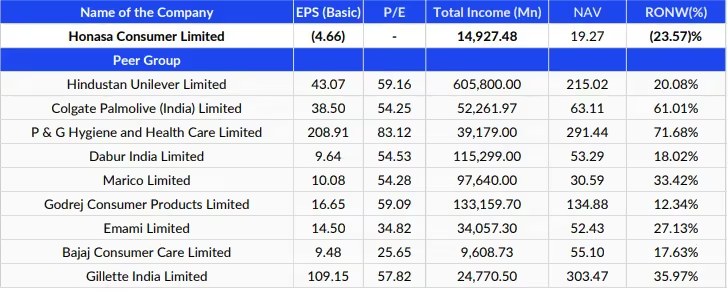
COMPARISON WITH LISTED INDUSTRY PEERS (AS ON 31ST MARCH 2023)
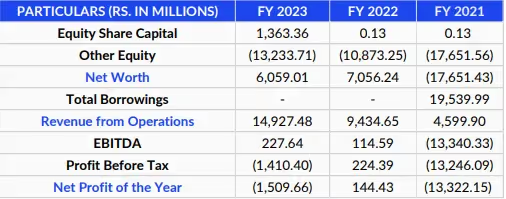
FINANCIALS (RESTATED CONSOLIDATED)
COMPANY PROFILE
Honasa’s portfolio of brands with differentiated value propositions includes products in the baby care, face care, body care, hair care, color cosmetics, and fragrances segments.
The Company's success with Mama earth and its ability to identify and cater to emerging trends has enabled it to develop repeatable brand-building playbooks that have helped in G scaling its newer brands at a fast pace.
It has a dedicated in house innovation team, consisting of 47 members, that drives end-to-end ideation and execution of new product launches.
For manufacturing, it has set up an asset-light contract manufacturing model that gives it the benefit of economies of scale at small batch sizes while also providing the flexibility to scale up production as needed.
The Company makes its products available to its customers through omni channel distribution networks across both online and offline touch points.
COMPETITIVE STRENGTHS
Brand-building capabilities and repeatable playbooks. Consumer-centric product innovation.
Digital-first omni channel distribution. Data-driven contextualized marketing.
Ability to manufacture a diverse range of products and maintain optimal inventory levels. Founder-led company with strong professional management.
KEY STRATEGIES
Expand distribution and brand awareness. Incubate or acquire new engines of growth. Strengthen business efficiency drivers.
KEY CONCERNS
The company does not manufacture any of its products and relies entirely on third-party.
It has recorded losses in the past. Any losses in the future may adversely impact its business. The Company does not hold any patents over its product formulae and has not made any applications in this respect.
It faces intense competition which may lead to a reduction in its market share.
Subsidiaries that it has acquired in the past, have incurred losses for certain historical periods. The company incurs significant advertising expenses.
The company’s majority revenue comes from the sale of products under its flagship Mama earth brand.
OUTLOOK & VALUATION
Honasa Consumer is a new-age company that is well-known for its flagship brand, Mama earth. The company offers a diverse range of products under its portfolio of six brands.The company has brand- building capabilities and it follows data-driven, context utalized marketing.
However the financial performance of the company has been inconsistent, and it has reported losses in recent fiscals. Subsidiaries that it has acquired have also incurred losses. Additionally, the company does not manufacture its products and relies on third parties for that, and it also does not hold any patents over its product formulas.
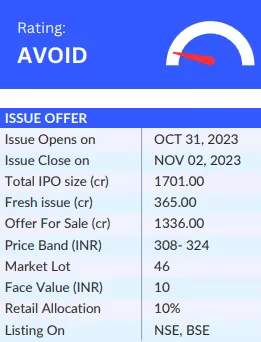
The business' return on advertising has also been consistent for a few years, i.e., 2.5%, thus the company's client retention is very low. As it is a loss-making company, we cannot derive its actual P/E, but even after considering its outflow in the latest investment, the company is coming at an extremely high valuation. Thus, I will suggest to Avoid this IPO.
DISCLAIMER:
The information contained herein are strictly confidential and are meant solely for the information of the recipient and shall not be altered in any way, transmitted to, copied or distributed, in part or in whole, to any other person or to the media or reproduced in any form, without prior written permission of Swastika Investmart Ltd. (“SIL”). The contents of this document are for information purpose only. This document is not an investment advice and must not alone be taken as the basis for an investment decision. Before taking any decision to invest, the recipient of this document must read carefully the Red Herring Prospectus (“RHP”) issued to know the details of IPO and various risks and uncertainties associated with the investment in the IPO of the Company. All recipients of this document must before acting on the given information/details, make their own investigation and apply independent judgment based on their specific investment objectives and financial position. They can also seek appropriate professional advice from their own legal and tax consultants, advisors, etc. to understand the risks and investment considerations arising from such investment. The investor should possess appropriate resources to analyze such investment and the suitability of such investment to such investor’s particular circumstances before making any decisions on the investment. The Investor shall be solely responsible for any action taken based on this document. SIL shall not be liable for any direct or indirect losses arising from the use of the information contained in this document and accept no responsibility for statements made otherwise issued or any other source of information received by the investor and the investor would be doing so at his/her/its own risk. The information contained in this document should not be construed as forecast or promise or guarantee or assurance of any kind. The investors are not being offered any assurance or guaranteed or fixed returns on their investments. The users of this document must bear in mind that past performances if any, are not indicative of future results. The actual returns on investment may be materially different than the past. Investments in Securities market products and instruments including in the IPO of the Company are highly risky and they are generally not an appropriate avenue for someone with limited resources/ limited investment and low risk tolerance. Such Investments are subject to market risks including, without limitation, price, volatility and liquidity and capital risks. Therefore, the users of this document must carefully consider all the information given in the RHP including the risks factors before making any investment in the Equity Shares of the Company.
Swastika Investmart Ltd or its analysts did not receive any compensation or other benefits from the companies mentioned in the report or third party in connection with preparation of the research report. Accordingly, neither Swastika Investmart Ltd nor Research Analysts have any material conflict of interest at the time of publication of this report. Compensation of our Research Analysts is not based on any specific merchant banking, investment banking or brokerage service transactions. Swastika Investment Ltd may have issued other reports that are inconsistent with and reach different conclusion from the information presented in this report. Research entity has not been engaged in market making activity for the subject company. Research analyst has not served as an officer, director or employee of the subject company. We have not received any compensation/benefits from the Subject Company or third party in connection with the Research Report.
CORPORATE & ADMINISTRATIVE OFFICE - 48, Jaora Compound, M.Y.H. Road, Indore - 452 001 | Phone 0731 - 6644000
Compliance Officer: Ms. Sheetal Duraphe Email: compliance@swastika.co.inPhone: (0731) 6644 241
Swastika Investmart Limited, SEBI Reg. No. : NSE/BSE/MSEI: INZ000192732 Merchant Banking: INM000012102 Investment Adviser: INA000009843 MCX/NCDEX: INZ000072532 CDSL/NSDL: IN-DP-115-2015 RBI Reg. No.: B-03-00174 IRDA Reg. No.: 713.

फेड बैठक से कीमती धातुओं में मुनाफ़ा वसूली।
कीमती धातुओं में लगातार तीन हफ्ते बढ़ोतरी होने के बाद पिछले सप्ताह थोड़ी मुनाफ़ा वसूली रही और कीमते सकारात्मक दायरे में कारोबार करती दिखी। फेड की बैठक के पहले कीमती धातुओं में नरमी, खरीदारी करने के अवसर हो सकता है क्योंकि भू-राजनितिक तनाव अभी कम नहीं हुआ है और आगे इसके बढ़ने के आसार क़ायम है। भारत में दिवाली करीब होने से सोने -चांदी की खुदरा मांग अच्छी रहने के चलते हाज़िर बाज़ार से भी कीमती धातुओं को सपोर्ट मिला हुआ है। वही इस सप्ताह में फेड की बैठक है जिसमे फेड द्वारा मौद्रिक नीति पर हॉकिश टिपण्णी कीमती धातुओं में कुछ दबाव बना सकती है लेकिन, निवेश और हाज़िर मांग का सपोर्ट रहने के चलते कीमती धातुओं में निचला स्तर सिमित रहने का अनुमान है। हालांकि, इजराइल-अमेरिका और मिड्ल ईस्ट में बढ़ता हुआ तनाव सेफ हैवन मांग बढ़ा रहा है। ग्लोबल आर्थिक आकड़ो में भी पिछले सप्ताह सुधार देखने को मिला है। अमेरिका की जीडीपी और रोज़गार बाज़ार में मजबूती बनी हुई है वही बेंचमार्क ट्रेज़री यील्ड लगातार बढ़ रही है। यूरोप और चीन की अर्थव्यस्था में भी सुधार हुआ है। भूराजनीतिक तनाव और फेड द्वारा ब्याज दरों में वृद्धि, दो विपरीत ट्रिगर कीमती धातुओं के भाव में संतुलन बना रहे है।इस सप्ताह बैंक ऑफ़ जापान, बैंक ऑफ़ इंग्लैंड और फेड की मॉनेटरी पॉलिसी, और अमेरिकी पैरोल डाटा कीमती धातुओं के लिए महत्वपूर्ण रहेंगे।
तकनिकी विश्लेषण :
इस सप्ताह कीमती धातुओं के भाव सीमित दायरे में रह सकते है। एमसीएक्स दिसंबर वायदा सोने में सपोर्ट 59000 रुपये पर है और रेजिस्टेंस 62000 रुपये पर है। दिसंबर वायदा चांदी में सपोर्ट 69000 रुपये पर है और रेजिस्टेंस 73000 रुपये पर है।

युद्ध बढ़ने की चिंताओं से बढ़ी सेफ हैवन मांग।
इजराइल-हमास युद्ध की चिंताओं के कारण लगातार सुरक्षित निवेश की मांग ने सोने की कीमतों को तीन महीने के उच्चतम स्तर पर पंहुचा दिया है, जबकि अमेरिकी ब्याज दरों पर कुछ हद तक मिश्रित संकेतों ने डॉलर और ट्रेजरी पैदावार में तेजी को रोक दिया है। सोने में लगातार दूसरे सप्ताह जोरदार बढ़त दर्ज की गई, कॉमेक्स सोने का वायदा भाव 2,000 डॉलर प्रति औंस के स्तर के करीब आ गया है, क्योंकि मिडिल-ईस्ट में व्यापक संघर्ष की आशंका के कारण पारंपरिक सुरक्षित ठिकानों की मांग से सोने की चमक बढ़ गई है। डॉलर इंडेक्स और ट्रेजरी यील्ड में पिछले सप्ताह के अंत में आई कमजोरी से सोने को प्रोत्साहन मिला, क्योंकि फेडरल रिजर्व के अध्यक्ष जेरोम पॉवेल ने कहा कि पैदावार में हालिया बढ़ोतरी वित्तीय स्थितियों को सख्त कर रही है, जिससे फेड द्वारा अधिक कार्रवाई की आवश्यकता कम हो सकती है। जबकि पॉवेल ने अभी भी इस वर्ष कम से कम एक और ब्याज दर बढ़ोतरी के लिए दरवाजा खुला रखा है, बाजार ने उनकी टिप्पणियों को एक संकेत के रूप में लिया कि फेड ने ब्याज दरें बढ़ाने का काम पूरा कर लिया है। इससे अमेरिकी डॉलर इंडेक्स और बेंचमार्क ट्रेज़री यील्ड उच्च स्तरों से पीछे हट गई, हालांकि 10 साल ट्रेज़री यील्ड की दर अभी भी 5 प्रतिशत के स्तर के करीब बनी हुई है। भारत में त्योहारों का सीज़न शुरू होना और दिवाली करीब होने के कारण भी ज्वेलर्स की खरीद सोने की कीमतों को चमका रही है। पिछले सप्ताह, एमसीएक्स में दिसंबर वायदा सोना 2.2 प्रतिशत तेज़ हो कर 60700 रुपये प्रति दस ग्राम, और चांदी 1 प्रतिशत तेज़ हो कर 72400 रुपये प्रति किलो पर कारोबार करती दिखी।
तकनिकी विश्लेषण
इस सप्ताह कीमती धातुओं के भाव में तेज़ी जारी रह सकती है। एमसीएक्स दिसंबर वायदा सोने में सपोर्ट 59000 रुपये पर है और रेजिस्टेंस 61800 रुपये पर है। दिसंबर वायदा चांदी में सपोर्ट 70000 रुपये पर है और रेजिस्टेंस 76000 रुपये पर है।

IRM Energy IPO Date, Price, GMP, Review
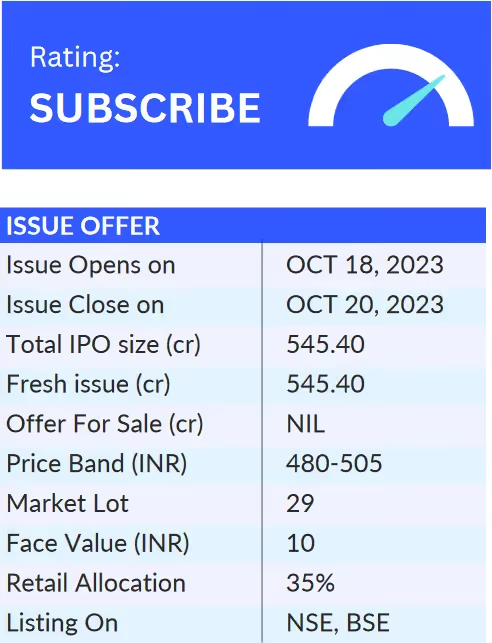
IRM Energy Limited is a gas distribution company. The company is involved in developing, operating, and expanding of local natural gas distribution network. IRM Energy is a value-driven energy enterprise serving industrial, commercial, domestic, and automobile customers.
OBJECTS OF THE ISSUE
- Funding capital expenditure requirements for the development of the City Gas Distribution network.
- Repayment of all or a portion of certain outstanding borrowings availed by the Company.
KEY MANAGERIAL PERSONNEL
Maheswar Sahu
He is a Non-Executive Director of the Company and the Chairman of the Board of Directors of company. He had active involvement in handling various portfolios in Government including PSU management.
Karan Kausha
He is Chief Executive Officer (CEO) of the Company on July 13, 2020. He has been associated with the Company since September 5, 2016. He has 16 years of experience in the field of General Management, Strategy, Business Development and Project Management.
Harshal Anjaria
Harshal Anjaria was appointed as the Chief Financial Officer (CFO) of the Company on July 13, 2017. He has been associated with the Company since July 11, 2016. He has been associated with the Company since July 11, 2016.
Shikha Jain
Shikha Jain was appointed as the Company Secretary and Compliance Officer of the Company on January 4, 2020 and November 7, 2022, respectively. She has been associated with the Company since September 2, 2019. She has over 5 years of experience in corporate secretarial and other related compliances.
COMPANY PROFILE
- Company develop natural gas distribution projects in the geographical areas (“GAs”) for industrial, commercial, domestic and automobile customers.
- The company has marked its presence in Banaskantha District in the state of Gujarat, Fatehgarh Sahib in the state of Punjab, and Diu & Gir-Somnath in the Union Territory of Daman & Diu and the state of Gujarat.
- The company is fulfilling the natural gas requirements of 48172 domestic clients, 179 industrial units, and 248 commercial clients.
- As of September 2022, the company has 216 CNG gas stations across its operating geographical areas.
- The company has received an award of City Gas Distribution- Growing Company of the Year 2020 from the Federation of Indian Petroleum Industries.
- Company supply natural gas to two primary set of customer segments that are CNG and PNG.
COMPETITIVE STRENGTHS
- Exclusivity in CNG and PNG supply in the awarded geographical areas.
- Diverse customer portfolio and distribution network of CNG and PNG.
- Strong parentage, experienced board and management team and strong execution team.
- Technology adoption and digital initiatives for efficient and optimal operations.
- Connectivity to gas pipelines and establishing cost-effective gas sourcing arrangements.
- Strong financial performance with consistent growth and profitability supported by healthy operating efficiency and favourable regulations.
KEY STRATEGIES
- Expand company’s presence in existing and newer geographical areas through an improved captive distribution channel.
- Infrastructure roll-out for development and operation of the new licensed geographical areas of Namakkal & Tiruchirappalli, Tamil Nadu.
- Technology adoption to increase operational efficiency and enhance customer value.
- Business integration for transition into a complete energy solution provider.
KEY CONCERNS
- Transporting natural gas is hazardous and could result in accidents, which could adversely affect the company’s reputation, business, financial condition, results of operations, and cash flows.
- The Company typically requires 15-18 months to generate revenue in its geographical areas. Any further delay in realizing revenue may affect projections, results of operations, and cash flows.
- Its operations are restricted to defined geographical boundaries and the natural gas requirements in these regions may be affected by various factors.
- Companies require various licenses and approvals for undertaking their businesses.
- The company is heavily reliant on CNG and industrial PNG supply operations and any decrease in the sales may have an adverse effect on the business.
- The company is dependent on Government policies for the allocation of natural gas and the cost of gas supplied for CNG and domestic PNG customers.
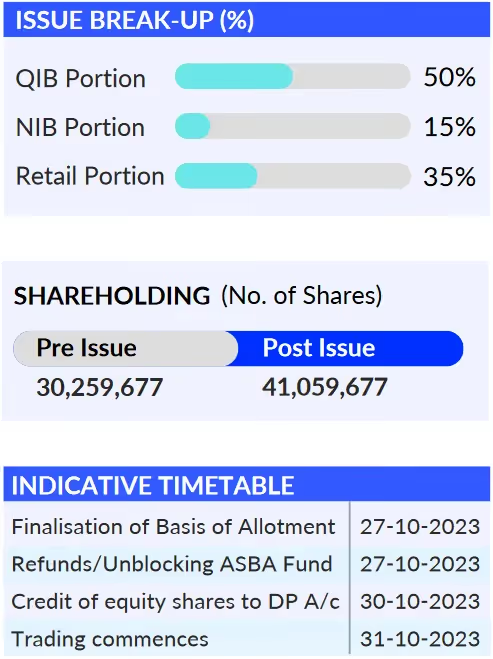
COMPARISON WITH LISTED INDUSTRY PEERS (AS ON 31ST MARCH 2023)

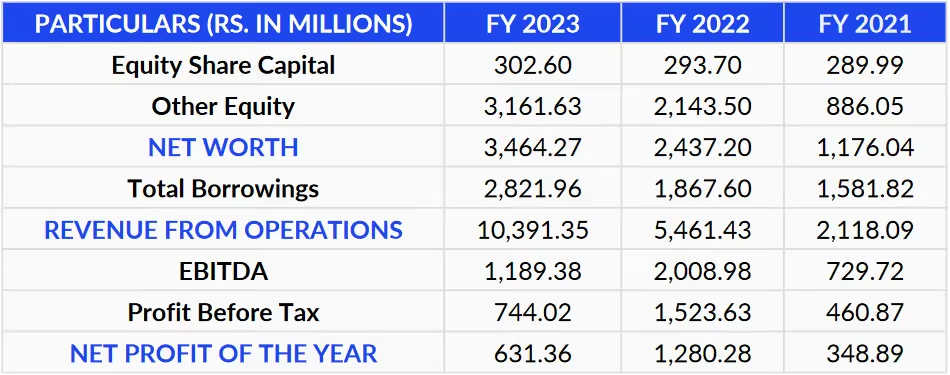
FINANCIALS (RESTATED CONSOLIDATED)
OUTLOOK & VALUATION
IRM has showcased consistent development of its gas distribution business in its key GAs. The company has a diverse customer portfolio and distribution network of CNG and PNG and a strong relationship with its customers. It has also reported strong financial performance in the last few years, except in FY23, when profit was impacted by a rise in gas prices due to geopolitical situations.
The company is still in the early stages of growth and may be impacted by unforeseen factors and other risks like limited geographic reach, government policies, delayed revenue generation, etc.
The issue is coming at a P/E valuation of 24.12x, which appears fairly priced. Thus, considering all these factors and the positive growth outlook, we will recommend a Subscribe rating to this IPO.
DISCLAIMER:
The information contained herein are strictly confidential and are meant solely for the information of the recipient and shall not be altered in any way, transmitted to, copied or distributed, in part or in whole, to any other person or to the media or reproduced in any form, without prior written permission of Swastika Investmart Ltd. (“SIL”). The contents of this document are for information purpose only. This document is not an investment advice and must not alone be taken as the basis for an investment decision. Before taking any decision to invest, the recipient of this document must read carefully the Red Herring Prospectus (“RHP”) issued to know the details of IPO and various risks and uncertainties associated with the investment in the IPO of the Company. All recipients of this document must before acting on the given information/details, make their own investigation and apply independent judgment based on their specific investment objectives and financial position. They can also seek appropriate professional advice from their own legal and tax consultants, advisors, etc. to understand the risks and investment considerations arising from such investment. The investor should possess appropriate resources to analyze such investment and the suitability of such investment to such investor’s particular circumstances before making any decisions on the investment. The Investor shall be solely responsible for any action taken based on this document. SIL shall not be liable for any direct or indirect losses arising from the use of the information contained in this document and accept no responsibility for statements made otherwise issued or any other source of information received by the investor and the investor would be doing so at his/her/its own risk. The information contained in this document should not be construed as forecast or promise or guarantee or assurance of any kind. The investors are not being offered any assurance or guaranteed or fixed returns on their investments. The users of this document must bear in mind that past performances if any, are not indicative of future results. The actual returns on investment may be materially different than the past. Investments in Securities market products and instruments including in the IPO of the Company are highly risky and they are generally not an appropriate avenue for someone with limited resources/ limited investment and low risk tolerance. Such Investments are subject to market risks including, without limitation, price, volatility and liquidity and capital risks. Therefore, the users of this document must carefully consider all the information given in the RHP including the risks factors before making any investment in the Equity Shares of the Company.
Swastika Investmart Ltd or its analysts did not receive any compensation or other benefits from the companies mentioned in the report or third party in connection with preparation of the research report. Accordingly, neither Swastika Investmart Ltd nor Research Analysts have any material conflict of interest at the time of publication of this report. Compensation of our Research Analysts is not based on any specific merchant banking, investment banking or brokerage service transactions. Swastika Investment Ltd may have issued other reports that are inconsistent with and reach different conclusion from the information presented in this report. Research entity has not been engaged in market making activity for the subject company. Research analyst has not served as an officer, director or employee of the subject company. We have not received any compensation/benefits from the Subject Company or third party in connection with the Research Report.
CORPORATE & ADMINISTRATIVE OFFICE - 48, Jaora Compound, M.Y.H. Road, Indore - 452 001 | Phone 0731 - 6644000
Compliance Officer: Ms. Sheetal Duraphe Email: compliance@swastika.co.in Phone: (0731) 6644 241
Swastika Investmart Limited, SEBI Reg. No. : NSE/BSE/MSEI: INZ000192732 Merchant Banking: INM000012102 Investment Adviser: INA000009843 MCX/NCDEX: INZ000072532 CDSL/NSDL: IN-DP-115-2015 RBI Reg. No.: B-03-00174 IRDA Reg. No.: 713.

डॉलर इंडेक्स में मजबूती से दबाव में सोना-चांदी।
ब्याज दरों के लंबे समय तक ऊंचे रहने की संभावनाओं के बीच अमेरिकी डॉलर 10 महीने की उचाई पर है और ट्रेजरी यील्ड में उछाल आया है जिसके कारण सोने के भाव 7 महीने के निचले स्तरों पर पहुंच गए है। दुनिया के सबसे बड़े सोना-समर्थित एक्सचेंज-ट्रेडेड फंड, एसपीडीआर गोल्ड ट्रस्ट की होल्डिंग्स चार साल से अधिक के निचले स्तर पर पहुंच गई है। जब ब्याज दरें अधिक हो जाती हैं, तो वे बांड जैसे अन्य ब्याज-युक्त निवेश को अधिक आकर्षक बना देते हैं, जिससे निवेशक ब्याज देने वाले निवेश की तरफ आकर्षित हुए है। उच्च ब्याज़ दरों की स्थिति में, सोने के विपरीत दिशा में चलने वाला डॉलर इंडेक्स में तेज़ी भी सोने के भाव में दबाव बना रही है। इस साल ब्याज दरों में एक बार और बढ़ोतरी होने के संकेत के साथ अगले साल उच्च ब्याज दरें क़ायम रहने के अनुमान के चलते कीमती धातुए निवेश के लिए कम आकर्षित हो गई है। अमेरिकी रोज़गार बाज़ार के बेहतर आकड़ो से लेबर इन्फ्लेशन बढ़ने का अनुमान है जिससे मुद्रास्फीति में बढ़ोतरी की सम्भवनाए बन रही है। बाजार ने दूसरी तिमाही के दौरान अमेरिकी अर्थव्यवस्था में मजबूत वृद्धि का संकेत देने वाले आंकड़ों पर प्रतिक्रिया दी है, जिससे ब्याज दरों में बढ़ोतरी की उम्मीद बढ़ गई है। पिछले सप्ताह दिसंबर वायदा सोने में 2.25 प्रतिशत की गिरावट के बाद कीमते 58050 रुपये प्रति दस ग्राम के स्तरों पर कारोबार करती रही। दिसंबर वायदा चांदी में 2 प्रतिशत की साप्ताहिक गिरावट के बाद कीमते 71800 रुपये प्रति किलो पर रही। इस सप्ताह अमेरिकी पैरोल के आंकड़े कीमती धातुओं के लिए महत्वपूर्ण रहेंगे।
तकनिकी विश्लेषण :
इस सप्ताह कीमती धातुओं के भाव में सुधार देखने को मिल सकता है। एमसीएक्स दिसंबर वायदा सोने में सपोर्ट 57500 रुपये पर है और रेजिस्टेंस 58800 रुपये पर है। दिसंबर वायदा चांदी में सपोर्ट 70500 रुपये पर है और रेजिस्टेंस 73500 रुपये पर है।

मजबूत बांड यील्ड से दबाव में सोना।
त्यौहार के सीजन से पहले कठोर मौद्रिक नीति के संकेतो से सोने और चांदी के भाव सस्ते हो गए है। और भारत में त्यौहार पर रीती रिवाज़ों के चलते पितृपक्ष के बाद सस्ते भाव होने के कारण इनकी हाज़िर मांग को अच्छा सपोर्ट देखने को मिल सकता है। भारत में पहली तिमाही में सोने की मांग में गिरावट देखने को मिली थी जबकि दूसरी तिमाही में मांग 4 प्रतिशत से बढ़ने का अनुमान है। हालांकि, बांड यील्ड में लगातार बढ़ोतरी होने के कारण गैरउपज वाली संपत्ति सोने से निवेशको ने छोटी अवधि के लिए दुरी बना रखी है। एसपीडीआर गोल्ड ट्रस्ट की सोने में होल्डिंग घट कर चार साल के निचले स्तरों पर पहुंच गई है। अमेरिका में आर्थिक मंदी का डर कम होने के बाद से ही निवेशक लम्बी अवधि के गवर्नमेंट बांड यह मान कर बेच रहे है की अर्थव्यवस्था ज्यादा नहीं सिकुड़ेगी। जबकि चीन, जो अमेरिकी ट्रेज़री का सबसे बड़ा होल्डर है, में आर्थिक मंदी रहने के कारण ट्रेज़री में नई खरीद नहीं हो रही है और अमेरिकी डेब्ट की रेटिंग घटने के बाद फेड द्वारा भी बांड खरीद कम हुई है जिससे बांड यील्ड में बढ़ोतरी हुई है और कीमती धातुओं के भाव में दबाव बना हुआ है। रोज़गार बाजार और मुद्रास्फीति में स्थिरता ब्याज दरों को लम्बी अवधि के लिए उच्च स्तरों पर बनाये रख सकता है, हालांकि ग्लोबल अर्थव्यवस्था की सुस्त चाल और भूराजनीतिक मुद्दो के रहते सोने में लम्बी अवधि की तेज़ क़ायम रह सकती है। पिछले सप्ताह एमसीएक्स दिसंबर वायदा सोने में 2 प्रतिशत की गिरावट के बाद भाव 56500 रुपये प्रति दस ग्राम और चांदी में 4.5 प्रतिशत की गिरावट के बाद भाव 66800 रुपये प्रति किलो पर रहे।
तकनिकी विश्लेषण :
इस सप्ताह कीमती धातुओं के भाव सीमित दायरे में रह सकते है। एमसीएक्स दिसंबर वायदा सोने में सपोर्ट 55000 रुपये पर है और रेजिस्टेंस 58000 रुपये पर है। दिसंबर वायदा चांदी में सपोर्ट 62000 रुपये पर है और रेजिस्टेंस 70000 रुपये पर है।
Big Budget


Popular Articles



.avif)
.avif)

.avif)



START YOUR INVESTMENT JOURNEY
Get personalized advice from our experts
- Dedicated RM Support
- Smooth and Fast Trading App
