

SpaceX IPO Could Break History with $75 Billion Raise : Is This the Biggest Listing Ever?


.png)

 Add Swastika as preferred source
The buzz around the SpaceX IPO is growing rapidly, and for good reason. Reports suggest that SpaceX could raise up to $75 billion, making it one of the largest public listings in global financial history. For Indian investors tracking global opportunities, this potential IPO is more than just hype. It signals a shift in how private tech giants are approaching capital markets.
Let’s break down what this means, how it compares to past IPOs, and whether Indian investors should pay attention.
Quick Takeaways
- SpaceX IPO could raise up to $75 billion, potentially the largest ever
- Strong interest from sovereign funds like Public Investment Fund
- May surpass historic IPOs like Saudi Aramco
- Indian investors may gain indirect exposure through global funds and platforms
Why the SpaceX IPO Is a Big Deal
Unprecedented Valuation and Demand
SpaceX, led by Elon Musk, has remained private for years despite massive growth. Its valuation has surged due to innovations in reusable rockets, satellite internet via Starlink, and strong government contracts.
If the IPO raises $75 billion, it could surpass the record set by Saudi Aramco’s $29.4 billion listing in 2019. That would make it the biggest IPO ever globally.
Anchor Investors and Global Interest
Reports indicate that Saudi Arabia’s Public Investment Fund is considering a $5 billion anchor investment. This level of institutional backing shows confidence in SpaceX’s long-term growth story.
Large IPOs often rely on anchor investors to stabilize demand and pricing. This is similar to how IPOs in India are supported under Securities and Exchange Board of India guidelines.
How Does It Compare to Previous Mega IPOs?
Historically, the biggest IPOs have come from energy and tech sectors. Saudi Aramco still holds the top position, followed by companies like Alibaba.
However, SpaceX stands out because it operates in the emerging space economy. This includes satellite internet, space exploration, and defense contracts, making it a unique investment opportunity.
For Indian investors, this is comparable to how tech IPOs like Zomato or Paytm reshaped local markets, though on a much larger global scale.
Can Indian Investors Invest in SpaceX IPO?
Direct Investment Challenges
Indian investors cannot directly invest in US IPOs unless they use international brokerage platforms and comply with Reserve Bank of India regulations under the Liberalised Remittance Scheme.
Indirect Investment Routes
There are still ways to gain exposure:
- Investing in global mutual funds or ETFs that may include SpaceX
- Tracking listed companies with partnerships or exposure to SpaceX
- Using international investing platforms offered by brokers
Platforms like Swastika Investmart help investors explore global opportunities with research-backed insights, making it easier to understand such complex investments.
Risks to Consider Before Investing
Even though the hype is strong, investors should remain cautious.
High Valuation Risk
A $75 billion raise implies a massive valuation. If growth slows, returns may not justify the price.
Regulatory and Geopolitical Risks
SpaceX operates in sensitive sectors like defense and satellite communications, which can face regulatory scrutiny.
Market Volatility
Large IPOs often see price swings post-listing. Investors should avoid rushing in during peak hype.
This is where research-driven platforms like Swastika Investmart add value through expert analysis and advisory tools.
Why This IPO Matters for Indian Markets
The SpaceX IPO reflects a broader trend of innovation-driven companies dominating capital markets. It also highlights increasing global participation from sovereign funds and retail investors.
Indian regulators like SEBI are also pushing for more transparency and investor protection, ensuring that local IPO markets evolve alongside global trends.
For Indian investors, staying informed about such mega listings helps in building a diversified and future-ready portfolio.
Frequently Asked Questions
What is the expected size of the SpaceX IPO?
The SpaceX IPO could raise up to $75 billion, potentially making it the largest IPO in history.
Can Indian investors buy SpaceX shares?
Yes, but only through international investment routes under RBI’s Liberalised Remittance Scheme.
Is SpaceX IPO bigger than Saudi Aramco?
If it reaches $75 billion, it will surpass Saudi Aramco’s $29.4 billion IPO.
Is it safe to invest in SpaceX IPO?
Like any IPO, it carries risks including valuation concerns and market volatility. Proper research is essential.
Final Thoughts
The SpaceX IPO could redefine global capital markets if it achieves its projected scale. While it presents exciting opportunities, it also comes with significant risks that investors must evaluate carefully.
For Indian investors, the key is not just access but understanding. Platforms like Swastika Investmart provide the research, tools, and support needed to navigate such global opportunities with confidence.
If you are looking to explore smarter investing strategies and stay ahead of market trends, you can get started here:
Big Budget


.webp)
.webp)
.webp)
.webp)
.webp)






.webp)
.webp)
.webp)
.webp)
Latest Articles
SEBI Tightens Rules for Index Derivatives — Here’s What’s Changing


Key Takeaways
- SEBI introduces stricter eligibility and risk-control measures for index derivatives.
- New rules focus on liquidity, volatility control, and better risk management.
- Retail traders will see changes in contract design and margin norms.
- Broader aim: to curb speculation and protect investor interests.
- Swastika Investmart’s tools and research help investors adapt seamlessly to the new framework.
A Major Overhaul in India’s Derivatives Market
The Securities and Exchange Board of India (SEBI) has once again stepped up to tighten the regulatory framework around index derivatives — one of the most actively traded segments in India’s financial markets.
The move comes after SEBI observed rising speculative activity and excessive short-term volatility in index futures and options, especially in popular benchmarks like Nifty50 and Bank Nifty.
These changes are not meant to discourage trading but to ensure that derivatives serve their true purpose — risk management and hedging, not unchecked speculation.
What Exactly Has Changed?
Here’s a simple breakdown of what SEBI’s new rules bring to the table 👇
1. Stricter Eligibility Criteria for New Index Launches
Earlier, exchanges could easily introduce new sectoral or thematic indices for trading in futures and options.
Now, SEBI mandates that:
- The index must represent a broad-based market segment (not just a handful of stocks).
- Each constituent stock must have adequate liquidity.
- At least 80% of the index weight should come from stocks that are already part of existing derivatives.
Impact: This ensures that new indices are less prone to manipulation and have sufficient depth for fair price discovery.
2. Revised Contract Design and Lot Sizes
SEBI has asked exchanges to review lot sizes and contract values regularly.
- The minimum contract value must now align with current volatility and liquidity levels.
- Smaller lot sizes may be adjusted upwards to reduce over-leveraging by retail traders.
Example: If a Nifty derivative lot currently represents ₹10 lakh exposure, the revised rules may increase this threshold to ₹15–20 lakh depending on volatility.
Impact: Retail traders will need to manage position sizing and margin requirements more prudently.
3. Enhanced Risk Management Norms
To prevent extreme swings, SEBI has strengthened its risk and margin framework:
- Dynamic margin requirements will adjust in real time to volatility.
- Exposure limits will be more closely monitored, especially for high-frequency or intraday traders.
- Stress-testing mechanisms will ensure clearing corporations can handle worst-case market scenarios.
Outcome: A more stable and resilient derivatives ecosystem, especially during high-stress events like elections or global market shocks.
4. Tightened Rules for Weekly Expiries
In recent years, weekly options — especially Bank Nifty contracts — have become a trader favorite. But they’ve also increased short-term speculative volatility.
SEBI has asked exchanges to review and rationalize the number of weekly expiries available for trading.
Impact: This may reduce ultra-short-term speculation but improve long-term market health by focusing on monthly contracts.
5. Greater Transparency and Data Reporting
Exchanges must now publish more detailed data on open interest, position concentration, and volatility patterns.
This gives retail investors and analysts better visibility into market behavior.
Investor Benefit: Transparent data leads to more informed decision-making and helps prevent herd behavior.
Why SEBI Is Tightening the Rules Now
Over the past year, India’s derivatives volumes have exploded — daily F&O turnover crossed ₹400 trillion, far outpacing the cash market. While high participation signals growing market depth, it also raises concerns about:
- Speculative trading overshadowing investment activity.
- Retail traders taking excessive leveraged positions.
- Systemic risks during sharp market corrections.
By tightening the rules, SEBI aims to strike a balance between accessibility and accountability. The reforms align India’s markets with global best practices, similar to frameworks followed by the U.S. SEC and European ESMA.
Impact on Indian Markets
Short-Term:
- Lower intraday volatility in popular indices like Nifty and Bank Nifty.
- Possible dip in trading volumes as retail traders recalibrate strategies.
Long-Term:
- Improved market stability and reduced manipulation.
- Healthier participation from institutional investors.
- Enhanced trust and confidence in India’s derivatives ecosystem.
For Indian markets, this is a sign of maturing regulation — a necessary step to protect investors and ensure sustainable growth.
How Traders Can Adapt
- Revisit trading strategies: Focus on quality setups instead of high-frequency trades.
- Manage leverage smartly: Keep margins ready for higher exposure requirements.
- Use analytical tools: Platforms like Swastika Investmart offer market data, research reports, and derivatives screeners to track open interest and volatility trends.
- Stay updated: Regularly check SEBI circulars and exchange notifications.
How Swastika Investmart Helps You Navigate the Change
As a SEBI-registered brokerage and research house, Swastika Investmart combines robust research tools with investor education and real-time market analytics.
With features like:
- Smart derivatives tracking
- Advanced margin calculators
- Personalized support and research insights
Swastika helps both beginners and experienced traders adapt to regulatory changes smoothly — ensuring your trades remain informed, compliant, and efficient.
FAQs
1. Why did SEBI introduce new rules for index derivatives?
To reduce excessive speculation, enhance transparency, and strengthen risk management in India’s fast-growing F&O market.
2. Will these rules affect retail traders?
Yes, mainly through higher contract values and dynamic margining, encouraging disciplined and risk-aware trading.
3. Are weekly options being removed?
No, but SEBI has advised exchanges to rationalize weekly expiries to curb short-term volatility.
4. How do these changes benefit long-term investors?
Lower volatility and better liquidity create a more stable market, benefiting investors with long-term equity positions or index-based portfolios.
5. How can I prepare for these changes?
Stay informed, manage your positions conservatively, and use research-backed platforms like Swastika Investmart for guidance.
Conclusion
SEBI’s new rules for index derivatives mark a crucial step toward a healthier and more disciplined market structure. While traders may initially feel the pinch of tighter margins and contract adjustments, the long-term impact is overwhelmingly positive — improved transparency, reduced volatility, and stronger market integrity.
For investors and traders who want to stay ahead with expert insights, Swastika Investmart offers a trusted, SEBI-registered platform with advanced research tools and personalized assistance to help you make smarter, safer trading decisions.
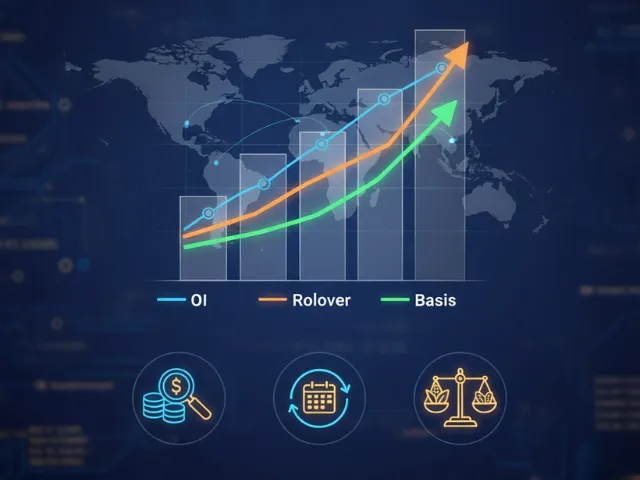
How to Read Commodity Futures Data: OI, Rollover & Basis Explained
Key Takeaways
- Open Interest (OI) shows trader participation and trend strength.
- Rollover reveals how many contracts are carried to next month’s expiry.
- Basis measures spot–futures price gap and sentiment.
- Together, they help traders spot long/short build-ups in commoditie
- Swastika Investmart provides SEBI-compliant analytics & expert insights for futures traders.
Introduction: Why Commodity Futures Data Matters
Commodity futures trading in India has evolved into a data-driven discipline. Successful traders today don’t just rely on price they decode Open Interest (OI), Rollover, and Basis to understand market positioning, strength, and sentiment.
Whether you trade on the Multi Commodity Exchange (MCX) or National Commodity & Derivatives Exchange (NCDEX), learning to interpret these metrics can transform the way you make decisions.
Let’s break them down in simple terms and see how brokers like Swastika Investmart help you read them efficiently.
1. What Is Open Interest (OI)?
Open Interest (OI) refers to the total number of outstanding contracts (buy or sell) that remain open in a commodity’s futures market.
- Rising OI means new positions are being built.
- Falling OI means traders are closing their positions.
In simple words: OI shows how many traders are active and how confident they are in the trend.
Example:
If Crude Oil futures prices rise from ₹6,800 to ₹7,000 and OI also rises, it means new long positions are being added bullish sentiment.
Swastika Investmart’s live OI trackers and heatmaps help traders identify these patterns in real time across commodities.
2. What Is Rollover in Commodity Futures?
Futures contracts have expiry dates monthly for most commodities. As expiry nears, traders either square off or roll over their positions to the next month’s series.
Rollover (%) = (Next Month OI / Current Month OI) × 100
A higher rollover percentage shows continuity of conviction traders are carrying their view forward.
Example:
If Gold futures rollover is 85%, it means most traders are confident about the trend continuing in the next month’s contract.
Swastika Investmart’s derivatives dashboard visually compares rollover ratios across series, helping you track where institutional money is flowing.
3. What Is Basis and Why Does It Matter?
Basis = Futures Price – Spot Price
It measures the difference between current futures and spot (cash) prices.
- Positive Basis (Futures > Spot): Bullish tone (cost of carry or storage).
Negative Basis (Futures < Spot): Bearish tone (weak demand or oversupply).
Example:
If Copper spot = ₹720 and Futures = ₹730, basis = +₹10 → bullish undertone.
If Futures = ₹710 → basis = –₹10 → bearish tone or oversupply.
4. Combining OI, Rollover, and Basis for Better Analysis
Smart traders don’t look at these metrics in isolation they combine all three to read the full market picture.
5. SEBI’s Role in Safeguarding Commodity Traders
SEBI (Securities and Exchange Board of India) ensures commodity futures trading remains transparent and regulated through:
- Margin requirements to control leverage risk.
- Daily mark-to-market (MTM) settlement.
- Position limits to avoid excessive speculation.
- Real-time data disclosure for OI, rollover, and basis via MCX/NCDEX.
Swastika Investmart’s trading systems follow all SEBI guidelines, ensuring traders have safe, compliant access to futures data.
6. AI & Analytics in Reading Commodity Data
The future of commodity analysis is AI-enhanced.
Modern platforms now use machine learning to analyze OI spikes, basis fluctuations, and rollover trends.
AI tools can even predict probable breakouts in commodities like Gold, Crude, or Copper by studying patterns across contracts.
FAQs
1. What does Open Interest indicate in commodity futures?
It shows total open contracts rising OI means new positions (bullish or bearish), falling OI means closure or unwinding.
2. How can rollover help traders?
Rollover reveals how many traders carry positions to the next month, reflecting conviction in the trend.
3. What does basis tell us?
Basis shows whether futures are trading at a premium or discount to spot indicating market sentiment.
4. How is SEBI involved in commodity futures?
SEBI regulates all trading activity, margins, and reporting standards to ensure transparency and investor protection.
5. How does Swastika Investmart help commodity traders?
Swastika offers real-time analytics, AI-integrated insights, and SEBI-compliant execution, helping traders decode OI, rollover, and basis effectively.
Conclusion
Reading commodity futures data is the art of understanding what the market is thinking not just what the price is doing.
By tracking Open Interest, Rollover, and Basis, you gain insights into trader psychology, institutional positioning, and upcoming trends.
And when you trade through Swastika Investmart, you combine that insight with research-backed data, advanced dashboards, and SEBI-regulated safety.
In the AI-driven era of 2025, data isn’t just information it’s your competitive advantage.
👉 Open your Demat & Trading Account with Swastika Investmart — trusted SEBI-registered broker with expert research, powerful tools, and dedicated customer support.
%20(9).webp)
Is Lenskart IPO Worth Your Money? Full Reality Check!
Key Takeaways
- IPO size: ₹7,278 crore (₹2,150 crore fresh issue + ₹5,128 crore OFS)
- Valuation: Extremely high – P/E above 200x, EV/Sales near 10x
- Profit quality: FY25 profit inflated by a one-time non-cash gain
- Strengths: Strong brand, omnichannel presence, investor confidence
- View: Solid business, but valuations look stretched → Neutral rating.
A Stylish IPO with a Price Tag to Match
Lenskart Solutions Ltd., founded in 2008, has transformed from an online eyewear seller into India’s largest tech-enabled eyewear retailer. With over 2,723 stores across India and overseas, the company manufactures, designs, and retails prescription glasses, sunglasses, and contact lenses through its own platform and app (over 100 million downloads).
After years of steady growth, Lenskart turned profitable in FY25 with a net profit of ₹297 crore and an EBITDA margin of 13.85%, up from 11.98% in FY24. The company’s revenue jumped 22.6% YoY to ₹6,652 crore, showing strong operating momentum.
But is that enough to justify its ₹70,000 crore market cap? Let’s break it down.
IPO Details at a Glance
Where the Money Will Go
The company plans to use the IPO proceeds for:
- Expanding company-owned stores (CoCo model) and meeting related lease costs.
- Investing in technology infrastructure, cloud systems, and marketing.
- Acquisitions and general corporate purposes.
Why Investors Are Interested
1. India’s Eyewear Market = Huge Opportunity
India’s eyewear industry is under-penetrated, with a large unorganized segment. Lenskart’s direct-to-consumer approach, backed by tech-driven supply chains and omnichannel reach, gives it a strong foothold in this expanding market.
2. Strong Brand Recall
With affordable yet trendy eyewear, Lenskart enjoys strong customer loyalty, particularly among millennials and Gen Z consumers.
3. Veteran Investor Backing
The entry of Radhakishan Damani, a respected market veteran, has boosted confidence among investors and analysts alike.
The Flip Side: Why You Should Be Cautious
1. Aggressive Valuation
Lenskart’s valuation metrics are sky-high.
- P/E: 200x+
- EV/Sales: ~10x
At these levels, the stock is priced for perfection, leaving minimal room for error if growth slows or margins shrink.
2. Profit Quality Concerns
FY25’s ₹297 crore profit primarily came from a one-time non-cash accounting gain, raising questions about the sustainability of earnings in future periods.
3. High Dependence on China
Over 40% of raw material and component sourcing is tied to Chinese suppliers via joint ventures, exposing the company to geopolitical risks and supply disruptions.
4. Competitive Pressure
Competition is rising from both online and offline eyewear players, including Titan’s Eye+ and new D2C startups. Maintaining growth while preserving margins could be challenging.
Market Context: Why It Matters
The Lenskart IPO arrives at a time when investor appetite for consumer tech companies is strong, but valuations are under scrutiny. With peers like Mamaearth and Boat facing post-listing volatility, investors are becoming cautious.
The company’s ₹7,278 crore issue, where 70% of funds (OFS) go to existing shareholders, signals that much of the offer is an exit opportunity for early investors rather than a pure growth capital raise.
Swastika Investmart’s View
Swastika Investmart has assigned a Neutral Rating to the Lenskart IPO.
The business fundamentals are solid — large customer base, strong brand, scalable tech model — but valuation comfort is missing.
For long-term investors, it may be worth watching post-listing performance before taking exposure.
FAQs
1. What is the Lenskart IPO price band?
The price band is set between ₹382 and ₹402 per share.
2. How much of the IPO is fresh issue?
₹2,150 crore is a fresh issue, while ₹5,128 crore is an offer for sale by existing shareholders.
3. Is Lenskart profitable?
Yes, the company turned profitable in FY25 with ₹297 crore net profit, though most of it came from a one-time accounting gain.
4. What is Swastika’s recommendation?
Swastika Investmart gives a Neutral rating — strong business, but valuations are on the higher side.
5. Should retail investors apply?
Apply only if you believe in long-term growth potential and can tolerate near-term valuation risk.
Conclusion
Lenskart’s IPO brings together a powerful mix of brand strength, tech-driven growth, and a booming consumer market. However, the steep valuation and profit quality concerns make it a case of “great company, expensive price.”
For investors looking for balanced, research-backed guidance and reliable support, Swastika Investmart offers SEBI-registered expertise, strong research tools, and tech-enabled investing platforms to help you make informed decisions.
👉 Open your Demat & Trading Account with Swastika Investmart — trusted SEBI-registered broker with expert research, powerful tools, and dedicated customer support.

Navigating the Private Equity Funding Process in an Investment Bank
For owners and promoters of successful, growing companies, seeking private capital often feels like a complicated and crucial process. You know your firm has tremendous potential, but turning that potential into a successful partnership with a Private Equity (PE) investor demands a clear strategy, not just strong performance.
This is the central promise of a specialized Boutique Investment Bank. It involves a step-by-step approach designed to boost your company's value, manage its presentation to the market, and guarantee long-term alignment with a new investor. Our Investment Banking experts explain this proven journey, from the initial planning stages to securing the necessary funds.
Phase I: Planning the Transaction and Defining Value
1. The Mandate
Every successful private equity deal starts by clearly defining a goal. The company, guided by an Investment Bank, must decide precisely what it wants to achieve: Is it raising capital for expansion, selling a portion of the company, or planning a full merger or sale?
This clear direction is formally captured in a mandate letter. This document ensures the promoter, management, and the investment bank are fully aligned on roles, timelines, and the ideal investor profile. This upfront agreement is vital, ensuring the process is focused on the company's long-term value creation, not just a quick cash injection.
2. Valuation and Structure
Determining your company's worth, or Valuation, is the foundation of any transaction. A skilled investment banker uses rigorous financial analysis combined with real-time market knowledge to arrive at a fair and defensible value range.
We determine the basis of valuation using several standard approaches, including:
- Discounted Cash Flow (DCF): Estimating value based on how much cash the company is expected to generate in the future.
- Comparable Company Analysis (CCA): Benchmarking against the values of similar public companies in the same industry.
- Precedent Transactions (PTA): Looking at the price paid for similar companies in recent mergers and acquisitions (M&A).
The final valuation figure is more than just a spreadsheet result; it is also influenced by industry outlook and how well the company aligns with major investor trends, such as deep-tech or sustainability. In fact, reports confirm that India has seen significant mid-market growth investments, proving that the opportunity for well-prepared companies is strong.
Once the valuation is clear, the focus shifts to Deal Structuring. This means deciding on the best type of capital to raise—such as common shares or preferred shares—to balance the new investor’s returns with the promoter’s continued control and operational freedom. A smart structure significantly impacts the partnership's success.
Phase II: Attracting Partners and Negotiating Terms
3. Investor Outreach
With the groundwork laid, the Investment Bank begins presenting the company's compelling story to the market. This phase goes beyond simple marketing; it is a focused campaign to find the perfect strategic partner.
The main document used, often called an Information Memorandum (IM), details the business model, financial results, management team quality, and the value creation plan. This step outlines how Investor Outreach is done by finding investors who are truly the right fit.
The Investment Bank identifies and contacts a select group of potential investors, including dedicated private equity funds and family offices, who have a track record of investing in companies of the client's size and sector. Effective outreach relies on:
- Targeted Search: Focusing on PE funds with available funds and proven sector experience.
- Clear Messaging: Ensuring the company’s story is transparent, consistent, and appealing across all presentations.
- Managing Due Diligence: Guiding the investor through the verification phase in an organized, timely manner to build trust. Analysing the company through and through, from their bookkeeping to client records to order books, to understand the company better and enhance investors’ sense of clarity.
4. Term Sheets and Negotiation
When a serious investor expresses interest, they issue a Term Sheet, and the process moves into the critical negotiation game in equity. While the purchase price attracts the most attention, the most defining aspects of the partnership are found in the detailed clauses covering governance and rights.
The Investment Bank acts as an essential transaction advisor here. They help the promoter navigate complex issues like board composition, special rights for the investor, how the founders are incentivized, and plans for the eventual exit. Key elements under negotiation include:
- Partnership Safeguards: Rights investors use to protect their capital and influence.
- Governance: Determining the new balance of power in future strategic decisions.
- Exit Strategy: Planning the pre-agreed methods for the investor to eventually sell their stake.
The banker’s main job is to broker a balanced agreement that protects the promoter’s long-term vision while meeting the institutional investor’s requirements for a strong return, leading to a successful, aligned partnership.
Phase III: Finalizing the Deal and Sustaining Growth
5. Closure and Compliance
The final phase involves legally documenting the deal, turning the agreed-upon Term Sheet into a legally binding contract. This execution stage demands extreme focus on detailed paperwork and regulatory adherence.
The importance of Compliance in Equity is paramount, especially in a regulated market. Legal teams draw up final agreements, the investor completes their final due diligence and finalises the Shareholder’s Agreement (SHA)& Shareholders Share Subscription Agreement (SSA), and all required documents are filed with government & regulatory authorities and signed by involved parties to finalise and seal the deal. Accuracy is key, as small compliance errors can significantly delay the final closure.
6. Beyond the Deal: Strategic Partnership
Closing the transaction is a milestone, not an end. A good Boutique Investment Bank continues to provide advice after the deal is done, offering crucial support in areas like new board governance, investor communication, and long-term strategic planning.
Maintaining a relationship with a trusted Investment Bank ensures a company is positioned for ongoing success. It facilitates future funding rounds, supports strategic acquisitions (bolt-ons), and prepares the company for a maximum-value exit later on—a true demonstration of partnership and sustained value creation..
👉 To Connect with us today, please click here.
.webp)
Why Every Investor Needs a Demat Account in the AI-Driven Era
Key Takeaways
- A Demat account is your digital locker for investments, essential for AI-based investing and automation.
- AI tools now analyze portfolios, trends, and risks directly linked to your Demat holdings.
- SEBI, NSDL, and CDSL ensure Demat safety and investor protection.
- Swastika Investmart merges AI-powered insights with traditional trust.
- Investing without a Demat account means missing out on future-ready financial ecosystems.
Introduction: The New Age of Investing
We’ve entered an era where algorithms predict market moves, AI tools build personalized portfolios, and data-driven insights guide investment decisions.
Yet, at the center of this high-tech transformation lies a humble yet vital foundation the Demat Account.
A Demat (Dematerialized) Account is more than a place to hold your shares digitally it’s the gateway to AI-powered wealth creation, offering security, automation, and integration with new-age trading tools.
Let’s explore why every investor beginner or seasoned needs one in the AI-driven era of investing.
What Is a Demat Account?
A Demat Account stores shares, ETFs, bonds, and mutual fund units in electronic form, eliminating the need for physical certificates.
It’s regulated by SEBI and maintained through depositories like NSDL (National Securities Depository Limited) and CDSL (Central Depository Services Limited).
In simpler terms, it’s your digital locker where all your investments live securely.
You can open one through SEBI-registered brokers like Zerodha, Groww, Angel One, Upstox, or Swastika Investmart, each connected to NSDL/CDSL systems.
Why a Demat Account Is Non-Negotiable in 2025
In the past, investors tracked stock certificates manually. Today, everything from IPOs to ETFs happens digitally.
Without a Demat account, you can’t even buy or sell listed securities on Indian exchanges.
But in 2025, the importance goes beyond compliance it’s about unlocking AI-powered efficiency.
Here’s why 👇
1. AI-Driven Portfolio Insights
AI systems analyze your holdings to recommend rebalancing, risk management, and tax-efficient moves all possible through your linked Demat data.
2. Automated Risk Management
Modern trading platforms use machine learning to monitor price movements and auto-trigger stop-loss or alerts based on your Demat positions.
3. Smart Order Execution
AI-powered brokers use predictive analytics to optimize entry/exit points, saving time and reducing emotional bias.
4. One-Tap Portfolio Visualization
AI dashboards visualize your holdings in real time across stocks, mutual funds, ETFs, and bonds all synced to your Demat account.
5. Enhanced Security & Fraud Detection
AI algorithms track unusual transactions, flagging unauthorized access, and protecting investors under SEBI’s investor protection framework.
AI + Demat: A Future-Ready Partnership
The integration of Artificial Intelligence with Demat systems has revolutionized how investors interact with markets.
As AI grows, your Demat account becomes the central nervous system of your financial profile, connecting multiple apps, analytics, and strategies in one ecosystem.
SEBI’s Role: Keeping the AI Age Investor-Safe
Even in this high-tech world, SEBI remains the ultimate safeguard.
It ensures brokers, platforms, and AI tools adhere to transparency, risk disclosure, and investor data protection norms.
Key measures include:
- Mandatory KYC verification for Demat account holders.
- Two-factor authentication (TPIN/eDIS) for trades.
- Periodic audits of brokers and depositories.
- Real-time alerts via NSDL/CDSL for every transaction.
This ensures that technology serves investors not the other way around.
Why Swastika Investmart Is Built for the AI Era
While fintech startups focus on automation, Swastika Investmart combines the best of both worlds human expertise + artificial intelligence.
Here’s why it stands out in 2025:
- AI-powered research and portfolio screeners built for retail investors.
- SEBI-registered advisory and compliance-first execution.
- Regional support centers for vernacular assistance and onboarding.
- Smart notification systems for order tracking, margin alerts, and data security.
- Integration with CDSL’s eDIS and TPIN protocols for fraud-free investing.
In short, Swastika isn’t just offering a Demat account it’s offering a secure, intelligent, and intuitive investing experience.
Beginner Scenario: How AI Empowers New Investors
Let’s take Riya, a 27-year-old new investor from Pune.
She opens a Swastika Demat account, links it to an AI-driven app, and starts her first SIP in ETFs.
The AI platform analyzes her portfolio:
- Suggests rebalancing when midcaps get overweighted.
- Sends alerts when her holdings approach target profit.
- Recommends switching to tax-efficient ELSS in March.
Her investments are safe (SEBI-regulated), accessible (24/7 dashboard), and optimized (AI-driven).
That’s the future where AI and Demat work hand-in-hand for wealth creation.
Demat Account Benefits in the AI Era
FAQs
1. Why is a Demat account important in the AI era?
Because AI-driven platforms depend on Demat-linked data to analyze, automate, and execute smart investment decisions securely.
2. Can AI trade using my Demat account automatically?
Yes, through SEBI-approved APIs and eDIS authorization, AI platforms can execute trades with your consent.
3. Is my data safe in an AI-linked Demat account?
Absolutely. SEBI, NSDL, and CDSL enforce data encryption and dual-factor authentication to ensure safety.
4. Which broker offers the best AI-integrated experience?
Swastika Investmart stands out with its AI tools, transparent advisory, and regionally personalized investor support.
5. Can beginners benefit from AI-driven investing?
Yes. AI tools simplify analysis, automate risk alerts, and guide SIPs, making it easier for new investors to start smartly.
Conclusion
In an age where AI analyzes trillions of data points before a single trade is placed, your Demat account becomes the bridge between human intelligence and machine precision.
From real-time insights to fraud detection, it powers the next generation of smart investing.
By choosing a SEBI-regulated broker like Swastika Investmart, you combine AI innovation, research-backed strategy, and old-school trust exactly what investors need in this digital era.
Because the future of investing isn’t just about returns it’s about intelligence, safety, and evolution.
👉 Open your Demat & Trading Account with Swastika Investmart — trusted SEBI-registered broker with expert research, powerful tools, and dedicated customer support.
.webp)
India’s No.1 Helmet Brand Goes Public! Studds IPO Explained
Key Takeaways
- Studds Accessories Ltd., India’s leading helmet manufacturer, launches its ₹455.49 crore IPO.
- Price band: ₹557–₹585 per share; Market Cap: ₹2,302 crore.
- Strong brands “Studds” & “SMK” dominate both domestic and global markets.
- EBITDA margin rose to 20% and PAT margin to 11.9% in FY25.
- Swastika Investmart recommends Subscribe for Long-Term.
A Safety Leader Now on the Stock Market
If you’ve ever worn a helmet in India, chances are high it carried the Studds logo. Incorporated in 1975 and established in 1983, Studds Accessories Limited is headquartered in Faridabad, Haryana. Over the last four decades, it has transformed from a small manufacturer to India’s largest two-wheeler helmet company by revenue and the world’s largest by volume.
The company designs, manufactures, and markets helmets and two-wheeler accessories under two strong brands —
- Studds: Targets mass and mid-market customers.
- SMK: Premium segment with advanced features and style.
With over 9 million units annual manufacturing capacity and exports to 70+ countries, Studds stands as a global face of Indian safety gear innovation.
IPO Details at a Glance
Issue Allocation:
Company Performance: A Helmet That Fits Financial Growth
Studds has maintained consistent top-line growth with rising profitability. Its PAT margin improved from 6.6% in FY23 to 11.9% in FY25, reflecting strong cost efficiency and better product mix.
The company’s Return on Capital Employed (ROCE) stands at 20.25%, signaling efficient utilization of capital resources.
Key Strengths: What Makes Studds Stand Out
- Market Leadership: Dominant player in India’s two-wheeler helmet segment and world’s largest by volume.
- Strong Brand Equity: “Studds” and “SMK” enjoy near-monopoly recognition among riders.
- Integrated Operations: In-house design, R&D, and advanced manufacturing ensure quality and quick production cycles.
- Global Reach: Presence in over 70 countries across Asia, Europe, and Africa.
- Sustainability Focus: Energy-efficient processes and recyclable materials enhance long-term brand trust.
Key Risks and Concerns
- Geographic Concentration: All plants are located in Faridabad — regional disruptions could impact operations.
- Safety Hazards: Use of flammable materials may pose operational risks.
- Export Dependency: Exposure to international product liability claims.
- Auto Sector Dependence: Demand tied closely to two-wheeler industry performance.
- Regulatory Delays: Any delay in government or factory-level approvals can affect production.
Valuation & Outlook
At the upper price band of ₹585, Studds is valued at a P/E of 33.05x based on FY25 earnings. This makes the issue fully priced, but justified considering its steady growth trajectory, brand dominance, and future expansion plans — including a new high-capacity manufacturing facility in Telangana.
Swastika Investmart’s research team has given a “Subscribe for Long-Term” rating, citing stable profitability, market leadership, and scalability potential.
Strategic Expansion Plans
- Setting up a modern manufacturing unit in Telangana.
- Expanding premium offerings under “SMK.”
- Strengthening online sales and digital presence.
- Deepening vertical integration for efficiency and cost savings.
- Exploring new international markets for export growth.
Market Context & Industry Impact
India’s two-wheeler market continues to grow, driven by rising urban mobility and affordable financing. With stricter helmet safety norms and increasing awareness, demand for certified helmets is surging. Studds, already a trusted household name, is well-positioned to capitalize on this long-term shift.
Its IPO not only represents a growth opportunity for investors but also signals the maturing of India’s protective gear manufacturing ecosystem — aligning perfectly with the Make in India and Atmanirbhar Bharat initiatives.
FAQs
1. What is the price band for Studds Accessories IPO?
The price band is set between ₹557 and ₹585 per share.
2. What are the IPO opening and closing dates?
It opens on October 30, 2025 and closes on November 3, 2025.
3. How is Studds financially performing?
The company reported ₹595.89 crore in revenue for FY25 with a 20% EBITDA margin and 11.9% PAT margin.
4. Is the IPO fairly priced?
At a P/E of 33.05x, it’s fully priced but supported by strong fundamentals and long-term growth potential.
5. Should investors apply for this IPO?
Swastika Investmart recommends Subscribe for Long-Term given the company’s brand strength and consistent performance.
Conclusion
Studds Accessories Ltd. brings a blend of brand legacy, consistent financial growth, and innovation to the Indian stock market. While valuations appear on the higher side, its leadership position and robust expansion strategy justify investor confidence.
If you’re a long-term investor seeking exposure to India’s rising safety gear and auto accessory sector, this IPO could be a solid pick.
👉 Open your Demat & Trading Account with Swastika Investmart — trusted SEBI-registered broker with expert research, powerful tools, and dedicated customer support.

.webp)
.webp)
.webp)





START YOUR INVESTMENT JOURNEY
Get personalized advice from our experts
- Dedicated RM Support
- Smooth and Fast Trading App
